
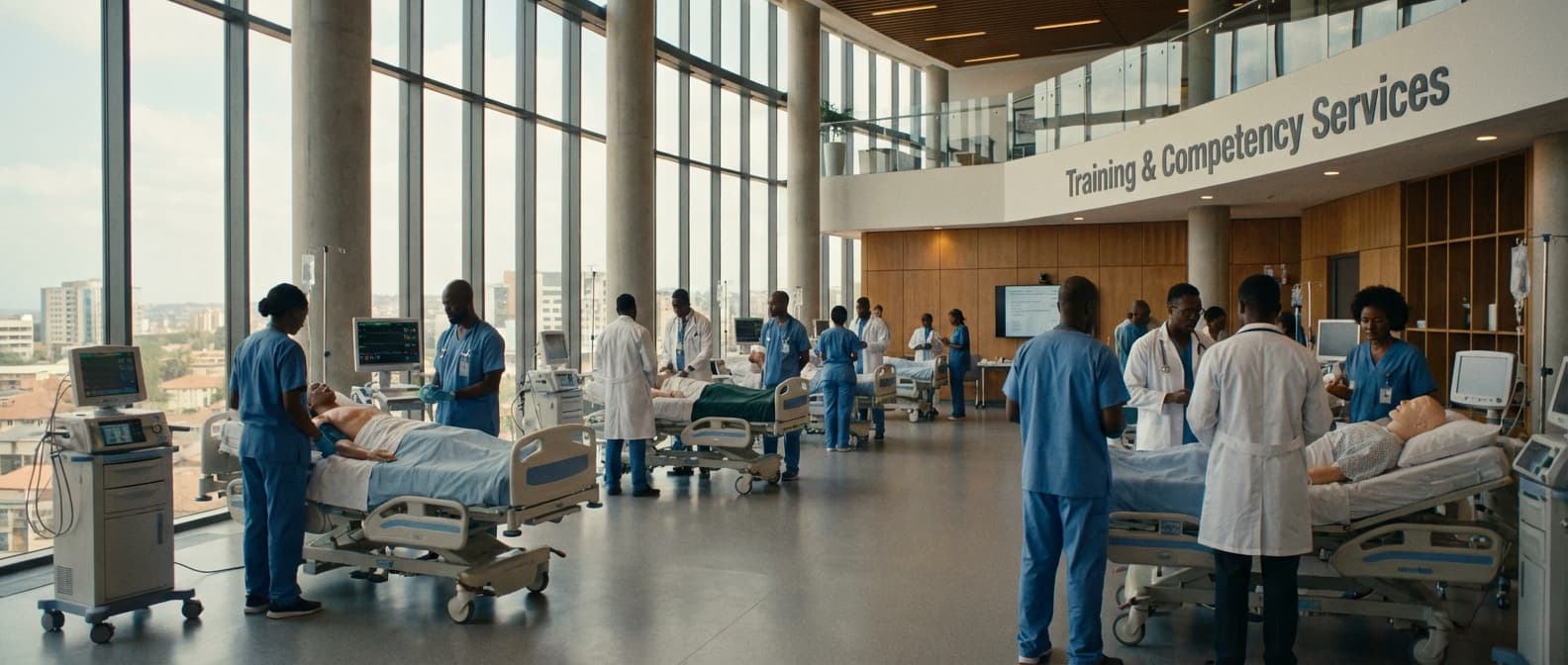
Biomedical Engineering First-Line Support Training Service in Burkina Faso
Engineering Excellence & Technical Support
Biomedical Engineering First-Line Support Training Service High-standard technical execution following OEM protocols and local regulatory frameworks.
Remote Diagnostic & Troubleshooting Assistance
Empower first-line support teams with real-time remote access and diagnostic tools to identify and resolve common biomedical equipment malfunctions quickly, reducing downtime and ensuring critical medical services remain operational.
Hands-on Simulation & Practical Skill Development
Provide interactive training modules and simulated equipment environments that allow support personnel to practice maintenance procedures, calibration, and basic repair skills in a safe and controlled setting, building confidence and competence.
Knowledge Sharing & Expert Collaboration Platform
Establish a centralized platform for first-line support to access a comprehensive knowledge base, share troubleshooting experiences, and connect with experienced biomedical engineers for guidance and complex issue resolution, fostering a community of practice.
What Is Biomedical Engineering First-line Support Training Service In Burkina Faso?
Biomedical Engineering First-Line Support Training Service in Burkina Faso refers to a structured program designed to equip local personnel with the fundamental knowledge and practical skills necessary to perform initial troubleshooting, basic maintenance, and user support for biomedical equipment within healthcare facilities. This service is crucial for ensuring the operational readiness and reliability of medical devices, thereby contributing to improved patient care and healthcare system efficiency in a resource-constrained environment. The training focuses on empowering individuals who are not necessarily full-fledged biomedical engineers but play a vital role in the immediate operational integrity of medical technology.
| Who Needs the Training? | Typical Use Cases | ||||||
|---|---|---|---|---|---|---|---|
| Healthcare Facility Technicians/Assistants: Individuals employed by hospitals, clinics, and health centers responsible for general facility maintenance and operational support. | Clinical Staff (Nurses, Doctors, Lab Technicians): Empowering them to perform basic checks, identify immediate issues, and ensure proper equipment utilization, especially in remote or understaffed areas. | Ministry of Health Personnel: Local health officials or administrators who oversee the management and deployment of medical equipment. | NGO/Development Project Staff: Individuals working on health initiatives who require a foundational understanding of medical equipment to ensure project sustainability. | Prospective Biomedical Technicians (Entry-Level): Individuals seeking to enter the field of biomedical equipment management and maintenance. | |||
| Responding to an "On-Call" Alarm: A nurse identifies a critical equipment alarm and performs initial checks to determine if it's a simple power issue or a more complex malfunction requiring a technician. | Routine Cleaning and Disinfection: A technician follows a standardized protocol to clean and disinfect an infusion pump after patient use, ensuring hygiene and operational readiness for the next patient. | Pre-Use Equipment Verification: A ward nurse performs a basic functional check of a vital signs monitor (e.g., battery level, sensor connectivity) before connecting it to a patient. | Basic Troubleshooting of a Non-Functional Device: A technician observes a non-responsive patient monitor, checks the power source, fuses, and cable connections before contacting a biomedical engineer. | User Training on New Equipment: A biomedical support person provides basic operational training to clinical staff on the correct usage of a newly acquired portable ultrasound machine. | Inventory and Asset Tagging: A facility assistant ensures all biomedical equipment is properly inventoried and tagged for tracking and maintenance purposes. | Reporting a Minor Equipment Fault: A laboratory technician documents a malfunctioning pipette controller and submits a request for repair to the biomedical support team. | Battery Replacement in Portable Devices: A technician performs the routine replacement of batteries in portable ECG machines to ensure continuous operation. |
Key Components of Biomedical Engineering First-Line Support Training
- Equipment Identification and Categorization: Understanding the types of biomedical equipment present in a facility, their basic functions, and classification.
- Basic Operational Principles: Learning how common medical devices operate at a fundamental level (e.g., power supply, essential circuitry, core mechanisms).
- Routine Preventive Maintenance (PM): Training on performing scheduled checks, cleaning procedures, calibration verification (where applicable and within scope), and battery management.
- Troubleshooting Methodologies: Developing systematic approaches to identify and isolate common faults, interpret error messages, and perform simple corrective actions.
- User Support and Education: Guiding clinical staff on the proper use, safe operation, and basic care of medical equipment, including identifying when professional intervention is required.
- Safety Protocols: Emphasizing electrical safety, infection control related to equipment, and emergency procedures.
- Documentation and Reporting: Training on maintaining logbooks, reporting equipment malfunctions, and documenting maintenance activities.
- Spares Management: Basic understanding of common spare parts, their identification, and inventory management.
- Referral Pathways: Knowing when and how to escalate issues to higher-level technical support or specialized repair services.
Who Needs Biomedical Engineering First-line Support Training Service In Burkina Faso?
Biomedical engineering first-line support training services are crucial for a range of healthcare facilities and governmental bodies in Burkina Faso. This training ensures that medical equipment is properly maintained, calibrated, and repaired, leading to improved patient care, reduced downtime, and optimized resource utilization. The target customers are primarily institutions that operate and rely on medical devices for diagnostics, treatment, and patient monitoring.
| Customer Type | Primary Departments Involved | Key Needs Addressed by Training |
|---|---|---|
| Public Hospitals | Biomedical Engineering Department, Clinical Departments (e.g., Surgery, Pediatrics, Radiology), IT Department, Maintenance Services | Basic maintenance and troubleshooting of essential medical equipment, preventive maintenance schedules, basic repair of common devices, proper record-keeping, ensuring equipment safety and functionality, reducing reliance on external technicians. |
| Private Clinics and Hospitals | Technical Services Unit, Clinical Staff (nurses, doctors), Administration | On-site immediate support for critical equipment, minimizing patient care interruptions, cost-effective equipment management, ensuring compliance with service standards, proactive maintenance to avoid costly breakdowns. |
| Health Centers (CSPS) | Technical Staff (if any), Clinical Officers, Nurses, Facility Managers | Basic operation and troubleshooting of essential diagnostic and treatment devices (e.g., vital signs monitors, basic laboratory equipment), understanding of simple maintenance procedures, safe handling and storage of equipment, knowing when and how to escalate issues. |
| Specialized Medical Centers | Biomedical Engineering Department, Specific Clinical Specializations (e.g., Radiation Oncology Physics, Cardiology Technicians), IT | In-depth understanding of complex specialized equipment, calibration procedures, preventative maintenance for high-value assets, advanced troubleshooting techniques, ensuring optimal performance of advanced diagnostic and therapeutic systems. |
| Government Ministries and Agencies | Ministry of Health (Departments of Infrastructure, Planning, Quality Assurance), National Health Supply Agency | Capacity building for national health infrastructure, standardization of maintenance practices, ensuring effective use of health investments, developing national guidelines for equipment management, data collection for equipment inventory and performance. |
| NGOs and International Organizations | Logistics and Procurement Departments, Technical Support Teams, Program Managers | Ensuring the sustainability of donated or procured medical equipment, training local staff to maintain equipment in remote or underserved areas, establishing reliable technical support networks, improving the effectiveness of healthcare programs. |
| Medical Training Institutions | Biomedical Engineering Departments, Continuing Education Units, Faculty | Developing curricula for biomedical engineering technicians and technologists, providing practical training for future professionals, offering refresher courses for existing healthcare professionals, enhancing the practical skills of graduates entering the workforce. |
Target Customers and Departments for Biomedical Engineering First-Line Support Training in Burkina Faso
- Public Hospitals (Central, Regional, District)
- Private Clinics and Hospitals
- Health Centers (Centres de Santé et de Promotion Sociale - CSPS)
- Specialized Medical Centers (e.g., cardiology, oncology, radiology units)
- Government Ministries and Agencies responsible for Health and Technology
- Non-Governmental Organizations (NGOs) involved in healthcare delivery
- Medical Training Institutions and Universities
- International Organizations supporting the health sector
Biomedical Engineering First-line Support Training Service Process In Burkina Faso
This document outlines the typical workflow for providing Biomedical Engineering First-Line Support Training Services in Burkina Faso, from initial inquiry to the successful execution of the training. The process is designed to ensure efficient communication, accurate needs assessment, and effective delivery of specialized training to healthcare professionals responsible for maintaining and repairing medical equipment.
| Phase | Key Activities | Responsible Parties | Deliverables |
|---|---|---|---|
| Inquiry and Needs Assessment | Initial contact, consultations, site visits, needs analysis | Client (Facility/Ministry/NGO), Service Provider (Trainer/Consultant) | Needs Assessment Report, Clarified Training Requirements |
| Proposal and Agreement | Proposal development, negotiation, contract signing | Service Provider, Client | Training Proposal, Signed Contract/Agreement |
| Training Preparation | Curriculum finalization, material development, logistics, trainer assignment | Service Provider (Trainers, Admin Staff) | Training Materials, Confirmed Logistics, Registered Trainees |
| Training Execution | Delivery of theoretical and practical sessions, ongoing assessment | Service Provider (Trainers), Trainees | Trained Personnel, Ongoing Feedback |
| Post-Training and Follow-up | Final assessment, evaluation, certificate issuance, reporting, follow-up | Service Provider, Client, Trainees | Certificates, Post-Training Report, Future Support Plan (if applicable) |
Biomedical Engineering First-Line Support Training Service Process
- {"steps":[{"details":"Inquiries should ideally specify the type of medical equipment to be covered, the target audience (e.g., biomedical technicians, nurses), desired training duration, and geographical location.","stepNumber":1,"description":"Initial Inquiry: Healthcare facilities, ministries of health, or NGOs interested in training contact the service provider. This can be through email, phone, or a formal request form."},{"details":"This involves discussing existing technical capacity, common equipment failures, available resources, and specific training goals. Clarification of technical prerequisites for trainees is crucial.","stepNumber":2,"description":"Preliminary Consultation: A meeting (virtual or in-person) is scheduled to understand the client's specific needs and objectives."},{"details":"This helps tailor the training environment and ensure the relevance of practical exercises.","stepNumber":3,"description":"Site Visit (if necessary): For complex needs or specific equipment types, a site visit may be conducted to assess the current infrastructure and available equipment for hands-on training."},{"details":"This report serves as the basis for the training proposal.","stepNumber":4,"description":"Needs Assessment Report: A detailed report is generated, outlining the identified training needs, target equipment, curriculum suggestions, and logistical considerations."}],"title":"Phase 1: Inquiry and Needs Assessment"}
- {"steps":[{"details":"The proposal includes objectives, curriculum outline, training methodology (theory, practical, simulation), trainer profiles, duration, schedule, required materials, and assessment methods.","stepNumber":5,"description":"Training Proposal Development: Based on the needs assessment, a comprehensive training proposal is drafted."},{"details":"Clients may request modifications to the curriculum, schedule, or budget.","stepNumber":6,"description":"Proposal Submission and Review: The proposal is submitted to the client for review and feedback."},{"details":"The contract details deliverables, payment terms, confidentiality, and responsibilities.","stepNumber":7,"description":"Contract Negotiation and Signing: Once the proposal is agreed upon, a formal contract is negotiated and signed by both parties."}],"title":"Phase 2: Proposal and Agreement"}
- {"steps":[{"details":"Materials are typically translated into relevant local languages if required.","stepNumber":8,"description":"Curriculum Finalization and Material Development: The training curriculum is finalized, and all necessary training materials (presentations, manuals, practical guides) are developed or procured."},{"details":"Trainers ensure they are familiar with the equipment and common issues encountered in Burkina Faso.","stepNumber":9,"description":"Trainer Assignment and Briefing: Experienced biomedical engineering trainers are assigned to the program and briefed on the specific needs and objectives."},{"details":"Coordination with the client's facility is critical for equipment availability and access.","stepNumber":10,"description":"Logistical Arrangements: Venue booking, equipment setup (for practical sessions), consumables, accommodation, and travel arrangements for trainers are confirmed."},{"details":"This ensures trainees are adequately prepared and aware of the training expectations.","stepNumber":11,"description":"Trainee Registration and Communication: Trainees are formally registered, and pre-training information (schedule, location, prerequisites) is communicated."}],"title":"Phase 3: Training Preparation"}
- {"steps":[{"details":"This includes theoretical lectures, demonstrations, hands-on practical exercises, troubleshooting scenarios, and case studies.","stepNumber":12,"description":"On-site Training Delivery: The training is conducted according to the agreed-upon schedule and curriculum."},{"details":"Informal quizzes and observation during practical sessions are common.","stepNumber":13,"description":"Continuous Assessment and Feedback: Trainees' understanding and progress are monitored throughout the training. Regular feedback is provided to trainees and the client."},{"details":"Flexibility is key to a successful training program.","stepNumber":14,"description":"Problem-Solving and Adaptation: Trainers address any emerging issues or specific challenges encountered by trainees during the sessions, adapting the content as needed."}],"title":"Phase 4: Training Execution"}
- {"steps":[{"details":"This can include written tests, practical skill evaluations, or a combination.","stepNumber":15,"description":"Final Assessment: A formal assessment is conducted to evaluate the trainees' acquired knowledge and skills."},{"details":"This feedback is vital for service improvement.","stepNumber":16,"description":"Training Evaluation and Feedback Collection: Trainees and client representatives provide feedback on the training program through evaluation forms."},{"details":"Certificates acknowledge the skills and knowledge gained.","stepNumber":17,"description":"Certificate Issuance: Upon successful completion of the training and assessment, certificates are issued to the trainees."},{"details":"This report is crucial for documenting the training's impact.","stepNumber":18,"description":"Post-Training Report: A comprehensive report is submitted to the client, summarizing the training conducted, assessment results, feedback, and recommendations for future support or training."},{"details":"This ensures sustained competence and problem resolution.","stepNumber":19,"description":"Follow-up and Support: Optional follow-up support (e.g., remote troubleshooting, refresher courses) may be offered based on the contract and client needs."}],"title":"Phase 5: Post-Training and Follow-up"}
Biomedical Engineering First-line Support Training Service Cost In Burkina Faso
Providing first-line support training for biomedical engineers in Burkina Faso involves a range of costs influenced by several key factors. The specific pricing will depend on the depth and breadth of the training, the qualifications and experience of the trainers, the duration of the program, and the location within Burkina Faso where the training is delivered. Furthermore, the inclusion of practical components, such as access to specialized equipment for hands-on practice, and the provision of training materials and certifications will all contribute to the overall cost. Demand for such specialized training within the country, as well as the availability of local training providers, will also play a role in price determination. Costs can vary significantly from basic introductory sessions to comprehensive, multi-week programs designed to equip engineers with advanced troubleshooting and maintenance skills.
| Service Level/Duration | Estimated Cost Range (XOF) | Typical Inclusions |
|---|---|---|
| Basic Introduction (1-2 days) | 50,000 - 150,000 | Theoretical overview, basic troubleshooting principles, common equipment types. |
| Intermediate Skill Development (3-5 days) | 150,000 - 400,000 | Hands-on practice with common equipment, detailed troubleshooting guides, preventive maintenance basics. |
| Comprehensive Program (1-2 weeks) | 400,000 - 1,000,000+ | In-depth modules on specific equipment categories, advanced diagnostic techniques, simulated repair scenarios, certification. |
| On-site Custom Training (per day) | 100,000 - 300,000+ | Tailored curriculum, delivered at the client's facility, often requires travel/accommodation for trainers. |
Key Pricing Factors for Biomedical Engineering First-Line Support Training in Burkina Faso:
- Training Curriculum Depth and Breadth
- Trainer Qualifications and Experience
- Program Duration
- Location of Training (e.g., Ouagadougou vs. other regions)
- Inclusion of Practical/Hands-on Sessions
- Access to Training Equipment and Simulators
- Provision of Training Materials (manuals, digital resources)
- Certification Issuance
- Training Provider's Reputation and Infrastructure
- Demand and Market Competition
Affordable Biomedical Engineering First-line Support Training Service Options
Finding affordable biomedical engineering first-line support training is crucial for healthcare facilities to ensure equipment reliability and patient safety without exceeding budget constraints. This document outlines various service options, emphasizing value bundles and cost-saving strategies to empower institutions to make informed decisions.
| Service Option | Description | Value Proposition | Cost-Saving Strategies |
|---|---|---|---|
| Value Bundles (Multi-Course Packages) | Comprehensive training programs combining multiple modules, often covering a range of common medical devices or essential troubleshooting techniques. | Offers a holistic approach to skill development, ensuring a well-rounded first-line support team. Can lead to more proficient problem-solving and reduced reliance on higher-level support. | Negotiate discounts for bulk purchases of courses. Choose bundles that align with the most prevalent equipment in your facility. Consider modules that cover foundational principles applicable to multiple device types. |
| Train-the-Trainer Programs | Training for selected senior personnel who then become internal trainers, disseminating knowledge to the wider support team. | Creates a sustainable internal training infrastructure, reducing long-term reliance on external providers. Fosters a culture of knowledge sharing and continuous learning within the organization. | Reduces per-person training costs significantly over time. Invest in high-quality train-the-trainer programs to ensure effective knowledge transfer. Allocate dedicated time and resources for internal trainers. |
| Subscription-Based Online Learning Platforms | Access to a library of online courses, modules, and resources for a recurring fee, often on a per-user or institutional basis. | Provides flexible, on-demand learning opportunities that can be accessed anytime, anywhere. Allows for continuous skill updates and access to a broad range of topics. | Choose platforms with tiered pricing based on usage. Leverage free trial periods to assess suitability. Focus on platforms offering courses relevant to your specific equipment inventory. Negotiate annual or multi-year contracts for better rates. |
| Modular, Customizable Training | Allows organizations to select and combine specific training modules based on their unique needs and equipment inventory. | Ensures that training investment is directly targeted, avoiding unnecessary expenses. Enables a highly tailored approach to upskilling the support team. | Only pay for the modules that are truly needed. Regularly review and update module selections as equipment and needs evolve. Combine modular training with internal mentorship for maximum cost-effectiveness. |
| OEM-Provided Refresher Courses | Periodic training offered by Original Equipment Manufacturers to update technicians on new features, maintenance protocols, or software updates for their specific devices. | Ensures compliance with manufacturer guidelines and best practices, minimizing the risk of equipment damage or failure due to outdated knowledge. | Negotiate bundled refresher courses with equipment purchase agreements. Prioritize refresher training for critical or high-maintenance equipment. Explore group discounts for multiple technicians attending the same session. |
| Consortium or Group Purchasing Organization (GPO) Training | Training services negotiated and offered through healthcare consortia or GPOs, often at discounted rates due to collective bargaining power. | Leverages the purchasing power of multiple institutions to secure better pricing on high-quality training programs. | Actively participate in GPOs and consortia that offer relevant biomedical training. Research and compare GPO offerings to identify the most cost-effective training options. |
Key Considerations for Affordable First-Line Support Training
- Define Specific Training Needs: Clearly identify the essential skills and knowledge required for your first-line support team. This prevents overspending on unnecessary modules.
- Assess Current Skill Gaps: Evaluate the existing competencies of your team to tailor training precisely, avoiding redundant instruction.
- Prioritize Critical Equipment: Focus training on the most frequently used or vital medical devices within your facility.
- Consider Vendor-Specific vs. General Training: Vendor-specific training is often essential for proprietary equipment, while general biomedical principles can be covered through broader programs.
- Evaluate On-site vs. Remote Training: On-site training can be beneficial for hands-on experience but may incur travel costs. Remote learning offers flexibility and potential cost savings.
- Investigate Third-Party Training Providers: Specialized training companies may offer more competitive pricing and diverse course offerings compared to original equipment manufacturers (OEMs).
- Explore Government and Non-Profit Initiatives: Some organizations offer grants or subsidized training programs for healthcare professionals.
- Leverage Internal Expertise: Identify senior technicians or engineers who can mentor and train junior staff, reducing external training costs.
Verified Providers In Burkina Faso
In Burkina Faso, ensuring access to reliable and high-quality healthcare is paramount. Identifying 'Verified Providers' is crucial for individuals seeking trustworthy medical services. Franance Health stands out as a leading entity that not only verifies healthcare providers but also champions a standard of excellence. Their rigorous credentialing process and commitment to patient well-being make them the premier choice for navigating the healthcare landscape in Burkina Faso.
| Criteria for Verification | Franance Health's Approach | Benefit to Patients |
|---|---|---|
| Licensing and Accreditation | Ensures providers hold current and valid professional licenses and institutional accreditations recognized by Burkina Faso's health authorities. | Guarantees that practitioners meet the minimum legal and professional standards required to practice. |
| Professional Experience and Qualifications | Meticulously reviews medical degrees, certifications, and demonstrated years of practice in relevant specializations. | Confirms that providers possess the necessary expertise for the services they offer. |
| Reputation and Patient Feedback | Incorporates mechanisms for collecting and evaluating patient testimonials and feedback, alongside a review of past professional conduct. | Provides insights into a provider's communication skills, bedside manner, and overall patient satisfaction. |
| Adherence to Ethical Standards | Assesses providers' commitment to medical ethics, patient confidentiality, and informed consent principles. | Ensures that patients receive care with integrity and respect for their rights. |
| Facility Standards and Equipment | Evaluates the cleanliness, safety, and availability of essential medical equipment and infrastructure within healthcare facilities. | Confirms that the environment and tools are conducive to safe and effective treatment. |
Why Franance Health Credentials Matter:
- Rigorous Verification Process
- Commitment to Quality of Care
- Enhanced Patient Trust and Safety
- Access to Specialized Medical Expertise
- Streamlined Healthcare Navigation
Scope Of Work For Biomedical Engineering First-line Support Training Service
This Scope of Work (SOW) outlines the requirements for a Biomedical Engineering First-Line Support Training Service. The objective is to equip newly hired or existing biomedical engineering technicians with the fundamental skills and knowledge necessary to provide effective first-line support for a range of medical devices. This training will focus on common troubleshooting procedures, basic maintenance, safety protocols, and accurate documentation, ensuring they can handle initial device issues and escalate complex problems appropriately. The training will be delivered through a combination of theoretical sessions, hands-on practical exercises, and simulated scenarios.
| Category | Standard Specification | Description | Measurement/Verification |
|---|---|---|---|
| Curriculum Design | Alignment with Industry Standards (e.g., AAMI, IEC) | Training content will cover device types relevant to the client's needs, including common principles of operation, safety features, basic diagnostics, user interface troubleshooting, and preventive maintenance checks. | Review of curriculum against agreed-upon device list and relevant industry standards. |
| Training Delivery | Blended Learning Approach | A combination of instructor-led sessions, online modules (if applicable), and practical, hands-on exercises using actual or simulated medical devices. | Observation during training sessions; review of training materials and methods. |
| Hands-on Practical | Realistic Scenarios and Device Simulation | Participants will engage in practical exercises simulating common first-line support issues, including error code interpretation, basic component identification, and performing initial troubleshooting steps. | Observation of participant performance during practical exercises; review of documented troubleshooting steps. |
| Safety Protocols | Emphasis on Electrical and Mechanical Safety | Training will rigorously cover device-specific safety procedures, including lockout/tagout, handling of hazardous materials (if applicable), and understanding patient and operator safety during all support activities. | Review of safety modules; observation of safety compliance during practical sessions. |
| Documentation & Reporting | Accurate and Timely Record Keeping | Training will emphasize the importance of clear, concise, and accurate documentation of all service calls, troubleshooting steps, and parts used, using the client's preferred system (e.g., CMMS). | Review of sample documentation exercises; assessment of documentation skills during simulated calls. |
| Assessment | Competency-Based Evaluation | Assessments will include theoretical knowledge tests and practical skill evaluations to ensure participants meet the defined competency levels for first-line support. | Analysis of pre- and post-training assessment scores; review of practical evaluation results. |
| Trainer Qualifications | Certified Biomedical Technicians/Engineers | Instructors must possess a minimum of 5 years of hands-on experience in biomedical equipment maintenance and support, with relevant certifications. | Verification of trainer resumes, certifications, and experience. |
Technical Deliverables
- Comprehensive Training Curriculum Modules (digital and/or printed)
- Trainer's Guide and Presentation Slides
- Participant Training Manuals
- Hands-on Training Equipment/Simulators (as applicable to agreed-upon device types)
- Pre- and Post-Training Assessment Tools (quizzes, practical evaluations)
- Certificate of Completion Template
- Training Feedback Forms and Summary Report
- Post-Training Support Plan (e.g., access to online resources, Q&A sessions)
- Final Training Report including attendance, assessment results, and recommendations
Service Level Agreement For Biomedical Engineering First-line Support Training Service
This Service Level Agreement (SLA) outlines the response times and uptime guarantees for the Biomedical Engineering First-Line Support Training Service. This training is critical for ensuring that support personnel are equipped to handle initial inquiries and basic troubleshooting for biomedical equipment, thereby minimizing downtime and ensuring patient safety. The service is delivered through a combination of online modules, interactive simulations, and scheduled virtual Q&A sessions.
| Service Component | Response Time Guarantee | Uptime Guarantee | Notes |
|---|---|---|---|
| Online Training Modules Access | N/A (On-demand access) | 99.5% | Platform availability for accessing pre-recorded lectures, documentation, and self-paced learning materials. |
| Virtual Q&A Session Availability | Scheduled sessions as per the training calendar. Support personnel will be notified of any deviations at least 24 hours in advance. | 100% (for scheduled sessions) | Ensures that scheduled interactive sessions with trainers occur as planned. Technical issues preventing a session will be rescheduled promptly. |
| First-Line Support Ticket Acknowledgment (related to training platform issues) | Within 4 business hours | N/A | Applies to issues reported via the designated support channel for the training platform itself (e.g., login problems, module access errors). |
| Initial Diagnostic Assessment (for training platform issues) | Within 8 business hours of acknowledgment | N/A | Focuses on understanding the nature and scope of the training platform issue. |
Key Performance Indicators
- Response Time: The maximum time allowed for a support request to be acknowledged and an initial diagnostic assessment to be initiated.
- Uptime Guarantee: The percentage of time the online training platform and its associated resources are available to users.
Frequently Asked Questions

Ready when you are
Let's scope your Biomedical Engineering First-Line Support Training Service in Burkina Faso project in Burkina Faso.

Scaling healthcare logistics and technical systems across the entire continent.