
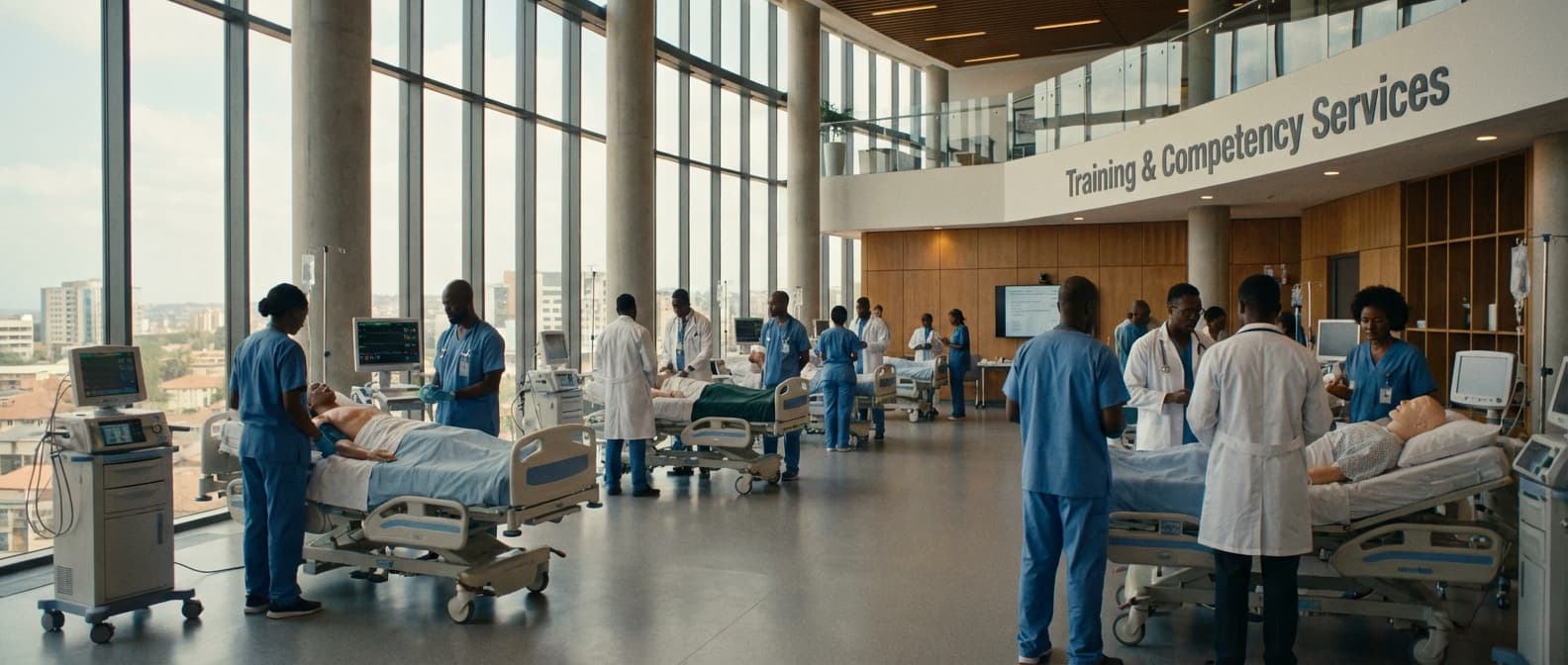
Anesthesia Workstation User Training Service in Burkina Faso
Engineering Excellence & Technical Support
Anesthesia Workstation User Training Service High-standard technical execution following OEM protocols and local regulatory frameworks.
Streamlined Workflow Integration
Our training emphasizes efficient setup and configuration of anesthesia workstations, minimizing setup time and maximizing patient care focus. Learn advanced features for rapid deployment in diverse clinical settings.
Proactive Troubleshooting & Maintenance
Gain hands-on expertise in identifying and resolving common workstation issues, ensuring uninterrupted operation. Our training covers essential preventive maintenance techniques crucial for reliable performance in resource-limited environments.
Enhanced Patient Safety Protocols
Master critical safety features, alarm management, and best practices for ventilation and drug delivery. Our curriculum is designed to instill confidence in operating advanced anesthesia equipment safely and effectively, adhering to international standards.
What Is Anesthesia Workstation User Training Service In Burkina Faso?
Anesthesia Workstation User Training Service in Burkina Faso refers to a specialized program designed to equip healthcare professionals with the requisite knowledge and practical skills for the safe and effective operation of modern anesthesia workstations. This service is crucial for ensuring optimal patient care during surgical and procedural interventions, by minimizing risks associated with anesthetic delivery and monitoring. It encompasses a comprehensive curriculum that addresses the technical intricacies of specific anesthesia machines, their integrated monitoring systems, and associated pharmacologic agents. The training aims to foster proficiency in pre-anesthetic equipment checks, anesthetic gas administration, mechanical ventilation, patient monitoring, and emergency management protocols specific to workstation malfunctions or patient decompensation.
| Target Audience | Rationale/Need | Typical Use Cases |
|---|---|---|
| Anesthesiologists and Certified Registered Nurse Anesthetists (CRNAs) in Burkina Faso. | To ensure competency in operating advanced anesthesia delivery and monitoring systems, enhancing patient safety and reducing anesthetic-related complications. | Pre-operative assessment and planning, induction of anesthesia, maintenance of anesthesia, emergence from anesthesia, post-operative monitoring, emergency resuscitation procedures, and management of complex surgical cases. |
| Anesthesia Technicians and Biomedical Engineers responsible for equipment maintenance and support. | To enable accurate setup, calibration, preventive maintenance, and basic repair of anesthesia workstations, ensuring continuous operational readiness. | Daily equipment checks, routine maintenance, troubleshooting of minor technical faults, and preparation of workstations for surgical procedures. |
| Anesthesiology Residents and Trainees. | To provide foundational and advanced skills training essential for their professional development and to meet the standards of modern anesthetic practice. | Hands-on practice in simulated environments, supervised clinical rotations, and preparation for independent anesthetic practice. |
Key Components of Anesthesia Workstation User Training
- Anatomy and Physiology Refresher: Review of relevant physiological systems and their response to anesthesia.
- Anesthesia Workstation Fundamentals: Detailed explanation of the components (vaporizers, flowmeters, breathing circuits, ventilators) and their principles of operation.
- Anesthetic Agent Management: Proper handling, calibration, and administration of various inhaled and intravenous anesthetic agents.
- Ventilation Modes and Settings: Comprehensive understanding of different ventilation strategies (e.g., volume control, pressure control, synchronized intermittent mandatory ventilation) and their application.
- Patient Monitoring Integration: Proficient use of integrated monitoring capabilities (e.g., ECG, SpO2, EtCO2, NIBP, invasive blood pressure) and interpretation of displayed data.
- Alarms and Troubleshooting: Recognition of alarm conditions, immediate corrective actions, and basic troubleshooting procedures for common workstation issues.
- Emergency Scenarios and Management: Simulation-based training for managing anesthetic emergencies and equipment failures.
- Infection Control and Sterilization: Protocols for maintaining workstation hygiene and preventing cross-contamination.
- Documentation and Record Keeping: Proper recording of anesthetic parameters and events during patient care.
Who Needs Anesthesia Workstation User Training Service In Burkina Faso?
Anesthesia workstation user training services are crucial for ensuring the safe, efficient, and effective operation of vital medical equipment in healthcare settings. In Burkina Faso, the need for such training is particularly pronounced due to the continuous introduction of new technologies and the importance of maximizing the lifespan and performance of existing anesthesia workstations. This training empowers healthcare professionals to confidently operate these complex machines, troubleshoot common issues, and ultimately improve patient care and outcomes during surgical procedures. It also plays a significant role in preventive maintenance, reducing the likelihood of costly repairs and downtime.
| Department | Specific Roles Requiring Training | Key Training Needs |
|---|---|---|
| Anesthesiology Department | Anesthesiologists, Certified Registered Nurse Anesthetists (CRNAs), Anesthesia Technicians, Residents in Anesthesiology | Operation of ventilation modes, drug delivery systems, monitoring capabilities, alarm management, basic troubleshooting, calibration, patient safety features, emergency procedures, preventive maintenance basics. |
| Surgery Department | Surgeons (for understanding workstation capabilities and limitations) | Understanding of how workstation settings impact the patient during surgery, communication with the anesthesia team regarding workstation status. |
| Operating Room (OR) Nursing Staff | Circulating Nurses, Scrub Nurses | Basic understanding of workstation functions for patient handover, awareness of potential issues that may require anesthesia team intervention, sterile field protocols related to equipment. |
| Biomedical Engineering/Technical Services | Biomedical Engineers, Clinical Engineers, Equipment Technicians | In-depth understanding of mechanical and electronic components, advanced troubleshooting and repair, preventive maintenance procedures, software updates, calibration protocols, understanding of user manuals for maintenance. |
| Infection Control Department | Infection Control Nurses/Practitioners | Proper cleaning and disinfection protocols for anesthesia workstations, understanding of manufacturer guidelines to prevent cross-contamination. |
Target Customers and Departments Requiring Anesthesia Workstation User Training in Burkina Faso
- Hospitals (Public and Private): All hospitals, regardless of their ownership structure, that utilize anesthesia workstations for surgical procedures.
- Regional and National Referral Hospitals: These facilities often handle complex cases and possess a higher volume of surgical procedures, necessitating advanced user competency.
- University Teaching Hospitals: Essential for training future anesthesiologists and anesthetists, ensuring they are proficient with current and emerging workstation technologies.
- Non-Governmental Organization (NGO) Medical Facilities: Many NGOs operate clinics and hospitals in remote areas, and ensuring their staff are well-trained on critical equipment like anesthesia workstations is vital for providing quality care.
- Military Hospitals: These institutions require specialized training to ensure operational readiness and the highest level of patient care for military personnel and their families.
Anesthesia Workstation User Training Service Process In Burkina Faso
This document outlines the user training service process for Anesthesia Workstations in Burkina Faso, detailing the workflow from initial inquiry to the successful execution of the training. The process is designed to be efficient, clear, and ensure all stakeholders' needs are met, ultimately leading to competent and safe operation of anesthesia workstations.
| Stage | Key Activities | Responsible Party | Deliverables | Timeline |
|---|---|---|---|---|
| Receive and acknowledge training request. | Client (Healthcare Facility/Organization) | Initial Training Request Form | Upon request |
| Conduct site visit (if applicable), interview stakeholders, assess skill gaps, identify specific workstation models. | Training Provider (Service Team) | Needs Assessment Report, Skill Gap Analysis | 1-2 weeks post-inquiry |
| Develop customized training curriculum, schedule, methodology, budget, and terms. | Training Provider (Training Department) | Training Proposal Document | 1 week post-needs assessment |
| Review, negotiate, and sign training service agreement/contract. | Client & Training Provider | Signed Contract/Service Agreement | 1-2 weeks post-proposal acceptance |
| Confirm participant list, schedule, venue, equipment availability, trainer assignment, and material preparation. | Training Provider (Operations Team) | Finalized Training Schedule, Participant List, Logistics Confirmation | 2-4 weeks pre-training execution |
| Deliver theoretical sessions, practical demonstrations, hands-on training, troubleshooting exercises. | Training Provider (Certified Instructors) | On-site Training Delivery, Practical Competency Demonstration | As per agreed schedule (e.g., 3-5 days) |
| Assess trainee understanding (tests/quizzes), collect feedback from participants and client. | Training Provider (Instructors & Quality Assurance) | Trainee Evaluation Results, Feedback Forms | Immediately post-training |
| Issue certificates of completion, provide training summary report to the client. | Training Provider (Administration) | Certificates of Completion, Training Summary Report | 1 week post-training evaluation |
| Provide remote or on-site support for a defined period, address any post-training queries, offer refresher courses. | Training Provider (Support Team) | Support Log, Refresher Training Options | Ongoing (e.g., 1-3 months post-certification) |
Anesthesia Workstation User Training Service Process
- The service begins with an official inquiry from a healthcare facility or organization in Burkina Faso requesting user training for their anesthesia workstations.
- This initial inquiry triggers a needs assessment phase to understand the specific requirements, the existing skill levels of the intended trainees, and the available infrastructure.
- Based on the needs assessment, a tailored training proposal is developed, outlining the curriculum, duration, methodology, required resources, and associated costs.
- Upon acceptance of the proposal, a formal contract or service agreement is established between the training provider and the client.
- The pre-training phase involves logistics planning, including scheduling training dates, confirming participant numbers, and ensuring all necessary equipment and materials are ready.
- The execution phase is the core of the service, where the actual training is delivered by certified instructors, encompassing theoretical sessions, practical demonstrations, and hands-on exercises.
- Post-training activities include participant evaluation, feedback collection from both trainees and the client, and the provision of certificates of completion.
- A crucial follow-up phase ensures ongoing support, addresses any emergent issues, and provides opportunities for refresher training or advanced modules as needed.
Anesthesia Workstation User Training Service Cost In Burkina Faso
The cost of anesthesia workstation user training services in Burkina Faso can vary significantly based on several key factors. These factors include the duration and depth of the training, the number of participants, the expertise and credentials of the trainers, the specific model and complexity of the anesthesia workstation being trained on, and the location of the training (e.g., in a major city hospital versus a more remote clinic). Additional considerations include whether the training is provided by the manufacturer's authorized representative, a third-party specialized training company, or an in-house training program. The inclusion of hands-on practice with actual equipment, simulation scenarios, and post-training support also impacts the overall price. It's important for healthcare facilities to obtain detailed quotes that outline all included components to ensure they are receiving comprehensive and cost-effective training.
| Training Scope | Estimated Cost Range (XOF) | Notes |
|---|---|---|
| Basic Operation & Safety (1-2 days) | 150,000 - 400,000 | Covers fundamental functions, safety checks, and common alarms. Suitable for initial onboarding. |
| Intermediate (3-4 days) | 300,000 - 800,000 | Includes advanced modes, ventilation strategies, troubleshooting, and integration with patient monitors. |
| Advanced & Specialist (5+ days) | 600,000 - 1,500,000+ | Focuses on specialized ventilation, complex patient scenarios, maintenance basics, and integration with other OR equipment. May include simulation. |
| On-site Training (Per Session) | Negotiable, often higher than off-site | Includes trainer's travel, accommodation, and direct facility access. Cost-effective for larger groups. |
| Manufacturer-Provided Training | Varies widely, often bundled with equipment purchase | Can be included in the purchase price or offered as a premium service. |
| Third-Party Specialized Training | Competitive pricing, may offer customized modules | Prices can be more flexible, but require due diligence on trainer expertise. |
Factors Influencing Anesthesia Workstation User Training Costs in Burkina Faso
- Training duration and curriculum scope (e.g., basic operation vs. advanced troubleshooting, emergency procedures)
- Number of trainees per session
- Trainer's qualifications, experience, and international recognition
- Anesthesia workstation model complexity and specific features
- Location of training (urban vs. rural, on-site vs. off-site)
- Provider of training (manufacturer, authorized distributor, independent training firm, internal)
- Inclusion of practical, hands-on sessions with equipment
- Use of simulation technology or mannequins
- Provision of training materials (manuals, digital resources)
- Post-training support and follow-up sessions
- Travel and accommodation costs for trainers (if applicable)
- Certification or accreditation awarded upon completion
Affordable Anesthesia Workstation User Training Service Options
This document outlines affordable anesthesia workstation user training service options, focusing on value bundles and cost-saving strategies to ensure your clinical team is proficient and confident in operating essential anesthesia equipment without exceeding budget constraints. We understand the critical need for effective training that maximizes equipment utilization, patient safety, and staff efficiency.
| Value Bundle | Description | Key Benefits | Ideal For |
|---|---|---|---|
| Starter Package | Includes essential e-learning modules for basic operation and one introductory on-site or virtual session for a core team. | Foundational knowledge, cost-effective for initial onboarding. | New facilities, small practices, introduction to a new workstation model. |
| Comprehensive Pro | Combines on-site or virtual training for all staff, access to advanced e-learning, and one follow-up competency assessment. | Deep understanding, skills validation, improved patient safety, optimized workflow. | Larger departments, institutions with high staff turnover, desire for advanced feature utilization. |
| Train-the-Trainer Plus | Includes a dedicated Train-the-Trainer program, comprehensive e-learning library for trainees, and ongoing remote support for your internal trainers. | Sustainable internal training, consistent knowledge transfer, reduced long-term training costs. | Hospitals and health systems seeking to build internal training capacity and reduce reliance on external providers. |
| Custom Solution | Tailored package designed to meet unique organizational needs, combining any of our service options. | Maximum flexibility, precise alignment with specific requirements and budget. | Organizations with unique equipment configurations, specialized clinical protocols, or specific training challenges. |
Key Training Service Options
- On-Site Customized Training: Our certified instructors deliver hands-on training tailored to your specific anesthesia workstation models and clinical workflows, maximizing relevance and impact.
- Remote Virtual Training: Cost-effective live, instructor-led sessions conducted via video conferencing, ideal for teams with dispersed locations or tight schedules.
- E-Learning Modules: Self-paced online courses offering foundational knowledge and specific feature training, allowing users to learn at their own convenience.
- Train-the-Trainer Programs: Empowering your in-house experts to deliver ongoing, standardized training to new staff, creating a sustainable internal training capability.
- Refresher & Advanced Training: Focused sessions to reinforce knowledge, introduce new features, or address specific clinical challenges.
- Competency Assessments & Verification: Ensuring users have achieved the required proficiency levels for safe operation.
Verified Providers In Burkina Faso
Ensuring access to quality healthcare is paramount in Burkina Faso. When seeking medical services, identifying Verified Providers is crucial. Among these, Franance Health stands out due to its commitment to excellence, rigorous credentialing processes, and patient-centric approach. This document outlines why Franance Health credentials represent the best choice for individuals and families in Burkina Faso.
| Credential Aspect | Franance Health Verification | Benefit to Patient |
|---|---|---|
| Medical License | Confirmed and current | Ensures legal practice and basic competence. |
| Specialty Certifications | Verified by accredited bodies | Confirms advanced training and expertise in a specific field. |
| Clinical Experience | Documented and assessed | Demonstrates practical application of knowledge and problem-solving skills. |
| Continuing Medical Education (CME) | Mandatory participation and documentation | Guarantees up-to-date knowledge and adherence to modern medical practices. |
| Professional References | Contacted and evaluated | Provides insights into a provider's work ethic and collegial standing. |
| Ethical Conduct Record | Screened for disciplinary actions or malpractice | Assures patient safety and trustworthy medical care. |
Why Franance Health Credentials Matter
- Rigorous Vetting Process: Franance Health employs a multi-stage vetting process that goes beyond standard medical licensing. This includes thorough background checks, verification of educational qualifications and specialized training, and assessment of clinical experience.
- Adherence to International Standards: Franance Health aligns its credentialing standards with internationally recognized benchmarks for healthcare provider quality, ensuring a high level of care.
- Commitment to Continuing Education: Providers affiliated with Franance Health are required to demonstrate ongoing professional development and participation in continuing education programs, keeping them abreast of the latest medical advancements and best practices.
- Patient Safety and Ethical Practice: Franance Health places a strong emphasis on patient safety and ethical conduct. Providers undergo scrutiny regarding their adherence to ethical guidelines and a proven track record of prioritizing patient well-being.
- Comprehensive Skill Assessment: Beyond basic qualifications, Franance Health may incorporate assessments of practical skills and specialized competencies relevant to their practice areas.
- Transparent Credentials: Franance Health is committed to transparency, allowing patients to have confidence in the qualifications and expertise of the healthcare professionals they engage with.
- Improved Patient Outcomes: By partnering with rigorously credentialed providers, patients are more likely to receive accurate diagnoses, effective treatments, and ultimately, experience better health outcomes.
Scope Of Work For Anesthesia Workstation User Training Service
This Scope of Work (SOW) outlines the requirements for providing comprehensive user training services for Anesthesia Workstations. The training aims to equip healthcare professionals with the knowledge and skills necessary to safely and effectively operate the anesthesia workstation, manage patient care during anesthesia, and troubleshoot common issues. The training will cover theoretical concepts, practical hands-on sessions, and competency assessments. Technical deliverables will include training materials, competency checklists, and post-training reports. Standard specifications will adhere to best practices in medical device training and adult learning principles.
| Deliverable | Description | Format | Standard Specification/Requirement |
|---|---|---|---|
| Training Manuals | Comprehensive documentation covering all training modules. | Print and/or Digital (PDF) | Clear, concise language. High-quality diagrams and illustrations. Version controlled. Aligned with workstation user manual. |
| Presentation Slides | Visual aids for instructor-led training sessions. | Digital (PowerPoint/PDF) | Visually engaging. Key learning points highlighted. Consistent branding. |
| Hands-on Simulation Scenarios | Realistic patient scenarios for practical application of workstation functions. | Simulation Software/Physical Workstation Practice | Variety of clinical situations (e.g., induction, maintenance, emergence). Graded complexity. |
| Competency Assessment Checklists | Tools to evaluate participant proficiency in performing key tasks. | Digital (Spreadsheet/PDF) or Physical | Objective criteria for evaluation. Measurable skill demonstration. Pass/Fail or graded scoring. |
| Post-Training Performance Reports | Summary of training delivered, participant attendance, and assessment results. | Digital (PDF/Excel) | Anonymized aggregate data. Identification of areas requiring further attention. Timely submission. |
| Certificate of Completion | Proof of successful completion of the training program. | Digital (PDF) or Physical | Includes participant name, training date, and authorized signatures. |
Key Training Modules and Topics
- Introduction to the Anesthesia Workstation (Components, Design Philosophy)
- System Setup and Pre-use Checks (Calibration, Leak Tests, Scavenging)
- Ventilator Modes and Settings (Volume Control, Pressure Control, PSV Pro, etc.)
- Gas Delivery and Monitoring (Flowmeters, Vaporizers, O2/Air Supply)
- Anesthetic Gas Monitoring (Agent Concentration, EtCO2, SpO2, etc.)
- Integration with Patient Monitors (ECG, NIBP, Temp)
- Drug Delivery Systems (Syringe Pumps, Infusion Devices)
- Ventilation Management Strategies (Initiation, Titration, Weaning)
- Airway Management Considerations
- Troubleshooting Common Alarms and Errors
- Emergency Procedures and Workstation Response
- Cleaning, Disinfection, and Maintenance Protocols
- Advanced Features and Customization Options (if applicable)
- Data Management and Electronic Health Record (EHR) Integration (if applicable)
Service Level Agreement For Anesthesia Workstation User Training Service
This Service Level Agreement (SLA) defines the terms and conditions for the Anesthesia Workstation User Training Service provided by [Your Company Name] to [Client Company Name]. This SLA outlines the expected response times for support requests and the guaranteed uptime for the online training platform.
| Service Component | Uptime Guarantee | Response Time (Business Hours) | Response Time (Outside Business Hours/Emergency) |
|---|---|---|---|
| Anesthesia Workstation User Training Platform Availability | 99.5% Monthly Uptime | 4 Business Hours | 2 Business Hours |
| Technical Support (Issue Triage & Initial Diagnosis) | N/A (Covered by Platform Availability) | 8 Business Hours | 4 Business Hours |
Key Definitions
- Anesthesia Workstation User Training Service: Refers to the online platform and associated support services designed to train users on the operation and maintenance of anesthesia workstations.
- Downtime: Any period during which the Anesthesia Workstation User Training Service is unavailable to users due to unscheduled maintenance, system failures, or other technical issues on our end.
- Scheduled Maintenance: Planned interruptions to the service for upgrades, patching, or other essential maintenance activities, which will be communicated in advance.
- Response Time: The maximum time allowed for [Your Company Name] to acknowledge and begin addressing a reported issue.
- Resolution Time: The maximum time allowed to fully resolve a reported issue.
- Business Hours: Monday to Friday, 9:00 AM to 5:00 PM [Client's Time Zone], excluding public holidays.
Frequently Asked Questions

Ready when you are
Let's scope your Anesthesia Workstation User Training Service in Burkina Faso project in Burkina Faso.

Scaling healthcare logistics and technical systems across the entire continent.