
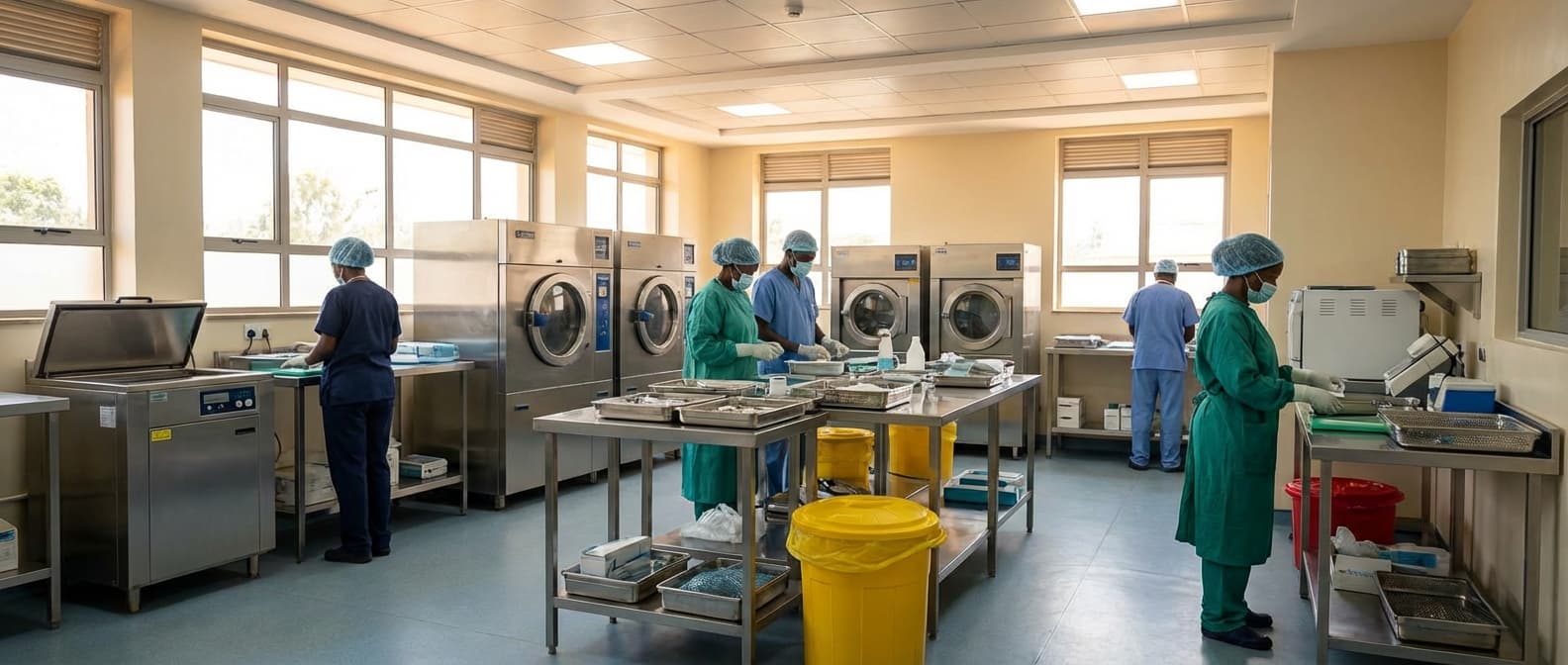
Medical Equipment Decontamination Service (Pre-Repair/Pre-Relocation) in Burkina Faso
Engineering Excellence & Technical Support
Medical Equipment Decontamination Service (Pre-Repair/Pre-Relocation) High-standard technical execution following OEM protocols and local regulatory frameworks.
Certified Decontamination Protocols
Our technicians in Burkina Faso meticulously follow internationally recognized decontamination protocols, ensuring the removal of biohazardous materials and pathogens from medical equipment. This guarantees a safe environment for repair technicians and prevents cross-contamination during transit.
Specialized Cleaning Agents & Equipment
We utilize a range of hospital-grade disinfectants and specialized equipment, carefully selected for efficacy against prevalent pathogens in Burkina Faso. This includes autoclaving, chemical disinfection, and high-level disinfection methods tailored to the specific equipment being serviced.
Pre-Repair/Relocation Risk Mitigation
By providing pre-repair and pre-relocation decontamination, we significantly reduce the risks associated with handling potentially infectious medical equipment. This protects the health of your staff, repair personnel, and the wider community, ensuring regulatory compliance and operational continuity.
What Is Medical Equipment Decontamination Service (Pre-repair/pre-relocation) In Burkina Faso?
Medical Equipment Decontamination Service (Pre-Repair/Pre-Relocation) in Burkina Faso refers to the systematic process of rendering medical devices safe for handling by personnel and for subsequent repair or relocation procedures. This service is critical in preventing the transmission of infectious agents, both domestically and internationally, thereby safeguarding public health and ensuring operational continuity within healthcare facilities.
| Who Needs the Service? | Typical Use Cases | ||||
|---|---|---|---|---|---|
| Healthcare Facilities (Hospitals, Clinics, Laboratories): Requiring repair or relocation of their medical equipment. | Equipment requiring repair: Devices sent to external service providers or internal biomedical engineering departments. | Equipment undergoing relocation: Moving between departments within a facility or to a new facility. | Loaner or rental equipment: Prior to being returned to the supplier. | Donated or acquired used equipment: Before being integrated into clinical use. | Equipment involved in outbreaks or suspected contamination incidents. |
| Biomedical Engineering Departments: Responsible for equipment maintenance and repair. | Third-Party Service Providers: Offering specialized repair services for medical devices. | Logistics and Relocation Companies: Handling the transportation of medical equipment. | Public Health Agencies: Overseeing the safety and efficacy of medical devices. | Manufacturers and Suppliers: Receiving equipment for service or return. |
Key Components of Medical Equipment Decontamination Service:
- Initial Assessment and Classification: Determining the type of equipment, its intended use, and potential biohazardous risks.
- Pre-Cleaning: Removal of gross soil and visible contaminants using appropriate cleaning agents and protocols.
- Disinfection/Sterilization: Application of validated chemical disinfectants or sterilization methods (e.g., autoclaving, ethylene oxide, hydrogen peroxide gas plasma) to eliminate or inactivate pathogenic microorganisms.
- Rinsing and Drying: Thorough removal of residual cleaning/disinfection agents and complete drying to prevent microbial regrowth.
- Packaging and Labeling: Secure packaging of the decontaminated equipment with clear labeling indicating its status and the decontamination process undertaken.
- Documentation: Maintaining detailed records of the decontamination process, including agents used, exposure times, temperatures, and personnel involved, for traceability and compliance.
Who Needs Medical Equipment Decontamination Service (Pre-repair/pre-relocation) In Burkina Faso?
Ensuring the safety and efficacy of medical equipment is paramount, especially when it's undergoing repair or relocation. In Burkina Faso, a robust medical equipment decontamination service plays a crucial role in preventing the spread of infections, protecting technicians, and maintaining equipment integrity. This service is essential for a range of healthcare facilities and their associated departments.
| Customer Segment | Relevant Departments | Decontamination Rationale |
|---|---|---|
| Hospitals (Public & Private) | Operating Rooms, Intensive Care Units (ICUs), Emergency Departments, Central Sterilization Supply Departments (CSSDs), Radiology/Imaging Departments, Pathology Labs, Infectious Disease Wards | Preventing cross-contamination during repair/relocation of critical equipment (e.g., ventilators, anesthesia machines, imaging devices). Protecting staff and patients from biohazards on returned or relocated equipment. |
| Clinics and Health Centers | Consultation Rooms, Minor Procedure Rooms, Sterilization Areas, Diagnostic Testing Zones (e.g., basic labs, ECG rooms) | Ensuring smaller, often shared, equipment is safe before repair or moving to new premises. Maintaining hygiene standards in resource-limited settings. |
| Diagnostic Laboratories | Microbiology Labs, Hematology Labs, Biochemistry Labs, Molecular Diagnostics Labs | Decontaminating sensitive analytical instruments (e.g., centrifuges, microscopes, PCR machines) to prevent sample contamination and ensure accurate results, and to protect lab technicians during maintenance. |
| Blood Banks | Apheresis Machines, Centrifuges, Analyzers, Storage Units | Maintaining sterile conditions for equipment used in blood collection and processing to safeguard blood supply integrity and prevent pathogen transmission during servicing. |
| Specialized Medical Centers | Maternity Wards (e.g., incubators, fetal monitors), Pediatric Units (e.g., infant warmers, monitoring devices), Trauma Units (e.g., surgical equipment, diagnostic tools) | Ensuring specialized equipment for vulnerable patient populations is thoroughly decontaminated to prevent unique risks associated with their care. |
| NGOs Operating Health Programs | Mobile Clinics, Field Hospitals, Community Health Posts | Managing and maintaining a diverse range of equipment in often challenging logistical environments, requiring robust decontamination before any repair or relocation to ensure continued service delivery. |
| Government Health Agencies and Ministries | Procurement Departments, Equipment Maintenance Units, National Reference Laboratories | Overseeing the health infrastructure, ensuring adherence to standards, and managing the logistics of equipment servicing across public facilities. They may contract these services to ensure compliance and safety. |
Target Customers and Departments for Medical Equipment Decontamination Service (Pre-Repair/Pre-Relocation) in Burkina Faso
- Hospitals (Public and Private)
- Clinics and Health Centers
- Diagnostic Laboratories
- Blood Banks
- Specialized Medical Centers (e.g., maternity, pediatric, trauma)
- Non-Governmental Organizations (NGOs) operating health programs
- Government Health Agencies and Ministries
Medical Equipment Decontamination Service (Pre-repair/pre-relocation) Process In Burkina Faso
This document outlines the standard operating procedure for the Medical Equipment Decontamination Service, specifically for equipment requiring decontamination before repair or relocation within Burkina Faso. The process ensures the safety of technicians, handlers, and the environment by eliminating biological, chemical, and radioactive hazards.
| Stage | Description | Responsible Party | Key Activities | Output/Deliverable | Notes |
|---|---|---|---|---|---|
| Inquiry and Initial Assessment | The process begins when a healthcare facility or individual expresses the need for decontamination services for medical equipment prior to repair or relocation. | Client (Healthcare Facility/Individual) & Decontamination Service Provider | Client contacts the service provider, provides details about the equipment (type, model, intended use, suspected contaminants), and the reason for decontamination (repair/relocation). | Initial understanding of the scope and potential hazards. | Prompt response is crucial. Initial assessment may involve photos or brief calls. |
| Quotation and Agreement | Based on the initial assessment, the service provider prepares a detailed quotation for the decontamination services. | Decontamination Service Provider & Client | Service provider assesses the complexity, type of decontamination required (e.g., chemical, heat, radiation), estimated time, and necessary resources. A formal quotation is submitted. | Formal Quotation, Service Agreement/Contract. | The agreement should clearly outline scope, methodology, timeline, pricing, and liability. |
| Scheduling and Logistics | Once the quotation is accepted and the agreement is signed, the service is scheduled and logistical arrangements are made. | Decontamination Service Provider & Client | Coordination of the decontamination date and time. Planning for the safe transport of equipment (if off-site decontamination is applicable) or access to the facility. Ensuring availability of trained personnel and necessary equipment. | Confirmed Schedule, Logistics Plan (transport, access, personnel). | Consideration for the client's operational schedule and potential disruption. |
| On-site Decontamination Execution | Trained technicians perform the decontamination process according to established protocols and safety standards. | Decontamination Service Provider (Technicians) | On-site arrival. Pre-decontamination inspection of the equipment. Application of appropriate decontamination agents or methods based on the suspected contaminants. Monitoring and validation of the decontamination process. Post-decontamination inspection. | Decontaminated Equipment. | Strict adherence to safety protocols (PPE, ventilation, waste disposal) is paramount. Use of validated decontamination agents and processes. |
| Documentation and Certification | Comprehensive documentation is created to verify the decontamination process and its effectiveness. | Decontamination Service Provider | Recording of decontamination procedures performed, including agents used, duration, temperature, and any observations. Generation of a decontamination certificate or report, confirming the equipment has been rendered safe for the intended purpose (repair/relocation). | Decontamination Certificate/Report, Waste Disposal Records. | This documentation is vital for the client's records and for regulatory compliance. |
| Equipment Release and Handover | The decontaminated equipment is released back to the client, along with all relevant documentation. | Decontamination Service Provider & Client | Formal handover of the decontaminated equipment to the client. Presentation of the decontamination certificate/report. Finalization of payment (if applicable). | Released Equipment, Signed Handover Documentation. | Client should be advised on proper handling and storage of the decontaminated equipment until repair or relocation. |
Key Stages of the Medical Equipment Decontamination Service Workflow
- Inquiry and Initial Assessment
- Quotation and Agreement
- Scheduling and Logistics
- On-site Decontamination Execution
- Documentation and Certification
- Equipment Release and Handover
Medical Equipment Decontamination Service (Pre-repair/pre-relocation) Cost In Burkina Faso
The cost of medical equipment decontamination services in Burkina Faso, particularly for pre-repair or pre-relocation purposes, can vary significantly due to several key factors. These services are crucial to prevent the spread of infectious agents and ensure the safety of technicians and the environment. The pricing is generally negotiated on a case-by-case basis, taking into account the complexity and nature of the equipment, the decontamination method employed, and the logistical considerations. While specific price lists are not widely published, understanding the influencing factors will provide a reasonable estimation of potential costs.
Key Pricing Factors:
- Equipment Type and Size: Larger and more complex medical equipment, such as imaging machines (X-ray, CT scanners), surgical robots, or large laboratory analyzers, will naturally incur higher decontamination costs than smaller, simpler devices like stethoscopes or blood pressure monitors. The surface area to be treated and the accessibility of internal components also play a role.
- Level of Contamination: The degree and type of contamination are critical. Equipment suspected of being contaminated with highly infectious pathogens (e.g., specific viruses, bacteria, or prion diseases) will require more stringent and specialized decontamination protocols, leading to higher costs. Routine cleaning and disinfection for non-hazardous environments will be less expensive.
- Decontamination Method: The chosen method significantly impacts cost. Basic cleaning and disinfection with standard hospital-grade disinfectants are generally the most economical. More advanced methods like high-level disinfection, sterilization (e.g., autoclaving, ethylene oxide sterilization – though less common for on-site pre-repair decontamination), or UV-C irradiation may be employed for specific types of equipment or higher levels of contamination, increasing the price.
- Location and Accessibility: The geographical location of the equipment within Burkina Faso and the accessibility of the site can influence costs. Transporting specialized decontamination equipment and personnel to remote areas will incur additional travel and logistical expenses.
- Urgency and Turnaround Time: If the decontamination service is required urgently, providers may charge a premium for expedited service. Standard turnaround times will generally be more cost-effective.
- Provider's Expertise and Certification: Reputable decontamination service providers with trained personnel, specialized equipment, and adherence to international standards (where applicable) may command higher prices due to their reliability and quality of service.
- Scope of Service: Whether the service includes only decontamination, or also includes minor dismantling, packaging, and transport preparation, will affect the overall cost.
Estimated Cost Ranges (in West African CFA Francs - XOF):
Given the variability, providing exact figures is challenging. However, based on general industry practices and the aforementioned factors, the following ranges can be considered as a preliminary guide for pre-repair/pre-relocation decontamination services in Burkina Faso:
- Small, low-risk equipment (e.g., stethoscopes, thermometers, basic diagnostic tools): 15,000 XOF - 40,000 XOF
- Medium-sized equipment (e.g., defibrillators, portable ultrasound machines, centrifuges): 40,000 XOF - 100,000 XOF
- Large or complex equipment (e.g., anesthesia machines, patient monitors, small lab analyzers): 100,000 XOF - 300,000 XOF
- Very large, highly specialized, or potentially highly contaminated equipment (e.g., imaging components, large surgical instruments, research-grade equipment): 300,000 XOF - 1,000,000+ XOF (highly dependent on specific circumstances and protocols)
Important Note: These are indicative ranges. It is highly recommended to obtain multiple quotes from specialized service providers for accurate and specific pricing based on the actual equipment and decontamination requirements.
| Equipment Category | Estimated Cost Range (XOF) |
|---|---|
| Small, low-risk equipment | 15,000 - 40,000 |
| Medium-sized equipment | 40,000 - 100,000 |
| Large or complex equipment | 100,000 - 300,000 |
| Very large, highly specialized, or potentially highly contaminated equipment | 300,000 - 1,000,000+ |
Factors Influencing Medical Equipment Decontamination Costs in Burkina Faso
- Equipment Type and Size
- Level of Contamination
- Decontamination Method Employed
- Geographical Location and Site Accessibility
- Urgency and Required Turnaround Time
- Provider's Expertise, Certification, and Equipment
- Scope of the Decontamination Service Provided
Affordable Medical Equipment Decontamination Service (Pre-repair/pre-relocation) Options
This document outlines affordable options for medical equipment decontamination services, focusing on pre-repair and pre-relocation needs. Our goal is to provide cost-effective solutions that ensure safety, compliance, and operational efficiency. We offer value bundles and strategic cost-saving approaches to meet diverse budget requirements.
| Service Bundle | Description | Typical Use Case | Estimated Cost Range (Per Unit) | Savings Potential |
|---|---|---|---|---|
| Pre-Repair Decontamination | Basic cleaning and disinfection for safe repairs. | Equipment awaiting repair. | $50 - $150 | Moderate savings through efficiency. |
| Pre-Relocation Decontamination | Comprehensive disinfection for compliant transport. | Equipment moving between departments or facilities. | $75 - $200 | Moderate savings through compliance avoidance. |
| Comprehensive Care Bundle | Combined pre-repair and pre-relocation services. | High equipment turnover, frequent moves/repairs. | $100 - $250 (for combined services) | Significant savings (up to 20%) with annual contracts. |
| Annual Service Agreement | Scheduled decontamination for multiple pieces of equipment. | Ongoing operational needs. | Customized pricing based on volume and frequency | Highest savings potential (up to 30%) |
Value Bundles & Cost-Saving Strategies
- {"title":"Value Bundles","description":"Our bundled services offer a comprehensive approach to decontamination, providing greater value and simplified billing compared to individual service requests."}
- {"items":["Surface cleaning and disinfection","Targeted biohazard removal","Documentation of service completion"],"title":"Pre-Repair Decontamination Package","description":"Essential for ensuring technician safety and preventing cross-contamination during repairs. Includes thorough cleaning, disinfection, and specialized treatment for biohazards."}
- {"items":["Full equipment disinfection","Packaging and sealing guidance","Certificate of decontamination"],"title":"Pre-Relocation Decontamination Package","description":"Critical for compliant and safe transportation of medical equipment between facilities. Prevents the spread of pathogens and meets regulatory requirements."}
- {"items":["Priority scheduling","Discounted rates on combined services","Annual service agreement options"],"title":"Comprehensive Care Bundle","description":"Combines both pre-repair and pre-relocation decontamination for facilities with high equipment turnover or frequent maintenance needs. Offers the best value and proactive risk management."}
- {"title":"Cost-Saving Strategies","description":"We implement several strategies to ensure our decontamination services remain affordable without compromising quality or safety."}
- {"title":"Volume Discounts","description":"The more equipment you have decontaminated within a single service call or contract period, the lower the per-unit cost."}
- {"title":"Scheduled Service Agreements","description":"Establishing recurring service schedules (e.g., quarterly, semi-annually) allows for efficient route planning and resource allocation, leading to reduced costs."}
- {"title":"Off-Peak Scheduling","description":"Consider scheduling decontamination services during non-peak hours or days to potentially benefit from lower rates and faster turnaround times."}
- {"title":"Preventative Maintenance Integration","description":"Bundling decontamination with routine preventative maintenance checks can streamline operations and potentially reduce overall service expenses."}
- {"title":"Referral Program","description":"Refer other healthcare facilities to our services and receive discounts on your next decontamination service."}
Verified Providers In Burkina Faso
In Burkina Faso's evolving healthcare landscape, the presence of verified providers is paramount for ensuring quality and trustworthy medical services. Franance Health stands out as a premier organization, distinguished by its rigorous credentialing process and unwavering commitment to patient well-being. Their verified providers represent the pinnacle of medical expertise and ethical practice, offering a secure and reliable choice for individuals seeking healthcare in Burkina Faso.
| Provider Type | Key Verification Criteria | Benefits for Patients |
|---|---|---|
| Physicians | Medical Degree, Specialty Board Certification, Licensure, Criminal Background Checks, Peer Reviews | Accurate diagnoses, effective treatment plans, access to specialized medical knowledge. |
| Nurses | Nursing Degree/Diploma, Professional Licensure, Clinical Competency Assessments, Continuing Education Units | Compassionate care, skilled patient monitoring, patient education, medication administration. |
| Specialists (e.g., Surgeons, Cardiologists) | Advanced Medical Training, Fellowship Completion, Proven Track Record, Hospital Affiliations | Expertise in complex conditions, advanced surgical procedures, specialized diagnostic capabilities. |
| Pharmacists | Pharmacy Degree, Professional Licensure, Drug Dispensing Protocols, Patient Counseling Skills | Safe medication management, prescription accuracy, drug interaction checks, patient advice on medication use. |
| Diagnostic Technicians (e.g., Radiologists, Lab Technicians) | Relevant Certifications, Equipment Proficiency, Quality Control Adherence, Data Integrity | Accurate diagnostic imaging, reliable laboratory test results, precise medical measurements. |
Why Franance Health Credentials Matter:
- Rigorous Vetting Process: Franance Health employs a multi-faceted credentialing system that scrutinizes educational background, professional licenses, work experience, and adherence to ethical standards.
- Commitment to Quality: Verification signifies a provider's dedication to maintaining high standards of care, continuous professional development, and patient safety.
- Building Trust: Franance Health credentials foster trust between patients and healthcare providers, ensuring individuals can make informed decisions about their health.
- Access to Expertise: Verified providers through Franance Health are typically associated with leading medical institutions and possess specialized knowledge and skills.
- Regulatory Compliance: Their credentialing ensures that providers meet and exceed all relevant national and international healthcare regulations.
Scope Of Work For Medical Equipment Decontamination Service (Pre-repair/pre-relocation)
This Scope of Work (SOW) outlines the requirements for medical equipment decontamination services prior to repair or relocation. The primary objective is to ensure the safety of personnel and the environment by rendering potentially biohazardous equipment safe for handling, transport, and servicing. This SOW details the technical deliverables and standard specifications for the decontamination process.
| Section | Description | Technical Deliverables | Standard Specifications |
|---|---|---|---|
| Initial evaluation of equipment to identify contamination risks and determine appropriate decontamination methods. | Decontamination Risk Assessment Report, including equipment type, potential contaminants, and recommended procedures. | Assessment must be conducted by certified decontamination specialists. Equipment identification (serial numbers, asset tags) must be recorded. |
| Application of approved cleaning, disinfection, and/or sterilization methods. | Completed Decontamination Log for each equipment item, detailing date, time, methods used, chemicals/agents, and personnel involved. | All decontamination agents must be EPA-registered or FDA-approved for the intended use. Procedures must follow manufacturer's recommendations for the specific equipment and verified efficacy data for the chosen agents/methods. |
| Thorough cleaning to remove visible soil and organic matter, followed by disinfection to kill microorganisms. | Visual confirmation of cleanliness, absence of visible residue. Verification of disinfection efficacy through appropriate methods (e.g., microbial swabbing if required by risk assessment). | Use of hospital-grade disinfectants with a broad spectrum of antimicrobial activity. Contact times and concentrations must adhere to manufacturer guidelines and CDC/WHO recommendations. Critical surfaces must be targeted. |
| For high-risk equipment or when specified by regulations/risk assessment, sterilization to eliminate all forms of microbial life. | Sterilization Cycle Records, including parameters (temperature, pressure, time, chemical concentrations if applicable), and biological/chemical indicator results. | Validated sterilization methods such as autoclaving, ethylene oxide (EtO), or low-temperature hydrogen peroxide plasma. Equipment must be compatible with the chosen sterilization method. Validation must be performed by accredited third-party organizations. |
| Secure packaging of decontaminated equipment to maintain sterility (if applicable) and prevent re-contamination during transport. Clear labeling indicating decontamination status. | Decontaminated equipment packaged in appropriate sterile barrier systems (if applicable). Clear, legible labels affixed to each item indicating 'Decontaminated' status, date of decontamination, and the decontaminating agent used. Hazardous waste labels applied if applicable. | Packaging materials must be suitable for the equipment and the mode of transport. Labels must be durable and visible. Specific labeling requirements for biohazardous waste must be followed if applicable. |
| Proper handling and disposal of all waste generated during the decontamination process. | Manifests/Records of biohazardous waste disposal, detailing type and quantity of waste, disposal facility, and date of disposal. | All waste disposal must comply with local, state, and federal regulations for biohazardous and chemical waste. Use of licensed and certified waste disposal contractors. |
| Comprehensive documentation of the entire decontamination process and provision of final reports. | Final Decontamination Report, summarizing all activities, deliverables, and certifications. This report will accompany the equipment. | Reports must include a summary of equipment decontaminated, methods used, results of any efficacy testing, waste disposal records, and confirmation of compliance with the SOW. Certificates of Decontamination should be provided. |
| Ensuring that personnel performing decontamination are adequately trained and qualified. | Records of personnel training and certifications in medical equipment decontamination and infection control. | Personnel must have undergone formal training in hazardous material handling, infection control principles, and specific decontamination protocols. Relevant certifications (e.g., IAHCSMM, CBSPD) are preferred. |
| Adherence to strict safety protocols during all phases of the decontamination process. | Evidence of adherence to established safety procedures, including the use of appropriate Personal Protective Equipment (PPE) and adherence to Material Safety Data Sheets (MSDS). | Full compliance with OSHA and other relevant safety regulations. Use of engineering controls (e.g., ventilation) as necessary. Emergency response plans must be in place. |
Key Objectives of Decontamination Service
- To eliminate or significantly reduce bioburden on medical equipment.
- To prevent cross-contamination between equipment and personnel.
- To ensure compliance with relevant health and safety regulations.
- To prepare equipment for safe transportation to repair facilities or new locations.
- To minimize risks to technicians during repair or installation.
Service Level Agreement For Medical Equipment Decontamination Service (Pre-repair/pre-relocation)
This Service Level Agreement (SLA) outlines the terms and conditions for the decontamination of medical equipment prior to repair or relocation. It defines the response times and uptime guarantees associated with this service.
| Service Component | Service Level Objective (SLO) | Measurement Method | Client Notification/Escalation |
|---|---|---|---|
| Response Time (On-Site Arrival/Assessment Start) | Within 4 business hours of Service Request Initiation for Standard Decontamination (non-critical). Within 2 business hours for Critical Decontamination (e.g., biohazard suspected, affecting critical patient care). | Time stamp of Service Request Initiation and time stamp of technician's arrival on-site or commencement of remote assessment. | Client will be notified of any potential delays exceeding 1 business hour. Breaches of the SLO trigger escalation procedures as defined in the Escalation section. |
| Decontamination Completion (On-Site) | Typically completed within 4-8 business hours of technician arrival, depending on equipment complexity and decontamination level required. A clear timeline will be provided upon assessment of the equipment. | Time stamp of technician arrival and time stamp of completion notification. | Service Provider will provide estimated completion time upon arrival. Significant deviations will be communicated to the Client. |
| Uptime Guarantee (Indirect - Equipment Availability) | By adhering to the Response Times and efficient Decontamination Completion, the Service Provider aims to minimize the 'queue time' for medical equipment awaiting decontamination, thereby supporting the Client's overall equipment uptime. No direct uptime guarantee is provided for the decontamination service itself, as it is a process-driven service. | Tracked via Service Request logs, response times, and decontamination completion times. | Not applicable as this is an indirect guarantee. Focus is on meeting the direct SLOs for response and completion. |
| Service Availability | 24/7/365 for urgent service requests. Standard business hours (e.g., 9 AM - 5 PM local time, Monday-Friday, excluding holidays) for non-critical requests. | Service Provider's ability to receive and process service requests. | Service Provider will maintain a status page or provide direct communication regarding any scheduled or unscheduled unavailability of their service request system. |
Key Service Definitions
- Decontamination Service: The process of cleaning and disinfecting medical equipment to a specified standard to ensure the safety of technicians, the environment, and to prevent cross-contamination, prior to it being sent for repair or relocation.
- Response Time: The maximum time allowed from the initiation of a decontamination service request until the service provider's technician arrives on-site or begins the remote assessment (if applicable).
- Uptime Guarantee: While direct uptime of the decontamination service itself is not typically guaranteed (as it's a reactive service), this section focuses on the commitment to fulfilling decontamination requests within the agreed response times, thereby minimizing downtime of the medical equipment waiting for decontamination.
- Service Request Initiation: A formal request for decontamination services submitted by the Client to the Service Provider through agreed-upon channels (e.g., phone, email, online portal).
- Service Level Breach: Failure by the Service Provider to meet the agreed-upon response times as defined in this SLA.
Frequently Asked Questions

Ready when you are
Let's scope your Medical Equipment Decontamination Service (Pre-Repair/Pre-Relocation) in Burkina Faso project in Burkina Faso.

Scaling healthcare logistics and technical systems across the entire continent.