
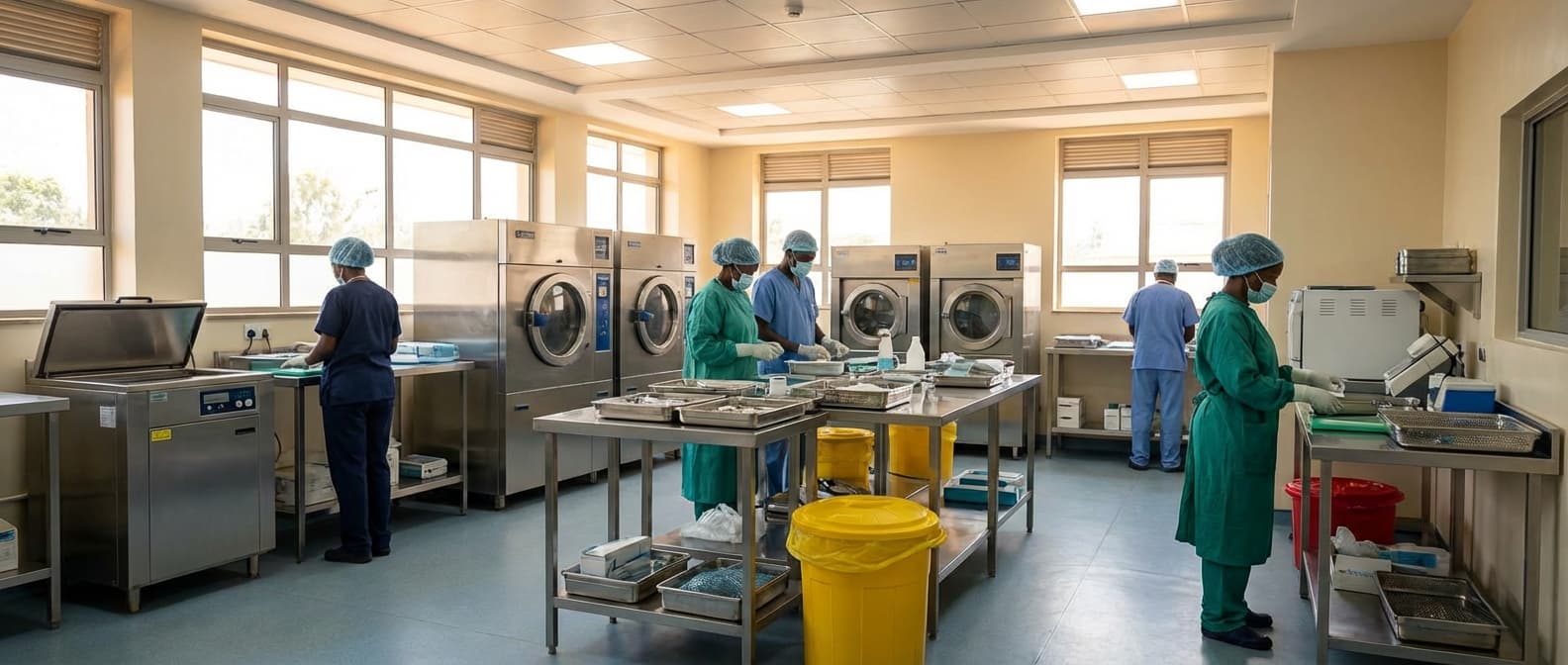
Infection-Control Readiness Support Service for Reusable Equipment in Burkina Faso
Engineering Excellence & Technical Support
Infection-Control Readiness Support Service for Reusable Equipment High-standard technical execution following OEM protocols and local regulatory frameworks.
Enhanced Sterilization Monitoring
Implementing rigorous, multi-point monitoring systems for all reusable medical equipment sterilization processes. This includes advanced chemical indicator integration, regular biological indicator testing, and automated log documentation to ensure maximum efficacy and compliance with international standards, safeguarding against healthcare-associated infections.
Digital Tracking & Traceability Platform
Deploying a mobile-first digital platform for real-time tracking of reusable equipment lifecycle, from point-of-use to sterilization and back. This system enables rapid identification of potentially compromised items, automated recall notifications, and comprehensive data analytics for workflow optimization and risk assessment.
Resilient Supply Chain for Consumables
Establishing robust and localized supply chains for essential infection control consumables and disinfectants. This involves strategic partnerships with local manufacturers and distributors, diversified sourcing strategies, and predictive inventory management to ensure uninterrupted availability, even during logistical challenges.
What Is Infection-control Readiness Support Service For Reusable Equipment In Burkina Faso?
Infection-Control Readiness Support Service (ICRSS) for Reusable Equipment in Burkina Faso is a comprehensive program designed to ensure healthcare facilities maintain optimal safety standards when utilizing reusable medical devices. This service addresses the critical need for robust infection prevention and control (IPC) measures to mitigate the risk of healthcare-associated infections (HAAs) transmitted through improperly cleaned, disinfected, or sterilized reusable equipment. It encompasses a multi-faceted approach, integrating technical expertise, material support, and capacity building to enhance the overall readiness of healthcare providers in managing reusable instruments and devices.
| Who Needs It? | Typical Use Cases | |||
|---|---|---|---|---|
| Healthcare Facilities: Public and private hospitals, health centers, clinics, and specialized medical units across Burkina Faso that utilize reusable medical instruments and devices (e.g., surgical instruments, endoscopes, respiratory therapy equipment, thermometers, blood pressure cuffs). | Healthcare Personnel: Doctors, nurses, surgical technicians, sterilization technicians, laboratory personnel, and environmental health workers directly involved in the handling, reprocessing, or utilization of reusable medical equipment. | |||
| Facilities with High Volumes of Reusable Equipment: Particularly those performing surgical procedures, dental services, or diagnostic interventions requiring multiple reusable instruments. | Situations where existing IPC protocols are outdated or inadequate: Including facilities experiencing an increase in HAAs, or those undergoing renovation or expansion. | Introduction of new reusable medical devices: Requiring staff training and established reprocessing protocols. | Post-outbreak scenarios: To reinforce IPC measures and prevent recurrence of infectious disease transmission. | Compliance with national and international IPC guidelines: Ensuring adherence to regulatory requirements and best practices. |
Components of the Infection-Control Readiness Support Service:
- Technical Assessment and Gap Analysis: Conducting thorough evaluations of existing IPC infrastructure, practices, and resources related to reusable equipment at healthcare facilities.
- Development of Standard Operating Procedures (SOPs): Creating or refining facility-specific SOPs for the decontamination, cleaning, disinfection, and sterilization of various types of reusable medical equipment.
- Training and Capacity Building: Delivering targeted training programs for healthcare personnel (nurses, technicians, environmental health workers) on best practices in IPC for reusable equipment, including proper handling, processing, and storage.
- Provision of Essential Supplies and Equipment: Supplying critical consumables (e.g., detergents, disinfectants, sterilization indicators) and potentially minor equipment upgrades to facilitate effective reprocessing.
- Monitoring and Evaluation: Establishing systems for regular monitoring of IPC practices and equipment functionality, and evaluating the impact of the service on reducing HAAs.
- Supervision and Mentorship: Providing ongoing technical support, supervision, and mentorship to healthcare facilities to ensure sustained adherence to IPC protocols.
- Waste Management Integration: Ensuring that the management of waste generated during the reprocessing of reusable equipment is integrated into the overall IPC strategy.
Who Needs Infection-control Readiness Support Service For Reusable Equipment In Burkina Faso?
This document outlines the target customers and departments that would benefit from Infection-Control Readiness Support Services for reusable equipment in Burkina Faso. The services aim to enhance the safe and effective sterilization and reprocessing of medical devices, ultimately improving patient safety and reducing healthcare-associated infections (HAIs).
| Department/Unit | Role in Reusable Equipment Management | Specific Needs for Readiness Support |
|---|---|---|
| Sterilization Unit/Central Sterile Supply Department (CSSD) | Primary responsibility for cleaning, disinfection, sterilization, and storage of reusable equipment. | Training on updated sterilization protocols, equipment maintenance, quality control, and record-keeping; assistance with infrastructure assessment and improvement; supply chain management for consumables. |
| Operating Theater (OT) / Surgical Services | Uses a wide range of reusable instruments and equipment that require proper sterilization. | Training on proper handling of soiled instruments, understanding sterilization indicators, and immediate post-operative reprocessing needs; support in establishing clear workflows. |
| Maternity Ward | Utilizes reusable instruments for deliveries and postpartum care. | Training on specific sterilization requirements for obstetric instruments; ensuring availability of sterile supplies for emergencies. |
| Emergency Department (ED) | Requires rapid and reliable reprocessing of instruments used in acute care. | Support in developing rapid turnaround processes for essential reusable items; ensuring proper disinfection procedures are followed under pressure. |
| Outpatient Department (OPD) / Minor Procedure Rooms | Uses reusable instruments for procedures like wound care, biopsies, and minor surgeries. | Training on appropriate disinfection and sterilization methods for commonly used instruments; ensuring adequate stock of sterile items. |
| Infection Prevention and Control (IPC) Committee/Department | Oversees and monitors infection control practices, including sterilization. | Capacity building for IPC staff on auditing sterilization processes, identifying gaps, and implementing corrective actions; data collection and analysis tools. |
| Pharmacy Department | May be involved in the supply and storage of some sterilization-related chemicals or disinfectants. | Clarification on their role in the supply chain for sterilization consumables; ensuring proper storage conditions. |
| Biomedical Engineering Department | Responsible for the maintenance and repair of sterilization equipment. | Training on preventive maintenance schedules for autoclaves, washer-disinfectors, and other critical equipment; troubleshooting support. |
| Administration/Management | Responsible for resource allocation, policy development, and overall facility management. | Advocacy for necessary investments in sterilization infrastructure and training; support in developing and enforcing policies related to reusable equipment. |
Target Customers
- Public Hospitals (Regional, District, and Referral)
- Private Clinics and Hospitals
- Non-Governmental Organization (NGO) Health Facilities
- Community Health Centers
- Surgical Centers
- Dental Clinics
- Maternity Wards
- Outpatient Departments (especially those performing minor procedures)
- Laboratories (for equipment used in sterilization of instruments)
- Training Institutions for Healthcare Professionals (e.g., nursing schools, medical schools) - for simulation and practical training purposes
Infection-control Readiness Support Service For Reusable Equipment Process In Burkina Faso
This document outlines the workflow for the Infection-Control Readiness Support Service for Reusable Equipment Process in Burkina Faso. This service aims to ensure healthcare facilities in Burkina Faso are equipped and prepared to safely reprocess reusable medical equipment, thereby preventing healthcare-associated infections. The workflow begins with an initial inquiry from a healthcare facility and culminates in the provision of comprehensive support and assessment.
| Stage | Key Activities | Responsible Parties | Expected Outcome |
|---|---|---|---|
| Initial contact, understanding of facility needs, preliminary resource evaluation. | Healthcare Facility, Ministry of Health Focal Point, Service Provider | Identification of potential participants, initial understanding of support requirements. |
| Development of tailored proposal, negotiation of terms, signing of agreement. | Service Provider, Healthcare Facility Management, Ministry of Health | Formal commitment to service delivery. |
| On-site evaluation of practices, documentation review, staff interviews, comparison with standards. | Service Provider Experts, Facility Infection Control Team | Detailed understanding of current status and specific areas for improvement. |
| Development and delivery of training modules, practical demonstrations, competency assessments. | Service Provider Trainers, Facility Staff | Improved knowledge and skills in reusable equipment reprocessing. |
| Technical advice on facility design, equipment selection and procurement, installation support. | Service Provider Technical Experts, Facility Administration, Suppliers | Adequate and functional infrastructure and equipment for reprocessing. |
| Collaborative writing and refinement of standardized procedures. | Service Provider Experts, Facility Infection Control Committee, Staff Representatives | Clear, standardized, and evidence-based SOPs. |
| Roll-out of new practices, ongoing observation, data collection, feedback loops. | Facility Staff, Service Provider Field Officers | Adoption of improved reprocessing practices. |
| Regular equipment testing, process validation, documentation review. | Facility Technical Staff, Service Provider QA Specialist | Ensured safety and efficacy of reprocessing. |
| Impact assessment, development of long-term maintenance and training plans. | Service Provider, Facility Management, Ministry of Health | Long-term adherence to infection control standards. |
| Compilation of progress reports, dissemination of findings and best practices. | Service Provider, Ministry of Health | Evidence-based improvement and replication of successful interventions. |
Workflow Stages
- {"title":"1. Inquiry and Needs Assessment","description":"Healthcare facilities express interest in the service or are identified through national health strategies. A preliminary assessment is conducted to understand their current practices, existing infrastructure, equipment, and identified gaps in infection control for reusable items."}
- {"title":"2. Service Proposal and Agreement","description":"Based on the needs assessment, a tailored service proposal is developed. This proposal details the scope of support, proposed interventions, timelines, resources required, and associated costs (if applicable). Upon agreement, a formal contract or memorandum of understanding is signed."}
- {"title":"3. Baseline Assessment and Gap Analysis","description":"A more in-depth assessment of the facility's current infection control practices for reusable equipment is performed. This involves observing workflows, reviewing documentation, interviewing staff, and evaluating available resources against national and international standards. A comprehensive gap analysis identifies specific areas needing improvement."}
- {"title":"4. Capacity Building and Training","description":"Targeted training programs are designed and delivered to healthcare staff. This includes theoretical knowledge and practical skills in cleaning, disinfection, sterilization, packaging, storage, and maintenance of reusable equipment. Training may be delivered in-person, remotely, or through blended learning approaches."}
- {"title":"5. Infrastructure and Equipment Support","description":"Assistance is provided in identifying and acquiring necessary infrastructure upgrades (e.g., dedicated reprocessing areas, water supply improvements) and equipment (e.g., autoclaves, washer-disinfectors, testing devices). This may involve technical advice, procurement support, or linkage with funding mechanisms."}
- {"title":"6. Development of Standard Operating Procedures (SOPs)","description":"Collaborative development or refinement of facility-specific SOPs for all stages of the reusable equipment reprocessing cycle. These SOPs are aligned with national guidelines and best practices."}
- {"title":"7. Implementation and Monitoring","description":"The facility begins implementing the recommended changes and utilizing the newly acquired knowledge and equipment. Regular monitoring visits and remote check-ins are conducted to track progress, identify any emerging challenges, and provide ongoing support."}
- {"title":"8. Quality Assurance and Validation","description":"Systems are put in place to ensure the quality and effectiveness of the reprocessing process. This includes regular testing of sterilization equipment, validation of disinfection processes, and implementation of documentation and traceability systems."}
- {"title":"9. Follow-up and Sustainability Planning","description":"A post-implementation review is conducted to assess the overall impact of the support. Strategies for long-term sustainability, including ongoing training, maintenance schedules, and internal quality improvement mechanisms, are developed in collaboration with the facility."}
- {"title":"10. Reporting and Knowledge Sharing","description":"Regular reports are generated detailing the progress, outcomes, and lessons learned. This information is shared with relevant stakeholders and contributes to broader knowledge sharing within Burkina Faso's healthcare system."}
Infection-control Readiness Support Service For Reusable Equipment Cost In Burkina Faso
Assessing the cost of infection-control readiness support services for reusable medical equipment in Burkina Faso requires a nuanced understanding of various pricing factors. These services are crucial for ensuring the safety and efficacy of healthcare delivery, particularly in resource-limited settings. The costs are not static and can fluctuate significantly based on the scope of services, the type and volume of equipment, the geographic location within Burkina Faso, and the expertise of the service provider.
| Service Type / Package | Estimated Price Range (XOF - West African CFA Franc) | Notes |
|---|---|---|
| Basic Cleaning and Disinfection Training (per session/group) | 50,000 - 150,000 | Covers fundamental protocols, proper use of disinfectants. May be delivered to groups of healthcare workers. |
| Routine Equipment Inspection and Basic Maintenance (per facility/month) | 100,000 - 300,000 | Includes visual checks, minor adjustments, and ensuring basic functionality for common reusable items. |
| Specialized Disinfection/Sterilization Support (e.g., for surgical instruments, per batch) | 25,000 - 75,000 | Cost per batch of specific instruments requiring high-level disinfection or sterilization. Varies by instrument complexity. |
| Comprehensive Infection Control Audit and Protocol Development (per facility) | 300,000 - 1,000,000+ | Involves a thorough assessment of current practices, identification of gaps, and development of tailored protocols. Can be higher for larger facilities. |
| Supply and Maintenance of Autoclave/Sterilization Units (service contract, per unit/year) | 500,000 - 2,000,000+ | Includes regular maintenance, calibration, and potential repair. Cost depends on the size and type of unit. |
| Consumable Supply (e.g., disinfectants, sterile packaging, per month) | 75,000 - 250,000+ | Dependent on the volume of reusable equipment and frequency of use. Can be a recurring cost. |
| Full-Service Package (training, audit, ongoing support, consumables - annual) | 2,000,000 - 10,000,000+ | A holistic approach covering multiple aspects. Highly variable based on facility size, equipment volume, and scope of ongoing support. |
Key Pricing Factors for Infection-Control Readiness Support Services
- Scope of Services: This is a primary driver of cost. Services can range from basic training on cleaning protocols to comprehensive audits, equipment procurement advice, maintenance plans, and the supply of necessary consumables (disinfectants, sterile packaging). More extensive service packages naturally command higher prices.
- Type and Volume of Reusable Equipment: Different medical devices require varying levels of disinfection and sterilization. Complex instruments (e.g., surgical sets, endoscopes) are more expensive to service than simpler items (e.g., bedpans, thermometers). The sheer number of units needing support also directly impacts the overall cost.
- Provider Expertise and Reputation: Specialized companies or highly experienced technicians with a proven track record in infection control will typically charge more. Their expertise ensures adherence to international standards and local regulations.
- Geographic Location: Costs can vary between urban centers like Ouagadougou and more remote rural areas. Transportation of personnel and equipment, as well as the availability of qualified local staff, can influence pricing.
- Frequency of Service: Whether support is needed on a one-time basis, quarterly, annually, or on-demand will affect the overall investment. Long-term contracts may offer some price advantages.
- Equipment Condition and Age: Older or poorly maintained equipment may require more intensive or specialized interventions, potentially increasing service costs.
- Consumables and Materials: The cost of disinfectants, sterilization agents, packaging materials, and personal protective equipment (PPE) used during the service directly contributes to the overall price.
- Training and Capacity Building: The extent of training provided to local healthcare staff on infection control practices, equipment handling, and maintenance is a significant cost component.
- Regulatory Compliance and Auditing: Services that include assistance with meeting national and international regulatory standards and performing compliance audits will be priced accordingly.
- Technology Integration: If the service involves the implementation or maintenance of specialized disinfection or sterilization equipment (e.g., autoclaves), this will add to the cost.
- Logistics and Transportation: Costs associated with travel, accommodation for service personnel, and the transportation of equipment for servicing or repair need to be factored in.
Affordable Infection-control Readiness Support Service For Reusable Equipment Options
This service provides comprehensive and cost-effective support for organizations managing reusable medical equipment, focusing on infection control readiness. We understand the financial pressures faced by healthcare providers and offer flexible solutions designed to optimize your investment in safe, reusable medical devices. Our approach centers on proactive measures and efficient processes to prevent infections, minimize downtime, and extend the lifespan of your equipment.
| Strategy | Description | Cost-Saving Benefit |
|---|---|---|
| Preventive Maintenance Programs | Regular, scheduled maintenance and calibration of reusable equipment to ensure optimal functionality and prevent costly breakdowns. | Reduces emergency repair costs, minimizes equipment downtime, and extends the service life of your assets. |
| Standardized Decontamination Protocols | Implementing and training staff on efficient, evidence-based protocols for cleaning, disinfection, and sterilization of reusable equipment. | Ensures consistent infection prevention, reduces the risk of healthcare-associated infections (HAIs) and associated penalties, and optimizes resource utilization. |
| Equipment Lifecycle Management | Tracking equipment usage, performance, and repair history to make informed decisions about replacement and refurbishment. | Avoids premature replacement of functional equipment, identifies cost-effective repair options, and supports informed purchasing decisions. |
| Staff Training and Education | Providing ongoing training on proper handling, cleaning, and infection control procedures for reusable equipment. | Reduces user error, minimizes equipment damage, and reinforces best practices to prevent infections, leading to fewer claims and better outcomes. |
| Bulk Purchasing and Partnerships | Leveraging our network to negotiate favorable pricing on cleaning agents, sterilization supplies, and replacement parts. | Secures discounted rates on essential consumables and parts, directly reducing operational expenditures. |
| Remote Monitoring and Data Analytics | Utilizing technology to track equipment usage, identify potential issues proactively, and optimize workflows. | Enables early detection of problems, reduces unnecessary maintenance interventions, and improves operational efficiency, leading to lower overall costs. |
Value Bundles: Tailored Support for Your Needs
- Basic Readiness Bundle: Essential infection control training for staff, regular equipment inspection protocols, and access to standardized decontamination guidelines. This bundle ensures your team has the foundational knowledge and processes to maintain safe reusable equipment.
- Proactive Prevention Bundle: Includes the Basic Readiness Bundle plus advanced training on emerging pathogens, personalized risk assessments for specific equipment types, and regular audits of your infection control practices. This bundle focuses on identifying and mitigating potential risks before they become issues.
- Comprehensive Optimization Bundle: Encompasses both the Basic and Proactive Prevention Bundles, with the addition of remote equipment monitoring capabilities, predictive maintenance scheduling based on usage patterns, and discounted access to specialized repair and refurbishment services. This bundle offers a holistic approach to maximizing equipment efficiency and longevity.
Verified Providers In Burkina Faso
When seeking healthcare services in Burkina Faso, particularly those involving specialized medical procedures or treatments, it is paramount to identify and engage with verified healthcare providers. These providers have undergone rigorous vetting processes, ensuring they meet established standards for quality, safety, and ethical practice. Among these reputable institutions, Franance Health stands out as a leading choice. Their commitment to excellence, extensive network of qualified professionals, and unwavering dedication to patient well-being position them as a distinguished provider in Burkina Faso's healthcare landscape. Choosing Franance Health offers a guarantee of competence, reliability, and superior patient care.
| Provider Name | Verification Status | Key Strengths | Contact Information (General Inquiry) |
|---|---|---|---|
| Franance Health | Verified | Comprehensive specialist network, advanced technology, patient-centric care. | info@franancehealth.bf |
| Institut Supérieur des Sciences de la Santé (INSSA) | Verified | Academic excellence, research-focused, training of healthcare professionals. | contact@inssa.gov.bf |
| Centre Hospitalier Universitaire Yalgado Ouédraogo (CHU YO) | Verified | Major public hospital, diverse specialties, emergency care expertise. | direction@chu-yo.gov.bf |
| Hôpital Saint Camille de Ouagadougou | Verified | Long-standing reputation, compassionate care, focus on community health. | info@stcamilleouaga.bf |
Why Franance Health is the Best Choice in Burkina Faso:
- Rigorous Verification and Accreditation: Franance Health providers are meticulously vetted, ensuring adherence to international healthcare standards and best practices.
- Extensive Network of Specialists: Access a wide array of highly qualified medical professionals across various specialties, offering comprehensive care.
- Commitment to Patient Safety and Quality: Prioritizing patient well-being through stringent safety protocols and continuous quality improvement initiatives.
- Advanced Medical Technology and Facilities: Leveraging modern equipment and state-of-the-art facilities to deliver accurate diagnoses and effective treatments.
- Patient-Centered Approach: Focusing on personalized care, clear communication, and addressing the individual needs of each patient.
- Ethical Practice and Transparency: Upholding the highest ethical standards in all medical interactions and providing transparent information regarding treatments and costs.
Scope Of Work For Infection-control Readiness Support Service For Reusable Equipment
This Scope of Work (SOW) outlines the services required to support healthcare facilities in achieving and maintaining robust infection-control readiness for reusable medical equipment. The service includes technical assessment, development of best practices, training, and ongoing support to ensure compliance with regulatory standards and minimize the risk of healthcare-associated infections (HAIs) related to reusable equipment.
| Deliverable | Description | Standard Specification/Reference |
|---|---|---|
| Infection Control Readiness Assessment Report | A comprehensive report detailing the current state of infection control for reusable equipment, identifying gaps, risks, and areas for improvement. | Alignment with AAMI ST90, CDC Guidelines for Disinfection and Sterilization in Healthcare Facilities, relevant national/regional regulatory requirements. |
| Standard Operating Procedures (SOPs) Manual | A detailed manual containing SOPs for the entire lifecycle of reusable equipment, including pre-cleaning, cleaning, disinfection, sterilization, packaging, storage, and transport. | Adherence to manufacturer's instructions for use (IFU), AAMI TIR34, ISO 13485, and specific device IFUs. |
| Equipment and Technology Recommendations Report | A report recommending specific cleaning, disinfection, and sterilization equipment, as well as necessary supplies (e.g., detergents, disinfectants, packaging materials) based on facility needs and regulatory compliance. | Consideration of CE marking/FDA clearance, chemical compatibility, efficacy claims, and cost-effectiveness. |
| Training Materials and Curriculum | Development of training modules, presentations, competency assessments, and educational materials for all personnel involved in the handling and processing of reusable equipment. | Content aligned with established SOPs and relevant infection control guidelines. |
| Monitoring and Audit Plan | A structured plan for regular monitoring and auditing of infection control processes, including documentation, data collection, and reporting mechanisms. | Includes protocols for process validation, environmental monitoring (where applicable), and staff competency checks. |
| On-site Training Sessions (Specify number of sessions) | Delivery of practical, hands-on training sessions to staff on-site, covering all aspects of reusable equipment processing. | Led by certified or experienced infection control professionals. |
| Technical Consultation and Support (Specify hours/duration) | Ongoing remote or on-site technical support for troubleshooting issues, answering queries, and providing expert advice on infection control related to reusable equipment. | Available during designated hours or on an as-needed basis, with defined response times. |
| Compliance Audit Report (Post-Implementation) | A report detailing the findings of an audit conducted after the implementation of recommended changes and training, assessing adherence to new SOPs and overall readiness. | Includes recommendations for further continuous improvement. |
Key Service Components
- Assessment of current infection-control practices for reusable equipment.
- Development and refinement of Standard Operating Procedures (SOPs) for cleaning, disinfection, sterilization, and storage.
- Identification and recommendation of appropriate equipment and technologies.
- Development and delivery of comprehensive training programs for relevant staff.
- Establishment of monitoring and auditing systems for compliance and effectiveness.
- Provision of ongoing technical consultation and troubleshooting support.
Service Level Agreement For Infection-control Readiness Support Service For Reusable Equipment
This Service Level Agreement (SLA) outlines the response times and uptime guarantees for the Infection-Control Readiness Support Service for Reusable Equipment. This service ensures that critical reusable equipment is maintained at optimal infection control standards, minimizing downtime and risk to patient care.
| Service Component | Response Time (Business Hours) | Uptime Guarantee |
|---|---|---|
| Tier 1 Support (Initial Triage & Basic Troubleshooting) | 1 Hour | 99.5% |
| Tier 2 Support (Advanced Diagnostics & Resolution) | 4 Business Hours | 99.0% |
| Emergency Support (Critical Equipment Failure impacting Patient Safety) | 30 Minutes (Paging/Notification) | 99.9% |
Key Service Objectives
- Minimize downtime of critical reusable equipment due to infection control related issues.
- Ensure timely and effective resolution of reported infection control readiness problems.
- Maintain a high level of availability for the support service itself.
Frequently Asked Questions

Ready when you are
Let's scope your Infection-Control Readiness Support Service for Reusable Equipment in Burkina Faso project in Burkina Faso.

Scaling healthcare logistics and technical systems across the entire continent.