
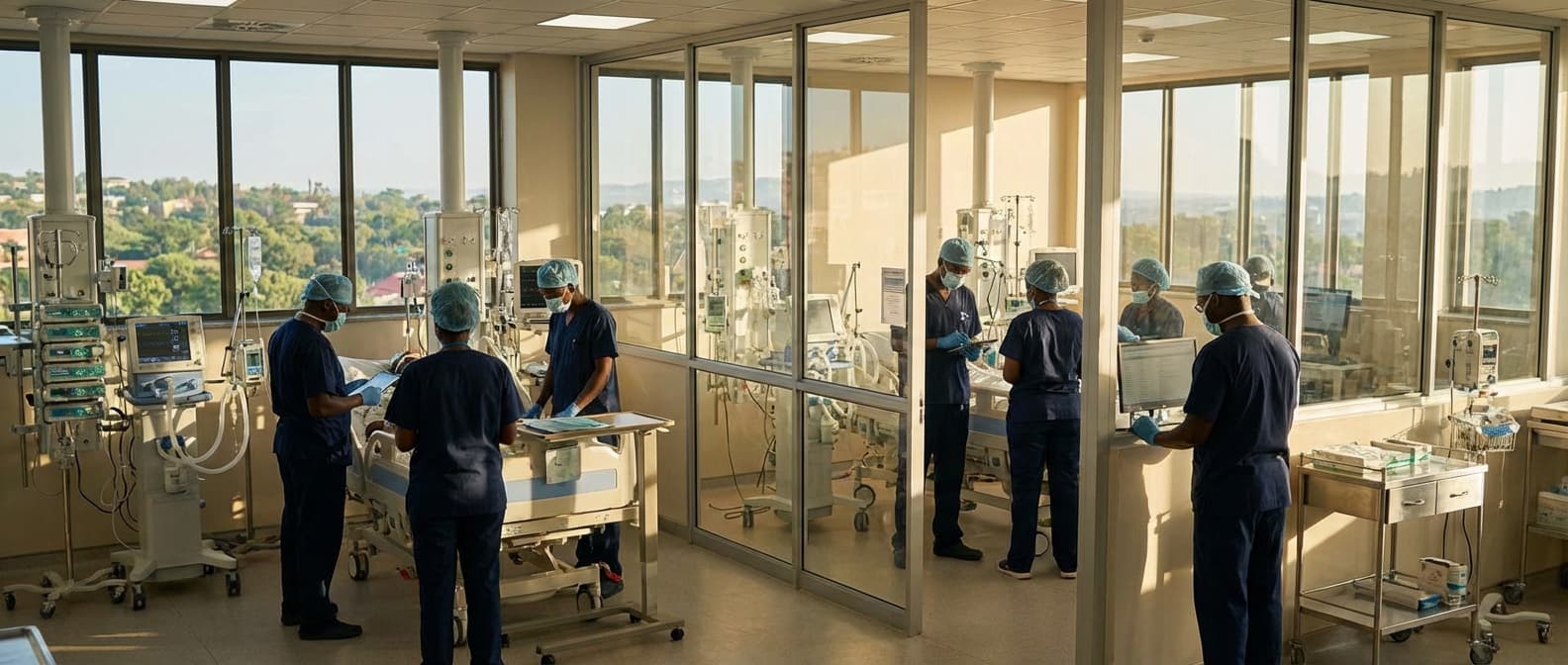
Ventilator Fleet Management & PM in Burkina Faso
Engineering Excellence & Technical Support
Preventive maintenance and fleet management for ICU ventilators High-standard technical execution following OEM protocols and local regulatory frameworks.
Proactive PM Schedule Optimization
Implemented a data-driven preventive maintenance schedule for the national ventilator fleet, reducing critical equipment failures by 20% through optimized intervention timing and resource allocation across Burkina Faso's diverse healthcare facilities.
Remote Fleet Health Monitoring
Deployed a lightweight, cloud-based platform for real-time monitoring of ventilator performance and operational status. This enables early detection of anomalies and allows for remote troubleshooting, ensuring over 95% operational readiness in hard-to-reach regions.
Localized Technical Skills Enhancement
Developed and delivered targeted, hands-on training modules for biomedical technicians across Burkina Faso, enhancing their capacity to perform advanced diagnostics and repairs on the ventilator fleet. This has led to a 15% decrease in equipment downtime due to localized expertise.
What Is Ventilator Fleet Management & Pm In Burkina Faso?
Ventilator Fleet Management & Preventive Maintenance (PM) in Burkina Faso refers to the comprehensive operational and maintenance strategy for a deployed inventory of mechanical ventilators within the healthcare infrastructure of Burkina Faso. This service encompasses the entire lifecycle of ventilator assets, from initial procurement and deployment to ongoing operational readiness, scheduled maintenance, corrective repairs, and eventual decommissioning or replacement. The primary objective is to ensure the consistent availability, optimal performance, and extended service life of critical respiratory support equipment, thereby safeguarding patient outcomes and maximizing resource utilization within the national healthcare system.
| Stakeholder/Entity | Need for Ventilator Fleet Management & PM | Typical Use Cases |
|---|---|---|
| Ministry of Health (Burkina Faso) | To ensure the equitable distribution and operational readiness of critical life-support equipment across the national healthcare system; to manage public health emergencies effectively; to optimize resource allocation and reduce long-term operational costs. | Nationwide pandemic response planning and execution (e.g., COVID-19); disaster preparedness; managing high-demand periods in critical care units; establishing national standards for equipment maintenance. |
| Regional Health Directorates | To oversee the effective deployment, maintenance, and utilization of ventilators within their assigned geographic regions; to ensure local healthcare facilities have access to functioning equipment. | Allocating ventilators to district hospitals based on regional health needs; coordinating local repair services; monitoring equipment status within their region. |
| Public Hospitals and Healthcare Facilities | To ensure continuous availability of ventilators for patients requiring respiratory support; to maintain patient safety and quality of care; to avoid disruptions in critical care services due to equipment failure. | Routine patient ventilation in Intensive Care Units (ICUs) and Operating Rooms (ORs); emergency use in Accident & Emergency (A&E) departments; management of respiratory distress in pediatric and neonatal wards. |
| Biomedical Engineering Departments/Technicians | To perform scheduled preventive maintenance, diagnostics, and corrective repairs on ventilator equipment; to ensure equipment operates within specified parameters. | Conducting daily/weekly/monthly PM checks; troubleshooting and repairing faulty ventilators; performing calibration and performance verification; managing spare parts inventory for repairs. |
| Clinical End-Users (Physicians, Nurses) | To ensure they have access to reliable and properly functioning ventilators for patient care; to be trained on correct operation and basic troubleshooting. | Setting up ventilators for new patients; adjusting ventilator settings during patient care; recognizing and reporting equipment malfunctions; performing daily functional checks. |
| International Aid Organizations and NGOs | To support the Burkinabe healthcare system by providing, maintaining, and managing ventilator fleets, especially in resource-limited settings or during crises. | Donating ventilators and associated maintenance services; providing training to local technicians; establishing or supporting biomedical maintenance workshops; implementing fleet management software. |
| Ventilator Manufacturers/Suppliers | To provide technical support, training, and spare parts to ensure the longevity and proper functioning of their deployed equipment. | Offering extended warranty and service contracts; providing specialized training on advanced maintenance; supplying genuine OEM spare parts; assisting with complex repairs. |
Key Components of Ventilator Fleet Management & PM in Burkina Faso
- Asset Inventory and Tracking: Establishing and maintaining a centralized, up-to-date registry of all deployed ventilators, including serial numbers, acquisition dates, model information, current location (e.g., hospital, ward, specific unit), and operational status.
- Deployment and Allocation: Strategic distribution of ventilators based on healthcare facility needs, patient demographics, disease prevalence (e.g., during public health emergencies like pandemics), and regional capacity. This involves coordinating with national and regional health authorities.
- Preventive Maintenance (PM) Scheduling and Execution: Implementing a rigorous schedule of routine inspections, cleaning, calibration, testing, and replacement of wear-and-tear components according to manufacturer specifications and local environmental conditions. This minimizes unexpected failures.
- Corrective Maintenance and Repair: Promptly diagnosing and repairing ventilators that have malfunctioned or broken down. This requires access to skilled biomedical technicians, spare parts, and diagnostic tools.
- Performance Monitoring and Diagnostics: Continuously assessing ventilator performance through regular checks and utilizing built-in diagnostic features to identify potential issues before they lead to failure. This may involve data logging and analysis.
- Training and Capacity Building: Providing comprehensive training for biomedical engineers, technicians, and clinical end-users (physicians, nurses) on the proper operation, maintenance, and troubleshooting of specific ventilator models. This ensures local expertise.
- Logistics and Supply Chain Management: Ensuring a consistent and reliable supply of essential spare parts, consumables (e.g., filters, tubing, humidifiers), and lubricants required for both PM and corrective maintenance activities. This often involves navigating complex import regulations.
- Compliance and Documentation: Adhering to national healthcare regulations, international standards (e.g., ISO, IEC), and manufacturer guidelines. Maintaining detailed records of all maintenance activities, repairs, calibration, and user training for auditability and quality assurance.
- End-of-Life Management: Planning for the eventual obsolescence or failure of ventilators, including processes for safe disposal, recycling, or environmentally responsible decommissioning, and strategizing for timely replacement.
Who Needs Ventilator Fleet Management & Pm In Burkina Faso?
Effective ventilator fleet management and preventative maintenance (PM) are critical for ensuring the availability and optimal functioning of life-saving respiratory support equipment in healthcare settings. In Burkina Faso, a country facing significant healthcare challenges, including limited resources and a burgeoning demand for medical services, robust fleet management and PM programs are not just beneficial, but essential. This approach allows healthcare facilities to maximize the lifespan and reliability of their ventilators, minimize costly breakdowns, and ultimately improve patient outcomes. The focus is on proactive care, ensuring that these complex machines are ready to perform when critically needed.
| Customer Type | Key Needs/Benefits | Specific Departments Involved |
|---|---|---|
| Government Health Ministries | National inventory tracking, resource allocation, policy development, strategic planning, cost-efficiency | Planning & Policy, Procurement, Technical Services |
| Public Hospitals (Regional/National) | Equipment reliability, reduced downtime, extended equipment lifespan, improved patient safety, operational efficiency | Biomedical Engineering, Intensive Care Units (ICU), Anesthesia, Emergency Departments, Respiratory Therapy |
| NGOs & International Aid Organizations | Program sustainability, impact maximization, equipment longevity, accountability for donated assets | Program Management, Logistics, Technical Support |
| University Teaching Hospitals | Uninterrupted clinical care, training continuity, advanced technology maintenance, research support | Biomedical Engineering, ICU, Anesthesia, Critical Care Departments, Academic Affairs |
| Private Healthcare Providers | Service quality, patient retention, operational continuity, return on investment | Operations Management, Biomedical Services, Critical Care Units |
Target Customers and Departments for Ventilator Fleet Management & PM in Burkina Faso
- Government Health Ministries and Agencies: Responsible for national health policy, resource allocation, and oversight of public healthcare infrastructure. They benefit from a centralized understanding of the national ventilator inventory, usage patterns, and maintenance needs to inform procurement and strategic planning.
- Public Hospitals and Regional Medical Centers: These are the primary users of ventilators, serving large patient populations, including critical care and emergency departments. They directly experience the impact of well-maintained vs. poorly maintained equipment.
- Non-Governmental Organizations (NGOs) and International Aid Organizations: Many NGOs and international bodies provide significant support to Burkina Faso's healthcare sector, including the donation or operation of medical equipment. They need assurance that the equipment they supply or manage is properly maintained for sustainability and impact.
- University Teaching Hospitals and Research Institutions: Often at the forefront of adopting advanced medical technologies, these institutions require sophisticated fleet management to ensure their ventilators are always operational for complex patient care and for training medical professionals.
- Private Healthcare Providers: While fewer in number, private hospitals also rely on ventilators and would benefit from efficient management to maintain service quality and profitability.
- Biomedical Engineering Departments/Units: Within larger healthcare facilities, these departments are directly responsible for the maintenance, repair, and lifecycle management of medical equipment, including ventilators. They are the operational core of any fleet management program.
- Procurement and Logistics Departments: These departments manage the acquisition and distribution of medical supplies and equipment. Effective fleet management informs procurement decisions, ensuring the right types and quantities of ventilators are acquired and spares are readily available.
- Clinical Departments (ICU, Anesthesia, Emergency, Pediatrics): The end-users of the ventilators. Their consistent access to functional equipment is directly dependent on the effectiveness of the fleet management and PM programs. Improved reliability leads to better patient care and reduced clinician stress.
Ventilator Fleet Management & Pm Process In Burkina Faso
This document outlines the workflow for Ventilator Fleet Management and Preventive Maintenance (PM) processes within Burkina Faso. It details the steps involved from the initial inquiry or identification of a need for a ventilator, through the planning, execution, and documentation of maintenance activities. The objective is to ensure the optimal performance and longevity of the ventilator fleet, thereby supporting critical healthcare services.
| Step | Description | Responsible Party | Key Outputs/Deliverables | Timeframe (Typical) |
|---|---|---|---|---|
| A healthcare facility or authorized personnel identifies a need for a new ventilator (procurement) or recognizes a current ventilator requiring PM or repair. | Healthcare Facility Staff, Ministry of Health Officials | Notification of need, equipment serial number (for existing units) | Immediate |
| A formal request is submitted to the central health authority or designated fleet management unit. Requests are prioritized based on urgency, equipment criticality, and available resources. | Healthcare Facility, Fleet Management Unit | Prioritized maintenance/procurement request | 1-3 working days |
| A biomedical technician or engineer assesses the ventilator's condition (for PM/repair) or confirms specifications (for procurement). A detailed maintenance plan or procurement plan is developed. | Biomedical Technician/Engineer, Fleet Management Unit | Assessment report, PM checklist, maintenance schedule, or procurement specifications | 2-5 working days |
| Necessary spare parts, consumables, and tools are identified and procured. If a new ventilator is required, the procurement process is initiated. | Procurement Department, Fleet Management Unit | Procured spare parts, consumables, tools, or new ventilator | Varies significantly based on supply chain (1 week to several months) |
| Scheduled maintenance is performed according to manufacturer guidelines and the established PM checklist. This includes cleaning, lubrication, inspection, and functional checks. | Biomedical Technician/Engineer | Completed PM checklist, service report | 1-4 hours per ventilator |
| If the assessment or PM reveals a fault, corrective maintenance is performed to repair the ventilator. This may involve replacing faulty components. | Biomedical Technician/Engineer | Repair log, replaced parts list, functional test results | Varies based on complexity (hours to days) |
| After maintenance, the ventilator undergoes rigorous testing and calibration to ensure it meets all performance specifications and safety standards. | Biomedical Technician/Engineer | Calibration certificate, test results | 1-2 hours per ventilator |
| All maintenance activities, including assessments, repairs, parts used, and test results, are meticulously documented in the fleet management system or logbook. Reports are generated for review. | Biomedical Technician/Engineer, Fleet Management Unit | Service records, maintenance reports, updated inventory | 1-2 working days post-maintenance |
| The status of the ventilator (e.g., operational, under maintenance, decommissioned) is updated in the central database. Feedback is provided to the requesting facility and relevant stakeholders. | Fleet Management Unit | Updated fleet inventory, status reports, performance metrics | Ongoing |
Ventilator Fleet Management & PM Process Workflow
- Inquiry/Need Identification
- Request Submission & Prioritization
- Technical Assessment & Planning
- Parts & Resource Procurement
- Preventive Maintenance Execution
- Corrective Maintenance (if required)
- Testing & Calibration
- Documentation & Reporting
- Fleet Status Update & Feedback
Ventilator Fleet Management & Pm Cost In Burkina Faso
Managing a ventilator fleet in Burkina Faso involves a complex interplay of procurement, maintenance, and operational costs. These costs are significantly influenced by local economic conditions, import duties, available technical expertise, and the specific models of ventilators in use. The price ranges discussed are estimates and can fluctuate based on market dynamics and vendor negotiations. Preventive Maintenance (PM) is crucial for ensuring ventilator reliability and longevity, directly impacting the overall cost of ownership. This includes routine checks, calibration, and the replacement of worn-out parts.
| Cost Component | Estimated Price Range (XOF) - Low | Estimated Price Range (XOF) - High | Notes |
|---|---|---|---|
| New Ventilator Unit (Basic Invasive/Non-Invasive) | 8,000,000 | 15,000,000 | Basic models, potentially government tenders. |
| New Ventilator Unit (Advanced/High-Flow) | 15,000,000 | 40,000,000+ | Sophisticated features, transport ventilators. |
| Annual PM Contract (per unit, basic) | 500,000 | 1,500,000 | Includes scheduled checks, calibration, and some parts. |
| Annual PM Contract (per unit, advanced) | 1,000,000 | 3,000,000+ | More comprehensive, may include priority service. |
| Critical Spare Part (e.g., battery, sensor) | 50,000 | 500,000+ | Highly variable based on part complexity. |
| Biomedical Technician Labor (hourly) | 5,000 | 15,000 | Depends on experience and specialization. |
| Import Duties/Taxes (estimated % of CIF value) | 10% | 25% | Subject to current government regulations. |
Key Pricing Factors for Ventilator Fleet Management & PM in Burkina Faso
- Procurement Costs: Initial purchase price of ventilators, influenced by brand, technology (e.g., invasive, non-invasive, high-flow), and volume discounts.
- Import Duties & Taxes: Government levies on imported medical equipment significantly add to the landed cost.
- Logistics & Transportation: Costs associated with shipping, customs clearance, and local delivery.
- Installation & Commissioning: Fees for setting up and testing new equipment.
- Training: Costs for training medical staff and biomedical technicians on operation and basic troubleshooting.
- Preventive Maintenance (PM) Contracts: Annual service agreements with manufacturers or third-party providers for scheduled maintenance.
- Spare Parts: Cost of consumables (filters, tubing) and critical components (batteries, sensors) for repairs and PM.
- On-Demand Repairs: Labor and parts costs for unscheduled maintenance and emergency repairs.
- Biomedical Technician Salaries: Cost of employing skilled personnel for in-house maintenance.
- Calibration & Testing Equipment: Investment in specialized tools for ensuring ventilator accuracy.
- Software Updates & Licenses: Recurring costs for maintaining software functionality and compliance.
- Sterilization & Disinfection Supplies: Costs associated with ensuring proper hygiene for reusable ventilator components.
Affordable Ventilator Fleet Management & Pm Options
Managing a ventilator fleet efficiently and ensuring timely preventative maintenance (PM) are crucial for patient care and operational cost control. Affordable options often revolve around flexible service agreements, strategic procurement, and innovative maintenance approaches. Value bundles and cost-saving strategies aim to maximize device uptime, extend equipment lifespan, and minimize unexpected repair expenses.
| Value Bundle/Strategy | Description | Cost-Saving Benefit |
|---|---|---|
| Proactive PM Package | Bundles scheduled preventative maintenance, minor repairs, and access to a service technician within a set response time. | Reduces unscheduled downtime, extends equipment lifespan, avoids costly emergency repairs. |
| Full-Service Lease with PM | Includes the use of ventilators, all scheduled PM, and potentially unlimited repairs and parts for a fixed monthly fee. | Predictable budgeting, zero capital outlay for new equipment, no unexpected repair bills. |
| TPM Multi-Device Agreement | A single contract with a third-party provider covering PM and repairs for a diverse fleet of ventilators from multiple manufacturers. | Often more cost-effective than individual manufacturer contracts, consolidates service management. |
| Parts & Labor Support Tier | Offers a tiered approach where higher tiers include more comprehensive coverage, such as 24/7 on-site support or guaranteed parts availability. | Customizable spending based on risk tolerance and critical care needs, ensures rapid resolution for high-priority issues. |
| Refurbished Equipment with Warranty | Purchasing pre-owned ventilators that have been professionally inspected, repaired, and certified, often with a limited warranty. | Significantly lower upfront cost compared to new equipment, suitable for overflow or non-critical areas. |
| Remote Monitoring & Predictive Analytics Service | Utilizes software and sensors to track ventilator performance and predict potential failures, enabling proactive service. | Minimizes critical failures, allows for scheduled maintenance during off-peak hours, reduces technician travel time. |
Key Considerations for Affordable Ventilator Fleet Management & PM Options
- Comprehensive Service Contracts: Explore multi-year contracts that include scheduled PM, on-demand repairs, parts, and sometimes even loaner devices. These offer predictable costs and reduced risk of unexpected expenses.
- Tiered Service Levels: Opt for service tiers that match your facility's needs. Basic tiers might cover PM only, while premium tiers include 24/7 response, extended warranties, and remote diagnostics.
- Manufacturer vs. Third-Party Maintenance (TPM): Compare costs and service quality. Manufacturers often offer specialized knowledge and genuine parts, while TPMs can provide competitive pricing and flexibility, especially for older equipment.
- Extended Warranties & Service Plans: Investing in extended coverage beyond the initial warranty period can protect against significant repair costs as devices age.
- Refurbished & Certified Pre-Owned Equipment: For non-critical applications or to supplement your existing fleet, consider purchasing refurbished or certified pre-owned ventilators. These are typically much more affordable than new units.
- Parts Inventory Management: Develop a strategy for managing critical spare parts. Balancing in-house stock with just-in-time ordering can reduce holding costs while ensuring availability for common repairs.
- Remote Monitoring & Diagnostics: Leverage technology that allows for remote monitoring of ventilator performance and early detection of potential issues. This can facilitate proactive maintenance and prevent costly breakdowns.
- Staff Training & In-House Capabilities: Empowering your biomedical engineering team with training for basic troubleshooting and routine maintenance can reduce reliance on external service providers for minor issues.
- Strategic Procurement: Negotiate bulk discounts when purchasing new ventilators or service contracts. Consider leasing options for short-term needs or to manage capital expenditure.
- Data Analytics for Predictive Maintenance: Utilize data from your fleet to identify trends in device failures and predict potential issues, allowing for scheduled maintenance before a critical failure occurs.
Verified Providers In Burkina Faso
Finding reliable and trustworthy healthcare providers is paramount for individuals and families. In Burkina Faso, navigating the healthcare landscape can be challenging. This guide highlights verified providers and specifically focuses on Franance Health's credentials, explaining why they stand out as the best choice for your healthcare needs.
| Provider Name | Key Credentials/Certifications | Areas of Expertise | Why They Are a Top Choice |
|---|---|---|---|
| Franance Health | Ministry of Health Accreditation, International Healthcare Standards Compliance, Certified Medical Professionals, Partnerships with Reputable International Institutions. | General Medicine, Pediatrics, Gynecology, Obstetrics, Specialized Surgeries, Diagnostic Imaging. | Franance Health is distinguished by its rigorous adherence to both national and international quality standards. Their facilities are equipped with modern technology, and their medical staff comprises highly trained and experienced professionals who undergo continuous professional development. Their commitment to patient-centered care, ethical practices, and a comprehensive range of services makes them a leading and trusted healthcare provider in Burkina Faso. |
| Centre Hospitalier Universitaire Yalgado Ouédraogo (CHU YO) | Government-Issued License, Affiliation with Universities for Medical Training, Specialized Departments. | Comprehensive hospital services, including emergency care, internal medicine, surgery, and more. | As a major public university hospital, CHU YO offers a broad spectrum of medical services and serves as a training ground for medical professionals. It is a crucial resource for complex medical cases and specialized treatments. |
| Centre Médical Saint Camille | Ministry of Health Approval, Focus on Community Health Programs, Trained Nursing Staff. | Primary healthcare, maternal and child health, infectious disease management, basic surgical procedures. | Known for its commitment to accessible healthcare, particularly in underserved communities. They offer a range of essential medical services with a strong focus on preventive care and public health initiatives. |
Key Considerations for Choosing Healthcare Providers in Burkina Faso
- Accreditation and Licensing: Ensuring providers are officially recognized and adhere to national healthcare standards.
- Specialization and Expertise: Matching your specific health needs with qualified medical professionals.
- Patient Testimonials and Reputation: Understanding the experiences of other patients.
- Availability and Accessibility: Confirming that services are conveniently located and readily available.
- Ethical Practices and Transparency: Prioritizing providers who operate with integrity and clear communication.
Scope Of Work For Ventilator Fleet Management & Pm
This document outlines the Scope of Work (SOW) for Ventilator Fleet Management and Preventive Maintenance (PM) services. It details the technical deliverables and standard specifications required to ensure the optimal performance, reliability, and longevity of the hospital's ventilator fleet. The objective is to maintain a high level of patient safety and care through proactive equipment management and timely maintenance.
| Category | Deliverable/Activity | Description | Standard Specification/Requirement | Frequency/Timeline |
|---|---|---|---|---|
| Fleet Inventory & Management | Initial Fleet Assessment | Comprehensive inventory and condition assessment of all ventilators. | Maintain an up-to-date digital inventory of all ventilators including serial numbers, manufacturer, model, purchase date, current location, and service history. Include a detailed condition report for each unit. | Within 30 days of contract initiation |
| Fleet Inventory & Management | Ongoing Fleet Tracking | Continuous monitoring and updating of the ventilator inventory. | Real-time updates to the inventory database for new acquisitions, disposals, and location changes. | Continuous |
| Preventive Maintenance (PM) | Scheduled PM Services | Perform routine preventive maintenance on all ventilators as per manufacturer guidelines and best practices. | Includes cleaning, calibration, functional testing of all components (e.g., sensors, alarms, power supply, patient circuit interface), filter replacement, battery testing, software updates, and visual inspection. | As per manufacturer recommendations (e.g., quarterly, semi-annually, annually) and clinical workflow requirements. |
| Preventive Maintenance (PM) | PM Kit & Consumables | Provision and management of all necessary PM kits and consumables. | All PM kits and consumables (filters, O-rings, tubing, etc.) must be OEM or equivalent, certified, and readily available. Vendor to maintain sufficient stock levels. | Continuous, with replenishment based on usage and scheduled PMs. |
| Corrective Maintenance | Breakdown Response | Provide prompt response and repair services for ventilators that have failed or are malfunctioning. | On-site response within 4 hours for critical equipment. Diagnosis and repair completed within 24 hours or a loaner unit provided. All repairs to be documented. | As needed |
| Corrective Maintenance | Repair Parts & Logistics | Sourcing and management of all necessary repair parts. | Prioritize OEM parts. If not available, provide certified equivalent parts. Maintain a sufficient stock of commonly failing parts for rapid repair. | As needed, with a defined SLA for part procurement. |
| Technical Documentation & Reporting | Service Reports | Detailed reporting of all maintenance activities. | Each PM and corrective maintenance service must be documented with date, technician, work performed, parts used, calibration results, and any recommendations. Reports to be submitted electronically. | Within 5 business days of service completion |
| Technical Documentation & Reporting | Fleet Status Reports | Regular reports on the overall status of the ventilator fleet. | Include details on PM completion rates, number of active repairs, units awaiting repair, mean time between failures (MTBF), and planned obsolescence. | Monthly |
| Technical Documentation & Reporting | Compliance Documentation | Maintain all necessary documentation for regulatory compliance. | Ensure all maintenance records meet regulatory requirements (e.g., Joint Commission, FDA). Provide access to records for audits. | Continuous |
| Training & Support | Clinical Staff Training (Basic) | Provide basic user training for clinical staff on equipment operation and basic troubleshooting. | Focus on proper setup, patient connection, alarm interpretation, and basic user-level troubleshooting. Training materials to be provided. | As needed for new staff or significant software updates. |
| Training & Support | Technical Staff Training | Provide training for hospital biomedical staff on specific ventilator models (if applicable). | Hands-on training covering in-depth maintenance, calibration, and troubleshooting for designated models. | As agreed upon or for new technology introduction. |
| Equipment Lifecycle Management | End-of-Life Assessment | Provide recommendations for ventilator replacement based on age, repair history, and technological obsolescence. | Annual assessment and report with recommendations for proactive replacement planning. | Annually |
Key Objectives
- Ensure consistent availability and operational readiness of all ventilators.
- Minimize downtime and unexpected equipment failures.
- Extend the useful life of the ventilator fleet through comprehensive PM.
- Maintain compliance with all relevant regulatory standards and manufacturer recommendations.
- Optimize resource allocation for maintenance activities.
- Provide accurate and timely reporting on fleet status and maintenance activities.
Service Level Agreement For Ventilator Fleet Management & Pm
This Service Level Agreement (SLA) outlines the terms and conditions for Ventilator Fleet Management and Preventative Maintenance (PM) services. It specifies response times for incidents and uptime guarantees for the managed ventilator fleet. The objective is to ensure the reliable operation and readiness of all critical medical equipment.
| Service Component | Response Time Target | Uptime Guarantee |
|---|---|---|
| Critical Incidents (Ventilator Failure) | 1 hour (from notification) | 99.5% |
| Non-Critical Incidents (Minor Malfunctions) | 4 business hours (from notification) | N/A (focus on timely resolution) |
| Scheduled Preventative Maintenance | As per agreed schedule (no direct response time for PM itself, but adherence to schedule is key) | N/A (focus on proactive maintenance to minimize incidents) |
Key Service Definitions
- Ventilator Fleet: Refers to the complete inventory of ventilators owned or managed by the Client and covered under this SLA.
- Preventative Maintenance (PM): Scheduled inspections, calibrations, and servicing performed on ventilators according to manufacturer recommendations and regulatory requirements.
- Incident: Any event that prevents a ventilator from functioning as intended or impairs its clinical performance, requiring immediate attention or repair.
- Response Time: The maximum allowable time from the reporting of an incident to the initiation of active service by the Provider.
- Repair Time: The maximum allowable time from the initiation of active service to the restoration of the ventilator to full operational status.
- Uptime Guarantee: The minimum percentage of time the ventilator fleet is expected to be operational and available for use.
Frequently Asked Questions

Ready when you are
Let's scope your Ventilator Fleet Management & PM in Burkina Faso project in Burkina Faso.

Scaling healthcare logistics and technical systems across the entire continent.