
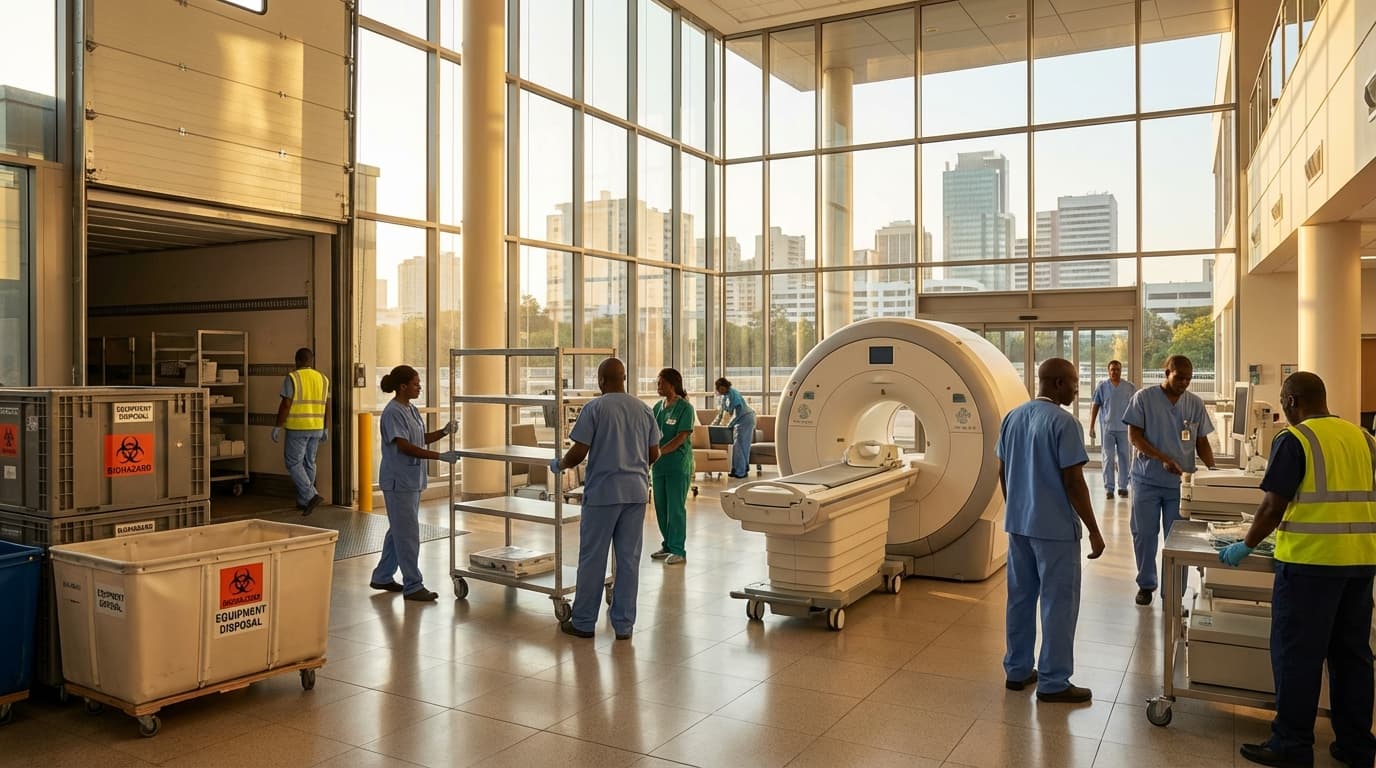
Medical Equipment Relocation Service (Move & Re-Install) in Burkina Faso
Engineering Excellence & Technical Support
Medical Equipment Relocation Service (Move & Re-Install) High-standard technical execution following OEM protocols and local regulatory frameworks.
Expert Medical Equipment Handling & Transit
We specialize in the safe and secure transportation of sensitive medical equipment across Burkina Faso. Our trained technicians utilize specialized packing materials, climate-controlled vehicles, and GPS tracking to ensure your valuable assets arrive at their destination intact and protected from environmental hazards.
Precision Re-Installation & Calibration
Beyond relocation, our certified biomedical engineers meticulously re-install and calibrate all medical equipment. We adhere to rigorous international standards and manufacturer specifications, guaranteeing optimal performance, patient safety, and minimal downtime for your healthcare facility.
End-to-End Logistics & Compliance Management
Navigating the complexities of medical equipment relocation in Burkina Faso requires expertise. We manage all aspects of the move, including customs clearance, permits, risk assessment, and comprehensive documentation, ensuring full compliance with local regulations and international best practices.
What Is Medical Equipment Relocation Service (Move & Re-install) In Burkina Faso?
Medical Equipment Relocation Service (Move & Re-Install) in Burkina Faso refers to a specialized logistical and technical process encompassing the safe transportation and subsequent operational recommissioning of medical devices within or between healthcare facilities in Burkina Faso. This service is designed to address the complex challenges associated with moving sensitive, often high-value, and critical medical apparatus. It involves a comprehensive workflow from initial planning and de-installation to secure transit and precise re-installation and calibration at the new location. The objective is to minimize downtime, ensure equipment integrity, and guarantee its readiness for clinical use immediately post-relocation.
| Who Needs This Service? | Typical Use Cases |
|---|---|
| Hospitals (Public and Private) | Facility Renovation/Expansion: Moving equipment within a hospital undergoing construction or refurbishment to optimize layout and workflow. |
| Clinics and Health Centers | Inter-Facility Transfer: Relocating specialized diagnostic or treatment equipment to a different branch or affiliated healthcare institution. |
| Diagnostic Imaging Centers | New Facility Setup: Transferring imaging systems (e.g., MRI, CT scanners, X-ray machines) to a newly established or relocated diagnostic center. |
| Surgical Centers | Technology Upgrades: Moving existing equipment to accommodate new installations or to a different area within the facility for enhanced surgical suites. |
| Research and Development Laboratories (Healthcare-focused) | Relocation of Research Infrastructure: Moving laboratory equipment, analytical instruments, and biosafety cabinets for research projects or facility changes. |
| Government Health Agencies | Public Health Program Deployment: Transferring essential medical equipment to remote areas or newly established health posts as part of public health initiatives. |
Key Components of Medical Equipment Relocation Service:
- Site Assessment and Planning: Comprehensive evaluation of both origin and destination sites, including space, power, environmental controls, and access routes. Development of a detailed relocation plan.
- De-installation and Disassembly: Professional disconnection of power, data, and ancillary systems. Careful disassembly of complex equipment while adhering to manufacturer specifications.
- Specialized Packing and Crating: Utilization of custom-designed, shock-absorbent, and environmentally controlled packaging to protect sensitive components during transit.
- Secure Transportation: Deployment of specialized vehicles equipped with climate control and vibration dampening systems. Adherence to strict handling protocols to prevent damage.
- Re-installation and Reassembly: Precise reassembly of the equipment at the new site, ensuring all connections and components are correctly integrated.
- Calibration and Testing: Rigorous calibration of all critical parameters to meet original manufacturer specifications. Comprehensive functional testing and performance verification.
- Safety and Regulatory Compliance: Ensuring all activities comply with Burkinabe healthcare regulations and international safety standards.
- Documentation: Provision of detailed records of the relocation process, including de-installation, transit, and re-installation checklists, calibration reports, and warranties.
Who Needs Medical Equipment Relocation Service (Move & Re-install) In Burkina Faso?
Moving and re-installing sensitive medical equipment requires specialized expertise to ensure functionality and patient safety. This service caters to a critical need within Burkina Faso's healthcare sector, where reliable medical infrastructure is paramount for delivering quality care.
| Customer Type | Key Departments Involved | Typical Equipment Relocated |
|---|---|---|
| Hospitals (Public & Private) | Radiology/Imaging, Surgery, Anesthesiology, Intensive Care Units (ICU), Laboratories, Sterilization, Biomedical Engineering | X-ray machines, CT scanners, MRI machines, Ultrasound devices, Surgical lasers, Anesthesia machines, Ventilators, Patient monitors, Laboratory analyzers, Autoclaves |
| Clinics & Health Centers | General Practice, Diagnostics, Minor Surgery, Laboratory | ECG machines, basic X-ray units, diagnostic kits, microscopes, dental chairs, sterilization units |
| Research Institutions & Labs | Research & Development, Quality Control, Diagnostics | Spectrophotometers, PCR machines, centrifuges, incubators, specialized microscopes, cell culture equipment |
| Government Health Bodies | Infrastructure Management, Public Health Programs, Procurement | Various, depending on program needs and facility types |
| NGOs & International Aid | Program Management, Logistics, Healthcare Delivery | Diverse, often includes basic to advanced diagnostic and treatment equipment for specific health projects |
| Private Medical Practices | Specialty Clinics (e.g., Cardiology, Dermatology, Ophthalmology) | Specialized diagnostic tools, treatment chairs, imaging equipment relevant to the specialty |
Target Customers & Departments for Medical Equipment Relocation Service in Burkina Faso
- {"title":"Hospitals","description":"Both public and private hospitals, from large referral centers to smaller district hospitals, often require the relocation of imaging machines (X-ray, CT, MRI), surgical equipment, laboratory analyzers, and patient monitoring systems during renovations, expansions, or when acquiring new facilities."}
- {"title":"Clinics and Health Centers","description":"Smaller healthcare facilities, including specialized clinics (e.g., dental, ophthalmology) and primary health centers, may need to move essential diagnostic and treatment equipment to new locations or within existing premises."}
- {"title":"Research Institutions and Laboratories","description":"Universities, research centers, and private diagnostic labs that utilize sophisticated scientific and medical equipment for research and testing will require careful handling and re-installation."}
- {"title":"Government Health Ministries and Agencies","description":"Government bodies responsible for public health infrastructure may oversee the relocation of equipment between public health facilities, especially during national health initiatives or infrastructure upgrades."}
- {"title":"Non-Governmental Organizations (NGOs) and International Aid Organizations","description":"Organizations involved in healthcare delivery and development in Burkina Faso often procure and deploy medical equipment. They will require professional services for moving this vital equipment to remote or new project sites."}
- {"title":"Private Medical Practices","description":"Individual doctors, dentists, and specialists operating private practices who are moving their offices or upgrading their equipment will benefit from a specialized relocation service."}
Medical Equipment Relocation Service (Move & Re-install) Process In Burkina Faso
This document outlines the comprehensive workflow for a Medical Equipment Relocation Service (Move & Re-Install) in Burkina Faso, covering the process from initial customer inquiry to the final successful re-installation and handover of medical equipment. The service emphasizes safety, compliance, and minimal disruption to healthcare operations.
| Phase | Stage/Step | Description | Key Activities | Responsible Parties | Deliverables/Outcomes | Considerations (Burkina Faso Specific) |
|---|---|---|---|---|---|---|
| 1 | Initial Inquiry | Customer contacts the relocation service with a request for moving medical equipment. | Receive inquiry (phone, email, website). Understand basic scope (type of equipment, origin/destination). Provide preliminary information about services. | Customer, Relocation Service Sales/Consultant | Initial contact made, basic understanding of need established. | Language barriers (French is official, Mooré and other local languages common). Local customs regarding initial interactions. |
| 1 | Site Survey & Needs Assessment | A detailed assessment of the equipment and relocation site is conducted. | Conduct on-site visit(s). Inventory equipment (make, model, serial numbers, condition). Assess access points, power requirements, environmental conditions. Discuss timelines, budget, and specific client needs. Identify potential risks and challenges. | Relocation Service Project Manager/Surveyor, Client Representative (e.g., Biomedical Engineer, Facility Manager) | Detailed equipment list. Site assessment report. Understanding of technical requirements. Risk assessment. Preliminary quote/proposal. | Infrastructure quality (road conditions, power stability). Availability of specialized tools at origin/destination. Security concerns at both locations. |
| 2 | Proposal & Quotation | A formal proposal outlining the scope, timeline, costs, and terms is presented to the client. | Develop detailed proposal based on site survey. Include scope of work, methodology, timelines, detailed cost breakdown, insurance, permits, and contractual terms. Present and discuss proposal with the client. | Relocation Service Project Manager/Sales, Client | Approved proposal and quotation. Signed contract/service agreement. | Payment terms and methods (e.g., mobile money, bank transfers). Clarity on taxes and duties. |
| 2 | Planning & Scheduling | Detailed project plan and schedule are developed. | Create comprehensive project plan. Schedule de-installation, packing, transportation, and re-installation dates. Coordinate with client and relevant authorities. Assign team members and allocate resources. | Relocation Service Project Manager, Operations Team, Client Coordinator | Approved project plan and schedule. Resource allocation confirmed. | Coordination with local holidays and working hours. Potential for unexpected delays due to local logistics. |
| 2 | Permits & Approvals | Obtain necessary permits and regulatory approvals. | Identify and secure all required permits for equipment movement (if applicable), transportation, and customs clearance (if cross-border). | Relocation Service Logistics Team, Client (for specific documentation) | All necessary permits and approvals obtained. | Complexity of customs procedures. Need for accredited customs brokers. Understanding of import/export regulations. |
| 3 | Specialized De-installation | Expert de-installation of medical equipment. | Disassemble and disconnect equipment following manufacturer guidelines and safety protocols. Document de-installation process with photos/videos. Ensure proper shut-down procedures are followed. | Certified Technicians (specializing in specific equipment types), Relocation Service Supervisor | Equipment safely disconnected and ready for packing. De-installation report. | Availability of manufacturer-specific tools and expertise. Safety protocols for handling electrical and sensitive components. |
| 3 | Protective Packing | Secure and protect equipment for transit. | Use specialized packing materials (e.g., anti-static wrapping, custom crates, shock-absorbent padding). Label packages clearly with content, handling instructions, and destination. | Packing Specialists, Relocation Service Supervisor | Equipment securely packed and labeled. Packing inventory. | Climate considerations (humidity, heat). Sourcing appropriate high-quality packing materials locally. |
| 4 | Loading & Securing | Careful loading of packed equipment onto transportation. | Utilize appropriate lifting equipment. Securely load items into specialized transport vehicles (e.g., climate-controlled trucks). Ensure weight distribution is optimized and items are immobilized to prevent movement during transit. | Loading Crew, Relocation Service Supervisor | Equipment safely loaded and secured for transport. | Roadworthiness of vehicles. Professionalism of drivers. Access to loading docks or suitable loading areas. |
| 4 | Transportation | Safe and timely transport of equipment to the destination. | Execute planned route, adhering to schedule. Monitor transit conditions (if equipped). Provide regular updates to the client. Navigate local traffic and road conditions. | Drivers, Relocation Service Logistics Team, Project Manager | Equipment delivered to the destination site within the agreed timeframe. Transit report. | Quality of road network. Fuel availability and cost. Potential for checkpoints or security escorts. Communication infrastructure for real-time tracking. |
| 5 | Unloading & Positioning | Careful unloading and placement of equipment at the new location. | Safely unload equipment from transport vehicles. Position equipment in designated areas based on client's layout plan. | Unloading Crew, Relocation Service Supervisor | Equipment safely unloaded and positioned at the new site. | Access to the new facility. Availability of adequate space for maneuvering. |
| 5 | Re-installation & Connection | Professional re-installation of medical equipment. | Reassemble equipment according to manufacturer specifications. Connect to power, network, and other necessary utilities. Follow all safety and compliance standards. | Certified Technicians, Relocation Service Supervisor | Equipment re-installed and physically connected. | Availability of required utilities (power voltage, water, ventilation). Local electrical codes and safety standards. |
| 5 | Calibration & Configuration | Ensure equipment functions optimally. | Perform necessary calibrations and configurations to meet manufacturer and operational requirements. Adjust settings as per client's specific needs. | Certified Technicians, Biomedical Engineers (Client/Service Provider) | Equipment calibrated and configured for operation. | Availability of calibration tools and reference standards. Expertise in specific equipment models. |
| 6 | Functional Testing | Verify equipment performance. | Conduct comprehensive functional tests to ensure all systems are operating correctly. Perform diagnostic checks and validate against performance benchmarks. | Certified Technicians, Biomedical Engineers (Client/Service Provider) | Successful functional test results. Equipment deemed operational. | Availability of test equipment and phantom materials. Client's operational readiness for testing. |
| 6 | User Training (Optional but Recommended) | Provide training to end-users. | Conduct training sessions for medical staff on the re-installed equipment's operation, maintenance, and basic troubleshooting, as per agreement. | Certified Technicians, Relocation Service Trainer, Client Medical Staff | Trained staff. Training session documentation. | Language of instruction. Client's willingness and availability for training. |
| 6 | Final Inspection & Handover | Formal handover of re-installed equipment. | Conduct a final walk-through with the client to confirm satisfaction. Address any immediate concerns. Sign-off on completion of services. | Relocation Service Project Manager, Client Representative | Signed handover document. Confirmation of client satisfaction. | Clear communication and documentation for client approval. |
| 7 | Post-Relocation Support | Ongoing support after relocation. | Provide warranty on relocation services. Offer ongoing technical support and maintenance options. Address any post-installation issues or queries promptly. | Relocation Service Support Team, Client | Client satisfaction maintained. Long-term relationship established. | Availability of local support staff. Clear escalation procedures for issues. |
Medical Equipment Relocation Workflow in Burkina Faso
- Phase 1: Inquiry & Assessment
- Phase 2: Planning & Preparation
- Phase 3: De-installation & Packing
- Phase 4: Transportation
- Phase 5: Re-installation & Calibration
- Phase 6: Testing, Training & Handover
- Phase 7: Post-Relocation Support
Medical Equipment Relocation Service (Move & Re-install) Cost In Burkina Faso
Relocating medical equipment in Burkina Faso involves specialized handling and expertise, impacting the overall cost. Several factors influence the pricing, from the type and size of the equipment to the distance and accessibility of the locations. Understanding these elements is crucial for budgeting and selecting the right service provider. The cost is typically presented in the local currency, the West African CFA franc (XOF).
| Equipment Category | Estimated Cost Range (XOF) | Notes |
|---|---|---|
| Small/Medium Equipment (e.g., patient monitors, infusion pumps, basic lab equipment) | 50,000 - 250,000 | Includes basic packing, transport, and re-setup. Dismantling/re-installation minimal. |
| Large/Complex Equipment (e.g., anesthesia machines, ultrasound machines, dental chairs) | 200,000 - 750,000 | May involve moderate dismantling/re-installation, specialized packing, and skilled labor. |
| Very Large/High-Value Equipment (e.g., X-ray machines, CT scanners, basic MRI, surgical tables) | 500,000 - 2,500,000+ | Significant dismantling, re-installation by certified technicians, specialized transport, and insurance are crucial. Costs can escalate significantly. |
| Highly Specialized/Oversized Equipment (e.g., advanced MRI, linear accelerators, large surgical suites) | 2,000,000 - 10,000,000+ | Requires extensive planning, custom crating, specialized engineering, and possibly international coordination. Often quoted on a project-by-project basis. |
Key Pricing Factors for Medical Equipment Relocation in Burkina Faso:
- Equipment Type and Size: Delicate, high-precision, or oversized equipment like MRI machines, CT scanners, X-ray units, or surgical tables will incur higher costs due to specialized packing, handling equipment (e.g., cranes, forklifts), and expertise required. Smaller, less sensitive items will be less expensive.
- Dismantling and Re-installation Complexity: The extent to which equipment needs to be dismantled for transport and then reassembled and recalibrated at the new location is a significant cost driver. Sophisticated medical devices often require certified technicians for proper re-installation and calibration, adding to the expense.
- Distance of Relocation: The geographical distance between the origin and destination is a primary factor. Longer distances mean increased fuel, labor, and transit time costs.
- Accessibility of Locations: Difficult access to either the pickup or delivery site (e.g., narrow streets, multi-story buildings without elevators, remote rural areas) can increase costs due to the need for specialized access equipment or extra labor.
- Insurance and Security: Comprehensive insurance for the high-value medical equipment during transit is often a necessity and will be factored into the cost. Additional security measures might be required for particularly sensitive or expensive items.
- Specialized Packing Materials: Medical equipment often requires custom-built crates, anti-static wrapping, and climate-controlled packing to prevent damage. The cost of these materials is passed on to the client.
- Time Sensitivity/Urgency: Expedited relocation services, especially for critical medical facilities, will typically command a premium.
- Permits and Documentation: Depending on the nature of the equipment and cross-regional moves, specific permits or documentation might be required, adding to administrative costs.
- Service Provider's Expertise and Reputation: Experienced and reputable medical equipment relocation specialists may charge more due to their proven track record, specialized training, and advanced equipment, but this often translates to a higher level of service and reduced risk.
- Additional Services: This can include warehousing, temporary storage, or disposal of old equipment, all of which will influence the final price.
Affordable Medical Equipment Relocation Service (Move & Re-install) Options
Moving sensitive and often large medical equipment requires specialized expertise to ensure its safety and functionality upon arrival. Our Affordable Medical Equipment Relocation Service (Move & Re-Install) offers comprehensive solutions tailored to your needs, minimizing downtime and protecting your valuable assets. We understand the importance of cost-effectiveness in healthcare, which is why we've developed flexible value bundles and implemented strategic cost-saving measures to make professional relocation accessible.
| Value Bundle | Description | Key Benefits | Ideal For |
|---|---|---|---|
| Basic Move & Setup | Includes professional packing, secure transport, unpacking, and re-installation of standard medical equipment with basic functional checks. | Cost-effective entry-level solution; ensures equipment is safely moved and ready for use. | Smaller clinics, individual practitioners, or relocation of non-critical equipment. |
| Comprehensive Move & Calibration | Builds upon Basic Move & Setup, adding specialized calibration and performance testing for critical diagnostic and treatment machines. | Ensures immediate operational readiness and accuracy of complex equipment, reducing post-move troubleshooting. | Hospitals, imaging centers, specialized treatment facilities. |
| Full-Service Relocation Package | The ultimate solution, encompassing all aspects from pre-move assessment, detailed packing, secure transportation, unpacking, full re-installation, rigorous testing, and calibration, plus documentation. | Minimizes your team's involvement, guarantees compliance and operational integrity, and provides complete peace of mind. | Large healthcare systems, multi-site relocations, or when specialized equipment requires the highest level of care. |
Our Relocation Services Include:
- Specialized packing and crating for delicate medical devices
- Secure transportation with climate-controlled options
- Careful unpacking and placement at the new location
- Professional re-installation and basic testing by certified technicians
- Coordination with your staff for minimal disruption
- Comprehensive insurance coverage for peace of mind
Verified Providers In Burkina Faso
In Burkina Faso, ensuring access to quality healthcare is paramount. Identifying and trusting healthcare providers is a critical step. Franance Health has emerged as a leading force in this regard, offering a robust system for verifying healthcare providers and establishing a benchmark for excellence. Their rigorous credentialing process not only identifies competent professionals but also instills confidence in patients seeking reliable medical services.
| Credentialing Aspect | Franance Health's Approach | Benefit for Patients in Burkina Faso |
|---|---|---|
| Professional Licensing | Mandatory verification of current and valid medical licenses issued by relevant authorities. | Guarantees that providers are legally authorized to practice medicine. |
| Educational Attainment | Thorough review of academic transcripts and degrees from recognized institutions. | Ensures providers have received foundational medical education. |
| Clinical Experience | Verification of past work experience and areas of specialization. | Confirms practical expertise and suitability for specific medical needs. |
| Continuing Professional Development | Assessment of ongoing training and participation in medical education. | Indicates commitment to staying updated with the latest medical advancements. |
| Reputation and References | Collection of peer reviews and patient feedback where applicable. | Provides insights into a provider's professional standing and patient interaction. |
Why Franance Health Credentials Matter in Burkina Faso
- Rigorous Verification Process: Franance Health employs a multi-faceted approach to verify the qualifications, licenses, and experience of healthcare professionals. This includes checking educational backgrounds, professional certifications, and any disciplinary records.
- Commitment to Ethical Standards: Beyond technical expertise, Franance Health assesses providers for their adherence to ethical medical practices and patient-centered care principles. This ensures a compassionate and trustworthy healthcare experience.
- Enhanced Patient Safety: By partnering with verified providers, patients in Burkina Faso can significantly reduce the risk of encountering unqualified or fraudulent medical practitioners, thereby prioritizing their safety and well-being.
- Access to Quality Care: Franance Health's network comprises highly skilled and reputable medical professionals across various specialties, offering patients greater assurance of receiving high-quality treatment and specialized medical attention.
- Building Trust and Transparency: The Franance Health credentialing system fosters transparency within the healthcare sector, building essential trust between patients and providers and contributing to a more reliable healthcare ecosystem.
Scope Of Work For Medical Equipment Relocation Service (Move & Re-install)
This Scope of Work (SOW) outlines the requirements for the relocation and re-installation of medical equipment. It defines the technical deliverables and standard specifications necessary to ensure a successful, safe, and efficient transition of critical medical assets. The service encompasses all aspects from de-installation at the origin site to re-installation and testing at the destination site.
| Phase/Activity | Description | Technical Deliverables | Standard Specifications / Requirements |
|---|---|---|---|
| Pre-Move Planning & Site Assessment | Initial survey of both origin and destination sites to identify equipment, access routes, power requirements, and potential challenges. | Detailed move plan, site assessment report, risk assessment, equipment inventory. | Qualified personnel with medical equipment knowledge, site visit reports, photographic documentation, communication plan with facility stakeholders. |
| De-installation of Medical Equipment | Safe and meticulous disconnection of all power, data, and medical gas lines from the equipment. Removal of any associated accessories or components. | Labelled components, de-installation confirmation report, photographs of disconnected state. | Certified technicians trained on specific equipment types, adherence to manufacturer's de-installation guidelines, proper lockout/tagout procedures, ESD precautions where applicable. |
| Packaging & Protection | Securely packaging each piece of equipment to prevent damage during transit. This includes specialized packaging for sensitive instruments and large machinery. | Custom-built crates, anti-static materials, shock-absorbent padding, shrink wrap, moisture barriers. | Use of appropriate materials based on equipment type and fragility, adherence to IP ratings for protection against environmental factors, labeling of packages with equipment name, destination, and handling instructions. |
| Transportation | Safe and secure transport of the packaged medical equipment from the origin to the destination site using specialized vehicles. | Air-ride suspension trucks, climate-controlled vehicles (if required), GPS tracking of shipments. | Trained drivers with experience in handling sensitive cargo, adherence to traffic regulations, insurance coverage for goods in transit, temperature/humidity monitoring during transit for sensitive equipment. |
| On-site Logistics & Positioning | Careful maneuvering of equipment into its designated location at the destination site, ensuring compliance with spatial and functional requirements. | Equipment placement verification, detailed floor plans with equipment locations. | Use of specialized moving equipment (e.g., gurneys, dollies, forklifts, cranes), adherence to safety protocols within the facility, clear communication with facility staff for placement guidance. |
| Re-installation & Re-connection | Reassembly and reconnection of all power, data, and medical gas lines according to manufacturer specifications and facility standards. | Re-installation confirmation report, connectivity verification records. | Qualified technicians certified for specific equipment, adherence to manufacturer's re-installation manuals, use of approved connectors and cabling, pressure testing of medical gas lines where applicable. |
| Testing & Calibration | Thorough testing of all functions and features of the re-installed equipment. Calibration to ensure accuracy and operational integrity. | Test reports, calibration certificates, functional test checklists. | Performance verification against manufacturer's specifications, adherence to established quality control procedures, use of calibrated testing equipment, documentation of all test results and any adjustments made. |
| Documentation & Handover | Provision of all relevant documentation, including move reports, test results, and calibration certificates, to the client. Formal handover of the re-installed equipment. | Comprehensive handover package, sign-off forms. | Clear, organized documentation, post-move debriefing with facility management, training for facility staff on any new configurations or operational aspects (if applicable). |
Key Areas of Service
- Pre-Move Planning & Site Assessment
- De-installation of Medical Equipment
- Packaging & Protection
- Transportation
- On-site Logistics & Positioning
- Re-installation & Re-connection
- Testing & Calibration
- Documentation & Handover
Service Level Agreement For Medical Equipment Relocation Service (Move & Re-install)
This Service Level Agreement (SLA) outlines the response times and uptime guarantees for the Medical Equipment Relocation Service (Move & Re-Install). It is designed to ensure minimal disruption to patient care and operational continuity during the relocation of critical medical equipment.
| Service Component | Response Time (Standard Hours) | Response Time (Emergency/After Hours) | Uptime Guarantee (Post Re-Installation) |
|---|---|---|---|
| Initial Site Survey & Planning | Within 3 business days of request | Within 1 business day of request | N/A |
| De-installation | As per agreed Project Schedule | Within 4 hours of confirmed need | N/A |
| Transportation | As per agreed Project Schedule | Immediate dispatch upon confirmation | N/A |
| Re-installation & Calibration | As per agreed Project Schedule | Within 4 hours of equipment arrival at new location | N/A |
| Post Re-Installation Verification & Testing | Within 2 business days of re-installation | Within 1 business day of re-installation | N/A |
| Critical Equipment (Life Support, Imaging, etc.) | N/A | N/A | 99.5% operational uptime within 24 hours of re-installation, assuming no external environmental factors or pre-existing faults. |
| Standard Equipment (Non-Critical) | N/A | N/A | 98.0% operational uptime within 48 hours of re-installation, assuming no external environmental factors or pre-existing faults. |
| Support for Unexpected Issues | Within 4 business hours | Within 2 business hours | N/A |
Scope of Service
- Includes the de-installation, safe transportation, and re-installation of designated medical equipment.
- Covers standard operating hours, with options for emergency services.
- Applies to equipment specified in the accompanying Project Plan.
Frequently Asked Questions

Ready when you are
Let's scope your Medical Equipment Relocation Service (Move & Re-Install) in Burkina Faso project in Burkina Faso.

Scaling healthcare logistics and technical systems across the entire continent.