
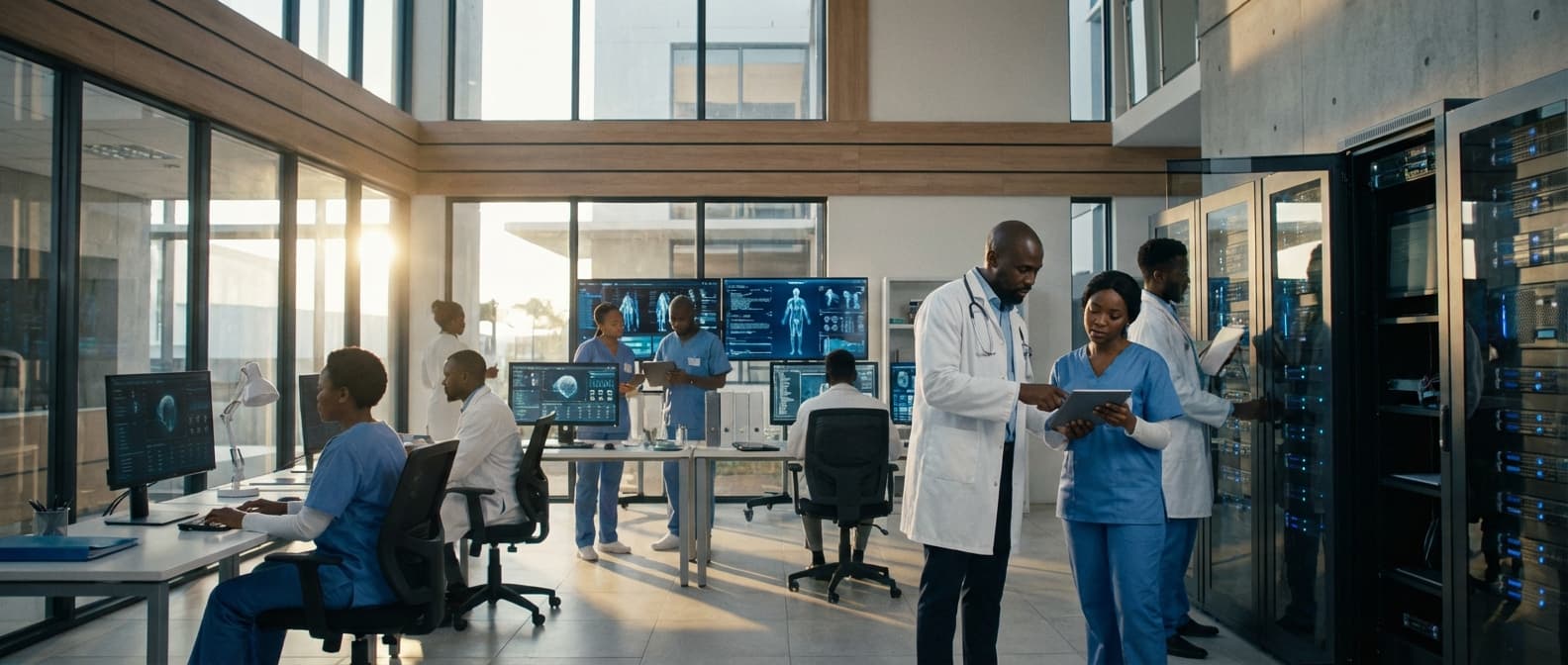
Tele-Radiology in Burkina Faso
Engineering Excellence & Technical Support
24/7 access to certified radiologists providing rapid, accurate remote interpretation of diagnostic imaging studies. High-standard technical execution following OEM protocols and local regulatory frameworks.
Remote Diagnostic Expertise
Leveraging tele-radiology to connect remote healthcare facilities in Burkina Faso with specialized radiologists, enabling prompt and accurate diagnosis of medical imaging, reducing the need for patient travel and improving access to critical care in underserved areas.
Secure Image Transfer Network
Implementing a secure and robust cloud-based platform for high-resolution medical image (X-ray, CT, MRI) transmission from rural clinics to central diagnostic hubs, ensuring data integrity and patient privacy while facilitating efficient workflow for remote interpretation.
Enhanced Specialist Collaboration
Facilitating seamless collaboration between local healthcare providers and international radiology specialists through tele-radiology, allowing for case consultations, quality assurance, and continuous professional development, ultimately elevating the standard of radiological services across Burkina Faso.
What Is Tele-radiology In Burkina Faso?
Tele-radiology in Burkina Faso refers to the transmission of radiological images (such as X-rays, CT scans, and MRIs) from a healthcare facility in Burkina Faso to a remote radiologist for interpretation. This service leverages telecommunications technology to overcome geographical barriers and the scarcity of specialized medical professionals within the country. It enables patients in underserved areas to receive expert diagnostic imaging interpretations that might otherwise be unavailable, improving the speed and accuracy of diagnosis and subsequent treatment planning.
| Who Needs Tele-Radiology? | Typical Use Cases |
|---|---|
| Patients in rural and remote areas with limited access to radiology services. | Diagnosis of fractures and other orthopedic injuries. |
| Healthcare facilities lacking on-site radiologists or specialized imaging expertise. | Identification of pneumonia and other pulmonary pathologies. |
| District hospitals and regional referral centers seeking to augment their diagnostic capabilities. | Screening for tuberculosis and other infectious diseases. |
| Emergency departments requiring rapid interpretation of critical imaging studies. | Detection of stroke and other neurological emergencies. |
| Patients with limited mobility or facing transportation challenges to urban diagnostic centers. | Evaluation of abdominal pain and suspected appendicitis. |
| Public health initiatives requiring widespread diagnostic support. | Follow-up imaging for chronic conditions like cancer and cardiovascular disease. |
Key Components and Stakeholders of Tele-Radiology in Burkina Faso
- Digital imaging equipment (e.g., X-ray machines, CT scanners) capable of producing DICOM-compliant images.
- Picture Archiving and Communication System (PACS) or a compatible image management system for storage and retrieval.
- Secure and reliable internet connectivity for image transmission.
- Radiological Information System (RIS) for workflow management, reporting, and billing.
- Remote radiologist(s) located either within Burkina Faso (in urban centers) or internationally, possessing the necessary licenses and qualifications.
- Local healthcare facilities acting as image acquisition sites (e.g., district hospitals, rural health centers).
- Technologists or radiographers trained in operating imaging equipment and adhering to imaging protocols.
- IT infrastructure and support personnel for maintaining the tele-radiology system.
Who Needs Tele-radiology In Burkina Faso?
Tele-radiology, the remote interpretation of medical images, offers a transformative solution to address the critical shortage of radiologists and specialized imaging expertise in Burkina Faso. This service can significantly improve diagnostic accuracy, reduce turnaround times, and extend the reach of quality radiology services to underserved populations across the country.
| Customer Type | Key Needs Addressed | Potential Benefits |
|---|---|---|
| Rural Hospitals/Clinics | Lack of radiologists, limited access to expert interpretation, long patient travel times | Improved diagnostic accuracy, faster turnaround times, reduced patient burden, enhanced quality of care |
| District/Regional Hospitals | High patient volume, potential for radiologist burnout, need for specialized interpretation | Efficient workflow, access to subspecialty expertise, improved diagnostic consistency |
| Tertiary/University Hospitals | Complex cases, subspecialty needs, staff shortages, after-hours coverage | Enhanced diagnostic capabilities, second opinions, continuous service availability |
| Private Diagnostic Centers | Cost of full-time radiologists, variable demand | Cost-effective interpretation services, scalable operations, expanded service offerings |
| Emergency Departments | Urgent need for rapid interpretation, off-hours coverage | Quicker diagnosis and treatment initiation, improved patient outcomes, reduced ED wait times |
| Specialized Departments (Maternity, Oncology, etc.) | Need for specific subspecialty expertise (pediatric, oncologic, etc.) | Highly accurate interpretations tailored to specific patient populations and conditions |
Target Customers & Departments for Tele-Radiology in Burkina Faso
- Hospitals and Clinics in Remote/Rural Areas: These facilities often lack in-house radiologists or the necessary infrastructure for advanced imaging interpretation. Tele-radiology can connect them to experts regardless of their geographical location.
- District and Regional Hospitals: These facilities serve a larger population and may experience higher patient volumes. Tele-radiology can augment their existing capabilities and manage overflow.
- Tertiary Care Centers and University Hospitals: While these centers may have some in-house radiologists, tele-radiology can provide subspecialty expertise for complex cases, offer second opinions, and support during peak demand or staff shortages.
- Private Diagnostic Centers: Smaller private centers may not be able to afford full-time radiologists. Tele-radiology provides a cost-effective solution for image interpretation services.
- Emergency Departments (EDs): Rapid interpretation of critical imaging studies (e.g., head CTs for stroke, chest X-rays for pneumonia) is vital. Tele-radiology can ensure timely diagnoses, especially during off-hours.
- Maternity and Pediatrics Departments: Specialized interpretation of neonatal imaging, pediatric fractures, and obstetric ultrasounds can be facilitated through tele-radiology.
- Oncology Departments: Accurate staging and monitoring of cancer through imaging are crucial. Tele-radiology can provide expertise in oncologic imaging interpretation.
- Surgical Departments: Post-operative imaging and pre-surgical planning often require expert radiological input. Tele-radiology ensures timely access to these interpretations.
- Infectious Disease Units: Rapid interpretation of chest X-rays for tuberculosis, or other imaging for tropical diseases, is critical for effective patient management.
Tele-radiology Process In Burkina Faso
Tele-radiology in Burkina Faso aims to bridge the gap in access to radiological expertise, especially in remote or underserved areas. The process involves a series of steps, from the initial patient consultation and image acquisition to the remote interpretation and final reporting. This workflow is crucial for improving diagnostic accuracy and patient care when local radiologists are unavailable or specialized expertise is needed.
| Stage | Description | Key Actors Involved | Technology/Tools Used | Potential Challenges |
|---|---|---|---|---|
| A patient presents with symptoms requiring radiological examination. The referring physician assesses the need for imaging. | Patient, Referring Physician (local doctor, nurse) | Clinical notes, patient history forms | Limited diagnostic equipment at local level, lack of awareness about imaging needs. |
| Radiological images (X-ray, CT, Ultrasound, etc.) are acquired using available equipment at the local health center or hospital. | Radiographer, Technician, Local Healthcare Provider | X-ray machine, Ultrasound probe, CT scanner (if available) | Outdated or malfunctioning equipment, power outages, lack of trained personnel for advanced imaging. |
| Acquired images are digitized and securely transmitted to a central teleradiology hub or a designated radiologist. | Technician, IT personnel, Local Healthcare Provider | PACS (Picture Archiving and Communication System), DICOM viewers, secure internet connection, VPN, cloud storage | Unreliable internet connectivity, high bandwidth requirements, data security and privacy concerns, cost of data transmission. |
| The teleradiology platform receives the images and cases are assigned to available radiologists based on subspecialty and workload. | Teleradiology Platform Administrator, Radiologist | Teleradiology software, scheduling algorithms, secure login credentials | Platform accessibility issues, fair workload distribution, emergency case prioritization. |
| A radiologist, located elsewhere, reviews the images, analyzes findings, and formulates a diagnosis. | Radiologist (remote) | High-resolution diagnostic monitors, teleradiology viewing software, communication tools | Image quality issues due to local acquisition, interpreter fatigue, need for comprehensive clinical information, language barriers (if applicable). |
| The radiologist generates a detailed diagnostic report, which may undergo a quality assurance check. | Radiologist (remote), Quality Assurance Officer (if applicable) | Reporting software, standardized templates, dictation software | Ensuring report clarity and accuracy, standardized reporting, timely feedback mechanisms. |
| The final report is securely transmitted back to the referring physician at the local facility. | Teleradiology Platform Administrator, Referring Physician | Teleradiology platform, secure email, fax (as backup) | Delayed report delivery, misinterpretation of reports, lack of direct communication between radiologist and referring physician. |
| The referring physician uses the teleradiology report to guide further patient management, treatment, or referral. | Referring Physician, Patient, Specialist (if referred) | Electronic Health Records (EHR), clinical decision support tools | Inability to integrate teleradiology reports into local patient records, challenges in patient follow-up due to distance. |
Tele-Radiology Workflow in Burkina Faso
- Patient Presentation and Initial Consultation
- Image Acquisition at Local Facility
- Data Transfer and Secure Transmission
- Teleradiology Platform Access and Case Assignment
- Remote Interpretation by Radiologist
- Report Generation and Quality Assurance
- Report Delivery to Referring Physician
- Follow-up and Patient Management
Tele-radiology Cost In Burkina Faso
Tele-radiology, the practice of interpreting medical images remotely, offers a promising solution to address the shortage of radiologists in regions like Burkina Faso. However, understanding the cost involved is crucial for healthcare providers and policymakers. The pricing of tele-radiology services in Burkina Faso is influenced by a complex interplay of factors, leading to a range of costs in the local currency, the West African CFA franc (XOF).
Key Pricing Factors:
- Volume of Studies: The sheer number of radiology studies (X-rays, CT scans, MRIs, ultrasounds) that need interpretation is a primary driver of cost. Higher volumes often lead to economies of scale and potentially lower per-study rates.
- Turnaround Time (TAT) Requirements: Urgent interpretations requiring a rapid turnaround time (e.g., within a few hours) will invariably command higher prices than routine interpretations with more flexible deadlines.
- Subspecialty Expertise: Interpreting complex cases or specific modalities like MRI or CT requires specialized radiologists. Access to these subspecialists often incurs a higher fee.
- Technology and Infrastructure: The cost of setting up and maintaining the tele-radiology platform, including image transfer systems, PACS (Picture Archiving and Communication System), and secure communication channels, is factored into the overall pricing. This can also include data storage and IT support.
- Radiologist Compensation: The remuneration of the remote radiologists, whether they are local or international, is a significant component. This includes their salary, benefits, and potential licensing or malpractice insurance costs.
- Provider Type and Business Model: The tele-radiology provider's business model (e.g., hospital-owned, third-party service, non-profit) and their overhead costs will influence their pricing strategy.
- Contractual Agreements: Long-term contracts with guaranteed volumes may offer more favorable pricing compared to ad-hoc or short-term arrangements.
- Ancillary Services: Some tele-radiology providers may bundle additional services, such as report generation, quality assurance, or direct consultation with referring physicians, which can affect the overall price.
- Geographic Location within Burkina Faso: While less of a direct factor for the tele-radiology service itself (as it's remote), the ability of local facilities to connect to the service might be influenced by their own internet infrastructure and associated costs.
Cost Ranges in XOF:
Due to the aforementioned factors, providing an exact, universally applicable price is challenging. However, based on general tele-radiology market trends and the economic context of Burkina Faso, the following are estimated ranges for per-study interpretation fees in West African CFA francs (XOF):
It's important to note that these are estimates and actual costs can vary significantly. For specific pricing, direct engagement with tele-radiology service providers operating in or serving Burkina Faso is recommended.
| Type of Study (Example) | Estimated Cost Range (XOF) |
|---|---|
| Plain X-ray (e.g., Chest X-ray, Limb X-ray) | 20,000 - 50,000 XOF |
| Ultrasound Study | 30,000 - 70,000 XOF |
| CT Scan (per body part/study) | 60,000 - 150,000 XOF |
| MRI Scan (per body part/study) | 100,000 - 300,000+ XOF |
| Urgent Interpretation (added fee) | +10,000 - 50,000 XOF |
Factors Influencing Tele-Radiology Costs in Burkina Faso
- Volume of Studies
- Turnaround Time (TAT) Requirements
- Subspecialty Expertise Required
- Technology and Infrastructure Costs
- Radiologist Compensation and Fees
- Provider Business Model and Overhead
- Contractual Terms and Duration
- Inclusion of Ancillary Services
- Potential local connectivity/infrastructure considerations
Affordable Tele-radiology Options
Tele-radiology offers a cost-effective solution for healthcare providers seeking expert diagnostic imaging interpretation. By leveraging remote radiologists, organizations can reduce overhead associated with in-house staffing, facility costs, and equipment maintenance. Value bundles and strategic cost-saving approaches are key to maximizing the financial benefits of tele-radiology.
| Cost-Saving Strategy | Description | Benefit |
|---|---|---|
| Volume-Based Discounts | Negotiating lower per-study rates as the volume of interpreted studies increases. | Reduced cost per interpretation, leading to significant savings with high utilization. |
| Long-Term Contracts | Committing to a tele-radiology provider for an extended period (e.g., 1-3 years). | Secures favorable pricing, predictable costs, and a stable partnership. |
| Integrated Workflow Solutions | Choosing providers that offer seamless integration with your existing PACS and EHR systems. | Minimizes IT overhead, reduces training time, and streamlines reporting. |
| Flexible Staffing Models | Opting for providers who can scale their services up or down based on your current needs. | Avoids overpaying for unused capacity and ensures efficient resource allocation. |
| Remote Access Technology | Utilizing secure, cloud-based platforms for image transmission and radiologist access. | Reduces the need for dedicated hardware and complex on-site infrastructure. |
| Shared Service Models | Partnering with other facilities to collectively negotiate rates with a tele-radiology provider. | Leverages combined volume to achieve better pricing than individual entities. |
Key Value Bundles in Tele-Radiology
- On-Demand Interpretation: Access to radiologists for urgent cases, often priced per study or a tiered per-hour rate.
- Routine Reads: Regular, scheduled interpretation of non-emergent studies, typically with a predictable volume-based pricing model.
- Subspecialty Coverage: Access to highly specialized radiologists (e.g., neuroradiology, interventional radiology) without the need for in-house recruitment and retention.
- 24/7 Coverage: Continuous access to diagnostic services, ensuring patient care is not hindered by time zone differences or staff availability.
- Quality Assurance & Reporting: Bundled services that include rigorous QA protocols, peer review, and standardized reporting formats.
Verified Providers In Burkina Faso
In Burkina Faso, navigating the healthcare landscape to find reliable and trustworthy providers is paramount. Franance Health has established itself as a leading entity, distinguished by its rigorous credentialing process and unwavering commitment to quality care. This commitment translates into a network of healthcare professionals and facilities that meet the highest standards, offering patients peace of mind and access to exceptional medical services.
| Provider Type | Key Franance Health Credentials | Benefits for Patients |
|---|---|---|
| Hospitals and Clinics | Accreditation by recognized national and international bodies (e.g., ISO standards, specific medical accreditation agencies) | Access to state-of-the-art facilities, robust infection control protocols, and comprehensive emergency services. |
| Physicians (General Practitioners & Specialists) | Valid and current medical licenses from the Ministry of Health, board certifications in their respective specialties, evidence of continuing medical education. | Expert diagnosis, evidence-based treatment plans, and personalized care tailored to individual patient needs. |
| Nurses and Allied Health Professionals | Registered nursing licenses, relevant professional certifications, and demonstrated proficiency in their areas of practice. | Skilled and compassionate care, effective patient education, and essential support services throughout the treatment journey. |
| Pharmaceutical Services | Licenses for pharmacies and dispensing professionals, adherence to drug quality and safety regulations, efficient supply chain management. | Access to genuine medications, accurate prescription fulfillment, and professional advice on drug usage and interactions. |
Why Franance Health Credentials Matter
- Rigorous Vetting Process: Franance Health employs a multi-faceted vetting process that scrutinizes the qualifications, experience, and ethical standing of all its affiliated providers. This includes verifying medical licenses, certifications, and past performance.
- Commitment to Quality Standards: Beyond basic licensing, Franance Health ensures its providers adhere to international best practices and continuously update their knowledge and skills. This focus on quality translates directly to improved patient outcomes.
- Patient Safety as a Priority: The credentialing process is designed with patient safety as the central tenet. Franance Health identifies and partners with providers who demonstrate a strong track record in maintaining a safe and effective healthcare environment.
- Access to Specialized Care: Through its extensive network, Franance Health offers access to a wide range of medical specialists, ensuring that patients can find the appropriate care for their specific needs, regardless of complexity.
- Building Trust and Transparency: By clearly defining and upholding its credentialing standards, Franance Health builds trust with patients and stakeholders. This transparency allows individuals to make informed decisions about their healthcare choices.
Scope Of Work For Tele-radiology
This Scope of Work (SOW) outlines the requirements for a Tele-Radiology service, focusing on technical deliverables and standard specifications. The service aims to provide remote interpretation of medical imaging studies, enhancing diagnostic capabilities and accessibility. This document details the expected technical outputs and the adherence to industry best practices and regulatory standards.
| Specification Area | Standard/Requirement | Description/Notes |
|---|---|---|
| Image Transfer Protocol | DICOM (Digital Imaging and Communications in Medicine) | Must support DICOM send/receive for all relevant modalities (X-ray, CT, MRI, Ultrasound, etc.). Version compatibility to be specified. |
| Data Exchange Protocol | HL7 (Health Level Seven) | For seamless integration with EHR/RIS systems, facilitating patient demographics, orders, and report delivery. |
| Security | HIPAA/GDPR Compliant, TLS/SSL Encryption | All data in transit and at rest must be encrypted. Access controls, user authentication, and audit logging are mandatory. |
| Image Quality | Industry Best Practices, Manufacturer Specifications | Ensure no degradation of image quality during transfer or viewing. Support for high-resolution displays. |
| System Uptime | 99.9% Availability | Minimum acceptable uptime for the tele-radiology platform, excluding scheduled maintenance. |
| Reporting Turnaround Time (TAT) | Defined Service Level Agreement (SLA) | Specific TAT for different study types (e.g., routine, STAT) to be agreed upon in the SLA. |
| Data Storage | Secure, Compliant, Scalable | Long-term archiving of images and reports in compliance with medical record retention laws. Deduplication and compression may be employed. |
| User Interface (UI)/User Experience (UX) | Intuitive, Accessible | Easy-to-navigate interfaces for both radiologists and referring physicians. WCAG accessibility compliance should be considered. |
| Interoperability | FHIR (Fast Healthcare Interoperability Resources) or equivalent | Desirable for future-proofing and enhanced integration with modern healthcare IT ecosystems. |
| Disaster Recovery | RPO/RTO Defined | Recovery Point Objective (RPO) and Recovery Time Objective (RTO) must be clearly defined and tested. |
Key Technical Deliverables
- Secure and robust Picture Archiving and Communication System (PACS) integration capabilities.
- High-availability, low-latency image transfer protocols (e.g., DICOM, HL7).
- Real-time or near real-time access to imaging studies and associated patient data.
- Comprehensive reporting platform with secure storage and retrieval of radiology reports.
- User-friendly and secure web-based or dedicated client application for radiologists and referring physicians.
- Audit trails and logging mechanisms for all system access and data transactions.
- Scalable infrastructure to accommodate increasing study volumes and data storage needs.
- Data backup and disaster recovery solutions compliant with healthcare regulations.
- Integration with existing Electronic Health Record (EHR) systems for seamless workflow.
- Compliance with relevant data privacy and security regulations (e.g., HIPAA, GDPR).
- Training materials and documentation for system users and administrators.
- Ongoing technical support and maintenance services.
- Performance monitoring and reporting tools.
Service Level Agreement For Tele-radiology
This Service Level Agreement (SLA) outlines the performance standards and guarantees for the tele-radiology services provided. It defines the expected response times for image interpretation and critical finding notifications, as well as the guaranteed uptime for the tele-radiology platform and associated services.
| Service Component | SLA Target | Measurement Period | Remedy for Failure |
|---|---|---|---|
| Routine Image Interpretation Response Time | 95% of reports within 24 hours | Monthly | Service credits applied based on a tiered structure for each percentage point below the target. |
| STAT/Urgent Image Interpretation Response Time | 99% of reports within 1 hour | Monthly | Service credits applied based on a tiered structure for each percentage point below the target. |
| Critical Finding Notification Time | 99.9% of notifications within 15 minutes of radiologist identification | Monthly | Service credits applied based on a tiered structure for each percentage point below the target. |
| Platform Uptime Guarantee | 99.9% excluding Scheduled Downtime | Monthly | Service credits of 5% of monthly fees for each hour of Unscheduled Downtime exceeding the guaranteed uptime. |
| Scheduled Downtime | Maximum of 4 hours per month | Monthly | Not applicable, provided advance notice is given. |
Key Definitions
- Image Interpretation Request: A formal request submitted by a healthcare provider for the interpretation of radiological images by a qualified radiologist.
- Critical Finding: An abnormal finding identified in a radiological image that requires immediate clinical attention or intervention.
- Response Time: The duration from the successful submission of an Image Interpretation Request or Critical Finding Notification to the radiologist's final report being made available.
- Uptime: The percentage of time the tele-radiology platform and its associated services are operational and accessible to authorized users.
- Scheduled Downtime: Planned maintenance or updates to the tele-radiology platform, communicated in advance to the client.
- Unscheduled Downtime: Any period of time the tele-radiology platform is unavailable outside of Scheduled Downtime.
Frequently Asked Questions

Ready when you are
Let's scope your Tele-Radiology in Burkina Faso project in Burkina Faso.

Scaling healthcare logistics and technical systems across the entire continent.