
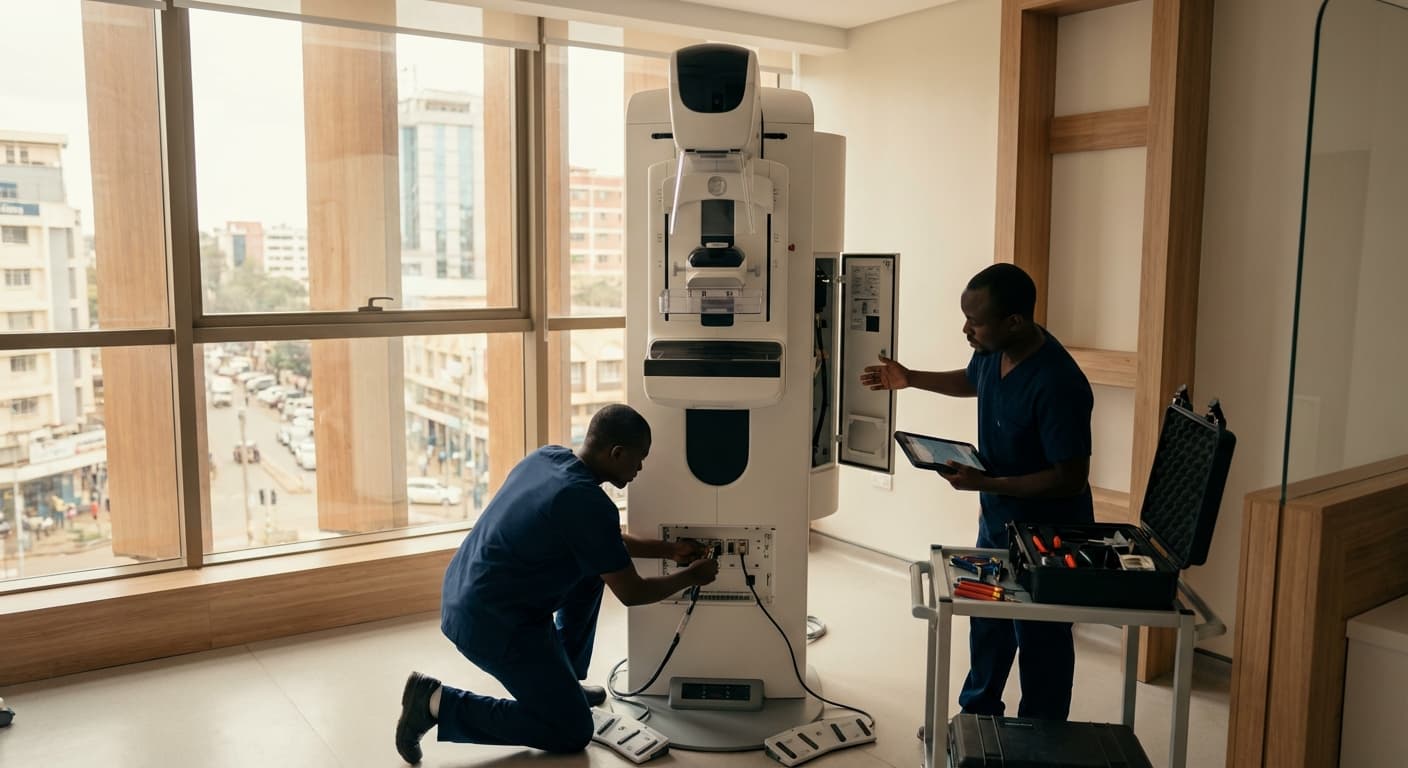
Mammography Installation Service in Burkina Faso
Engineering Excellence & Technical Support
Mammography Installation Service High-standard technical execution following OEM protocols and local regulatory frameworks.
Optimized Radiation Safety Protocols
Our expert technicians implement rigorous radiation safety protocols during mammography installation, adhering to international standards and local regulations specific to Burkina Faso. This ensures the well-being of both patients and medical staff through proper shielding, dose optimization, and comprehensive training on safe operating procedures.
Advanced Digital Imaging Integration
We specialize in the seamless installation and integration of state-of-the-art digital mammography systems. Our services encompass precise calibration, network connectivity, and PACS/RIS integration, ensuring high-resolution imaging and efficient workflow management for enhanced diagnostic accuracy in healthcare facilities across Burkina Faso.
Robust Equipment Calibration & Validation
Our installation process includes comprehensive calibration and validation of all mammography equipment. We meticulously test image quality, detector performance, and mechanical integrity to guarantee optimal functionality and diagnostic reliability, providing healthcare providers in Burkina Faso with dependable tools for early breast cancer detection.
What Is Mammography Installation Service In Burkina Faso?
Mammography Installation Service in Burkina Faso refers to the comprehensive process of setting up, configuring, and validating mammography equipment within healthcare facilities located in Burkina Faso. This service ensures that the installed systems meet established technical specifications, regulatory requirements, and operational readiness for diagnostic imaging of breast tissue. It encompasses the physical placement, electrical and network integration, software configuration, calibration, and initial performance testing of mammography units, including both digital and analog systems, as well as advanced modalities like tomosynthesis. The objective is to guarantee the reliable and accurate acquisition of mammographic images for screening and diagnostic purposes, thereby supporting effective breast cancer detection and management programs within the country's healthcare infrastructure.
| Who Needs It | Typical Use Cases | |||
|---|---|---|---|---|
| Hospitals and large clinics in Burkina Faso seeking to acquire new mammography equipment. | Establishment of new radiology departments or enhancement of existing breast imaging capabilities. | Healthcare facilities upgrading from older analog systems to digital mammography or tomosynthesis. | Public health initiatives and government-funded projects aimed at increasing access to breast cancer screening. | Private healthcare providers investing in advanced diagnostic imaging technology. |
| Routine screening mammography for asymptomatic individuals to detect early signs of breast cancer. | Diagnostic mammography for patients presenting with palpable breast lumps or other clinical symptoms suggestive of malignancy. | Follow-up imaging for patients with a history of breast cancer or abnormal screening results. | Utilizing tomosynthesis (3D mammography) for improved lesion detection, especially in dense breast tissue. | Integration into comprehensive breast care centers offering a multidisciplinary approach to diagnosis and treatment. |
Key Components of Mammography Installation Service
- Site preparation and assessment (e.g., power, shielding, space)
- Unpacking, assembly, and physical positioning of the mammography unit
- Integration with existing hospital IT infrastructure (PACS, RIS)
- Electrical and network connectivity setup
- Software installation, configuration, and initial calibration
- Performance testing and quality assurance (QA) according to international standards (e.g., ACR, IEC)
- User training for radiographers and technologists
- Documentation and handover of the operational system
- Initial system validation and certification
Who Needs Mammography Installation Service In Burkina Faso?
Mammography installation services are crucial for healthcare facilities in Burkina Faso aiming to provide advanced diagnostic imaging for breast cancer screening and detection. This service ensures that state-of-the-art mammography equipment is set up correctly, calibrated, and ready for clinical use, guaranteeing accurate and reliable results for patients.
| Customer Type | Relevant Departments / Units | Key Needs & Benefits of Installation Service |
|---|---|---|
| Public Hospitals and Clinics | Radiology Department, Oncology Department, Women's Health Units, Screening Programs | Essential for offering early detection services, improving patient outcomes, meeting national health targets, ensuring equipment longevity and minimal downtime. |
| Private Hospitals and Diagnostic Centers | Radiology Department, Imaging Centers, Breast Health Clinics | Crucial for maintaining a competitive edge, attracting patients seeking specialized care, ensuring high diagnostic accuracy for a fee-paying clientele, and adhering to international quality standards. |
| NGOs focused on women's health | Mobile Screening Units, Community Health Centers, Outreach Programs | Vital for establishing or upgrading screening capabilities in underserved areas, enabling accessible and effective breast cancer detection for vulnerable populations, and ensuring reliable operation of equipment in diverse settings. |
| Regional Health Directorates and Ministry of Health facilities | Procurement and Logistics Departments, Public Health Programs, Central Medical Stores | Key for managing and deploying new diagnostic equipment across the public health network, ensuring standardized installation practices, and facilitating nationwide breast cancer screening initiatives. |
| Research Institutions and University Hospitals | Radiology Research Departments, Medical Imaging Laboratories, Clinical Trial Units | Important for setting up specialized imaging systems for research purposes, ensuring precise calibration for clinical trials, and facilitating advanced training for future radiologists and technicians. |
Target Customers for Mammography Installation Service in Burkina Faso:
- Public Hospitals and Clinics
- Private Hospitals and Diagnostic Centers
- Non-Governmental Organizations (NGOs) focused on women's health
- Regional Health Directorates and Ministry of Health facilities
- Research Institutions and University Hospitals
Mammography Installation Service Process In Burkina Faso
This document outlines the typical workflow for mammography installation services in Burkina Faso, from initial customer inquiry to the final execution and handover of the equipment. The process is designed to ensure a smooth, efficient, and compliant installation that meets both the client's needs and regulatory requirements.
| Phase | Key Activities | Responsible Parties | Deliverables/Outcomes | Key Considerations (Burkina Faso Specific) |
|---|---|---|---|---|
| Phase 1: Pre-Installation & Planning |
| Client (Hospital/Clinic Management), Service Provider (Sales Team, Technical Engineers) | Detailed needs assessment report, Site survey report, Technical proposal, Signed contract, Approved permits (if applicable) | Understanding local energy stability (e.g., need for generators), availability of qualified local technicians for future maintenance, regulatory requirements specific to medical equipment import and installation, language considerations (French often primary). |
| Phase 2: Site Preparation & Infrastructure |
| Client (Facilities Management), Service Provider (Installation Team, Contractors) | Completed room modifications, installed radiation shielding, robust power supply, functional IT network, controlled environment | Access to reliable construction materials and skilled labor, adherence to local building codes and electrical standards, potential delays due to import of specialized shielding materials. |
| Phase 3: Equipment Delivery & Unpacking |
| Service Provider (Logistics Team, Installation Team), Client (Receiving Staff) | Equipment safely delivered to site, all components present and undamaged, customs documentation complete | Challenges with road infrastructure, potential for delays at customs, ensuring proper handling of sensitive equipment during transit in varying climatic conditions. |
| Phase 4: Installation & Configuration |
| Service Provider (Certified Installation Engineers) | Mammography unit fully assembled and connected, software installed and configured, basic system functionality verified | Availability of specialized tools and equipment, ensuring engineers have necessary visas and work permits, clear communication with local IT staff for integration. |
| Phase 5: Testing & Calibration |
| Service Provider (Certified Engineers, Medical Physicists if required) | Performance test reports, calibration certificates, QA documentation, confirmation of radiation safety compliance | Access to calibration phantoms and test equipment, ensuring adherence to international QA standards as adopted by Burkina Faso. |
| Phase 6: Training & Handover |
| Service Provider (Engineers, Application Specialists), Client (Biomedical Staff, Radiologists, Radiographers) | Trained technical and clinical staff, complete set of documentation, signed acceptance of installation | Training in French (or relevant local language where possible), ensuring sufficient time for effective knowledge transfer, availability of training materials in appropriate formats. |
| Phase 7: Post-Installation Support |
| Service Provider (Technical Support Team, Service Engineers) | Ongoing equipment reliability, timely resolution of issues, adherence to service level agreements | Establishing a local presence or reliable partner for timely on-site support, efficient import of spare parts, clear communication channels for reporting issues. |
Mammography Installation Service Workflow
- Phase 1: Pre-Installation & Planning
- Phase 2: Site Preparation & Infrastructure
- Phase 3: Equipment Delivery & Unpacking
- Phase 4: Installation & Configuration
- Phase 5: Testing & Calibration
- Phase 6: Training & Handover
- Phase 7: Post-Installation Support
Mammography Installation Service Cost In Burkina Faso
Installing a mammography machine is a complex process that involves specialized technical expertise, equipment, and logistical considerations. The cost of mammography installation services in Burkina Faso can vary significantly based on several factors. These include the type and model of the mammography unit, the complexity of the installation site, the required infrastructure upgrades, the service provider's experience and reputation, and any necessary training for local personnel. Furthermore, import duties, transportation costs, and the availability of spare parts can also influence the final price. It's crucial for healthcare facilities to obtain detailed quotes from multiple reputable service providers to ensure they are receiving competitive pricing for a high-quality installation.
| Service Component | Estimated Price Range (in XOF - West African CFA franc) |
|---|---|
| Basic Installation (Standard Digital Mammography Unit) | 1,500,000 - 3,000,000 XOF |
| Advanced Installation (3D Mammography/Tomosynthesis) | 2,500,000 - 5,000,000 XOF |
| Site Preparation & Infrastructure Upgrades (per project) | 500,000 - 2,000,000 XOF |
| Technical Training (per session/group) | 300,000 - 750,000 XOF |
| Post-Installation Support & Initial Maintenance (e.g., 3-6 months) | 200,000 - 500,000 XOF |
Key Pricing Factors for Mammography Installation Services in Burkina Faso:
- Type and Model of Mammography Unit: Advanced digital mammography systems generally have higher installation costs than older analog models.
- Site Preparation and Infrastructure: The need for electrical upgrades, radiation shielding, climate control, and structural modifications at the installation site.
- Service Provider's Expertise and Reputation: Experienced and certified technicians may command higher fees but offer greater reliability.
- Logistics and Transportation: The cost of safely transporting the heavy and sensitive equipment to the installation location within Burkina Faso.
- Training and Support: The inclusion of operational training for radiographers and maintenance staff, as well as initial technical support.
- Warranty and Maintenance Packages: Extended warranties or ongoing maintenance contracts can be bundled into the installation cost.
- Import Duties and Taxes: Applicable taxes and customs duties on imported medical equipment and installation components.
- Geographic Location within Burkina Faso: Installation costs might differ slightly based on accessibility and local labor rates in different regions.
Affordable Mammography Installation Service Options
Securing affordable mammography installation services is crucial for healthcare providers aiming to expand or upgrade their imaging capabilities without incurring prohibitive costs. This involves understanding various service models, the benefits of value bundles, and implementing effective cost-saving strategies. Affordable installation means more than just a low initial price; it encompasses reliability, efficiency, and long-term support.
| Value Bundle Component | Description | Cost-Saving Benefit |
|---|---|---|
| Equipment Purchase & Installation | Bundled pricing for the mammography unit and its professional installation. | Negotiated discounts for bulk purchase and combined services. |
| Site Preparation & Infrastructure | Services related to room modification, shielding, power, and HVAC. | Reduced costs through integrated planning and efficient execution, avoiding rework. |
| Calibration & Quality Assurance | Ensuring the mammography unit meets all regulatory and performance standards. | Streamlined process, potentially faster regulatory approval and fewer post-installation adjustments. |
| Initial Staff Training | Training for radiographers and technicians on operating the new equipment. | Reduces the need for separate, potentially more expensive, training sessions. |
| Extended Warranty or Maintenance Contract | A period of included warranty or a discounted first-year maintenance contract. | Predictable costs and immediate support, preventing unexpected repair expenses. |
| Integration with PACS/RIS | Connecting the new mammography system with existing Picture Archiving and Communication Systems (PACS) or Radiology Information Systems (RIS). | Ensures smooth workflow and data management from day one, avoiding integration delays and costs. |
Types of Mammography Installation Services
- Turnkey Installation: This comprehensive service includes site assessment, planning, equipment delivery, installation, calibration, testing, and initial user training. It's ideal for facilities seeking a hassle-free experience.
- Partial Installation: This option allows providers to manage certain aspects of the installation themselves, such as site preparation or electrical work, potentially reducing costs. The service provider focuses on the equipment setup and calibration.
- Managed Installation: Similar to turnkey, but may include ongoing equipment maintenance and support contracts bundled with the installation.
- Rental or Lease with Installation: Some providers offer mammography equipment on a rental or lease basis, with installation and often maintenance included in the monthly payments.
- Refurbished Equipment Installation: Purchasing and installing certified refurbished mammography systems can significantly reduce capital expenditure while still offering modern capabilities.
Verified Providers In Burkina Faso
In Burkina Faso's evolving healthcare landscape, identifying reliable and competent medical providers is paramount for individuals seeking quality care. Franance Health stands out as a premier choice, distinguished by its rigorous credentialing process and commitment to excellence. This document outlines why Franance Health credentials represent the best choice for patients in Burkina Faso, detailing the criteria, benefits, and the organization's unwavering dedication to patient well-being.
| Credentialing Area | Franance Health Standard | Patient Benefit |
|---|---|---|
| Medical Education & Training | Verification of degrees from accredited institutions and recognized residency/fellowship programs. | Ensures foundational knowledge and specialized training. |
| Professional Experience | Thorough review of past practice history, including hospital affiliations and any disciplinary actions. | Confirms practical application of skills and a stable professional record. |
| Specialty Certifications | Validation of board certifications and sub-specialty credentials. | Guarantees expertise in specific medical disciplines. |
| Continuing Medical Education (CME) | Requirement for ongoing professional development to stay abreast of the latest medical advancements. | Ensures providers are up-to-date with current best practices and treatments. |
| Licensure and Regulatory Compliance | Confirmation of valid and current medical licenses in Burkina Faso and any other relevant jurisdictions. | Ensures legal and ethical practice within the country's healthcare system. |
| Patient Feedback and Outcomes | Integration of patient satisfaction surveys and, where applicable, outcome data. | Provides an indicator of patient experience and treatment effectiveness. |
Why Franance Health Credentials Matter
- Rigorous Verification Process: Franance Health employs a multi-faceted vetting system that goes beyond standard licensing. This includes scrutinizing educational background, professional experience, certifications, and ongoing professional development of all affiliated providers.
- Commitment to Ethical Standards: All Franance Health-credentialed providers adhere to a strict code of ethics and professional conduct, ensuring patient-centered care, transparency, and respect.
- Focus on Competency and Specialization: The credentialing process specifically evaluates a provider's expertise in their respective fields, ensuring they possess the necessary skills and knowledge for effective treatment. This includes identifying specialists for complex medical needs.
- Continuous Quality Improvement: Franance Health actively monitors the performance and patient feedback of its credentialed providers, fostering an environment of continuous improvement and accountability.
- Enhanced Patient Confidence: By choosing a Franance Health-credentialed provider, patients gain peace of mind, knowing they are entrusting their health to professionals who have met the highest standards of quality and integrity.
Scope Of Work For Mammography Installation Service
This Scope of Work (SOW) outlines the requirements for the installation of a new mammography system at [Client Facility Name/Location]. The service includes all necessary technical tasks to ensure a fully functional, calibrated, and operational mammography unit as per manufacturer specifications and regulatory standards. This SOW covers the technical deliverables and standard specifications expected for this installation.
| Specification Category | Standard/Requirement | Description |
|---|---|---|
| Electrical Requirements | Manufacturer Specifications/Local Electrical Codes | Adequate, dedicated power supply with surge protection as per system manual. Proper grounding and circuit breaker capacity. |
| Environmental Conditions | Manufacturer Specifications | Controlled temperature and humidity levels within the specified operating range of the mammography system. Minimal dust and vibration. |
| Radiation Shielding | Local/National Radiation Safety Regulations | Verification that the installation location meets all necessary radiation shielding requirements. No leaks or breaches. |
| Network Connectivity | DICOM 3.0 Standard/Client IT Policy | Secure and stable network connection for image transfer (DICOM) and system management. IP addressing, subnet mask, gateway, and DNS configuration. |
| System Calibration | Manufacturer Protocols/ACR Standards | Precise calibration of X-ray tube, detectors, and all imaging parameters to ensure diagnostic image quality and radiation dose consistency. |
| Quality Assurance (QA) | ACR (American College of Radiology) Standards/Manufacturer Protocols | Completion of all required QA tests including phantom imaging, dose measurements, resolution, contrast, uniformity, and artifact analysis. Results documented. |
| Software Configuration | Manufacturer Specifications/Client IT Requirements | Correct installation and configuration of all system software, including imaging acquisition, processing, and connectivity modules. User profiles and access control setup. |
| Integration (PACS/RIS/EMR) | DICOM Conformance Statement/Client HL7/FHIR Standards | Successful bidirectional communication with PACS for image archival, RIS for workflow management, and EMR for patient data integration. Verification of data flow and error handling. |
| Safety Features | Manufacturer Specifications/CE/FDA/local certification | Verification of all safety interlocks, emergency stop functions, and ergonomic considerations. Compliance with all relevant safety certifications. |
| Documentation | Industry Best Practices/Client Requirements | Comprehensive documentation including installation records, calibration reports, QA results, user manuals, and training materials. |
Technical Deliverables
- Pre-installation site survey and assessment report.
- Unpacking, assembly, and physical placement of the mammography system components.
- Connection of the mammography system to power, network, and any required ancillary equipment (e.g., PACS workstation, laser printer).
- Installation and configuration of all software components (e.g., operating system, imaging software, DICOM connectivity).
- System integration with existing hospital IT infrastructure (PACS, RIS, EMR) as per agreed specifications.
- Performance testing and quality assurance (QA) checks as per manufacturer and regulatory guidelines.
- Image acquisition and display verification on all designated workstations.
- User training for designated clinical and technical staff on system operation, basic troubleshooting, and QA procedures.
- Calibration and acceptance testing report, including all test results and measurements.
- Final system handover and sign-off documentation.
- Post-installation support period (defined duration) for minor issues or adjustments.
Service Level Agreement For Mammography Installation Service
This Service Level Agreement (SLA) outlines the terms and conditions for the Mammography Installation Service provided by [Your Company Name] to [Client Name]. It specifies the expected response times for technical support and the guaranteed uptime for the installed mammography equipment and associated software. This agreement is designed to ensure minimal disruption to patient care and maximize the efficiency of the diagnostic imaging department.
| Service Component | Response Time (Business Hours) | Resolution Target (Business Hours) | Uptime Guarantee | Definition of Uptime |
|---|---|---|---|---|
| Critical System Failure (e.g., complete equipment malfunction impacting all mammography operations) | 1 Hour | 4 Business Hours | 99.5% | The mammography equipment and associated PACS are fully operational and available for patient scans, excluding scheduled maintenance and unforeseen major hardware failures beyond our immediate control. |
| Major System Issue (e.g., partial equipment malfunction, PACS connectivity issue affecting a significant portion of workflow) | 2 Business Hours | 8 Business Hours | 99.8% | The mammography equipment and associated PACS are largely operational, with only minor or temporary interruptions to workflow that do not completely halt diagnostic capabilities. |
| Minor System Issue (e.g., minor software bug, localized image display problem) | 4 Business Hours | 24 Business Hours | 99.9% | The mammography equipment and associated PACS are operational with minimal impact on workflow. Minor cosmetic issues or non-critical functionality impairments are acceptable. |
| Routine Support Request (e.g., user inquiry, configuration question) | 8 Business Hours | 48 Business Hours | N/A | N/A |
Key Service Components
- Installation Service: Includes physical installation, calibration, and initial testing of the mammography equipment and PACS integration.
- Technical Support: Provision of remote and on-site technical assistance for troubleshooting and resolving issues.
- Preventative Maintenance: Scheduled maintenance to ensure optimal equipment performance and longevity (details in a separate maintenance agreement).
- Software Updates & Upgrades: Management and implementation of necessary software patches and version upgrades.
Frequently Asked Questions

Ready when you are
Let's scope your Mammography Installation Service in Burkina Faso project in Burkina Faso.

Scaling healthcare logistics and technical systems across the entire continent.