
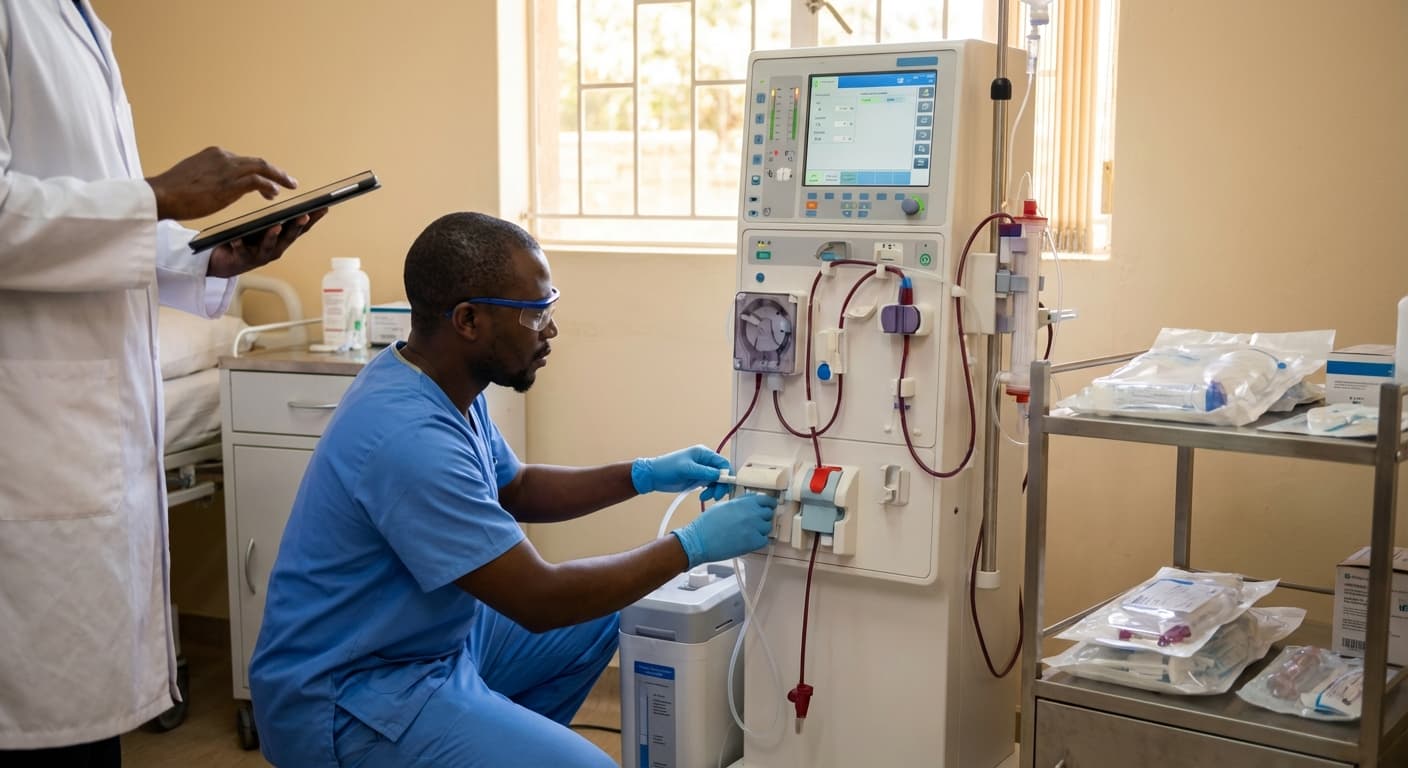
Hemodialysis Machine Installation Service in Burkina Faso
Engineering Excellence & Technical Support
Hemodialysis Machine Installation Service High-standard technical execution following OEM protocols and local regulatory frameworks.
Expert Biomedical Engineering Support
Our certified biomedical engineers ensure meticulous installation of hemodialysis machines, adhering to international standards and local health regulations in Burkina Faso. We guarantee optimal functionality and safety for critical patient care.
Comprehensive Site Preparation & Integration
We provide end-to-end installation, including essential site assessment, power and water supply verification, and seamless integration with existing hospital infrastructure. This ensures immediate operational readiness and minimal disruption.
Hands-On Staff Training & Certification
Beyond installation, we offer comprehensive training for your clinical and technical staff on machine operation, maintenance, and troubleshooting. Empower your team with the skills for confident and efficient hemodialysis delivery.
What Is Hemodialysis Machine Installation Service In Burkina Faso?
Hemodialysis machine installation service in Burkina Faso refers to the comprehensive process of setting up, configuring, and validating hemodialysis machines within healthcare facilities in the country. This service is critical for enabling the provision of life-sustaining hemodialysis treatment to patients suffering from end-stage renal disease (ESRD). It encompasses the physical placement of the equipment, connection to essential utilities (water, electricity, waste disposal), software configuration, calibration, and initial testing to ensure optimal performance and patient safety. The service typically involves trained biomedical engineers and technicians who possess the specialized knowledge and adherence to international standards and local regulations.
| Stakeholder/Entity | Need for Service | Typical Use Cases |
|---|---|---|
| Public Hospitals and Clinics in Burkina Faso | To establish or upgrade hemodialysis units to treat a growing ESRD patient population. Essential for providing critical care services. | Installation of new hemodialysis machines in newly built or renovated dialysis centers. Replacement of outdated or malfunctioning equipment. Expansion of existing dialysis capacity. |
| Private Healthcare Facilities and Dialysis Centers | To deploy state-of-the-art hemodialysis technology for a fee-based service, catering to patients with access to private insurance or personal funds. | Setting up dedicated hemodialysis suites. Integration of advanced features for specialized dialysis modalities (e.g., online hemodiafiltration). Ensuring compliance with private healthcare standards. |
| Non-Governmental Organizations (NGOs) and Humanitarian Organizations | To provide essential dialysis services in underserved or resource-limited regions, often as part of broader healthcare initiatives. | Installation of robust and user-friendly machines in mobile dialysis units or remote clinics. Deployment of equipment requiring minimal maintenance and readily available spare parts. |
| Ministry of Health and National Health Authorities | To ensure standardized and safe implementation of hemodialysis services across the nation, promoting equitable access to treatment and compliance with national health policies. | Overseeing national dialysis infrastructure development. Setting procurement specifications for hemodialysis equipment. Facilitating the installation of machines in government-funded facilities. |
| Manufacturers and Distributors of Hemodialysis Equipment | To fulfill contractual obligations and ensure their products are correctly installed and operational, maintaining brand reputation and customer satisfaction. | On-site installation by factory-trained technicians. Post-installation support and troubleshooting. Commissioning of new equipment lines. |
Key Components of Hemodialysis Machine Installation Service
- Site Assessment and Planning
- Unpacking and Physical Setup
- Utility Connections (Water Treatment Systems, Electrical Power, Drainage)
- Software Installation and Configuration
- Calibration and Functional Testing
- System Validation and Performance Verification
- Operator Training and Handover
- Documentation and Certification
Who Needs Hemodialysis Machine Installation Service In Burkina Faso?
Hemodialysis machine installation services are crucial for the establishment and effective operation of dialysis units. These services ensure that the complex machinery is set up correctly, calibrated, and ready for patient use, minimizing downtime and maximizing patient safety. In Burkina Faso, as in many developing nations, the demand for such services is driven by the growing need to manage end-stage renal disease (ESRD) and improve access to life-sustaining treatments.
| Customer Type | Likely Departments Involved | Key Considerations for Installation |
|---|---|---|
| Public Hospitals | Nephrology Department, Biomedical Engineering Department, Facilities Management | Scalability for high patient volume, integration with existing hospital infrastructure, adherence to national health standards. |
| Private Hospitals and Clinics | Nephrology Department, Administration, Technical Services | Efficiency, patient comfort, aesthetic integration, compliance with private accreditation standards. |
| NGOs and Charities | Project Management Team, Local Healthcare Partners, Technical Advisors | Cost-effectiveness, sustainability, training for local staff, remote support capabilities. |
| New Healthcare Facility Developers | Project Management, Architects, Biomedical Engineers, Contractors | Early integration into building design, power and water supply requirements, waste management protocols. |
| Existing Dialysis Centers (Upgrades/Expansions) | Dialysis Unit Manager, Biomedical Engineers, Nursing Staff | Minimizing disruption to ongoing operations, ensuring compatibility with existing plumbing and electrical systems, staff training on new models. |
| Research and Training Institutions | Research Department Heads, Training Coordinators, Biomedical Engineering | Precision calibration for research, reliability for continuous training, integration with data logging systems. |
| International Health Organizations/Donors | Procurement Department, Project Managers, Local Implementing Partners | Adherence to donor specifications, quality assurance, robust maintenance plans, transfer of knowledge. |
Target Customers for Hemodialysis Machine Installation Service in Burkina Faso
- Public Hospitals: Government-owned tertiary and regional hospitals are primary recipients of new or upgraded dialysis facilities. They serve a large patient population and often rely on public funding for equipment acquisition and installation.
- Private Hospitals and Clinics: As healthcare access expands, private healthcare providers are increasingly investing in specialized units like nephrology and dialysis. They require professional installation to ensure service quality and attract patients.
- Non-Governmental Organizations (NGOs) and Charities: Organizations focused on improving healthcare in underserved regions often fund and establish dialysis centers. They partner with healthcare facilities to provide access to treatment, making installation services a key component of their projects.
- New Healthcare Facility Developers: Developers planning to build or expand hospitals and clinics with dedicated nephrology departments will require comprehensive installation services for all medical equipment, including hemodialysis machines.
- Existing Dialysis Centers (Upgrades and Expansions): Dialysis centers that are expanding their capacity or replacing older equipment will need installation services for the new machines. This also includes centers undergoing significant renovations or upgrades to their infrastructure.
- Research and Training Institutions: Medical training facilities and research centers that house dialysis units for educational purposes and clinical research will also require professional installation and maintenance services.
- International Health Organizations/Donors: Organizations funding healthcare infrastructure development in Burkina Faso may mandate professional installation as a condition for equipment grants or loans, ensuring proper setup and functionality.
Hemodialysis Machine Installation Service Process In Burkina Faso
The installation of a hemodialysis machine in Burkina Faso is a multi-stage process designed to ensure proper setup, functionality, and user readiness. It begins with an initial inquiry and concludes with a fully operational machine and trained personnel. This workflow outlines the key steps involved from the moment a client expresses interest to the successful completion of the installation.
| Stage | Description | Key Activities | Responsible Parties | Estimated Timeline (Days) |
|---|---|---|---|---|
| Initial Inquiry and Consultation | The client (hospital, clinic, or healthcare facility) contacts the service provider to inquire about hemodialysis machine installation. | Understanding client needs, machine type, quantity, and initial budget. Providing general information about the service. | Client, Service Provider Sales/Technical Team | 1-3 |
| Site Assessment and Requirements Gathering | A technical team visits the client's facility to evaluate the installation site. | Assessing space, power supply, water quality and supply, drainage, ventilation, and accessibility. Documenting specific requirements. | Service Provider Technical Team, Client Facility Manager | 2-5 |
| Quotation and Contract Finalization | Based on the assessment, a detailed quotation is prepared and a contract is signed. | Itemizing machine costs, installation fees, training, and any additional services. Negotiating terms and conditions. Signing the service agreement. | Service Provider Sales/Management, Client Procurement/Management | 3-7 |
| Machine Procurement and Shipping | The chosen hemodialysis machine(s) are procured and prepared for shipment to Burkina Faso. | Ordering from the manufacturer, quality control checks, customs clearance, and logistics planning for transportation. | Service Provider Procurement Team, Manufacturer, Shipping Company | 15-60 (depending on machine availability and shipping) |
| Pre-Installation Site Preparation | The client's facility prepares the installation site according to the gathered requirements. | Ensuring necessary electrical, plumbing, and ventilation modifications are completed. Setting up dedicated space. | Client Facility Management/Contractors, Service Provider Guidance | 7-21 (concurrent with shipping) |
| Machine Delivery and Unpacking | The hemodialysis machine arrives at the client's facility and is unpacked. | Receiving the shipment, inspecting for transit damage, carefully unpacking the machine(s). | Shipping Company, Client Staff, Service Provider Technicians | 1-2 |
| Installation and Setup | Certified technicians install and connect the hemodialysis machine. | Assembling components, connecting to water supply, power, and drainage systems, securing the machine in its designated location. | Service Provider Certified Technicians | 2-5 |
| Testing and Calibration | The installed machine undergoes rigorous testing and calibration. | Performing functional tests, water purity tests, pressure checks, and calibrating all parameters to manufacturer specifications. | Service Provider Certified Technicians | 1-3 |
| User Training | Healthcare professionals are trained on the operation and basic maintenance of the machine. | Demonstrating machine functions, dialysis procedures, troubleshooting common issues, and safety protocols. | Service Provider Certified Trainers, Client Clinical Staff | 3-7 |
| Final Handover and Documentation | The installed machine is officially handed over to the client with all necessary documentation. | Presenting test results, calibration reports, user manuals, warranty information, and service contracts. Obtaining client sign-off. | Service Provider Project Manager/Lead Technician, Client Representative | 1 |
| Post-Installation Support | Ongoing support is provided to ensure continued optimal performance. | Scheduled maintenance, troubleshooting, emergency technical assistance, and spare parts supply. | Service Provider Technical Support, Client Biomedical Department | Ongoing |
Hemodialysis Machine Installation Service Process in Burkina Faso
- Initial Inquiry and Consultation
- Site Assessment and Requirements Gathering
- Quotation and Contract Finalization
- Machine Procurement and Shipping
- Pre-Installation Site Preparation
- Machine Delivery and Unpacking
- Installation and Setup
- Testing and Calibration
- User Training
- Final Handover and Documentation
- Post-Installation Support
Hemodialysis Machine Installation Service Cost In Burkina Faso
Installing a hemodialysis machine in Burkina Faso involves several factors that influence the overall cost. These factors range from the type and model of the machine to the complexity of the installation site and the services included by the provider. Understanding these elements is crucial for healthcare facilities budgeting for new equipment and services.
| Service Component | Estimated Cost Range (XOF) |
|---|---|
| Basic Hemodialysis Machine Unit (excluding installation) | 20,000,000 - 70,000,000+ |
| Water Treatment System (RO/DI) | 5,000,000 - 25,000,000+ |
| Site Preparation (electrical, plumbing, HVAC adjustments) | 2,000,000 - 15,000,000+ |
| Machine Installation & Calibration | 1,000,000 - 5,000,000 |
| Staff Training (initial) | 500,000 - 2,000,000 |
| Logistics & Transportation (dependent on origin) | Variable (can be significant for imports) |
| Total Estimated Installation Service Cost (excluding machine purchase, but including essential supporting systems and services) | 8,500,000 - 47,000,000+ XOF |
Key Pricing Factors for Hemodialysis Machine Installation in Burkina Faso
- Machine Type and Brand: The cost of the hemodialysis machine itself is a significant determinant. High-end, technologically advanced machines from reputable international brands will naturally command higher prices than basic models or those from less-established manufacturers. The specific features and functionalities of the machine (e.g., advanced monitoring, user interface, connectivity) also play a role.
- Installation Site Preparation: The existing infrastructure at the healthcare facility is a critical factor. This includes: * Electrical Supply: Ensuring adequate and stable power, potentially requiring upgrades to existing circuits or the installation of a dedicated power supply. * Plumbing and Water Treatment: Hemodialysis requires ultrapure water. This often necessitates the installation or upgrading of water purification systems (reverse osmosis, deionization) and appropriate plumbing to deliver water to the machine and handle wastewater. * Ventilation and Climate Control: Maintaining optimal room temperature and humidity is essential for machine performance and patient comfort, potentially requiring HVAC system modifications. * Space and Layout: The physical space available for the machine and its accessories, as well as the ease of access for installation and maintenance, can impact labor costs.
- Logistics and Transportation: The cost of transporting the machine from the point of origin (whether imported or within Burkina Faso) to the installation site. This includes potential customs duties, shipping fees, and local transportation.
- Labor and Expertise: The fees charged by qualified technicians for the physical installation, calibration, and initial setup of the machine. This also includes training for the facility's staff on machine operation and basic maintenance.
- Ancillary Equipment and Consumables: While not strictly part of the installation, the cost of initial consumables (dialyzers, tubing, dialysate concentrate) and any required ancillary equipment (e.g., a UPS for power backup, specialized trolleys) might be bundled or factored into the overall project cost.
- Warranty and Maintenance Contracts: The duration and scope of the warranty offered, as well as any pre-negotiated maintenance contracts, will influence the initial investment. Extended warranties and comprehensive service plans will increase the upfront cost but can provide long-term value and predictability.
- Provider Reputation and Service Level: Established providers with a proven track record, comprehensive support, and quick response times may charge a premium for their services compared to smaller or less experienced installers.
Affordable Hemodialysis Machine Installation Service Options
Setting up a hemodialysis machine requires professional installation to ensure optimal performance, safety, and compliance with healthcare standards. For individuals or clinics seeking affordable options, understanding value bundles and implementing cost-saving strategies is crucial. This guide explores service packages designed to maximize value and offers practical tips for reducing overall installation expenses.
| Cost-Saving Strategy | Description | Potential Savings |
|---|---|---|
| Off-Peak Installation Scheduling | Request installation during the service provider's less busy periods (e.g., weekdays, non-holidays). | 5-15% discount on service fees. |
| Bundle with Machine Purchase | Inquire if the equipment supplier offers discounted installation when bundled with the purchase of the hemodialysis machine. | Variable, often 10-20% off installation cost. |
| DIY Site Preparation (Where Permitted) | Handle minor tasks like clearing space, ensuring adequate electrical outlets, or basic plumbing modifications if the service provider allows and it doesn't compromise safety or warranty. | Reduces labor costs, but requires careful coordination and adherence to specifications. |
| Compare Multiple Quotes | Obtain detailed proposals from at least three reputable installation service providers. | Potential for significant savings through competitive pricing. |
| Leverage Existing Infrastructure | If upgrading or replacing existing machines, utilize existing plumbing and electrical infrastructure where feasible and certified as compliant. | Reduces the need for new installations, saving on materials and labor. |
| Negotiate Post-Installation Support | Discuss and negotiate the terms of any included post-installation support or initial warranty coverage. | Avoids unexpected costs for early technical issues. |
| Consider Refurbished Machines with Installation | Explore options for professionally refurbished hemodialysis machines that often come with installation and warranty packages at a lower initial cost. | Significant upfront cost reduction compared to new machines. |
Value Bundles for Hemodialysis Machine Installation
- Basic Installation Package: Typically includes the physical setup of the machine, connection to water and electrical sources, and initial functional testing. This is the most budget-friendly option for straightforward installations.
- Standard Installation Package: Builds upon the basic package by adding essential pre-installation site assessment, water treatment system setup, and basic user training for machine operation and routine maintenance. This offers a good balance of cost and essential services.
- Premium Installation Package: Encompasses all services from the standard package, plus comprehensive water purification system integration and validation, advanced user training (including troubleshooting), and initial calibration with a certified technician. This option is ideal for clinics prioritizing full-service support and meticulous setup.
- Turnkey Solution: A comprehensive package that handles everything from site evaluation and modifications to machine installation, water treatment setup, staff training, and even initial supply procurement. This is the most expensive but offers the highest level of convenience and peace of mind, especially for new dialysis centers.
- Maintenance & Service Contracts: Often bundled with installation, these contracts offer discounted rates for post-installation preventive maintenance, emergency repair services, and software updates, providing long-term cost predictability.
Verified Providers In Burkina Faso
In Burkina Faso, access to reliable and high-quality healthcare is paramount. Franance Health has emerged as a leading name, distinguished by its rigorous credentialing process and unwavering commitment to patient care. This document outlines why verified providers associated with Franance Health represent the best choice for individuals seeking medical services in the country.
| Provider Type | Franance Health Verification Criteria | Benefits for Patients |
|---|---|---|
| General Practitioners | Valid medical license, verified degree from accredited institution, proof of continuous professional development. | Accurate diagnosis, appropriate initial treatment, referrals to specialists when needed. |
| Specialists (e.g., Cardiologists, Dermatologists, Pediatricians) | All GP criteria plus board certification in their specialty, documented experience in advanced procedures. | Expert diagnosis and management of complex conditions, access to specialized treatments. |
| Surgeons | All Specialist criteria plus a proven track record of successful surgical outcomes, adherence to stringent safety protocols. | Safe and effective surgical interventions, reduced risk of complications. |
| Dentists | Valid dental license, verified degree from accredited dental school, commitment to infection control standards. | Comprehensive oral health care, preventative treatments, restorative procedures. |
| Pharmacies | Licensed and regulated by the Ministry of Health, stocking of authentic and approved medications, adherence to dispensing regulations. | Access to safe and genuine prescription and over-the-counter medications. |
Key Advantages of Choosing Franance Health Verified Providers:
- Unwavering Commitment to Quality: Franance Health's credentialing process is meticulously designed to ensure that all affiliated healthcare professionals meet the highest standards of expertise, ethics, and patient safety.
- Rigorous Vetting and Verification: Providers undergo a comprehensive background check, including verification of their educational qualifications, licenses, certifications, and professional history. This eliminates the risk of unqualified or fraudulent practitioners.
- Specialized Expertise: Franance Health prioritizes matching patients with providers who possess the specific skills and experience required for their medical needs, ensuring effective and targeted treatment.
- Patient-Centric Approach: Verified providers are committed to a patient-first philosophy, emphasizing clear communication, empathy, and personalized care plans. Your well-being is their top priority.
- Adherence to Best Practices: Franance Health ensures its affiliated professionals stay abreast of the latest medical advancements and adhere to internationally recognized best practices in diagnosis and treatment.
- Enhanced Trust and Confidence: The 'verified' status provided by Franance Health instills confidence, allowing you to make informed decisions about your healthcare with peace of mind.
Scope Of Work For Hemodialysis Machine Installation Service
This Scope of Work (SOW) outlines the requirements for the installation of hemodialysis machines at [Hospital/Clinic Name]. The service includes delivery, unboxing, physical installation, connection to utilities (water, power, drain), initial system checks, basic functional testing, and a formal handover. The objective is to ensure the safe and efficient integration of the hemodialysis machines into the existing clinical environment, ready for immediate use by trained medical personnel.
| Item | Description | Standard Specification / Requirement | Acceptance Criteria |
|---|---|---|---|
| 1.0 | Site Readiness Verification | Confirm availability of designated installation space, adequate ventilation, correct power outlet types and ratings, access to approved water source and drain points, and absence of environmental hazards. | Signed site readiness checklist by client representative prior to equipment delivery. |
| 2.0 | Equipment Delivery and Unboxing | Safe transportation of hemodialysis machines to the installation site. Careful unboxing to prevent damage to the machines and packaging. | No visible damage to the machines or packaging upon inspection. |
| 3.0 | Physical Installation | Positioning of each machine in the designated location, ensuring stability and accessibility for operation and maintenance. Securing machines to prevent tipping or movement. | Machines are stable, level, and positioned according to site layout plan. All necessary anchoring/securing measures implemented. |
| 4.0 | Utility Connections (Water) | Connection of each machine's water inlet to the facility's approved water treatment system (e.g., RO unit) using appropriate medical-grade tubing. Ensure leak-free connections. | Water inlet connections are secure, leak-free, and compliant with water quality standards for hemodialysis. Flow rate and pressure meet manufacturer specifications. |
| 5.0 | Utility Connections (Power) | Connection of each machine to dedicated, properly grounded electrical outlets meeting manufacturer's voltage, amperage, and surge protection requirements. | Power connections are secure, grounded, and meet all electrical safety standards. Machine power-on successful. |
| 6.0 | Utility Connections (Drainage) | Connection of each machine's waste drain outlet to the facility's approved sanitary drainage system. Ensure adequate slope and no backflow. | Drain connections are secure, leak-free, and allow for proper waste disposal. No visible signs of leakage or blockage. |
| 7.0 | Initial System Power-Up and Diagnostics | Powering on each machine and running built-in self-tests and diagnostic routines as per manufacturer's instructions. Verification of error-free operation. | All self-tests complete successfully. No critical error messages displayed. Basic system parameters are within operational range. |
| 8.0 | Basic Functional Testing | Performing limited functional tests, such as cycling the dialysate pump, verifying temperature control (without actual dialysate), and checking pressure sensors. This is not a full operational validation. | Key functional components respond as expected. Basic parameters display correctly. No abnormal noises or vibrations. |
| 9.0 | Sanitization and Cleaning | Internal and external cleaning of the installed machines to remove any dust, debris, or manufacturing residues. Wipe-down of surfaces with approved disinfectants. | Machines are visibly clean and sanitized. All protective packaging removed. |
| 10.0 | Documentation and Handover | Provision of an installation report detailing the work performed, materials used, and any observations. Formal handover of the installed machines to the client representative. Training on basic operation and emergency shutdown procedures for designated personnel may be included depending on agreement. | Signed installation report. Client representative formally accepts the installed machines. Basic operational and safety orientation completed for designated staff. |
Key Stages and Deliverables
- Site assessment and preparation verification
- Machine delivery and unboxing
- Physical placement and securing of machines
- Connection to approved water treatment system
- Connection to electrical power outlets
- Connection to waste drainage system
- Initial system power-up and self-tests
- Basic functional testing (e.g., pump operation, dialysate preparation)
- Sanitization and cleaning of installed equipment
- Documentation of installation
- Client acceptance and formal handover
Service Level Agreement For Hemodialysis Machine Installation Service
This Service Level Agreement (SLA) outlines the performance standards and guarantees for the Hemodialysis Machine Installation Service provided by [Your Company Name] (hereinafter referred to as 'Service Provider') to [Client Name] (hereinafter referred to as 'Client'). This SLA applies to all new installations of hemodialysis machines as per the contract signed on [Contract Date].
| Service Metric | Response Time | Uptime Guarantee |
|---|---|---|
| Initial Contact for Installation Scheduling | Within 2 business days of receiving a confirmed order from the Client. | N/A |
| On-site Arrival for Scheduled Installation | Within 30 minutes of the scheduled appointment time. | N/A |
| Completion of Standard Installation (per machine) | Within 4 business hours of on-site arrival (excluding utility readiness by Client). | N/A |
| Post-Installation Functional Testing | Completed immediately after standard installation. | N/A |
| Resolution of Critical Installation Errors | Within 8 business hours of identification of a critical error during installation. | N/A |
| Availability of Installed Hemodialysis Machines (Post-Acceptance) | 99.5% uptime during scheduled operational hours, excluding scheduled maintenance and planned downtime. | 99.5% |
| Technical Support During Installation | 24/7 availability for critical issues encountered during the installation window. | N/A |
Scope of Service
- On-site delivery and unboxing of new hemodialysis machines.
- Physical installation and connection of machines to required utilities (water, power, waste).
- Initial calibration and functional testing of each machine.
- Basic user orientation for designated clinical staff.
- Confirmation of successful installation and handover to the Client.
Frequently Asked Questions

Ready when you are
Let's scope your Hemodialysis Machine Installation Service in Burkina Faso project in Burkina Faso.

Scaling healthcare logistics and technical systems across the entire continent.