
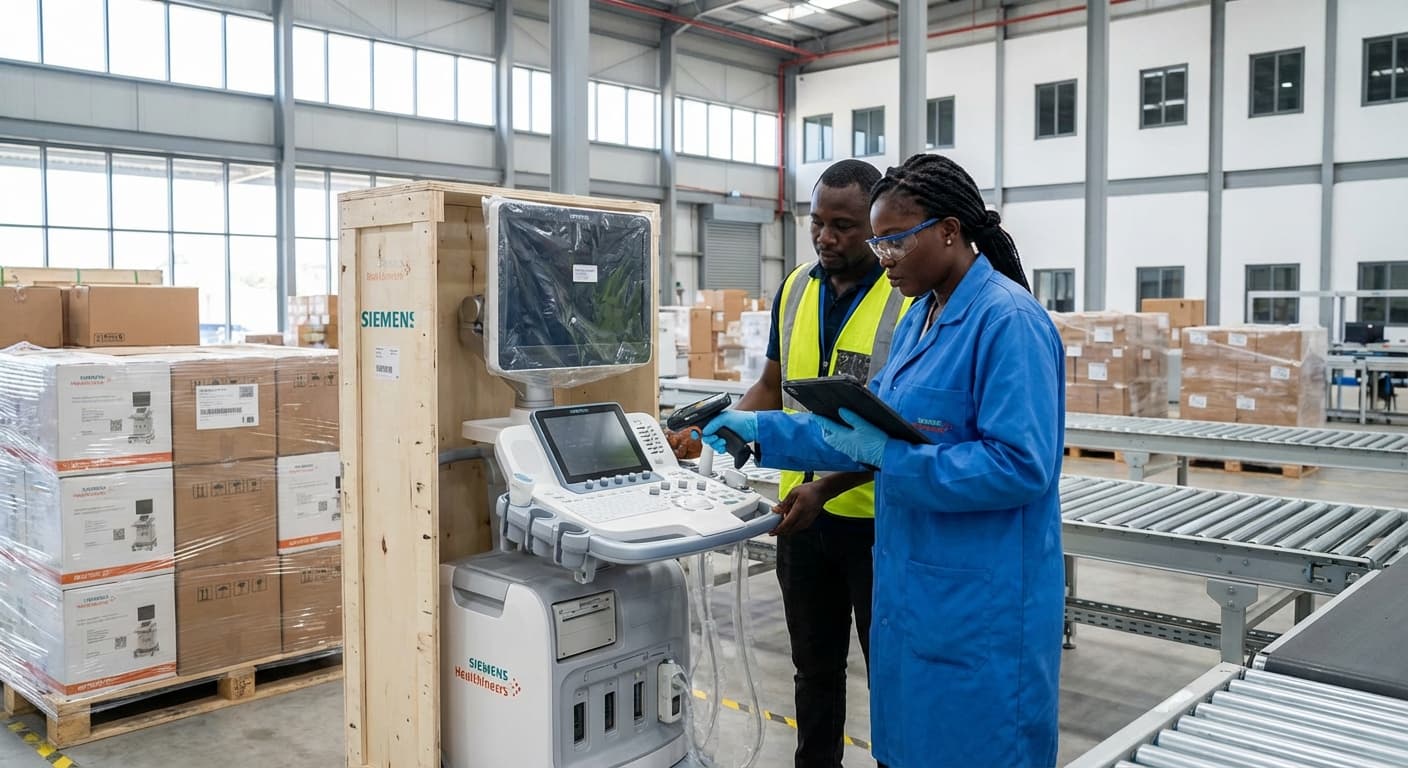
Warehouse Receiving Inspection Service (Medical Equipment) in Burkina Faso
Engineering Excellence & Technical Support
Warehouse Receiving Inspection Service (Medical Equipment) High-standard technical execution following OEM protocols and local regulatory frameworks.
Rigorous Quality Assurance Protocols
Implementing internationally recognized ISO standards and tailored Good Distribution Practices (GDP) for medical equipment, ensuring every incoming item undergoes comprehensive visual inspection, functional testing (where applicable), and documentation verification to prevent substandard or counterfeit products from entering the supply chain in Burkina Faso.
Controlled Environment Monitoring
Utilizing calibrated environmental monitoring equipment to track temperature, humidity, and light exposure during the receiving process, safeguarding the integrity and efficacy of sensitive medical devices and pharmaceuticals, crucial for maintaining product stability in Burkina Faso's diverse climate.
End-to-End Traceability & Inventory Management
Employing advanced barcode scanning and serialization technologies to capture and record unique product identifiers, batch numbers, and expiry dates at the point of receipt, providing real-time inventory visibility and enabling swift recall capabilities for enhanced accountability and regulatory compliance within Burkina Faso's healthcare system.
What Is Warehouse Receiving Inspection Service (Medical Equipment) In Burkina Faso?
Warehouse Receiving Inspection Service (Medical Equipment) in Burkina Faso refers to the systematic process of verifying the quantity, quality, and compliance of medical equipment upon arrival at a designated storage facility within Burkina Faso. This service is critical for ensuring that procured medical devices meet specified standards, are fit for intended use, and are properly documented before being integrated into the healthcare supply chain.
| Who Needs This Service? | Typical Use Cases | ||||
|---|---|---|---|---|---|
| Government Health Ministries and Agencies: Responsible for national procurement and distribution of medical equipment. | Hospitals and Clinics (Public and Private): Receiving direct shipments of medical equipment for operational use. | Non-Governmental Organizations (NGOs) and International Aid Agencies: Procuring and distributing medical supplies and equipment for humanitarian projects and healthcare initiatives. | Medical Equipment Suppliers and Distributors: Receiving imported medical devices for warehousing and onward sale within Burkina Faso. | Procurement Agents and Third-Party Logistics Providers (3PLs): Managing the logistics and warehousing of medical equipment on behalf of other entities. | |
| Importation of New Medical Devices: Ensuring imported equipment from international manufacturers meets quality and safety standards before entering the national healthcare system. | Procurement of Essential Medical Equipment: Verifying the receipt of critical devices (e.g., diagnostic machines, surgical instruments, patient monitors) funded by government budgets or international grants. | Donated Medical Supplies: Inspecting and documenting the condition and quantity of medical equipment received as donations from foreign entities or organizations. | Stock Replenishment and Inventory Management: Confirming the accuracy of incoming stock against purchase orders for ongoing operational needs. | End-of-Project or Program Equipment Returns: Inspecting equipment being returned to a central warehouse after project completion. | Compliance with Regulatory Requirements: Ensuring received equipment aligns with any specific national standards or certifications mandated by Burkina Faso's health authorities. |
Key Components of Warehouse Receiving Inspection Service (Medical Equipment) in Burkina Faso:
- Initial Documentation Review: Verifying purchase orders, invoices, packing lists, certificates of origin, quality control certificates, and any other relevant import documentation against the physical shipment.
- Quantity Verification: Counting and confirming that the number of units received matches the declared quantities on shipping manifests and purchase orders.
- Physical Inspection: Assessing the external condition of the packaging for damage, signs of tampering, and proper labeling. This includes checking for integrity of seals and any required hazard symbols.
- Product Identification and Verification: Confirming that the equipment received matches the product specifications (model number, serial number, manufacturer, etc.) as per the procurement documents.
- Damage Assessment: Thoroughly inspecting the medical equipment itself for any visible damage that may have occurred during transit or handling.
- Completeness Check: Ensuring all accessories, manuals, warranty cards, and other accompanying items specified in the procurement are present.
- Initial Functionality Testing (where applicable): For certain types of equipment, basic 'power-on' or superficial functionality checks may be performed to identify obvious defects. More extensive testing is typically deferred to pre-use inspections.
- Environmental Condition Assessment: Verifying that the storage environment upon receipt is suitable for the type of medical equipment (e.g., temperature, humidity) to prevent immediate degradation.
- Documentation of Findings: Recording all observations, discrepancies, damages, and non-conformities in an inspection report, often including photographic evidence.
- Quarantine and Non-Conformance Handling: Initiating quarantine procedures for any damaged or non-conforming items and facilitating the process for returns, replacements, or corrective actions.
Who Needs Warehouse Receiving Inspection Service (Medical Equipment) In Burkina Faso?
When it comes to ensuring the quality and integrity of critical medical equipment arriving in Burkina Faso, a dedicated Warehouse Receiving Inspection Service is indispensable. This service plays a vital role in safeguarding public health by preventing the entry of substandard, damaged, or counterfeit medical devices. The demand for such a specialized inspection service spans a range of organizations and governmental bodies that are responsible for the procurement, storage, and distribution of medical equipment within the country.
| Target Customer Group | Key Departments/Functions Involved | Reason for Requiring Inspection Service |
|---|---|---|
| Government Ministries and Agencies | Ministry of Health (Procurement Department, Quality Assurance Department, Logistics Department), Ministry of Finance (for budget allocation and oversight) | To ensure that publicly funded medical equipment is of the required quality, meets specifications, and is free from defects before being deployed to public health facilities. Prevents financial loss due to faulty equipment and ensures patient safety. |
| Healthcare Providers (Public & Private) | Hospital Administration, Biomedical Engineering Departments, Procurement Officers, Clinical Departments (for specialized equipment) | To verify the functionality, condition, and compliance of medical equipment upon arrival. Crucial for immediate patient care, reducing downtime, and ensuring the efficacy of medical procedures. Private entities also need to protect their investments and reputation. |
| Non-Governmental Organizations (NGOs) & International Aid Organizations | Program Managers, Logistics/Supply Chain Officers, Medical Coordinators, Procurement Departments | To confirm that donated or procured medical equipment for their projects aligns with project goals and international standards. Essential for the success of health programs and the effective use of donor funds. |
| Medical Equipment Importers & Distributors | Quality Control Department, Sales & Marketing Department, Logistics & Warehousing Department, Compliance Department | To validate the quality of imported equipment, meet regulatory requirements for market entry, build trust with clients, and avoid costly returns or recalls. Ensures products are fit for purpose and comply with national standards. |
| Procurement Agencies | Tender Evaluation Committees, Technical Review Teams, Contract Management Officers | To provide independent verification of equipment quality as part of the procurement process. Ensures that awarded contracts deliver compliant and functional equipment, thereby safeguarding public funds and public health outcomes. |
Target Customers and Departments for Warehouse Receiving Inspection Service (Medical Equipment) in Burkina Faso
- {"title":"Government Ministries and Agencies","description":"These are primary recipients and distributors of medical equipment funded by national budgets and international aid."}
- {"title":"Healthcare Providers (Public & Private)","description":"Hospitals, clinics, and health centers, whether publicly funded or privately operated, are direct users of medical equipment and need assurance of its quality."}
- {"title":"Non-Governmental Organizations (NGOs) & International Aid Organizations","description":"Organizations involved in medical aid, development projects, and humanitarian efforts often procure and distribute medical equipment in Burkina Faso."}
- {"title":"Medical Equipment Importers & Distributors","description":"Companies that import and distribute medical equipment within Burkina Faso have a vested interest in ensuring their products meet quality standards to maintain reputation and comply with regulations."}
- {"title":"Procurement Agencies","description":"Entities responsible for the tendering and purchasing of medical equipment on behalf of various government and public health institutions."}
Warehouse Receiving Inspection Service (Medical Equipment) Process In Burkina Faso
This document outlines the standard workflow for the Warehouse Receiving Inspection Service for medical equipment in Burkina Faso, from initial client inquiry through the final execution of the inspection. The process is designed to ensure the quality, integrity, and compliance of medical equipment upon arrival at its destination.
| Stage | Activity | Description | Responsible Party | Deliverables/Outcomes |
|---|---|---|---|---|
| Initial Contact | Client contacts the inspection service provider to request receiving inspection for medical equipment. This includes understanding the type of equipment, quantity, origin, intended destination, and any specific client requirements or standards to be verified. | Client, Inspection Service Provider (Sales/Business Development) | Understanding of client needs, initial scope definition. |
| Proposal Generation | Based on the gathered requirements, the inspection service provider prepares a detailed quotation outlining the scope of work, methodology, timeline, applicable standards, and fees. This is followed by contract negotiation and signing. | Inspection Service Provider, Client | Formal quotation, signed contract/agreement. |
| Team Assignment & Logistics | A qualified inspection team is assigned. The team reviews all relevant documentation (e.g., purchase orders, shipping manifests, manufacturer specifications, previous inspection reports). Logistics for the on-site inspection (travel, accommodation, site access) are arranged. | Inspection Service Provider (Operations/Project Management) | Assigned inspection team, confirmed logistics, reviewed documentation. |
| Inspection Protocol Development | A detailed inspection protocol is developed, tailored to the specific equipment and client requirements. This protocol outlines the specific checks, tests, and documentation to be reviewed during the on-site inspection. | Inspection Service Provider (Inspection Team Lead) | Approved inspection protocol. |
| Arrival & Site Briefing | The inspection team arrives at the designated warehouse facility in Burkina Faso. A pre-inspection briefing is conducted with the warehouse staff and client representatives to confirm access, procedures, and any site-specific considerations. | Inspection Team, Warehouse Staff, Client Representatives | Site access granted, mutual understanding of procedures. |
| Visual Inspection | The team conducts a thorough visual inspection of the medical equipment. This includes checking for physical damage, proper packaging, correct labeling (including serial numbers, model numbers, expiry dates), and conformity with the shipping manifest. | Inspection Team | Visual inspection checklist completed, identified damages/discrepancies. |
| Documentation Review | Relevant documentation accompanying the equipment is reviewed. This may include certificates of origin, quality certificates, user manuals, warranty cards, and any required regulatory compliance documents. | Inspection Team | Documentation verification report. |
| Functional Testing (if applicable) | For certain types of equipment, basic functional tests may be performed to ensure they are operational and meet specified parameters. This is conducted in accordance with the pre-defined inspection protocol. | Inspection Team | Functional test results recorded. |
| Sampling & Testing (if specified) | If specified in the contract, samples may be taken or further laboratory testing arranged to verify material quality or performance characteristics. | Inspection Team, Third-Party Labs (if applicable) | Sample collection, test requests submitted. |
| Draft Report Generation | Following the on-site inspection, the team compiles all findings, observations, and test results into a draft inspection report. This report will highlight any non-conformities, deviations from specifications, or damages. | Inspection Team | Draft inspection report. |
| Report Review & Issuance | The draft report is reviewed by the inspection service provider's management. Once finalized, the official inspection report, including photographic evidence where applicable, is issued to the client. | Inspection Service Provider (Management), Client | Finalized and issued inspection report. |
| Corrective Action Verification (if needed) | If non-conformities were identified, the client may initiate corrective actions. The inspection service provider may be engaged to verify the effectiveness of these corrective actions. | Client, Inspection Service Provider | Confirmation of corrective action completion. |
| Project Closure | Once all inspection activities are completed and the final report is accepted by the client, the project is formally closed. This may involve final invoicing and archival of project documentation. | Inspection Service Provider, Client | Project closure confirmation, final documentation. |
Key Stages of the Warehouse Receiving Inspection Service:
- Client Inquiry and Requirement Gathering
- Quotation and Agreement
- Pre-Inspection Planning
- On-site Inspection Execution
- Reporting and Documentation
- Follow-up and Closure
Warehouse Receiving Inspection Service (Medical Equipment) Cost In Burkina Faso
The cost of warehouse receiving inspection services for medical equipment in Burkina Faso can vary significantly based on several factors. These services are crucial to ensure that medical equipment arriving at warehouses meets quality standards, specifications, and regulatory requirements before being distributed. The pricing is influenced by the complexity of the equipment, the volume of inspections, the location of the warehouse, and the specific scope of work required by the client. Typically, inspection firms will offer tiered pricing based on these elements.
| Service Component | Estimated Price Range (XOF) | Notes |
|---|---|---|
| Basic Visual Inspection (per item/unit) | 5,000 - 15,000 | Checks for visible damage, correct labeling, and packaging integrity. |
| Standard Functional Testing (per item/unit) | 15,000 - 50,000 | Includes basic operational checks to ensure the equipment powers on and performs core functions. Varies greatly by equipment type. |
| Comprehensive Inspection (per item/unit) | 50,000 - 200,000+ | Involves detailed functional testing, calibration verification, documentation review, and potentially pre-installation checks. For complex equipment, this can be significantly higher. |
| Per Diem for Inspector (local) | 30,000 - 75,000 | Covers daily living expenses for the inspector if the inspection is extended or requires overnight stays. |
| Travel & Logistics (per trip) | 20,000 - 100,000+ | Covers transportation, accommodation (if applicable), and other on-ground costs. Highly dependent on distance and accessibility. |
| Report Generation (basic) | 5,000 - 10,000 | Standard inspection checklist and summary findings. |
| Report Generation (detailed/custom) | 15,000 - 50,000+ | Includes photographs, in-depth analysis, recommendations, and compliance verification. |
| Rush Service Fee (percentage) | 20% - 50% of total service cost | Applied for urgent requests requiring immediate deployment. |
| Bulk Discount (volume-based) | Negotiable (e.g., 5-20% off) | Applied for large batches of inspections, typically for hundreds or thousands of items. |
Key Pricing Factors for Warehouse Receiving Inspection Services (Medical Equipment) in Burkina Faso
- Equipment Complexity and Type: Highly specialized or sensitive medical equipment (e.g., imaging machines, complex diagnostic tools) will command higher inspection fees due to the need for specialized knowledge, calibration, and testing procedures. Simpler equipment may have lower costs.
- Scope of Inspection: The depth and breadth of the inspection are primary cost drivers. This can range from a basic visual check for damage and correct labeling to comprehensive functional testing, calibration verification, documentation review (manuals, certificates), and even pre-installation checks.
- Volume of Inspections: A larger number of items to be inspected often leads to a lower per-unit cost. Bulk discounts are common in the inspection industry.
- Location of Warehouse: Warehouses located in remote or difficult-to-access areas within Burkina Faso may incur additional travel and logistical costs for the inspectors, which will be factored into the overall price.
- Urgency of Service: Rush inspections or those requiring immediate attention outside of standard working hours will likely be subject to premium pricing.
- Inspector Qualifications and Experience: Inspections requiring highly qualified and experienced technicians, particularly those with specialized medical equipment certifications, will naturally be more expensive.
- Reporting Requirements: The level of detail and format of the inspection report can influence cost. Detailed reports with photographic evidence and in-depth analysis will be priced higher than basic checklists.
- Regulatory Compliance Checks: If the inspection includes verifying compliance with specific Burkinabe health regulations or international standards (e.g., WHO, ISO), this will add to the complexity and cost.
- Client-Specific Requirements: Any unique or additional requests from the client that go beyond standard inspection protocols will impact the final price.
Affordable Warehouse Receiving Inspection Service (Medical Equipment) Options
Securing reliable and cost-effective warehouse receiving inspection services for medical equipment is crucial. This ensures the integrity of incoming inventory, prevents costly returns, and maintains compliance with regulatory standards. This guide outlines affordable service options, focusing on value bundles and strategic cost-saving measures.
| Value Bundle Description | Included Services | Cost-Saving Benefit | Ideal For |
|---|---|---|---|
| Basic Incoming Verification | Visual inspection for damage, quantity verification, matching against packing slips, basic documentation. | Lower per-inspection cost, suitable for non-critical items or routine checks. | High-volume receiving of standardized, low-risk medical supplies. |
| Standard Compliance Check | Includes Basic Verification plus checks for proper labeling, expiration dates (where applicable), and initial documentation review for regulatory adherence. | Combines essential checks at a more economical price than separate services. | Most medical equipment receiving, ensuring basic compliance. |
| Advanced Quality Assurance | Includes Standard Compliance Check plus functional testing (if applicable), detailed condition assessment, non-conformance reporting, and detailed photographic evidence. | Proactive identification of issues reduces costly returns and potential patient safety risks, offering long-term savings. | High-value, complex, or high-risk medical equipment requiring thorough due diligence. |
| Subscription Package (e.g., Monthly/Quarterly) | Customizable bundle of inspections based on anticipated volume, often with a set number of inspections included at a discounted rate. May include priority scheduling. | Predictable monthly/quarterly costs, volume discounts, and streamlined booking. | Businesses with consistent and predictable receiving volumes. |
| 'Add-On' Inspection Services | Ability to add specific inspections (e.g., sterile packaging integrity, specific technical checks) to a base service package at a reduced rate compared to standalone. | Pay only for the specialized checks needed, avoiding unnecessary costs. | Receiving of equipment with specific, unique inspection requirements. |
Affordable Warehouse Receiving Inspection Service Options
- Tiered Service Packages: Service providers often offer different levels of inspection, allowing you to choose the depth and frequency that best suits your needs and budget.
- Subscription Models: For consistent high-volume receiving, subscription plans can provide discounted rates and predictable budgeting.
- On-Demand Services: For lower volume or infrequent needs, on-demand services offer flexibility without long-term commitments.
- Regional & Local Providers: Partnering with local or regional inspection companies can reduce travel costs and response times.
- Leveraging Technology: Explore providers who utilize digital reporting and photo/video documentation, reducing administrative overhead and potential for errors.
- Bundle with Other Services: Inquire about bundling receiving inspections with other warehouse services like inventory management, quality control checks, or labeling.
Verified Providers In Burkina Faso
In Burkina Faso's healthcare landscape, discerning reliable and qualified medical services is paramount. Franance Health stands out as a leader, offering a network of verified providers who adhere to stringent quality standards. This commitment ensures patients receive safe, effective, and ethical medical care. Understanding Franance Health's credentialing process and what makes their network the best choice empowers individuals to make informed decisions about their health.
| Credentialing Aspect | Franance Health's Standard | Benefit to Patients |
|---|---|---|
| Professional Licensing | Verification of current and valid medical licenses from recognized authorities. | Ensures providers are legally authorized and meet basic competency requirements. |
| Education and Training | Thorough review of academic qualifications and specialized training. | Guarantees providers possess the necessary knowledge and skills for their practice. |
| Clinical Experience | Assessment of previous work history and practical experience. | Confirms providers have hands-on expertise in patient care. |
| Peer Review and Performance | Inclusion of peer recommendations and, where applicable, performance metrics. | Provides an indicator of a provider's reputation and effectiveness within the medical community. |
| Background Checks | Criminal and professional conduct checks. | Ensures patient safety and ethical practice by screening for any disqualifying issues. |
| Continuing Medical Education (CME) | Requirement for ongoing professional development and updates. | Confirms providers stay current with the latest medical advancements and techniques. |
Why Franance Health Providers are the Best Choice:
- Rigorous Vetting Process: Franance Health implements a comprehensive credentialing system, scrutinizing each provider's qualifications, experience, and adherence to best practices.
- Commitment to Quality Care: Verified providers are dedicated to delivering high-quality medical services, focusing on patient safety, positive outcomes, and ethical conduct.
- Access to Specialized Expertise: The network encompasses a diverse range of medical professionals, ensuring access to specialized care when needed.
- Enhanced Patient Trust: The "verified" status provides an added layer of assurance for patients, building confidence in the quality of care they will receive.
- Compliance with Standards: Franance Health providers operate in compliance with national and international healthcare regulations and standards.
Scope Of Work For Warehouse Receiving Inspection Service (Medical Equipment)
This Scope of Work outlines the requirements for a Warehouse Receiving Inspection Service specifically for medical equipment. The service encompasses thorough inspection of incoming medical equipment to ensure it meets quality, safety, and functional standards before being accepted into the warehouse inventory. This document details the technical deliverables expected and the standard specifications to be adhered to during the inspection process.
| Inspection Area | Standard Specification/Requirement | Inspection Method | Acceptance Criteria |
|---|---|---|---|
| Documentation Verification | Completeness and accuracy of shipping documents (BOL, Packing List, PO, Manufacturer's Certificate of Analysis/Conformance, Sterilization Certificates). | Cross-referencing physical items against documentation. | All required documents present, accurate, and legible. No discrepancies between documents and actual shipment. |
| Visual Inspection - Packaging | Integrity of outer packaging (boxes, crates, pallets). No signs of damage, punctures, tears, water ingress, or tampering. | Visual examination of all external surfaces of the packaging. | Packaging intact and suitable for protecting contents during transit and handling. |
| Visual Inspection - Product | Physical condition of the medical equipment. No visible damage (scratches, dents, cracks, deformation), contamination, or signs of prior use. | Detailed visual inspection of the equipment's exterior and accessible internal components. | Equipment is free from cosmetic and structural defects. Serial numbers and model numbers match documentation. |
| Functional Testing (Basic) | Verification of essential operational functions as per manufacturer's specifications. Power on, basic controls, indicator lights. | Controlled activation of specified functions. Follow basic operating instructions from user manual. | Equipment powers on and specified functions operate as intended without error messages or abnormal noises. Safety features engage correctly. |
| Labeling and Identification | Accuracy and legibility of product labels, including manufacturer name, model number, serial number, expiry dates (if applicable), regulatory markings (e.g., CE, FDA). | Comparison of labels against product specifications and documentation. | All labels present, correct, legible, and conform to regulatory requirements. |
| Completeness of Accessories and Components | Verification of all listed accessories, consumables, and components as per the packing list and product manual. | Inventory check against the packing list and manual. | All specified accessories and components are present and in good condition. |
| Sterilization Status (if applicable) | Verification of sterilization indicators or certificates for sterile medical equipment. | Visual check of sterilization indicators (e.g., autoclave tape) and review of provided sterilization certificates. | Sterilization indicators show successful sterilization, or valid sterilization certificate is provided. |
| Temperature/Humidity Sensitive Items | Verification of environmental conditions during transit (if data loggers are provided) and condition of packaging for sensitive items. | Review of temperature/humidity data loggers and visual inspection of packaging. | Environmental conditions remained within specified ranges. Packaging integrity maintained. |
Technical Deliverables
- Detailed Inspection Reports for each received batch/item.
- Non-Conformance Reports (NCRs) for any identified deviations from specifications.
- Corrective Action Recommendations (CARs) for identified non-conformances.
- Summary Inspection Performance Metrics (e.g., rejection rate, inspection time).
- Digital photographs of inspected items, including any defects or damage.
- Certificate of Inspection (if required by client) for compliant shipments.
- Updated inventory status (if integrated with client's WMS).
Service Level Agreement For Warehouse Receiving Inspection Service (Medical Equipment)
This Service Level Agreement (SLA) outlines the guaranteed response times and uptime for the Warehouse Receiving Inspection Service for Medical Equipment provided by [Your Company Name] (hereinafter referred to as "Provider") to [Client Company Name] (hereinafter referred to as "Client"). This SLA is an integral part of the Master Service Agreement between the Provider and Client.
| Service Component | Uptime Guarantee | Response Time Guarantee | Definition |
|---|---|---|---|
| Availability of Inspection Personnel | 99.5% (during agreed-upon business hours) | Within 1 hour of scheduled arrival time | Ensures qualified inspection personnel are available and ready to commence inspection within the defined timeframe during operating hours. |
| Completion of Initial Receiving Inspection (per shipment, average) | N/A (Service is event-driven) | Within 4 business hours of shipment arrival and verification of contents | The time from the point the inspection can reasonably commence (e.g., shipment is accessible and manifests are available) to the completion of the initial inspection report. |
| Delivery of Inspection Report | N/A (Service is event-driven) | Within 2 business hours of inspection completion | The time from the conclusion of the physical inspection to the delivery of the digital inspection report to the designated Client contact. |
| Escalation of Critical Issues (e.g., significant damage, major quantity discrepancies) | N/A (Service is event-driven) | Immediate notification (within 30 minutes) of discovery | Urgent communication of severe issues to pre-defined Client contacts via agreed-upon channels (e.g., phone call followed by email). |
Scope of Service
- Upon delivery of medical equipment to the Client's designated warehouse facility, the Provider shall perform an initial receiving inspection.
- The receiving inspection will verify the quantity of received items against the shipping manifest and purchase order.
- The inspection will include a visual check for any external damage to packaging and the equipment itself.
- Identification and verification of each item's serial number and model number against provided documentation.
- Documentation of the inspection findings, including any discrepancies, damages, or issues encountered.
- This service is limited to the receiving dock of the Client's warehouse and does not include internal warehousing, storage, or further quality control testing beyond initial visual inspection and verification.
Frequently Asked Questions

Ready when you are
Let's scope your Warehouse Receiving Inspection Service (Medical Equipment) in Burkina Faso project in Burkina Faso.

Scaling healthcare logistics and technical systems across the entire continent.