
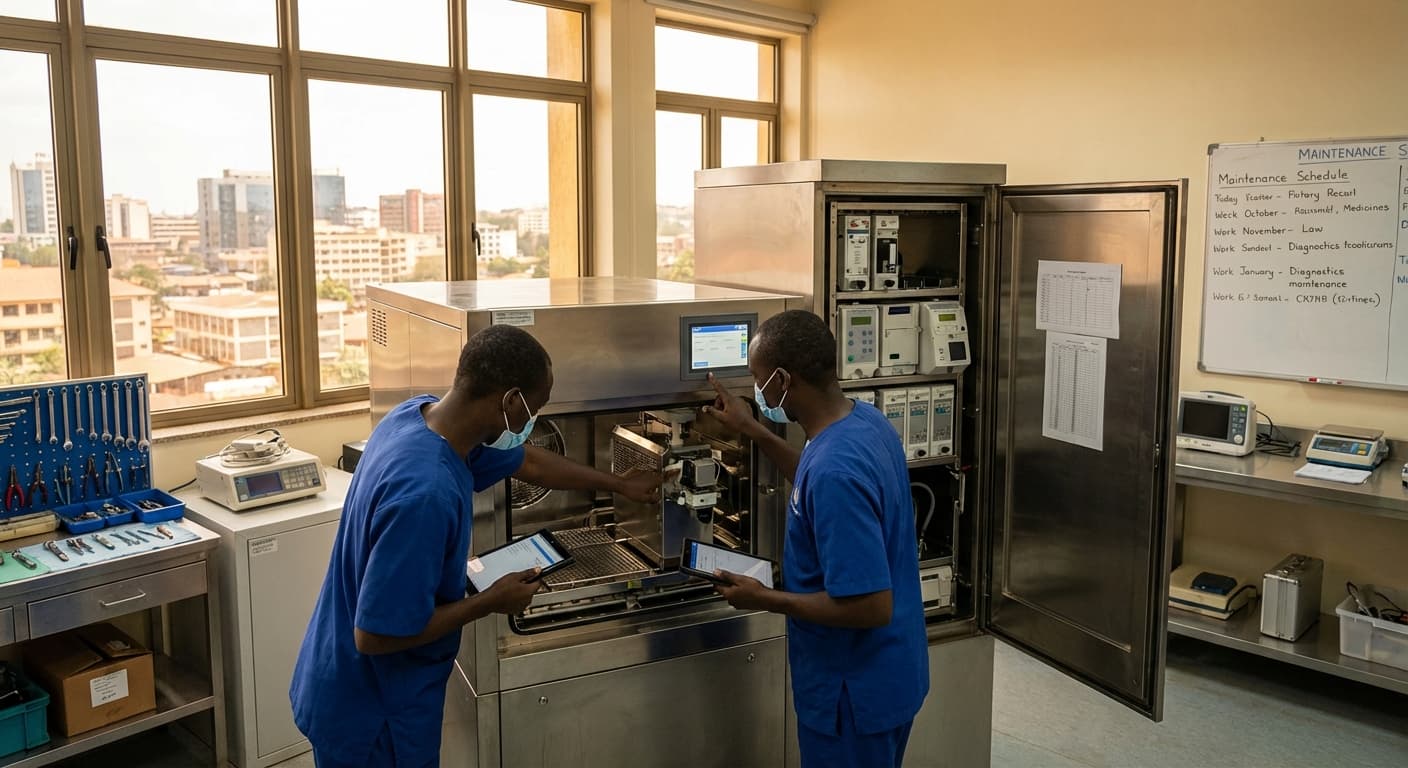
Total Cost of Ownership (TCO) & Lifecycle Budgeting Service in Burkina Faso
Engineering Excellence & Technical Support
Total Cost of Ownership (TCO) & Lifecycle Budgeting Service High-standard technical execution following OEM protocols and local regulatory frameworks.
Optimized Asset Lifecycle Value
Leveraging advanced data analytics and predictive modeling, we identify cost-saving opportunities throughout the entire lifecycle of your assets in Burkina Faso, from acquisition and operation to maintenance and eventual disposal. This ensures maximum return on investment and minimizes unexpected expenditures.
Predictive Maintenance Cost Mitigation
Our TCO service employs IoT integration and real-time sensor data to proactively predict equipment failures and schedule maintenance. This significantly reduces costly emergency repairs, minimizes downtime, and extends the operational life of critical infrastructure and machinery in Burkina Faso.
Strategic Procurement & Resource Allocation
We provide granular TCO insights to inform strategic procurement decisions for goods and services in Burkina Faso. By analyzing total costs beyond initial purchase price, including energy consumption, spare parts, and labor, we empower you to make informed choices that optimize resource allocation and long-term financial performance.
What Is Total Cost Of Ownership (Tco) & Lifecycle Budgeting Service In Burkina Faso?
Total Cost of Ownership (TCO) & Lifecycle Budgeting (LCB) services in Burkina Faso encompass a comprehensive financial assessment and planning methodology. TCO quantifies all direct and indirect costs associated with acquiring, operating, maintaining, and eventually disposing of an asset or system over its entire lifespan. LCB, a closely related concept, extends this by integrating TCO principles into the budgeting process, ensuring that the full financial implications are considered from initial investment through to decommissioning. This service aims to provide organizations with a holistic understanding of their financial commitments, enabling more informed decision-making, risk mitigation, and optimized resource allocation within the Burkinabe economic and regulatory context.
| Who Needs TCO & Lifecycle Budgeting Service? | Typical Use Cases in Burkina Faso |
|---|---|
| Government Agencies and Public Sector Entities: For infrastructure projects (roads, utilities, public buildings), fleet management, IT systems, and public services where long-term financial planning and accountability are paramount. Ensuring responsible use of public funds is critical. | Infrastructure Development: Assessing the TCO of new road networks, water treatment plants, power generation facilities, and telecommunication infrastructure, considering initial construction, ongoing operation and maintenance, and eventual upgrade or replacement costs. For example, evaluating the TCO of different solar power versus traditional grid expansion projects in diverse regions of Burkina Faso. |
| Large Corporations and Parastatals: Particularly those with significant capital investments, operational expenditures, and long asset lifespans (e.g., mining, agriculture, energy, telecommunications). Focusing on maximizing return on investment and minimizing operational risks. | Resource Extraction (Mining): Evaluating the TCO of mining equipment (excavators, haul trucks, processing plants), considering the harsh operational environment, fuel costs, spare parts availability, and regulatory compliance related to environmental impact and worker safety. This includes the cost of rehabilitating mining sites post-operation. |
| International Organizations and NGOs: When managing projects involving significant asset acquisition, implementation, and long-term sustainability, especially in development contexts. Ensuring project viability and long-term impact beyond initial funding. | Agricultural Project Implementation: Analyzing the TCO of agricultural machinery, irrigation systems, and storage facilities to optimize operational efficiency, reduce post-harvest losses, and ensure the sustainability of agricultural initiatives, especially in regions facing climate change challenges. |
| Financial Institutions and Investors: For evaluating the long-term financial viability of investments in assets or companies, particularly in sectors with high capital intensity and long payback periods. Assessing the true financial risk and potential return. | Public-Private Partnerships (PPPs): Developing robust lifecycle budgets for PPP projects, clearly defining cost responsibilities and financial risks for both public and private entities over the project's duration. Ensuring financial sustainability of services like toll roads or power plants. |
| Businesses with Fleet Operations: For vehicles, machinery, and transportation assets, optimizing acquisition, maintenance, fuel consumption, and replacement strategies to reduce operational costs. | Information Technology (IT) Systems: Assessing the TCO of software licenses, hardware, cloud services, network infrastructure, and ongoing IT support to make informed decisions about technology investments and upgrades. This includes evaluating the TCO of on-premise versus cloud-based solutions for businesses operating in Burkina Faso. |
| Manufacturing and Industrial Companies: For plant and equipment, production lines, and facility management, aiming to minimize downtime, optimize energy consumption, and ensure efficient maintenance regimes. | Energy Sector Investments: Evaluating the TCO of renewable energy projects (solar, wind) versus conventional energy sources, considering long-term operational and maintenance costs, grid integration, and potential policy incentives or changes in Burkina Faso. |
Key Components of TCO & Lifecycle Budgeting Services
- Cost Identification and Categorization: Detailed enumeration of all cost elements across the asset lifecycle, including capital expenditure (CAPEX), operational expenditure (OPEX), maintenance, upgrades, training, consumables, energy, labor, and end-of-life costs (disposal, decommissioning, residual value).
- Data Collection and Analysis: Gathering historical and projected cost data, factoring in relevant economic indicators, inflation rates, currency fluctuations (especially in relation to foreign currency dependencies), and local market conditions in Burkina Faso.
- Scenario Modeling and Sensitivity Analysis: Developing various financial scenarios based on different operational assumptions, technological obsolescence, regulatory changes, and market dynamics prevalent in Burkina Faso. This includes evaluating the impact of potential risks and uncertainties.
- Lifecycle Cost Projection: Forecasting future costs based on identified components, discount rates (reflecting the time value of money and risk), and expected usage patterns.
- Optimization and Recommendation: Identifying cost-saving opportunities, evaluating alternative solutions, and providing strategic recommendations for asset selection, procurement strategies, operational efficiency improvements, and maintenance plans.
- Budget Integration: Translating TCO findings into actionable lifecycle budgets, aligning financial planning with strategic objectives and ensuring sustainable resource allocation.
- Reporting and Documentation: Presenting findings in clear, concise reports, often with detailed justifications and supporting data, to facilitate stakeholder understanding and approval.
- Regulatory Compliance Review: Incorporating analysis of Burkinabe regulations pertaining to asset acquisition, environmental standards, and disposal to ensure compliance and avoid penalties.
Who Needs Total Cost Of Ownership (Tco) & Lifecycle Budgeting Service In Burkina Faso?
In Burkina Faso, organizations across various sectors can significantly benefit from Total Cost of Ownership (TCO) and Lifecycle Budgeting services. These services are crucial for strategic financial planning, risk mitigation, and optimizing long-term value for assets and projects. They go beyond initial purchase price to encompass all costs associated with an asset or project from acquisition through disposal, including maintenance, operations, training, and eventual decommissioning. This holistic approach is vital for making informed investment decisions, especially in a developing economy where resource allocation is critical.
| Department | Key Responsibilities & TCO/Lifecycle Focus | Examples of Assets/Projects |
|---|---|---|
| Finance/Budgeting | Strategic financial planning, capital expenditure approval, risk management, long-term budget forecasting. | All major capital investments, infrastructure projects, fleet acquisitions. |
| Procurement/Acquisition | Developing sourcing strategies, evaluating vendor proposals, negotiating contracts with TCO in mind, lifecycle cost analysis during selection. | IT hardware and software, vehicles, heavy machinery, building materials. |
| Operations & Maintenance | Managing day-to-day operations, planning preventative and corrective maintenance, optimizing resource utilization, tracking operational costs. | Manufacturing equipment, power generation units, water treatment systems, IT infrastructure. |
| Asset Management | Tracking asset performance, planning for asset replacement and disposal, ensuring compliance with standards, optimizing asset utilization. | Buildings, vehicles, machinery, IT equipment, infrastructure networks. |
| Project Management | Budgeting for project lifecycle, forecasting costs for procurement, construction, operation, and eventual closure, managing project financial risks. | New plant construction, infrastructure development, technology implementation, large-scale agricultural projects. |
| Sustainability/Environmental Departments | Assessing environmental impact costs throughout the lifecycle, planning for decommissioning and remediation, evaluating eco-friendly alternatives. | Mining sites, industrial facilities, waste management projects, energy infrastructure. |
| IT/Technology Departments | Planning for hardware and software acquisition, implementation, maintenance, upgrades, and eventual retirement and data disposal. | Servers, computers, networking equipment, software licenses, cloud services. |
Target Customers and Departments in Burkina Faso Requiring TCO & Lifecycle Budgeting Services:
- {"title":"Government & Public Sector","description":"Essential for managing public infrastructure, large-scale development projects, and fleet management. Ensures efficient use of taxpayer money and long-term sustainability of public services."}
- {"title":"Mining and Extractive Industries","description":"Critical for managing the high capital expenditure and operational costs of mining equipment, exploration, and site development. Includes consideration of environmental rehabilitation costs."}
- {"title":"Agriculture & Agribusiness","description":"Important for evaluating the long-term costs of agricultural machinery, irrigation systems, processing facilities, and the overall lifecycle of farming operations."}
- {"title":"Energy & Utilities (Electricity, Water)","description":"Vital for planning and budgeting for power generation, transmission, distribution infrastructure, and water treatment plants, considering maintenance, upgrades, and eventual replacement."}
- {"title":"Telecommunications","description":"Key for managing the complex lifecycle of network infrastructure, including base stations, fiber optic cables, and data centers, factoring in technological obsolescence and expansion."}
- {"title":"Construction & Real Estate Development","description":"Essential for understanding the true cost of buildings, roads, and other infrastructure projects over their entire lifespan, including maintenance, repairs, and eventual demolition or renovation."}
- {"title":"Manufacturing & Industrial Sector","description":"Crucial for evaluating the total cost of production machinery, factory equipment, and supply chain logistics, optimizing operational efficiency and profitability."}
- {"title":"Transportation & Logistics","description":"Important for managing fleets of vehicles (trucks, buses, trains), shipping, and warehousing, considering fuel, maintenance, insurance, and disposal costs."}
- {"title":"Non-Governmental Organizations (NGOs) & International Development Agencies","description":"Beneficial for managing project assets, vehicles, and operational infrastructure to maximize the impact of their aid and development programs with limited resources."}
- {"title":"Financial Institutions & Investors","description":"Useful for assessing the long-term financial viability and risks associated with projects and assets they are financing or investing in."}
Total Cost Of Ownership (Tco) & Lifecycle Budgeting Service Process In Burkina Faso
This document outlines the workflow for our Total Cost of Ownership (TCO) & Lifecycle Budgeting Service in Burkina Faso, from initial inquiry to final execution. Our process is designed to be comprehensive, transparent, and tailored to the specific needs of clients operating within the Burkinabe economic and regulatory landscape. We aim to provide clients with a clear understanding of the long-term financial implications of their assets and projects, enabling informed decision-making and optimized resource allocation.
| Stage | Key Activities | Deliverables | Considerations for Burkina Faso |
|---|---|---|---|
| Initial Inquiry & Needs Assessment | Client contact, consultation, scope definition | Understanding of client needs, preliminary scope | Local business practices, regulatory environment |
| Proposal Development & Agreement | Costing, methodology definition, contract drafting | Formal proposal, signed service agreement | Local taxation laws, currency fluctuations |
| Data Collection & Validation | On-site visits, document review, interviews | Validated dataset, asset/project inventory | Availability of local data, language barriers, infrastructure reliability |
| TCO & Lifecycle Cost Modeling | Model creation, financial forecasting | TCO/lifecycle cost models, financial projections | Local inflation and interest rates, import duties on equipment |
| Analysis & Insight Generation | Cost driver identification, risk assessment | Key findings, actionable recommendations | Specific industry benchmarks in Burkina Faso, energy costs |
| Reporting & Presentation | Report writing, presentation preparation | Comprehensive report, presentation slides | Cultural nuances in communication, language of reporting (French/English) |
| Implementation Support (Optional) | Guidance on procurement, maintenance planning | Implementation roadmap, policy recommendations | Local supplier networks, availability of skilled labor |
| Follow-up & Review | Performance tracking, feedback collection | Post-service review, impact assessment | Long-term economic outlook of Burkina Faso |
Service Workflow Stages
- {"title":"1. Initial Inquiry & Needs Assessment","description":"The process begins with an inquiry from a potential client, typically received via email, phone, or through our website. Our team then schedules an initial consultation to understand the client's specific objectives, the assets or projects in question, their current operational context in Burkina Faso, and any immediate concerns they have regarding costs or budgeting. This stage involves active listening and information gathering to define the scope of our services."}
- {"title":"2. Proposal Development & Agreement","description":"Based on the needs assessment, we develop a detailed proposal outlining the scope of work, methodology, deliverables, timeline, and associated fees for the TCO & Lifecycle Budgeting service. The proposal will also consider any specific local regulations or economic factors relevant to Burkina Faso. Upon client acceptance, a formal service agreement is drafted and signed, establishing the terms and conditions of engagement."}
- {"title":"3. Data Collection & Validation","description":"This is a critical phase where we meticulously gather all relevant data pertaining to the asset or project. This includes initial purchase costs, operational expenses (energy, maintenance, consumables, labor), repair costs, potential upgrade costs, disposal costs, and any projected revenues or savings. We employ a mix of on-site visits within Burkina Faso, document review (invoices, maintenance logs, contracts), and interviews with key personnel to ensure data accuracy and completeness. Data validation is paramount, cross-referencing information to ensure reliability."}
- {"title":"4. TCO & Lifecycle Cost Modeling","description":"Using the validated data, our experts construct detailed TCO and lifecycle cost models. This involves forecasting costs over the entire expected lifespan of the asset or project. We utilize established methodologies and specialized software, incorporating elements such as inflation rates, discount rates (considering the Burkinabe economic environment), potential obsolescence, and residual value. Sensitivity analyses are performed to understand the impact of changing variables."}
- {"title":"5. Analysis & Insight Generation","description":"The developed models are thoroughly analyzed to identify key cost drivers, potential areas for cost optimization, and risks associated with lifecycle expenditures. We pinpoint periods of highest expenditure, opportunities for efficiency improvements, and the financial implications of different operational or maintenance strategies. This stage focuses on translating raw data into actionable insights for the client."}
- {"title":"6. Reporting & Presentation","description":"A comprehensive report is generated, presenting the TCO and lifecycle budget findings in a clear, concise, and visually engaging manner. This report includes detailed breakdowns of costs, projected financial trajectories, risk assessments, and strategic recommendations. We then schedule a presentation session with the client to walk them through the findings, answer questions, and discuss the implications of our analysis for their operations in Burkina Faso."}
- {"title":"7. Implementation Support (Optional)","description":"Depending on the client's needs and the service agreement, we can offer support in implementing the recommendations derived from our analysis. This might involve assisting with procurement strategies, developing maintenance schedules, or advising on asset management policies to achieve the projected cost savings and optimize long-term value."}
- {"title":"8. Follow-up & Review","description":"After the execution of the service, we may schedule follow-up meetings to assess the impact of implemented recommendations and to address any evolving needs. This ensures continuous improvement and reinforces our commitment to our clients' long-term financial success in Burkina Faso."}
Total Cost Of Ownership (Tco) & Lifecycle Budgeting Service Cost In Burkina Faso
Total Cost Of Ownership (Tco) & Lifecycle Budgeting Service Cost In Burkina Faso
Understanding the Total Cost of Ownership (TCO) and implementing robust lifecycle budgeting are crucial for businesses and organizations in Burkina Faso to make informed financial decisions, optimize resource allocation, and ensure long-term sustainability. TCO encompasses all direct and indirect costs associated with an asset, from acquisition to disposal. Lifecycle budgeting extends this concept to plan and manage these costs over the entire lifespan of an asset or project.
In Burkina Faso, several factors influence the pricing of TCO and lifecycle budgeting services. These include the complexity of the asset or project, the level of detail required, the expertise and reputation of the consulting firm, the scope of the engagement (e.g., data collection, analysis, reporting, implementation support), and the prevailing economic conditions.
Pricing Factors And Ranges In Local Currency (West African Cfa Franc - Xof)
The cost of TCO and lifecycle budgeting services in Burkina Faso can vary significantly. Below are key pricing factors and estimated ranges in XOF.
Key Pricing Factors:
- Scope of Analysis: A simple TCO analysis for a single asset will be less expensive than a comprehensive lifecycle budget for a large-scale infrastructure project.
- Data Availability and Quality: If extensive data collection or validation is required, the cost will increase. Access to accurate historical data is crucial.
- Asset Complexity and Technology: Analyzing high-tech equipment with intricate maintenance schedules will be more resource-intensive than analyzing basic assets.
- Number of Assets/Lifecycle Stages: The more assets or lifecycle stages to be analyzed, the higher the cost.
- Consulting Firm's Expertise and Reputation: Established firms with specialized expertise and a proven track record will command higher fees.
- Reporting and Deliverables: The level of detail and customization in the final reports and presentations will affect pricing.
- Additional Services: Inclusion of strategic recommendations, implementation support, risk assessment, or training will increase the overall cost.
- Project Duration and Timeline: Tight deadlines or extended project durations can influence pricing.
- Economic Climate and Inflation: Fluctuations in the local economy and inflation rates can impact service costs.
Estimated Pricing Ranges (in XOF):
These ranges are indicative and can vary significantly based on the aforementioned factors. It is recommended to obtain detailed quotes from multiple service providers.
| Service Component / Project Type | Estimated Cost Range (XOF) | Description |
|---|---|---|
| Basic TCO Analysis (Single Asset/Small Project) | 150,000 - 500,000 | Covers acquisition, operating, and disposal costs for a limited number of assets. Data is readily available. |
| Comprehensive TCO Analysis (Multiple Assets/Medium Project) | 500,000 - 2,000,000 | Detailed analysis of several assets or a medium-sized project, including operational and maintenance nuances, and potentially some risk assessment. |
| Full Lifecycle Budgeting (Large Project/Infrastructure) | 2,000,000 - 10,000,000+ | In-depth financial planning for the entire lifespan of large assets or complex projects, including all cost categories, scenario planning, and strategic recommendations. May involve extensive data gathering and stakeholder engagement. |
| Consulting Firm Hourly Rate (Senior Consultant) | 20,000 - 60,000 XOF/hour | Rate for experienced consultants providing expert advice, analysis, and project management. |
| Consulting Firm Daily Rate (Senior Consultant) | 150,000 - 450,000 XOF/day | Daily rate for senior consultants, often used for extended on-site work or project phases. |
| Data Collection & Validation (Per Asset/Per Hour) | 5,000 - 20,000 XOF | Cost for gathering, cleaning, and verifying cost data from various sources. |
| Custom Report Development | 50,000 - 500,000 | Cost for creating tailored reports with specific visualizations, executive summaries, and strategic insights. |
Typical Components of TCO and Lifecycle Budgeting Analysis
- Acquisition Costs (Purchase price, taxes, shipping, installation)
- Operating Costs (Energy, consumables, labor, maintenance, repairs)
- Financing Costs (Interest on loans)
- Downtime and Productivity Loss Costs
- Decommissioning and Disposal Costs (Salvage value, demolition, environmental remediation)
- Training and Skill Development Costs
- Insurance and Licensing Fees
- Upgrade and Modification Costs
- End-of-Life Management Costs
Affordable Total Cost Of Ownership (Tco) & Lifecycle Budgeting Service Options
Our Affordable Total Cost of Ownership (TCO) & Lifecycle Budgeting Service offers comprehensive solutions to help you understand, manage, and minimize the long-term expenses associated with your assets, projects, or systems. We focus on delivering tangible value through transparent pricing, strategic cost-saving initiatives, and expertly designed value bundles. Understanding TCO is crucial for making informed investment decisions, optimizing resource allocation, and ensuring financial sustainability throughout the entire lifecycle of an asset or system.
| Value Bundle Name | Key Inclusions | Target Audience | Cost-Saving Focus | Pricing Tier |
|---|---|---|---|---|
| Essential TCO Starter Pack | Basic TCO framework development, initial asset identification, basic operational cost estimation, introductory lifecycle budgeting template. | Small businesses, startups, or organizations beginning their TCO journey. | Understanding primary cost drivers, identifying obvious areas for reduction (e.g., energy efficiency). | Tier 1: Most Affordable |
| Strategic TCO & Budget Pro | In-depth TCO analysis across multiple asset categories, detailed lifecycle budgeting with scenario planning, maintenance optimization recommendations, risk assessment report. | Medium-sized businesses, project managers, department heads seeking deeper insights. | Optimizing maintenance schedules, identifying opportunities for bulk purchasing, proactive risk management to avoid costly disruptions. | Tier 2: Balanced Value |
| Enterprise Lifecycle Management Suite | Full lifecycle cost modeling for complex systems/portfolios, advanced predictive maintenance strategies, total asset optimization recommendations, custom reporting dashboards, ongoing TCO monitoring and advisory. | Large corporations, government agencies, organizations with extensive asset portfolios or critical infrastructure. | Maximizing ROI, minimizing downtime, extending asset lifespan significantly, integrated supply chain cost optimization, strategic procurement strategies. | Tier 3: Premium & Comprehensive |
Key Service Components & Value Proposition
- Comprehensive TCO Analysis: We go beyond initial purchase price to encompass all direct and indirect costs, including acquisition, operation, maintenance, repair, upgrades, and disposal.
- Lifecycle Budgeting: Develop realistic and proactive budgets that account for every stage of an asset's life, from inception to retirement.
- Risk Identification & Mitigation: Identify potential cost overruns and operational risks, developing strategies to mitigate them.
- Performance Optimization: Recommend strategies to enhance asset performance and longevity, thereby reducing operational costs.
- Data-Driven Decision Support: Provide clear, actionable insights derived from thorough data analysis to support strategic financial planning.
- Customizable Service Packages: Flexible options to suit your specific needs and budget constraints.
Verified Providers In Burkina Faso
In Burkina Faso's evolving healthcare landscape, identifying reliable and trustworthy healthcare providers is paramount. Franance Health has emerged as a leading entity, distinguished by its rigorous credentialing process and unwavering commitment to quality. This document outlines the verified providers associated with Franance Health and elucidates why they represent the best choice for healthcare needs in Burkina Faso.
| Provider Name | Specialty/Focus | Key Differentiators | Franance Health Verification Status |
|---|---|---|---|
| Hôpital Saint Camille de Ouagadougou | General Medicine, Surgery, Pediatrics, Maternity | Long-standing reputation, community outreach programs, accessible pricing | Verified |
| Clinique La Providence | Cardiology, Neurology, Diagnostic Imaging | Advanced diagnostic capabilities, specialized medical teams, international patient services | Verified |
| Centre Hospitalier Universitaire de Tengandogo (CHUT) | All Major Medical and Surgical Specialties, Research and Training | Tertiary care services, cutting-edge research, highly specialized interventions | Verified |
| Institut Supérieur des Sciences de la Santé (INSSA) Clinic | Primary Care, Preventive Health, Basic Diagnostics | Focus on public health initiatives, affordable consultations, training ground for future healthcare professionals | Verified |
| Hôpital Privé de Bobo-Dioulasso | Orthopedics, Ophthalmology, Dentistry | Modern surgical facilities, specialized rehabilitation services, commitment to patient comfort | Verified |
Franance Health Verified Provider Criteria
- Adherence to International Standards: Verified providers must demonstrate compliance with globally recognized healthcare quality and safety benchmarks.
- Qualified and Licensed Professionals: All medical practitioners must possess valid licenses and a proven track record of expertise in their respective fields.
- State-of-the-Art Facilities and Equipment: Providers are assessed on the modernity and functionality of their infrastructure and medical technology.
- Patient-Centric Approach: Emphasis on compassionate care, clear communication, and patient satisfaction is a key credentialing factor.
- Ethical Practices and Transparency: A commitment to ethical conduct, transparent billing, and data privacy is rigorously evaluated.
- Continuous Professional Development: Providers are encouraged to engage in ongoing training and education to stay abreast of medical advancements.
Scope Of Work For Total Cost Of Ownership (Tco) & Lifecycle Budgeting Service
This Scope of Work (SOW) defines the services to be provided for a comprehensive Total Cost of Ownership (TCO) and Lifecycle Budgeting analysis. The objective is to provide a detailed understanding of all costs associated with an asset or system throughout its entire lifecycle, from acquisition to disposal, enabling informed decision-making and long-term financial planning. This SOW outlines the technical deliverables and standard specifications for this service.
| Phase | Key Activities | Technical Deliverables | Standard Specifications |
|---|---|---|---|
| Define scope, objectives, and key stakeholders. Establish data collection methodology and tools. Develop project plan and timeline. | Project Charter, Stakeholder Register, Data Collection Plan, Project Management Plan | Alignment with organizational strategic goals. Clearly defined and agreed-upon scope. Documented data sources and validation procedures. Robust project management framework (e.g., PMI standards). |
| Gather historical and projected cost data across all lifecycle stages (acquisition, operation, maintenance, support, disposal). Validate data accuracy and completeness. | Comprehensive Cost Database, Data Validation Report | Standardized data templates. Use of reliable and verifiable data sources. Quantitative and qualitative data capture. Traceability of data sources. |
| Develop a TCO model incorporating all relevant cost categories. Perform sensitivity analysis and scenario planning. Identify key cost drivers and risk factors. | TCO Model, Cost Driver Analysis Report, Sensitivity & Scenario Analysis Report | Use of established TCO methodologies (e.g., ISO 55000 principles). Clear definition of cost categories. Robust analytical techniques. Transparent model assumptions. |
| Translate TCO findings into long-term budget forecasts. Develop operational and capital expenditure plans. Establish budget monitoring and control mechanisms. | Lifecycle Budget Forecasts, Capital & Operational Expenditure Plans, Budget Monitoring Framework | Aligned with organizational financial cycles. Detailed breakdown of costs by year and category. Realistic and achievable budget targets. Defined reporting intervals. |
| Prepare comprehensive reports summarizing TCO analysis, budget forecasts, and key findings. Provide actionable recommendations for cost optimization and risk mitigation. | Final TCO & Lifecycle Budget Report, Executive Summary, Presentation of Findings, Recommendation Document | Clear, concise, and visually appealing reports. Actionable and prioritized recommendations. Quantifiable benefits of recommendations. Tailored to stakeholder needs. |
| Provide training on TCO principles and the developed model. Document all processes, methodologies, and data. Ensure handover of all project deliverables. | Training Materials, Process Documentation, User Manuals (if applicable), Final Project Deliverables Package | Comprehensive and easily understandable documentation. Empowerment of internal teams for future application. Secure storage and accessibility of all documentation. |
Key Objectives
- To establish a robust framework for TCO and lifecycle budgeting.
- To identify and quantify all direct and indirect costs across the asset/system lifecycle.
- To forecast future costs and develop realistic budget projections.
- To provide data-driven insights for strategic asset management and investment decisions.
- To identify opportunities for cost optimization and value enhancement.
Service Level Agreement For Total Cost Of Ownership (Tco) & Lifecycle Budgeting Service
This Service Level Agreement (SLA) outlines the guaranteed response times and uptime for the Total Cost of Ownership (TCO) & Lifecycle Budgeting Service. It defines the service's availability and the expected timeframe for addressing incidents, ensuring the consistent and reliable delivery of TCO analysis and lifecycle budgeting support.
| Service Component | Uptime Guarantee | Response Time Target (Critical Incident) | Response Time Target (Major Incident) | Response Time Target (Minor Incident) |
|---|---|---|---|---|
| Core TCO Analysis Engine | 99.9% Monthly Uptime | 1 Hour | 4 Business Hours | 8 Business Hours |
| Lifecycle Budgeting Module | 99.8% Monthly Uptime | 2 Hours | 8 Business Hours | 16 Business Hours |
| Reporting & Visualization Tools | 99.9% Monthly Uptime | 1 Hour | 4 Business Hours | 8 Business Hours |
| Data Import & Integration Interface | 99.7% Monthly Uptime | 2 Hours | 12 Business Hours | 24 Business Hours |
| Customer Support Portal & Ticketing System | 99.9% Monthly Uptime | 30 Minutes | 2 Business Hours | 4 Business Hours |
Service Overview
- Service: Total Cost of Ownership (TCO) & Lifecycle Budgeting Service
- Purpose: To provide clients with comprehensive analysis, forecasting, and management of the total cost of assets and projects throughout their entire lifecycle, enabling informed financial planning and strategic decision-making.
- Scope: This SLA applies to all functionalities and access points of the TCO & Lifecycle Budgeting Service platform, including data input, analysis generation, reporting tools, and any associated support channels.
Frequently Asked Questions

Ready when you are
Let's scope your Total Cost of Ownership (TCO) & Lifecycle Budgeting Service in Burkina Faso project in Burkina Faso.

Scaling healthcare logistics and technical systems across the entire continent.