
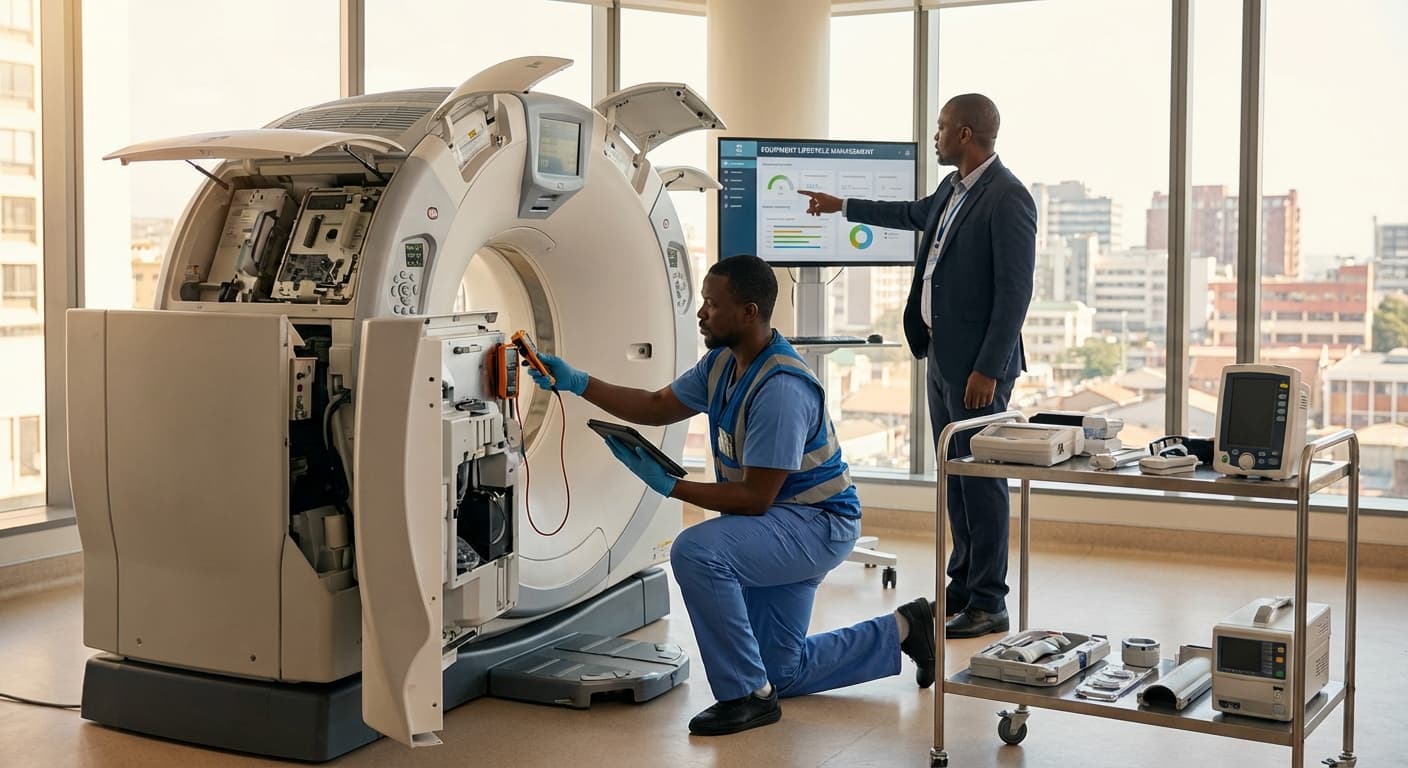
Equipment Replacement Planning & Obsolescence Strategy Service in Burkina Faso
Engineering Excellence & Technical Support
Equipment Replacement Planning & Obsolescence Strategy Service High-standard technical execution following OEM protocols and local regulatory frameworks.
Proactive Asset Lifecycle Management
We leverage advanced data analytics and predictive modeling to forecast equipment end-of-life and obsolescence risks, enabling strategic replacement planning that minimizes downtime and maximizes operational efficiency for critical infrastructure in Burkina Faso.
Risk Mitigation Through Strategic Sourcing
Our obsolescence strategy identifies and mitigates risks associated with end-of-support components and technologies. We facilitate the sourcing of compliant alternatives and develop robust transition plans, ensuring continuity of operations and cybersecurity for vital equipment in Burkina Faso.
Optimized Capital Expenditure & ROI
By providing data-driven insights into equipment performance and total cost of ownership, our service enables informed capital expenditure decisions. We align replacement cycles with strategic business objectives, ensuring a maximized return on investment for your equipment assets in Burkina Faso.
What Is Equipment Replacement Planning & Obsolescence Strategy Service In Burkina Faso?
Equipment Replacement Planning and Obsolescence Strategy Service in Burkina Faso refers to a specialized consulting and implementation offering designed to help organizations within Burkina Faso proactively manage their fixed assets. This service addresses the lifecycle of equipment, from acquisition through operational use, eventual obsolescence, and planned disposal/replacement. It is critical for ensuring operational continuity, minimizing financial risk, and optimizing resource allocation in a dynamic economic and technological landscape. The service involves a comprehensive assessment of existing equipment, forecasting future needs, identifying obsolescence risks (technological, functional, and economic), and developing strategic roadmaps for replacement and upgrade. The objective is to transition from reactive, crisis-driven replacements to a structured, data-driven approach that aligns with business objectives and leverages available capital effectively.
| Who Needs This Service? | Typical Use Cases | |||||||
|---|---|---|---|---|---|---|---|---|
| Manufacturing and Industrial Sectors: Companies operating factories, processing plants, and production lines where machinery is central to output. | Telecommunications Providers: Managing networks, transmission equipment, and switching infrastructure susceptible to rapid technological upgrades. | Energy and Utilities: Planning for the replacement of power generation, transmission, and distribution equipment with long lifecycles but significant maintenance and technological upgrade pressures. | Mining and Extractive Industries: High-value, heavy-duty equipment subject to harsh operating conditions and significant capital investment. | Healthcare Institutions: Medical imaging equipment, laboratory instruments, and diagnostic devices with critical performance requirements and rapid technological advancement. | Transportation and Logistics: Fleet management, infrastructure maintenance (rail, road), and operational technology requiring regular updates. | Public Sector and Government Agencies: Infrastructure projects, IT systems, and specialized operational equipment requiring long-term planning and budget allocation. | Large-Scale Agricultural Operations: Mechanization and processing equipment critical for crop yields and efficiency. | |
| Preventing Production Downtime: Proactively replacing aging machinery before it fails, thereby avoiding costly interruptions to operations. | Optimizing Capital Expenditure: Ensuring that replacement decisions are based on a holistic understanding of lifecycle costs and future operational needs, rather than emergency purchases. | Leveraging Technological Advancements: Upgrading to more efficient, productive, and sustainable equipment to gain a competitive advantage. | Managing Functional Obsolescence: Replacing equipment that, while still operational, can no longer meet current production standards or business requirements. | Addressing Security Vulnerabilities: Replacing outdated IT infrastructure and control systems that may pose cybersecurity risks. | Meeting Regulatory Compliance: Ensuring that equipment meets evolving environmental, safety, or industry-specific regulations. | Improving Energy Efficiency and Sustainability: Replacing older equipment with newer, more energy-efficient models to reduce operational costs and environmental impact. | Streamlining Maintenance and Repair Budgets: Shifting from reactive, high-cost repairs of failing equipment to planned, predictable maintenance and replacement schedules. | Facilitating Digital Transformation: Integrating new, technologically advanced equipment as part of broader digitization initiatives. |
Key Components of the Service:
- Asset Inventory and Condition Assessment: Detailed cataloging of all equipment, including make, model, serial number, purchase date, current condition, maintenance history, and performance metrics.
- Obsolescence Risk Analysis: Evaluation of equipment against technological advancements, diminishing parts availability, rising maintenance costs, regulatory changes, and functional inadequacy for current and future operational demands.
- Lifecycle Cost Analysis (LCCA): Forecasting of total cost of ownership, including acquisition, operation, maintenance, repair, and disposal/replacement costs over the equipment's projected lifespan.
- Demand Forecasting and Capacity Planning: Analysis of current and future operational requirements to determine the optimal timing and specifications for replacement equipment.
- Strategic Replacement and Upgrade Roadmapping: Development of phased plans outlining when and how to replace or upgrade specific assets, considering budgetary constraints, operational impact, and technological evolution.
- Technology Scouting and Solution Evaluation: Identification and assessment of emerging technologies and potential replacement solutions relevant to the organization's industry and specific needs.
- Financial Planning and Budgeting: Integration of replacement plans into capital expenditure (CapEx) and operational expenditure (OpEx) budgets, including analysis of financing options.
- Risk Mitigation Strategies: Development of contingency plans for critical equipment failure or accelerated obsolescence.
- Implementation Support and Monitoring: Assistance in procuring and integrating new equipment, and establishing metrics for ongoing performance monitoring and plan refinement.
Who Needs Equipment Replacement Planning & Obsolescence Strategy Service In Burkina Faso?
In Burkina Faso, organizations across various sectors are increasingly recognizing the critical need for robust Equipment Replacement Planning and Obsolescence Strategy services. This is driven by a desire to optimize operational efficiency, mitigate risks, and ensure long-term sustainability. Proactive management of aging equipment and the foresight to address technological obsolescence are no longer optional but essential for competitive advantage and reliable service delivery.
| Target Customer Type | Key Departments Involved | Primary Needs & Concerns |
|---|---|---|
| Large Industrial Enterprises | Operations, Maintenance, Procurement, Finance, Engineering, IT | Maximizing uptime, minimizing production downtime, cost-effective upgrades, managing specialized equipment lifecycles, supply chain security for critical spares, impact of outdated technology on safety and efficiency. |
| Public Utilities | Engineering, Operations, Asset Management, Finance, Regulatory Compliance, IT | Ensuring continuous service delivery, infrastructure reliability, compliance with safety and environmental regulations, managing aging infrastructure, budget allocation for major replacements, impact of obsolescence on grid stability/network performance. |
| Government Ministries and Agencies | IT, Procurement, Administration, Specific Sector Ministries (e.g., Transport, Health, Education) | Modernizing public services, ensuring data security and integrity, cost-efficiency in public spending, long-term strategic planning for national infrastructure, managing legacy systems, citizen service continuity. |
| Transportation and Logistics Companies | Fleet Management, Operations, Maintenance, IT, Procurement | Vehicle and equipment uptime, fuel efficiency, safety standards, integration of new technologies (e.g., GPS tracking, fleet management software), regulatory compliance, minimizing breakdown costs. |
| Healthcare Providers | Biomedical Engineering, IT, Procurement, Finance, Clinical Operations | Reliability of medical equipment for patient care, accuracy of diagnostics, cybersecurity of medical devices, compliance with healthcare regulations, managing the rapid obsolescence of advanced medical technology, budget constraints. |
| Educational Institutions | IT, Academic Departments, Facilities Management, Procurement | Providing up-to-date learning tools, maintaining efficient IT infrastructure for research and administration, access to modern teaching equipment, managing budget limitations for technology upgrades, ensuring student and faculty productivity. |
| Construction and Infrastructure Development Firms | Operations, Plant and Fleet Management, Procurement, Project Management, Finance | Availability and reliability of construction machinery, project timelines, cost of equipment maintenance and repair, safety of operators, integration of advanced construction technologies, managing depreciation and resale value. |
| Financial Institutions | IT, Operations, Risk Management, Compliance, Procurement | Security and reliability of IT systems (servers, networks, ATMs), compliance with financial regulations, data integrity, business continuity, managing software and hardware obsolescence to prevent vulnerabilities and maintain operational efficiency. |
Target Customers and Departments in Burkina Faso Requiring Equipment Replacement Planning & Obsolescence Strategy Services:
- Large Industrial Enterprises (Mining, Manufacturing, Agriculture)
- Public Utilities (Electricity, Water, Telecommunications)
- Government Ministries and Agencies
- Transportation and Logistics Companies
- Healthcare Providers (Hospitals, Clinics)
- Educational Institutions (Universities, Technical Colleges)
- Construction and Infrastructure Development Firms
- Financial Institutions with significant IT infrastructure
Equipment Replacement Planning & Obsolescence Strategy Service Process In Burkina Faso
This document outlines the Equipment Replacement Planning & Obsolescence Strategy Service Process for clients in Burkina Faso. This structured workflow ensures a comprehensive and efficient approach to managing the lifecycle of critical equipment, from initial client contact to the successful execution of replacement or obsolescence mitigation strategies.
| Stage | Key Activities | Deliverables | Responsible Parties | Timeline (Indicative) |
|---|---|---|---|---|
| Client expresses interest in the service. Initial discussion to understand general needs, company size, and industry. Introduction to the service offering. | Understanding of client's initial scope and expectations. Confirmation of service applicability. | Client, Service Provider Sales/Business Development | 1-2 Business Days |
| Detailed site visits or remote data gathering. Inventory of existing equipment (age, condition, maintenance history, operational costs). Identification of critical equipment and operational dependencies. Understanding of future production/operational requirements. | Detailed equipment inventory report. Baseline operational performance data. Identified critical assets and dependencies. | Service Provider Consultants/Engineers, Client Stakeholders (Operations, Maintenance, IT) | 1-3 Weeks (depending on scale) |
| Analysis of collected data against manufacturer end-of-life (EOL) dates, availability of spare parts, support availability, technological advancements, and emerging risks (e.g., cybersecurity). Risk assessment based on criticality and obsolescence level. | Obsolescence assessment report for each asset. Risk matrix identifying high-risk equipment. Obsolescence forecast. | Service Provider Engineers/Analysts, Technical Specialists | 1-2 Weeks |
| Development of tailored strategies: proactive replacement, component upgrade, extended support negotiation, phase-out and alternative solution identification. Cost-benefit analysis for each recommended option. Consideration of local availability of parts and services in Burkina Faso. | Strategic recommendations report. Proposed replacement/mitigation options with pros and cons. Cost estimates for each option. Phased implementation plan. | Service Provider Consultants/Engineers, Financial Analysts | 1-2 Weeks |
| Presentation of the developed strategy and recommendations to the client. Negotiation of scope, timelines, and costs. Formalization of the service agreement and Service Level Agreement (SLA). | Formal Service Proposal. Signed Service Agreement. | Service Provider Management, Client Procurement/Management | 1 Week |
| Detailed project planning for the chosen strategy. Procurement process initiation (if replacement is decided). Vendor selection and engagement. Logistics planning for equipment delivery and installation in Burkina Faso. Training plan development. | Detailed project plan. Procurement documentation. Vendor contracts. Logistics and installation schedule. Training materials. | Service Provider Project Manager, Procurement Team, Client Operations/Maintenance | 2-4 Weeks |
| Procurement and delivery of new equipment or components. Decommissioning of old equipment. Installation and configuration of new assets. Testing and commissioning. Implementation of agreed obsolescence mitigation measures (e.g., securing long-term spares). | Installed and commissioned equipment. Decommissioned old equipment. Performance validation reports. Mitigation action completion certificates. | Service Provider Project Team, Installation Technicians, Client Operations/Maintenance | Variable (weeks to months, depending on scope) |
| Performance monitoring of new equipment. Handover to client's operational and maintenance teams. Post-installation support and warranty management. Final project review and lessons learned. Ongoing monitoring and advisory services (optional). | Final project report. Post-implementation review documentation. Warranty activation. Ongoing support plan (if applicable). | Service Provider Project Manager, Support Team, Client Operations/Maintenance | Ongoing (initial review within 2-4 weeks post-execution) |
Service Process Workflow: Equipment Replacement Planning & Obsolescence Strategy in Burkina Faso
- Inquiry & Initial Consultation
- Needs Assessment & Data Collection
- Obsolescence Analysis & Risk Profiling
- Strategy Development & Recommendation
- Proposal & Agreement
- Implementation Planning
- Execution of Replacement/Obsolescence Mitigation
- Post-Execution Review & Support
Equipment Replacement Planning & Obsolescence Strategy Service Cost In Burkina Faso
The cost of Equipment Replacement Planning & Obsolescence Strategy services in Burkina Faso is influenced by a variety of factors. These include the complexity and scale of the organization's asset base, the specific types of equipment involved, the desired level of detail in the strategy, the duration of the engagement, and the expertise of the consulting firm or individual providing the service. Given the developing economic landscape of Burkina Faso, local currency (West African CFA franc - XOF) pricing will also reflect the availability of specialized skills, the firm's overhead, and their perceived market value. It's crucial for organizations to obtain detailed proposals outlining the scope of work and associated costs. While precise ranges are difficult to provide without specific project details, general estimations can be made.
| Service Component | Estimated Cost Range (XOF) | Notes |
|---|---|---|
| Initial Asset Audit & Data Collation | 250,000 - 750,000 | Depends on the volume and accessibility of existing data. |
| Lifecycle Assessment & Performance Analysis (per equipment category) | 300,000 - 1,000,000 | More complex equipment and deeper analysis will increase this cost. |
| Obsolescence Risk Assessment & Forecasting | 400,000 - 1,500,000 | Involves expert judgment and forecasting models. |
| Development of Replacement Strategy & Roadmap | 500,000 - 2,000,000 | Includes prioritization, budget allocation recommendations, and phased implementation plans. |
| Consulting & Implementation Support (per day/hour) | 75,000 - 150,000 (daily) | Varies based on consultant's seniority and expertise. |
| Full Service Package (Comprehensive Planning & Strategy) | 2,000,000 - 10,000,000+ | A comprehensive approach covering all stages for a medium to large enterprise. |
Key Pricing Factors for Equipment Replacement Planning & Obsolescence Strategy Services in Burkina Faso
- Scope of Asset Inventory: The number and diversity of equipment to be assessed (e.g., industrial machinery, IT hardware, vehicles, specialized tools) significantly impact cost.
- Complexity of Equipment: Highly specialized or technologically advanced equipment may require more in-depth analysis and expert consultation, increasing costs.
- Data Availability and Quality: The ease with which accurate and up-to-date equipment data (purchase date, maintenance history, performance records) can be accessed will affect the time and resources required.
- Depth of Analysis Required: Whether the service includes basic lifecycle assessments, detailed risk analyses, or the development of sophisticated predictive maintenance models will influence pricing.
- Obsolescence Mitigation Strategies: The complexity of recommended solutions, such as exploring upgrades, refurbishment, or phased replacements, will affect the service cost.
- Consultant/Firm Expertise and Reputation: Highly experienced firms or specialized consultants with a proven track record in asset management and obsolescence strategies will command higher fees.
- Project Duration and Timeline: Longer-term engagements or urgent project requirements can influence overall cost.
- Geographic Location within Burkina Faso: While less impactful than other factors, access to remote operational sites might incur additional logistical expenses.
- Reporting and Deliverable Format: The level of detail, customization, and frequency of reporting can also be a pricing determinant.
Affordable Equipment Replacement Planning & Obsolescence Strategy Service Options
Our Affordable Equipment Replacement Planning & Obsolescence Strategy Service is designed to help businesses proactively manage their asset lifecycle, minimize disruption, and maximize return on investment. We understand that unexpected equipment failures and the costs associated with outdated technology can significantly impact operational efficiency and profitability. Our service offers flexible value bundles and implementable cost-saving strategies to ensure you have a robust and budget-friendly plan in place.
| Value Bundle | Description | Cost-Saving Strategies Included | Typical Benefit | ||
|---|---|---|---|---|---|
| Core Plan | Essential asset inventory, basic lifecycle tracking, and initial obsolescence risk assessment. | Bulk purchasing discounts, early-bird procurement incentives, vendor negotiation guidance. | Reduced emergency repair costs, improved budget predictability, avoidance of critical downtime. | 2-5% annual savings on equipment procurement, 10-15% reduction in unplanned maintenance. | |
| Advanced Plan | Includes Core Plan plus in-depth forecasting, detailed obsolescence mitigation strategies, and proactive technology scouting. | Leasing vs. buying analysis, refurbished equipment sourcing, strategic maintenance scheduling to extend lifespan. | Optimized capital expenditure, minimized downtime from obsolescence, enhanced operational efficiency. | 5-10% annual savings on equipment procurement, 15-25% reduction in obsolescence-related disruptions. | Potential for significant ROI on technology investments. |
| Premium Partnership | Full-service offering with continuous monitoring, real-time risk alerts, integration with ERP systems, and customized contingency planning. | Predictive maintenance integration, spare parts inventory optimization, vendor performance management, trade-in program maximization. | Maximized asset utilization, minimized total cost of ownership, seamless transition to new technologies, enhanced business continuity. | 7-15% annual savings on equipment procurement, 20-30% reduction in total cost of ownership, significant improvement in asset lifespan and performance. |
Key Service Components:
- Comprehensive equipment inventory and assessment.
- Lifecycle analysis and forecasting for critical assets.
- Obsolescence risk identification and mitigation planning.
- Budget development for replacement and upgrade projects.
- Sourcing and procurement strategy optimization.
- Disposal and recycling recommendations for retired equipment.
- Contingency planning for unexpected failures.
- Regular review and update of the replacement plan.
Verified Providers In Burkina Faso
In Burkina Faso's evolving healthcare landscape, identifying reliable and skilled medical professionals is paramount. Franance Health stands out as a leader in credential verification, offering a robust system that ensures patients have access to the highest quality of care. Their meticulous vetting process, encompassing rigorous checks on qualifications, experience, and ethical standing, provides an unparalleled level of assurance. Choosing a Franance Health verified provider means opting for expertise, integrity, and peace of mind, making them the definitive best choice for healthcare in Burkina Faso.
| Verification Aspect | Franance Health's Approach | Benefit for Patients |
|---|---|---|
| Educational Qualifications | Verification of degrees, diplomas, and certifications from accredited institutions. | Confirms providers have the foundational knowledge and training. |
| Professional Experience | Thorough review of past work history and roles in recognized healthcare settings. | Ensures practical skills and real-world application of expertise. |
| Licensure and Registration | Confirmation of valid and current licenses with relevant medical boards. | Guarantees providers are legally authorized to practice. |
| Continuing Medical Education (CME) | Assessment of participation in ongoing training and skill enhancement programs. | Indicates commitment to staying updated with medical advancements. |
| Ethical Conduct and Disciplinary Records | Background checks for any past disciplinary actions or ethical violations. | Protects patients from potential malpractice or misconduct. |
| Specialization and Sub-specialization | Verification of advanced training and certifications in specific medical fields. | Helps patients find experts in their particular health needs. |
Why Franance Health Verification is Crucial
- Ensures providers meet stringent medical and ethical standards.
- Promotes patient safety and reduces the risk of substandard care.
- Facilitates access to specialized medical expertise.
- Builds trust and confidence in the healthcare system.
- Supports continuous professional development and accountability.
Scope Of Work For Equipment Replacement Planning & Obsolescence Strategy Service
This Scope of Work (SOW) outlines the services to be provided for Equipment Replacement Planning and Obsolescence Strategy. The objective is to develop a comprehensive, data-driven strategy that minimizes operational disruptions, optimizes capital expenditure, and mitigates risks associated with aging and obsolete equipment. The services will encompass a thorough assessment of existing equipment, development of a predictive replacement model, and the creation of a long-term obsolescence management plan. Technical deliverables will be provided in a structured format, adhering to standard specifications for clarity and usability.
| Deliverable Name | Description | Format/Specification | Purpose |
|---|---|---|---|
| Equipment Inventory Database | A comprehensive database detailing all relevant equipment, including make, model, serial number, installation date, maintenance history, criticality, and current condition. | Microsoft Excel or SQL Database. Standardized template with defined fields. | Foundation for all subsequent analysis and planning. |
| Obsolescence Risk Assessment Report | Analysis of equipment obsolescence based on manufacturer support lifecycle, spare parts availability, technology advancements, and regulatory compliance. Includes a prioritized list of high-risk equipment. | PDF Document. Executive summary, detailed findings, risk scores, and recommendations. | Identifies immediate threats and guides proactive mitigation. |
| Equipment Replacement Model & Criteria | Defined quantitative and qualitative criteria for equipment replacement decisions. Includes established methodologies for Total Cost of Ownership (TCO) analysis and Return on Investment (ROI) calculations. | Microsoft Excel (for model calculations) and PDF Document (for criteria definition). | Provides a consistent and objective framework for replacement decisions. |
| Multi-Year Equipment Replacement Plan | A phased plan outlining recommended equipment replacements over a defined period (e.g., 5-10 years), including estimated costs, budgetary implications, and potential project timelines. | Microsoft Excel or specialized Capital Planning Software. Includes Gantt charts for project phasing. | Facilitates strategic capital allocation and budget forecasting. |
| Obsolescence Management Policy & Procedures | Documented policies and standard operating procedures (SOPs) for ongoing equipment lifecycle management, including proactive obsolescence monitoring and mitigation strategies. | PDF Document. Clearly defined roles, responsibilities, and workflows. | Ensures sustainable management of equipment obsolescence beyond the initial project. |
| Technical Specifications for Replacement Equipment | Generic technical specifications or templates for key equipment categories to be used during the procurement process for replacement items. Focuses on essential performance, safety, and interoperability requirements. | Microsoft Word or PDF Document. Includes placeholders for specific details. | Streamlines the procurement of suitable replacement equipment. |
| Project Status Reports | Regular updates on project progress, key findings, risks, and upcoming activities. | PDF Document or email. Consistent template for reporting. | Maintains transparency and alignment throughout the engagement. |
| Final Project Report & Presentation | A comprehensive report summarizing all analyses, findings, recommendations, and the developed strategy. Includes a presentation to key stakeholders. | PDF Document and Microsoft PowerPoint Presentation. | Formal handover of the developed strategy and an overview for decision-makers. |
Services Offered
- Current Equipment Inventory and Condition Assessment
- Obsolescence Risk Analysis and Prioritization
- Development of Equipment Replacement Criteria and Models
- Creation of a Multi-Year Replacement Plan
- Implementation Roadmap and Change Management Support
- Training and Knowledge Transfer
Service Level Agreement For Equipment Replacement Planning & Obsolescence Strategy Service
This Service Level Agreement (SLA) outlines the guaranteed response times and uptime for the Equipment Replacement Planning & Obsolescence Strategy Service (hereinafter referred to as "the Service"). This SLA is intended to ensure the client receives timely and effective support for their equipment lifecycle management needs.
| Service Component | Response Time Guarantee | Uptime Guarantee |
|---|---|---|
| Initial Consultation & Needs Assessment | Within 48 business hours of request | N/A (Service availability is implicit) |
| Delivery of Preliminary Equipment Replacement Plan Draft | Within 5 business days of completion of Needs Assessment | N/A (Service availability is implicit) |
| Delivery of Finalized Equipment Replacement Plan | Within 3 business days of receiving client feedback on draft | N/A (Service availability is implicit) |
| Obsolescence Risk Assessment Report | Within 7 business days of data submission by client | N/A (Service availability is implicit) |
| Proactive Obsolescence Mitigation Recommendations | Within 5 business days of Obsolescence Risk Assessment completion | N/A (Service availability is implicit) |
| Ad-hoc Support & Query Resolution (via email/portal) | Within 8 business hours for critical issues; within 24 business hours for non-critical issues | 99.5% during standard business hours (Monday-Friday, 9 AM - 5 PM client's local time, excluding public holidays) |
| Access to Obsolescence Monitoring Dashboard (if applicable) | N/A | 99.9% during standard business hours (Monday-Friday, 9 AM - 5 PM client's local time, excluding public holidays) |
Service Objectives
- To provide expert guidance and actionable plans for equipment replacement.
- To proactively identify and mitigate risks associated with equipment obsolescence.
- To optimize the total cost of ownership for the client's equipment portfolio.
- To ensure the Service is available and responsive as per the defined metrics.
Frequently Asked Questions

Ready when you are
Let's scope your Equipment Replacement Planning & Obsolescence Strategy Service in Burkina Faso project in Burkina Faso.

Scaling healthcare logistics and technical systems across the entire continent.