
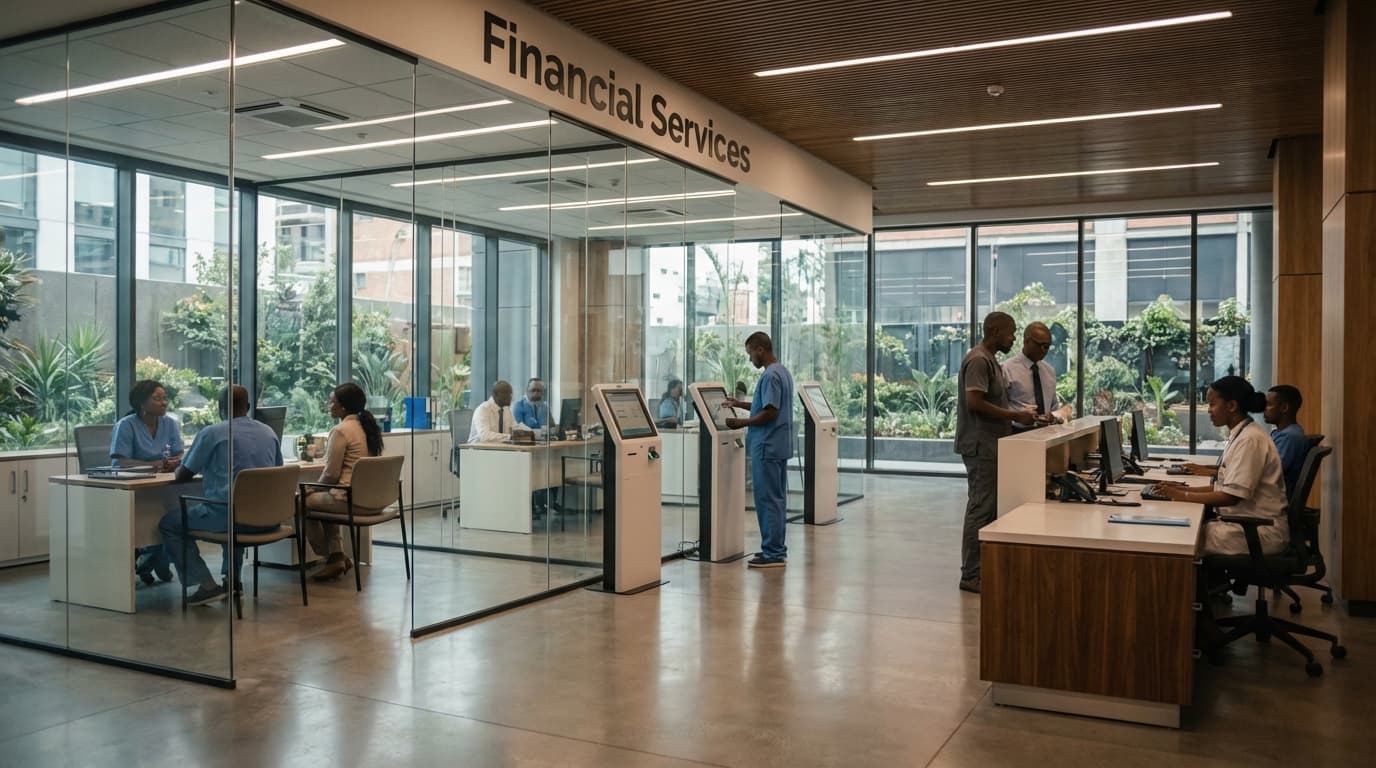
Medical Equipment Financing in Burkina Faso
Engineering Excellence & Technical Support
Leasing and financing solutions for medical equipment High-standard technical execution following OEM protocols and local regulatory frameworks.
Flexible Financing Options
Offering tailored loan structures, competitive interest rates, and adaptable repayment schedules to accommodate the diverse financial capacities of healthcare providers in Burkina Faso.
Accelerated Procurement Pathways
Streamlined application and approval processes designed to expedite the acquisition of essential medical equipment, reducing lead times and improving patient care access.
Risk Mitigation Support
Providing expertise and resources for risk assessment, asset management, and insurance guidance to safeguard investments and ensure long-term equipment operational viability.
What Is Medical Equipment Financing In Burkina Faso?
Medical Equipment Financing (MEF) in Burkina Faso refers to a specialized financial service that provides capital to healthcare providers and institutions for the acquisition, upgrade, or replacement of medical equipment. This financing mechanism enables entities to access essential technologies and infrastructure without the burden of immediate, substantial capital outlay. MEF typically involves loans, leases, or other credit facilities structured to accommodate the lifecycle and depreciation of medical assets. The service is designed to enhance healthcare delivery capabilities by ensuring access to modern diagnostic, therapeutic, and supportive medical technologies.
| Who Needs Medical Equipment Financing? | Typical Use Cases | ||
|---|---|---|---|
| Public Hospitals and Clinics: Government-funded healthcare facilities often face budgetary constraints and require external financing to equip or upgrade their infrastructure, particularly in underserved regions. | Acquisition of essential diagnostic equipment (e.g., X-ray machines, ultrasound devices, laboratory analyzers) for primary and secondary care facilities. | Installation of specialized surgical equipment for tertiary care centers. | Procurement of beds, monitoring systems, and essential care apparatus for intensive care units. |
| Private Hospitals and Clinics: Profit-driven healthcare providers seek financing to expand service offerings, enhance patient care quality, and maintain a competitive edge. | Upgrading imaging departments with MRI or CT scanners to offer advanced diagnostic services. | Purchasing modern surgical robotics for minimally invasive procedures. | Financing the establishment of new specialized medical centers (e.g., cardiology, oncology). |
| Non-Governmental Organizations (NGOs) and Faith-Based Organizations: Healthcare providers operating with a social mission often require financial assistance to procure vital equipment for outreach programs and underserved communities. | Supplying mobile clinics with portable diagnostic and treatment equipment. | Equipping rural health posts with basic medical tools and essential drug dispensing systems. | Funding the acquisition of equipment for specialized health campaigns (e.g., maternal and child health). |
| Medical Training and Research Institutions: Educational bodies need financing to equip laboratories and clinical simulation centers for training healthcare professionals and conducting research. | Purchasing advanced simulation manikins and virtual reality training systems for medical schools. | Acquiring state-of-the-art laboratory equipment for research into local health challenges. | Financing the setup of specialized research facilities. |
Key Aspects of Medical Equipment Financing in Burkina Faso:
- Asset Acquisition: Facilitates the purchase of new or refurbished medical devices, ranging from basic diagnostic tools to advanced imaging systems and surgical instruments.
- Technology Upgrades: Enables healthcare facilities to replace outdated equipment with more advanced, efficient, and accurate technologies, improving diagnostic precision and treatment outcomes.
- Leasing Options: Offers flexible leasing structures where providers use equipment for a specified period with options to purchase, upgrade, or return at the end of the term.
- Loan Products: Provides term loans with structured repayment schedules, allowing ownership of the equipment over time.
- Risk Mitigation: Lenders often assess the operational and financial viability of the healthcare provider, as well as the market demand for the services the equipment will support, to mitigate their investment risk.
- Collateralization: Medical equipment itself often serves as collateral for the financing, reducing the lender's exposure.
- Maintenance and Service Contracts: Financing may sometimes be bundled with contracts for equipment maintenance, calibration, and technical support, ensuring optimal functionality.
Who Needs Medical Equipment Financing In Burkina Faso?
Medical equipment financing in Burkina Faso is a critical need for a variety of healthcare providers and institutions aiming to improve patient care, expand services, and ensure operational efficiency. This financing enables the acquisition of essential diagnostic tools, treatment machinery, surgical instruments, and other vital medical technologies that might otherwise be out of reach due to high upfront costs.
| Department/Area | Typical Equipment Needs | Financing Rationale |
|---|---|---|
| Radiology/Imaging | X-ray machines, Ultrasound devices, CT scanners, MRI machines, Mammography units | High cost of acquisition, rapid technological advancements, critical for diagnosis. |
| Surgery | Surgical tables, Anesthesia machines, Surgical instruments (laparoscopic, orthopedic, etc.), Electrosurgical units, Sterilizers | Essential for operative procedures, safety standards, specialized surgical techniques. |
| Intensive Care Unit (ICU)/Critical Care | Ventilators, Patient monitors, Infusion pumps, Defibrillators, Dialysis machines (for critical care) | Life-saving equipment, requires continuous upgrades and maintenance. |
| Laboratories (Clinical & Pathology) | Microscopes, Hematology analyzers, Biochemistry analyzers, DNA sequencers, Blood culture systems | Crucial for disease detection, diagnosis, and monitoring treatment efficacy. |
| Maternal and Child Health | Incubators, Phototherapy units, Fetal Doppler, Delivery tables, Ultrasound for obstetrics | Addressing critical health needs for mothers and newborns, often in under-resourced areas. |
| Emergency Medicine | Ambulance equipment (stretchers, oxygen systems), AEDs, Emergency carts, Trauma kits | Rapid response and stabilization of critically ill or injured patients. |
| Cardiology | ECG machines, Echocardiography machines, Stress test equipment, Cardiac monitors | Diagnosis and management of cardiovascular diseases. |
| Dentistry | Dental chairs, X-ray units, Sterilizers, Dental handpieces, Diagnostic tools | Oral healthcare access, preventive and restorative treatments. |
| Rehabilitation/Physiotherapy | Therapeutic exercise equipment, Ultrasound therapy units, Electrical stimulation devices, Traction tables | Restoring function and mobility, often post-injury or surgery. |
Target Customers for Medical Equipment Financing in Burkina Faso
- {"title":"Public Hospitals and Clinics","description":"Government-run facilities, from large central hospitals to rural health posts, often face budget constraints. Financing allows them to upgrade outdated equipment, acquire new technologies for specialized treatments, and increase accessibility to healthcare services for the general population."}
- {"title":"Private Hospitals and Clinics","description":"These institutions, often catering to a specific demographic or offering specialized services, use financing to remain competitive, invest in state-of-the-art technology to attract patients, and expand their service offerings. This includes facilities in urban centers as well as those in emerging private healthcare hubs."}
- {"title":"Non-Governmental Organizations (NGOs) and Charitable Organizations","description":"Many NGOs operate healthcare programs and clinics in underserved areas. Financing helps them procure the necessary equipment to deliver essential medical services, often focusing on maternal and child health, infectious disease control, and primary care."}
- {"title":"Diagnostic Laboratories and Imaging Centers","description":"Standalone or hospital-affiliated labs and imaging centers require advanced equipment for accurate diagnosis. Financing enables them to purchase modern diagnostic machines, X-ray units, ultrasound devices, CT scanners, and MRI machines."}
- {"title":"Specialized Medical Centers","description":"This includes facilities focusing on specific areas like ophthalmology, cardiology, oncology, dentistry, and physiotherapy. Financing allows them to acquire the specialized equipment needed for these niche medical practices."}
- {"title":"Rural Health Centers and Mobile Clinics","description":"To extend healthcare to remote populations, these entities benefit greatly from financing that allows them to acquire portable or robust equipment suitable for challenging environments and mobile units."}
- {"title":"Medical Training Institutions","description":"Universities and vocational schools training healthcare professionals need modern equipment for hands-on learning. Financing helps them acquire the latest models for simulation labs and practical training sessions."}
Medical Equipment Financing Process In Burkina Faso
This document outlines the typical workflow for medical equipment financing in Burkina Faso, from initial client inquiry to the final execution of the financing agreement. The process is designed to be thorough, ensuring both the financial viability of the applicant and the suitability of the medical equipment for the intended purpose. It involves multiple stages of assessment, documentation, and approval.
| Stage | Description | Key Actors | Deliverables/Outcomes |
|---|---|---|---|
| Prospective client expresses interest in financing medical equipment. A preliminary discussion to understand their needs, financial capacity, and the type of equipment required. | Client (Hospital/Clinic/Doctor), Financing Institution (Bank/Leasing Company) | Understanding of client's needs, preliminary eligibility assessment. |
| Client formally applies for financing and submits required documents. This includes company registration, financial statements, project proposals, and details of the intended equipment. | Client, Financing Institution (Loan Officer/Account Manager) | Completed application form, supporting financial and legal documents. |
| Financing institution evaluates the client's creditworthiness, financial history, and ability to repay the loan. This involves assessing financial ratios, cash flow, and overall risk. | Financing Institution (Credit Analysts, Risk Department) | Credit report, risk assessment, loan repayment capacity evaluation. |
| Assessment of the proposed medical equipment. This includes verifying its specifications, suitability for local healthcare needs, supplier reliability, and market price. May involve technical experts. | Financing Institution (Technical Advisors/Procurement Specialists), Client, Equipment Suppliers | Technical feasibility report, commercial viability assessment, equipment validation. |
| Based on the assessments, the financing institution prepares a formal loan or lease proposal outlining the terms and conditions, interest rates, repayment schedule, and collateral requirements. | Financing Institution (Loan Department, Business Development) | Loan/lease proposal, offer letter. |
| The proposal and all associated legal documents are reviewed by the financing institution's legal team and potentially external legal counsel to ensure compliance with Burkinabe laws and regulations. | Financing Institution (Legal Department), Client (may engage own counsel) | Legal due diligence, finalized financing agreement draft. |
| Final approval from the financing institution's credit committee. Once approved, the loan or lease agreement is signed by both parties, and funds are disbursed to the equipment supplier. | Financing Institution (Credit Committee, Management), Client, Equipment Supplier | Signed financing agreement, disbursement of funds. |
| The client takes possession of the medical equipment. The financing institution may oversee or verify delivery and installation to ensure it meets the agreed-upon specifications. | Client, Equipment Supplier, Financing Institution (Monitoring) | Proof of delivery, installation confirmation. |
| Ongoing monitoring of loan repayments or lease payments. The financing institution may also offer support services or engage in follow-up to ensure the equipment is being utilized effectively. | Financing Institution (Collections Department, Relationship Managers), Client | Repayment schedule adherence, asset performance tracking. |
Key Stages in the Medical Equipment Financing Process
- Inquiry & Initial Consultation
- Application Submission & Documentation
- Credit Assessment & Risk Analysis
- Technical & Commercial Evaluation
- Proposal & Offer Generation
- Legal & Compliance Review
- Approval & Disbursement
- Equipment Delivery & Installation
- Post-Disbursement Monitoring & Servicing
Medical Equipment Financing Cost In Burkina Faso
Financing medical equipment in Burkina Faso involves a complex interplay of factors that influence costs. These costs are typically denominated in the local currency, the West African CFA franc (XOF). The overall price will depend on the specific type of equipment, its age (new vs. refurbished), the vendor's markup, financing terms, and prevailing economic conditions. For new, high-end diagnostic equipment like MRI machines or CT scanners, financing can represent a significant investment. Refurbished equipment, while generally cheaper, still requires careful consideration of financing. Interest rates on loans, loan tenure, and any associated administrative or insurance fees will directly impact the total cost of financing. Local banks, specialized medical equipment financing companies, and even manufacturers offering their own financing plans are potential sources. The reputation and financial stability of the borrowing institution (e.g., a public hospital, a private clinic) will also play a role in the terms offered. Exchange rate fluctuations can also indirectly affect costs, particularly for imported equipment, though financing in XOF aims to mitigate direct exposure.
| Equipment Category | Estimated Financing Cost Range (New) | Estimated Financing Cost Range (Refurbished) | Indicative Interest Rate Range (Annual) | Indicative Loan Tenure (Years) |
|---|---|---|---|---|
| Basic Diagnostic Equipment (e.g., X-ray, Ultrasound) | 5,000,000 - 25,000,000 XOF | 2,000,000 - 10,000,000 XOF | 10% - 18% | 3 - 7 |
| Advanced Diagnostic Equipment (e.g., CT Scanner, MRI) | 100,000,000 - 700,000,000+ XOF | 40,000,000 - 250,000,000 XOF | 12% - 20% | 5 - 10 |
| Surgical Equipment (e.g., Operating Room Sets) | 10,000,000 - 60,000,000 XOF | 5,000,000 - 25,000,000 XOF | 11% - 18% | 3 - 8 |
| Laboratory Equipment (e.g., Analyzers) | 3,000,000 - 30,000,000 XOF | 1,500,000 - 15,000,000 XOF | 10% - 17% | 3 - 7 |
| Patient Monitoring and Life Support (e.g., Ventilators, ICU Beds) | 5,000,000 - 40,000,000 XOF | 2,000,000 - 18,000,000 XOF | 11% - 19% | 4 - 8 |
Key Pricing Factors for Medical Equipment Financing in Burkina Faso
- Equipment Type and Technology: Advanced, specialized, or cutting-edge equipment commands higher financing costs.
- Equipment Condition: New equipment is more expensive to finance than refurbished or used equipment.
- Vendor Markup and Profit Margins: The profit margin built into the equipment's sale price by the vendor directly affects the financed amount.
- Financing Institution and Terms: Interest rates, loan duration, and repayment schedules vary significantly between lenders.
- Loan Tenure: Longer repayment periods generally result in higher total interest paid.
- Administrative and Ancillary Fees: These can include application fees, appraisal fees, legal costs, and insurance premiums.
- Creditworthiness of the Borrower: The financial health and reputation of the hospital or clinic seeking financing influences interest rates and loan approval.
- Market Demand and Supply: The availability of specific equipment and demand for financing can impact pricing.
- Economic Stability and Inflation: A stable economic environment generally leads to more predictable and potentially lower financing costs.
- Government Regulations and Import Duties: Taxes and duties on imported medical equipment can increase the base price that needs financing.
Affordable Medical Equipment Financing Options
Accessing necessary medical equipment can be a significant financial undertaking for healthcare providers, from small clinics to larger hospitals. Fortunately, a variety of affordable financing options exist, designed to ease the burden and ensure access to quality tools. These options often come with built-in value bundles and can be further enhanced by strategic cost-saving measures.
| Financing Strategy | Description | Cost-Saving Benefit |
|---|---|---|
| Leasing vs. Purchasing | Leasing involves regular payments for the use of equipment over a set term, with options to upgrade or return it. Purchasing means outright ownership. | Leasing often has lower upfront costs and allows for easier technology upgrades, preventing the expense of outdated equipment. It can also offer tax advantages depending on the lease structure. |
| Operating Leases | These are considered rental agreements where the lessor retains ownership. Payments are treated as operating expenses. | Can be more cost-effective for equipment with rapid technological advancement as it avoids the burden of depreciation and facilitates upgrades. Payments are often fully tax-deductible as a business expense. |
| Finance Leases (Capital Leases) | These are similar to loans, where the lessee essentially gains ownership over the lease term and is responsible for maintenance and insurance. The equipment appears on the lessee's balance sheet. | May offer a lower overall cost of ownership compared to operating leases if the equipment is used for its entire useful life. Allows for potential asset appreciation. |
| Equipment Loans | A traditional loan where the equipment serves as collateral. Funds are used to purchase the equipment outright. | Provides outright ownership and the potential for building equity in the asset. Interest payments may be tax-deductible. |
| Sale-Leaseback Agreements | Existing medical equipment owned by a healthcare provider is sold to a financing company and then leased back to the provider. | Provides immediate capital infusion by converting owned assets into cash, which can then be used for operational needs or purchasing new equipment without taking on additional debt. |
| Negotiating Bulk Discounts | Purchasing or leasing multiple pieces of equipment from a single vendor. | Significant price reductions per unit can be achieved through volume purchasing, leading to substantial savings. |
| Exploring Vendor Financing | Many medical equipment manufacturers and distributors offer in-house financing options. | Can sometimes offer more flexible terms or competitive rates tailored to their specific products, potentially including bundled value-adds. |
| Securing Grants and Rebates | Investigating government programs, non-profit organizations, or manufacturer rebates for specific types of equipment or for healthcare providers meeting certain criteria. | Can significantly reduce the outright purchase price or the financing amount needed, acting as a direct cost reduction. |
| Refurbished Equipment | Purchasing or leasing pre-owned, refurbished medical equipment that has been restored to full working order by certified technicians. | Offers substantial cost savings compared to new equipment, often with a warranty, making high-quality equipment accessible at a lower price point. |
| Understanding Total Cost of Ownership (TCO) | Calculating not just the purchase price but also maintenance, repair, energy consumption, and eventual disposal costs. | Allows for informed decisions by choosing equipment that is not only affordable upfront but also cost-effective over its entire lifespan, avoiding hidden long-term expenses. |
Value Bundles in Medical Equipment Financing
- {"title":"Integrated Service and Maintenance Contracts","description":"Many financing packages include comprehensive service and maintenance agreements. This means routine check-ups, repairs, and software updates are covered, preventing unexpected costs and ensuring equipment longevity. It bundles peace of mind with financial predictability."}
- {"title":"Extended Warranties","description":"Financing can often include the option for extended warranties beyond the standard manufacturer's period. This protects against costly breakdowns and replacements well into the equipment's lifecycle, adding significant value by hedging against future expenses."}
- {"title":"Training and Implementation Support","description":"Some bundles incorporate training for staff on how to effectively use and maintain the new equipment. This ensures optimal performance, reduces errors, and maximizes the return on investment, effectively bundling operational efficiency with the financing."}
- {"title":"Software Updates and Upgrades","description":"For technology-dependent equipment, financing packages might include access to the latest software updates and even future upgrade paths. This keeps your equipment current and capable, preventing obsolescence and ensuring access to new features, bundled into the overall cost."}
- {"title":"Bundled Insurance","description":"Certain financing agreements may offer insurance coverage for the equipment against damage or theft. This provides an additional layer of financial security, bundled with the financing itself."}
Verified Providers In Burkina Faso
In Burkina Faso's burgeoning healthcare landscape, identifying trustworthy and skilled medical professionals is paramount. Franance Health stands out as a premier organization, diligently verifying healthcare providers to ensure the highest standards of care. This meticulous credentialing process underscores their commitment to patient safety and quality healthcare delivery. When seeking medical services in Burkina Faso, choosing a provider affiliated with Franance Health offers a significant advantage, guaranteeing a level of expertise and ethical practice that sets them apart.
| Criteria | Franance Health Verification Process | Why it Matters for Patients |
|---|---|---|
| Professional Qualifications & Education | Verification of degrees, diplomas, and certifications from accredited institutions. | Ensures providers have foundational knowledge and are appropriately trained. |
| Licensing & Regulatory Compliance | Confirmation of valid and current medical licenses with relevant national bodies. | Guarantees providers are legally permitted to practice and adhere to regulations. |
| Experience & Competence | Assessment of practical experience and demonstrated ability in their specialization. | Indicates providers have hands-on skills and a proven track record. |
| Ethical Conduct & Professionalism | Review of disciplinary records and adherence to a strict code of ethics. | Ensures providers act with integrity, respect, and prioritize patient well-being. |
| Continuing Professional Development | Encouragement and often verification of ongoing training and skill enhancement. | Confirms providers are up-to-date with the latest medical advancements and practices. |
Key Benefits of Choosing Franance Health Verified Providers
- Ensured Quality of Care: Franance Health rigorously vets providers, ensuring they meet stringent professional and ethical standards.
- Access to Skilled Professionals: Verified providers possess the necessary qualifications, experience, and up-to-date knowledge in their respective fields.
- Enhanced Patient Safety: The credentialing process includes background checks and verification of licenses and certifications, minimizing risks.
- Improved Patient Outcomes: Access to competent and reliable healthcare professionals directly contributes to better health outcomes.
- Increased Trust and Confidence: Patients can feel more secure and confident in the care they receive from Franance Health-certified providers.
Scope Of Work For Medical Equipment Financing
This Scope of Work (SOW) outlines the technical requirements and deliverables for a Medical Equipment Financing project. The objective is to secure financing for the acquisition of specified medical equipment, ensuring adherence to industry standards and technical specifications for optimal performance, reliability, and integration within existing healthcare infrastructure. The financing agreement will cover the procurement, installation, and initial commissioning of the equipment. Technical deliverables will focus on ensuring the equipment meets all functional, safety, and interoperability requirements.
| Equipment Type | Manufacturer/Model | Key Technical Specifications (Example) | Regulatory Compliance | Integration Requirements | Warranty Period |
|---|---|---|---|---|---|
| MRI Scanner | Siemens Healthineers MAGNETOM Vida | 7T field strength, 205 cm bore, advanced coil technology, AI-driven imaging protocols | FDA 510(k) cleared, CE Marked | PACS integration (DICOM 3.0), EMR interface (HL7) | 5 Years (parts and labor) |
| CT Scanner | GE Healthcare Revolution CT | 256-slice detector, wide bore (80 cm), low-dose imaging capabilities, iterative reconstruction | FDA 510(k) cleared, CE Marked | PACS integration (DICOM 3.0), EMR interface (HL7) | 5 Years (parts and labor) |
| Ultrasound Machine | Philips EPIQ Elite | High-resolution imaging, advanced Doppler capabilities, AI-assisted image optimization, ergonomic design | FDA 510(k) cleared, CE Marked | PACS integration (DICOM 3.0), EMR interface (HL7) | 3 Years (parts and labor) |
| Patient Monitor | Mindray BeneVision N Series | Comprehensive parameter monitoring (ECG, SpO2, NIBP, EtCO2), touchscreen interface, wireless connectivity, modular design | FDA 510(k) cleared, CE Marked | Central monitoring system integration, EMR interface (HL7) | 3 Years (parts and labor) |
| Infusion Pump | Baxter Sigma Spectrum | Smart pump technology with drug library, adjustable flow rates and volumes, wireless data transfer, user-friendly interface | FDA 510(k) cleared, CE Marked | EMR integration for documentation (HL7), inventory management system compatibility | 2 Years (parts and labor) |
Key Technical Deliverables
- Detailed technical specifications for each piece of medical equipment, aligned with current industry standards and regulatory requirements (e.g., FDA, CE marking).
- Manufacturer's certificates of conformity, calibration certificates, and warranty documentation for all financed equipment.
- Installation and commissioning reports signed by certified technicians, confirming proper setup, functionality, and integration with hospital systems (e.g., PACS, EMR).
- User manuals, service manuals, and training materials provided in the specified language.
- Proof of compliance with relevant cybersecurity standards and data privacy regulations (e.g., HIPAA, GDPR) for networked medical devices.
- Maintenance and service agreements from the manufacturer or authorized third-party providers for the financing term.
- Site readiness reports confirming the availability of necessary infrastructure (power, networking, space) for equipment installation.
- Acceptance testing protocols and sign-off documentation, verifying equipment performance against pre-defined criteria.
- Training completion records for key hospital personnel on equipment operation and basic maintenance.
Service Level Agreement For Medical Equipment Financing
This Service Level Agreement (SLA) outlines the response times and uptime guarantees for medical equipment financing services provided by [Your Company Name] to [Client Name]. This SLA is an integral part of the Master Service Agreement (MSA) dated [Date of MSA].
| Service Component | Uptime Guarantee | Response Time (Acknowledgement) | Target Resolution Time | Notes/Escalation |
|---|---|---|---|---|
| Medical Equipment Financing Platform (Core Functionality) | 99.5% Uptime | Critical Issue: 1 hour | Critical Issue: 4 business hours | Continuous monitoring and proactive maintenance. Escalation to Tier 2/3 support within 1 hour of identification. |
| Customer Support Portal/Client Dashboard | 99.0% Uptime | Major Issue: 2 business hours | Major Issue: 8 business hours | User interface and accessibility. Access to account information and financing status. |
| Application Submission & Processing System | 99.8% Uptime | Minor Issue: 4 business hours | Minor Issue: 2 business days | Availability of application forms and secure submission channels. |
| Reporting and Analytics Module | 98.5% Uptime | Service Request: 8 business hours | Service Request: 3 business days | Timeliness and accuracy of generated reports. |
| Scheduled Maintenance Window | N/A (Planned Downtime) | N/A | N/A | Scheduled maintenance will be performed during off-peak hours, with at least 48 hours' prior written notice to the Client. No more than 4 hours of scheduled downtime per month. |
Key Service Definitions
- Uptime: The percentage of time that the financing platform and associated services are operational and accessible to the Client.
- Downtime: The percentage of time that the financing platform and associated services are unavailable or inaccessible to the Client.
- Response Time: The time it takes for [Your Company Name] to acknowledge and begin addressing a reported issue or request.
- Resolution Time: The time it takes for [Your Company Name] to resolve a reported issue or fulfill a request.
- Critical Issue: An issue that renders the primary functions of the medical equipment financing platform inoperable, significantly impacting the Client's ability to conduct essential financing operations.
- Major Issue: An issue that impairs significant functionality of the medical equipment financing platform but does not render it completely inoperable. The Client can still perform some critical operations.
- Minor Issue: An issue that affects non-critical functionality or has a minimal impact on the Client's overall operations. Workarounds may be available.
- Service Request: A request for non-emergency support, information, or minor modifications to the financing platform.
Frequently Asked Questions

Ready when you are
Let's scope your Medical Equipment Financing in Burkina Faso project in Burkina Faso.

Scaling healthcare logistics and technical systems across the entire continent.