
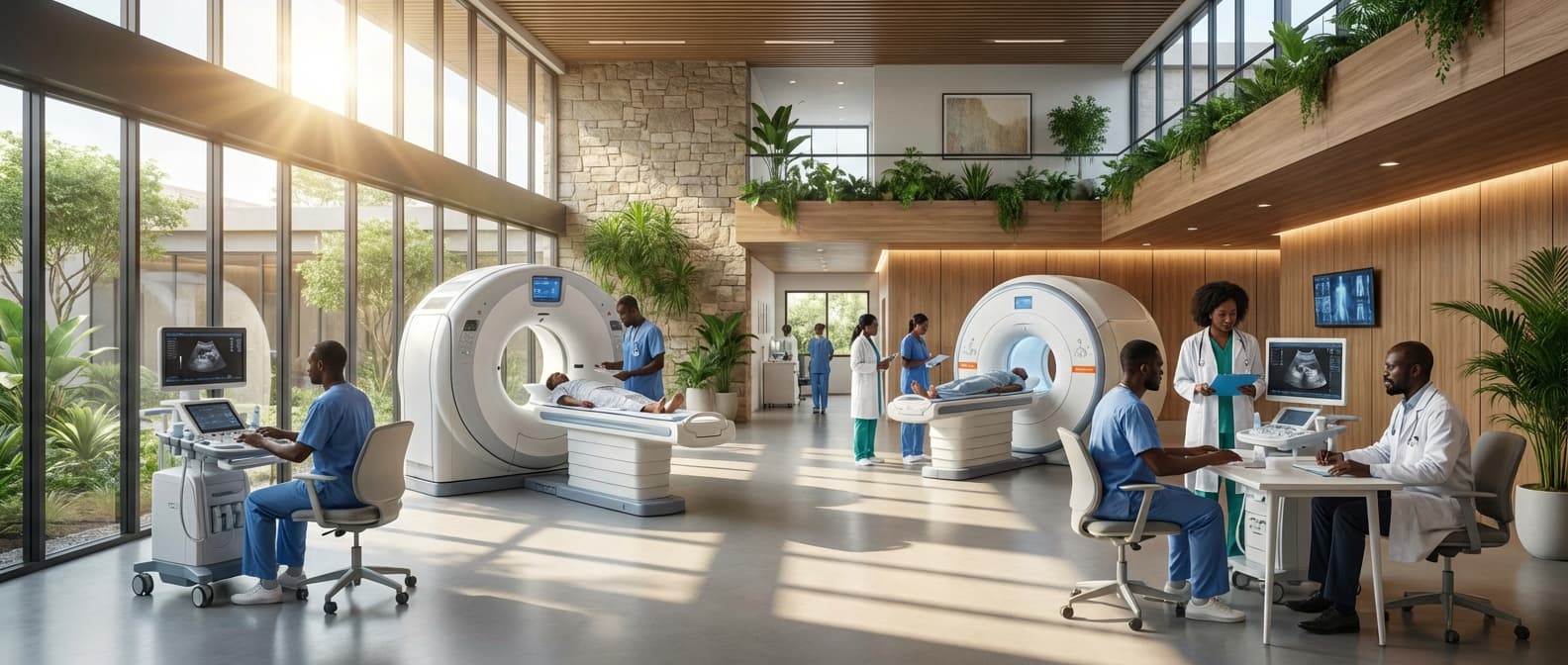
Endoscopy Solutions in Burkina Faso
Engineering Excellence & Technical Support
Advanced endoscopic equipment delivering superior visualization and diagnostic precision for minimally invasive procedures. High-standard technical execution following OEM protocols and local regulatory frameworks.
Mobile Diagnostic Units for Remote Access
Deploying state-of-the-art, portable endoscopy units equipped with advanced imaging and AI-assisted diagnostic tools. These units are designed for rugged terrain and can be rapidly deployed to underserved rural communities, dramatically increasing access to early disease detection and treatment for prevalent gastrointestinal and respiratory conditions.
Tele-Endoscopy Training & Support Network
Establishing a robust tele-endoscopy platform connecting local healthcare professionals in Burkina Faso with expert gastroenterologists and pulmonologists internationally. This facilitates remote guidance during complex procedures, real-time image analysis, and continuous professional development, enhancing the skill base and improving patient outcomes nationwide.
Sustainable Sterilization & Maintenance Hubs
Implementing a network of decentralized, solar-powered sterilization hubs to ensure the consistent availability of safely reprocessed endoscopic equipment. These hubs also serve as local maintenance centers, providing essential technical support and reducing equipment downtime, thereby ensuring the long-term viability and scalability of endoscopy services across the country.
What Is Endoscopy Solutions In Burkina Faso?
Endoscopy solutions in Burkina Faso encompass a range of diagnostic and therapeutic procedures utilizing endoscopes to visualize and intervene within internal body cavities and organs. These solutions are critical for the accurate diagnosis and management of various gastrointestinal, respiratory, and genitourinary conditions. The availability and application of endoscopy in Burkina Faso are vital for improving patient outcomes, particularly in areas where access to advanced medical imaging and surgical interventions may be limited. The service involves the insertion of a flexible or rigid tube equipped with a light source and a camera (the endoscope) into the body. High-definition video is transmitted to a monitor, allowing clinicians to inspect the internal structures. Diagnostic capabilities include biopsy collection for histopathological analysis, identification of lesions, and assessment of inflammation or structural abnormalities. Therapeutic applications range from bleeding control (e.g., cauterization, clipping) to polyp removal (polypectomy), foreign body retrieval, and stenting to relieve obstructions.
| Service Component | Description | Target Population | Typical Use Cases |
|---|---|---|---|
| Diagnostic Endoscopy | Visual inspection of internal organs and tissues with the aid of an endoscope. Allows for direct visualization of mucosal surfaces, lumen integrity, and the presence of abnormalities. Enables real-time imaging and collection of tissue samples (biopsies) for further analysis. | Patients presenting with symptoms such as unexplained gastrointestinal bleeding, chronic abdominal pain, dysphagia, persistent cough, or hematuria. Individuals with a history of gastrointestinal polyps or inflammatory bowel disease requiring surveillance. | Gastroscopy (EGD) for evaluation of upper gastrointestinal symptoms, colonoscopy for colorectal cancer screening and inflammatory bowel disease assessment, bronchoscopy for respiratory symptoms and suspected lung masses, cystoscopy for urinary tract issues. |
| Therapeutic Endoscopy | Interventions performed using endoscopic tools passed through the endoscope's working channel. Aims to treat conditions non-surgically or minimally invasively, reducing the need for open surgery and associated complications. | Patients with specific endoscopic findings requiring intervention, such as active bleeding sites, precancerous polyps, benign or malignant strictures causing obstruction, or ingested foreign bodies. | Hemostasis for active bleeding (e.g., peptic ulcer hemorrhage), polypectomy for removal of precancerous or symptomatic polyps, dilation of esophageal or pyloric strictures, foreign body extraction, stent placement for palliation of malignant obstructions. |
| Endoscopic Retrograde Cholangiopancreatography (ERCP) | A specialized endoscopic procedure used to diagnose and treat conditions of the bile and pancreatic ducts. Involves cannulating the ampulla of Vater and injecting contrast medium to visualize these structures via fluoroscopy. | Patients with suspected or confirmed biliary or pancreatic ductal obstructions, gallstones in the common bile duct, cholangitis, or pancreatic duct pathology. | Biliary stone removal, stent placement in biliary or pancreatic ducts, biopsy of lesions within the ducts, sphincterotomy for stone extraction or to relieve pressure. |
| Endoscopic Ultrasound (EUS) | Combines endoscopy with ultrasound imaging. An ultrasound transducer is mounted on the tip of the endoscope, providing high-resolution cross-sectional images of the gastrointestinal wall layers and surrounding organs. | Patients requiring detailed staging of gastrointestinal cancers, evaluation of submucosal lesions, assessment of pancreatic masses, or guidance for fine-needle aspiration (FNA) of suspicious areas. | Staging of esophageal, gastric, and rectal cancers; evaluation of pancreatic cancer and cysts; diagnosis of mediastinal and lymph node abnormalities; guided biopsy of deep-seated lesions. |
Endoscopy Solutions in Burkina Faso: Key Aspects
- Definition and Scope
- Target Patient Population
- Indications and Applications
- Technological Considerations
- Challenges and Future Directions
Who Needs Endoscopy Solutions In Burkina Faso?
Endoscopy plays a crucial role in the diagnosis and management of a wide range of gastrointestinal and respiratory conditions. In Burkina Faso, where access to advanced medical technologies can be limited and certain diseases are prevalent, endoscopy solutions are essential for improving patient outcomes. The demand for these solutions stems from the need for accurate and minimally invasive diagnostic procedures, as well as therapeutic interventions for conditions that might otherwise require more complex surgeries or lead to severe complications.
| Customer Segment | Key Departments/Users | Primary Needs/Applications | Challenges in Burkina Faso |
|---|---|---|---|
| Public Hospitals (e.g., CHU Yalgado Ouédraogo, CHU Tengandogo) | Gastroenterology, Pulmonology, Surgery (General, Thoracic), Oncology, Internal Medicine | Diagnostic upper and lower GI endoscopy, bronchoscopy, foreign body removal, biopsy, dilation, stenting, polypectomy, management of GI bleeding. | Limited funding, aging equipment, shortage of trained personnel, insufficient infrastructure (electricity, sterile water), difficulty in importing and maintaining specialized equipment. |
| Private Hospitals and Clinics (e.g., Clinique La Providence) | Gastroenterology, Pulmonology, Surgery, Internal Medicine | Similar to public hospitals, with potential for higher demand for advanced diagnostic and therapeutic procedures, screening programs. | Higher cost of services may limit access for some patients, reliance on imported consumables and equipment, competition for skilled professionals. |
| Diagnostic Centers | Gastroenterology, Pulmonology | Primarily focused on diagnostic endoscopy, biopsies, and screening for common GI and respiratory pathologies. | May have more specialized but fewer overall diagnostic capabilities, dependent on referrals from physicians. |
| Medical Training Institutions (e.g., Université Joseph Ki-Zerbo) | Medical Schools, Postgraduate Training Programs (Gastroenterology, Surgery) | Training future endoscopists, research, demonstration of advanced techniques. | Need for up-to-date simulators, training models, and access to functional, modern endoscopy equipment for hands-on learning. |
Target Customers and Departments for Endoscopy Solutions in Burkina Faso
- Hospitals (Public and Private)
- Specialized Clinics
- Diagnostic Centers
- Medical Training Institutions
Endoscopy Solutions Process In Burkina Faso
The Endoscopy Solutions Process in Burkina Faso outlines the comprehensive workflow from an initial inquiry to the successful execution of endoscopy services. This process is designed to ensure efficient patient care, accurate diagnosis, and appropriate treatment planning within the healthcare system of Burkina Faso. It involves multiple stakeholders, including patients, healthcare providers, and administrative staff, and addresses logistical, clinical, and resource-related aspects.
| Stage | Description | Key Activities | Responsible Parties | Potential Challenges in Burkina Faso |
|---|---|---|---|---|
| Inquiry & Referral | The process begins when a patient presents with symptoms requiring endoscopic investigation or is referred by another healthcare professional. | Patient presents with symptoms (e.g., gastrointestinal bleeding, abdominal pain, difficulty swallowing). Doctor assesses need for endoscopy. Referral to an endoscopy unit or specialized center. | Patient, General Practitioner, Specialist Physician | Limited access to primary healthcare, long travel distances for patients, insufficient awareness of when to seek endoscopic evaluation. |
| Initial Patient Assessment & Scheduling | Once referred, the patient undergoes an initial assessment to determine suitability for the procedure and to schedule the appointment. | Review of medical history, physical examination, identification of comorbidities, discussion of risks and benefits, scheduling of the endoscopy appointment. | Endoscopist, Nurse, Administrative Staff | Overcrowded facilities, limited availability of specialized endoscopists and equipment, lengthy waiting lists, potential for patient no-shows due to cost or logistical issues. |
| Pre-Procedure Preparation | The patient receives detailed instructions and undergoes necessary preparations before the endoscopy. | Fasting instructions (NPO), bowel preparation (if applicable for colonoscopy), medication review and adjustments, consent form completion, provision of educational materials. | Nurse, Patient, Pharmacist (for medication adjustments) | Lack of access to clean water for bowel prep, limited understanding of instructions due to literacy levels or language barriers, cost of preparation materials, adherence challenges. |
| Procedure Execution | The actual endoscopic examination is performed by a qualified practitioner. | Patient arrival at the unit, vital signs monitoring, administration of sedation/anesthesia, insertion of endoscope, visualization of organs, biopsy collection (if needed), therapeutic interventions (e.g., polyp removal). | Endoscopist, Anesthetist (if applicable), Nurse, Technician | Shortage of trained endoscopists and support staff, inadequate or malfunctioning equipment, inconsistent power supply, limited availability of biopsy forceps or therapeutic accessories, potential for infection control issues. |
| Post-Procedure Care & Recovery | The patient is monitored as they recover from the procedure and sedation. | Recovery room monitoring, vital signs checks, management of any immediate complications, observation for bleeding or perforation, discharge instructions. | Nurse, Physician | Limited recovery space, insufficient nursing staff for continuous monitoring, lack of accessible transportation home, difficulty in follow-up due to patient location. |
| Pathology & Diagnostic Reporting | If biopsies were taken, they are sent for pathological examination, and a comprehensive report is generated. | Sample transport to laboratory, microscopic examination by pathologist, preparation of detailed pathology report, interpretation of endoscopic findings and biopsy results. | Pathologist, Laboratory Technician, Endoscopist | Limited laboratory infrastructure, lack of specialized pathologists, delays in sample transport, inconsistent quality control, limited availability of advanced diagnostic techniques. |
| Treatment Planning & Follow-up | Based on the findings, a treatment plan is developed, and arrangements for follow-up are made. | Discussion of results with patient, formulation of treatment strategies (medical, surgical, further endoscopic procedures), scheduling of follow-up appointments, referral for further management. | Endoscopist, Referring Physician, Patient, Specialist (if needed) | Limited availability of specialized treatment options, financial barriers to accessing necessary medications or procedures, poor patient adherence to follow-up appointments, geographical challenges for rural populations. |
Endoscopy Solutions Process Workflow in Burkina Faso
- Inquiry & Referral
- Initial Patient Assessment & Scheduling
- Pre-Procedure Preparation
- Procedure Execution
- Post-Procedure Care & Recovery
- Pathology & Diagnostic Reporting
- Treatment Planning & Follow-up
Endoscopy Solutions Cost In Burkina Faso
The cost of endoscopy solutions in Burkina Faso can vary significantly based on several factors, including the type of procedure, the medical facility, the complexity of the case, and the specific equipment or consumables used. Generally, endoscopy refers to a range of diagnostic and sometimes therapeutic procedures using specialized instruments to visualize internal organs and cavities. These procedures are crucial for diagnosing conditions affecting the digestive system, respiratory tract, and other internal structures. While exact, up-to-date pricing information can be elusive and subject to change, understanding the contributing factors provides a framework for estimating costs.
| Endoscopy Type (Approximate) | Estimated Cost Range (XOF) | Notes |
|---|---|---|
| Gastroscopy (Upper Endoscopy - Diagnostic) | 50,000 - 120,000 | Includes basic examination, may or may not include biopsy. |
| Colonoscopy (Lower Endoscopy - Diagnostic) | 70,000 - 180,000 | Includes basic examination, may or may not include biopsy. |
| Gastroscopy with Polypectomy | 80,000 - 200,000 | Cost increases with the number and size of polyps removed. |
| Colonoscopy with Polypectomy | 100,000 - 250,000 | Cost increases with the number and size of polyps removed. |
| Bronchoscopy (Diagnostic) | 80,000 - 150,000 | May include bronchial washings or brushing. |
| Sedation/Anesthesia | 20,000 - 50,000 | Additional cost depending on the agent and administration. |
Key Factors Influencing Endoscopy Costs in Burkina Faso:
- Type of Endoscopy: The price will differ greatly depending on whether it's a gastroscopy (upper endoscopy), colonoscopy (lower endoscopy), bronchoscopy (lungs), or another specialized endoscopic examination.
- Medical Facility: Public hospitals typically offer lower costs compared to private clinics or specialized medical centers, which often have more advanced equipment and amenities.
- Provider Expertise & Reputation: The experience and reputation of the gastroenterologist or endoscopist can influence the perceived value and, consequently, the cost.
- Procedure Complexity: Simple diagnostic endoscopies are generally less expensive than those requiring biopsies, polyp removal (polypectomy), stricture dilation, or other interventional procedures.
- Sedation/Anesthesia: The type and duration of sedation or anesthesia administered will add to the overall cost.
- Consumables & Disposables: The cost of disposable accessories, biopsy forceps, snares, and sterile equipment used during the procedure impacts the final bill.
- Pre- and Post-Procedure Care: This includes consultation fees, laboratory tests, and any necessary follow-up appointments or medications.
- Geographic Location within Burkina Faso: Prices may vary slightly between major cities like Ouagadougou and Bobo-Dioulasso, and more rural areas.
Affordable Endoscopy Solutions Options
Navigating the costs associated with endoscopy can be a significant concern for patients. Fortunately, several affordable endoscopy solutions and cost-saving strategies exist. Understanding these options can empower individuals to make informed decisions and manage their healthcare expenses effectively. Value bundles, often offered by healthcare providers or insurance companies, are pre-packaged sets of services that can provide a more predictable and potentially lower overall cost compared to purchasing services individually. These bundles might include the procedure itself, pre-operative consultations, post-operative care, and even follow-up appointments.
| Service Component | Typical Cost Range (USD) | Cost-Saving Considerations |
|---|---|---|
| Physician Fee (Endoscopist) | $500 - $2,500+ | In-network physicians, comparative shopping, physician groups vs. independent practice. |
| Facility Fee (Operating Room/Equipment) | $1,000 - $5,000+ | Outpatient centers vs. hospitals, negotiating self-pay rates. |
| Anesthesia Fee (Anesthesiologist/CRNA) | $300 - $1,000+ | In-network anesthesiologists, understanding if sedation is included in facility fee. |
| Pathology Fee (Biopsy Analysis) | $100 - $500+ (per sample) | Number of samples taken, facility's pathology lab vs. external lab. |
| Pre-procedure Consultations | $100 - $300+ | Bundled with procedure, telehealth options. |
| Post-procedure Follow-up | $75 - $200+ | Bundled with procedure, telehealth options. |
| Medications (Sedatives, Pain Relievers) | $20 - $100+ | Generic alternatives, patient assistance programs. |
Cost-Saving Strategies for Endoscopy
- Explore Value Bundles: Inquire with your healthcare provider or insurance company about any available value bundles that encompass your endoscopy procedure. These can offer transparent pricing and potential discounts.
- Compare Provider Costs: Obtain price estimates from multiple endoscopy centers or hospitals. Prices can vary significantly based on location, facility type (hospital vs. outpatient clinic), and the specific physician performing the procedure.
- Understand Insurance Coverage: Thoroughly review your health insurance policy. Understand your deductible, co-pays, co-insurance, and out-of-pocket maximum. Verify that the chosen facility and physician are in-network to minimize costs.
- Inquire About Self-Pay Discounts: If you are uninsured or have a high deductible, ask about self-pay discounts. Many facilities offer reduced rates for patients paying out-of-pocket.
- Consider Outpatient Facilities: Endoscopies performed in outpatient surgical centers are often less expensive than those conducted in hospital settings.
- Utilize Health Savings Accounts (HSAs) or Flexible Spending Accounts (FSAs): If you have an HSA or FSA, these pre-tax accounts can be used to cover eligible medical expenses, including endoscopy procedures, lowering your taxable income.
- Negotiate Payment Plans: If you anticipate difficulty paying the full cost, inquire about payment plan options with the healthcare provider or facility.
- Seek Second Opinions (if applicable): For non-emergency procedures, a second opinion can confirm the necessity of the endoscopy and potentially offer alternative treatment pathways, which might be less costly.
- Look for Community Health Centers or Non-Profit Hospitals: These facilities may offer services on a sliding scale or have programs to assist low-income patients.
- Ask About Generic vs. Brand-Name Medications: If any medications are prescribed pre- or post-procedure, inquire about cost-effective generic alternatives.
Verified Providers In Burkina Faso
In Burkina Faso, navigating the healthcare landscape to find reliable and qualified providers is crucial. Franance Health stands out as a leader, offering a robust network of verified professionals committed to providing exceptional care. Their rigorous credentialing process ensures that every practitioner within their network meets the highest standards of expertise, ethical practice, and patient safety. This meticulous approach not only builds trust but also guarantees that patients receive optimal medical attention. Choosing Franance Health means opting for a healthcare experience that prioritizes quality, accessibility, and patient well-being.
| Credential Type | Franance Health Verification | Significance for Patients |
|---|---|---|
| Medical Licenses & Certifications | Verified against national and international standards. | Confirms practitioners are legally authorized and possess required qualifications. |
| Professional Experience | Thorough review of past roles, responsibilities, and surgical/procedural history. | Ensures practitioners have practical, hands-on experience relevant to their specialization. |
| Education & Training | Validation of degrees, diplomas, and specialized training from accredited institutions. | Guarantees a strong foundational knowledge and advanced skills. |
| Professional Affiliations & Memberships | Confirmation of membership in reputable medical associations. | Indicates adherence to professional codes of conduct and continuous learning. |
| Background Checks & Ethical Standing | Comprehensive review of professional conduct and absence of disciplinary actions. | Ensures patient trust and a commitment to ethical patient care. |
Why Franance Health Credentials Matter
- Rigorous vetting and verification of all healthcare professionals.
- Commitment to upholding the highest ethical and professional standards.
- Ensured access to qualified medical practitioners across various specialties.
- Enhanced patient safety and confidence in healthcare services.
- Streamlined access to quality medical care for residents and visitors.
Scope Of Work For Endoscopy Solutions
This Scope of Work (SOW) outlines the requirements and deliverables for the implementation and integration of new Endoscopy Solutions. The objective is to enhance diagnostic capabilities, streamline workflows, and improve patient care through the adoption of advanced endoscopic technologies. This document details the technical deliverables, standard specifications, and expected outcomes. It serves as a foundational document for vendor selection, project planning, and execution.
| Category | Specification | Description | Compliance Requirement |
|---|---|---|---|
| Endoscope Type | Flexible Video Endoscopes (Gastroscope, Colonoscope, Bronchoscope, etc.) | High-definition (HD) or 4K resolution, excellent image clarity, ergonomic design, various working channel sizes, and angulation capabilities. | Minimum HD resolution; 4K preferred. Clear demonstration of articulation range and image quality. |
| Image Processor | High-performance Digital Image Processor | Real-time image processing, advanced visualization modes (e.g., NBI, i-Scan), image enhancement features, and connectivity options. | Supports all provided endoscope models. Demonstrable capability of advanced visualization modes. |
| Light Source | LED or Xenon Light Source | High-intensity, stable illumination, adjustable brightness, compatible with specified endoscopes. | Sufficient lumen output for clear visualization; color temperature within clinically acceptable range. |
| Documentation System | Integrated or Standalone Digital Documentation System | High-resolution still image and video capture, patient data association, reporting tools, archiving capabilities (DICOM compliant). | Minimum 1080p video capture; integration with HIS/PACS is critical. DICOM conformance statement required. |
| Monitor | Medical-grade High-Definition Display | Minimum 24-inch diagonal screen size, HD resolution (1920x1080 or higher), high contrast ratio, wide viewing angle, color accuracy. | DICOM calibrated display. Brightness and contrast ratios meeting clinical requirements. |
| Connectivity | Network Interface (Ethernet), USB Ports, Video Outputs (HDMI/DVI) | Support for wired Ethernet connection, USB for data transfer, standard video outputs for monitor connection. | Compliance with hospital network security policies. Support for standard network protocols. |
| Sterilization Compatibility | Autoclavable or High-Level Disinfection (HLD) Compatible | Endoscopes and accessories must be compatible with approved sterilization methods (e.g., Ethylene Oxide, Sterrad, HLD solutions). | Manufacturer's validated reprocessing guidelines and compatibility certifications provided. |
| Software Features | User-friendly Interface, Workflow Optimization Tools, Image Management | Intuitive user interface, customizable settings, patient list integration, efficient image/video review and export functions. | Demonstration of ease of use and workflow efficiency features. |
| Data Storage | Network Attached Storage (NAS) or PACS Integration | Sufficient capacity for storing studies, compliant with hospital IT infrastructure and data retention policies. | DICOM storage commitment and interoperability with existing PACS. |
Key Technical Deliverables and Standard Specifications
- Comprehensive Endoscopy System Deployment: Includes the provision, installation, configuration, and integration of all necessary hardware (endoscopes, processors, light sources, monitors, documentation systems) and software.
- Integration with Existing Hospital Information Systems (HIS) / Picture Archiving and Communication Systems (PACS): Seamless data flow for patient demographics, imaging studies, and reports. Adherence to HL7 and DICOM standards is mandatory.
- User Training and Support: Development and delivery of comprehensive training programs for clinical staff (physicians, nurses, technicians) and IT personnel. Ongoing technical support with defined Service Level Agreements (SLAs).
- System Validation and Testing: Rigorous testing of all system components and integrated functionalities to ensure optimal performance, reliability, and adherence to specifications.
- Security and Data Privacy Compliance: Implementation of robust security measures to protect patient data, complying with HIPAA, GDPR, or relevant local data protection regulations.
- Documentation and Manuals: Provision of detailed technical documentation, user manuals, troubleshooting guides, and maintenance procedures in English.
- Interoperability Standards: Adherence to industry-standard protocols for data exchange and communication.
- Performance Metrics: Defined performance indicators for image quality, system responsiveness, and workflow efficiency.
Service Level Agreement For Endoscopy Solutions
This Service Level Agreement (SLA) outlines the agreed-upon service standards for Endoscopy Solutions, focusing on critical performance metrics such as response times for technical support and guaranteed system uptime. This agreement is designed to ensure the optimal performance and availability of the provided endoscopy services and equipment.
| Service Component | Severity Level | Response Time Target | Resolution Time Target (Best Effort) | Uptime Guarantee |
|---|---|---|---|---|
| Endoscopic Equipment & Imaging Systems | Critical (System Unavailable, impacting all procedures) | 1 hour | 4 hours | 99.8% |
| Endoscopic Equipment & Imaging Systems | High (Significant feature degradation, impacting some procedures) | 2 hours | 8 hours | 99.8% |
| Endoscopic Equipment & Imaging Systems | Medium (Minor feature degradation, workaround available) | 4 business hours | 24 business hours | 99.8% |
| Endoscopic Equipment & Imaging Systems | Low (Cosmetic issue, no impact on functionality) | 8 business hours | As soon as practicable | 99.8% |
| Software & Data Management Systems | Critical (System Unavailable, impacting all data access/processing) | 30 minutes | 2 hours | 99.9% |
| Software & Data Management Systems | High (Significant feature degradation, impacting critical functions) | 1 hour | 4 hours | 99.9% |
| Software & Data Management Systems | Medium (Minor feature degradation, workaround available) | 2 business hours | 8 business hours | 99.9% |
Key Performance Indicators (KPIs)
- Response Time: The maximum time allowed for Endoscopy Solutions to acknowledge and begin addressing a reported issue.
- Resolution Time: The maximum time allowed to fully resolve a reported issue, depending on its severity.
- Uptime Guarantee: The percentage of time the Endoscopy Solutions service is guaranteed to be operational and accessible.
- Maintenance Windows: Scheduled periods for planned system maintenance that may result in temporary downtime.
- Exclusions: Specific conditions or events that are not covered by this SLA.
Frequently Asked Questions

Ready when you are
Let's scope your Endoscopy Solutions in Burkina Faso project in Burkina Faso.

Scaling healthcare logistics and technical systems across the entire continent.