
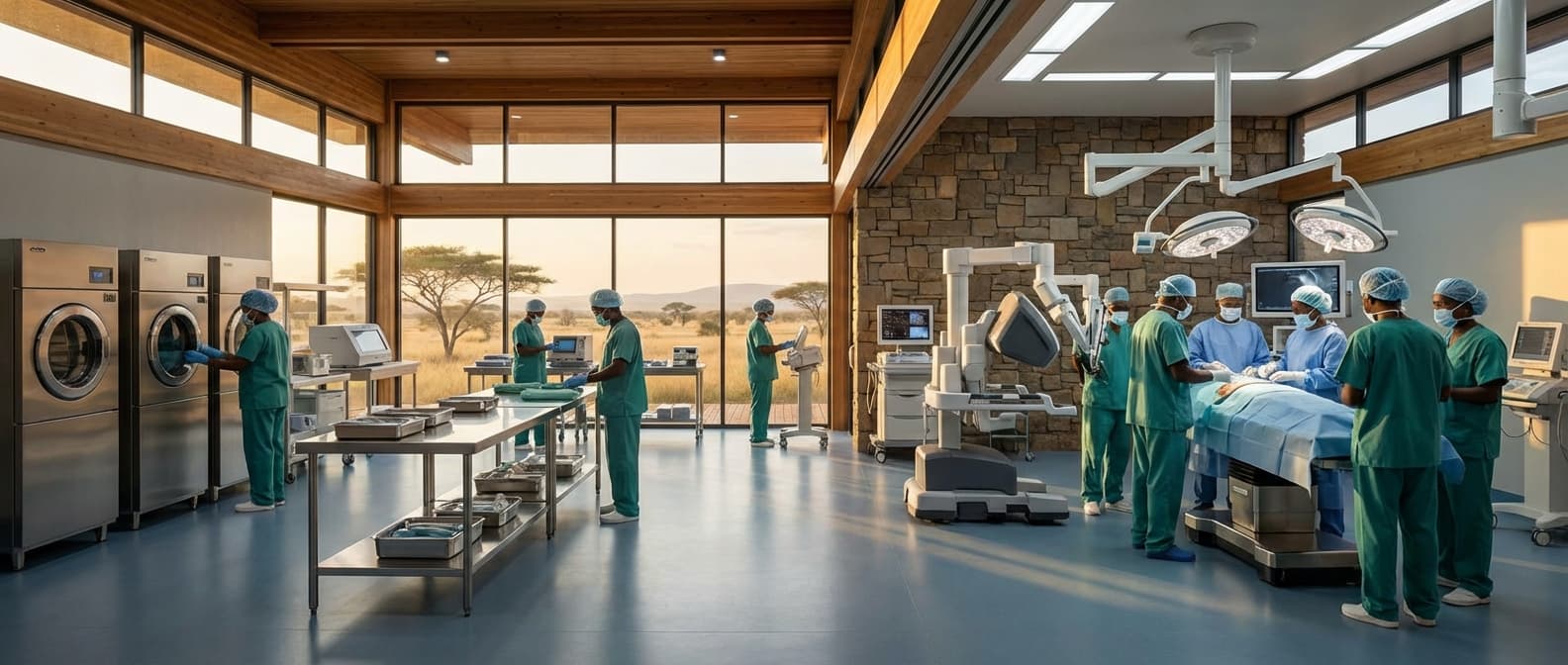
Medical Gas System Design & Installation in Burkina Faso
Engineering Excellence & Technical Support
Medical gas pipeline systems: O2, N2O, air, vacuum High-standard technical execution following OEM protocols and local regulatory frameworks.
Decentralized Medical Gas Manifolds for Remote Clinics
Engineered robust, easily maintainable decentralized medical oxygen and medical air manifold systems, utilizing locally sourced components where feasible. These systems ensure uninterrupted gas supply to remote healthcare facilities lacking centralized infrastructure, drastically improving patient care outcomes in underserved areas.
Standards-Compliant Medical Gas Pipeline Installation
Executed comprehensive medical gas pipeline installation adhering to international standards (e.g., ISO 7396-1) and adapted to local environmental considerations. Rigorous pressure testing, leak detection, and purity analysis are integral to ensuring the safety and efficacy of the delivered medical gases, minimizing contamination risks.
Local Technician Training and Capacity Building
Implemented hands-on training programs for local healthcare facility technicians and maintenance personnel on the operation, routine maintenance, and basic troubleshooting of medical gas systems. This initiative empowers local teams to ensure system longevity and immediate response to minor issues, reducing reliance on external expertise.
What Is Medical Gas System Design & Installation In Burkina Faso?
Medical Gas System Design & Installation in Burkina Faso refers to the comprehensive process of planning, engineering, and physically establishing the infrastructure required to safely and reliably deliver medical gases to patient care areas within healthcare facilities. This encompasses the selection of appropriate gases, the design of distribution networks, the installation of essential components, and the rigorous testing and commissioning to ensure compliance with relevant national and international standards. The objective is to provide a consistent and controlled supply of life-sustaining and therapeutic gases like medical oxygen, medical air, nitrous oxide, and vacuum to where they are needed most, such as operating rooms, intensive care units, emergency departments, and patient wards.
| Stakeholder/Entity | Need for Medical Gas System Design & Installation | Typical Use Cases |
|---|---|---|
| Public Hospitals (e.g., CHU Yalgado Ouédraogo, CHR Bobo-Dioulasso) | Essential for providing life support, anesthesia, and respiratory therapy to a large patient population. | Surgical procedures, intensive care, emergency resuscitation, general patient care requiring supplemental oxygen. |
| Private Clinics and Hospitals | To offer advanced medical services and maintain a competitive edge by providing modern patient care amenities. | Specialized surgeries, diagnostic procedures requiring medical air, neonatal care. |
| Military and National Security Healthcare Facilities | Ensuring the readiness of medical services for military personnel and in support of national security operations. | Field hospitals, medical evacuation services, trauma care. |
| Non-Governmental Organization (NGO) Healthcare Facilities | Providing critical medical services in underserved areas and during humanitarian crises. | Primary healthcare, maternal and child health, emergency response in remote regions. |
| New Healthcare Facility Construction Projects | Integral to the initial infrastructure planning and development of a modern healthcare establishment. | Foundation for all patient-related gas delivery services from inception. |
| Existing Healthcare Facility Renovations and Expansions | Upgrading outdated systems, increasing capacity, or integrating new medical technologies that rely on medical gases. | Modernization of operating rooms, addition of new ICU beds, installation of advanced diagnostic equipment. |
Key Components and Processes Involved:
- Needs Assessment and Planning: Determining the type and quantity of medical gases required, the number and location of outlets, and the overall system capacity based on the healthcare facility's size, specialty, and projected patient load.
- System Design and Engineering: Developing detailed blueprints and schematics for the medical gas pipeline system (MGPS), including source equipment (e.g., oxygen concentrators, manifolds, bulk liquid storage), distribution piping, pressure regulators, alarms, shut-off valves, and terminal units (outlets).
- Regulatory Compliance: Adhering to Burkina Faso's national health regulations, building codes, and relevant international standards (e.g., NFPA 99, ISO 7396) governing the design, installation, and performance of medical gas systems.
- Material Selection and Procurement: Specifying and sourcing high-quality, medical-grade piping, fittings, valves, and ancillary equipment that meet stringent purity and safety requirements.
- Installation and Fabrication: Executing the physical installation of the MGPS, including pipe cutting, welding, brazing, and assembly, ensuring proper support, labeling, and protection of all components.
- Purging and Cleaning: Thoroughly purging the pipeline system to remove any contaminants (e.g., particulate matter, moisture, oil) to maintain gas purity.
- Pressure Testing: Conducting pressure decay tests to verify the integrity and leak-tightness of the entire distribution network.
- Gas Purity and Analysis: Performing gas analysis at various points in the system to confirm that the delivered gases meet the required purity standards.
- Commissioning and Validation: Comprehensive testing of all system functionalities, including alarms, shut-off valves, and outlet performance, followed by final validation to certify operational readiness.
- Training and Handover: Providing training to facility staff on the operation, maintenance, and emergency procedures related to the medical gas system.
Who Needs Medical Gas System Design & Installation In Burkina Faso?
The design and installation of medical gas systems are critical for ensuring the safe and effective delivery of medical care. These systems are not a luxury but a fundamental necessity for a wide range of healthcare facilities and departments, particularly in developing nations like Burkina Faso where infrastructure and healthcare access can be challenging. A well-designed and installed medical gas system guarantees a reliable supply of essential gases like oxygen, medical air, nitrous oxide, and vacuum, which are vital for patient respiration, anesthesia, diagnostics, and surgical procedures.
| Target Customer Type | Key Departments Requiring Medical Gas Systems | Specific Needs/Applications |
|---|---|---|
| Public Hospitals | Operating Rooms, ICUs, Emergency Rooms, General Wards, Maternity Wards, Pediatric Wards | Oxygen for respiratory support, medical air for ventilators, nitrous oxide for anesthesia, vacuum for suction, potentially specialized gases for diagnostic equipment. |
| Private Hospitals | Similar to public hospitals, with potential for more specialized units (e.g., cardiac care, advanced surgical suites) | High-quality, reliable gas supply for critical procedures, often with a focus on patient comfort and advanced monitoring capabilities. |
| Clinics and Health Centers | Outpatient treatment rooms, minor procedure rooms, emergency response areas | Basic oxygen supply for emergencies, essential for stabilization before transfer to higher-level care. |
| Surgical Centers | Operating Rooms | Reliable and consistent supply of anesthetic gases (e.g., nitrous oxide) and oxygen for patient ventilation and resuscitation. |
| Intensive Care Units (ICUs) | Ventilator support areas, patient monitoring stations | High-flow oxygen, medical air for mechanical ventilation, and vacuum for airway management and fluid removal. |
| Emergency Departments | Trauma bays, resuscitation rooms, triage areas | Immediate availability of oxygen for respiratory distress, medical air for resuscitation devices, and vacuum for suction of secretions. |
| Neonatal Intensive Care Units (NICUs) | Incubator areas, specialized infant respiratory support | Precise delivery of oxygen and medical air, often at low flow rates and controlled concentrations, crucial for premature infants. |
| Anesthesia Departments | Operating rooms, procedure rooms | Primary users of anesthetic gases, requiring precise mixing and delivery systems linked to patient vital signs monitoring. |
| Pulmonary/Respiratory Care Units | Inpatient and outpatient respiratory treatment areas | Extensive use of oxygen therapy, nebulizer treatments, and potentially specialized gas mixtures for diagnostic testing. |
| Rehabilitation Centers | Therapy rooms, exercise areas | Oxygen for patients with chronic respiratory conditions requiring supplemental support during physical therapy. |
| Research Laboratories | Gas chromatography, mass spectrometry, cell culture incubators | Specific pure gases (e.g., nitrogen, helium, carbon dioxide) for analytical equipment and controlled atmosphere environments. |
| Military/Government Facilities | Field hospitals, military bases, public health clinics | Robust and durable systems capable of withstanding diverse environmental conditions, ensuring essential medical support for personnel and the public. |
Who Needs Medical Gas System Design & Installation in Burkina Faso? Target Customers and Departments
- Hospitals (Public and Private)
- Clinics and Health Centers
- Surgical Centers and Operating Theaters
- Intensive Care Units (ICUs)
- Emergency Departments
- Neonatal Intensive Care Units (NICUs)
- Anesthesia Departments
- Pulmonary/Respiratory Care Units
- Rehabilitation Centers
- Research Laboratories within Healthcare Institutions
- Military and Government Medical Facilities
Medical Gas System Design & Installation Process In Burkina Faso
Designing and installing a medical gas system in Burkina Faso involves a structured workflow, ensuring compliance with local regulations and international standards. This process begins with a detailed inquiry from a healthcare facility and culminates in a fully operational, tested, and commissioned system. Key stages include initial assessment, design and engineering, procurement, installation, testing, and final commissioning and handover. Each phase is critical for guaranteeing the safety, reliability, and efficacy of the medical gas supply.
| Stage | Key Activities | Key Considerations/Deliverables |
|---|---|---|
| Initial Inquiry & Needs Assessment | Receive request from healthcare facility; understand their requirements for medical gases (types, quantities, locations); identify existing infrastructure. | Clear understanding of project scope; preliminary budget estimation; identification of key stakeholders. |
| Site Survey & Feasibility Study | Conduct a thorough site visit to assess available space, power supply, structural integrity, and accessibility; evaluate existing gas pipelines; determine optimal plant room locations. | Detailed site report; identification of potential challenges and constraints; feasibility of the proposed system. |
| Conceptual Design & System Specification | Develop a preliminary design outlining the main components of the system (e.g., manifolds, compressors, vacuum pumps, piping layout); specify types and grades of medical gases required. | Conceptual drawings; preliminary equipment list; initial cost estimates; definition of system performance requirements. |
| Detailed Engineering Design & Drawings | Produce comprehensive engineering drawings, including P&ID (Piping and Instrumentation Diagrams), layout drawings, schematics, and specifications for all components and materials. | Complete set of approved technical drawings; detailed Bill of Materials (BOM); construction schedule; safety protocols. |
| Regulatory Approvals & Permitting | Submit design documents to relevant Burkinabé authorities (e.g., Ministry of Health, local building permit offices) for review and approval. | Obtained permits and licenses to proceed with installation; compliance with national standards (if any) and international codes (e.g., NFPA, ISO). |
| Material & Equipment Procurement | Source and procure all necessary medical gas equipment, piping, fittings, valves, alarms, and safety devices from reputable suppliers. | Acquisition of quality-assured materials and equipment; adherence to specifications; timely delivery to site. |
| On-site Installation & Construction | Carry out the installation of all system components, including gas generation/storage, piping network, terminal outlets, and alarm systems, by qualified technicians. | Properly installed piping, valves, and equipment; adherence to design specifications and safety standards during installation. |
| System Testing & Commissioning | Conduct rigorous pressure testing, leak detection, purity analysis, and functional testing of the entire medical gas system to ensure it meets all performance and safety requirements. | Comprehensive test reports; validation of system integrity and performance; identification and rectification of any defects. |
| Training & Handover | Provide comprehensive training to the healthcare facility's engineering and clinical staff on the operation, maintenance, and emergency procedures for the medical gas system. | Well-trained personnel; operation and maintenance manuals; warranty information; formal system handover. |
| Post-Installation Support & Maintenance | Offer ongoing technical support, regular maintenance services, and emergency repair services to ensure the continued reliable operation of the system. | Ensured long-term system performance and reliability; proactive maintenance to prevent failures. |
Medical Gas System Design & Installation Process
- Initial Inquiry & Needs Assessment
- Site Survey & Feasibility Study
- Conceptual Design & System Specification
- Detailed Engineering Design & Drawings
- Regulatory Approvals & Permitting
- Material & Equipment Procurement
- On-site Installation & Construction
- System Testing & Commissioning
- Training & Handover
- Post-Installation Support & Maintenance
Medical Gas System Design & Installation Cost In Burkina Faso
Designing and installing a medical gas system in Burkina Faso involves a complex interplay of factors influencing costs. These include the scope of the project (number of beds, types of gases required, complexity of the installation), the quality and origin of materials, labor costs, the specific location within Burkina Faso (urban centers typically have higher costs), regulatory compliance requirements, and the chosen supplier or contractor. The fluctuating exchange rates of the West African CFA franc (XOF) against major currencies also play a role in the final pricing. It's crucial to obtain detailed quotes from reputable local and international suppliers and installers who understand the specific challenges and standards applicable in Burkina Faso.
| Component/Service | Estimated Cost Range (XOF) | Notes |
|---|---|---|
| Medical Gas Piping (per meter, installed) | 30,000 - 150,000+ | Depends on material (copper, stainless steel), diameter, and installation complexity. |
| Medical Gas Outlet (per unit, installed) | 75,000 - 300,000+ | Varies by gas type, brand, and features (e.g., integrated regulators). |
| Pressure Regulators & Flowmeters (per unit) | 50,000 - 250,000+ | Quality and precision affect price. |
| Alarm System (centralized unit) | 1,000,000 - 5,000,000+ | Depends on the number of monitored parameters and reporting capabilities. |
| Oxygen Concentrator (e.g., 5-10 LPM) | 800,000 - 3,000,000+ | Continuous flow, medical-grade units. |
| Oxygen Manifold System (for cylinders) | 2,000,000 - 10,000,000+ | Includes switchover valves, pressure reducers, and piping for multiple cylinders. |
| Bulk Liquid Oxygen Tank (installation & supply) | 15,000,000 - 50,000,000+ | Significant upfront cost, but lower per-unit gas cost. Includes tank, vaporizer, and piping. |
| On-Site Oxygen Generator (PSA, per capacity) | 20,000,000 - 100,000,000+ | Large capital investment, but eliminates reliance on external supply. Price is highly dependent on capacity. |
| Design & Engineering Fees (percentage of project cost) | 5% - 15% | Professional fees for system design and supervision. |
| Installation Labor (estimated) | Varies significantly | Often a substantial portion of the total cost, dependent on the scale and complexity. |
| Commissioning & Testing | 500,000 - 2,000,000+ | Includes leak testing, pressure testing, and gas purity analysis. |
| Project Management & Contingency | 10% - 20% of total | Essential for managing unforeseen issues and ensuring smooth execution. |
Key Pricing Factors for Medical Gas System Design & Installation in Burkina Faso
- System Scope and Complexity: The number of medical beds to be served, the types of medical gases (oxygen, medical air, vacuum, nitrous oxide, etc.), the pressure requirements, and the layout of the healthcare facility significantly impact the quantity of materials and labor needed.
- Material Quality and Origin: High-quality, certified medical-grade piping, valves, regulators, outlets, alarms, and gas supply units (e.g., oxygen concentrators, manifold systems) are essential. Materials sourced internationally might incur higher import duties and shipping costs.
- Labor Costs: Skilled labor for design, installation, and commissioning is crucial. While generally lower than in Western countries, specialized technicians and engineers can command higher rates. Training and certification of local personnel can add to initial costs.
- Location within Burkina Faso: Costs for materials, transport, and labor can vary between major cities like Ouagadougou and Bobo-Dioulasso compared to more remote regions.
- Regulatory Compliance and Standards: Adherence to international (e.g., ISO, NFPA) and any specific Burkinabe health and safety regulations for medical gas systems can necessitate the use of specific components and rigorous testing, influencing costs.
- Gas Supply Method: The choice between bulk liquid oxygen tanks, cylinder manifolds, or on-site oxygen generators (PSA or VPSA) will dramatically affect the upfront investment and ongoing operational costs.
- Ancillary Equipment: This includes alarm systems, pressure monitoring devices, gas filters, and emergency shut-off valves, all of which contribute to the overall system cost.
- Design and Engineering Fees: Professional design and engineering services are vital for ensuring a safe, efficient, and compliant system. These fees depend on the complexity and size of the project.
- Installation and Commissioning: This covers the physical installation of piping, outlets, and the integration of all system components, followed by rigorous testing and commissioning to ensure functionality and safety.
- Permits and Approvals: Obtaining necessary permits and approvals from local authorities can involve fees.
- Contingency and unforeseen expenses: It is prudent to include a contingency fund to cover unexpected issues that may arise during design or installation.
Affordable Medical Gas System Design & Installation Options
Designing and installing a medical gas system is a critical undertaking for healthcare facilities, balancing patient safety with budgetary constraints. This guide explores affordable design and installation options, emphasizing the value of bundled services and effective cost-saving strategies. By understanding these approaches, facilities can achieve compliant, reliable, and cost-effective medical gas infrastructure.
| Value Bundle Component | Description | Cost-Saving Impact |
|---|---|---|
| Integrated Design-Build | Combines design and construction services under a single contract. Eliminates the need for separate design and bid phases. | Reduces administrative overhead, streamlines communication, minimizes potential for design/construction conflicts, and can offer a fixed price upfront. |
| Phased Installation | Breaking down the installation into manageable stages, often aligning with construction phases or departmental needs. | Allows for better cash flow management, prioritizes critical areas, and can leverage bulk purchasing for materials over time. |
| Pre-Fabricated Components | Utilizing pre-assembled manifolds, panels, and pipe sections manufactured off-site. | Faster installation times, reduced on-site labor, improved quality control, and potentially lower material waste. |
| Material & Equipment Procurement Packages | Negotiating bulk discounts or bundled pricing for multiple gas types, regulators, outlets, and piping. | Leverages purchasing power, reduces individual procurement efforts, and can secure better rates from suppliers. |
| Comprehensive Maintenance Contracts | Including a service agreement for routine inspections, testing, and minor repairs as part of the initial installation contract. | Ensures system longevity, prevents costly breakdowns, and may offer preferential rates compared to ad-hoc service calls. |
Key Considerations for Affordable Medical Gas Systems
- Regulatory Compliance: Ensuring adherence to all relevant codes (NFPA 99, ASSE, local regulations) is paramount, regardless of budget.
- System Scalability: Designing for future growth can prevent costly retrofits later.
- Material Selection: Choosing durable yet cost-effective materials is crucial for long-term value.
- Installation Expertise: Partnering with experienced and certified installers minimizes errors and rework.
- Maintenance Planning: Proactive maintenance is significantly cheaper than emergency repairs.
Verified Providers In Burkina Faso
In Burkina Faso's evolving healthcare landscape, identifying trusted and verified providers is paramount for individuals seeking quality medical services. Franance Health stands out as a leading entity, offering a robust network of accredited healthcare professionals and facilities. This JSON document outlines the credentials that make Franance Health the superior choice for your health needs in Burkina Faso.
| Credential Type | Verification Standard | Benefit to Patient |
|---|---|---|
| National Accreditation | Ministry of Health of Burkina Faso Standards | Guaranteed compliance with national healthcare regulations and quality assurance. |
| International Certifications | ISO, JCI (where applicable) | Assurance of adherence to globally recognized best practices in patient safety and care. |
| Specialist Board Certification | Recognized medical boards and licensing authorities | Ensures practitioners possess the highest level of expertise in their respective fields. |
| Patient Feedback | Regular surveys and outcome analysis | Demonstrates consistent high levels of patient satisfaction and service quality. |
| Ethical Framework | Franance Health Code of Conduct | Guarantees patient rights, privacy, and transparent, ethical medical practice. |
| Technological Readiness | Assessment of diagnostic and treatment equipment | Access to advanced medical technology for more accurate and effective care. |
Key Franance Health Credentials
- Accreditation by National Health Authorities: Franance Health partners exclusively with providers who have undergone rigorous vetting and meet or exceed the standards set by the Ministry of Health of Burkina Faso. This ensures adherence to national healthcare regulations and quality benchmarks.
- International Quality Standards: Many Franance Health affiliated facilities and practitioners hold certifications from internationally recognized quality assurance bodies. This demonstrates a commitment to global best practices in patient care, safety, and operational efficiency.
- Specialized Expertise Verification: Franance Health employs a stringent verification process for specialists, confirming their board certifications, years of experience, and specific areas of expertise. This guarantees that patients are connected with the most qualified professionals for their medical conditions.
- Patient Testimonials and Satisfaction Scores: A strong track record of positive patient feedback and high satisfaction scores is a key indicator of Franance Health's commitment to patient-centered care. This data is regularly collected and analyzed to ensure continuous improvement.
- Ethical Practice Compliance: All Franance Health providers are bound by a strict code of ethics, emphasizing patient privacy, informed consent, and transparent billing practices. This commitment to ethical conduct builds trust and ensures a reliable healthcare experience.
- Technological Advancement and Infrastructure: Franance Health prioritizes partnerships with facilities equipped with modern medical technology and infrastructure. This allows for accurate diagnoses, effective treatments, and improved patient outcomes.
Scope Of Work For Medical Gas System Design & Installation
This Scope of Work (SOW) outlines the requirements for the comprehensive design and installation of a medical gas system, ensuring compliance with all applicable codes, standards, and client specifications. The project encompasses the entire lifecycle of the medical gas system, from initial conceptualization and detailed design through procurement, fabrication, installation, testing, and commissioning. The objective is to deliver a safe, reliable, and fully functional medical gas system that meets the critical healthcare needs of the facility.
| Deliverable Category | Technical Deliverables | Standard Specifications/Applicable Standards | |||||||||||||
|---|---|---|---|---|---|---|---|---|---|---|---|---|---|---|---|
| Design & Engineering | Schematic Design Drawings (SD) | NFPA 99 (Health Care Facilities Code) | ASME B31.3 (Process Piping) | Local Building Codes | Client's Design Guidelines | ||||||||||
| Design & Engineering | Design Development Drawings (DD) | NFPA 99 (Health Care Facilities Code) | ASME B31.3 (Process Piping) | Local Building Codes | Client's Design Guidelines | ASHRAE Standards (for ventilation related to gas storage) | |||||||||
| Design & Engineering | Construction Documents (CD) - Including |
|
|
|
|
|
|
|
| NFPA 99 (Health Care Facilities Code) | ASME B31.3 (Process Piping) | NFPA 70 (National Electrical Code) | Local Building Codes | Client's Design Guidelines | Manufacturer's Installation Manuals |
| Design & Engineering | 3D Model of Medical Gas Systems (if applicable) | BIM Standards (if required by client) | |||||||||||||
| Procurement & Fabrication | Submittals for all equipment and materials | Material Certifications (e.g., copper tubing, fittings) | Welding Procedure Qualifications (WPQ) | Manufacturer's Data Sheets | Compliance with specified materials and standards (e.g., ASTM B88 for copper tubing) | ||||||||||
| Installation | As-Built Drawings | Field Change Documents | Installation Quality Control Reports | Daily/Weekly Progress Reports | Compliance with approved submittals and construction documents | Good construction practices | |||||||||
| Testing & Commissioning | System Pressure Testing Reports | System Purity Testing Reports (for each medical gas) | System Leak Testing Reports | Alarm System Testing Reports | Flow and Pressure Verification Reports | Performance Testing Reports for all equipment | Certified Test Reports for all testing activities | NFPA 99 (specifically sections on system verification and testing) | Manufacturer's testing requirements | ||||||
| Documentation & Closeout | Operation and Maintenance (O&M) Manuals | Manufacturer's Warranties | Training Manuals for Facility Staff | Final As-Built Drawings | Commissioning Report | Certificate of Occupancy (related to medical gas system) | Record of all testing and inspection reports |
Key Project Phases and Activities
- Phase 1: Design and Engineering
- Phase 2: Procurement and Fabrication
- Phase 3: Installation
- Phase 4: Testing and Commissioning
- Phase 5: Documentation and Closeout
Service Level Agreement For Medical Gas System Design & Installation
This Service Level Agreement (SLA) outlines the expected response times and uptime guarantees for the design and installation services of the Medical Gas System. This agreement is between [Client Name] (hereinafter referred to as the 'Client') and [Service Provider Name] (hereinafter referred to as the 'Provider').
| Service Phase | Response Time Target (Business Hours) | Response Time Target (Emergency Hours) | Uptime Guarantee (Post-Installation) |
|---|---|---|---|
| Design Phase - Initial Consultation & Requirements Gathering | Within 2 Business Days | N/A (Scheduled during Business Hours) | N/A |
| Design Phase - Submission of Preliminary Design Documents | Within 10 Business Days of receiving all necessary Client input | N/A | N/A |
| Design Phase - Addressing Design Review Feedback | Within 5 Business Days of receiving Client feedback | N/A | N/A |
| Installation Phase - Scheduling & Mobilization | As per mutually agreed project schedule | N/A | N/A |
| Installation Phase - Addressing Critical Installation Issues (during active installation) | Within 4 Business Hours | Within 8 Business Hours | N/A |
| Post-Installation - Critical System Failure (within warranty period) | Response within 2 Business Hours (initiation of troubleshooting) | Response within 4 Business Hours (initiation of troubleshooting) | 99.5% Uptime (measured monthly) |
| Post-Installation - Major System Malfunction (within warranty period) | Response within 8 Business Hours (initiation of troubleshooting) | Response within 16 Business Hours (initiation of troubleshooting) | 99.5% Uptime (measured monthly) |
| Post-Installation - Minor System Issue (within warranty period) | Response within 1 Business Day (initiation of troubleshooting) | Response within 2 Business Days (initiation of troubleshooting) | N/A (Resolution time will vary based on issue complexity) |
Key Definitions
- Medical Gas System: Refers to the complete network of piping, outlets, alarms, regulators, and associated equipment for the delivery of medical gases (e.g., oxygen, medical air, nitrous oxide, vacuum) within the Client's facility.
- Design Phase: Encompasses the activities from initial consultation and requirements gathering to the creation of detailed engineering drawings, specifications, and calculations for the Medical Gas System.
- Installation Phase: Includes the physical installation of all components of the Medical Gas System according to approved designs and relevant industry standards.
- System Downtime: Refers to the period during which the Medical Gas System is non-operational or experiencing critical malfunctions that prevent its intended use for patient care.
- Critical System Failure: A failure of the Medical Gas System that poses an immediate threat to patient safety or necessitates the immediate cessation of medical procedures reliant on that specific gas.
- Major System Malfunction: A failure of the Medical Gas System that significantly impacts its functionality or performance but does not pose an immediate, life-threatening risk to patients. This could include issues with pressure regulation, alarm system defects, or localized gas supply interruptions.
- Minor System Issue: A non-critical issue that does not affect the primary functionality or safety of the Medical Gas System, such as minor leaks, cosmetic damage, or non-essential alarm notifications.
- Business Hours: Monday to Friday, 8:00 AM to 5:00 PM, excluding public holidays.
- Emergency Hours: Outside of Business Hours, including nights, weekends, and public holidays.
Frequently Asked Questions

Ready when you are
Let's scope your Medical Gas System Design & Installation in Burkina Faso project in Burkina Faso.

Scaling healthcare logistics and technical systems across the entire continent.