
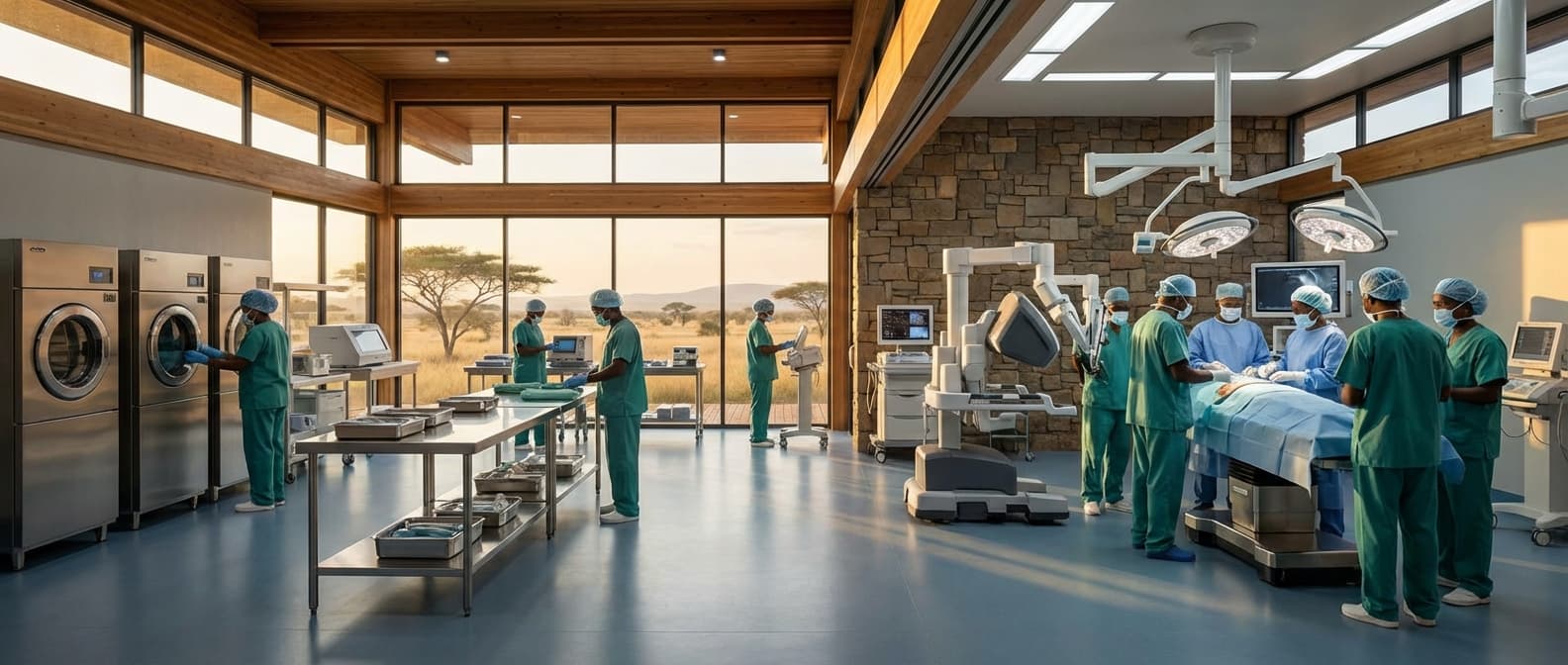
Endoscopy Reprocessing Validation in Burkina Faso
Engineering Excellence & Technical Support
AER validation, SOP development and compliance High-standard technical execution following OEM protocols and local regulatory frameworks.
Microbial Challenge Testing
Conducting rigorous microbial challenge testing of reprocessed endoscopes using standardized protocols to ensure efficacy against a broad spectrum of relevant pathogens, including spore-forming bacteria and high-level disinfectant-resistant organisms. This validates the cleaning and high-level disinfection processes meet international safety standards.
Chemical Residue Analysis
Implementing advanced analytical techniques, such as High-Performance Liquid Chromatography (HPLC), to quantify and verify the absence of residual cleaning agents, disinfectants, and organic matter on reprocessed endoscope components. This ensures patient safety and prevents adverse reactions.
Process Automation & Data Logging
Deploying automated reprocessing equipment with integrated data logging capabilities to capture critical parameters (e.g., temperature, cycle time, chemical concentration, flow rates) for each reprocessing cycle. This provides auditable proof of compliance and allows for continuous quality improvement of the validation process.
What Is Endoscopy Reprocessing Validation In Burkina Faso?
Endoscopy reprocessing validation in Burkina Faso refers to the systematic evaluation and confirmation of the entire process by which flexible endoscopic equipment is cleaned, disinfected, or sterilized after each patient use, ensuring it meets established safety and efficacy standards within the Burkinabè healthcare context. This validation is critical to prevent the transmission of healthcare-associated infections (HAIs) originating from contaminated endoscopes. The service involves a multi-faceted approach, encompassing the verification of personnel competency, adherence to manufacturer's instructions for use (IFUs) and local protocols, functionality of reprocessing equipment (e.g., automated endoscope reprocessors - AERs), efficacy of cleaning and disinfection agents, and environmental controls within the reprocessing area.
| Service/Component | Purpose | Typical Users/Recipients | Use Cases/Scenarios |
|---|---|---|---|
| Initial Validation | To establish baseline performance and compliance of a new or significantly modified reprocessing system. | Hospitals and clinics implementing endoscopy services or acquiring new reprocessing equipment; regulatory bodies overseeing healthcare safety. | Setup of a new endoscopy unit; installation of new AERs; implementation of a new disinfection protocol. |
| Routine Periodic Validation | To ensure ongoing compliance and effectiveness of the reprocessing process over time. | Healthcare facilities with established endoscopy units; quality assurance departments. | Annual or semi-annual audits of the reprocessing workflow; scheduled verification of AER performance. |
| Post-Incident Validation | To investigate and rectify issues identified after an outbreak, equipment malfunction, or adverse event. | Infection control committees; risk management teams; public health authorities. | Investigation of a cluster of endoscope-related infections; identification of a faulty AER cycle; failure of a biological indicator test. |
| Training and Competency Validation | To assess and document the proficiency of reprocessing staff. | Healthcare facility education departments; supervisors of reprocessing technicians. | Onboarding new staff; recurring training sessions; performance evaluations. |
| Environmental Monitoring | To assess the microbial load and cleanliness of the reprocessing environment. | Infection control departments; specialized laboratories. | Periodic assessment of air and surface microbial contamination in the sterile processing area. |
Key Components of Endoscopy Reprocessing Validation:
- Personnel Training and Competency Assessment: Verifying that reprocessing technicians possess the necessary knowledge and practical skills in all stages of the reprocessing cycle (pre-cleaning, cleaning, high-level disinfection (HLD)/sterilization, rinsing, drying, storage).
- Process Protocol Adherence: Auditing strict compliance with established Standard Operating Procedures (SOPs) for reprocessing, which are typically based on international guidelines (e.g., CDC, WHO) and adapted to local resources and regulatory frameworks.
- Equipment Functionality Checks: Regular testing and calibration of automated endoscope reprocessors (AERs), washer-disinfectors, and other critical reprocessing equipment to ensure they operate within specified parameters (e.g., temperature, cycle time, chemical concentration).
- Cleaning Efficacy Verification: Utilizing visual inspection methods and potentially specialized tests (e.g., protein assays) to confirm the removal of gross soil and biological debris from endoscope lumens and surfaces.
- Disinfection/Sterilization Efficacy Confirmation: Validating the efficacy of the chosen HLD or sterilization method through appropriate chemical indicator testing, biological indicator (BI) testing for sterilization cycles, and ensuring the correct concentration and contact time of disinfectants.
- Water Quality Assessment: Testing the quality of rinse water used in reprocessing to ensure it meets microbiological standards (e.g., potable water or treated water as per guidelines) to prevent recontamination.
- Drying and Storage Procedures: Confirming that endoscopes are thoroughly dried after rinsing and stored in a clean, dust-free environment to prevent microbial growth and recontamination.
- Documentation and Record-Keeping: Reviewing logs and records of reprocessing cycles, equipment maintenance, personnel training, and any quality control tests performed, which is crucial for traceability and continuous improvement.
Who Needs Endoscopy Reprocessing Validation In Burkina Faso?
Endoscopy reprocessing validation is a critical process to ensure the safety and efficacy of reusable medical devices, particularly endoscopes, which are used in close contact with patients. In Burkina Faso, a country with a growing healthcare sector and an increasing demand for endoscopic procedures, the need for robust reprocessing validation is paramount. This validation confirms that cleaning and disinfection/sterilization protocols are effectively eliminating microorganisms, thereby preventing healthcare-associated infections (HAAs) and ensuring patient safety. Without proper validation, there's a significant risk of cross-contamination, leading to increased morbidity and mortality, and placing an undue burden on the already stretched healthcare system.
| Department | Key Functions Related to Endoscopy Reprocessing Validation |
|---|---|
| Gastroenterology | Performing diagnostic and therapeutic endoscopic procedures, requiring clean and sterile endoscopes. |
| Pulmonology | Conducting bronchoscopies, necessitating meticulous reprocessing to prevent pulmonary infections. |
| Urology | Performing cystoscopies and other urological endoscopic procedures, with a focus on preventing urinary tract infections. |
| Gynecology | Utilizing hysteroscopy and laparoscopy, requiring validated reprocessing for reproductive health procedures. |
| Operating Rooms (OR) | Where many endoscopic surgeries are performed, demanding the highest standards of sterile equipment. |
| Central Sterile Supply Department (CSSD) | The core department responsible for the decontamination, cleaning, disinfection, and sterilization of medical devices, including endoscopes. This is where validation is most directly implemented and monitored. |
| Infection Prevention and Control (IPC) Department | Responsible for developing, implementing, and monitoring infection control policies and procedures, including those for endoscope reprocessing. They will utilize validation data to assess risk and compliance. |
| Laboratory Services | May be involved in testing the effectiveness of reprocessing solutions or in microbiological testing to confirm sterilization/disinfection efficacy. |
| Biomedical Engineering | Ensuring the proper functioning and maintenance of reprocessing equipment (e.g., washer-disinfectors, sterilizers) which directly impacts the validation process. |
Target Customers and Departments for Endoscopy Reprocessing Validation in Burkina Faso
- {"title":"Hospitals (Public and Private)","description":"These are the primary facilities performing endoscopic procedures. They house the departments most directly impacted by reprocessing validation."}
- {"title":"Specialized Clinics","description":"Clinics focusing on gastroenterology, pulmonology, urology, and gynecology that utilize endoscopes will require this validation."}
- {"title":"Ministry of Health","description":"The national health authority responsible for setting standards, regulations, and ensuring quality of care across the country. They will drive the adoption and oversight of validation practices."}
- {"title":"Healthcare Professionals and Technicians","description":"The individuals directly involved in cleaning, disinfection, sterilization, and operation of endoscopic equipment. Their training and adherence to validated protocols are key."}
- {"title":"Medical Device Manufacturers and Suppliers","description":"Those who import, distribute, and service endoscopic equipment. They play a role in providing validated reprocessing guidelines and may be involved in implementing validation services."}
- {"title":"Accreditation and Quality Assurance Bodies","description":"Organizations tasked with evaluating the quality of healthcare services. Endoscopy reprocessing validation will be a key metric for their assessments."}
Endoscopy Reprocessing Validation Process In Burkina Faso
The Endoscopy Reprocessing Validation process in Burkina Faso is a multi-stage workflow designed to ensure the safety and efficacy of reusable medical devices, specifically endoscopes, after they have been cleaned and disinfected. This process is crucial for preventing healthcare-associated infections (HAIs). The workflow typically begins with an inquiry, often initiated by a healthcare facility or a regulatory body, and culminates in the formal validation of the reprocessing procedures. This explanation details the steps involved from the initial request to the final execution and documentation.
| Stage | Description | Key Activities | Responsible Parties | Documentation |
|---|---|---|---|---|
| Inquiry and Initial Assessment | The process is initiated when a need for validation is identified or requested. | Healthcare facility identifies need; potential regulatory body or funding agency initiates contact; preliminary assessment of current reprocessing practices. | Healthcare Facility Management, Infection Control Department, Ministry of Health (MOH), National Regulatory Agency. | Initial request letter, meeting minutes, preliminary site assessment report. |
| Protocol Development and Submission | A detailed plan outlining the validation methodology is created. | Development of a comprehensive validation protocol including scope, objectives, reprocessing steps, validation parameters (e.g., microbial testing, chemical indicator usage), sampling plans, and acceptance criteria. Submission of the protocol to relevant authorities. | Infection Control Department, Biomedical Engineering Department, External Consultants (if applicable), MOH Department of Medical Devices. | Validation Protocol document, submission confirmation. |
| Ethical and Regulatory Review | The protocol undergoes scrutiny for ethical and regulatory compliance. | Review by an Institutional Review Board (IRB) or Ethics Committee to ensure patient safety and ethical conduct. Review by the National Regulatory Agency for compliance with national guidelines and standards. | IRB/Ethics Committee, National Regulatory Agency (e.g., Direction Nationale de la Pharmacie et des Médicaments - DNPM). | Ethics approval letter, regulatory approval letter. |
| Site Preparation and Training | Ensuring the reprocessing environment and personnel are ready. | Verification and calibration of reprocessing equipment (e.g., washer-disinfectors, drying cabinets). Training of reprocessing staff on the validated protocol and any new procedures or equipment. | Biomedical Engineering Department, Infection Control Department, Reprocessing Staff. | Equipment calibration records, training attendance sheets, training materials. |
| Execution of Validation Studies | The validation protocol is implemented in practice. | Carrying out the reprocessing steps as defined in the protocol. Collecting samples (e.g., swab samples from endoscope lumens, rinse water) for microbiological and chemical analysis. Performing necessary tests (e.g., high-level disinfection efficacy tests, visual inspection for cleanliness). | Reprocessing Staff, Laboratory Technicians, Infection Control Personnel. | Raw data from microbiological and chemical tests, test results, observation logs, photographic evidence. |
| Data Analysis and Reporting | Interpreting the results of the validation studies. | Analysis of all collected data to determine if acceptance criteria have been met. Compilation of a comprehensive validation report detailing methodology, results, analysis, and conclusions. | Laboratory Personnel, Biostatistician (if needed), Infection Control Department. | Validation Study Report, statistical analysis outputs. |
| Validation Committee Review and Decision | A formal decision is made regarding the validity of the reprocessing process. | A dedicated committee (often comprising representatives from the MOH, regulatory agency, and facility) reviews the validation report. They assess whether the reprocessing protocol has met all required standards and whether it is safe for routine use. Decision is made to approve, reject, or request further action. | Validation Committee (MOH representatives, DNPM, facility leadership, infection control specialists). | Minutes of the Validation Committee meeting, formal approval/rejection letter. |
| Implementation and Ongoing Monitoring | The validated process is integrated into routine practice, with continuous oversight. | Implementation of the approved reprocessing protocol for all endoscopes. Establishment of a system for ongoing monitoring, including regular audits, periodic re-testing, and documentation of any deviations or incidents. Staff retraining as needed. | Healthcare Facility Management, Infection Control Department, Reprocessing Staff. | Standard Operating Procedures (SOPs) for reprocessing, audit reports, incident reports, records of re-validation/re-training. |
Endoscopy Reprocessing Validation Workflow in Burkina Faso
- Inquiry and Initial Assessment
- Protocol Development and Submission
- Ethical and Regulatory Review
- Site Preparation and Training
- Execution of Validation Studies
- Data Analysis and Reporting
- Validation Committee Review and Decision
- Implementation and Ongoing Monitoring
Endoscopy Reprocessing Validation Cost In Burkina Faso
Endoscopy reprocessing validation is a critical step to ensure patient safety and prevent the transmission of infections. In Burkina Faso, like in many developing countries, the cost of this validation process can be influenced by several factors. These include the specific type of validation required (e.g., initial validation, periodic revalidation), the complexity of the endoscopy equipment, the availability and cost of reagents and consumables, the laboratory infrastructure and expertise, and the transportation costs associated with sample collection and delivery. Furthermore, the capacity of local laboratories and the presence of specialized technicians play a significant role in pricing. Due to a lack of standardized pricing across facilities and the variable nature of these contributing factors, providing exact price ranges is challenging. However, general estimates can be made based on typical service provider charges and the economic landscape of Burkina Faso.
| Service Component | Estimated Cost Range (West African CFA Franc - XOF) |
|---|---|
| Microbiological Testing (e.g., Adenosine Triphosphate (ATP) testing, bioburden testing) | 15,000 - 50,000 XOF |
| Chemical Indicator Verification (if applicable) | 5,000 - 15,000 XOF |
| Documentation and Reporting | 10,000 - 30,000 XOF |
| Consumables (e.g., swabs, culture media, reagents) | Varies significantly based on tests performed, potentially 5,000 - 20,000 XOF per test |
| Laboratory Access Fee / Service Charge | 20,000 - 60,000 XOF |
| Transportation and Sample Handling | 5,000 - 25,000 XOF (depending on distance and logistics) |
| Total Estimated Validation Cost (per endoscope, per validation cycle) | 65,000 - 200,000+ XOF |
Key Pricing Factors for Endoscopy Reprocessing Validation in Burkina Faso
- Type of Validation (Initial vs. Periodic)
- Endoscope Complexity
- Reagents and Consumables Cost
- Laboratory Infrastructure and Expertise
- Transportation and Logistics
- Laboratory Capacity and Technician Availability
- Geographic Location within Burkina Faso
Affordable Endoscopy Reprocessing Validation Options
Endoscopy reprocessing is a critical yet often costly aspect of healthcare. Ensuring the safety and efficacy of reprocessed endoscopes requires rigorous validation processes. Fortunately, healthcare facilities can explore several affordable options and cost-saving strategies to meet these validation requirements without breaking the budget. Understanding value bundles and implementing smart financial approaches are key to achieving this balance.
| Cost-Saving Strategy | Description | Potential Benefits |
|---|---|---|
| Value Bundles | Pre-packaged services at a reduced overall cost. | Predictable budgeting, comprehensive coverage, lower per-service cost. |
| In-House Validation | Performing validation tasks with internal staff and equipment. | Reduced vendor fees, greater control, potential long-term ROI. |
| Consortium Purchasing | Collaborating with other facilities for bulk purchases. | Significant price reductions, shared resources, stronger negotiation power. |
| Phased Validation | Breaking down validation into smaller, manageable steps over time. | Improved cash flow, immediate partial compliance, reduced upfront financial burden. |
| Standardized Test Kits | Using readily available, cost-effective testing solutions. | Lower material costs, ease of implementation, consistent results. |
| Strategic Vendor Partnerships | Establishing long-term relationships with service providers. | Preferred pricing, dedicated support, streamlined processes. |
| Preventative Maintenance | Proactive equipment care to minimize failures. | Reduced repair costs, extended equipment lifespan, fewer validation interruptions. |
| Data Management & Analysis | Systematic tracking and interpretation of validation data. | Early issue detection, optimized processes, prevention of costly failures. |
| Component Outsourcing | Engaging external experts for specific, specialized tasks. | Cost efficiency for infrequent needs, access to specialized skills. |
| Grant Applications | Seeking funding from relevant organizations. | Reduced out-of-pocket expenses, financial support for critical initiatives. |
Affordable Endoscopy Reprocessing Validation Options & Cost-Saving Strategies
- Value Bundles for Validation Services: Many third-party reprocessing validation providers offer "value bundles" that combine multiple services at a discounted rate. These bundles can include initial validation, routine performance testing, and even staff training, providing a comprehensive and cost-effective solution.
- Leveraging In-House Expertise: For facilities with trained biomedical engineering staff, certain validation tasks can be performed in-house, reducing reliance on external vendors. This requires investment in appropriate testing equipment and ongoing training, but can yield significant long-term savings.
- Consortium Purchasing: Grouping with other healthcare facilities to collectively purchase validation services or equipment can lead to substantial discounts through bulk purchasing power. This is particularly effective for smaller or independent hospitals.
- Phased Validation Approach: Instead of a single, large validation project, consider a phased approach. Validate critical parameters first, then gradually validate less critical ones as budget allows. This allows for immediate compliance while spreading out costs.
- Utilizing Standardized Test Kits: Employing standardized, commercially available test kits for routine performance monitoring can be more cost-effective than custom-designed or vendor-specific solutions. These kits are designed for ease of use and reliable results.
- Strategic Vendor Partnerships: Develop long-term partnerships with reputable validation service providers. These partnerships can often result in preferred pricing, dedicated support, and a deeper understanding of your specific needs, leading to more efficient and cost-effective validation.
- Focus on Preventative Maintenance: Robust preventative maintenance programs for endoscopes can significantly reduce the likelihood of failures that necessitate costly re-validation or repairs. Investing in proactive care is a powerful cost-saving strategy.
- Data Management and Analysis: Efficiently managing and analyzing reprocessing validation data can help identify trends, predict potential issues, and optimize reprocessing protocols. This proactive approach can prevent costly downtime and re-validation efforts.
- Outsourcing Specific Validation Components: For highly specialized or infrequent validation needs, outsourcing only those specific components to experts can be more economical than maintaining in-house capabilities for every possible scenario.
- Investigate Government or Non-Profit Grants: Explore available grants from government agencies or non-profit organizations that focus on healthcare safety and quality improvement. These grants can help offset the costs associated with validation.
Verified Providers In Burkina Faso
In Burkina Faso's evolving healthcare landscape, identifying truly verified providers is paramount for ensuring quality care and patient safety. Franance Health stands out as a leading accreditation and credentialing body. Their rigorous verification process goes beyond surface-level checks, delving into the core competencies, ethical standards, and operational integrity of healthcare institutions and professionals. This commitment to thoroughness makes Franance Health credentials a strong indicator of excellence, providing patients with the confidence that they are choosing providers who meet the highest benchmarks for medical practice in Burkina Faso.
| Credentialed Provider Type | Key Verification Areas | Benefits for Patients |
|---|---|---|
| Hospitals & Clinics | Infrastructure, Equipment, Staff Qualifications, Infection Control, Patient Records Management, Emergency Preparedness | Access to well-equipped facilities, competent medical teams, and standardized care protocols. Reduced risk of medical errors. |
| Specialist Physicians | Medical Education & Training, Board Certifications, Continuing Medical Education, Ethical Conduct, Professional References | Consultation with highly qualified and experienced specialists. Assurance of up-to-date medical knowledge and ethical practice. |
| Diagnostic Laboratories | Equipment Calibration & Maintenance, Quality Control Procedures, Staff Competency, Sample Handling & Integrity, Reporting Accuracy | Reliable and accurate diagnostic results. Confidence in treatment decisions based on precise testing. |
| Pharmaceutical Services (Pharmacies) | Drug Sourcing & Storage, Dispensing Accuracy, Pharmacist Qualifications, Patient Counseling, Inventory Management | Access to authentic and safely stored medications. Professional advice on drug usage and potential interactions. |
Why Franance Health Credentials Matter in Burkina Faso
- Rigorous Verification Standards: Franance Health employs a multi-faceted approach to assess providers, including on-site inspections, review of training and qualifications, and patient feedback mechanisms.
- Commitment to Patient Safety: Their accreditation process prioritizes protocols and practices that directly contribute to improved patient outcomes and reduced risks.
- Ethical Practice Assurance: Franance Health ensures that accredited providers adhere to strict ethical guidelines, fostering trust and transparency in healthcare delivery.
- Recognition and Trust: The Franance Health seal of approval is increasingly recognized as a mark of quality, guiding patients towards reliable and competent healthcare services.
- Promoting Healthcare Excellence: By setting high standards, Franance Health actively contributes to the overall improvement of healthcare infrastructure and service quality across Burkina Faso.
Scope Of Work For Endoscopy Reprocessing Validation
This Scope of Work (SOW) outlines the requirements for validating the endoscope reprocessing procedures at [Facility Name]. The objective is to ensure that current reprocessing protocols effectively reduce bioburden and eliminate the risk of patient-to-patient transmission of pathogens, meeting regulatory standards and best practices for high-level disinfection (HLD) and sterilization.
| Technical Deliverable | Description | Standard Specification / Acceptance Criteria |
|---|---|---|
| Revised Endoscope Reprocessing SOPs | Updated Standard Operating Procedures reflecting validated processes, including detailed steps for pre-cleaning, manual cleaning, mechanical cleaning (AER use), rinsing, high-level disinfection/sterilization, and storage. | SOPs must align with manufacturer's instructions, regulatory guidelines (e.g., CDC, FDA, AAMI ST58), and best practices. Documented review and approval by relevant stakeholders. |
| Environmental Monitoring Report | Report detailing baseline microbiological and water quality of reprocessing areas. | Acceptable microbial counts for ambient air and surfaces. Water quality parameters (e.g., total organic carbon, microbial counts) meeting standards for medical device reprocessing (e.g., AAMI TIR34). |
| Microbiological Validation Report | Comprehensive report detailing the results of sampling and testing of reprocessed endoscopes for microbial contamination and cleaning efficacy. | Absence of specified indicator organisms and pathogens on reprocessed endoscopes. Protein levels < 50 µg per channel, Carbohydrate levels < 100 µg per channel, Hemoglobin levels < 10 µg per channel (or as per manufacturer's recommendation). |
| High-Level Disinfection / Sterilization Validation Report | Report detailing the effectiveness of HLD and sterilization processes, including BI and CI results. | Biological indicators must demonstrate a statistically significant kill (e.g., ≥ 6 log reduction for standard BIs). Chemical indicators must show successful completion of the disinfection/sterilization cycle as per manufacturer's specifications. |
| AER Cycle Validation Report | Documentation confirming that AER cycles consistently meet critical parameters (temperature, time, flow, pressure) and achieve the required level of disinfection/sterilization. | Each monitored parameter within the manufacturer's specified range for the entire cycle duration. Consistent achievement of HLD/sterilization efficacy as confirmed by microbiological testing. |
| Training Material and Records | Development and delivery of training for reprocessing staff on updated SOPs and best practices, with documented attendance and competency assessment. | Training completion records for all relevant personnel. Post-training competency assessments demonstrating understanding and application of procedures. |
| Final Validation Report | A consolidated report summarizing all validation activities, results, conclusions, and recommendations. This report will serve as the official documentation of the validation status of the endoscope reprocessing program. | Report includes executive summary, methodology, raw data, analysis, risk assessment, conclusions, and recommendations. Approved and signed by designated authorities. |
Key Stages of Endoscopy Reprocessing Validation
- Phase 1: Protocol Review and Gap Analysis:
- Review of existing endoscope reprocessing Standard Operating Procedures (SOPs).
- Assessment of manufacturer's reprocessing instructions for all endoscope models.
- Identification of any gaps or deviations from current guidelines (e.g., CDC, AAMI, SGNA, local health authorities).
- Phase 2: Pre-Validation Environmental Monitoring:
- Baseline environmental swab cultures of cleaning and HLD/sterilization areas.
- Air quality monitoring in reprocessing rooms.
- Water quality testing for cleaning and rinsing steps.
- Phase 3: Process Validation Sampling and Testing:
- Microbiological Testing:
- Sampling of internal lumens and external surfaces of reprocessed endoscopes using appropriate techniques (e.g., rinse water, swab).- Testing for indicator organisms (e.g., *Pseudomonas aeruginosa*, *Enterococcus faecium*) and potential pathogens.- Testing of cleaning efficacy using biochemical assays (e.g., protein, hemoglobin, carbohydrate detection).- Testing of HLD efficacy using biological indicators (BIs) for validated HLD cycles (e.g., *Mycobacterium chelonae*) and chemical indicators (CIs) for sterilization cycles.- Chemical Monitoring:
- Verification of disinfectant concentration and contact time for all HLD cycles.- Monitoring of automated endoscope reprocessor (AER) cycles (e.g., temperature, pressure, flow rates, cycle times).- Verification of detergent effectiveness during the cleaning phase.- Documentation Review:
- Review of all reprocessing logs, patient tracking records, and equipment maintenance records.- Phase 4: Data Analysis and Reporting:
- Statistical analysis of microbiological and chemical monitoring data.
- Comparison of results against established acceptance criteria.
- Identification of areas requiring corrective action or protocol refinement.
- Preparation of a comprehensive validation report.
- Phase 5: Corrective Actions and Re-validation (if necessary):
- Implementation of recommended changes to SOPs, equipment, or training.
- Performance of re-validation testing to confirm the effectiveness of implemented changes.
Service Level Agreement For Endoscopy Reprocessing Validation
This Service Level Agreement (SLA) outlines the response times and uptime guarantees for the Endoscopy Reprocessing Validation service. This service ensures the proper functioning and adherence to standards for automated endoscope reprocessors (AERs) and associated validation processes. This SLA is critical for maintaining patient safety and regulatory compliance.
| Service Component | Response Time (Business Hours) | Resolution Time Target (Business Hours) | Uptime Guarantee |
|---|---|---|---|
| Critical Validation Failure (e.g., AER failure leading to reprocessing halt) | 1 Hour | 4 Business Hours | 99.5% (Excluding scheduled maintenance) |
| Non-Critical Validation Issue (e.g., minor indicator reading anomaly) | 4 Business Hours | 8 Business Hours | 99.0% (Excluding scheduled maintenance) |
| Request for New Validation Cycle / Scheduling | 1 Business Day | N/A (Scheduling dependent on availability) | N/A |
| Preventative Maintenance | N/A (Scheduled in advance) | N/A | N/A (Scheduled downtime will be communicated at least 7 days in advance) |
| Technical Support Inquiry | 8 Business Hours | 24 Business Hours | N/A |
Scope of Service
- Validation of Automated Endoscope Reprocessors (AERs) using physical or chemical indicators.
- Troubleshooting and resolution of validation failures.
- Scheduled preventative maintenance of validation equipment.
- Provision of validation reports and documentation.
- Technical support for validation queries.
Frequently Asked Questions

Ready when you are
Let's scope your Endoscopy Reprocessing Validation in Burkina Faso project in Burkina Faso.

Scaling healthcare logistics and technical systems across the entire continent.