
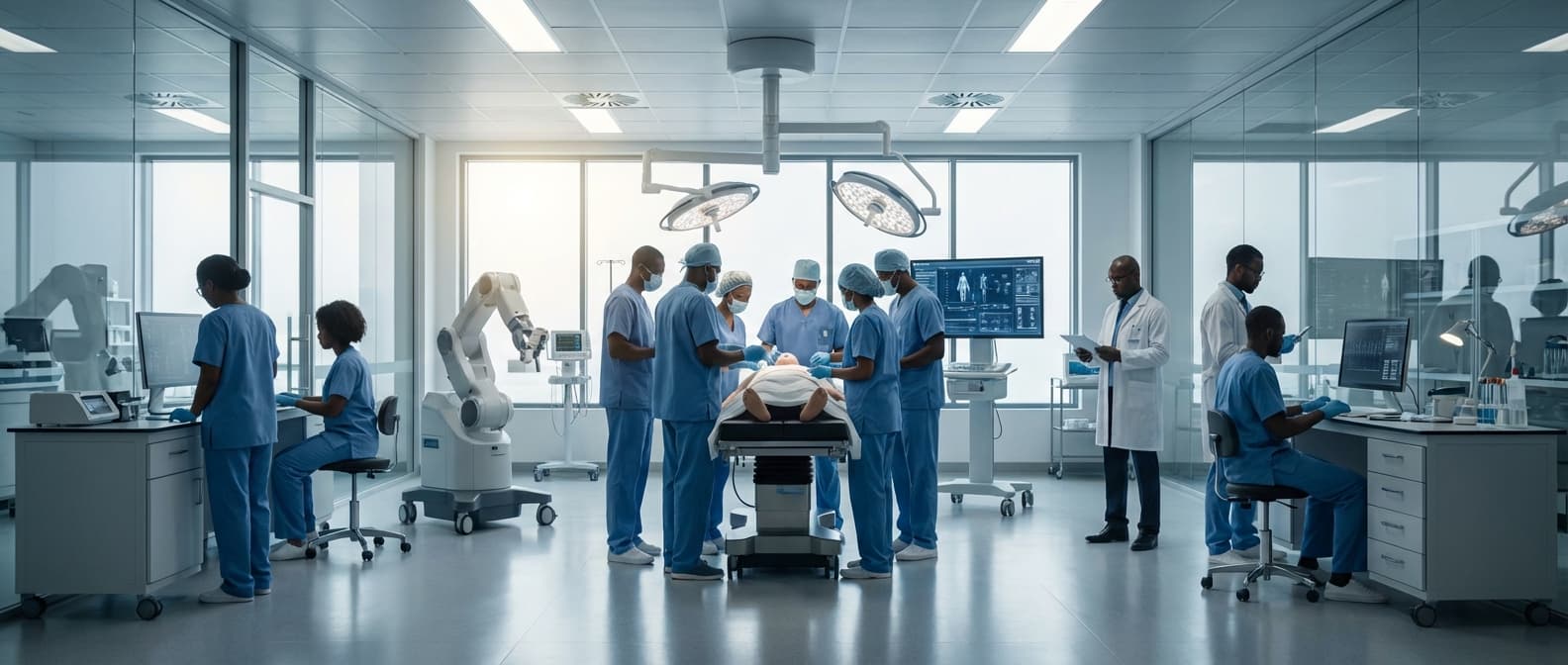
Managed Equipment Service (MES) in Burkina Faso
Engineering Excellence & Technical Support
Long‑term equipment provision with uptime SLAs and lifecycle management. High-standard technical execution following OEM protocols and local regulatory frameworks.
Enhanced Equipment Reliability & Uptime
MES implements proactive maintenance strategies and advanced diagnostics for critical medical equipment, significantly reducing unplanned downtime and ensuring consistent operational availability for healthcare providers across Burkina Faso.
Optimized Operational Efficiency & Cost Savings
By centralizing procurement, maintenance, and inventory management, MES achieves economies of scale and predictive resource allocation, leading to substantial cost reductions and predictable expenditure for healthcare facilities in Burkina Faso.
Advanced Technical Training & Capacity Building
MES provides specialized training programs for local biomedical technicians, equipping them with the latest skills and knowledge to maintain and repair advanced medical equipment, fostering long-term technical independence and expertise within Burkina Faso's healthcare sector.
What Is Managed Equipment Service (Mes) In Burkina Faso?
Managed Equipment Service (MES) in Burkina Faso refers to a comprehensive outsourcing model wherein a third-party provider takes responsibility for the procurement, installation, operation, maintenance, and eventual replacement of specialized equipment for public and private sector entities. This service model is designed to optimize the utilization and lifecycle management of critical assets, ensuring their availability, reliability, and adherence to performance standards, thereby reducing operational burdens and capital expenditure risks for the client. MES typically encompasses a Service Level Agreement (SLA) that defines performance metrics, uptime guarantees, and response times for maintenance and repair.
| Entity Type | Need for MES | Typical Use Cases |
|---|---|---|
| Healthcare Sector (Hospitals, Clinics, Diagnostic Centers) | Requires advanced medical imaging (MRI, CT scanners), laboratory equipment, and surgical instruments. High cost of acquisition and maintenance, need for specialized technicians, and demand for high uptime to ensure patient care. | Medical imaging equipment, laboratory analyzers, sterilization units, patient monitoring systems, dental equipment. |
| Agricultural Sector (Large-scale Farms, Cooperatives, Government Agencies) | Utilizes heavy machinery for cultivation, harvesting, processing, and irrigation. Need for reliable and well-maintained equipment to optimize crop yields and reduce post-harvest losses. | Tractors, harvesters, irrigation systems, grain dryers, processing machinery, soil analysis equipment. |
| Mining and Extractive Industries | Involves significant investment in heavy-duty machinery for exploration, extraction, and processing. High operational costs, demanding environments, and the need for specialized maintenance expertise. | Drilling rigs, excavators, loaders, crushers, conveyor systems, pumps, safety equipment. |
| Telecommunications Infrastructure Providers | Requires robust and continuously operational network equipment. Need for rapid deployment and maintenance to ensure service continuity and expand coverage. | Base stations, transmission equipment, fiber optic infrastructure, data center hardware. |
| Public Utilities (Water, Electricity) | Relies on specialized equipment for generation, distribution, and monitoring of essential services. Critical need for high uptime and efficiency to serve the population. | Pumps, turbines, generators, transformers, SCADA systems, water treatment plants. |
| Research and Development Institutions | Requires access to cutting-edge laboratory and analytical equipment. Need for specialized tools without the burden of ownership and upkeep. | Spectrometers, chromatographs, microscopes, environmental chambers, advanced computing clusters. |
| Government Ministries and Agencies (e.g., Infrastructure, Environment) | Often involved in large-scale projects requiring specialized equipment for monitoring, data collection, and service delivery. | Geophysical survey equipment, environmental monitoring stations, road construction machinery, fleet management systems. |
Key Components of Managed Equipment Service (MES) in Burkina Faso
- Equipment Procurement and Installation: Sourcing, purchasing, and deploying the necessary equipment based on client specifications and operational needs.
- Operation and Monitoring: Overseeing the day-to-day functioning of the equipment, often involving remote monitoring systems to track performance and identify potential issues proactively.
- Preventive Maintenance: Implementing scheduled maintenance routines to minimize downtime and extend equipment lifespan.
- Corrective Maintenance and Repair: Responding to equipment failures and performing necessary repairs to restore functionality within agreed-upon timeframes.
- Spare Parts Management: Ensuring the availability of essential spare parts to facilitate swift repairs and minimize disruption.
- Training and Capacity Building: Providing technical training to client personnel for basic operation and first-level support.
- Technology Upgrades and Replacement: Managing the lifecycle of the equipment, including planning for and executing upgrades or replacements when technologies become obsolete or performance degrades.
- Performance Reporting and Analysis: Providing regular reports on equipment utilization, uptime, maintenance activities, and cost-effectiveness.
- Risk Management: Transferring the risks associated with equipment obsolescence, maintenance costs, and downtime to the service provider.
- Financing Models: Often structured with flexible payment models, such as pay-per-use or fixed monthly fees, to manage capital outflow.
Who Needs Managed Equipment Service (Mes) In Burkina Faso?
Managed Equipment Service (MES) offers a comprehensive solution for organizations that rely on specialized and often complex equipment to deliver their services. In Burkina Faso, this service is particularly relevant for entities that face challenges related to procurement, maintenance, upgrade, and efficient utilization of their technological assets. MES is not a one-size-fits-all solution; its value is realized by specific sectors and departments that can benefit from outsourcing these critical functions to expert providers. This allows them to focus on their core mission, improve operational efficiency, and ensure the reliability and longevity of their essential equipment.
| Customer Segment | Key Departments/Areas Requiring MES | Specific Equipment Needs | |||||||
|---|---|---|---|---|---|---|---|---|---|
| Healthcare Sector (Hospitals, Clinics, Diagnostic Centers) | Medical Imaging Departments (Radiology, CT, MRI) | Surgical Units | Laboratories (Pathology, Biochemistry) | Intensive Care Units (ICUs) | Sterilization and Central Sterile Supply Departments (CSSDs) | Advanced Diagnostic Machines (e.g., X-ray, Ultrasound, MRI, CT Scanners, Endoscopes, Laboratory Analyzers, Ventilators, ECG Machines) | Specialized Surgical Tools | ||
| Educational Institutions (Universities, Technical Colleges, Research Centers) | Science and Engineering Laboratories | Computer Science Departments | Medical Schools | Research Departments | Specialized Training Workshops | Advanced Computing Clusters | Scientific Instruments | Medical Simulation Equipment | High-End Computing Hardware |
| Government Agencies (Public Administration, Defense, Infrastructure) | Technical Ministries (e.g., Ministry of Infrastructure, Ministry of Mines) | Defense Forces (Military, Police) | Emergency Services | Public Works Departments | Communication Centers | Heavy Construction and Earthmoving Equipment | Surveillance and Communication Systems | Specialized Vehicles | Data Centers and IT Infrastructure |
| Large-Scale Industrial Operations (Mining, Manufacturing, Energy) | Production Lines | Maintenance Departments | Quality Control Laboratories | Power Generation Units | Mining Equipment (Drilling, Extraction, Processing) | Manufacturing Machinery | Robotics and Automation Systems | Industrial Sensors and Control Systems | Power Generation and Distribution Equipment |
| Telecommunications Providers | Network Operations Centers (NOCs) | Field Maintenance Teams | Data Centers | Base Stations and Tower Infrastructure | Transmission Equipment | Network Servers and Routers | Fiber Optic Cabling Infrastructure | ||
| Research and Development Facilities | Specialized Research Laboratories | Advanced Analytical Facilities | Prototyping and Testing Centers | High-Performance Computing Facilities | Scientific Analytical Instruments (e.g., Spectrometers, Chromatographs) | Specialized Testing Rigs | Advanced Fabrication Equipment | Simulation Software and Hardware |
Target Customers and Departments in Burkina Faso for Managed Equipment Service (MES)
- Healthcare Sector
- Educational Institutions
- Government Agencies
- Large-Scale Industrial Operations
- Telecommunications Providers
- Research and Development Facilities
Managed Equipment Service (Mes) Process In Burkina Faso
This document outlines the typical workflow for Managed Equipment Service (MES) processes in Burkina Faso, from the initial inquiry to the full execution and ongoing management of equipment services. MES is a contractual arrangement where a third-party provider takes responsibility for the management, maintenance, and often procurement of medical equipment for a healthcare facility. This frees up the facility to focus on patient care.
| Stage | Description | Key Activities | Key Stakeholders | Potential Challenges |
|---|---|---|---|---|
| Initial contact from a healthcare facility expressing interest in MES and a detailed assessment of their equipment needs. | Facility identifies need for MES; MES provider conducts site visits; inventory of existing equipment; understanding of clinical services; budget discussion. | Healthcare Facility (Management, Clinical Staff, Procurement); MES Provider (Business Development, Technical Experts). | Lack of clear needs definition; unrealistic expectations; difficulty accessing existing data; political/bureaucratic hurdles. |
| The MES provider develops a tailored proposal based on the needs assessment, outlining services, costs, and timelines. This stage involves detailed discussions and adjustments. | MES provider drafts proposal (technical and financial); facility reviews proposal; negotiation on scope, SLAs, pricing, payment terms; refinement of proposal. | MES Provider (Commercial Team, Technical Experts); Healthcare Facility (Management, Finance, Legal). | Discrepancies in understanding scope; pricing disagreements; lengthy negotiation cycles; challenges in achieving mutual agreement on Service Level Agreements (SLAs). |
| Formalization of the MES agreement through a legally binding contract, ensuring all terms and conditions are clearly defined and agreed upon by both parties. | Legal review of contract; finalization of terms; signing of the MES contract; registration with relevant authorities (if required). | MES Provider (Legal, Commercial); Healthcare Facility (Legal, Management); Government/Regulatory bodies (if applicable). | Complex legal frameworks; lengthy approval processes; changes in government regulations; ensuring contract compliance. |
| Sourcing, purchasing, and installing new equipment as per the contract, often involving complex logistics and compliance with local standards. | Equipment selection and specification; tendering/procurement process; import/customs clearance; installation; site preparation; calibration. | MES Provider (Procurement, Logistics, Technical); Healthcare Facility (End-users, Technical Staff); Suppliers; Customs Authorities. | Delays in customs; quality of supplied equipment; logistical challenges (transport, infrastructure); ensuring compatibility with existing systems. |
| Ensuring clinical and technical staff are adequately trained to operate and maintain the new or managed equipment. A formal handover signifies the commencement of operational management. | Development of training materials; conducting training sessions for clinical and biomedical staff; competency assessment; formal handover of equipment and operational responsibility. | MES Provider (Training Specialists, Technical Staff); Healthcare Facility (Clinical Staff, Biomedical Engineers). | Resistance to change; insufficient training duration/quality; language barriers; availability of staff for training. |
| The ongoing day-to-day management of the equipment, including scheduled preventive maintenance, reactive repairs, and spare parts management. | Implementing preventive maintenance schedules; responding to equipment failures (troubleshooting, repair); managing spare parts inventory; ensuring equipment uptime; providing technical support. | MES Provider (Field Service Engineers, Technical Support Team, Operations Manager); Healthcare Facility (Clinical Staff reporting issues). | Availability of spare parts; geographical dispersion of facilities; skilled technical workforce shortages; rapid obsolescence of technology. |
| Regular tracking of equipment performance against agreed-upon SLAs and providing regular reports to the healthcare facility. | Collecting performance data (uptime, repair times, utilization); analyzing data against SLAs; generating performance reports; conducting regular review meetings with the facility. | MES Provider (Operations Manager, Performance Analyst); Healthcare Facility (Management, Clinical Leads). | Inaccurate data collection; difficulty in attributing performance issues; subjective interpretation of reports; lack of standardized reporting formats. |
| Strategic planning for the entire lifespan of the equipment, including eventual replacement or upgrades to ensure the facility remains technologically advanced. | Forecasting equipment obsolescence; planning for replacements/upgrades; budgeting for future investments; identifying new technologies; managing disposal of old equipment. | MES Provider (Strategic Planning, Commercial Team); Healthcare Facility (Management, Clinical Leadership). | Securing future funding; rapid technological advancements; difficulty in forecasting future needs; resistance to upgrading. |
| Periodic review of the MES contract to assess its effectiveness, make necessary adjustments, or decide on renewal or termination. | Joint review meetings; performance evaluation against contract; identification of areas for improvement; decision on contract renewal or termination; negotiation of new terms if renewed. | MES Provider (Senior Management, Commercial Team); Healthcare Facility (Senior Management, Procurement). | Disagreement on performance; changing needs of the facility; financial sustainability issues; lack of clear exit strategy. |
MES Process Workflow
- Inquiry & Needs Assessment
- Proposal Development & Negotiation
- Contracting & Legalization
- Procurement & Installation
- Training & Handover
- Operational Management & Maintenance
- Performance Monitoring & Reporting
- Equipment Lifecycle Management & Upgrades
- Contract Review & Renewal/Termination
Managed Equipment Service (Mes) Cost In Burkina Faso
Managed Equipment Service (MES) in Burkina Faso, while still a developing sector compared to more established markets, offers significant potential for healthcare providers seeking to optimize their medical equipment. The cost of MES contracts in Burkina Faso is influenced by a complex interplay of factors, making it challenging to provide a single, definitive price range. These costs are typically expressed in West African CFA Francs (XOF).
Key Pricing Factors:
- Equipment Type and Quantity: The nature and volume of the medical equipment covered are primary determinants. High-end imaging equipment (MRI, CT scanners), complex surgical tools, and a large inventory of devices will naturally command higher service fees than basic diagnostic tools or a smaller fleet.
- Service Level Agreement (SLA): The criticality of the equipment and the required uptime significantly impact pricing. SLAs often include guaranteed response times for repairs, preventative maintenance schedules, and the availability of spare parts. More stringent SLAs with faster response times and higher uptime guarantees will increase costs.
- Scope of Services: MES contracts can vary in their comprehensiveness. This might include basic maintenance and repair, or extend to full lifecycle management, including procurement advisory, installation, training, calibration, and eventual decommissioning and disposal.
- Original Equipment Manufacturer (OEM) vs. Third-Party Providers: Services provided directly by the OEM are often more expensive due to brand premium and guaranteed access to genuine parts and expertise. Third-party MES providers, while potentially offering cost savings, may have varying levels of access to specialized parts and OEM-certified technicians.
- Geographic Location and Accessibility: While Burkina Faso has a relatively centralized healthcare infrastructure in urban centers like Ouagadougou and Bobo-Dioulasso, remote or less accessible locations can incur additional logistical costs for technicians and spare parts, potentially leading to higher MES fees.
- Contract Duration: Longer-term MES contracts often come with better per-unit pricing, as providers can better forecast resource allocation and achieve economies of scale. Shorter, ad-hoc agreements tend to be more expensive.
- Age and Condition of Equipment: Older or poorly maintained equipment may require more frequent and extensive servicing, leading to higher maintenance costs within an MES framework. New equipment typically has lower initial maintenance needs.
- Included Spare Parts and Consumables: The extent to which spare parts and consumables are included in the MES contract will directly affect the price. Some contracts might cover all parts, while others might have a tiered approach or exclude certain high-cost components.
- Training and Technical Support: The inclusion of comprehensive training for hospital staff on equipment operation and basic maintenance can add to the overall cost of the MES package.
Estimated Pricing Ranges in Local Currency (XOF):
Providing precise figures is difficult due to the aforementioned variables. However, based on general market understanding for similar African contexts, MES costs can be broadly categorized:
- Basic Maintenance & Repair (for smaller clinics/basic equipment): XOF 150,000 - XOF 500,000 per year per piece of equipment.
- Comprehensive MES (for medium-sized hospitals/standard equipment): XOF 500,000 - XOF 2,000,000 per year per piece of equipment.
- Advanced MES (for large hospitals/high-end imaging/specialized equipment): XOF 2,000,000 - XOF 10,000,000+ per year per piece of equipment. For very complex systems or large fleets, the total contract value could run into tens or even hundreds of millions of XOF annually.
It is crucial for healthcare institutions in Burkina Faso to conduct thorough due diligence, obtain multiple quotes, and clearly define their specific needs and expectations when negotiating MES contracts to ensure they secure a service that is both cost-effective and meets their operational requirements.
| Service Category | Estimated Annual Cost (XOF) Per Equipment |
|---|---|
| Basic Maintenance & Repair (Small clinics/basic equipment) | 150,000 - 500,000 |
| Comprehensive MES (Medium hospitals/standard equipment) | 500,000 - 2,000,000 |
| Advanced MES (Large hospitals/high-end/specialized equipment) | 2,000,000 - 10,000,000+ |
Factors Influencing MES Costs in Burkina Faso
- Equipment Type and Quantity
- Service Level Agreement (SLA)
- Scope of Services
- OEM vs. Third-Party Providers
- Geographic Location and Accessibility
- Contract Duration
- Age and Condition of Equipment
- Included Spare Parts and Consumables
- Training and Technical Support
Affordable Managed Equipment Service (Mes) Options
Finding affordable Managed Equipment Service (MES) is crucial for many organizations to maintain operational efficiency and control costs without compromising on equipment reliability. MES can significantly reduce the burden of in-house maintenance, offering expertise, proactive care, and timely repairs. This section explores various affordable MES options, focusing on the value of 'value bundles' and effective 'cost-saving strategies'.
Value bundles are pre-packaged service offerings that combine multiple services and support levels into a single, often discounted, package. These bundles are designed to cater to common organizational needs, providing a comprehensive solution that can be more cost-effective than procuring individual services. They typically include elements like preventative maintenance, on-site repairs, spare parts management, remote monitoring, and sometimes even equipment upgrades or replacements. The advantage lies in predictable budgeting, streamlined procurement, and access to a wider range of support.
Cost-saving strategies in MES involve smart planning, negotiation, and leveraging the provider's expertise. This includes optimizing service level agreements (SLAs) to match actual needs, exploring tiered support options, and negotiating favorable terms for spare parts and labor. Furthermore, proactive maintenance, often a core component of MES, prevents costly breakdowns and extends equipment lifespan. Data analytics provided by MES can also identify inefficiencies and opportunities for optimization, leading to long-term savings. Choosing the right MES provider that offers flexible solutions and transparent pricing is paramount.
| Cost-Saving Strategy | Description | Potential Benefits |
|---|---|---|
| Optimize SLAs | Tailoring service level agreements to match specific equipment criticality and usage patterns. | Avoids overpaying for services not consistently required, ensures critical equipment has priority support. |
| Tiered Support Options | Selecting different support tiers (e.g., standard, premium, critical) based on the urgency and impact of equipment issues. | Reduces costs by not paying for the highest level of support for less critical assets. |
| Proactive Maintenance Focus | Prioritizing scheduled preventative maintenance to identify and address issues before they cause major failures. | Minimizes unplanned downtime, reduces emergency repair costs, extends equipment lifespan. |
| Negotiate Spare Parts Pricing | Leveraging bulk purchasing power of the MES provider or negotiating discounts on common replacement parts. | Lower overall cost of ownership due to reduced parts expenses. |
| Leverage Remote Monitoring | Utilizing provider's remote monitoring tools to detect anomalies and predict potential failures. | Enables proactive intervention, reduces the need for costly on-site visits for minor issues. |
| Long-Term Contracts (with review) | Committing to longer contract terms for potentially better rates, but ensuring periodic reviews for adjustments. | Secures predictable pricing and potential volume discounts. |
| Consolidate Vendors | If managing multiple types of equipment, consolidating MES under a single provider can lead to better pricing and simplified management. | Streamlined operations, potential for bundled discounts, single point of contact. |
| Data-Driven Insights | Utilizing MES provider's reporting on equipment performance to identify inefficiencies and optimize usage. | Improves operational efficiency, identifies opportunities for cost reduction through better resource allocation. |
Key Components of Affordable MES Value Bundles
- Preventative Maintenance Schedules
- On-Demand Repair Services
- Remote Monitoring and Diagnostics
- Spare Parts Inventory Management
- Technical Support and Helpdesk Access
- Equipment Performance Reporting
- Potential for Software Updates and Patches
- Extended Warranty Options
Verified Providers In Burkina Faso
When seeking healthcare services in Burkina Faso, it is crucial to identify and engage with verified providers. This ensures you receive safe, effective, and legitimate medical care. Franance Health stands out as a premier choice due to its rigorous credentialing process and commitment to quality healthcare delivery. Their verification signifies a dedication to upholding the highest standards, offering patients peace of mind and confidence in the services they receive.
| Key Aspects of Franance Health Verification | Description | Benefit to Patients |
|---|---|---|
| Licensing and Certification | Ensures providers hold valid medical licenses and relevant certifications from recognized bodies. | Guarantees that practitioners are legally qualified and possess the necessary expertise. |
| Professional Experience | Evaluates the practical experience and track record of healthcare professionals. | Connects patients with experienced and competent individuals in their respective fields. |
| Adherence to Ethical Standards | Confirms providers follow established medical ethics and professional conduct guidelines. | Promotes patient-centered care, respect, and confidentiality. |
| Facility Standards (where applicable) | Assesses if healthcare facilities meet minimum requirements for safety, hygiene, and equipment. | Ensures a safe and conducive environment for medical treatment. |
| Continuous Professional Development | Encourages and may require providers to engage in ongoing training and skill enhancement. | Keeps patients informed about the latest advancements and best practices in healthcare. |
Why Choose Franance Health Verified Providers:
- Rigorous Credentialing Process: Franance Health meticulously vets all participating healthcare providers, ensuring they meet stringent qualifications and ethical standards.
- Commitment to Quality: Verified providers are dedicated to delivering high-quality medical care, employing evidence-based practices and prioritizing patient well-being.
- Enhanced Patient Safety: The verification process includes checks on licensing, certifications, and adherence to safety protocols, minimizing risks for patients.
- Access to Competent Professionals: Franance Health connects you with skilled and experienced healthcare professionals across various specialties.
- Trust and Reliability: Choosing a Franance Health verified provider offers a trusted and reliable pathway to accessing essential medical services in Burkina Faso.
Scope Of Work For Managed Equipment Service (Mes)
This document outlines the Scope of Work (SOW) for a Managed Equipment Service (MES). It details the technical deliverables and standard specifications required to ensure the successful operation, maintenance, and optimization of designated equipment throughout its lifecycle. The MES aims to provide a comprehensive solution that includes installation, calibration, preventive maintenance, corrective maintenance, repairs, parts management, performance monitoring, and end-of-life management for a defined set of medical or industrial equipment.
| Category | Technical Deliverables | Standard Specifications / Requirements | |
|---|---|---|---|
| Equipment Inventory & Asset Management | Comprehensive inventory of all managed equipment, including serial numbers, manufacturer, model, location, purchase date, and warranty status. | A centralized, secure database or system for tracking all equipment assets. Regular (e.g., quarterly) updates and audits of the inventory. | |
| Installation & Commissioning | Professional installation and configuration of new equipment according to manufacturer guidelines and site-specific requirements. | Pre-installation site surveys, adherence to all safety and environmental regulations, functional testing, and client acceptance sign-off. | Provision of user training upon installation. |
| Preventive Maintenance (PM) | Scheduled preventive maintenance services based on manufacturer recommendations and usage data. | Adherence to manufacturer's PM schedules and procedures. Use of OEM-specified parts and consumables. Detailed PM reports including checks performed, results, and any recommendations. | |
| Corrective Maintenance & Repairs | On-demand repair services for equipment malfunctions and breakdowns. | Response times (e.g., within 4 hours for critical equipment, 8 hours for non-critical) and resolution times (e.g., 95% of repairs completed within 24 hours) as defined in SLAs. Use of qualified technicians. Access to a pool of spare parts. | |
| Calibration & Performance Verification | Regular calibration and performance verification of equipment to ensure accuracy and reliability. | Adherence to accredited calibration procedures and standards (e.g., ISO 17025 where applicable). Provision of calibration certificates with traceable standards. | |
| Spare Parts Management | Stocking and management of necessary spare parts to minimize repair lead times. | Maintenance of an adequate inventory of critical spare parts. Proactive identification of potential part obsolescence. Inventory management system for tracking parts usage and stock levels. | |
| Performance Monitoring & Optimization | Continuous monitoring of equipment performance and utilization data. | Implementation of monitoring tools and software. Regular performance reports highlighting key metrics (e.g., uptime, utilization, failure rates). Recommendations for optimization and efficiency improvements. | |
| Software Updates & Upgrades | Management of software updates and firmware upgrades for equipment. | Scheduled and ad-hoc updates as released by manufacturers. Testing of updates before deployment. Documentation of all software changes. | |
| Training & Support | Provision of training to end-users and technical staff on equipment operation and basic troubleshooting. | Development of training materials. On-site or remote training sessions. Ongoing technical support available during business hours and potentially 24/7 for critical issues. | |
| Reporting & Analytics | Regular reporting on all aspects of the MES, including maintenance activities, equipment performance, costs, and compliance. | Monthly or quarterly reports. Customizable report formats. Trend analysis and predictive maintenance insights. Financial reporting on service costs. | |
| End-of-Life Management | Planning and execution of equipment decommissioning, disposal, or refurbishment at the end of its useful life. | Adherence to environmental regulations for disposal. Secure data erasure. Options for remarketing or recycling. Recommendations for replacement equipment. | |
| Compliance & Regulatory Adherence | Ensuring all managed equipment and services comply with relevant industry regulations and standards. | Knowledge of and adherence to standards such as FDA, HIPAA, ISO, CE marking, etc. Maintenance of all necessary certifications and documentation. | |
| Service Level Agreements (SLAs) | Defined metrics for service response, resolution, and equipment uptime. | Clearly documented SLAs with specific, measurable, achievable, relevant, and time-bound (SMART) targets. Penalties for non-compliance and incentives for exceeding targets. |
Key Objectives of the MES
- Ensure equipment availability and uptime meets agreed-upon Service Level Agreements (SLAs).
- Maintain equipment in optimal working condition according to manufacturer specifications and regulatory requirements.
- Minimize equipment downtime through proactive and reactive maintenance strategies.
- Control and optimize equipment operating costs.
- Provide comprehensive reporting on equipment performance, maintenance activities, and costs.
- Facilitate timely upgrades and replacements to ensure technological relevance and compliance.
- Enhance patient safety and clinical outcomes through reliable equipment performance.
- Streamline the equipment management process for the client.
Service Level Agreement For Managed Equipment Service (Mes)
This Service Level Agreement (SLA) outlines the performance standards and guarantees for the Managed Equipment Service (MES). It defines the expected response times to incidents and the guaranteed uptime for the managed equipment.
| Service Component/Equipment Type | Severity Level | Response Time Guarantee | Uptime Guarantee |
|---|---|---|---|
| Core Network Infrastructure (Routers, Switches) | Critical (Service Outage) | 15 Minutes | 99.99% |
| Core Network Infrastructure (Routers, Switches) | High (Performance Degradation) | 30 Minutes | 99.99% |
| Server Hardware (Production Systems) | Critical (Service Outage) | 30 Minutes | 99.95% |
| Server Hardware (Production Systems) | High (Performance Degradation) | 1 Hour | 99.95% |
| Storage Systems (Production Data) | Critical (Data Unavailability) | 30 Minutes | 99.99% |
| Storage Systems (Production Data) | High (Performance Degradation) | 1 Hour | 99.99% |
| End-User Devices (Desktops, Laptops) | High (Single User Impact) | 2 Business Hours | N/A (Standard Support Applies) |
| Printers & Peripherals | Medium (Multiple User Impact) | 4 Business Hours | N/A (Standard Support Applies) |
Key Definitions
- Managed Equipment Service (MES): The comprehensive service provided for the monitoring, maintenance, and support of specified equipment.
- Incident: Any event that causes or may cause an interruption to the normal functioning of the managed equipment, or a degradation of its service.
- Uptime: The percentage of time the managed equipment is operational and available for use, excluding scheduled maintenance periods.
- Response Time: The maximum time allowed from the reporting of an incident to the commencement of investigation or corrective action by the MES provider.
- Resolution Time: The maximum time allowed from the reporting of an incident to its successful resolution.
Frequently Asked Questions

Ready when you are
Let's scope your Managed Equipment Service (MES) in Burkina Faso project in Burkina Faso.

Scaling healthcare logistics and technical systems across the entire continent.