
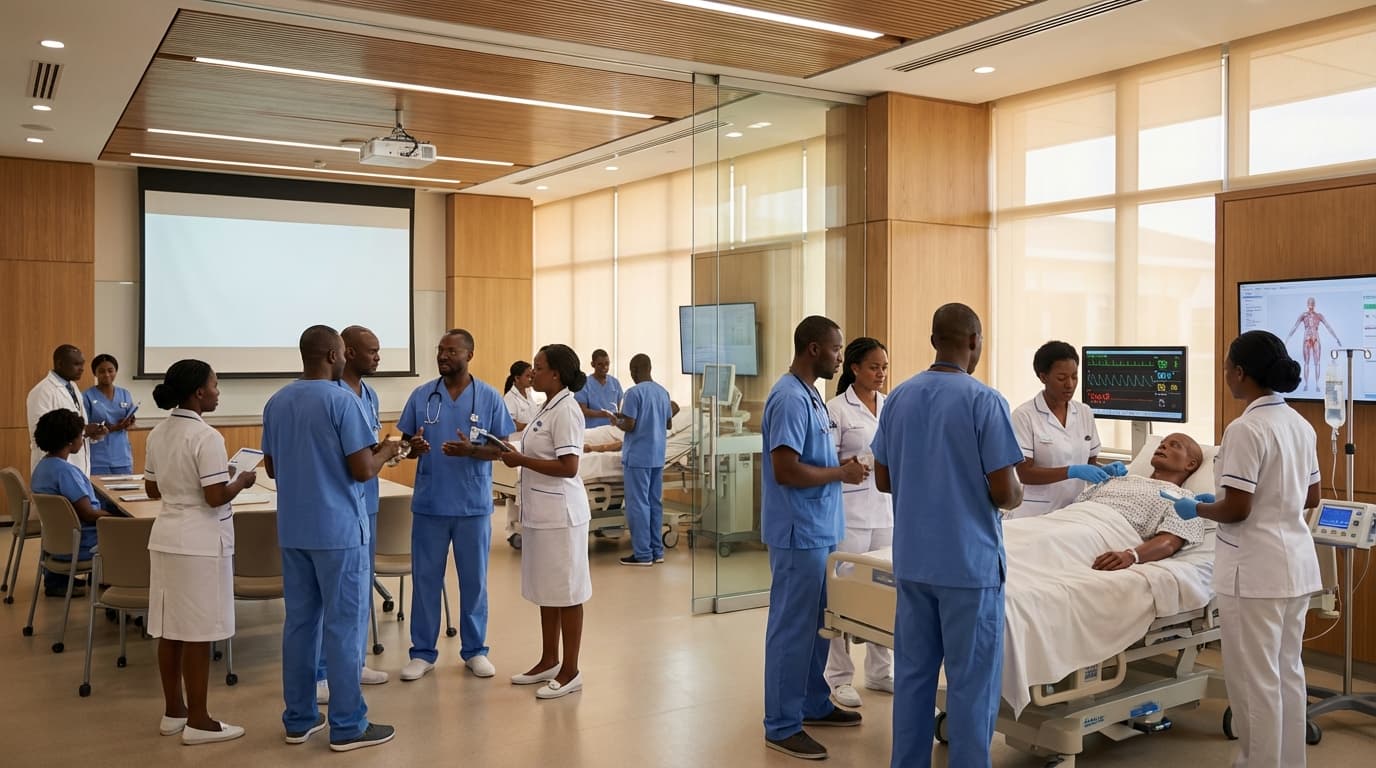
Equipment Training & Education in Botswana
Engineering Excellence & Technical Support
Comprehensive equipment training and certification programs High-standard technical execution following OEM protocols and local regulatory frameworks.
Advanced Operator Training Program
Empowering Botswana's workforce with comprehensive training on specialized heavy machinery operation, maintenance, and safety protocols, enhancing productivity and reducing downtime for critical infrastructure projects.
Digital Learning Platform for Technical Skills
Implementing an accessible online platform offering interactive modules, virtual simulations, and expert-led webinars for technicians and engineers, bridging geographical barriers and fostering continuous skill development across Botswana's diverse industries.
Safety & Compliance Certification for Equipment
Providing accredited training and certification courses focused on safe handling, operation, and maintenance of industrial equipment, ensuring adherence to international standards and promoting a safer working environment throughout Botswana.
What Is Equipment Training & Education In Botswana?
Equipment training and education in Botswana refers to the structured provision of knowledge and practical skills necessary for the safe, efficient, and effective operation, maintenance, and troubleshooting of various types of equipment. This service is critical for ensuring optimal asset utilization, minimizing downtime, enhancing workplace safety, and fostering regulatory compliance within Botswana's diverse industrial and commercial sectors. It encompasses both theoretical instruction and hands-on practical application, tailored to specific equipment types and user competency levels.
| Who Needs Equipment Training & Education? | Typical Use Cases | ||||||||||
|---|---|---|---|---|---|---|---|---|---|---|---|
| Operators: Individuals directly responsible for the daily functioning of machinery, vehicles, and specialized equipment. | Mining and Quarrying: Training on heavy earthmoving equipment (excavators, loaders, haul trucks), drilling rigs, and processing plant machinery. | Construction: Instruction on cranes, concrete mixers, scaffolding, power tools, and surveying equipment. | Manufacturing and Industrial: Training on production line machinery, automated systems, forklifts, and welding equipment. | Agriculture: Education on tractors, harvesters, irrigation systems, and crop spraying machinery. | Healthcare: Training on medical diagnostic equipment (e.g., X-ray machines, MRI scanners) and laboratory instruments. | Energy and Utilities: Instruction on power generation equipment, transmission lines, and water treatment plant machinery. | Information Technology: Training on server hardware, network infrastructure, and specialized IT support equipment. | Logistics and Warehousing: Training on forklifts, reach trucks, automated storage systems, and material handling equipment. | Maintenance Technicians: Personnel tasked with servicing, repairing, and troubleshooting equipment to ensure optimal performance and longevity. | Supervisors and Managers: To understand equipment capabilities, safety requirements, and resource allocation for efficient operations. | Safety Officers: To ensure compliance with safety regulations and best practices related to equipment usage. |
Key Components of Equipment Training & Education
- Theoretical Instruction: Covering principles of operation, safety protocols, regulatory standards, technical specifications, and diagnostic procedures.
- Practical Skill Development: Hands-on exercises for operation, calibration, routine maintenance, minor repairs, and emergency response.
- Assessment and Certification: Evaluating learner competency through written tests, practical demonstrations, and awarding recognized certifications.
- Refresher Training: Periodic sessions to reinforce skills, introduce updates, or address new operational challenges.
- Customized Curricula: Development of training programs specific to an organization's equipment fleet and operational environment.
- On-site and Off-site Delivery: Training conducted at the client's premises or at dedicated training facilities.
Who Needs Equipment Training & Education In Botswana?
In Botswana, a comprehensive approach to equipment training and education is crucial for a wide range of individuals and organizations to ensure operational efficiency, safety, and economic growth. This investment in human capital directly impacts productivity, reduces accidents, and fosters a skilled workforce capable of adapting to technological advancements.
| Department/Sector | Key Equipment Types | Training Needs |
|---|---|---|
| Mining | Drilling rigs, excavators, haul trucks, processing machinery | Operation, maintenance, safety protocols, specialized software |
| Construction | Cranes, bulldozers, concrete mixers, scaffolding | Operation, safety, site management, basic maintenance |
| Manufacturing | Assembly lines, CNC machines, packaging equipment | Operation, troubleshooting, quality control, preventative maintenance |
| Agriculture | Tractors, combine harvesters, irrigation pumps, sprayers | Operation, maintenance, precision farming techniques, safety |
| Healthcare | MRI machines, X-ray equipment, ventilators, laboratory analyzers | Operation, calibration, maintenance, infection control, patient safety |
| Transportation | Trucks, buses, forklifts, conveyor systems | Driving, load handling, route optimization, vehicle maintenance |
| Energy | Generators, turbines, solar panels, power distribution equipment | Operation, maintenance, safety, grid management |
| Water & Sanitation | Pumps, filtration systems, treatment plants, pipeline inspection tools | Operation, maintenance, water quality testing, safety |
| Education & Training Institutions | Workshop tools, laboratory equipment, simulation software | Curriculum development, practical instruction, safety in training environments |
Target Customers & Departments for Equipment Training & Education in Botswana
- {"heading":"Industrial Sector","description":"Businesses involved in manufacturing, mining, construction, and energy production rely heavily on specialized equipment. Proper training minimizes operational errors, extends equipment lifespan, and enhances safety protocols."}
- {"heading":"Agricultural Sector","description":"Farmers and agricultural cooperatives utilizing modern farming machinery (tractors, harvesters, irrigation systems) benefit from training to maximize yields, operate machinery efficiently, and reduce downtime."}
- {"heading":"Healthcare Sector","description":"Medical professionals and technicians operating sophisticated diagnostic and therapeutic equipment require specialized training to ensure accurate patient care, device maintenance, and adherence to safety standards."}
- {"heading":"Transportation & Logistics","description":"Drivers, mechanics, and logistics personnel operating heavy-duty vehicles, forklifts, and other material handling equipment need training for safe operation, maintenance, and efficient movement of goods."}
- {"heading":"Public Works & Infrastructure","description":"Government departments responsible for road construction, water management, and waste disposal utilize heavy machinery. Training for operators and maintenance staff is vital for public service delivery and infrastructure development."}
- {"heading":"Tourism & Hospitality","description":"While seemingly less equipment-intensive, this sector may require training for staff operating specialized items like hotel laundry equipment, kitchen appliances, or even safari vehicles, ensuring guest satisfaction and safety."}
- {"heading":"Educational Institutions","description":"Vocational training centers, technical colleges, and universities need to equip their students with practical skills in operating and maintaining various types of equipment relevant to their respective fields of study."}
- {"heading":"Small and Medium Enterprises (SMEs)","description":"Many SMEs in various sectors rely on equipment for their operations. Affordable and accessible training can significantly improve their competitiveness and sustainability."}
- {"heading":"Government Agencies & Parastatals","description":"Agencies involved in regulatory oversight, disaster management, and public service delivery often operate specialized equipment that requires trained personnel for effective utilization and response."}
Equipment Training & Education Process In Botswana
This document outlines the standard workflow for equipment training and education within Botswana. The process begins with an inquiry from a client or internal department requesting specific training on a piece of equipment. This is followed by a detailed needs assessment to understand the scope, objectives, and target audience of the training. Once the requirements are clear, a training proposal is developed and submitted for approval. Upon approval, the training program is designed, including curriculum development, material creation, and scheduling. The execution phase involves delivering the training through various methods like workshops, hands-on sessions, and online modules. Finally, post-training evaluation and feedback are collected to assess effectiveness and identify areas for improvement, leading to certification or completion records.
| Stage | Description | Key Activities | Responsible Party/Department | Deliverables/Outcomes |
|---|---|---|---|---|
| Inquiry & Initial Contact | The process starts when a client or internal department expresses interest in equipment training. | Receiving the request, initial clarification of needs. | Client/Internal Department, Training Coordinator | Initial understanding of training requirement. |
| Needs Assessment | A thorough evaluation to determine the specific training requirements, target audience, skill gaps, and desired learning outcomes. | Conducting interviews, surveys, skill audits; defining learning objectives. | Training Specialist, Subject Matter Expert (SME) | Detailed Training Needs Analysis (TNA) report. |
| Proposal Development & Submission | Creating a comprehensive proposal outlining the training program, including objectives, content, methodology, duration, resources, and cost. | Drafting the proposal, cost estimation, outlining trainer qualifications. | Training Department, Project Manager | Formal Training Proposal document. |
| Proposal Approval | The submitted proposal is reviewed and approved by relevant stakeholders (e.g., management, client). | Review of proposal by management/client, budget allocation, signing off. | Management, Client Representative | Approved Training Proposal, Budgetary approval. |
| Training Program Design | Developing the detailed structure and content of the training program based on the approved proposal. | Designing modules, learning activities, assessments, and evaluation methods. | Training Specialist, Instructional Designer | Training Curriculum Outline, Learning Objectives Refined. |
| Curriculum & Material Development | Creating all necessary training materials, including presentations, manuals, handouts, practical exercises, and assessment tools. | Writing content, designing visuals, developing practical scenarios, creating assessments. | Instructional Designer, SMEs, Technical Writers | Training Manuals, Presentation Slides, Workbooks, Assessment Questionnaires. |
| Scheduling & Logistics | Planning the practical arrangements for the training delivery, including dates, times, venue, equipment, and trainer allocation. | Booking venues, confirming trainer availability, arranging equipment, sending invitations. | Training Coordinator, Logistics Department | Training Schedule, Confirmed Venue, Allocated Trainers and Equipment. |
| Training Execution | Delivering the training program to the participants as per the designed curriculum and schedule. | Conducting lectures, demonstrations, hands-on exercises, group discussions, simulations. | Trainer, Facilitator | Delivered Training Sessions, Participant Engagement. |
| Post-Training Evaluation | Assessing the effectiveness of the training program and its impact on participant knowledge, skills, and performance. | Administering post-tests, practical assessments, observation of performance. | Trainer, Training Specialist | Assessment Results, Performance Improvement Data (if applicable). |
| Feedback Collection | Gathering feedback from participants and trainers on the training program's strengths and weaknesses. | Distributing and collecting feedback forms, conducting debriefing sessions. | Training Coordinator, Participants | Participant Feedback Forms, Trainer Feedback. |
| Reporting & Record Keeping | Documenting the entire training process, including attendance, assessment results, and feedback, for future reference and auditing. | Compiling training reports, updating participant records, filing documentation. | Training Administrator, Records Management | Training Completion Certificates, Training Report, Updated Participant Records. |
| Follow-up & Continuous Improvement | Following up with participants to reinforce learning and identify any further training needs, and using feedback to enhance future training programs. | Post-training support, analysis of feedback for program updates, implementing changes. | Training Department, SMEs | Updated Training Materials, Improved Training Delivery Methods. |
Equipment Training & Education Process in Botswana - Workflow Stages
- Inquiry & Initial Contact
- Needs Assessment
- Proposal Development & Submission
- Proposal Approval
- Training Program Design
- Curriculum & Material Development
- Scheduling & Logistics
- Training Execution
- Post-Training Evaluation
- Feedback Collection
- Reporting & Record Keeping
- Follow-up & Continuous Improvement
Equipment Training & Education Cost In Botswana
The cost of equipment training and education in Botswana can vary significantly based on several key factors. These include the type and complexity of the equipment, the duration and depth of the training program, the qualifications and experience of the trainers, the location where the training is conducted (e.g., a dedicated training facility, on-site at a company's premises, or online), and the reputation and accreditation of the training provider. Furthermore, the number of participants often influences the per-person cost, with group discounts being common. Specialized equipment requiring extensive hands-on practice or advanced theoretical knowledge will naturally command higher prices than basic operational training. The currency of Botswana is the Pula (BWP).
| Training Category | Estimated Price Range (BWP) | Notes |
|---|---|---|
| Basic Equipment Operation (e.g., Forklift, Basic Machinery) | 500 - 2,000 | Typically a few days, introductory level. May include safety aspects. |
| Intermediate Equipment Operation & Maintenance (e.g., Heavy Construction Machinery, Agricultural Equipment) | 1,500 - 5,000 | More in-depth, covering operation, basic troubleshooting, and preventative maintenance. Several days to a week. |
| Advanced Technical Training (e.g., Industrial Automation, Specialized Medical Equipment) | 4,000 - 15,000+ | Highly specialized, often requiring experienced engineers or technicians. Can range from several days to weeks. May involve simulator time. |
| Safety-Specific Equipment Training (e.g., Working at Heights, Firefighting Equipment) | 800 - 3,000 | Focuses on safe usage, emergency procedures, and compliance. Often a prerequisite for certain jobs. |
| On-site Training (per day/group) | 2,000 - 8,000+ | Cost varies significantly based on trainer fees, travel, and the number of employees being trained. Often more cost-effective for larger groups. |
| Online/E-learning Modules (per course) | 300 - 2,500 | Flexible learning options, good for theoretical knowledge. Practical components may still require in-person sessions. |
Key Pricing Factors for Equipment Training in Botswana
- Type and Complexity of Equipment
- Duration and Depth of Training
- Trainer Qualifications and Experience
- Training Location (On-site, Off-site, Online)
- Training Provider Reputation and Accreditation
- Number of Participants
- Inclusion of Materials and Assessments
- Certification and Accreditation
Affordable Equipment Training & Education Options
Investing in proper equipment training and education is crucial for safety, efficiency, and long-term cost savings. Fortunately, there are many affordable options available that can significantly reduce expenses while still providing valuable knowledge. Understanding how to leverage value bundles and implement smart cost-saving strategies can make professional development accessible to individuals and businesses alike.
| Strategy | Description | Potential Savings |
|---|---|---|
| Value Bundles | Purchasing training, certifications, and sometimes even equipment as a package deal. Often offered by manufacturers or training providers, these bundles provide a comprehensive solution at a reduced overall price compared to individual purchases. | Up to 30-50% on combined services. |
| Subscription Models | Accessing a library of online courses, webinars, and resources for a recurring fee. This is ideal for ongoing learning and upskilling as new equipment or techniques emerge. | Significant savings over time compared to per-course fees, especially for multiple users. |
| Early Bird Discounts | Registering for in-person workshops, conferences, or certification exams well in advance of the event date often unlocks discounted pricing. | 10-25% on registration fees. |
| Group Discounts | Enrolling multiple employees from the same organization in a training program. Many providers offer tiered discounts based on the number of participants. | Varies by provider, but can range from 10% for small groups to 50%+ for large corporate enrollments. |
| Free Online Resources | Utilizing publicly available content like YouTube tutorials, manufacturer documentation, open-source software training, and free webinars. While not always structured, they offer foundational knowledge. | Costs can be minimal or entirely free, primarily requiring time investment. |
| Cross-Training Employees | Training employees to operate and maintain multiple types of equipment. This reduces the need for specialized external training for each piece of equipment and increases operational flexibility. | Reduces external training costs and improves overall workforce efficiency. |
| Leveraging Manufacturer Support | Many equipment manufacturers offer free or low-cost introductory training sessions or online modules as part of their sales agreement or for a nominal fee. | Can be included with equipment purchase or offered at a fraction of the cost of third-party training. |
| Certification Reciprocity/Equivalency | Investigating if existing certifications can be accepted as equivalent to requirements for new training, or if there are pathways to upgrade existing certifications at a lower cost. | Avoids redundant training and reduces certification fees. |
| Local Partnerships | Collaborating with local vocational schools, community colleges, or industry associations for tailored training programs. These often have lower overhead costs. | Potentially lower tuition fees and more accessible training locations. |
Affordable Equipment Training & Education Options
- Online Courses and Webinars
- Manufacturer-Provided Training (often bundled)
- Community College and Vocational Programs
- On-the-Job Training (structured programs)
- Industry Association Workshops and Seminars
- Peer-to-Peer Learning and Mentorship
- Certification Programs with Discounted Packages
- Train-the-Trainer Programs
- E-learning Platforms and Subscriptions
- Open Educational Resources (OER)
Verified Providers In Botswana
In the growing landscape of healthcare providers in Botswana, discerning the most reliable and qualified options is crucial for individuals and organizations seeking quality medical services. Franance Health stands out as a premier choice due to its rigorous credentialing process and unwavering commitment to excellence. This document outlines why verified providers, particularly Franance Health, represent the best choice for your healthcare needs.
| Attribute | Franance Health Credentials | Why it Matters for Patients |
|---|---|---|
| Accreditation Status | Franance Health is accredited by [Insert relevant accreditation body, e.g., Botswana Ministry of Health, JCI if applicable, or other recognized health accreditation bodies]. | This accreditation signifies adherence to international standards of quality, safety, and patient care, providing an independent assurance of excellence. |
| Medical Staff Qualifications | All medical practitioners at Franance Health are fully licensed, board-certified, and possess extensive experience in their respective fields. | Ensures you are treated by highly skilled and knowledgeable professionals, guaranteeing competent and specialized medical attention. |
| Compliance with Healthcare Regulations | Franance Health strictly adheres to all national healthcare regulations and ethical guidelines established by the Botswana Ministry of Health. | Guarantees that your healthcare experience is conducted within a legal and ethical framework, protecting your rights and well-being. |
| Patient Feedback and Satisfaction | Franance Health actively seeks and incorporates patient feedback to continuously improve services and patient experience. | Demonstrates a commitment to patient-centered care and a proactive approach to addressing patient needs and concerns. |
| Technological Advancement | The facility is equipped with modern medical technology and diagnostic equipment, regularly updated to reflect the latest advancements. | Provides access to accurate diagnoses and effective treatments, enhancing the overall quality and efficiency of care. |
| Commitment to Continuous Improvement | Franance Health invests in ongoing training and professional development for its staff, staying abreast of the latest medical research and techniques. | Ensures that you receive care based on the most current medical knowledge and practices, leading to optimal treatment outcomes. |
Key Benefits of Choosing Verified Healthcare Providers:
- Quality Assurance: Verified providers have undergone a thorough vetting process, ensuring they meet established standards of care, ethical practices, and professional competence.
- Patient Safety: Accreditation and credentialing often involve stringent safety protocols, reducing the risk of medical errors and ensuring a secure healthcare environment.
- Expertise and Specialization: Verified providers typically showcase the qualifications and experience of their medical professionals, allowing you to identify specialists best suited to your specific health concerns.
- Trust and Transparency: The credentialing process fosters transparency, giving patients confidence in the legitimacy and capabilities of the healthcare services they receive.
- Access to Advanced Treatments: Verified institutions are more likely to invest in state-of-the-art technology and adhere to best practices, offering access to a wider range of advanced medical treatments.
- Improved Patient Outcomes: By choosing verified providers, you are more likely to receive effective and evidence-based care, leading to better health outcomes and faster recovery.
Scope Of Work For Equipment Training & Education
This Scope of Work outlines the training and education services to be provided for the acquired equipment. The objective is to ensure that all relevant personnel are proficient in the operation, maintenance, and troubleshooting of the equipment, thereby maximizing its performance and longevity. The training will be delivered through a combination of theoretical instruction and hands-on practical sessions, tailored to the specific needs of the client's team.
| Deliverable Type | Description | Standard Specification / Format | Target Audience | Timeline / Frequency |
|---|---|---|---|---|
| Training Manuals | Comprehensive guides covering all training modules. | Digital (PDF) and/or Hardcopy, professionally formatted with clear diagrams and illustrations. | Operators, Technicians, Supervisors | Provided prior to training commencement, updated annually or upon significant equipment changes. |
| Hands-on Training Sessions | Practical demonstrations and supervised exercises using the actual equipment. | On-site at client facility, minimum 80% practical application. | Operators, Technicians | Scheduled in dedicated blocks, duration dependent on module complexity (e.g., 1-3 days per module). |
| Instructor-Led Presentations | Theoretical instruction delivered by certified trainers. | Visual aids (slides), interactive Q&A, group discussions. | All personnel involved with the equipment. | Integrated within hands-on sessions, spread across the training duration. |
| Competency Assessment | Evaluation of participant understanding and practical skills. | Written tests, practical skill demonstrations, observation checklists. | All trained personnel. | Conducted at the end of each module or training program. |
| Training Certificates | Official documentation of completed training. | Digital and/or Hardcopy, including participant name, course details, and date. | All successfully assessed participants. | Issued upon successful completion of competency assessment. |
| Post-Training Support | Ongoing assistance and clarification for trainees. | Email and/or phone support from trainers, access to online knowledge base (if applicable). | All trained personnel. | Available for a defined period post-training (e.g., 30-90 days), with options for extended support. |
| Training Report | Summary of training activities, attendance, and assessment results. | Digital (PDF), including recommendations for further training or skill development. | Client Management and Project Lead. | Delivered within 7 days of training completion. |
Training Modules and Content Areas
- Module 1: Introduction to the Equipment - Overview of the equipment's purpose and capabilities. - Key components and their functions. - Safety protocols and emergency procedures. - Basic operational principles.
- Module 2: Operation and Control - Step-by-step operating procedures. - Control panel interface and navigation. - Parameter settings and adjustments. - Normal and abnormal operating scenarios.
- Module 3: Routine Maintenance and Inspection - Daily, weekly, and monthly maintenance schedules. - Lubrication and cleaning procedures. - Visual inspection guidelines. - Recommended consumables and spare parts.
- Module 4: Troubleshooting and Diagnostics - Common fault identification and error codes. - Diagnostic tools and techniques. - Basic repair procedures. - When to escalate issues.
- Module 5: Advanced Features and Applications (Optional) - In-depth exploration of specialized functions. - Integration with other systems. - Case studies and best practices.
- Module 6: Refresher and Advanced Training (As needed) - Reinforcement of key concepts. - Training on new features or upgrades. - Skill enhancement for experienced operators.
Service Level Agreement For Equipment Training & Education
This Service Level Agreement (SLA) outlines the guaranteed response times and uptime for equipment training and educational services provided by [Your Company Name] (hereinafter referred to as "Provider") to [Client Name] (hereinafter referred to as "Client"). This SLA is an addendum to the Master Services Agreement (MSA) dated [Date of MSA].
| Service Component | Uptime Guarantee | Response Time (Emergency) | Response Time (Routine Inquiry) | Resolution Time (Emergency) | Resolution Time (Routine Inquiry) |
|---|---|---|---|---|---|
| Online Training Portal & Learning Management System (LMS) | 99.5% (excluding Scheduled Downtime) | 1 Business Hour | 4 Business Hours | 4 Business Hours | 2 Business Days |
| Virtual Training Environment Access | 99.0% (excluding Scheduled Downtime) | 2 Business Hours | 8 Business Hours | 6 Business Hours | 3 Business Days |
| Live Webinar/Virtual Classroom Platform | 99.9% (excluding Scheduled Downtime) | 30 Minutes (during scheduled session hours) | 4 Business Hours | 1 Business Hour (during scheduled session hours) | 1 Business Day |
| Access to Digital Training Manuals & Documentation | 99.9% (excluding Scheduled Downtime) | 2 Business Hours | 8 Business Hours | 4 Business Hours | 2 Business Days |
Definitions
- Emergency: A critical failure of training systems or access to vital educational materials that prevents the Client from conducting essential operations related to the trained equipment. This may include complete inability to access online learning modules or unavailability of the training environment.
- Routine Inquiry: A request for information, clarification, or minor support that does not significantly impede the Client's ability to conduct training or access educational content.
- Scheduled Downtime: Pre-announced periods where training systems or educational platforms may be unavailable for planned maintenance, upgrades, or enhancements. Client will be notified at least [Number] business days in advance.
- Unscheduled Downtime: Any period where the training systems or educational platforms are unavailable outside of Scheduled Downtime, excluding Force Majeure events.
- Response Time: The maximum time allowed for the Provider to acknowledge a Client's support request and begin working on a resolution.
- Resolution Time: The maximum time allowed for the Provider to fully resolve a Client's support request and restore service to the agreed-upon level.
- Uptime: The percentage of time that the training systems and educational platforms are available and accessible to the Client.
Frequently Asked Questions

Ready when you are
Let's scope your Equipment Training & Education in Botswana project in Botswana.

Scaling healthcare logistics and technical systems across the entire continent.