
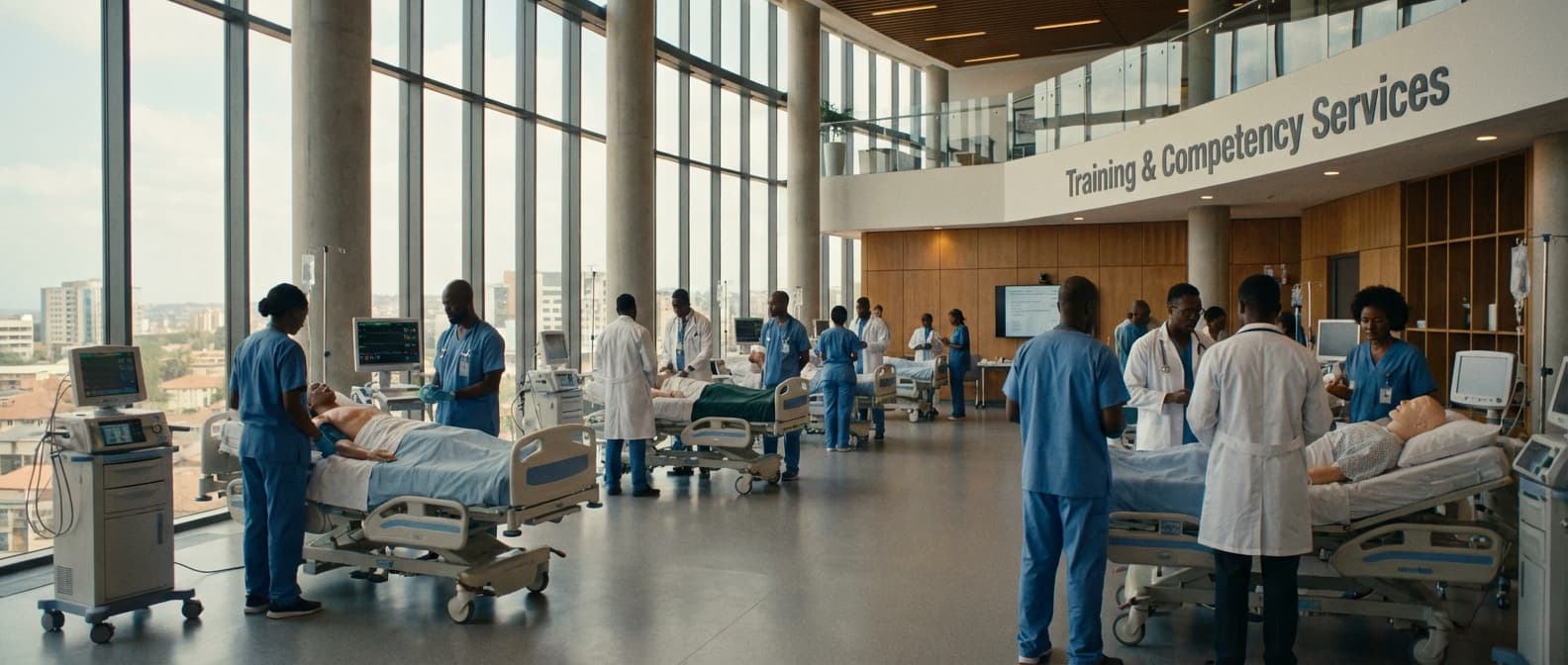
Ventilator User Training Service (Nurses) in Botswana
Engineering Excellence & Technical Support
Ventilator User Training Service (Nurses) High-standard technical execution following OEM protocols and local regulatory frameworks.
Mastering Ventilator Setup & Pre-use Checks
Gain confidence in assembling and performing essential pre-use checks on critical ventilators. Learn to identify key components, connect circuits correctly, and verify alarm settings for optimal patient safety and accurate ventilation delivery from the start.
Navigating Ventilator Modes for Patient Needs
Understand the principles and practical application of common ventilator modes (e.g., AC/VC, AC/PC, SIMV, PSV) relevant to adult and pediatric patients in Botswana's healthcare settings. Learn to select appropriate modes, set target parameters, and interpret graphical displays to support individualized respiratory care.
Effective Alarm Management & Troubleshooting
Develop a systematic approach to recognizing, interpreting, and responding to critical ventilator alarms. This module will equip you with the skills to quickly identify common causes of alarms, implement corrective actions, and escalate issues appropriately, ensuring timely intervention and minimizing patient risk.
What Is Ventilator User Training Service (Nurses) In Botswana?
The Ventilator User Training Service for Nurses in Botswana refers to a specialized educational program designed to equip registered nurses with the requisite knowledge and practical skills to safely and effectively operate, monitor, and manage mechanical ventilators in clinical settings. This service is crucial for ensuring patient safety, optimizing therapeutic outcomes, and mitigating risks associated with mechanical ventilation. The training emphasizes understanding ventilator principles, patient-ventilator interface management, troubleshooting common alarms, and recognizing signs of patient deterioration or ventilator malfunction.
| Typical Use Case | Clinical Scenario | Training Focus |
|---|---|---|
| Acute Respiratory Failure Management | Patients experiencing conditions such as pneumonia, Acute Respiratory Distress Syndrome (ARDS), exacerbations of Chronic Obstructive Pulmonary Disease (COPD), or sepsis requiring ventilatory support. | Initiating and adjusting ventilator settings for optimal gas exchange and reduced work of breathing; monitoring patient response and physiological parameters. |
| Post-Operative Care | Patients undergoing major surgical procedures who require mechanical ventilation for airway protection, stabilization, or management of anesthetic effects. | Ensuring adequate ventilation and oxygenation post-surgery; early identification of complications such as pneumothorax or bronchospasm. |
| Neurological Emergencies | Patients with severe head injuries, stroke, or Guillain-Barré syndrome who may develop respiratory muscle weakness or require airway protection. | Managing ventilation to maintain adequate cerebral perfusion pressure (CPP); recognizing and responding to changes in neurological status impacting respiratory drive. |
| Transport and Retrieval | Transferring critically ill patients requiring mechanical ventilation between facilities or within a hospital. | Maintaining continuous and safe ventilation during patient movement; troubleshooting equipment and patient-related issues during transport. |
| Emergency Response | Situations involving mass casualties or outbreaks where the demand for ventilators may increase. | Rapid deployment and effective utilization of available ventilator resources; training of personnel to manage ventilators under high-stress conditions. |
Service Components and Target Audience
- Core Curriculum:
- Principles of mechanical ventilation (modes, settings, physiology)
- Ventilator components and functionality
- Patient-ventilator synchrony and monitoring parameters
- Alarm management and troubleshooting strategies
- Principles of weaning from mechanical ventilation
- Infection control protocols related to mechanical ventilation
- Documentation and communication standards
- Training Modalities:
- Didactic lectures and theoretical sessions
- Hands-on practice with simulated ventilators
- Case study analysis and problem-based learning
- Supervised clinical application
- Assessment of competency (written and practical)
- Target Audience:
- Registered Nurses (RNs) working in critical care units (ICUs, HDUs), emergency departments, operating rooms, and general wards where mechanical ventilation may be required.
- Newly graduated nurses entering critical care roles.
- Nurses transitioning to new clinical areas with differing ventilator requirements.
- Nurses requiring refresher training or certification updates.
Who Needs Ventilator User Training Service (Nurses) In Botswana?
Effective and comprehensive ventilator user training is crucial for nurses in Botswana to ensure optimal patient care, reduce complications, and improve patient outcomes. This training is essential for healthcare professionals who are directly involved in the management of patients requiring mechanical ventilation. The primary target audience includes nurses working in critical care settings, emergency departments, and other areas where mechanically ventilated patients are managed. These individuals require a thorough understanding of ventilator operation, patient monitoring, troubleshooting, and adherence to established protocols. The service aims to equip nurses with the necessary skills and knowledge to confidently and competently manage patients on ventilators, contributing to a higher standard of healthcare delivery across Botswana.
| Department/Unit | Role of Nurses | Specific Training Needs |
|---|---|---|
| Intensive Care Units (ICUs) | Primary ventilators users, responsible for continuous monitoring, adjustments, and patient stabilization. | Advanced ventilation modes, complex patient scenarios, weaning protocols, troubleshooting, infection control. |
| High Dependency Units (HDUs) | Manage patients requiring closer monitoring than general wards but not full ICU intensity, often on less complex ventilation. | Basic and intermediate ventilation modes, patient monitoring, recognizing deteriorating conditions, escalation of care. |
| Emergency Departments (EDs) | Initiate mechanical ventilation for critically ill or injured patients arriving at the hospital. | Rapid initiation of ventilation, transport ventilation, securing airways, initial ventilator settings, handover to critical care. |
| Surgical Wards (Post-Operative) | Nurses managing post-operative patients who may require short-term mechanical ventilation. | Basic ventilation modes, monitoring for respiratory distress, timely extubation, recognizing complications. |
| Medical Wards (with Critical Care Outreach) | Nurses in general medical wards who may be involved in the care of patients with respiratory compromise, with potential for escalation. | Recognition of respiratory distress, basic airway management, calling for critical care assistance, understanding of initial ventilator indications. |
Target Customers and Departments for Ventilator User Training Service in Botswana
- Nurses responsible for direct patient care on ventilators.
- Nurses seeking to upskill or specialize in critical care.
- New nursing graduates entering critical care environments.
- Nurses participating in refresher courses for ventilator management.
Ventilator User Training Service (Nurses) Process In Botswana
This document outlines the standard workflow for the Ventilator User Training Service for Nurses in Botswana, covering the process from initial inquiry to the successful execution of the training program. The service aims to equip nurses with the necessary knowledge and skills to safely and effectively operate and manage ventilators, ensuring optimal patient care in critical settings.
| Stage | Description | Key Activities | Responsible Party | Deliverables/Outcomes |
|---|---|---|---|---|
| The initial contact from a healthcare facility or the Ministry of Health requesting ventilator training for their nursing staff. |
| Training Provider (e.g., Ministry of Health Training Department, Accredited Training Institution) |
|
| Formalizing the training request with a detailed proposal outlining the scope, objectives, methodology, duration, costs, and terms. |
| Training Provider, Requesting Institution |
|
| Preparing or adapting training materials to meet the specific needs identified and align with national guidelines and available ventilator models. |
| Training Provider (Content Developers, Subject Matter Experts) |
|
| Organizing all practical arrangements for the training sessions, including venue, equipment, and participant coordination. |
| Training Provider, Requesting Institution |
|
| The actual execution of the training program, involving theoretical instruction and practical, hands-on sessions. |
| Training Provider (Lead Trainer, Facilitators) |
|
| Assessing the participants' understanding and competence, and evaluating the effectiveness of the training program. |
| Training Provider |
|
| Issuing certificates of completion and providing ongoing support or follow-up as agreed. |
| Training Provider |
|
Ventilator User Training Service (Nurses) Process in Botswana
- Inquiry & Needs Assessment
- Proposal & Agreement
- Training Material Development/Customization
- Logistics & Scheduling
- Training Delivery
- Assessment & Evaluation
- Certification & Follow-up
Ventilator User Training Service (Nurses) Cost In Botswana
Training nurses on ventilator usage in Botswana involves several cost factors that influence the overall price. These factors include the training provider, the curriculum's depth and duration, the number of participants, the location of the training (on-site at a facility versus off-site at a training center), and the inclusion of practical, hands-on sessions with actual equipment. The specific type of ventilator covered (basic vs. advanced) also plays a role. Due to the specialized nature of this training and the need for qualified instructors, prices can vary significantly. It's common for training to be offered in packages, which can affect the per-person cost. Ongoing support and certification can also be additional charges.
| Training Type/Scope | Estimated Cost Range (BWP) | Notes |
|---|---|---|
| Basic Ventilator Operation (e.g., 1-2 days) | 800 - 2,500 per participant | Covers fundamental settings, alarms, and basic patient connection. May be group-based. |
| Intermediate Ventilator Management (e.g., 3-5 days) | 2,000 - 6,000 per participant | Includes more advanced settings, weaning parameters, and common troubleshooting. Often includes hands-on practice. |
| Advanced Ventilator Therapy & Critical Care (e.g., 5+ days) | 4,000 - 10,000+ per participant | Covers complex ventilation modes, advanced monitoring, non-invasive ventilation, and troubleshooting in critical care settings. May include simulation. |
| Customized On-Site Training (per day/program) | Negotiable, often based on program scope | Prices can vary widely depending on the number of participants and specific curriculum requirements for a facility. |
| Certification Fees (if separate) | 200 - 500 per participant | Applied for formal certification after successful completion of the course. |
Key Pricing Factors for Ventilator User Training (Nurses) in Botswana
- Training Provider (e.g., medical equipment suppliers, specialized training institutions, hospital-based programs)
- Curriculum Scope and Duration (e.g., basic operation vs. advanced troubleshooting, number of hours/days)
- Number of Participants (group discounts may apply)
- Training Location (on-site at healthcare facility vs. off-site at a training center)
- Inclusion of Practical/Hands-on Sessions (use of actual ventilators)
- Ventilator Type Covered (basic, critical care, specific models)
- Instructor Expertise and Qualifications
- Inclusion of Assessment and Certification
- Provision of Training Materials (manuals, handouts)
- Ongoing Support or Refresher Courses
Affordable Ventilator User Training Service (Nurses) Options
This document outlines affordable ventilator user training service options specifically for nurses, focusing on value bundles and cost-saving strategies to maximize learning while minimizing expenditure. Effective ventilator management is crucial for patient outcomes, and equipping nurses with the necessary skills is paramount. We aim to provide accessible and comprehensive training solutions tailored to the needs of healthcare institutions.
| Value Bundle Option | Description | Target Audience | Key Benefits | Estimated Cost Savings (Compared to Traditional) |
|---|---|---|---|---|
| Basic Essentials Bundle | Covers foundational ventilator principles, common modes, initial setup, and basic troubleshooting for a single type of ventilator. | New nurses, those returning to critical care, or for general ward settings. | Quick onboarding, foundational knowledge, cost-effective for broad application. | 20-30% |
| Comprehensive Core Bundle | Includes basic essentials plus advanced modes, weaning protocols, patient-ventilator asynchrony, and common critical care scenarios for multiple ventilator platforms. | Experienced critical care nurses, ICU/CCU staff. | In-depth understanding, enhanced clinical decision-making, versatility across equipment. | 15-25% |
| Specialty Focus Bundle | Deeper dive into specific areas like pediatric ventilation, ARDS management, or non-invasive ventilation, often including simulation-based scenarios. | Nurses specializing in specific critical care areas or those managing complex patient populations. | Expertise in niche areas, improved management of complex cases, specialized skill development. | 10-20% |
| Train-the-Trainer Bundle | Empowers experienced nurses to become internal trainers, delivering training to their peers. Includes curriculum guides, teaching materials, and competency validation tools. | Lead nurses, educators, or experienced staff members interested in internal capacity building. | Scalable training, reduced external training costs, consistent institutional knowledge. | 40-60% (long-term) |
Key Features of Affordable Ventilator Training for Nurses
- Flexible Delivery Models: Online, in-person, and hybrid options to suit institutional schedules and resources.
- Modular Curriculum: Break down complex topics into digestible modules for focused learning.
- Hands-on Skill Development: Emphasis on practical application and simulation.
- Competency-Based Assessment: Ensures nurses achieve and maintain proficiency.
- Ongoing Support & Refresher Courses: Continuous learning opportunities to stay updated.
- Customizable Training Packages: Tailor content to specific ventilator models and institutional protocols.
Verified Providers In Botswana
When seeking healthcare in Botswana, it's crucial to partner with verified providers who offer not only medical expertise but also a commitment to patient well-being and ethical practices. Franance Health stands out as a premier choice due to its rigorous credentialing process and unwavering dedication to quality care. This commitment ensures that patients receive treatment from highly qualified and trustworthy professionals, offering peace of mind and superior health outcomes.
| Credential | Verification Standard | Franance Health Assurance |
|---|---|---|
| Medical Licensure | Active and valid registration with the Botswana Health Professions Council. | All Franance Health providers undergo mandatory verification of their current and valid medical licenses. |
| Educational Background | Accredited medical degrees and specialized training from recognized institutions. | Franance Health verifies the authenticity and accreditation of all educational qualifications. |
| Professional Experience | Demonstrated years of practice and relevant clinical experience. | We assess and confirm the depth and breadth of a provider's professional experience. |
| Specialty Certifications | Board certifications or equivalent in their respective medical specialties. | Franance Health confirms that providers possess the necessary certifications for their specialized areas. |
| Criminal Background Checks | Thorough checks to ensure a safe and secure patient environment. | All providers associated with Franance Health have passed comprehensive background checks. |
| Professional References | Endorsements from peers and former supervisors. | We solicit and review professional references to gauge a provider's reputation and competency. |
Why Franance Health Represents the Best Choice:
- Rigorous Vetting Process: Franance Health employs a stringent verification process for all its healthcare providers, ensuring they meet the highest standards of education, experience, and licensing.
- Experienced and Qualified Professionals: We partner with a network of doctors, nurses, specialists, and allied health professionals who possess extensive experience and are leaders in their respective fields.
- Commitment to Patient-Centered Care: Our providers are dedicated to understanding individual patient needs and delivering personalized, compassionate, and effective treatment plans.
- Adherence to Ethical Standards: Franance Health strictly enforces ethical guidelines, ensuring all partner providers operate with integrity, transparency, and respect for patient confidentiality.
- Continuous Professional Development: We encourage and facilitate ongoing training and development for our providers, keeping them abreast of the latest medical advancements and best practices.
- Access to Comprehensive Healthcare Services: Through our verified network, patients gain access to a wide spectrum of medical services, from routine check-ups to specialized treatments.
Scope Of Work For Ventilator User Training Service (Nurses)
This Scope of Work (SOW) outlines the requirements for providing comprehensive Ventilator User Training Services specifically tailored for nurses. The training aims to equip nurses with the necessary knowledge and skills to safely and effectively operate, monitor, and troubleshoot common ventilators used in clinical settings. The training will cover theoretical concepts, practical application, and competency assessment.
| Category | Specific Deliverables | Standard Specifications/Requirements | ||||||
|---|---|---|---|---|---|---|---|---|
| Training Curriculum Development | Comprehensive training modules for various ventilator models (specify models if known, e.g., Puritan Bennett 840, Dräger Evita Infinity V500, Hamilton Medical C1). | Modules should cover: Introduction to Mechanical Ventilation, Ventilator Components and Controls, Basic Modes of Ventilation (e.g., Volume Control, Pressure Control, SIMV, PSV), Advanced Modes (if applicable), Alarm Management, Humidification and Oxygenation, Patient Monitoring, Weaning Principles, Troubleshooting Common Issues, Infection Control related to ventilation. | Curriculum must be evidence-based and align with current clinical guidelines. | Differentiated training based on nurse experience level (e.g., novice, experienced). | ||||
| Training Materials | Participant training manuals/handbooks. | Instructor presentation slides. | Case studies and scenarios for practical application. | Competency assessment checklists. | Visual aids (diagrams, charts, infographics). | High-quality, durable, and up-to-date materials. | Materials should be provided in electronic and/or print format as agreed upon. | Materials should be easily accessible for future reference. |
| Training Delivery | Classroom-based theoretical sessions. | Hands-on practical training using actual or simulation ventilators. | Demonstrations by certified trainers. | Interactive Q&A sessions. | Trainers must be certified in advanced respiratory care and have extensive experience in ventilator management. | Training sessions to be scheduled at mutually agreed upon times and locations. | Training sessions should be limited in size to facilitate effective learning and individual attention (e.g., maximum 10-12 nurses per session). | Availability of functional ventilators for hands-on practice (either provided by the service provider or the client). |
| Competency Assessment | Written pre-assessment (optional, to gauge baseline knowledge). | Post-training written examination. | Practical skills demonstration and observation. | Case study analysis and management simulation. | A passing score of at least 80% on written examinations. | Successful demonstration of all critical skills outlined in the competency checklist. | Clear documentation of individual nurse performance and completion certificates issued upon successful assessment. | |
| Post-Training Support | Follow-up Q&A sessions (virtual or in-person). | Access to a designated point of contact for urgent queries. | Refresher training modules (optional, based on agreement). | Availability of support for a defined period post-training (e.g., 30-60 days). | Mechanism for collecting feedback on the training program. | |||
| Reporting and Documentation | Summary report of training conducted (dates, locations, participants). | Individual competency assessment reports. | Consolidated training completion report. | Detailed attendance records. | Reports to be submitted within a specified timeframe after training completion (e.g., 5-7 business days). | |||
| Logistics and Equipment | Provision of functional ventilators for training purposes (if not provided by client). | Ancillary equipment (e.g., test lungs, airway adapters, oxygen sources). | Training venue setup (if applicable). | All equipment to be in good working order and regularly maintained. | Ensure appropriate infection control measures are in place for all equipment. |
Service Objectives
- To ensure nurses can confidently and safely set up and initiate ventilation therapy.
- To enable nurses to accurately monitor patient response to ventilation and adjust settings as per physician orders.
- To empower nurses to identify and respond to common ventilator alarms and troubleshoot basic issues.
- To foster a strong understanding of ventilation principles and their application in different patient scenarios.
- To improve patient outcomes by ensuring competent and timely ventilator management.
Service Level Agreement For Ventilator User Training Service (Nurses)
This Service Level Agreement (SLA) outlines the guaranteed response times and uptime for the Ventilator User Training Service specifically for nurses. It defines the standards of performance that the training provider will meet and the remedies available should these standards not be met. This SLA aims to ensure a reliable and effective training experience for nursing staff, critical for patient safety and optimal ventilator utilization.
| Service Component | Response Time (Business Hours) | Uptime Guarantee |
|---|---|---|
| Urgent Technical Support (e.g., inability to access training platform, critical system errors) | 1 Hour | 99.5% |
| General Inquiries & Non-Urgent Technical Support (e.g., questions about training content, minor platform issues) | 4 Business Hours | 99.5% |
| Request for New Training Session Scheduling | 2 Business Days | N/A (Availability based on scheduled slots) |
| Post-Training Support & Certification Queries | 1 Business Day | N/A (Response to inquiries) |
Key Service Metrics
- Response Time: Refers to the maximum time allowed for the training provider to acknowledge and begin addressing an initiated support request or inquiry related to the Ventilator User Training Service.
- Uptime Guarantee: Refers to the percentage of scheduled training availability that the service will be operational and accessible to users. Downtime is defined as the period during which the service is unavailable for its intended use, excluding scheduled maintenance.
Frequently Asked Questions

Ready when you are
Let's scope your Ventilator User Training Service (Nurses) in Botswana project in Botswana.

Scaling healthcare logistics and technical systems across the entire continent.