
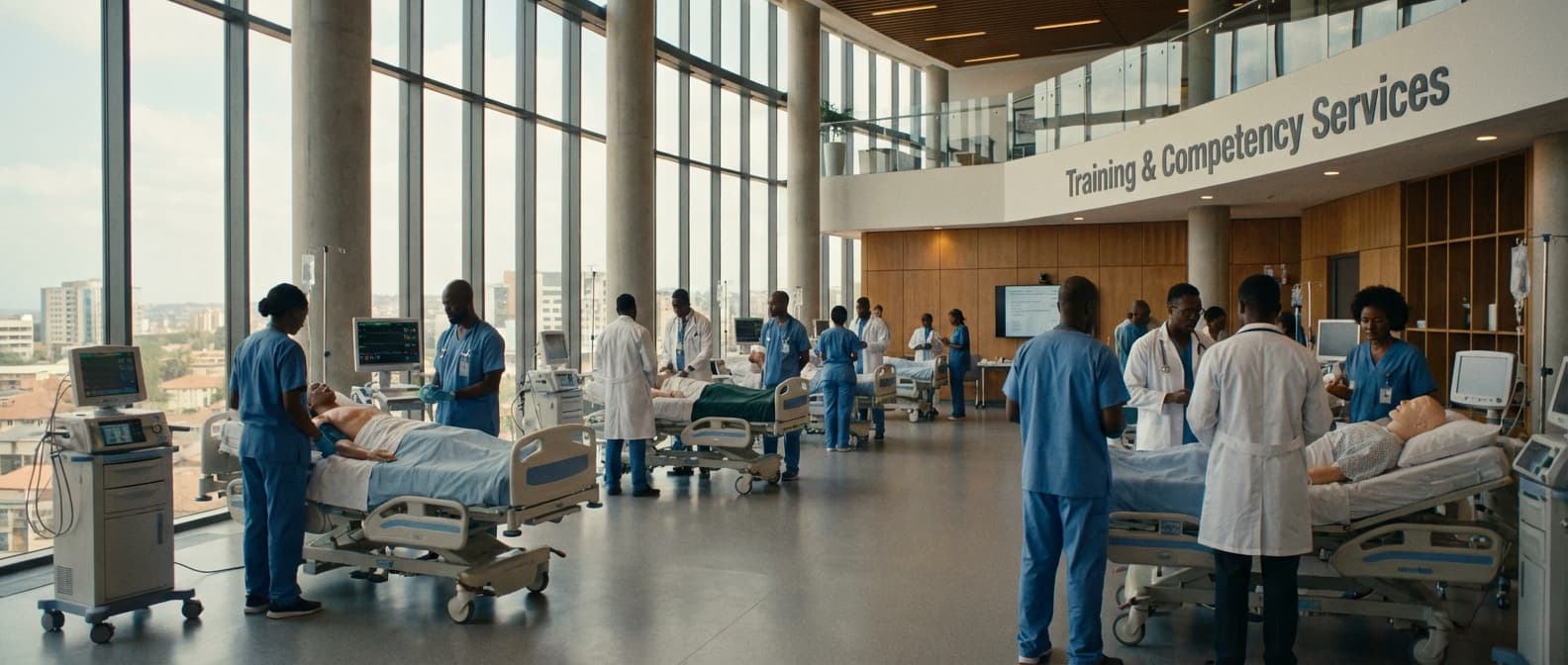
Ultrasound Application Training Service (Protocol-Based) in Botswana
Engineering Excellence & Technical Support
Ultrasound Application Training Service (Protocol-Based) High-standard technical execution following OEM protocols and local regulatory frameworks.
Standardized Protocol Training
Empowering Botswana's healthcare professionals with evidence-based, protocol-driven ultrasound training. Our comprehensive curriculum ensures consistent and accurate image acquisition and interpretation, fostering improved patient outcomes across diverse clinical settings.
Context-Specific Ultrasound Skills
Tailored ultrasound application training designed for the unique healthcare landscape of Botswana. We focus on essential diagnostics relevant to local needs, equipping practitioners with practical skills for effective point-of-care ultrasound and advanced imaging techniques.
Hands-On Proficiency Development
Accelerate your team's ultrasound expertise through intensive, hands-on training. Our protocol-based approach emphasizes practical application, simulation, and supervised scanning, building confidence and competence in critical diagnostic ultrasound procedures.
What Is Ultrasound Application Training Service (Protocol-based) In Botswana?
Ultrasound Application Training Service (Protocol-Based) in Botswana refers to specialized educational programs designed to equip healthcare professionals with the theoretical knowledge and practical skills required to perform and interpret ultrasound examinations according to established clinical protocols. This service focuses on standardized examination sequences and criteria, ensuring consistent and accurate diagnostic capabilities across various anatomical regions and pathological conditions. The 'protocol-based' aspect emphasizes adherence to a defined set of steps, views, and measurements during the ultrasound procedure, as dictated by specific clinical indications and departmental guidelines. This approach aims to standardize practice, enhance diagnostic yield, and facilitate inter-observer agreement.
| Who Needs Ultrasound Application Training Service (Protocol-Based)? | Typical Use Cases | ||||||
|---|---|---|---|---|---|---|---|
| Radiologists and Radiographers: To enhance their diagnostic capabilities and standardize their ultrasound practice. | Obstetricians and Gynecologists: For routine antenatal scanning, gynecological assessments, and early pregnancy evaluations. | General Practitioners and Family Physicians: To perform point-of-care ultrasound (POCUS) for initial diagnostic screening and triage. | Sonographers (Diagnostic Medical Sonographers): To specialize in specific ultrasound modalities and improve their technical and interpretive skills. | Emergency Medicine Physicians: For rapid bedside assessment of trauma, abdominal pain, and vascular emergencies. | Anesthesiologists: For image-guided regional anesthesia and vascular access. | Veterinary Practitioners: For diagnostic imaging in animal health. | Medical and Allied Health Students: As part of their curriculum to introduce them to ultrasound principles and applications. |
| Abdominal Ultrasound: Assessment of liver, gallbladder, spleen, pancreas, kidneys, and aorta. | Pelvic Ultrasound (Transabdominal and Transvaginal): Evaluation of the uterus, ovaries, bladder, and prostate. | Obstetric Ultrasound: Fetal biometry, anatomy survey, growth assessment, and Doppler studies. | Echocardiography: Assessment of cardiac structure and function. | Vascular Ultrasound: Evaluation of peripheral arteries and veins, carotid arteries, and abdominal vasculature. | Musculoskeletal Ultrasound: Examination of joints, tendons, ligaments, and muscles. | Thyroid and Breast Ultrasound: Evaluation of nodules and masses. | Pediatric Ultrasound: Including abdominal, cranial, and hip imaging in infants and children. |
Key Components of Ultrasound Application Training Service (Protocol-Based)
- Theoretical Instruction: Covers ultrasound physics, instrumentation, image optimization, and the underlying pathophysiology of diseases relevant to specific ultrasound applications.
- Protocol Derivation and Application: Detailed explanation and practice of standardized ultrasound examination protocols for various organ systems (e.g., abdominal, pelvic, obstetric, vascular, musculoskeletal). This includes understanding the rationale behind each step, the required anatomical landmarks, and critical views to acquire.
- Image Acquisition Techniques: Hands-on training in manipulating the ultrasound transducer to obtain optimal images, adhering to protocol requirements for field of view, depth, gain, and focus.
- Image Interpretation and Reporting: Instruction on recognizing normal and abnormal sonographic findings, correlating them with clinical information, and generating comprehensive, protocol-driven reports.
- Quality Assurance and Optimization: Training on image quality assessment, artifact recognition and reduction, and continuous improvement of scanning techniques.
- Simulation and Supervised Practice: Utilization of ultrasound simulators and supervised clinical sessions to reinforce learning and build proficiency under the guidance of experienced sonographers or radiologists.
- Assessment and Evaluation: Methods to assess learner competency, including practical scanning examinations, case study analysis, and written evaluations.
Who Needs Ultrasound Application Training Service (Protocol-based) In Botswana?
This document outlines the critical need for Ultrasound Application Training Services (Protocol-Based) in Botswana, specifically focusing on enhancing diagnostic capabilities within healthcare institutions. Such training is essential for healthcare professionals to accurately interpret ultrasound images and provide timely, effective patient care. The protocol-based approach ensures standardized and high-quality ultrasound examinations, leading to improved diagnostic accuracy and patient outcomes across various medical disciplines.
| Target Customer Group | Relevant Departments | Rationale for Training Need |
|---|---|---|
| Hospitals (Governmental & Private) | Radiology, Obstetrics & Gynecology, Pediatrics, Internal Medicine, Surgery, Emergency Medicine, Cardiology, Critical Care | To standardize ultrasound protocols, improve diagnostic accuracy, reduce misdiagnosis, and enhance patient management across a wide range of specialties. Essential for both routine and specialized examinations. |
| District Health Teams | Primary Healthcare Clinics, Community Health Centers | To equip healthcare workers at the primary level with essential ultrasound skills for point-of-care diagnostics, early detection of common conditions (e.g., obstetric complications, fluid collections), and improved referral pathways. Reduces burden on tertiary facilities. |
| Tertiary Referral Centers | Advanced Radiology, Specialized Surgical Units, Cardiology Departments, Neonatology | To train specialists in advanced ultrasound techniques, novel applications, and protocol adherence for complex cases. Crucial for maintaining cutting-edge diagnostic and interventional ultrasound capabilities. |
| Specialized Clinics | Obstetrics & Gynecology, Cardiology, Vascular Surgery, Urology, Rheumatology | To provide in-depth training on protocol-specific ultrasound examinations relevant to their subspecialty, leading to enhanced diagnostic precision and treatment planning for specific patient populations. |
| Academic and Training Institutions | Medical Schools, Nursing Schools, Allied Health Professional Training Programs | To integrate standardized, protocol-based ultrasound training into the curriculum for future healthcare professionals, ensuring a competent and well-trained workforce from the outset of their careers. |
| Ministry of Health & Wellness | Public Health Departments, Health Training Coordination Units | To ensure a national standard for ultrasound practice, facilitate quality assurance, and develop a skilled ultrasound workforce to meet the evolving healthcare needs of Botswana. |
Target Customers and Departments in Botswana Requiring Ultrasound Application Training Service (Protocol-Based)
- Hospitals (Governmental and Private)
- District Health Teams
- Primary Healthcare Facilities
- Tertiary Referral Centers
- Specialized Clinics (e.g., Obstetrics & Gynecology, Cardiology, Radiology)
- Academic and Training Institutions
Ultrasound Application Training Service (Protocol-based) Process In Botswana
This document outlines the workflow for the Ultrasound Application Training Service (Protocol-Based) in Botswana, detailing the process from initial inquiry to the successful execution of the training. This protocol-based approach ensures standardized, high-quality training delivered to healthcare professionals across Botswana, enhancing their diagnostic capabilities and patient care.
| Stage | Description | Key Activities | Responsible Party |
|---|---|---|---|
| Inquiry & Needs Assessment | Initial contact and understanding of training requirements. | Express interest, discuss needs, identify application scope, assess current skills. | Client (Healthcare Facility/Individual), Training Provider |
| Proposal & Quotation | Formal offering of the training service. | Develop training curriculum, outline methodology, prepare cost estimate. | Training Provider |
| Agreement & Scheduling | Formalizing the training commitment. | Sign contract, confirm payment terms, set training dates. | Client, Training Provider |
| Pre-Training Preparations | Ensuring all resources are ready for the training. | Trainer allocation, material preparation, equipment readiness, participant notification. | Training Provider, Client |
| Training Delivery (Execution) | The actual teaching and practical application of skills. | Theoretical lectures, hands-on scanning, case study review, Q&A. | Training Provider (Trainers), Client (Participants) |
| Assessment & Evaluation | Measuring learning outcomes and gathering feedback. | Written/practical tests, skills observation, participant feedback forms. | Training Provider, Client (Participants) |
| Certification & Follow-up | Recognizing completion and offering ongoing support. | Issuing certificates, planning post-training support, refresher sessions. | Training Provider |
| Reporting & Record Keeping | Documenting the training process and outcomes. | Generating training reports, sharing with stakeholders, maintaining records. | Training Provider |
Ultrasound Application Training Service (Protocol-Based) Workflow in Botswana
- Inquiry & Needs Assessment: The process begins when a healthcare facility or individual expresses interest in the Ultrasound Application Training Service. This can be through direct contact with the training provider, a government health agency, or a referral. A preliminary needs assessment is conducted to understand the specific ultrasound applications required, the current skill level of the personnel, the available equipment, and the desired learning outcomes.
- Proposal & Quotation: Based on the needs assessment, a detailed proposal is developed. This proposal outlines the training objectives, curriculum, duration, methodology (theoretical lectures, hands-on scanning sessions, case studies), trainer qualifications, required equipment, and venue. A comprehensive quotation is provided, detailing all associated costs.
- Agreement & Scheduling: Upon acceptance of the proposal and quotation, a formal training agreement is established. This agreement includes terms and conditions, payment schedules, and agreed-upon training dates. The training schedule is finalized in consultation with the requesting facility, considering their operational needs and staff availability.
- Pre-Training Preparations: This phase involves meticulous planning. The training provider confirms the availability of trainers, prepares training materials (manuals, presentations, case studies), and ensures any specialized equipment required for the training is readily accessible. The participating facility is informed of any preparations they need to undertake, such as ensuring functional ultrasound machines and adequate space for the training sessions.
- Training Delivery (Execution): The core of the service involves the actual delivery of the training. This typically includes: * Theoretical Sessions: In-depth lectures covering ultrasound physics, image optimization, anatomical correlations, and protocol-based scanning techniques for the specific applications. * Hands-on Scanning: Practical sessions where participants perform scans under the direct supervision of experienced trainers, applying the learned protocols. This is a crucial component for skill development. * Case Study Analysis: Review and discussion of real-world ultrasound cases to enhance diagnostic interpretation skills and problem-solving abilities. * Q&A and Feedback: Dedicated time for participants to ask questions and receive immediate feedback from trainers.
- Assessment & Evaluation: Throughout and at the conclusion of the training, assessments are conducted to gauge participant learning. This can include written tests, practical scanning evaluations, and observation of their performance. Participant feedback on the training content, delivery, and trainers is also collected through evaluation forms.
- Certification & Follow-up: Upon successful completion of the training and assessment, participants receive a certificate of completion. A follow-up plan may be established, which could include remote support, refresher courses, or site visits to monitor the application of learned skills in their clinical practice.
- Reporting & Record Keeping: The training provider generates a comprehensive report detailing the training conducted, participant attendance, assessment results, and feedback received. This report is shared with the requesting facility and relevant health authorities for record-keeping and future planning.
Ultrasound Application Training Service (Protocol-based) Cost In Botswana
The cost of Ultrasound Application Training Services (Protocol-Based) in Botswana can vary significantly depending on several key factors. These factors influence the overall price, making it essential for institutions and individuals to understand them when budgeting for such specialized training. Generally, protocol-based training implies a structured and standardized approach to learning specific ultrasound applications, often tailored to clinical needs and regulatory requirements. The pricing is usually quoted in Botswana Pula (BWP).
| Training Type/Scope | Estimated Cost Range (BWP) | Typical Duration |
|---|---|---|
| Basic Ultrasound Principles & General Abdominal Scanning (Protocol-Based) | 15,000 - 30,000 | 3-5 Days |
| Obstetric Ultrasound (Level 1/Dating Scans) | 20,000 - 40,000 | 4-6 Days |
| Obstetric Ultrasound (Level 2/Anomaly Scans) | 25,000 - 50,000 | 5-7 Days |
| Echocardiography (Basic/Adult) | 30,000 - 60,000 | 5-10 Days |
| Vascular Ultrasound (Peripheral) | 25,000 - 45,000 | 4-7 Days |
| Small Parts & Superficial Structures Ultrasound | 18,000 - 35,000 | 3-5 Days |
| Specialized/Advanced Modules (e.g., Interventional Ultrasound, Advanced Fetal Echo) | 40,000+ | Varies (can be workshops or multi-day courses) |
| Refresher/CPD Courses (Protocol-Specific) | 10,000 - 20,000 | 1-3 Days |
Key Pricing Factors for Ultrasound Application Training in Botswana:
- Scope and Specialization of Training: Training for general ultrasound applications will typically be less expensive than highly specialized modules (e.g., advanced echocardiography, interventional ultrasound, fetal anomaly scans). The depth and breadth of the protocol covered directly impact the training duration and expertise required from the instructors.
- Duration of the Training Program: Longer training courses, often involving more comprehensive theoretical and practical components, will naturally incur higher costs. This is directly related to instructor time, facility usage, and access to equipment.
- Trainer Expertise and Qualifications: Highly experienced sonographers, radiologists, or medical professionals with specialized training and international credentials command higher fees. Their expertise ensures the quality and accuracy of the instruction.
- Number of Participants: While some training providers may offer group discounts, a higher number of participants generally leads to increased administrative costs and potentially requires more instructors or smaller group rotations for hands-on practice, thus influencing the overall price per participant.
- Training Venue and Facilities: Training conducted at a dedicated educational facility with fully equipped ultrasound rooms and simulation equipment will be more expensive than in-situ training at a hospital or clinic where existing infrastructure is utilized. The cost of renting specialized training facilities and maintaining state-of-the-art equipment is a significant factor.
- Inclusion of Practical Sessions and Equipment Access: The amount of hands-on practice time with ultrasound machines is crucial. Training that includes extensive supervised scanning sessions with real patients or high-fidelity phantoms will be priced higher than purely theoretical courses.
- Customization of Protocols: While the service is 'protocol-based,' some level of customization to the specific needs or existing protocols of a healthcare facility might be required. This bespoke element can add to the cost.
- Accreditation and Certification: Training programs that lead to recognized certifications or are accredited by professional bodies often come with a higher price tag due to the rigorous standards and quality assurance involved.
- Logistics and Travel (if applicable): If trainers need to travel to a client's location within Botswana, or if participants are from out of town and require accommodation and per diems, these logistical costs will be factored into the overall price.
- Training Provider Reputation and Resources: Established training institutions with a strong track record, advanced learning materials, and comprehensive support systems may charge more due to their perceived value and the resources they invest.
Affordable Ultrasound Application Training Service (Protocol-based) Options
Our Affordable Ultrasound Application Training Service focuses on providing comprehensive, protocol-based education designed to enhance your team's diagnostic capabilities. We understand that budget constraints are a reality, so we've developed flexible value bundles and cost-saving strategies to make high-quality ultrasound training accessible to all healthcare providers. Our goal is to equip you with the essential knowledge and practical skills needed to perform and interpret ultrasound examinations confidently and efficiently, adhering to industry-standard protocols.
| Cost-Saving Strategy | Description | Benefit |
|---|---|---|
| Early Bird Discounts | Register for training bundles well in advance of the start date to secure reduced pricing. | Significant upfront cost reduction for proactive planning. |
| Group Registration Incentives | Registering multiple individuals or teams simultaneously often unlocks tiered discounts. The more you train, the more you save. | Lower per-person training costs, encouraging team-wide skill development. |
| Subscription Model | Opting for our Continuous Learning Subscription provides ongoing access at a predictable monthly or annual fee, which is often more economical than purchasing individual courses repeatedly. | Economical for sustained learning and staying current; avoids piecemeal purchasing. |
| E-learning & Virtual Delivery | Our primary training is delivered digitally, eliminating travel, accommodation, and venue costs associated with traditional in-person seminars. | Drastically reduces overall training expenses and allows for flexible learning schedules. |
| Protocol Standardization Focus | By emphasizing protocol-based training, we ensure your team learns efficient and accurate methods, reducing the time and resources spent on less effective or inconsistent practices. | Improved efficiency in scanning, leading to fewer repeat studies and better diagnostic outcomes, indirectly saving costs. |
Understanding Our Value Bundles
- {"title":"Core Competency Bundle","includes":["Comprehensive e-learning modules","Protocol guides for core applications","Simulated case studies","Online Q&A sessions with instructors"],"description":"This foundational package covers essential ultrasound physics, image optimization, and core protocols for the most commonly performed examinations (e.g., Abdominal, OB/GYN, Vascular basics). Ideal for new practitioners or those needing a strong refresher."}
- {"title":"Specialty Focus Bundle","includes":["All Core Competency Bundle features","Specialized protocol libraries","Advanced case reviews","Application-specific simulation exercises"],"description":"Tailored for departments requiring in-depth knowledge in specific areas. Choose from options like Advanced Cardiac, Musculoskeletal, Small Parts, or Pediatric applications. Builds upon core competencies."}
- {"title":"Team Integration Bundle","includes":["Access for a specified number of users","Group reporting and progress tracking","On-site or virtual group training sessions","Customizable protocol review"],"description":"Designed for clinics and hospitals to train multiple staff members. Promotes standardized practice and interdisciplinary collaboration. Includes group discounts and dedicated support."}
- {"title":"Continuous Learning Subscription","includes":["Unlimited access to all existing and new training modules","Monthly webinar updates","Access to a growing library of advanced techniques","Priority support"],"description":"An ongoing access model that keeps your team updated with the latest advancements, new protocols, and emerging applications. Offers the best long-term value for staying ahead."}
Verified Providers In Botswana
In Botswana, ensuring access to reliable and high-quality healthcare is paramount. Franance Health stands out as a leading provider, distinguished by its unwavering commitment to verified credentials and exceptional patient care. This dedication translates into a superior healthcare experience, making Franance Health the best choice for your medical needs.
| Key Benefit | Franance Health's Assurance |
|---|---|
| Trustworthy Practitioners | Rigorous verification of all medical licenses and qualifications. |
| Quality of Care | Focus on providers with demonstrated clinical expertise and ethical standards. |
| Range of Services | Extensive network covering diverse medical specialties and treatments. |
| Patient Experience | Emphasis on personalized care, respect, and patient involvement. |
| Accessibility | Effort to simplify healthcare access and appointment scheduling. |
Why Franance Health is Your Best Choice:
- Verified Provider Credentials: Franance Health rigorously vets all its healthcare professionals. This means every doctor, nurse, and specialist on their network has undergone thorough background checks, license verifications, and credentialing processes. You can trust that you are receiving care from qualified and legitimate practitioners.
- Commitment to Excellence: Beyond basic verification, Franance Health actively seeks out providers with a proven track record of clinical excellence, ethical practice, and patient satisfaction. They prioritize professionals who are dedicated to ongoing learning and staying at the forefront of medical advancements.
- Comprehensive Healthcare Network: Franance Health offers access to a wide range of medical specialties and services. Whether you need a general practitioner, a specialist, diagnostic services, or surgical procedures, their network is designed to meet your diverse healthcare requirements.
- Patient-Centric Approach: At Franance Health, the patient is always the priority. They foster an environment where patients feel heard, respected, and actively involved in their treatment plans. This patient-centric philosophy ensures personalized care tailored to individual needs.
- Streamlined Access and Convenience: Navigating the healthcare system can be challenging. Franance Health aims to simplify this process, offering streamlined appointment booking, easy access to information, and a focus on efficient service delivery.
Scope Of Work For Ultrasound Application Training Service (Protocol-based)
This document outlines the Scope of Work for a Protocol-Based Ultrasound Application Training Service. It details the technical deliverables and standard specifications required to ensure effective and standardized ultrasound application training for healthcare professionals. The training will focus on specific ultrasound protocols to ensure consistency, accuracy, and optimal diagnostic yield. This service aims to enhance the proficiency of sonographers and clinicians in utilizing ultrasound technology for various clinical scenarios.
| Technical Deliverable | Description | Standard Specification / Requirement | Format / Medium |
|---|---|---|---|
| Ultrasound Application Protocols | Detailed, step-by-step guides for performing specific ultrasound examinations (e.g., abdominal, cardiac, obstetric, vascular). Includes probe selection, patient positioning, image acquisition parameters, and normal/abnormal findings. | Protocols must adhere to established professional society guidelines (e.g., AIUM, ASE, SRU). Must be evidence-based and clinically relevant. Include annotated diagrams and sample images. | Digital document (PDF), printable manual |
| Training Curriculum and Modules | Structured learning program covering theoretical knowledge, practical skills, and protocol application for each ultrasound modality. | Curriculum should be modular, allowing for progressive learning. Each module should have defined learning objectives, content, and assessment methods. | Digital presentation slides (PowerPoint/PDF), interactive e-learning modules, video demonstrations |
| Hands-on Training Scenarios | Simulated or supervised real-patient scanning sessions applying the developed protocols. | Sufficient scanning time allocated per participant. Access to functional ultrasound machines with appropriate phantoms and/or real patients. Clear demonstration of correct technique and troubleshooting. | In-person practical sessions, simulated patient encounters (manikins/phantoms) |
| Image Acquisition Guidelines | Best practices for obtaining diagnostic-quality ultrasound images according to established protocols. | Emphasis on optimal transducer manipulation, machine controls (gain, depth, focus, etc.), and documentation of images. Minimizing artifacts. | Visual aids (images/videos), checklists |
| Reporting Templates and Recommendations | Standardized templates for documenting ultrasound findings and providing concise, actionable reports. | Templates should align with specific clinical questions and include key measurements and descriptive elements. Clear recommendations for follow-up or further investigations. | Digital document templates (Word/PDF), integrated reporting software components |
| Competency Assessment Tools | Methods for evaluating a participant's understanding and practical application of ultrasound protocols. | Includes written quizzes, practical scanning assessments (observed or reviewed), case study analysis. Pass/fail criteria clearly defined. | Online quizzes, practical observation checklists, case study worksheets |
| Instructor Training Materials | Resources for trainers to effectively deliver the protocol-based ultrasound training. | Includes detailed lesson plans, trainer notes, FAQs, and best practices for instruction and feedback. | Digital document (PDF), presentation slides |
| Post-Training Support Resources | Materials and access for continued learning and skill reinforcement after the formal training period. | Access to protocol library, online forums for questions, periodic webinars on advanced topics or updates. | Online portal access, email support, scheduled webinars |
Key Components of the Ultrasound Application Training Service
- Standardized Protocol Development and Review
- Curriculum Design and Content Creation
- Delivery Methods (e.g., in-person, virtual, hybrid)
- Hands-on Practical Training Sessions
- Competency Assessment and Evaluation
- Post-Training Support and Refresher Modules
- Customization for Specific Clinical Needs
Service Level Agreement For Ultrasound Application Training Service (Protocol-based)
This Service Level Agreement (SLA) outlines the guaranteed response times and uptime for the Ultrasound Application Training Service (Protocol-Based). It defines the expected performance levels and the remedies available to the Client in the event of service degradation or unavailability.
| Service Component | Severity Level | Response Time Commitment | Uptime Guarantee | Remedy for Breach |
|---|---|---|---|---|
| Ultrasound Application Training Platform (Core Functionality) | Critical | 1 hour (24/7) | 99.8% Monthly | Service Credit equivalent to 10% of monthly subscription fee for each 30-minute period of downtime exceeding the guaranteed uptime. |
| Ultrasound Application Training Platform (Core Functionality) | Major | 4 business hours | 99.8% Monthly | Service Credit equivalent to 5% of monthly subscription fee for each 1-hour period of unavailability exceeding the guaranteed uptime. |
| Ultrasound Application Training Platform (Core Functionality) | Minor | 8 business hours | N/A (Focus on response time) | No direct remedy, but continuous improvement efforts. |
| Access to Training Modules & Resources | Critical | 2 hours (during business hours) | 99.5% Monthly | Service Credit equivalent to 5% of monthly subscription fee for each 1-hour period of unavailability exceeding the guaranteed uptime. |
| Access to Training Modules & Resources | Major | 6 business hours | 99.5% Monthly | Service Credit equivalent to 2.5% of monthly subscription fee for each 2-hour period of unavailability exceeding the guaranteed uptime. |
| Technical Support for Training Delivery | Critical | 1 hour (24/7) | N/A (Focus on response time) | N/A (Focus on response time) |
| Technical Support for Training Delivery | Major | 4 business hours | N/A (Focus on response time) | N/A (Focus on response time) |
Key Service Commitments
- Response Time: Refers to the maximum time taken by the Service Provider to acknowledge and begin addressing a reported issue or request.
- Uptime Guarantee: Represents the percentage of time the Ultrasound Application Training Service is available and operational for the Client.
- Critical Issues: Issues that significantly disrupt the ability to conduct training sessions or access essential training materials.
- Major Issues: Issues that impede specific training functionalities but do not completely halt all training activities.
- Minor Issues: Issues that affect non-essential functionalities or have a minimal impact on training delivery.
Frequently Asked Questions

Ready when you are
Let's scope your Ultrasound Application Training Service (Protocol-Based) in Botswana project in Botswana.

Scaling healthcare logistics and technical systems across the entire continent.