
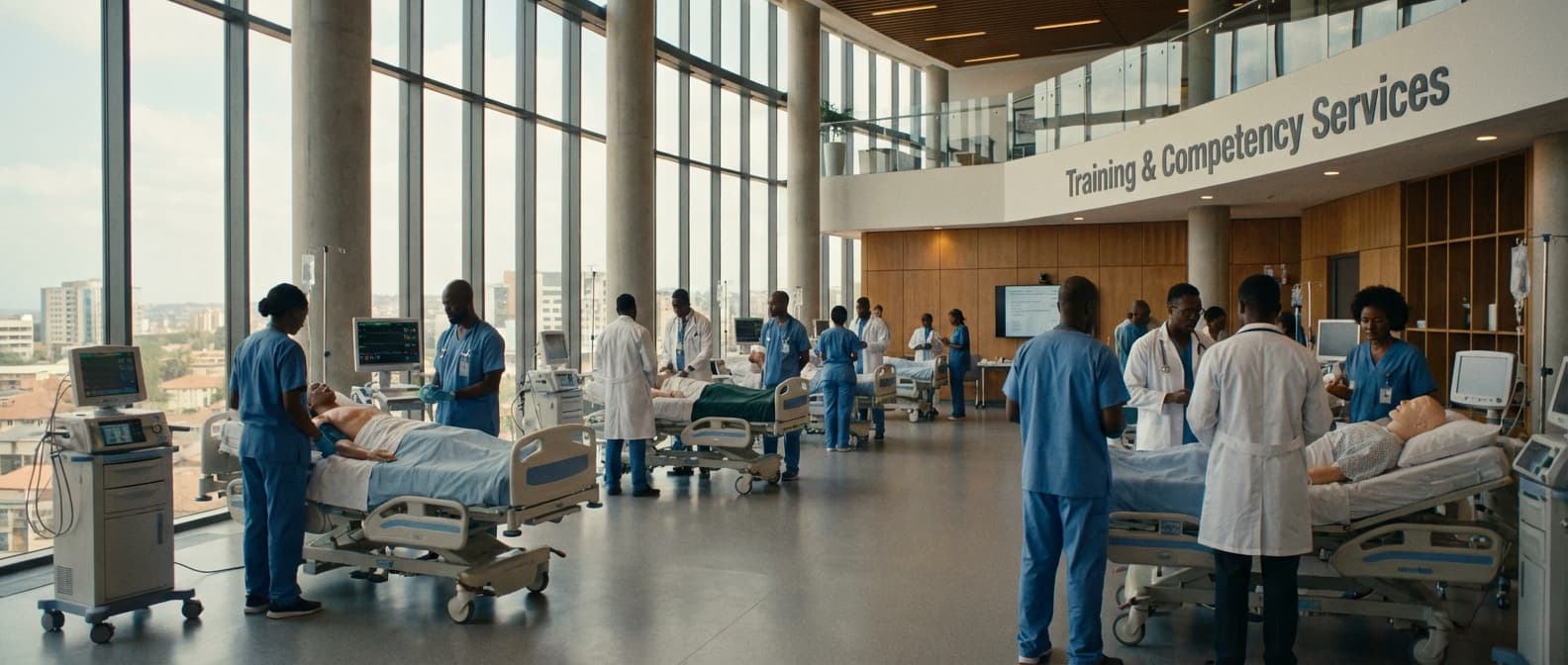
MRI Operator Training Service (Radiographers) in Botswana
Engineering Excellence & Technical Support
MRI Operator Training Service (Radiographers) High-standard technical execution following OEM protocols and local regulatory frameworks.
Advanced MRI Safety Protocols
Comprehensive training modules focusing on patient and operator MRI safety, including screening procedures, ferromagnetic detection, and emergency response for radiographers in Botswana.
Optimizing MRI Image Quality
Hands-on workshops and theoretical sessions designed to enhance radiographers' understanding of pulse sequences, contrast administration, and artifact reduction for superior diagnostic imaging in a Botswana context.
Modern MRI Workflow & PACS Integration
Training on efficient MRI scanning protocols, patient positioning techniques, and seamless integration with Picture Archiving and Communication Systems (PACS) to streamline reporting and data management for Botswana's healthcare facilities.
What Is Mri Operator Training Service (Radiographers) In Botswana?
MRI Operator Training Service (Radiographers) in Botswana refers to specialized educational programs designed to equip diagnostic radiographers with the requisite knowledge and practical skills to safely and effectively operate Magnetic Resonance Imaging (MRI) scanners. This training is essential for ensuring high-quality diagnostic imaging, patient safety, and adherence to international best practices within the healthcare sector. The service encompasses theoretical instruction, hands-on experience with MRI equipment, image interpretation fundamentals, and protocols for various anatomical regions and pathologies. It addresses the growing demand for MRI services in Botswana and the need for a skilled workforce to manage this advanced imaging modality.
| Category | Description | Rationale | |||
|---|---|---|---|---|---|
| Who Needs It? | Certified and practicing diagnostic radiographers in Botswana, including those seeking to specialize in MRI, new graduates entering the field, and existing MRI operators requiring refresher training or certification. | To meet the demand for skilled personnel to operate advanced MRI equipment, ensure accurate diagnoses, and uphold patient safety standards. | |||
| Typical Use Cases | Diagnostic Imaging Centers: Staff operating MRI scanners for routine patient examinations across various medical specialties. | Hospitals (Public and Private): Radiographers providing advanced diagnostic imaging services to inpatients and outpatients. | Specialized Clinics: Imaging departments focusing on specific areas like neurology, orthopedics, or oncology that utilize MRI. | Research Institutions: Personnel involved in MRI-based research studies requiring technical expertise. | Professional Development: Continuing education for radiographers to maintain and enhance their skills in a rapidly evolving field. |
Key Components of MRI Operator Training Service:
- Theoretical Foundations: Principles of MRI physics (e.g., nuclear magnetism, RF pulses, gradient fields), image formation, pulse sequences, contrast mechanisms, and artifact recognition.
- Equipment Operation: Detailed understanding of MRI scanner hardware, control consoles, patient positioning techniques, and safety protocols (e.g., magnetic field strength considerations, RF shielding, acoustic noise management).
- Protocols and Imaging Techniques: Development and application of specific MRI protocols for different anatomical areas (e.g., neuroimaging, musculoskeletal, abdominal, pelvic), optimization of imaging parameters, and selection of appropriate pulse sequences for diagnostic clarity.
- Patient Care and Safety: Patient screening for contraindications (e.g., metallic implants, pacemakers), administration of contrast agents (if applicable), patient comfort and anxiety management, and emergency procedures.
- Image Quality Assurance: Techniques for optimizing image quality, troubleshooting common issues, and understanding quality control measures.
- Basic Interpretation: Introduction to image interpretation principles and recognition of common pathologies for effective communication with radiologists.
- Radiation Safety and Compliance: While MRI is non-ionizing, training includes understanding the magnetic field safety and adherence to local and international regulatory guidelines.
- Hands-on Practical Sessions: Supervised operation of MRI scanners, performing phantom scans, and practicing various imaging sequences under expert guidance.
Who Needs Mri Operator Training Service (Radiographers) In Botswana?
In Botswana, specialized MRI Operator Training Services are crucial for ensuring the safe, effective, and high-quality utilization of Magnetic Resonance Imaging (MRI) technology. This training is primarily aimed at radiographers who operate MRI scanners, but also extends to other healthcare professionals involved in the MRI process.
| Customer Type | Primary Departments Involved | Key Needs Addressed | Examples in Botswana |
|---|---|---|---|
| Radiographers | Radiology Department | Technical proficiency, protocol optimization, patient safety, image quality | Staff at Princess Marina Hospital, Gaborone Private Hospital, Bokamoso Private Hospital |
| Hospitals | Radiology, Administration, Quality Assurance | Operational efficiency, return on investment, patient care standards, regulatory compliance | All public hospitals (e.g., Nyangabwe Hospital) and private hospitals with MRI capabilities |
| Private Diagnostic Centers | Radiology Department, Management | Competitive edge, specialized service delivery, client satisfaction, safety protocols | Independent imaging clinics offering MRI |
| Educational Institutions | Radiography Programs, Continuing Education Units | Curriculum development, skilled workforce production, faculty enhancement | University of Botswana (for health sciences students), vocational training centers |
| Government Healthcare | Ministry of Health and Wellness, Regional Health Authorities | Standardization of care, equitable access, public health infrastructure development | Government-funded hospitals and clinics with or acquiring MRI |
Target Customers & Departments for MRI Operator Training Services in Botswana
- {"title":"Radiographers (Diagnostic Imaging Technologists)","description":"The primary target audience. These professionals are directly responsible for operating the MRI scanner, positioning patients, selecting appropriate imaging protocols, acquiring scan data, and ensuring patient safety during the procedure. Comprehensive training is essential for them to master the technical aspects of MRI and understand the underlying principles."}
- {"title":"Radiology Departments/Units","description":"Hospitals and imaging centers with MRI facilities are key clients. The departments themselves benefit from having a well-trained workforce, leading to improved diagnostic accuracy, reduced scan times, and enhanced patient experience. This includes both public and private healthcare providers."}
- {"title":"Hospitals (Public and Private)","description":"All hospitals in Botswana that possess or plan to acquire MRI scanners will require trained personnel. This includes tertiary referral hospitals, general hospitals, and specialized medical centers."}
- {"title":"Private Diagnostic Imaging Centers","description":"Independent imaging facilities offering MRI services need to maintain high standards of operation and patient care, necessitating ongoing training for their radiographers."}
- {"title":"Medical Universities and Training Institutions","description":"Institutions that train future radiographers can integrate MRI operator training into their curriculum, ensuring graduates are equipped with the necessary skills from the outset. This could involve partnerships for specialized modules or faculty development."}
- {"title":"Ministry of Health and Wellness (Botswana)","description":"The Ministry plays a vital role in public healthcare provision and may seek training services to upskill staff within government-run hospitals and facilities across the country, ensuring equitable access to advanced imaging services."}
- {"title":"Radiology Registrars/Residents (in training)","description":"While their primary focus is often on interpretation, a foundational understanding and practical exposure to MRI operation are beneficial for registrars, especially in academic or teaching hospital settings. This training helps them understand the imaging process and its limitations."}
- {"title":"Physicists and Biomedical Engineers (for advanced training)","description":"While not direct operators, these professionals involved in the maintenance, quality assurance, and troubleshooting of MRI equipment can benefit from advanced training modules related to the operational aspects and safety considerations of the scanner."}
Mri Operator Training Service (Radiographers) Process In Botswana
This document outlines the typical workflow for MRI Operator Training Services for Radiographers in Botswana, from the initial inquiry to the successful execution of the training program. The process is designed to be comprehensive, ensuring that training providers understand the client's needs and that the training delivered is effective and compliant with relevant standards.
| Stage | Description | Key Activities | Responsible Parties | Deliverables/Outcomes |
|---|---|---|---|---|
| The process begins when a potential client (e.g., hospital, clinic, government health facility) expresses interest in MRI operator training for their radiographers. | Client initiates contact, provides basic information about their needs (number of trainees, desired skill level). | Client (Facility), Training Provider | Initial acknowledgment, scheduling of a consultation. |
| A detailed understanding of the client's specific training requirements, existing skill levels, and available resources is established. | In-depth discussions, site visits (if applicable), review of current radiographer qualifications and experience, identification of specific MRI modalities to be covered. | Training Provider, Client (Facility Management, HR, Lead Radiographer) | Comprehensive needs assessment report, identification of training gaps. |
| Based on the needs assessment, a tailored training proposal is created and presented to the client. | Development of training curriculum, identification of trainers, estimation of costs, outlining of training methodology, duration, venue, and schedule. | Training Provider | Formal training proposal document, including scope of work, timeline, budget, and trainer profiles. |
| The proposal is reviewed, and terms are negotiated leading to a formal contractual agreement. | Review of proposal by client, negotiation of fees, payment terms, deliverables, and responsibilities. Signing of the training contract. | Client (Procurement/Legal), Training Provider (Legal/Management) | Signed training contract, outlining all agreed-upon terms. |
| The generic training program is refined to precisely meet the client's specific requirements and context in Botswana. | Finalization of curriculum content, development of training materials (presentations, manuals, practical exercises), scheduling of training sessions, logistics planning (venue booking, equipment availability). | Training Provider (Curriculum Developers, Trainers) | Finalized training curriculum and materials, detailed training schedule. |
| All logistical and administrative aspects are finalized to ensure a smooth training commencement. | Communication of training schedule and pre-reading materials to trainees, confirmation of venue and equipment, arrangement of trainer travel and accommodation (if applicable). | Training Provider, Client (HR/Administration) | Trainee registration confirmation, confirmed training logistics. |
| The core training program is delivered to the radiographers as per the agreed plan. | Lectures, practical demonstrations, hands-on MRI scanning sessions (on-site or simulated), case studies, Q&A sessions, trainer feedback to trainees. | Training Provider (Trainers) | Active participation of trainees, commencement of practical skill development. |
| The effectiveness of the training is assessed through various evaluation methods. | Trainee assessments (written, practical), trainer observation, trainee feedback questionnaires, client feedback on training delivery. | Training Provider, Client (Trainees, Supervisors) | Assessment results, trainee performance reports, feedback summaries. |
| Successful completion of the training is formally recognized, and a comprehensive report is provided. | Issuance of certificates of completion for trainees who meet the required standards, preparation of a final training report detailing objectives achieved, attendance, assessment outcomes, and recommendations. | Training Provider | Certificates of completion, comprehensive training report. |
| Ongoing support and opportunities for further development are offered to ensure sustained competence. | Post-training consultations, refresher courses, access to updated training materials, advice on troubleshooting common MRI operational issues. | Training Provider | Enhanced operator competency, long-term client satisfaction. |
MRI Operator Training Service Workflow in Botswana (Radiographers)
- Inquiry & Initial Contact
- Needs Assessment & Consultation
- Proposal Development & Submission
- Contract Negotiation & Agreement
- Training Program Customization & Planning
- Pre-Training Preparations
- Training Delivery & Execution
- Post-Training Evaluation & Feedback
- Certification & Reporting
- Follow-up & Support
Mri Operator Training Service (Radiographers) Cost In Botswana
Providing MRI Operator Training services for radiographers in Botswana involves a range of costs influenced by several key factors. These factors determine the overall investment required for comprehensive and high-quality training. Understanding these elements is crucial for institutions and individuals seeking to upskill their radiography workforce in MRI operation.
The pricing for MRI Operator Training in Botswana is not a fixed figure and can vary significantly. Several determinants contribute to these variations, including the duration of the training program, the expertise and qualifications of the trainers, the inclusion of practical, hands-on sessions with actual MRI equipment, the location and facilities where the training is conducted, and any accreditation or certification that the course offers. Furthermore, the specific content covered, such as basic operation, advanced imaging techniques, patient care protocols specific to MRI, and safety procedures, will also impact the cost.
| Training Type/Scope | Estimated Price Range (BWP) | Notes |
|---|---|---|
| Basic MRI Operation Workshop (1-2 days) | BWP 3,000 - BWP 7,000 | Focuses on fundamental principles, safety, and basic scan protocols. May be theoretical or include limited practical exposure. |
| Comprehensive MRI Operator Certification (1-2 weeks) | BWP 10,000 - BWP 25,000 | In-depth theory, extensive hands-on scanning practice, patient management, and common pathologies. Often leads to a certificate of completion. |
| Specialized MRI Module (e.g., Neuro, MSK, Abdomen) (3-5 days) | BWP 5,000 - BWP 12,000 | Focuses on advanced techniques, protocols, and interpretation for a specific anatomical area. Assumes basic MRI operation knowledge. |
| On-site Group Training (Customized) | BWP 15,000 - BWP 40,000+ (per course) | Tailored to an institution's needs, delivered at their facility. Price depends heavily on duration, trainer travel, and number of participants. |
| Advanced MRI Physics & Safety Training | BWP 7,000 - BWP 15,000 | Deeper dive into MR physics, advanced safety protocols, troubleshooting, and quality assurance. Generally for experienced operators. |
Key Factors Influencing MRI Operator Training Costs in Botswana:
- Training Duration: Shorter, introductory courses will be less expensive than comprehensive, multi-week programs covering advanced topics.
- Trainer Expertise: Highly experienced and certified MRI radiographers or physicists as trainers will command higher fees.
- Practical/Hands-on Component: Training that includes significant supervised practice on an actual MRI scanner is more resource-intensive and thus more costly.
- Location and Facilities: Training conducted at a dedicated facility with advanced equipment might be pricier than on-site training at a hospital or clinic.
- Accreditation and Certification: Courses leading to recognized professional certifications often have higher fees due to the rigor of the curriculum and assessment.
- Curriculum Scope: The breadth and depth of topics covered (e.g., neuroimaging, musculoskeletal, abdominal MRI, contrast administration, quality control) will affect the price.
- Group Size and Format: Training for larger groups might offer a per-person discount, while one-on-one or small-group training can be more expensive.
- Training Provider: Established training institutions or specialized medical imaging training companies may have different pricing structures than individual consultants.
Affordable Mri Operator Training Service (Radiographers) Options
This document outlines affordable MRI operator training service options specifically for radiographers. We focus on delivering high-quality, cost-effective training that enhances your team's skills and maximizes your return on investment. Understanding value bundles and implementing smart cost-saving strategies are key to making advanced MRI training accessible.
| Value Bundle Option | Key Inclusions | Target Audience | Estimated Cost Range (per radiographer) | Cost-Saving Strategies |
|---|---|---|---|---|
| Basic Certification Package | Core MRI physics, safety, and basic protocol training. Online modules with limited practical time. Certification exam. | Radiographers new to MRI or seeking foundational knowledge. | $800 - $1,500 | Leverage early bird discounts. Group enrollments for bulk discounts. Utilize manufacturer-provided basic training if available. |
| Intermediate Skills Enhancement | In-depth protocol optimization, advanced artifact management, introduction to specific MRI sequences. Blended learning (online + limited in-person). | Radiographers with some MRI experience looking to improve efficiency and image quality. | $1,200 - $2,200 | Explore bundled discounts for multiple team members. Partner with equipment vendors for subsidized training. Consider online-only options for theoretical components. |
| Advanced Specialization Module | Focus on specific MRI applications (e.g., neuro, cardiac, musculoskeletal). Hands-on advanced techniques. Case study analysis. On-site or virtual expert mentorship. | Experienced MRI operators seeking to specialize or enhance expertise in a particular area. | $1,800 - $3,500+ | Inquire about government grants or professional development funding. Negotiate pricing for customized in-house training sessions. Consider shared training resources with neighboring facilities. |
| Full-Service Training Partnership | Comprehensive initial training, ongoing skill development, regular refresher courses, access to updated modules, expert consultation. Tailored to facility needs. | Facilities committed to maintaining a highly skilled and consistently trained MRI team. | Customized pricing based on scope and duration | Long-term contract negotiations. Develop a training roadmap with the provider for predictable costs. Utilize the provider's expertise to identify internal training champions. |
Key Components of Affordable MRI Operator Training
- Comprehensive curriculum covering MRI physics, safety protocols, image acquisition, artifact recognition, and basic quality control.
- Hands-on practical sessions with simulated or actual MRI equipment (depending on the service provider).
- Flexible learning formats to accommodate busy schedules, including online modules, in-person workshops, and blended learning approaches.
- Certification upon successful completion, enhancing professional credentials.
- Ongoing support and refresher courses for continuous skill development.
Verified Providers In Botswana
When seeking healthcare in Botswana, ensuring you are connected with verified providers is paramount. Franance Health stands out as a leading platform that rigorously vets its healthcare partners, offering a trusted gateway to quality medical services. Their commitment to verification goes beyond a simple checkbox; it signifies a dedication to patient safety, competence, and ethical practice. Choosing Franance Health means choosing peace of mind, knowing you are engaging with healthcare professionals who meet the highest standards.
| Credential Type | Franance Health Verification Focus | Implication for Patients |
|---|---|---|
| Medical Licenses | Ensures current, valid, and unencumbered licenses from recognized regulatory bodies. | Confirms legal authorization to practice medicine. |
| Professional Certifications | Validates specialized training and board certifications in specific medical disciplines. | Guarantees expertise in a particular area of healthcare. |
| Educational Background | Confirms accredited medical education and training from reputable institutions. | Underlines a strong foundation in medical knowledge and practice. |
| Professional Experience | Assesses a history of relevant clinical practice and any disciplinary actions. | Indicates practical skills and a track record of patient care. |
| Reputation and References | May involve checks with professional organizations and peer reviews (where applicable). | Provides an additional layer of assurance regarding competence and conduct. |
Why Franance Health Credentials Matter:
- Rigorous Vetting Process: Franance Health implements a multi-stage verification process that examines credentials, licenses, certifications, and professional history of each provider.
- Enhanced Patient Safety: By partnering exclusively with verified providers, Franance Health significantly reduces the risk of encountering unqualified or fraudulent practitioners.
- Access to Competent Professionals: Verification ensures that listed healthcare professionals possess the necessary expertise, training, and experience in their respective fields.
- Ethical Standards Assurance: Franance Health's vetting extends to the ethical conduct of their providers, promoting a patient-centered and respectful healthcare experience.
- Streamlined Healthcare Navigation: Franance Health simplifies the process of finding reliable healthcare, saving you time and effort in your search.
Scope Of Work For Mri Operator Training Service (Radiographers)
This Scope of Work outlines the requirements for providing comprehensive MRI Operator Training Services specifically tailored for Radiographers. The training will cover theoretical knowledge, practical application, safety protocols, and quality assurance relevant to operating MRI scanners. The objective is to equip radiographers with the necessary skills and understanding to perform MRI examinations safely, efficiently, and to a high standard.
| Deliverable | Description | Standard Specification / Outcome | Timeline / Frequency |
|---|---|---|---|
| Training Curriculum Development | Design and development of a comprehensive training curriculum covering all aspects of MRI operation for radiographers. Includes theoretical modules, practical sessions, and assessment methods. | Curriculum aligns with international best practices and relevant professional standards (e.g., ARRT, CSPT). Modules clearly defined with learning objectives. Includes participant manuals and instructor guides. | One-time development at the commencement of the contract. |
| Theoretical Training Sessions | Delivery of lectures, presentations, and interactive discussions covering MRI physics, safety, protocols, and image interpretation. | Minimum 80% knowledge retention demonstrated through post-training assessments. Sessions delivered by certified and experienced MRI professionals. | Scheduled throughout the training program, based on the curriculum. |
| Practical Hands-on Training | Supervised practical sessions on actual MRI scanners, focusing on patient positioning, coil selection, sequence optimization, and protocol execution. | Radiographers demonstrate proficiency in operating the scanner and performing basic to intermediate MRI examinations. Successful completion of at least 5 different anatomical region protocols. | Integral part of the training, with a minimum of 40 hours per participant. |
| Competency Assessments | Formal evaluations of radiographer competency in MRI operation, including written examinations, practical demonstrations, and case study reviews. | Participants must achieve a minimum score of 85% in written assessments and demonstrate satisfactory performance in practical evaluations. | Conducted at the end of theoretical modules and at the conclusion of the practical training. |
| Training Materials | Provision of high-quality training manuals, presentations, reference guides, and access to relevant online resources. | Materials are up-to-date, clear, concise, and accessible to all participants. Includes printed and/or digital versions. | Provided at the commencement of relevant modules and made available throughout the training. |
| Post-Training Support | Limited post-training support to address any immediate queries or challenges encountered by the radiographers in their practice. | Availability of an expert for consultation for a defined period post-training (e.g., 1 month). Resolution of queries within 2 business days. | Offered for 4 weeks following the completion of the main training program. |
| Training Report | A comprehensive report detailing the training activities, participant attendance, assessment results, and overall program effectiveness. | Report includes individual participant progress, strengths, and areas for improvement. Recommendations for ongoing development. | Submitted within 2 weeks of training completion. |
Key Training Modules and Topics
- Introduction to MRI Physics and Principles
- MRI Scanner Hardware and Software Operation
- Patient Positioning and Coil Selection
- Imaging Sequences and Parameters Optimization
- Contrast Agent Administration and Safety
- MRI Safety: General, Biological, and Foreign Body Hazards
- Artifact Recognition and Reduction
- Image Quality Assessment and Quality Control
- Common MRI Protocols for Various Anatomical Regions
- Emergency Procedures and Management
- Data Management and PACS Integration
Service Level Agreement For Mri Operator Training Service (Radiographers)
This Service Level Agreement (SLA) outlines the terms and conditions governing the provision of MRI Operator Training Services (Radiographers) by [Service Provider Name] to [Client Name]. This SLA defines the expected response times for support requests and the uptime guarantees for the training platform and associated resources.
| Service Component | Priority Level | Response Time Target (Business Hours) | Resolution Target (Business Hours) | Uptime Guarantee |
|---|---|---|---|---|
| Training Platform Availability (Access to modules, videos, quizzes) | Critical Incident | 1 Hour | 4 Business Hours | 99.9% Monthly Uptime |
| Training Platform Availability (Access to modules, videos, quizzes) | Major Incident | 2 Business Hours | 8 Business Hours | 99.9% Monthly Uptime |
| Training Platform Availability (Access to modules, videos, quizzes) | Minor Incident | 4 Business Hours | 24 Business Hours | 99.9% Monthly Uptime |
| Technical Support (Login issues, navigation problems) | Critical Incident | 1 Hour | 4 Business Hours | N/A (Covered by platform availability) |
| Technical Support (Login issues, navigation problems) | Major Incident | 2 Business Hours | 8 Business Hours | N/A (Covered by platform availability) |
| Technical Support (Login issues, navigation problems) | Minor Incident | 4 Business Hours | 24 Business Hours | N/A (Covered by platform availability) |
| Trainer/Content Inquiries (Clarification on course material) | All | 8 Business Hours | 48 Business Hours | N/A (Content related, not a technical issue) |
| Scheduled Maintenance | N/A | Notification 7 days in advance | As per scheduled window | Not applicable during scheduled maintenance windows |
Key Definitions
- {"title":"Response Time","description":"The maximum time allowed for [Service Provider Name] to acknowledge and begin addressing a reported issue or request."}
- {"title":"Uptime","description":"The percentage of time the MRI Operator Training Service platform and its core functionalities are available and operational for the client's use."}
- {"title":"Scheduled Maintenance","description":"Pre-planned periods for system updates, upgrades, or repairs that may temporarily impact service availability. Notification will be provided in advance."}
- {"title":"Downtime","description":"Any period during which the MRI Operator Training Service platform is unavailable or significantly impaired, excluding Scheduled Maintenance."}
- {"title":"Critical Incident","description":"A severe disruption to the MRI Operator Training Service that prevents trainees from accessing core learning materials or completing essential training modules."}
- {"title":"Major Incident","description":"A significant disruption to the MRI Operator Training Service that impacts a substantial number of trainees or a key functionality, but does not completely halt training."}
- {"title":"Minor Incident","description":"A non-critical issue that affects a single trainee or a limited functionality, but does not prevent overall training progress."}
Frequently Asked Questions

Ready when you are
Let's scope your MRI Operator Training Service (Radiographers) in Botswana project in Botswana.

Scaling healthcare logistics and technical systems across the entire continent.