
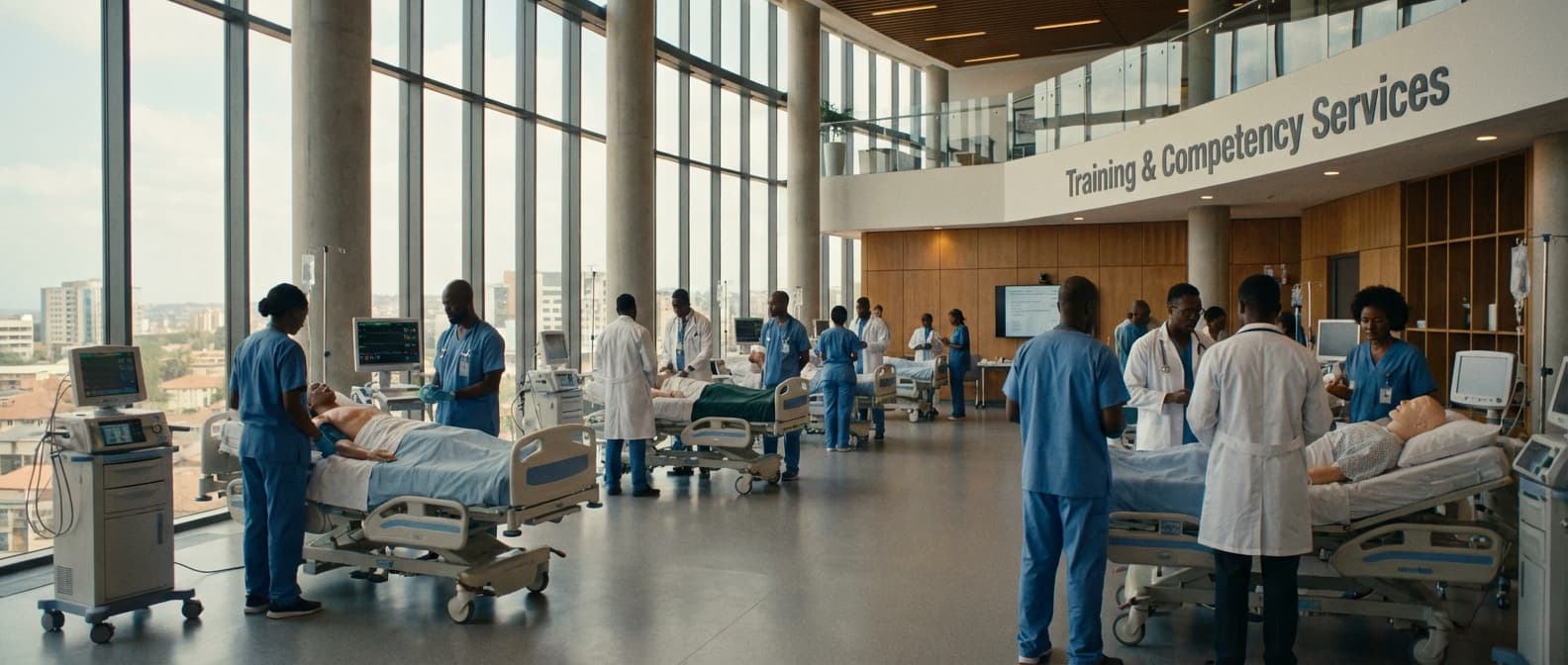
CT Operator Training Service (Radiographers) in Botswana
Engineering Excellence & Technical Support
CT Operator Training Service (Radiographers) High-standard technical execution following OEM protocols and local regulatory frameworks.
Advanced Imaging Techniques Mastery
Empower radiographers in Botswana with hands-on training in cutting-edge CT scanning protocols, including dual-energy imaging, iterative reconstruction, and advanced contrast administration techniques. Enhance diagnostic accuracy and patient outcomes through specialized skill development.
Radiation Safety & Dose Optimization
Ensure the highest standards of patient and staff safety with comprehensive training modules focused on ALARA principles, advanced dose reduction strategies specific to CT, and regulatory compliance in Botswana. Minimize radiation exposure without compromising image quality.
Critical Case Interpretation & Workflow Efficiency
Equip radiographers with the expertise to interpret complex CT findings in critical care scenarios (e.g., trauma, stroke) and optimize daily workflow through efficient protocol selection, image post-processing, and PACS integration, tailored to the needs of Botswana's healthcare system.
What Is Ct Operator Training Service (Radiographers) In Botswana?
CT Operator Training Service (Radiographers) in Botswana refers to specialized educational programs designed to equip qualified radiographers with the theoretical knowledge and practical skills necessary for the safe, effective, and efficient operation of Computed Tomography (CT) scanners. This training is crucial for ensuring high-quality diagnostic imaging, patient safety, and adherence to international radiation protection standards within the healthcare sector of Botswana. The service encompasses a curriculum that covers principles of CT physics, image acquisition protocols, patient positioning, contrast media administration, radiation safety, image processing and post-processing techniques, quality assurance, and troubleshooting common operational issues.
| Who Needs CT Operator Training? | Typical Use Cases for Trained Radiographers | |||||
|---|---|---|---|---|---|---|
| Newly graduated radiographers seeking to specialize in CT imaging. | Performing diagnostic CT examinations for a wide range of clinical indications, including neurological conditions (stroke, tumors), oncological staging and follow-up, abdominal and pelvic pathologies, trauma assessment, and vascular imaging. | Operating CT scanners in public and private hospitals, specialized imaging centers, and mobile CT units across Botswana. | Adhering to established imaging protocols and ensuring optimal image quality for accurate diagnosis by radiologists. | Implementing and monitoring radiation safety protocols for both patients and staff. | Collaborating with radiologists and other healthcare professionals to provide comprehensive patient care. | Participating in ongoing professional development and quality improvement initiatives related to CT imaging. |
| Experienced radiographers seeking to expand their skill set or transition to CT operation. | Advanced practice radiographers undertaking specialized CT examinations (e.g., CT angiography, cardiac CT). | Radiographers working in settings where CT technology is newly introduced or upgraded. | Healthcare professionals requiring refresher courses or certification in CT operation. | Technicians responsible for the maintenance and basic troubleshooting of CT equipment. |
Key Components of CT Operator Training Service:
- Foundational CT Physics and Principles
- CT Scanner Hardware and Software Operation
- Patient Preparation and Protocol Selection
- Image Acquisition Parameters and Optimization
- Contrast Media Administration and Safety
- Radiation Protection Principles and Practices (ALARA)
- Image Processing, Reconstruction, and Post-processing
- Artifact Recognition and Mitigation
- Quality Assurance (QA) and Quality Control (QC) Procedures
- Emergency Procedures and Patient Management
- Ethical and Legal Considerations in CT Imaging
Who Needs Ct Operator Training Service (Radiographers) In Botswana?
CT operator training is essential for ensuring safe, efficient, and high-quality CT imaging services. In Botswana, this training is critically important for radiographers working in both public and private healthcare facilities. The demand for skilled CT operators is driven by the increasing adoption of CT technology, the need to maintain international standards of practice, and the desire to improve diagnostic accuracy and patient outcomes. This training is not a one-off event but rather an ongoing requirement to keep pace with technological advancements and evolving best practices in medical imaging.
| Customer Type | Primary Need for CT Operator Training | Specific Department Focus |
|---|---|---|
| Public Hospitals | Ensuring foundational competency and efficient use of limited resources. | Radiology Department |
| Private Hospitals & Clinics | Offering specialized diagnostic services and maintaining competitive standards. | Medical Imaging Department, Radiology Department |
| Tertiary/Referral Hospitals | Advanced protocols, complex case management, and potential interventional CT. | Radiology Department, Interventional Radiology |
| University Teaching Hospitals | Developing skilled professionals, research, and academic standards. | Radiology Department, Training & Education Units |
Target Customers and Departments Requiring CT Operator Training in Botswana
- Public Hospitals: These facilities often serve a large patient population and may have limited resources, making efficient and effective use of CT technology paramount. Training here ensures a baseline of competency across the radiology department.
- Private Hospitals & Clinics: As private healthcare continues to expand in Botswana, so does the investment in advanced imaging technologies like CT. Training ensures these facilities can offer specialized diagnostic services.
- Tertiary/Referral Hospitals: These institutions handle complex cases and often have high-volume CT scanners. Specialized training for advanced protocols and interventional CT procedures may be required.
- University Teaching Hospitals: Radiographers in training and those involved in academic settings benefit greatly from comprehensive CT operator training to develop both practical skills and theoretical understanding.
- Medical Imaging Departments: This is the core department where CT scanners are housed and operated. All radiographers involved in CT acquisition will require this training.
- Radiology Departments: This encompasses the broader department, including radiographers, technologists, and potentially some radiologists who may benefit from refresher training or training on new equipment.
- Emergency Departments (as support): While not direct operators, radiographers supporting emergency departments might require specific training for urgent CT scans and protocol optimization.
- Oncology Departments (as support): Radiographers involved in CT simulation for radiation therapy or monitoring treatment response will need specific CT training.
- Surgical Departments (as support): Radiographers assisting surgeons with intraoperative imaging or pre-operative planning may require specialized CT training.
Ct Operator Training Service (Radiographers) Process In Botswana
This document outlines the standard operating procedure for the CT Operator Training Service for Radiographers in Botswana. It details the workflow from the initial inquiry to the successful completion and certification of the training.
| Stage | Description | Key Activities | Responsible Party | Deliverables/Outcomes |
|---|---|---|---|---|
| Initial contact from a healthcare facility or individual radiographer seeking CT operator training. | Receive inquiry, schedule a consultation, understand specific training needs (e.g., new equipment, refresher, specialized techniques), assess current skill levels. | Potential Client (Facility/Radiographer), Training Provider | Understanding of training requirements, initial client profile. |
| The training provider develops and submits a detailed proposal and cost estimate. | Develop training curriculum outline, identify trainers, estimate duration, prepare detailed quotation including fees, materials, and any travel/accommodation costs. | Training Provider | Formal Training Proposal, Detailed Quotation. |
| Formalization of the training agreement between the client and the training provider. | Review and negotiation of proposal terms, contract signing, payment schedule confirmation, booking of training dates. | Potential Client, Training Provider | Signed Training Agreement/Contract, Confirmed Training Schedule. |
| Activities undertaken by both parties before the commencement of the training. | Client: Provide access to CT scanner, identify trainees, ensure trainees have necessary prerequisites. Training Provider: Finalize curriculum, prepare training materials (manuals, presentations), confirm trainer availability, coordinate logistics (venue if applicable). | Client, Training Provider | Ready training environment, prepared training materials, identified and confirmed trainees and trainers. |
| The core delivery of the CT operator training program. | Conduct theoretical sessions (anatomy, physics, radiation safety, CT protocols), practical hands-on sessions on the CT scanner, case study reviews, demonstration of advanced techniques. | Training Provider (Trainers) | Delivered theoretical knowledge, developed practical skills in CT operation. |
| Measuring the trainee's understanding and proficiency, and evaluating the training program. | Administer theoretical assessments (quizzes, exams), practical competency assessments (performing scans, protocol selection), trainer feedback on trainee performance, trainee feedback on the training program. | Training Provider | Trainee performance reports, assessment results, training feedback forms. |
| Issuance of certificates and post-training support. | Issue certificates of completion to successful trainees, provide summary report to the client, offer post-training support or advanced modules if requested. | Training Provider | Certificates of Competency for Radiographers, Final Training Report, potential for ongoing professional development. |
CT Operator Training Service Workflow
- Inquiry & Needs Assessment
- Proposal & Quotation
- Agreement & Contract
- Pre-Training Preparations
- Training Execution
- Assessment & Evaluation
- Certification & Follow-up
Ct Operator Training Service (Radiographers) Cost In Botswana
The cost of CT Operator Training for Radiographers in Botswana can vary significantly based on several factors. These factors include the reputation and accreditation of the training provider, the duration and intensity of the course, the inclusion of practical hands-on experience with actual CT equipment, the level of qualification being sought (e.g., basic introduction vs. advanced specialization), and any associated costs like study materials, examination fees, and certifications. Generally, the training will be provided by specialized medical training institutions, hospitals offering continuing education, or international training bodies with a presence in Botswana. The pricing is typically quoted in Botswana Pula (BWP).
| Training Type | Estimated Cost Range (BWP) | Notes |
|---|---|---|
| Basic CT Operator Certificate/Introduction | 3,000 - 7,000 | Focus on foundational principles, safety, and basic operation. May involve simulation. |
| Comprehensive CT Operator Diploma/Advanced Training | 8,000 - 18,000 | Includes in-depth theory, advanced protocols, image optimization, and significant practical experience on real CT scanners. Often includes certification. |
| Specialized CT Modality Training (e.g., Cardiac CT, Interventional CT) | 10,000 - 25,000+ | Highly specialized courses requiring prior CT knowledge. Costs can be significantly higher due to specialized instructors and equipment access. |
| Refresher/Continuing Professional Development (CPD) Courses | 1,000 - 4,000 | Shorter courses focusing on updates, new technologies, or specific skills. |
Key Pricing Factors for CT Operator Training in Botswana:
- Training Provider Reputation and Accreditation
- Course Duration and Intensity
- Practical Hands-on Experience
- Level of Qualification/Specialization
- Inclusion of Study Materials and Examination Fees
- Certification and Accreditation Body
- Location within Botswana (minor impact, but may affect travel/accommodation for remote learners)
Affordable Ct Operator Training Service (Radiographers) Options
Our Affordable CT Operator Training Service is designed to equip radiographers with the essential skills and knowledge to confidently and competently operate CT scanners. We understand the budgetary constraints faced by many healthcare facilities, and therefore, we focus on providing high-quality training at competitive prices. Our program emphasizes practical application, patient safety, and adherence to industry best practices, ensuring your staff is well-prepared to deliver excellent diagnostic imaging services.
| Training Package | Description | Estimated Base Cost (USD) | Potential Savings (with strategies) |
|---|---|---|---|
| Core CT Operator Training | Foundational skills for CT operation. | $1,500 - $3,000 per participant | 10-20% (Group/On-site) |
| Advanced CT Techniques Module | Specialized CT applications. | $1,000 - $2,000 per participant | 10-20% (Group/On-site) |
| CT Safety & Radiation Protection | Focus on safety protocols. | $750 - $1,500 per participant | 10-20% (Group/On-site) |
| Full Spectrum CT Training Bundle | Core + Advanced + Safety | $3,000 - $5,500 per participant | 15-25% (Group/On-site/Blended) |
| On-Demand Online Modules | Flexible, self-paced learning. | $100 - $500 per module | Significantly lower than in-person, ideal for supplementing |
| Customized On-Site Program (10+ staff) | Tailored curriculum delivered at your facility. | Quote-based (volume discounts apply) | Up to 30% savings compared to individual enrollments |
Value Bundles & Cost-Saving Strategies
- {"title":"Core CT Operator Training","description":"Comprehensive curriculum covering CT physics, anatomy, protocol selection, patient positioning, image acquisition, and basic quality control. Ideal for new operators or those needing a foundational refresh."}
- {"title":"Advanced CT Techniques Module","description":"Deep dives into specialized CT applications such as cardiac CT, interventional CT guidance, dual-energy CT, and advanced contrast protocols. Perfect for experienced operators seeking to expand their skillset."}
- {"title":"CT Safety & Radiation Protection","description":"Mandatory module focusing on ALARA principles, patient shielding, dose reduction techniques, and regulatory compliance to ensure the highest level of safety for both patients and staff."}
- {"title":"On-Site Training Discount","description":"Significant cost savings for facilities that can accommodate our trainers on-site. Reduces travel and accommodation expenses for both parties."}
- {"title":"Group Training Packages","description":"Discounted rates for training multiple radiographers from the same facility. The more staff you train, the greater the per-person savings."}
- {"title":"Customizable Training Plans","description":"We can tailor training modules to your specific equipment and patient population needs, ensuring relevance and maximizing training efficiency, thus saving time and resources."}
- {"title":"Blended Learning Approach","description":"Combining online theoretical modules with in-person practical sessions. This can reduce the overall duration of on-site training, leading to cost reductions."}
- {"title":"Refresher Course Bundles","description":"Discounted rates for annual or bi-annual refresher courses to maintain and enhance existing CT operator skills, ensuring ongoing competence and compliance."}
Verified Providers In Botswana
In Botswana's evolving healthcare landscape, identifying trusted and verified providers is paramount for ensuring quality and patient safety. Franance Health stands out as a leading entity, distinguished by its rigorous credentialing processes and unwavering commitment to excellence. This section explores what makes Franance Health's credentials significant and why they represent the best choice for healthcare consumers in Botswana.
| Feature | Franance Health's Commitment | Benefit to Patients |
|---|---|---|
| Rigorous Vetting | Comprehensive verification of all medical licenses, certifications, and educational backgrounds. | Assurance of receiving care from qualified and competent medical professionals. |
| Adherence to Standards | Compliance with national healthcare regulations and international best practices. | Ensured safety, efficacy, and quality of medical services. |
| Focus on Continuous Improvement | Emphasis on ongoing training and professional development for all practitioners. | Access to the latest medical knowledge, treatments, and technologies. |
| Patient-Centric Approach | Incorporation of patient feedback and robust complaint resolution processes. | A healthcare experience that prioritizes patient needs and satisfaction. |
| Ethical Framework | Strict adherence to ethical medical practices and patient rights. | Trustworthy and respectful healthcare delivery. |
Understanding Franance Health Credentials
- Accreditation Standards: Franance Health adheres to stringent national and international accreditation standards, ensuring that all its affiliated healthcare facilities and professionals meet the highest benchmarks for safety, effectiveness, and patient satisfaction.
- Professional Qualifications Verification: Every healthcare practitioner associated with Franance Health undergoes a thorough verification of their academic qualifications, licenses, and specialized training. This meticulous process guarantees that patients are treated by competent and appropriately qualified professionals.
- Continuous Professional Development (CPD) Monitoring: Franance Health mandates and monitors the ongoing professional development of its providers. This commitment ensures that practitioners remain up-to-date with the latest medical advancements, treatment protocols, and technological innovations, offering patients access to cutting-edge care.
- Quality Assurance and Performance Metrics: The organization implements robust quality assurance programs, continuously evaluating the performance of its providers and facilities. This data-driven approach identifies areas for improvement and ensures consistent delivery of high-quality healthcare services.
- Patient Feedback and Grievance Redressal: Franance Health actively solicits and acts upon patient feedback. A transparent and efficient grievance redressal mechanism is in place to address any concerns, further reinforcing their dedication to patient-centric care.
- Ethical Practice Compliance: All Franance Health providers are bound by a strict code of ethics, ensuring patient confidentiality, respectful treatment, and unbiased medical advice.
Scope Of Work For Ct Operator Training Service (Radiographers)
This Scope of Work (SOW) outlines the requirements for a comprehensive training service for CT Operators (Radiographers). The objective is to ensure that all participating radiographers are proficient in operating CT scanners, adhering to safety protocols, optimizing image quality, and performing routine maintenance. The training will cover theoretical knowledge and practical hands-on experience, culminating in an assessment to verify competency.
| Deliverable | Description | Standard Specification/Acceptance Criteria | Timeline |
|---|---|---|---|
| Training Curriculum Document | A detailed document outlining the modules, learning objectives, training methods, and assessment strategies for the CT Operator training. | Curriculum must cover all topics listed in the 'Key Training Modules and Topics'. Learning objectives must be measurable. Assessment methods must be clearly defined (e.g., written exams, practical simulations, observed competency). | Week 1 |
| Training Materials (Presentations, Handouts, Guides) | Comprehensive digital and/or printed materials for each training module. | Materials must be clear, concise, accurate, and up-to-date with current industry standards and manufacturer guidelines. Visual aids (diagrams, images, videos) are highly encouraged. | Weeks 2-4 |
| Practical Training Sessions (On-site/Simulated) | Hands-on training sessions using actual CT scanners or high-fidelity simulators. | Each participant must receive a minimum of X hours of supervised hands-on practice per module. Trainers must demonstrate proficiency in all operational aspects and guide participants through complex scenarios. | Weeks 3-8 |
| Competency Assessment (Written & Practical) | A formal assessment to evaluate the radiographers' understanding and practical skills. | Written exam must achieve a passing score of Y% for theoretical knowledge. Practical assessment must demonstrate the ability to perform Z core CT procedures with acceptable image quality and radiation safety practices. Feedback on assessment results must be provided to each participant. | Week 9 |
| Training Completion Certificates | Certificates issued to participants who successfully complete the training and pass the competency assessment. | Certificates must include participant's name, training title, date of completion, and trainer's signature/institution. | Week 10 |
| Post-Training Support Plan | A plan outlining how ongoing support and refresher training will be provided. | Plan should include options for Q&A sessions, access to updated materials, and schedule for periodic refresher courses (e.g., annually). | Week 10 |
Key Training Modules and Topics
- Introduction to CT Technology and Principles
- CT Scanner Anatomy and Functionality
- Patient Preparation and Positioning for CT Scans
- Image Acquisition Protocols and Parameter Optimization
- Radiation Safety and Dose Management (ALARA Principle)
- Image Reconstruction and Processing Techniques
- Artifact Recognition and Mitigation
- Quality Assurance and Control Procedures
- Routine Maintenance and Troubleshooting of CT Scanners
- PACS and RIS Integration and Workflow
- Advanced CT Applications (e.g., Dual-Energy, Cardiac CT)
- Ethical Considerations and Patient Communication
Service Level Agreement For Ct Operator Training Service (Radiographers)
This Service Level Agreement (SLA) outlines the response times and uptime guarantees for the CT Operator Training Service provided to radiographers. This agreement ensures the timely and reliable delivery of training resources and support to facilitate effective CT operator competency.
| Service Component | Metric | Target | Measurement Period |
|---|---|---|---|
| CT Operator Training Service (Radiographers) | Response Time to Support Inquiries (Email/Ticketing System) | Within 8 business hours | During business hours (9 AM - 5 PM, Mon-Fri) |
| CT Operator Training Service (Radiographers) | Response Time to Critical Issues (e.g., platform inaccessibility) | Within 4 business hours | During business hours (9 AM - 5 PM, Mon-Fri) |
| Online Training Platform | Uptime Guarantee | 99.5% (monthly) | Monthly |
| Online Training Platform | Scheduled Maintenance Downtime | Maximum 4 hours per month (notified 48 hours in advance) | Monthly |
| Training Material Updates | Availability of Newly Added/Updated Modules | Within 5 business days of release | Post-release |
Key Performance Indicators
- Response Time to Training Support Inquiries
- Uptime Guarantee for Online Training Platform
- Availability of Training Material Updates
Frequently Asked Questions

Ready when you are
Let's scope your CT Operator Training Service (Radiographers) in Botswana project in Botswana.

Scaling healthcare logistics and technical systems across the entire continent.