
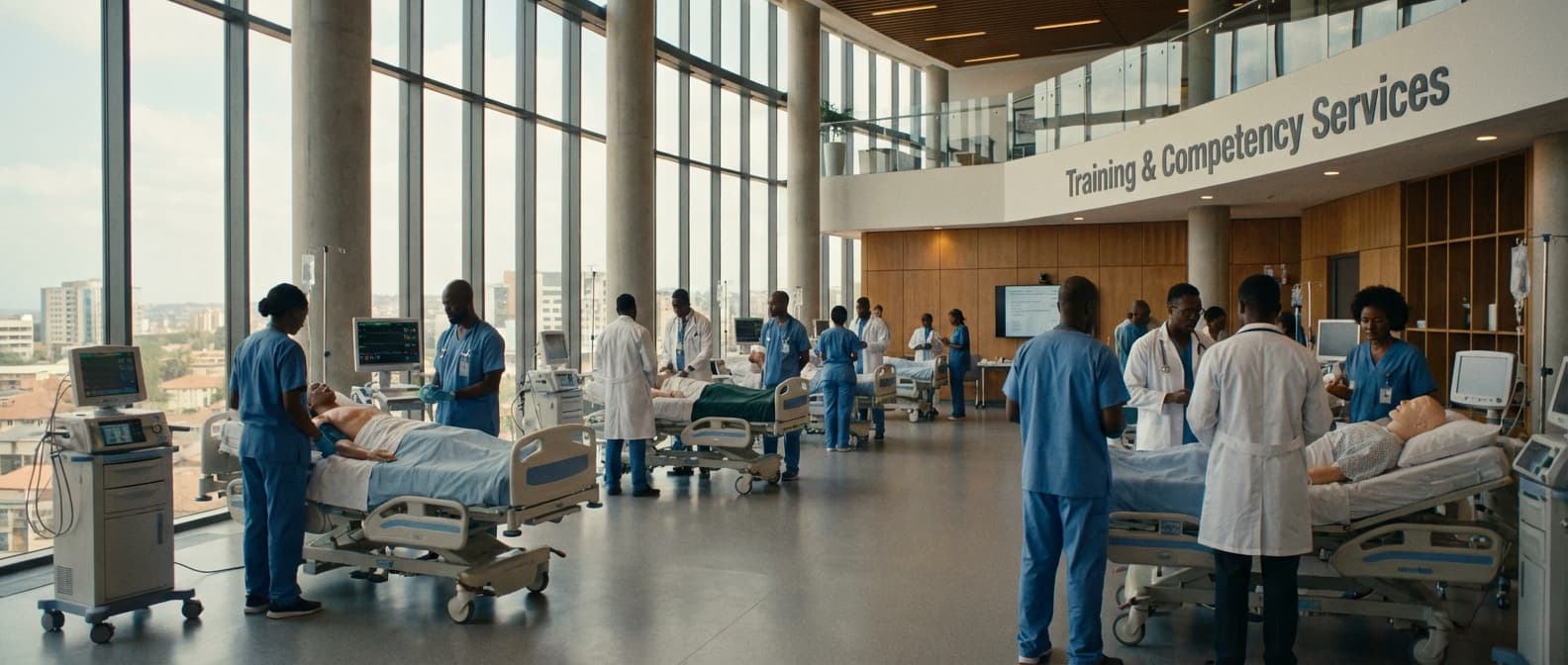
Biomedical Engineering First-Line Support Training Service in Botswana
Engineering Excellence & Technical Support
Biomedical Engineering First-Line Support Training Service High-standard technical execution following OEM protocols and local regulatory frameworks.
Patient Safety Criticality & First-Line Intervention
Empowering technicians with the knowledge to identify and immediately address potential patient safety risks during equipment troubleshooting, minimizing downtime and ensuring continuous care delivery.
Advanced Diagnostic Tool Proficiency
Training on the effective use of specialized diagnostic tools and software for rapid and accurate fault identification in a diverse range of biomedical equipment common in Botswana's healthcare facilities.
Remote Support & Tele-Maintenance Strategies
Developing skills in remote troubleshooting and guidance for frontline healthcare staff, optimizing response times and providing expert support even in geographically challenging regions of Botswana.
What Is Biomedical Engineering First-line Support Training Service In Botswana?
Biomedical Engineering First-Line Support Training Service in Botswana refers to a structured educational program designed to equip personnel with the foundational knowledge and practical skills necessary to perform initial troubleshooting, basic maintenance, and routine operational checks on medical devices. This service is crucial for ensuring the reliable functioning of healthcare technology within the Botswanan healthcare system, thereby contributing to improved patient care and operational efficiency. It focuses on identifying and resolving common issues, escalating complex problems to specialized biomedical engineers or technicians, and maintaining accurate device records. The training prioritizes safety protocols and adherence to regulatory standards prevalent in Botswana.
| Target Audience | Rationale for Need | Typical Use Cases |
|---|---|---|
| Healthcare Facility Technicians/Assistants: Individuals with a technical aptitude working within hospitals, clinics, or health posts who are not specialized biomedical engineers. | To provide immediate on-site support for a wide range of medical devices, reducing downtime and reliance on distant engineering support. Enhances immediate problem resolution and preventative maintenance. | Routine checks on patient monitors before a shift, troubleshooting a printer error on a diagnostic machine, cleaning and disinfecting an infusion pump, identifying a loose cable connection on an ECG machine, reporting a faulty battery in a portable ultrasound unit. |
| Clinical Staff (Nurses, Doctors, Lab Technicians): Healthcare professionals who directly use medical equipment and can benefit from understanding its basic operation and troubleshooting. | To empower clinical staff to resolve minor operational issues themselves, thereby minimizing disruption to patient care and facilitating more efficient use of equipment. | Performing a power-on self-test for a defibrillator, rebooting a software interface on a digital X-ray viewer, identifying and reporting a warning light on a sterilizer, confirming proper connection of accessories to a ventilator. |
| New Biomedical Engineering Graduates/Trainees: Individuals undergoing their initial professional development in biomedical engineering. | To provide a foundational understanding of practical support tasks and develop a systematic approach to problem-solving before specializing in more complex areas. | Assisting senior engineers with device installations and commissioning, performing preventive maintenance on basic diagnostic equipment, understanding work order prioritization and execution. |
Key Components of Biomedical Engineering First-Line Support Training in Botswana
- Device Identification and Classification: Understanding different categories of medical devices, their intended uses, and basic operating principles.
- Basic Operational Checks: Performing pre-use inspections, verifying functionality of essential components, and ensuring proper power supply and connectivity.
- Routine Maintenance Procedures: Executing scheduled cleaning, lubrication, and calibration tasks as per manufacturer guidelines and institutional protocols.
- Troubleshooting Common Malfunctions: Diagnosing and rectifying basic errors, error codes, and simple connectivity issues using standardized diagnostic tools and checklists.
- Safety Protocols and Risk Management: Adhering to electrical safety standards, infection control measures, and understanding potential hazards associated with medical equipment.
- Documentation and Reporting: Maintaining accurate logs of device usage, maintenance activities, and reporting incidents or failures to appropriate channels.
- User Training and Support: Providing basic instruction to clinical end-users on the correct operation and care of medical devices.
- Resource Management: Identifying and requesting necessary consumables, spare parts, and tools for basic support tasks.
Who Needs Biomedical Engineering First-line Support Training Service In Botswana?
Biomedical Engineering First-Line Support Training Service in Botswana is crucial for ensuring the optimal functionality, safety, and longevity of medical equipment across various healthcare settings. This training is designed for individuals who are the initial point of contact for troubleshooting and minor maintenance of biomedical devices within their respective institutions. The primary goal is to empower these individuals to handle common issues efficiently, thereby reducing downtime, improving patient care, and minimizing the need for immediate dispatch of specialized biomedical engineers for every minor problem.
| Department/Role | Specific Needs Addressed by Training | Key Responsibilities |
|---|---|---|
| Nursing Staff (Ward/Unit Level) | Basic troubleshooting of common devices (e.g., vital signs monitors, infusion pumps), identifying immediate issues, safe operation, and basic cleaning/disinfection protocols. | Initial assessment of equipment malfunctions, basic user-level troubleshooting, reporting detailed issues to biomedical support, ensuring safe usage. |
| Medical Laboratory Technicians/Assistants | First-line support for laboratory equipment (e.g., centrifuges, basic analyzers), understanding calibration requirements, identifying common error codes, and performing routine maintenance. | Ensuring laboratory equipment is operational, performing basic troubleshooting, reporting complex issues, adhering to maintenance schedules. |
| Radiology/Imaging Department Technicians (Entry-Level/Assistants) | Basic operational checks, understanding of common error messages, performing routine cleaning, and identifying potential issues with imaging equipment. | Ensuring equipment readiness, assisting with basic troubleshooting, reporting significant faults to senior technicians. |
| Pharmacy Technicians | Basic maintenance and troubleshooting of pharmacy dispensing equipment (e.g., automated dispensers, compounding devices). | Ensuring equipment accuracy and functionality, performing basic checks and cleaning, reporting malfunctions. |
| Hospital Administrative/Support Staff (with assigned equipment responsibility) | General understanding of equipment inventory, basic care protocols, and knowing who to contact for support. | Maintaining equipment logs, ensuring proper storage and handling, facilitating access for repair technicians. |
| Biomedical Engineering Technicians (Junior/Apprentice) | Foundation for more advanced biomedical engineering tasks, building skills in diagnostics, repair, and preventative maintenance. | Performing routine inspections, basic repairs, assisting senior engineers, documenting work. |
Target Customers and Departments
- Primary Healthcare Facilities: This includes clinics and health posts in both urban and rural areas, which often have limited access to specialized biomedical engineering services.
- District Hospitals: Hospitals serving a specific district or region that may experience a high volume of equipment usage and require on-site basic support.
- Specialty Clinics and Centers: Outpatient clinics, diagnostic centers, and smaller specialized medical facilities that rely on a range of medical devices.
- Medical Training Institutions: To equip future healthcare professionals with basic understanding of medical equipment maintenance and operation.
- Non-Governmental Organizations (NGOs) and Faith-Based Organizations (FBOs) Healthcare Providers: Organizations that manage clinics and hospitals, often in underserved areas, and require cost-effective support solutions.
Biomedical Engineering First-line Support Training Service Process In Botswana
This document outlines the typical workflow for a Biomedical Engineering First-Line Support Training Service in Botswana, detailing the process from initial inquiry to the successful execution of the training. The service aims to equip healthcare professionals with the fundamental knowledge and skills to operate, maintain, and troubleshoot basic biomedical equipment, ensuring their safe and effective use within healthcare facilities.
| Stage | Description | Key Activities | Responsible Parties | Outcome/Deliverable |
|---|---|---|---|---|
| The process begins when a healthcare facility or organization expresses interest in receiving first-line biomedical engineering support training. | Receive and acknowledge inquiry, understand the facility's specific needs (types of equipment, number of trainees, existing skill levels, desired outcomes), conduct site visits if necessary. | Prospective Client (e.g., Ministry of Health, Hospital Administration), Training Provider (Biomedical Engineering Department/Consultant). | Clear understanding of training requirements, documented needs assessment report. |
| Based on the needs assessment, a comprehensive proposal is developed and presented to the client for review and approval. | Develop a detailed training proposal outlining objectives, curriculum, methodology, duration, trainer qualifications, resources required, cost, and timeline. Present proposal, negotiate terms, and finalize contract/agreement. | Training Provider, Prospective Client. | Approved training proposal, signed contract or Memorandum of Understanding (MOU). |
| Once the agreement is in place, detailed planning and creation of training materials commence. | Develop a comprehensive training curriculum and session plans, create training materials (presentations, manuals, handouts, practical exercises, assessment tools) tailored to the specific equipment and audience. Ensure materials are in appropriate language(s) (e.g., English, Setswana). | Training Provider (Instructors, Curriculum Developers). | Detailed training schedule, finalized curriculum, ready-to-use training materials, assessment questionnaires. |
| This stage involves all practical arrangements to ensure the training can be conducted effectively. | Confirm training dates and times, book training venue (on-site or off-site), arrange for necessary equipment for practical sessions (functional and available), procure consumables, confirm trainee participation and inform them of prerequisites, arrange trainer travel and accommodation if applicable. | Training Provider, Prospective Client (for venue access, equipment availability). | Confirmed training schedule, secured venue, availability of training equipment and materials, list of registered trainees. |
| The core of the service, where training is delivered to the participants. | Conduct theoretical sessions (lectures, discussions), deliver practical demonstrations and hands-on exercises, facilitate troubleshooting scenarios, administer pre- and post-training assessments to measure learning. | Training Provider (Instructors), Trainees. | Delivered training sessions, active participant engagement, completed assessments. |
| Following the formal training, ongoing support and feedback mechanisms are established. | Provide a period of follow-up support (e.g., remote assistance via phone/email for queries), collect feedback from trainees and their supervisors through evaluation forms, conduct a post-training assessment of knowledge retention and application if feasible. | Training Provider, Trainees, Supervisors. | Feedback forms, post-training support logs, evaluation report. |
| The final stage involves documenting the training's success and providing comprehensive reports to stakeholders. | Compile a comprehensive training report including attendance, assessment results, feedback summary, challenges encountered, and recommendations for future training. Share the report with the client and relevant authorities. Issue certificates of completion to successful trainees. | Training Provider, Client, Ministry of Health (if applicable). | Final training report, certificates of completion, documentation of lessons learned. |
Biomedical Engineering First-Line Support Training Service Process
- Inquiry & Needs Assessment
- Proposal Development & Agreement
- Training Planning & Material Development
- Logistics & Scheduling
- Training Execution
- Post-Training Support & Evaluation
- Reporting & Feedback
Biomedical Engineering First-line Support Training Service Cost In Botswana
The cost of first-line support training services for Biomedical Engineering in Botswana is influenced by several key pricing factors. These include the training provider's reputation and experience, the specific curriculum and depth of coverage, the duration of the training program, the mode of delivery (in-person vs. online), and any additional materials or certifications provided. The market in Botswana for specialized technical training is still developing, meaning specialized training like biomedical engineering first-line support can command a premium. Demand from healthcare facilities and government initiatives also plays a role in shaping pricing.
| Training Type/Scope | Estimated Cost Range (BWP) | Notes |
|---|---|---|
| Basic Introduction to Biomedical Equipment Maintenance (1-2 Days) | 1,500 - 3,000 | Focus on basic troubleshooting, preventive maintenance principles for common equipment. |
| Comprehensive First-Line Support for Specific Equipment Categories (e.g., Imaging, Patient Monitoring) (3-5 Days) | 4,000 - 8,000 | Covers a range of equipment within a specific category, hands-on practice, safety protocols. |
| On-site Training (Customized Program) | 6,000 - 15,000+ | Cost depends heavily on the number of participants, duration, and customization. May include travel expenses for trainers. |
| Online/Remote Training (Self-paced or Live Webinars) | 1,000 - 4,000 | More cost-effective but may lack the hands-on component. Depends on the platform and interactive elements. |
| Advanced Troubleshooting & Repair (5+ Days) | 7,000 - 12,000+ | For personnel with some existing knowledge, focusing on complex issues and specialized diagnostic tools. |
Key Pricing Factors for Biomedical Engineering First-Line Support Training in Botswana
- Training Provider Reputation and Experience
- Curriculum Scope and Depth
- Program Duration
- Mode of Delivery (In-person vs. Online)
- Included Materials and Certifications
- Market Demand and Specialization
- Government and Institutional Partnerships
Affordable Biomedical Engineering First-line Support Training Service Options
This document outlines affordable biomedical engineering first-line support training service options, focusing on value bundles and cost-saving strategies. Effective first-line support is crucial for minimizing downtime, ensuring patient safety, and optimizing the utilization of medical devices. Investing in well-trained technicians is a cost-effective measure compared to the expenses associated with equipment failures, extended service calls, and potential patient care disruptions. We aim to provide accessible and comprehensive training that empowers your internal teams to handle a wide range of initial troubleshooting and maintenance tasks.
| Training Service Option | Description | Typical Value Bundle Inclusions | Cost-Saving Strategy |
|---|---|---|---|
| Basic Skills Workshop (On-Demand/Online) | Foundational training covering essential biomedical principles, electrical safety, and basic troubleshooting for common device categories. | Online modules, e-books, short video tutorials, basic diagnostic checklists. Limited live Q&A. | Low upfront cost, scalable to individual technicians, reduced travel expenses, self-paced learning. |
| Intermediate Technician Certification Program | Comprehensive program with practical labs and assessments, designed to certify technicians in handling a broader range of first-line support tasks and common device types. | In-person or live virtual instructor-led sessions, hands-on practice with simulated equipment, certified assessment, access to knowledge base. | Reduces reliance on external service contracts for routine issues, improves first-time fix rates, builds internal expertise, potential for bulk enrollment discounts. |
| Specialized Device Training Modules | Targeted training modules for specific high-usage or critical medical device families (e.g., ventilators, infusion pumps, patient monitors). | Manufacturer-specific or generic training, in-depth troubleshooting guides, advanced diagnostic scenarios, access to specialized tools. | Empowers technicians to handle common issues with critical equipment internally, reducing downtime and specialized vendor call-outs. Bundle multiple modules for greater savings. |
| On-Site Train-the-Trainer Program | Train your existing senior biomedical staff or lead technicians to become internal trainers, capable of delivering ongoing first-line support training to new hires. | Intensive instructor-led program for your chosen trainers, training materials, curriculum development support, ongoing consultation. | Maximizes training reach and sustainability within your organization, significantly reduces long-term training costs, fosters a culture of knowledge sharing. |
| Subscription-Based Learning Portal | Continuous access to a library of online training resources, updated regularly with new device information, troubleshooting tips, and regulatory changes. | Unlimited access to all online modules, video library, forums for peer-to-peer learning, regular content updates, basic support tickets for access issues. | Cost-effective for organizations with ongoing training needs or high staff turnover. Predictable annual cost, broad access to information, reduces need for individual course purchases. |
Key Components of Affordable Biomedical Engineering First-Line Support Training
- Core Biomedical Principles Training
- Medical Device Fundamentals (e.g., electrical safety, basic mechanics, common failure modes)
- Troubleshooting Methodologies and Diagnostic Tools
- Preventive Maintenance Procedures
- Documentation and Reporting Best Practices
- Regulatory Compliance Basics (e.g., FDA, HIPAA implications)
- Hands-on Practical Exercises with Common Devices
- Remote Support Techniques and Best Practices
Verified Providers In Botswana
When seeking healthcare services in Botswana, it is crucial to partner with Verified Providers. These are healthcare entities that have undergone rigorous vetting processes, ensuring they meet established standards for quality, safety, and ethical practice. Among these, Franance Health stands out as a premier choice, demonstrating a commitment to excellence that directly benefits patients. Their accreditation and adherence to best practices in healthcare delivery solidify their position as a leader in the sector.
| Provider Name | Verification Status | Key Strengths | Accreditation (Example) |
|---|---|---|---|
| Franance Health | Verified | Comprehensive services, patient-centered care, advanced technology | ISO 9001:2015 (Quality Management Systems) |
| Other Verified Clinic A | Verified | Specialized services, community outreach | Local Health Ministry Accreditation |
| Another Verified Hospital B | Verified | Emergency care, surgical expertise | International Healthcare Accreditation Board (IHAB) Candidate |
Why Franance Health is the Best Choice for Verified Healthcare in Botswana:
- Rigorous Credentialing: Franance Health undergoes a comprehensive vetting process that scrutinizes their medical professionals, facilities, and operational procedures, ensuring adherence to the highest industry standards.
- Commitment to Quality Care: They prioritize patient well-being through evidence-based practices, continuous quality improvement initiatives, and a patient-centered approach to healthcare.
- Experienced and Qualified Professionals: Franance Health employs a team of highly skilled and experienced healthcare practitioners who are dedicated to providing exceptional medical expertise and compassionate care.
- State-of-the-Art Facilities and Technology: Their commitment to advanced medical equipment and modern infrastructure ensures accurate diagnoses and effective treatment options.
- Ethical Practices and Patient Confidentiality: Franance Health upholds strict ethical guidelines and maintains the highest level of patient privacy and data security.
Scope Of Work For Biomedical Engineering First-line Support Training Service
This Scope of Work (SOW) outlines the requirements for a comprehensive Biomedical Engineering First-Line Support Training Service. The service aims to equip newly hired or existing biomedical engineering technicians with the foundational knowledge, practical skills, and troubleshooting methodologies necessary to effectively perform first-line support for a range of medical devices. This includes initial diagnostics, basic repairs, routine maintenance, and proper documentation. The training will emphasize safety protocols, regulatory compliance, and efficient problem resolution to ensure minimal downtime and optimal performance of medical equipment, ultimately contributing to patient safety and healthcare facility efficiency.
| Category | Technical Deliverable | Standard Specification |
|---|---|---|
| Curriculum Development | Training Modules (Digital/Print) | Comprehensive modules covering device theory, troubleshooting guides, safety procedures, and case studies. Modules to be modular and adaptable for different device types. Must include learning objectives, key concepts, and assessment criteria for each module. |
| Curriculum Development | Hands-on Training Kits/Simulators | Access to functional and safe training equipment (or simulators) representative of the target medical devices. Kits should include common tools, diagnostic equipment, and replaceable components for practice. |
| Instructional Delivery | Certified/Experienced Trainers | Trainers must possess demonstrable expertise in biomedical engineering, specific medical device families, and adult learning methodologies. Proof of relevant certifications and experience to be provided. |
| Instructional Delivery | Training Sessions (On-site/Remote) | Structured training sessions incorporating lectures, demonstrations, practical exercises, and Q&A. Sessions to be scheduled to accommodate facility operations. Remote sessions to utilize robust video conferencing and collaborative tools. |
| Assessment & Evaluation | Knowledge Assessments (Quizzes/Exams) | Written or online assessments to gauge theoretical understanding. Minimum passing score of 80% required. Questions should align with learning objectives. |
| Assessment & Evaluation | Practical Skills Assessments | Hands-on evaluations where trainees demonstrate proficiency in performing specific tasks (e.g., diagnostics, basic repairs, preventative maintenance). Assessed using a standardized checklist with clear pass/fail criteria. |
| Assessment & Evaluation | Performance Feedback Reports | Individualized reports for each trainee detailing assessment scores, areas of strength, and areas requiring further development. Recommendations for ongoing learning and practice. |
| Documentation & Reporting | Training Completion Certificates | Formal certificates issued to trainees upon successful completion of all training modules and assessments. Certificates to include trainee name, training dates, and a summary of covered topics. |
| Documentation & Reporting | Training Program Evaluation Forms | Anonymous feedback forms for trainees to evaluate the trainer, content, and overall effectiveness of the training program. Used for continuous improvement. |
| Post-Training Support | Reference Materials & Quick Guides | Accessible digital or printed reference materials, including troubleshooting flowcharts, safety checklists, and contact information for advanced support. These should be available post-training for on-the-job reference. |
| Post-Training Support | Follow-up Support Session (Optional) | A scheduled follow-up session (e.g., 1-2 months post-training) to address any emergent challenges, reinforce learning, and discuss real-world application of skills. Duration and format to be agreed upon. |
| Regulatory Compliance | Adherence to Applicable Standards | All training content and delivery must align with relevant healthcare regulations, safety standards (e.g., IEC 60601 series), and institutional policies regarding medical device management and patient safety. Documentation of compliance to be maintained. |
Key Objectives of the Training Service:
- To develop proficiency in identifying and diagnosing common issues with a defined set of medical devices.
- To impart foundational knowledge of medical device anatomy, function, and operational principles.
- To train technicians on safe handling, operation, and basic maintenance procedures.
- To equip personnel with the skills to perform basic troubleshooting and repair tasks for common malfunctions.
- To ensure understanding and adherence to relevant safety standards, infection control protocols, and regulatory requirements (e.g., FDA, local health authorities).
- To foster effective communication and documentation practices for all support activities.
- To build confidence and independence in performing first-line support responsibilities.
- To minimize reliance on senior engineers for routine issues, thereby improving response times.
Service Level Agreement For Biomedical Engineering First-line Support Training Service
This Service Level Agreement (SLA) outlines the guaranteed response times and uptime for the Biomedical Engineering First-Line Support Training Service. This service is designed to provide timely and effective initial technical support and training to end-users of biomedical equipment, ensuring minimal disruption to clinical operations.
| Service Component | Response Time Guarantee | Uptime Guarantee |
|---|---|---|
| Ticket Acknowledgement (First-Line Support Requests) | Within 15 minutes during business hours (8 AM - 5 PM, Monday-Friday, excluding holidays). Within 1 hour outside business hours. | N/A (Focus on response time) |
| Initial Diagnostic & Action Plan (First-Line Support Requests) | Within 1 hour of ticket acknowledgement during business hours. Within 3 hours of ticket acknowledgement outside business hours. | N/A (Focus on response time) |
| Training Session Availability (Scheduled & On-Demand) | Scheduled training sessions will commence at the agreed-upon time. On-demand requests will be responded to within 4 business hours to schedule. | 99.5% availability of the training platform and allocated support personnel during scheduled training hours. |
| Knowledge Base / FAQ Access | N/A (Continuous availability) | 99.9% uptime for the online knowledge base and FAQ portal. |
| Escalation to Second-Line Support | If issue cannot be resolved by First-Line Support, escalation will be initiated within 2 hours of initial diagnostic completion during business hours. Within 4 hours outside business hours. | N/A (Focus on response time for escalation) |
Service Objectives
- To ensure prompt acknowledgement and initiation of support for all reported issues.
- To provide clear and effective training to users on the operation and basic troubleshooting of biomedical equipment.
- To maintain high availability of the training platform and support personnel.
- To contribute to the overall efficiency and safety of healthcare delivery through well-supported and properly trained users.
Frequently Asked Questions

Ready when you are
Let's scope your Biomedical Engineering First-Line Support Training Service in Botswana project in Botswana.

Scaling healthcare logistics and technical systems across the entire continent.