
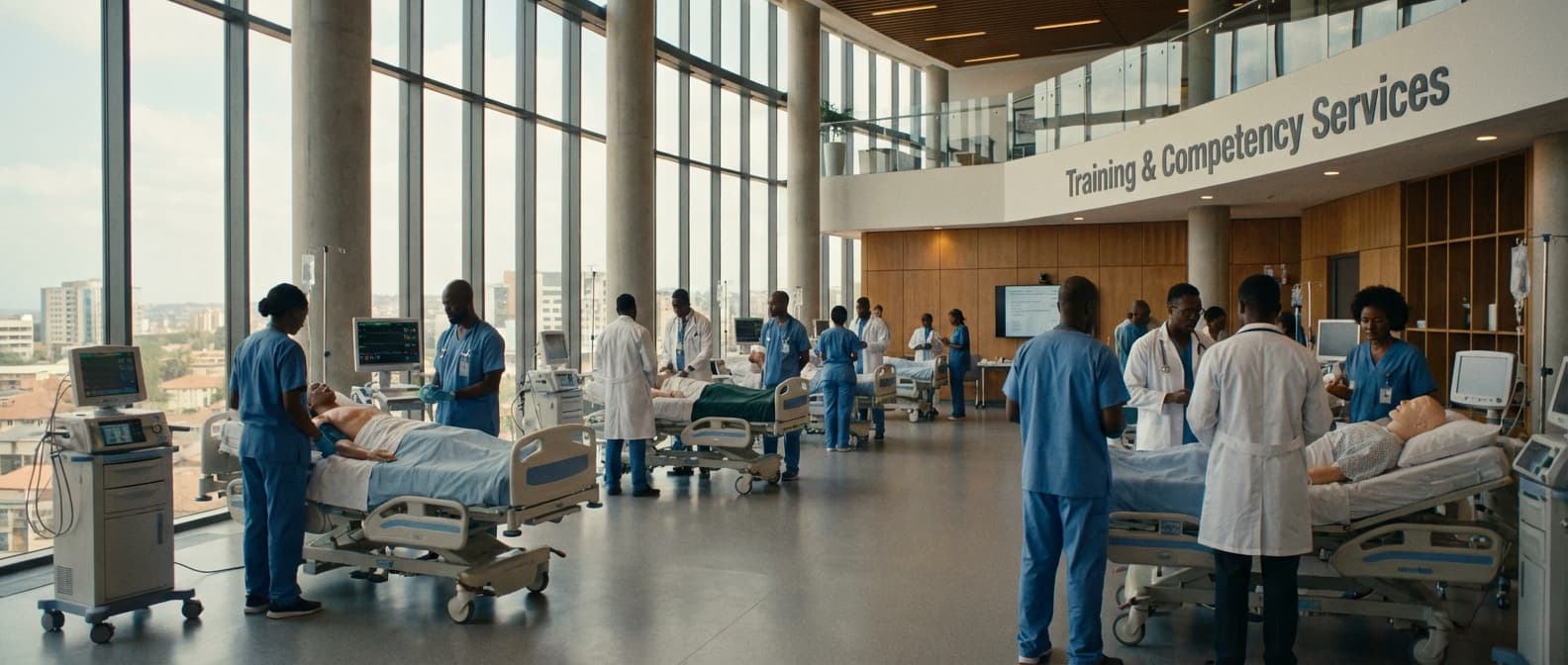
Anesthesia Workstation User Training Service in Botswana
Engineering Excellence & Technical Support
Anesthesia Workstation User Training Service High-standard technical execution following OEM protocols and local regulatory frameworks.
Advanced Ventilator Modes Mastery
Gain in-depth expertise in operating complex ventilator modes (e.g., APRV, PAV+). Our training covers real-world scenarios, critical parameter adjustments, and troubleshooting common issues encountered with modern anesthesia workstations, ensuring optimal patient ventilation in diverse clinical settings across Botswana.
Integrated Hemodynamic Monitoring & Management
Learn to effectively utilize and interpret integrated hemodynamic monitoring features of anesthesia workstations. This module focuses on understanding advanced waveforms, invasive and non-invasive pressure measurements, and how to leverage this data for proactive patient management and rapid response to hemodynamic instability within the Botswanan healthcare context.
Patient Safety & Alarm Configuration Best Practices
Empower your team with comprehensive training on patient safety protocols and advanced alarm configuration specific to anesthesia workstations. We'll cover risk mitigation strategies, understanding alarm priorities, setting appropriate thresholds, and creating customized alarm profiles to enhance patient safety and reduce the likelihood of adverse events in your practice.
What Is Anesthesia Workstation User Training Service In Botswana?
Anesthesia Workstation User Training Service in Botswana refers to a specialized educational program designed to equip healthcare professionals with the knowledge and practical skills necessary for the safe and effective operation of modern anesthesia workstations. These complex medical devices integrate multiple functionalities, including ventilation, gas delivery, monitoring, and drug administration, crucial for patient care during surgical and invasive procedures. The service encompasses theoretical instruction on device principles, functional components, system settings, and troubleshooting, coupled with hands-on practical sessions utilizing actual or simulated workstations. Emphasis is placed on adherence to established protocols, patient safety algorithms, and emergency management procedures specific to the Botswana healthcare context.
| Target Audience | Typical Use Cases | |||
|---|---|---|---|---|
| Anesthesiologists (Consultants, Specialists, Registrars) | Pre-operative assessment and setup of the anesthesia workstation. | Intraoperative management of ventilation, gas delivery, and monitoring. | Responding to intraoperative alarms and system malfunctions. | Performing post-operative system checks and handover. |
| Certified Registered Nurse Anesthetists (CRNAs) / Anesthetic Officers | Preparing the workstation for patient induction. | Administering anesthetic agents and managing ventilation during procedures. | Continuous patient monitoring and alarm response. | Assisting in troubleshooting and basic maintenance. |
| Medical Interns and Residents in Anesthesia Programs | Foundational understanding of workstation operation under supervision. | Practicing basic ventilation modes and monitoring interpretation. | Familiarization with pre-use checks and emergency procedures. | |
| Biomedical Engineers and Technicians | Understanding device functionality for maintenance, repair, and calibration. | Assisting in the installation and validation of new workstations. | Providing technical support to clinical users. | |
| Anesthesia Department Management | Ensuring compliance with training requirements and standards. | Optimizing workstation utilization and resource management. | Facilitating ongoing professional development for clinical staff. |
Key Components of Anesthesia Workstation User Training:
- Device Familiarization: In-depth understanding of the physical layout, control interfaces, and connectivity of the anesthesia workstation.
- Ventilator Mechanics and Settings: Comprehensive training on various ventilation modes (e.g., volume-controlled, pressure-controlled, SIMV), parameter optimization, and patient-lung mechanics.
- Gas Delivery and Vaporizer Operation: Principles of fresh gas flow, anesthetic gas selection, vaporizer calibration, and troubleshooting for accurate agent delivery.
- Patient Monitoring Integration: Understanding how the workstation integrates with and displays vital signs monitoring (ECG, SpO2, EtCO2, NIBP, invasive blood pressure) and alarm management.
- Drug Administration Systems: Training on integrated syringe pumps, automated drug delivery systems (if applicable), and safe infusion practices.
- System Checks and Pre-use Calibration: Rigorous protocols for pre-operative system checks, leak tests, and calibration procedures to ensure device integrity and patient safety.
- Troubleshooting and Error Management: Identification of common system errors, alarm conditions, and appropriate corrective actions.
- Emergency Scenarios and Contingency Planning: Simulation of critical events (e.g., equipment malfunction, difficult airway) and the development of appropriate responses.
- Infection Control and Device Maintenance: Principles of cleaning, disinfection, and basic maintenance to prevent cross-contamination and ensure device longevity.
- Local Protocol Adherence: Training tailored to specific guidelines and policies relevant to anesthesia practice within Botswana's healthcare facilities.
Who Needs Anesthesia Workstation User Training Service In Botswana?
In Botswana, Anesthesia Workstation User Training Services are crucial for ensuring the safe and effective operation of advanced medical equipment. These services are essential for healthcare professionals who utilize anesthesia workstations, including anesthesiologists, nurse anesthetists, and critical care nurses. The primary goal is to equip users with the knowledge and skills to operate these complex devices confidently, understand their functionalities, troubleshoot common issues, and adhere to safety protocols, ultimately contributing to improved patient care and outcomes.
| Department | Key Roles Requiring Training | Training Focus Areas |
|---|---|---|
| Anesthesiology Department | Anesthesiologists, Senior Registrars | Advanced ventilation modes, integrated drug delivery, patient monitoring capabilities, emergency procedures, system setup and shutdown, basic troubleshooting, software updates. |
| Surgical Departments (e.g., General Surgery, Obstetrics & Gynecology, Pediatrics) | Surgeons (for oversight and awareness), Anesthesia Support Staff | Understanding workstation functionality during procedures, basic interface navigation, awareness of potential issues and communication protocols. |
| Intensive Care Units (ICUs) | Critical Care Nurses, Intensivists | Ventilation support settings, weaning parameters, advanced monitoring integration, troubleshooting alarms, adapting to patient needs. |
| Emergency Departments (ED) | Emergency Physicians, ED Nurses | Rapid patient stabilization, emergency ventilation, portable workstation use (if applicable), quick setup and deployment. |
| Hospital Administration & Procurement | Procurement Officers, Department Heads | Understanding the capabilities and training requirements for new equipment acquisition, assessing vendor training packages. |
| Biomedical Engineering Department | Biomedical Engineers, Maintenance Technicians | Installation, preventive maintenance, calibration, troubleshooting complex technical issues, repair, software diagnostics. |
Target Customers & Departments for Anesthesia Workstation User Training Services in Botswana
- {"item":"Anesthesiologists","description":"These medical specialists are the primary users of anesthesia workstations and require comprehensive training on advanced features, patient monitoring, ventilation modes, and drug delivery systems."}
- {"item":"Nurse Anesthetists","description":"In contexts where they practice, nurse anesthetists need in-depth training to safely administer anesthesia and manage patients under their care using the workstation."}
- {"item":"Critical Care Nurses","description":"Nurses working in intensive care units (ICUs) or during emergency procedures may use aspects of anesthesia workstations for patient ventilation and monitoring, necessitating specialized training."}
- {"item":"Biomedical Engineers/Technicians","description":"While not direct users for patient care, these professionals require training for installation, maintenance, calibration, and basic troubleshooting of anesthesia workstations."}
- {"item":"Medical Equipment Trainers/Educators","description":"Individuals responsible for ongoing in-house training within hospitals or for new equipment adoption benefit from formal training services to enhance their instructional capabilities."}
Anesthesia Workstation User Training Service Process In Botswana
This document outlines the user training service process for anesthesia workstations in Botswana, from initial inquiry to successful execution. It details the steps involved in ensuring healthcare professionals are proficient in operating and maintaining these critical medical devices.
| Stage | Key Activities | Responsible Party | Deliverables/Outcomes | Timeline (Indicative) |
|---|---|---|---|---|
| Initial contact by healthcare institution (hospital, clinic) expressing interest in training. Discussion of specific workstation models, number of users, existing skill levels, and desired learning outcomes. Site visit may be conducted to assess infrastructure and specific needs. | Client Institution, Training Provider | Detailed understanding of training requirements, scope of work, and identified training gaps. | 1-2 Weeks |
| Training provider develops a comprehensive proposal outlining training objectives, curriculum, duration, methodology, trainer qualifications, required resources, and a detailed cost breakdown. | Training Provider | Formal training proposal and quotation submitted to the client institution. | 1-2 Weeks |
| Client institution reviews and approves the proposal. Formal agreement (contract/Purchase Order) is established. Training dates, venue, and logistics are finalized in coordination with the client. | Client Institution, Training Provider | Signed agreement, confirmed training schedule, and booking of resources. | 1-3 Weeks |
| Training provider prepares training materials (manuals, presentations, practical exercises). If the workstation is new, installation and initial setup may be required. Client institution ensures participant availability and access to the training venue and equipment. | Training Provider, Client Institution | Prepared training materials, functional workstation, identified participants, secured training venue. | 1-2 Weeks (concurrent with scheduling) |
| On-site or remote delivery of theoretical and practical training sessions covering workstation operation, safety features, routine maintenance, troubleshooting, and emergency procedures. Hands-on sessions with actual anesthesia workstations are crucial. | Training Provider (Trainers) | Knowledgeable and skilled participants capable of operating the anesthesia workstation safely and effectively. | Duration varies based on scope (e.g., 2-5 days) |
| Assessment of participant learning through practical demonstrations, quizzes, or written tests. Collection of feedback on the training program. Provision of ongoing technical support, clarification of doubts, and access to a knowledge base. | Training Provider, Client Institution | Trained personnel, feedback report, identified areas for improvement, accessible support channels. | Ongoing |
| Issuance of training certificates to participants who successfully complete the program. Provision of final training reports to the client institution, documenting the training conducted, participants, and outcomes. | Training Provider | Official training certificates for participants, comprehensive training report for the institution. | 1-2 Weeks post-training |
Anesthesia Workstation User Training Service Process
- Inquiry and Needs Assessment
- Proposal Development and Quotation
- Agreement and Scheduling
- Pre-Training Preparations
- Training Delivery
- Post-Training Evaluation and Support
- Certification and Documentation
Anesthesia Workstation User Training Service Cost In Botswana
The cost of anesthesia workstation user training services in Botswana can vary significantly based on several factors. These include the provider of the training (manufacturer, distributor, or independent training company), the duration and depth of the training, the number of participants, the complexity of the anesthesia workstation, and whether the training is conducted on-site at a healthcare facility or remotely. Customization of training content to specific hospital protocols or advanced features can also influence pricing. Availability of certified trainers and their travel expenses within Botswana are also key considerations.
Pricing Factors:
- Provider Type: Manufacturer-led training is often more expensive but may offer deeper, specialized knowledge. Distributor-led training is common and can be more cost-effective. Independent trainers might offer flexible packages.
- Training Duration & Intensity: A basic overview will be cheaper than a multi-day, hands-on, in-depth training session covering all functionalities and troubleshooting.
- Number of Participants: Training costs are often quoted per participant or as a group rate. Larger groups might receive a per-person discount.
- Workstation Complexity: Training on a highly advanced, multi-parameter anesthesia workstation with integrated ventilators and advanced monitoring will naturally be more expensive than on a simpler model.
- On-site vs. Remote: On-site training incurs costs related to trainer travel, accommodation, and potential facility usage. Remote (online) training can reduce these expenses but may lack the hands-on element.
- Customization: Tailoring the training to specific clinical scenarios or unique hospital workflows adds to the cost.
- Certification: If formal certification is required upon completion, this may add to the overall price.
- Location within Botswana: Travel and logistical costs to remote areas of Botswana will be higher than for training in major cities like Gaborone or Francistown.
| Factor | Typical Cost Impact (BWP) |
|---|---|
| Manufacturer-led Training | Higher (often included with purchase, or premium service) |
| Distributor-led Training | Moderate (common and competitive) |
| Independent Trainer | Variable (can be more flexible/cost-effective) |
| Duration (per day, per trainer) | BWP 3,000 - BWP 10,000+ |
| Number of Participants (group discounts apply) | BWP 5,000 - BWP 30,000+ per person |
| Travel & Accommodation (per trainer, per trip) | BWP 2,000 - BWP 10,000+ |
| Customization Fee | Add 20-50% to base cost |
Typical Pricing Ranges (Botswana Pula - BWP)
- Basic User Training (1-2 Days, Group): BWP 5,000 - BWP 15,000 per participant. This might cover essential operation, basic troubleshooting, and safety features.
- Comprehensive User Training (3-5 Days, Group): BWP 10,000 - BWP 30,000 per participant. This level usually includes in-depth functional training, advanced modes, maintenance basics, and hands-on simulations.
- On-site Training (Additional Costs): Beyond the per-participant fee, expect additional charges for trainer travel, accommodation, and potentially per diem. These can range from BWP 2,000 to BWP 10,000+ depending on distance.
- Customized Training Modules: Pricing for bespoke modules will be quoted separately and can add 20-50% to the base training cost.
- Refresher/Advanced Courses: BWP 3,000 - BWP 10,000 per participant.
Affordable Anesthesia Workstation User Training Service Options
This document outlines user training service options for affordable anesthesia workstations, focusing on value bundles and cost-saving strategies. Providing comprehensive and accessible training is crucial for ensuring safe and efficient use of these essential medical devices. We aim to offer flexible and cost-effective solutions that meet the diverse needs of healthcare facilities.
| Training Package Name | Description | Key Features | Value Bundle Benefits | Estimated Cost Range (per user/site) |
|---|---|---|---|---|
| Essentials Onboarding | Basic operational training for new users. | Core workstation functions, safety checks, basic troubleshooting, simulated scenarios. | Foundation for safe operation, reduced initial learning curve. | $150 - $300 |
| Advanced Workflow Integration | Training focused on optimizing use within specific clinical settings. | Advanced ventilation modes, drug delivery integration, electronic health record (EHR) connectivity, case management. | Enhanced efficiency, improved patient care, streamlined workflows. | $250 - $500 |
| Comprehensive Mastery Bundle | All-inclusive training for maximum proficiency. | Includes Essentials Onboarding and Advanced Workflow Integration, plus specialized modules (e.g., pediatrics, critical care), ongoing Q&A sessions, and certification. | Peak performance, reduced errors, staff confidence, potential for instructor certification. | $400 - $750 |
| Train-the-Trainer Program | Empowering facility staff to conduct in-house training. | In-depth instruction on all aspects of the workstation and training methodologies, curriculum development support. | Long-term cost savings, consistent internal training, reduced reliance on external trainers. | Custom Pricing (Typically a higher upfront investment with significant ROI) |
Key Considerations for Affordable Anesthesia Workstation Training
- Target Audience: Tailoring content to different user roles (anesthesiologists, CRNAs, technicians) ensures relevance and efficiency.
- Training Modalities: Leveraging a mix of online, in-person, and blended learning approaches to optimize cost and accessibility.
- Scalability: Offering tiered training packages that can be expanded as your facility grows or acquires more workstations.
- Ongoing Support: Incorporating resources for continuous learning and troubleshooting to maximize device utilization and minimize errors.
- Customization: Adapting training modules to specific clinical workflows and facility protocols.
Verified Providers In Botswana
When seeking reliable healthcare services in Botswana, it is crucial to partner with verified providers. Franance Health stands out as a premier choice, offering a comprehensive suite of services backed by stringent credentialing and a commitment to excellence. Their verified status signifies adherence to the highest industry standards, ensuring patient safety, quality care, and ethical practices. Choosing Franance Health means entrusting your well-being to a reputable organization dedicated to delivering exceptional healthcare outcomes.
| Credential Aspect | Franance Health's Verification | Benefit to Patients |
|---|---|---|
| Professional Licensing & Certification | All practitioners are fully licensed and certified by relevant Botswana medical boards. | Ensures practitioners have met mandatory educational and competency requirements. |
| Facility Accreditation | Our facilities are accredited by recognized health standards bodies. | Guarantees a safe, clean, and well-equipped environment for medical procedures. |
| Quality Assurance Programs | Active participation in ongoing quality improvement initiatives. | Demonstrates a commitment to continuously enhancing patient care and service delivery. |
| Patient Feedback & Grievance Mechanisms | Established and accessible channels for patient feedback and issue resolution. | Empowers patients and ensures their concerns are addressed effectively. |
| Compliance with Regulations | Strict adherence to all national health regulations and ethical codes. | Upholds the highest standards of patient privacy, data security, and ethical conduct. |
Why Franance Health is the Best Choice:
- Rigorous Credentialing: Franance Health undergoes extensive verification processes, ensuring all healthcare professionals and facilities meet and exceed established quality benchmarks.
- Unwavering Commitment to Quality: Their accreditation signifies a dedication to providing the highest standard of medical care, focusing on patient outcomes and satisfaction.
- Patient Safety First: Verified providers like Franance Health prioritize patient safety through robust protocols and continuous monitoring, minimizing risks.
- Ethical and Transparent Practices: Their verified status assures adherence to ethical guidelines and transparent operational procedures, building trust with patients.
- Comprehensive Service Offering: Franance Health provides a wide range of medical services, catering to diverse healthcare needs under one trusted roof.
- Access to Qualified Professionals: Patients can be confident in receiving care from highly qualified and experienced healthcare practitioners who have met rigorous selection criteria.
- Reliability and Peace of Mind: Partnering with a verified provider eliminates the guesswork, offering peace of mind knowing you are receiving dependable and high-quality healthcare.
- Innovation and Best Practices: Franance Health embraces innovation and implements evidence-based best practices to ensure you receive the most effective and up-to-date treatments.
Scope Of Work For Anesthesia Workstation User Training Service
This Scope of Work outlines the services to be provided for Anesthesia Workstation User Training. The training will equip healthcare professionals with the necessary knowledge and skills to safely and effectively operate the anesthesia workstation. The technical deliverables and standard specifications are detailed below.
| Deliverable Category | Technical Deliverable | Standard Specifications/Description | Format | Responsibility |
|---|---|---|---|---|
| Training Materials | User Manual & Quick Reference Guide | Comprehensive document detailing all workstation features, operational procedures, safety guidelines, and troubleshooting. Includes diagrams and illustrations. Quick Reference Guide provides essential information for immediate access. | PDF, Printed | Vendor |
| Training Materials | Presentation Slides | Visually engaging slides covering all training modules, including theoretical concepts and practical demonstrations. Content aligned with the User Manual. | PDF, PPT | Vendor |
| Training Materials | Case Studies & Scenarios | Realistic clinical scenarios designed to test user understanding and decision-making skills in various anesthesia contexts. Includes answers and explanations. | PDF, Digital Interactive | Vendor |
| Training Delivery | Instructor-Led Training Sessions | On-site or remote sessions delivered by certified trainers. Includes theoretical lectures, practical demonstrations on the workstation, and Q&A. | In-person, Virtual (Webinar) | Vendor |
| Training Delivery | Hands-on Practical Sessions | Dedicated time for participants to interact directly with the anesthesia workstation under trainer supervision, practicing key operations and scenarios. | In-person | Vendor |
| Assessment | Knowledge Assessment (Written/Online) | Evaluation of theoretical knowledge gained through the training. Typically multiple-choice or short-answer questions. | Online Quiz, Paper-based | Vendor |
| Assessment | Skills Competency Assessment (Practical) | Evaluation of users' ability to perform essential tasks on the anesthesia workstation, observed by the trainer. | Checklist-based observation | Vendor |
| Post-Training Support | Post-Training Q&A/Support Session | Follow-up session to address any lingering questions or clarify specific operational aspects. | Virtual (Webinar), Email Support | Vendor |
| Post-Training Support | Training Certificates | Formal documentation acknowledging successful completion of the training program by each participant. | PDF, Printed | Vendor |
| Technical Specifications | Workstation Model Covered | Specific anesthesia workstation model(s) that the training is designed for. e.g., 'Model XYZ Anesthesia System' | Text | Vendor/Client |
| Technical Specifications | Minimum Participant Prerequisite Knowledge | General understanding of anesthesia principles, basic medical terminology, and familiarity with hospital IT systems (if applicable). | Text | Client |
| Technical Specifications | Training Environment Requirements (On-site) | Adequate training room space, power outlets, projector, screen, and access to the specific anesthesia workstation(s) for hands-on practice. | Checklist | Client |
| Technical Specifications | Training Environment Requirements (Virtual) | Reliable internet connection for both trainer and participants, audio/video conferencing platform, and access to simulation software (if applicable). | Checklist | Vendor/Client |
| Technical Specifications | Trainer Qualifications | Certified trainers with extensive experience in anesthesia practice and specific knowledge of the workstation model being trained. | CV, Certification Proof | Vendor |
Key Objectives of the Training Program
- Ensure users understand the basic principles of anesthesia delivery and monitoring.
- Familiarize users with the specific features, functions, and controls of the anesthesia workstation.
- Train users on proper setup, pre-use checks, and routine maintenance procedures.
- Equip users with the ability to respond to common alarms and system malfunctions.
- Promote safe patient care practices related to anesthesia delivery.
- Provide users with an understanding of emergency procedures and troubleshooting techniques.
Service Level Agreement For Anesthesia Workstation User Training Service
This Service Level Agreement (SLA) outlines the performance expectations and guarantees for the Anesthesia Workstation User Training Service. It defines the response times for support requests and the uptime guarantees for the training platform.
| Service Level | Description | Target Response Time | Guaranteed Uptime |
|---|---|---|---|
| Standard Support | Assistance with general inquiries, basic troubleshooting, and access issues. | Within 4 business hours | 99.5% |
| Critical Support | Assistance with system outages, critical functional failures affecting training access, or data integrity concerns. | Within 1 business hour | 99.9% |
| Scheduled Maintenance | Planned downtime for system updates and maintenance. Users will be notified at least 48 hours in advance. | N/A | Exempt from uptime calculation |
Key Service Commitments
- This SLA applies to all registered users of the Anesthesia Workstation User Training Service.
- Response times are measured from the time a support ticket is successfully submitted through the designated portal.
- Uptime is measured as the percentage of time the Anesthesia Workstation User Training platform is accessible and functional for users.
Frequently Asked Questions

Ready when you are
Let's scope your Anesthesia Workstation User Training Service in Botswana project in Botswana.

Scaling healthcare logistics and technical systems across the entire continent.