
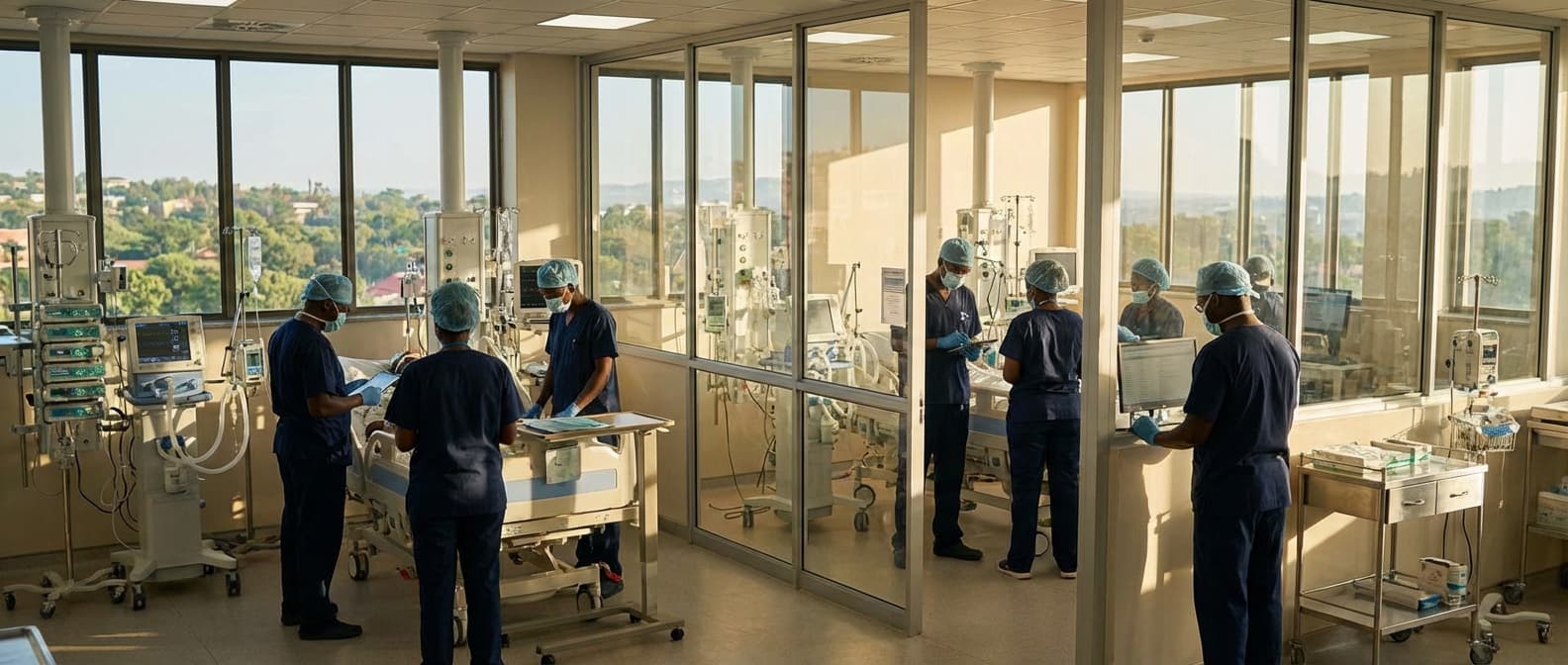
Ventilator Fleet Management & PM in Botswana
Engineering Excellence & Technical Support
Preventive maintenance and fleet management for ICU ventilators High-standard technical execution following OEM protocols and local regulatory frameworks.
Predictive Maintenance for Uninterrupted Respiratory Support
Leveraging IoT sensors and AI algorithms to monitor ventilator performance in real-time. Our predictive maintenance system anticipates potential failures, enabling proactive repairs and ensuring critical medical equipment is always operational, minimizing downtime and safeguarding patient lives across Botswana's healthcare facilities.
Real-time Fleet Visibility and Optimization
Implementing a centralized digital platform for comprehensive ventilator fleet management. This solution provides real-time location tracking, utilization data, and maintenance history for every device. It empowers Botswana's health ministry to optimize resource allocation, respond rapidly to emergencies, and ensure equitable distribution of life-saving ventilators.
Remote Diagnostics & Technician Empowerment
Enabling remote diagnostics capabilities for ventilators, reducing the need for immediate on-site technician visits. This feature allows for preliminary fault identification and troubleshooting from a central hub, empowering local healthcare technicians with guided repair procedures and minimizing travel costs and response times, crucial for remote areas in Botswana.
What Is Ventilator Fleet Management & Pm In Botswana?
Ventilator Fleet Management and Preventive Maintenance (PM) in Botswana refers to the comprehensive operational and maintenance strategy for a collection of mechanical ventilators utilized within healthcare facilities. This service encompasses the lifecycle management of these critical medical devices, from acquisition and deployment to routine servicing, calibration, repair, and eventual decommissioning. The primary objective is to ensure the consistent availability, optimal performance, and prolonged lifespan of the ventilator fleet, thereby supporting patient respiratory care and minimizing operational disruptions.
This service is essential for any healthcare institution in Botswana that possesses and operates mechanical ventilators. This includes public and private hospitals, critical care units, intensive care units (ICUs), emergency departments, and specialized respiratory care centers. The need is driven by the critical nature of mechanical ventilation in patient management, the inherent complexity of ventilator technology, regulatory compliance requirements, and the imperative to maintain cost-effectiveness in healthcare operations.
| Typical Use Cases for Ventilator Fleet Management & PM in Botswana | Description of Use Case | Key Activities Involved |
|---|---|---|
| New Ventilator Acquisition and Integration | Procurement and initial setup of new ventilator units into the existing fleet. | Needs assessment, vendor selection, procurement process, installation, initial configuration, and staff training. |
| Routine Preventive Maintenance (PM) | Scheduled inspections, cleaning, calibration, and functional testing to identify and rectify potential issues before they cause failure. | Adherence to manufacturer's PM schedules, visual inspection, functional checks, filter replacement, battery testing, sensor calibration, and documentation. |
| Corrective Maintenance and Repair | Addressing unexpected equipment failures or malfunctions to restore operational capability. | Diagnosis of faults, troubleshooting, component replacement, software updates, and post-repair verification and calibration. |
| Asset Tracking and Inventory Management | Maintaining an accurate and up-to-date record of all ventilator units, including location, status, service history, and warranty information. | Implementation of an asset management system (e.g., CMMS), regular physical inventory checks, and data entry. |
| Performance Monitoring and Optimization | Continuously assessing ventilator performance and utilization to ensure efficient operation and identify areas for improvement. | Review of usage logs, error reports, patient outcome data correlation (where applicable), and parameter optimization. |
| Staff Training and Competency Assessment | Ensuring that clinical and biomedical engineering staff are adequately trained on the operation, maintenance, and troubleshooting of the ventilator fleet. | Development and delivery of training programs, competency evaluations, and continuous professional development. |
| Decommissioning and Disposal | Managing the end-of-life process for ventilators, including secure data erasure and environmentally responsible disposal. | Asset retirement criteria establishment, data sanitization, recycling or disposal according to regulations, and final inventory updates. |
| Regulatory Compliance and Documentation | Ensuring that all maintenance activities and device performance meet national and international medical device regulations and standards. | Maintaining comprehensive service records, calibration certificates, incident reports, and audit trails. |
Who Needs Ventilator Fleet Management & PM in Botswana?
- Public Hospitals (e.g., referral hospitals, district hospitals with critical care capabilities)
- Private Hospitals and Clinics
- Tertiary and Secondary Healthcare Facilities
- Specialized Medical Centers (e.g., cardiac care, neurological units)
- Government Health Ministries or Agencies responsible for national medical equipment inventories
- Non-Governmental Organizations (NGOs) involved in healthcare provision and equipment support
Who Needs Ventilator Fleet Management & Pm In Botswana?
Effective Ventilator Fleet Management and Preventative Maintenance (PM) are crucial for ensuring the readiness and optimal performance of critical medical equipment like ventilators. In Botswana, these services are essential for a range of healthcare facilities and departments that rely on ventilators to save lives and manage respiratory conditions. Without robust management and regular PM, the risk of equipment failure during critical patient care scenarios increases significantly, potentially leading to adverse outcomes. This is particularly important in resource-constrained environments where the lifespan and reliability of medical equipment are paramount.
| Target Customer/Department | Specific Needs & Rationale | Key Responsibilities of Fleet Management & PM |
|---|---|---|
| Intensive Care Units (ICUs) | High volume of ventilator use; critical for life support in severe respiratory illnesses (e.g., COVID-19, ARDS). Equipment failure is life-threatening. | Ensuring 24/7 operational readiness, rapid response to malfunctions, calibration, and adherence to PM schedules for continuous monitoring and advanced modes. |
| Operating Theatres | Ventilators are essential for anesthesia and post-operative respiratory support. Reliability is critical for patient safety during surgical procedures. | Pre-operative checks, regular servicing to ensure precise ventilation parameters, and immediate availability for emergency situations. |
| Emergency Departments (EDs) | Initial stabilization of patients with respiratory distress. Ventilators are often the first line of intervention. | Ensuring immediate accessibility, rapid deployment, and basic functionality checks. PM is vital to prevent unexpected downtime. |
| Paediatric/Neonatal Intensive Care Units (PICUs/NICUs) | Specialized ventilators and settings are required for infants and children. Accuracy and gentle ventilation are paramount. | Calibration to paediatric/neonatal standards, specialized PM for sensitive equipment, and training on specific paediatric modes. |
| COVID-19 Treatment Centers/Isolation Wards | Surge capacity for ventilators was a critical need during the pandemic. Sustained availability is still important for ongoing respiratory care. | Inventory management, rapid deployment, disinfection protocols, and ensuring sufficient spare parts and trained personnel for high-demand periods. |
| Rural/District Hospitals | Often have limited access to specialized technical support. Reliable equipment is crucial for providing essential care without immediate transfer. | Proactive PM to minimize breakdowns, remote support capabilities, and ensuring equipment durability for challenging environments. |
| Botswana Defence Force (BDF) Medical Services | Support for military operations, including field hospitals and medical evacuation. Equipment must be robust and reliable in various conditions. | Ruggedized equipment maintenance, readiness for deployment, and training for operational environments. |
| Ministry of Health and Wellness (MoHW) | Overall oversight of national healthcare infrastructure. Needs data for asset management, resource allocation, and policy development. | Data collection on equipment status, maintenance history, usage patterns, and compliance with national standards. Facilitates strategic planning and procurement. |
| Emergency Medical Services (EMS) / Ambulance Services | Ventilators used in pre-hospital care for rapid stabilization and transport. Mobility and immediate functionality are key. | Regular checks, battery maintenance, shock resistance checks, and ensuring appropriate ventilation modes for transport. |
| Private Healthcare Providers | Investment in advanced medical technology. Need to ensure return on investment through reliable equipment and minimize downtime. | Compliance with manufacturer recommendations, planned maintenance to avoid costly repairs, and efficient asset utilization. |
Target Customers & Departments for Ventilator Fleet Management & PM in Botswana
- Government Hospitals (Tertiary, Referral, District)
- Mission Hospitals
- Private Hospitals & Clinics
- Emergency Medical Services (EMS)
- Disaster Preparedness & Response Agencies
- Non-Governmental Organizations (NGOs) involved in healthcare provision
Ventilator Fleet Management & Pm Process In Botswana
This document outlines the workflow for Ventilator Fleet Management and Preventive Maintenance (PM) processes within Botswana. It details the steps involved from the initial inquiry or identification of a need, through to the successful execution and documentation of maintenance activities. The goal is to ensure the optimal functioning and longevity of the national ventilator fleet, thereby supporting healthcare delivery.
| Stage | Description | Key Activities | Responsible Party | Output/Deliverable |
|---|---|---|---|---|
| The process begins when a need for ventilator maintenance or management is identified. This could be a scheduled PM, a malfunction report, or a new deployment. | Receive alert/report, assess initial need, verify equipment details. | Healthcare Facility Staff, Biomedical Engineering Department, Ministry of Health. | Initial notification/report. |
| A formal work order is created to initiate and track the maintenance activity. | Record equipment ID, location, nature of issue/PM, priority level, requested service date. | Biomedical Engineering Department, Designated Fleet Manager. | Generated Work Order (digital or physical). |
| Necessary resources, including personnel, spare parts, and tools, are identified and assigned. | Assign technicians, procure/allocate spare parts, ensure availability of specialized tools. | Biomedical Engineering Department, Procurement Department. | Allocated technicians, confirmed spare parts availability. |
| For scheduled PM, specific dates and times are coordinated with healthcare facilities. | Coordinate with facility for optimal service window, schedule technician visit. | Biomedical Engineering Department, Healthcare Facility Administration. | Scheduled PM visit confirmation. |
| The actual maintenance or repair work is carried out on the ventilator. | Perform diagnostic checks, cleaning, calibration, part replacement (as per PM checklist or repair needs), functional testing. | Certified Biomedical Technicians, External Service Providers (if contracted). | Completed maintenance/repair, updated equipment log. |
| Post-maintenance checks ensure the ventilator is functioning as per specifications. | Conduct comprehensive performance tests, safety checks, and verification against manufacturer standards. | Biomedical Engineering Department, Quality Control Team. | Test results, pass/fail status. |
| All activities, findings, and parts used are meticulously recorded. | Update work order with details of work performed, parts used, technician notes, test results. Generate service reports. | Biomedical Engineering Department, Technicians. | Completed Work Order, Service Report, updated equipment maintenance history. |
| The central fleet management system is updated with the current status of the ventilator. | Mark equipment as operational, under maintenance, or retired. Update availability status. | Fleet Management System Administrator, Biomedical Engineering Department. | Updated fleet inventory and status. |
| If issues persist or require further attention, follow-up actions are initiated. | Schedule repeat maintenance, escalate to manufacturer, consider replacement. | Biomedical Engineering Department, Ministry of Health. | Action plan for persistent issues. |
| For contracted services, invoices are processed and payment is made. | Review invoices against service reports, process for payment. | Finance Department, Ministry of Health. | Payment of service provider. |
Ventilator Fleet Management & PM Process Workflow
- Inquiry/Identification of Need
- Work Order Generation
- Resource Allocation
- Preventive Maintenance Scheduling
- Execution of PM
- Quality Assurance & Testing
- Documentation & Reporting
- Fleet Status Update
- Follow-up Actions (if required)
- Invoice Processing & Payment (for external service providers)
Ventilator Fleet Management & Pm Cost In Botswana
Managing a ventilator fleet in Botswana, as in any country, involves significant costs, particularly for preventative maintenance (PM). These costs are influenced by a variety of factors, and pricing can vary considerably. A robust PM program is crucial for ensuring ventilator reliability, patient safety, and maximizing the lifespan of these critical medical devices. The absence of regular maintenance can lead to costly emergency repairs, extended downtime, and potentially compromised patient care.
Several key factors dictate the pricing of ventilator PM services and related fleet management in Botswana:
- Ventilator Make and Model: Different manufacturers and models have varying complexities, requiring specialized parts and expertise. High-end, technologically advanced ventilators will typically incur higher PM costs than simpler, older models.
- Age and Condition of Ventilators: Older ventilators or those in poorer condition may require more frequent or intensive PM, leading to higher costs. Parts availability for older models can also be a challenge, driving up expense.
- Scope of PM Services: The breadth of services included in a PM contract significantly impacts price. This can range from basic visual inspections and cleaning to comprehensive performance testing, calibration, and replacement of wear-and-tear components (e.g., filters, batteries, tubing).
- Service Provider: The choice of service provider – whether it's the original equipment manufacturer (OEM), an authorized third-party service provider, or a local biomedical engineering company – will influence pricing. OEMs often charge a premium for their specialized knowledge and genuine parts, while third-party providers may offer more competitive rates.
- Frequency of PM: Recommended PM schedules vary by manufacturer and usage. More frequent PM, while beneficial for device longevity, will naturally increase overall annual costs.
- Location and Accessibility: For facilities located in remote areas of Botswana, travel and logistical costs for technicians and parts can add to the overall expense.
- Contractual Agreements: Long-term service contracts often come with discounts compared to ad-hoc service calls. These contracts can also include guaranteed response times and parts availability.
- Parts and Consumables: The cost of replacement parts and consumables specific to the ventilator models is a major component of PM pricing. Availability of these parts locally in Botswana can also impact price and turnaround time.
- Labor Rates: Skilled biomedical technicians command specific labor rates, which are influenced by the local economy and the demand for specialized skills.
- Training and Certification: Service providers need to ensure their technicians are adequately trained and certified on the specific ventilator models they service. This training cost is factored into their pricing.
Pricing Ranges in Botswana (BWP - Botswana Pula)
It's important to note that these are estimated ranges and can fluctuate based on the factors above. Obtaining formal quotes from multiple service providers is essential for accurate budgeting.
- Basic Preventative Maintenance (per ventilator, per visit): This typically includes visual inspection, cleaning, filter replacement, and basic functional checks.
* **Range:** BWP 1,500 - BWP 3,500
- Comprehensive Preventative Maintenance (per ventilator, per visit): This includes all basic services plus performance testing, calibration, battery replacement, and potential replacement of common wear parts.
* **Range:** BWP 3,000 - BWP 7,000
- Annual Service Contract (per ventilator, per year): This often covers two comprehensive PM visits per year, priority response, and sometimes includes a set number of minor repairs or discounted parts. This offers better predictability and potential cost savings.
* **Range:** BWP 8,000 - BWP 20,000+ (depending on complexity and inclusions)
- Fleet Management Services (beyond PM): This can include asset tracking, maintenance scheduling software, inventory management, and consulting. Pricing is highly variable and often customized.
* **Range:** Negotiated, can be a percentage of equipment value, a per-device fee, or a project-based cost.
- Emergency Repairs (per incident): This is highly unpredictable and depends on the nature of the fault, parts required, and urgency.
* **Range:** BWP 2,000 - BWP 15,000+ (excluding major component replacement)
- Parts and Consumables: Costs vary dramatically by part.
* **Filters:** BWP 100 - BWP 500
* **Batteries:** BWP 500 - BWP 2,500
* **Sensors/Turbines:** BWP 1,000 - BWP 7,000+
* **Major components (e.g., compressor, valve block):** BWP 10,000 - BWP 50,000+
Considerations for Botswana:
- Local Capacity: Building local capacity for biomedical engineering and maintenance is crucial to reduce reliance on foreign expertise and potentially lower long-term costs.
- Government Procurement and Standards: Government tenders for PM services often establish benchmarks for pricing. Adherence to international standards for medical equipment maintenance is vital.
- Budget Allocation: Healthcare facilities and ministries of health need to allocate sufficient budgets for robust PM programs to avoid greater costs associated with equipment failure.
- Partnerships: Exploring partnerships with regional or international organizations for training, parts sourcing, and technical support can be beneficial.
| Service Type | Estimated Price Range (BWP) |
|---|---|
| Basic Preventative Maintenance (per ventilator, per visit) | 1,500 - 3,500 |
| Comprehensive Preventative Maintenance (per ventilator, per visit) | 3,000 - 7,000 |
| Annual Service Contract (per ventilator, per year) | 8,000 - 20,000+ |
| Emergency Repair (per incident, excluding major parts) | 2,000 - 15,000+ |
| Replacement Parts (e.g., Filters) | 100 - 500 |
| Replacement Parts (e.g., Batteries) | 500 - 2,500 |
| Replacement Parts (e.g., Sensors/Turbines) | 1,000 - 7,000+ |
Key Factors Influencing Ventilator PM Costs in Botswana
- Ventilator Make and Model
- Age and Condition of Ventilators
- Scope of Preventative Maintenance (PM) Services
- Choice of Service Provider (OEM vs. Third-Party vs. Local)
- Frequency of PM Visits
- Logistical Costs (Travel and Accessibility)
- Type of Contractual Agreement
- Cost of Replacement Parts and Consumables
- Skilled Labor Rates for Biomedical Technicians
- Technician Training and Certification Requirements
Affordable Ventilator Fleet Management & Pm Options
Optimizing ventilator fleet management through comprehensive service plans and preventative maintenance (PM) is crucial for healthcare facilities. Affordable options focus on maximizing equipment uptime, extending lifespan, and controlling operational costs. This involves understanding the value of bundled services that combine regular inspections, calibrations, repairs, and essential parts, all tailored to specific fleet sizes and equipment types. Strategic procurement, proactive maintenance scheduling, and exploring third-party service providers can significantly reduce overall expenditure.
| Cost-Saving Strategy | Description | Impact on Affordability |
|---|---|---|
| Proactive PM Scheduling | Implementing a rigorous, scheduled PM program to identify and address issues before they lead to breakdowns. | Reduces costly emergency repairs and extends equipment lifespan. |
| Bundled Service Contracts | Negotiating contracts that combine multiple services (PM, repairs, parts) for a fixed or discounted rate. | Provides cost predictability and leverages volume discounts. |
| Third-Party Service Providers | Utilizing specialized third-party companies that may offer more competitive pricing than Original Equipment Manufacturers (OEMs). | Can lead to significant savings on labor and parts. |
| Parts Management & Inventory Control | Optimizing on-hand inventory of critical parts to avoid overstocking or stock-outs, and negotiating bulk purchase discounts. | Minimizes capital tied up in inventory and secures better pricing. |
| Equipment Lifecycle Management | Developing a strategy for equipment replacement based on age, repair history, and technological advancements, rather than reactive replacement. | Prevents escalating repair costs on aging, inefficient equipment and allows for planned capital expenditures. |
| Remote Monitoring & Diagnostics | Leveraging technology for remote monitoring of ventilator performance to detect anomalies early. | Enables proactive intervention, reducing the need for on-site visits and preventing minor issues from becoming major problems. |
Key Value Bundles for Affordable Ventilator Fleet Management
- {"title":"Basic Preventative Maintenance Package","description":"Includes scheduled PM checks, calibration, safety inspections, and basic functional testing. Essential for maintaining operational readiness."}
- {"title":"Comprehensive Service & Repair Bundle","description":"Extends the basic package to include labor and parts for routine repairs, filter replacements, and minor component upgrades. Offers predictable budgeting for maintenance."}
- {"title":"Full Fleet Management Solution","description":"Encompasses all aspects of PM, repairs, parts, technical support, and potentially fleet optimization software. Often includes remote monitoring and predictive maintenance capabilities."}
- {"title":"Parts & Consumables Subscription","description":"Guarantees availability of common replacement parts and consumables at a fixed price, preventing delays and unexpected costs."}
- {"title":"Extended Warranty & Post-Warranty Support","description":"Provides continued coverage beyond the manufacturer's warranty, ensuring protection against unforeseen major failures and costly repairs."}
Verified Providers In Botswana
In Botswana's evolving healthcare landscape, ensuring you receive care from verified and reputable providers is paramount. Franance Health stands out as a leader, offering a network of credentialed healthcare professionals and facilities. Their rigorous vetting process, adherence to international standards, and commitment to patient well-being make them the optimal choice for your healthcare needs.
| Credential Type | Franance Health's Verification Process | Benefits for Patients |
|---|---|---|
| Medical Licenses | Verifies current, valid medical licenses with relevant regulatory bodies. | Ensures providers are legally qualified and authorized to practice medicine. |
| Professional Qualifications | Confirms academic degrees, specialized training, and certifications from accredited institutions. | Guarantees providers possess the necessary expertise and knowledge in their respective fields. |
| Clinical Experience | Reviews work history and professional references to assess practical experience. | Confirms hands-on experience and a proven track record in patient care. |
| Reputation and Ethics | Conducts background checks and assesses professional conduct and ethical standing. | Ensures providers adhere to high ethical standards and maintain a positive reputation within the medical community. |
| Facility Accreditation | For partner facilities, verifies adherence to national and international healthcare standards and safety protocols. | Assures patients of safe, well-equipped, and efficiently managed healthcare environments. |
Why Franance Health is the Best Choice:
- Rigorous Credentialing: Franance Health employs a stringent verification process for all its providers, ensuring they meet the highest professional and ethical standards.
- Quality Assurance: Their commitment to quality extends beyond individual practitioners to encompass the facilities and services offered, guaranteeing a high standard of care.
- Patient-Centric Approach: Franance Health prioritizes patient experience, focusing on accessibility, affordability, and compassionate care.
- Comprehensive Network: Access a wide range of medical specialists, hospitals, and clinics across Botswana, all vetted and approved by Franance Health.
- Trust and Reliability: Partnering with Franance Health provides peace of mind, knowing you are entrusting your health to credible and dependable professionals.
Scope Of Work For Ventilator Fleet Management & Pm
This Scope of Work (SOW) outlines the requirements for a comprehensive Ventilator Fleet Management and Preventative Maintenance (PM) program. The objective is to ensure the reliable operation, optimal utilization, and extended lifespan of the entire ventilator fleet through proactive maintenance, efficient management, and adherence to stringent technical standards. This SOW details the technical deliverables and standard specifications expected from the service provider.
| Category | Deliverable | Description | Standard Specification/Requirement |
|---|---|---|---|
| Fleet Management | Inventory Management System | A centralized system for tracking all ventilators, including model, serial number, location, purchase date, warranty status, maintenance history, and usage statistics. | Must be web-based, secure, and capable of generating custom reports. Integration with existing hospital asset management systems (if applicable) is preferred. Data accuracy and real-time updates are critical. |
| Fleet Management | Utilization Monitoring & Reporting | Regular reporting on ventilator usage patterns, identifying underutilized or overutilized equipment, and recommending adjustments. | Monthly reports detailing usage by unit, department, and patient type. Recommendations for redistribution or acquisition/decommissioning based on trends. |
| Fleet Management | Lifecycle Planning | Proactive planning for ventilator replacement, including budgeting, forecasting, and recommendations for new acquisitions. | Annual lifecycle plan outlining upcoming replacements based on age, obsolescence, and performance data. Includes ROI analysis for new acquisitions. |
| Preventative Maintenance (PM) | Scheduled PM Program | Development and execution of a comprehensive PM schedule for all ventilators based on manufacturer recommendations and usage. | PM tasks to include (but not be limited to): visual inspection, functional testing, calibration, cleaning, filter replacement, battery testing, and software updates. PM frequency to be determined by manufacturer guidelines and usage hours, but no less than annually for all units. |
| Preventative Maintenance (PM) | PM Kits & Consumables | Provision of all necessary parts, consumables, and testing equipment for scheduled PM. | All parts and consumables must be OEM or equivalent, meeting manufacturer specifications. Testing equipment must be calibrated and certified. |
| Preventative Maintenance (PM) | PM Record Keeping | Detailed documentation of all PM activities performed on each ventilator. | Records to include date of service, technician name/ID, tasks performed, parts used, calibration results, and any issues identified. Digital record keeping with clear audit trails. |
| Repair Services | On-Demand Repair Service | Prompt and efficient repair of malfunctioning ventilators. | Guaranteed response times for critical equipment failure (e.g., within 4 hours for emergency calls, within 24 hours for non-critical). Repair to be performed by certified technicians using OEM parts or equivalent. |
| Repair Services | Troubleshooting & Diagnostics | Accurate identification and resolution of ventilator malfunctions. | Utilize manufacturer-specific diagnostic tools and software. Technicians must demonstrate expertise in troubleshooting complex ventilation modes and alarms. |
| Repair Services | Loaner Equipment | Provision of loaner ventilators during extended repair periods, if feasible. | Loaner units must be of comparable functionality and model to the unit under repair to minimize disruption to patient care. |
| Technical Standards | Technician Certification & Training | All technicians performing PM and repair must be adequately trained and certified. | Technicians must hold current certifications for the specific ventilator models managed, as provided by the manufacturers. Ongoing training on new models and software updates is mandatory. |
| Technical Standards | Calibration Procedures | All calibration must be performed according to manufacturer specifications. | Calibration must be traceable to national standards. Calibration certificates must be provided for all performed calibrations. |
| Technical Standards | Quality Control | A robust quality control process for all maintenance and repair activities. | Includes post-service verification of functionality, review of documentation, and adherence to established protocols. Customer satisfaction surveys can be incorporated. |
| Technical Standards | Reporting & Documentation | Comprehensive and accurate reporting of all fleet activities. | Includes monthly performance reports (uptime, PM completion rates, repair turnaround times), incident reports, and a final annual report summarizing fleet status and recommendations. |
| Technical Standards | Safety & Compliance | Adherence to all applicable safety regulations and manufacturer guidelines. | Compliance with FDA regulations (if applicable), OSHA standards, and manufacturer's instructions for use and service. |
Key Objectives
- Ensure maximum availability and uptime of the ventilator fleet.
- Minimize unexpected equipment failures and associated downtime.
- Optimize the utilization of ventilator resources across the organization.
- Extend the operational lifespan of ventilators through proper maintenance.
- Ensure compliance with all relevant regulatory and manufacturer requirements.
- Maintain accurate and comprehensive records of all fleet activities.
- Provide timely and cost-effective repair and maintenance services.
Service Level Agreement For Ventilator Fleet Management & Pm
This Service Level Agreement (SLA) outlines the performance standards and guarantees for the Ventilator Fleet Management & Preventative Maintenance (PM) services. It defines the responsibilities of both the Service Provider and the Client, ensuring optimal equipment availability and operational efficiency.
| Service Component | Response Time (Critical) | Response Time (Non-Critical) | Resolution Target (Critical) | Resolution Target (Non-Critical) | Uptime Guarantee |
|---|---|---|---|---|---|
| Emergency Equipment Failure (Critical) | 1 Hour (On-site) | 4 Hours (System restored to operational status) | 98% | ||
| Urgent Service Request (e.g., performance degradation) | 2 Business Hours (Remote/Phone) | 4 Business Hours (On-site) | 8 Business Hours (System restored) | 2 Business Days (System restored) | 98% |
| Scheduled Preventative Maintenance | As per agreed schedule | Completion within scheduled window | 98% | ||
| Routine Inquiries & Reporting | 4 Business Hours (Acknowledgement) | 1 Business Day (Information provided) | N/A |
Key Service Commitments
- Proactive preventative maintenance scheduling and execution.
- Rapid response to equipment failures and service requests.
- High uptime guarantee for the ventilator fleet.
- Comprehensive fleet monitoring and reporting.
- Stock management of critical spare parts.
- Qualified and certified technical personnel.
Frequently Asked Questions

Ready when you are
Let's scope your Ventilator Fleet Management & PM in Botswana project in Botswana.

Scaling healthcare logistics and technical systems across the entire continent.