
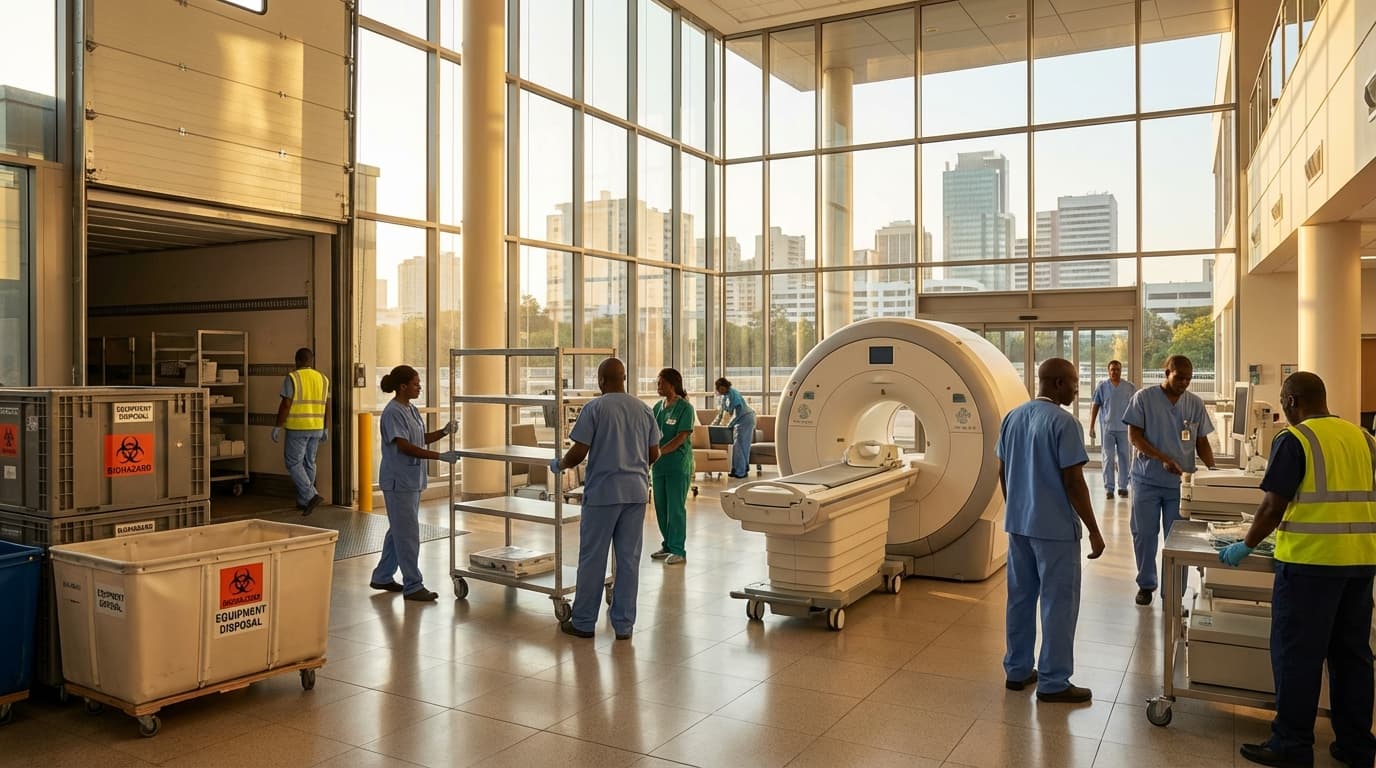
Decommissioning Service for Medical Devices in Botswana
Engineering Excellence & Technical Support
Decommissioning Service for Medical Devices High-standard technical execution following OEM protocols and local regulatory frameworks.
Safe Decommissioning of Radioactive Medical Devices
Expert handling and disposal of decommissioned medical devices containing radioactive isotopes, ensuring compliance with Botswana's radiation safety regulations and international best practices. Our trained technicians employ specialized shielding, monitoring, and containment protocols to mitigate any potential radiation exposure risks.
Biohazard & Contaminant Management
Specialized procedures for the safe removal and disposal of biohazardous materials and chemical contaminants from medical equipment. We utilize approved disinfection, sterilization, and waste management techniques to prevent the spread of infectious agents and ensure environmental protection in line with Botswana's health and environmental standards.
Secure Data Destruction for Imaging & Diagnostic Devices
Ensuring complete and irreversible data erasure from all diagnostic and imaging medical devices, such as MRI, CT scanners, and X-ray machines. We implement certified data sanitization and physical destruction methods to guarantee patient confidentiality and compliance with data privacy regulations in Botswana.
What Is Decommissioning Service For Medical Devices In Botswana?
Decommissioning service for medical devices in Botswana refers to the systematic and controlled process of retiring a medical device from active clinical use. This encompasses all necessary steps to ensure the device is no longer operational, safe for handling, and disposed of in an environmentally responsible and legally compliant manner. The primary objective is to prevent unauthorized use, protect patient data, and mitigate any potential health or environmental hazards associated with the device.
| Who Needs Decommissioning Service? | Typical Use Cases |
|---|---|
| Hospitals and Clinics (Public and Private) | End-of-life equipment replacement |
| Diagnostic Laboratories | Technology upgrades and obsolescence |
| Medical Research Institutions | Discontinuation of research projects or equipment |
| Medical Device Manufacturers (for returned/refurbished units) | Product recalls or discontinuation |
| Government Health Facilities | Budgetary constraints leading to asset retirement |
| Medical Device Distributors and Suppliers | Decommissioning of demo units or expired inventory |
| Any healthcare provider managing a medical device inventory | Facility closures or mergers |
Key Components of Medical Device Decommissioning Service:
- Data Sanitization/Destruction: Securely erasing or physically destroying any stored patient data (e.g., images, patient records, settings) to maintain privacy and comply with data protection regulations.
- Functional Disablementment: Rendering the device incapable of operation through physical alteration, removal of critical components, or software-based lockout mechanisms.
- Asset Management Update: Formally removing the device from inventory records, updating maintenance logs, and documenting its disposal.
- Environmental Disposal: Adhering to national and international regulations for the safe and environmentally sound disposal of medical waste, which may include specialized handling for hazardous materials (e.g., batteries, refrigerants, radioactive sources).
- Regulatory Compliance: Ensuring all decommissioning activities meet the requirements of the Botswana Ministry of Health and Wellness, environmental protection agencies, and any relevant international standards.
- Documentation and Certification: Providing comprehensive records of the decommissioning process, including certificates of destruction or disposal for audit and compliance purposes.
Who Needs Decommissioning Service For Medical Devices In Botswana?
Decommissioning medical devices in Botswana is a crucial but often overlooked service. It ensures the safe and environmentally responsible disposal of outdated, broken, or replaced medical equipment. This process is essential for compliance with regulations, data security, and preventing the release of hazardous materials into the environment. Several entities and departments within Botswana require specialized decommissioning services to manage their medical device lifecycle effectively.
| Customer Type | Relevant Departments/Functions | Specific Needs/Reasons for Decommissioning |
|---|---|---|
| Hospitals (Public and Private) | Biomedical Engineering Department, IT Department, Procurement Department, Infection Control, Radiology, Pathology, Surgery | Replacement of old or malfunctioning equipment, upgrades to new technology, data sanitization of imaging and patient record devices, disposal of biohazardous materials, compliance with waste management regulations. |
| Clinics and Health Centers | Clinical Staff, Administrative Staff, Procurement Officer | Disposal of basic medical equipment (e.g., examination tables, minor surgical instruments, basic diagnostic tools), managing limited budgets for equipment replacement, ensuring safe disposal of expired consumables. |
| Diagnostic Laboratories | Laboratory Technicians, Laboratory Managers, IT Support | Decommissioning of analytical instruments (e.g., centrifuges, microscopes, DNA sequencers), ensuring secure data wiping of laboratory information systems (LIS), safe disposal of hazardous reagents and biological samples. |
| Medical Research Institutions | Researchers, IT Department, Facilities Management | Retiring specialized research equipment, archiving research data from decommissioned devices, managing the disposal of experimental materials and equipment, compliance with research ethics and safety standards. |
| Government Ministries (e.g., Ministry of Health) | Policy and Planning Department, Procurement and Supply Chain Management, Health Services Directorate | Overseeing the decommissioning of government-owned medical facilities, establishing and enforcing national guidelines for medical waste management, facilitating large-scale procurement and disposal tenders. |
| Non-Governmental Organizations (NGOs) involved in healthcare | Program Managers, Operations Managers, Medical Coordinators | Managing the disposal of equipment donated or acquired for specific health programs, ensuring ethical and compliant disposal practices, often operating in resource-constrained environments. |
| Medical Equipment Suppliers and Distributors | Service Department, Sales Department, Logistics | Facilitating end-of-life product stewardship, offering take-back programs for old equipment, managing the logistics of returning and decommissioning devices sold to clients. |
Target Customers and Departments for Medical Device Decommissioning in Botswana
- Hospitals (Public and Private)
- Clinics and Health Centers
- Diagnostic Laboratories
- Medical Research Institutions
- Government Ministries (e.g., Ministry of Health)
- Non-Governmental Organizations (NGOs) involved in healthcare
- Medical Equipment Suppliers and Distributors (for end-of-life management)
Decommissioning Service For Medical Devices Process In Botswana
This document outlines the typical workflow for the decommissioning of medical devices in Botswana, from the initial inquiry stage to the successful execution of the service. The process emphasizes safety, environmental responsibility, and regulatory compliance, ensuring that obsolete or damaged medical equipment is handled appropriately.
| Phase | Stage | Description | Key Activities | Responsible Parties | Documentation/Outputs |
|---|---|---|---|---|---|
| 1 | Inquiry and Initial Assessment | The process begins with a healthcare facility or individual initiating contact to request decommissioning services for one or more medical devices. |
| Client (Healthcare Facility/Individual), Decommissioning Service Provider | Inquiry form, Initial assessment report (internal) |
| 2 | Quotation and Service Agreement | Based on the initial assessment, the service provider prepares a detailed quotation and, upon acceptance, a formal service agreement is established. |
| Decommissioning Service Provider, Client | Quotation, Service Level Agreement (SLA)/Contract |
| 3 | Planning and Preparation | Before commencing physical work, thorough planning and preparation are undertaken to ensure efficiency and safety. |
| Decommissioning Service Provider, Client (for site access) | Work plan, Safety protocols, Permit documentation (if applicable) |
| 4 | Decommissioning Execution | This is the core phase where the medical devices are safely and systematically rendered unusable and prepared for disposal. |
| Decommissioning Service Provider | Execution progress reports, Site photos/videos |
| 5 | Waste Management and Disposal | Proper segregation, transportation, and disposal of all components and waste generated during decommissioning are critical. |
| Decommissioning Service Provider, Licensed Waste Disposal Facility | Waste manifests, Certificates of disposal |
| 6 | Documentation and Finalization | Upon completion, all relevant documentation is compiled, and the service is formally concluded. |
| Decommissioning Service Provider, Client | Final decommissioning report, Invoices, Payment receipts, Signed completion certificate |
Decommissioning Service Workflow for Medical Devices in Botswana
- Phase 1: Inquiry and Initial Assessment
- Phase 2: Quotation and Service Agreement
- Phase 3: Planning and Preparation
- Phase 4: Decommissioning Execution
- Phase 5: Waste Management and Disposal
- Phase 6: Documentation and Finalization
Decommissioning Service For Medical Devices Cost In Botswana
The decommissioning of medical devices in Botswana involves a range of costs that are influenced by several key factors. These factors collectively determine the final price, which can vary significantly. Understanding these elements is crucial for healthcare facilities and medical device vendors planning such services. The process generally includes safe removal, secure transportation, and responsible disposal or recycling of obsolete, damaged, or end-of-life medical equipment. The cost is not a fixed rate but rather a dynamic figure adjusted based on specific project requirements and the nature of the devices.
| Device Category (Examples) | Estimated Cost Range (BWP) | Notes |
|---|---|---|
| Small, non-hazardous devices (e.g., stethoscopes, blood pressure monitors, basic examination lights) | BWP 500 - BWP 1,500 | Primarily labor and basic disposal fees. |
| Medium-sized, general-use equipment (e.g., basic patient monitors, ECG machines, simple lab equipment) | BWP 2,000 - BWP 8,000 | May involve more complex disassembly and specialized disposal depending on materials. |
| Large, specialized, or potentially hazardous equipment (e.g., X-ray machines, older anaesthesia machines, large analysers) | BWP 10,000 - BWP 50,000+ | Significant costs related to hazardous material handling, specialized dismantling, data sanitization, and transport. |
| Highly complex imaging systems (e.g., MRI, CT scanners, PET scanners) | BWP 50,000 - BWP 200,000+ | Involves extensive expertise, specialized equipment for dismantling, potential de-energization of complex systems, and highly regulated disposal procedures. |
| End-of-life IT/networking equipment from medical devices | BWP 300 - BWP 2,000 (per unit/batch) | Focus on data destruction and electronic waste recycling. |
Key Pricing Factors for Medical Device Decommissioning in Botswana
- Type and Complexity of Medical Device: Larger, more complex, or specialized medical equipment (e.g., MRI machines, CT scanners, large laboratory analysers) will incur higher decommissioning costs due to the intricate disassembly, specialized tools, and potential hazardous materials involved. Simple devices like basic examination beds or older monitoring equipment will be less expensive.
- Quantity of Devices: A bulk decommissioning project involving numerous devices will generally have a lower per-unit cost compared to decommissioning a single or a few items, due to economies of scale in logistics and labor. However, the total project cost will be higher.
- Location and Accessibility: The physical location of the devices within Botswana impacts costs. Devices located in remote or hard-to-reach areas will incur higher transportation and logistical expenses. Accessibility for specialized equipment and personnel also plays a role.
- Disposal/Recycling Method: The chosen method for disposal or recycling significantly affects the cost. Environmentally friendly recycling and secure destruction of sensitive data or materials often come with higher fees than standard landfill disposal, though the latter is increasingly regulated and discouraged.
- Hazardous Material Handling: Medical devices can contain hazardous materials such as mercury, lead, or radioactive components. The safe removal, containment, and specialized disposal of these materials add a substantial cost component due to strict regulations and specialized expertise required.
- Data Sanitization and Destruction: For devices with data storage capabilities (e.g., imaging machines, electronic health records systems), secure data sanitization or physical destruction is a mandatory and often costly step to comply with privacy regulations.
- Labor and Expertise: The number of technicians, engineers, and specialized personnel required for safe disassembly, removal, and transportation influences labor costs. Highly skilled technicians for complex equipment will command higher rates.
- Transportation and Logistics: The distance to the disposal or recycling facility, the size and weight of the devices, and the need for specialized transport vehicles all contribute to transportation costs. This includes fuel, vehicle hire, and potential insurance.
- Regulatory Compliance and Certification: Ensuring all decommissioning activities comply with local and international environmental and safety regulations is paramount. Obtaining necessary permits, certifications, and documentation adds to the overall cost.
- Urgency of Service: If the decommissioning needs to be completed on an expedited timeline, rush fees or overtime charges may apply, increasing the overall cost.
Affordable Decommissioning Service For Medical Devices Options
Decommissioning medical devices is a critical and often overlooked process. It involves safely removing, sanitizing, and disposing of or repurposing medical equipment at the end of its lifecycle. This is essential for patient safety, data security (for devices with stored patient information), regulatory compliance, and environmental responsibility. Affordable decommissioning services are crucial for healthcare providers, especially smaller clinics or those with budget constraints. Understanding the options available and implementing smart strategies can significantly reduce costs without compromising the integrity of the process. This guide explores value bundles and cost-saving strategies for affordable medical device decommissioning.
| Value Bundle Option | Description | Cost-Saving Strategy Integration | Ideal For |
|---|---|---|---|
| Basic Decommissioning Package | Includes essential services like data wiping, basic sanitization, and documented disposal. Focuses on compliance for standard devices. | Bulk service agreements, standardized procedures, minimal customization. | Small clinics, individual practices, devices with low data sensitivity. |
| Comprehensive Asset Management Bundle | Combines decommissioning with asset tracking, inventory updates, and potential for recycling/resale assessment. Offers a holistic approach to device lifecycle management. | Maximizing resale value of functional equipment, bundling logistics for multiple devices, integrated reporting. | Medium-sized hospitals, imaging centers, facilities with a large device inventory. |
| Specialized Decommissioning (e.g., Imaging Equipment) | Tailored services for complex equipment like MRI machines or CT scanners, requiring expert handling, specialized data wiping, and specific disposal protocols. | Negotiating long-term contracts for specialized services, pooling resources with other institutions for shared expertise. | Large hospitals, specialized medical facilities, manufacturers. |
| Compliance-Focused Bundle | Prioritizes stringent adherence to all regulatory requirements (HIPAA, EPA, etc.), with thorough documentation and audit trails. Essential for high-risk devices. | Streamlined compliance processes, utilizing established regulatory frameworks, expert consultation to avoid costly non-compliance fines. | Hospitals with high patient volume, facilities handling sensitive research data, organizations undergoing audits. |
Key Components of Medical Device Decommissioning
- Secure Data Wiping/Destruction: Ensuring all sensitive patient data is irretrievably removed or destroyed.
- Environmental Disposal: Complying with regulations for the safe and environmentally responsible disposal of medical waste and electronics.
- Asset Tracking & Inventory Management: Maintaining accurate records of devices being decommissioned.
- Logistical Support: Arranging for transportation and handling of devices.
- Certification & Documentation: Providing proof of proper decommissioning for compliance and auditing purposes.
- Recycling & Resale Options: Exploring opportunities to recover value from functional or reusable components.
Verified Providers In Botswana
In Botswana, ensuring access to reliable and high-quality healthcare is paramount. "Verified Providers" signifies a commitment to excellence, rigorous standards, and patient safety. Franance Health stands at the forefront of this movement, not only meeting but exceeding the benchmarks set for verified healthcare providers. Our unwavering dedication to patient well-being, combined with our comprehensive approach to health services, makes Franance Health the undisputed best choice for your healthcare needs in Botswana.
| Credential/Attribute | Franance Health's Commitment | Benefit to You |
|---|---|---|
| Accreditation & Licensing | Fully compliant with Botswana's Ministry of Health and Wellness regulations and any relevant international accreditation bodies. | Ensures all services meet legal and professional standards, guaranteeing safe and effective care. |
| Medical Staff Qualifications | All practitioners hold recognized degrees, certifications, and are registered with relevant professional boards. Continuous professional development is mandatory. | Access to competent and up-to-date medical expertise for accurate diagnosis and treatment. |
| Quality Assurance Protocols | Implementation of stringent internal quality control measures, regular audits, and patient feedback mechanisms. | Consistent delivery of high-standard healthcare, with continuous improvement based on your experience. |
| Infection Control Standards | Adherence to robust infection prevention and control policies and procedures. | A safe and hygienic environment that minimizes the risk of healthcare-associated infections. |
| Patient Safety Measures | Established protocols for medication management, patient identification, and emergency preparedness. | Your well-being and safety are prioritized throughout your visit and treatment. |
| Ethical Conduct & Confidentiality | Upholding the highest ethical standards in patient care and ensuring strict adherence to patient confidentiality. | Trustworthy and respectful treatment, with your personal health information protected. |
Why Franance Health is the Best Choice:
- Uncompromising Quality Standards: Franance Health adheres to the strictest international and national quality assurance protocols. This means every service, from diagnostics to treatment, is delivered with precision and care.
- Expert Medical Professionals: Our team comprises highly qualified and experienced doctors, nurses, and specialists, all of whom undergo continuous professional development to stay abreast of the latest medical advancements.
- Patient-Centric Approach: We prioritize your comfort, understanding, and active participation in your healthcare journey. Our facilities are designed for your ease, and our staff is dedicated to providing compassionate and personalized care.
- Comprehensive Service Offering: Franance Health provides a wide spectrum of medical services, catering to diverse health needs across various specialties, ensuring you have access to all the care you require under one roof.
- State-of-the-Art Technology: We invest in cutting-edge medical equipment and technology to ensure accurate diagnoses, effective treatments, and optimal patient outcomes.
- Commitment to Ethical Practice: Integrity and transparency are the cornerstones of our operations. We are committed to ethical medical practices and building trust with our patients.
Scope Of Work For Decommissioning Service For Medical Devices
This Scope of Work (SOW) outlines the requirements and deliverables for the decommissioning of medical devices. The objective is to ensure safe, secure, and compliant removal of medical equipment from service, including data sanitization and disposal. This document details the technical deliverables and standard specifications to be adhered to by the service provider.
| Category | Technical Deliverable | Standard Specifications / Requirements | Acceptance Criteria |
|---|---|---|---|
| Planning and Preparation | Decommissioning Plan | Detailed plan including device inventory, risk assessment, safety protocols, data sanitization methods, disposal logistics, and timeline. Must be reviewed and approved by client prior to commencement. | Approved Decommissioning Plan by client representative. |
| Site Assessment | Site Survey Report | Assessment of physical environment, power requirements, access routes, potential hazards, and waste segregation needs. | Comprehensive Site Survey Report submitted and accepted. |
| Data Sanitization | Data Sanitization Report | Evidence of secure data erasure or destruction according to industry standards (e.g., NIST SP 800-88 Rev. 1). Includes device serial numbers, sanitization method used, and confirmation of erasure. | Data Sanitization Report with verifiable proof of data destruction for each device. |
| Device Removal | Inventory Reconciliation Report | Detailed list of all devices removed, including make, model, serial number, and condition. Reconciliation against original inventory. | Reconciled inventory report matching the initial asset list with all removed items accounted for. |
| Transportation | Secure Transportation Log | Documentation of transportation, including date, time, origin, destination, carrier information, and chain of custody. | Completed and signed Secure Transportation Log, demonstrating chain of custody. |
| Disposal/Recycling | Certificate of Destruction/Recycling | Proof of environmentally responsible disposal or recycling by certified facilities. Must comply with all local, state, and federal regulations. | Valid Certificates of Destruction or Recycling for all disposed/recycled devices. |
| Documentation | Final Decommissioning Report | Consolidated report including all previous deliverables, photos of the site post-decommissioning, incident reports (if any), and final sign-off. | Comprehensive Final Decommissioning Report, signed and accepted by client. |
| Safety | Safety Compliance Record | Documentation of adherence to all safety protocols during the decommissioning process. Includes incident reports and corrective actions. | No safety incidents reported, or all reported incidents appropriately addressed and documented. |
| Asset Management | Asset Disposition Records | Records detailing the final disposition of each asset (e.g., sold, donated, recycled, destroyed). | Complete and accurate Asset Disposition Records for all decommissioned devices. |
Key Considerations for Medical Device Decommissioning
- Regulatory Compliance (e.g., HIPAA, GDPR, FDA)
- Data Security and Privacy
- Environmental Regulations
- Asset Tracking and Inventory Management
- Safety Procedures
- Documentation and Reporting
Service Level Agreement For Decommissioning Service For Medical Devices
This Service Level Agreement (SLA) outlines the response times and uptime guarantees for the Decommissioning Service for Medical Devices provided by [Your Company Name] to [Client Company Name]. This SLA is an appendix to the Master Service Agreement (MSA) dated [Date of MSA].
| Service Component | Response Time Target | Uptime Guarantee | Definition |
|---|---|---|---|
| Service Request Initiation (Client Portal/Email) | 2 Business Hours | N/A (Initiation Event) | Time from client submission of a decommissioning request until acknowledgement by [Your Company Name]. |
| Scheduling Confirmation | 8 Business Hours | N/A (Scheduling Event) | Time from acknowledgement of request until confirmation of scheduled decommissioning appointment. |
| On-site Service Commencement (if applicable) | Within agreed scheduled window +/- 1 hour | N/A (Scheduled Event) | Time for our technicians to begin on-site decommissioning work as per the scheduled appointment. |
| Data Erasure Completion (for applicable devices) | Within 24 business hours of on-site commencement | N/A (Process Completion) | Time taken to successfully complete secure data erasure procedures on the designated devices. |
| Physical Destruction Completion (if applicable) | Within 48 business hours of on-site commencement | N/A (Process Completion) | Time taken to complete physical destruction procedures on the designated devices. |
| Decommissioning Report Generation | 5 Business Days post-completion of on-site services | N/A (Reporting) | Time to generate and provide the client with a comprehensive decommissioning report and any applicable certificates. |
| Customer Support Availability | 24/7 for critical issues, 8 Business Hours for general inquiries | 99.5% | Availability of our support team to address issues related to the decommissioning process. Critical issues are defined as [define critical issues, e.g., inability to commence scheduled work, major data breach concerns]. Uptime is measured monthly as the percentage of time the client can successfully initiate a service request and receive acknowledgement, and support channels are responsive. |
Scope of Service
- Decommissioning of medical devices as defined in the MSA, including secure data erasure, physical destruction (if applicable), and environmental disposal.
- Adherence to all relevant regulatory requirements (e.g., HIPAA, GDPR, local medical device disposal regulations).
- Provision of detailed decommissioning reports and certificates of destruction/disposal.
Frequently Asked Questions

Ready when you are
Let's scope your Decommissioning Service for Medical Devices in Botswana project in Botswana.

Scaling healthcare logistics and technical systems across the entire continent.