
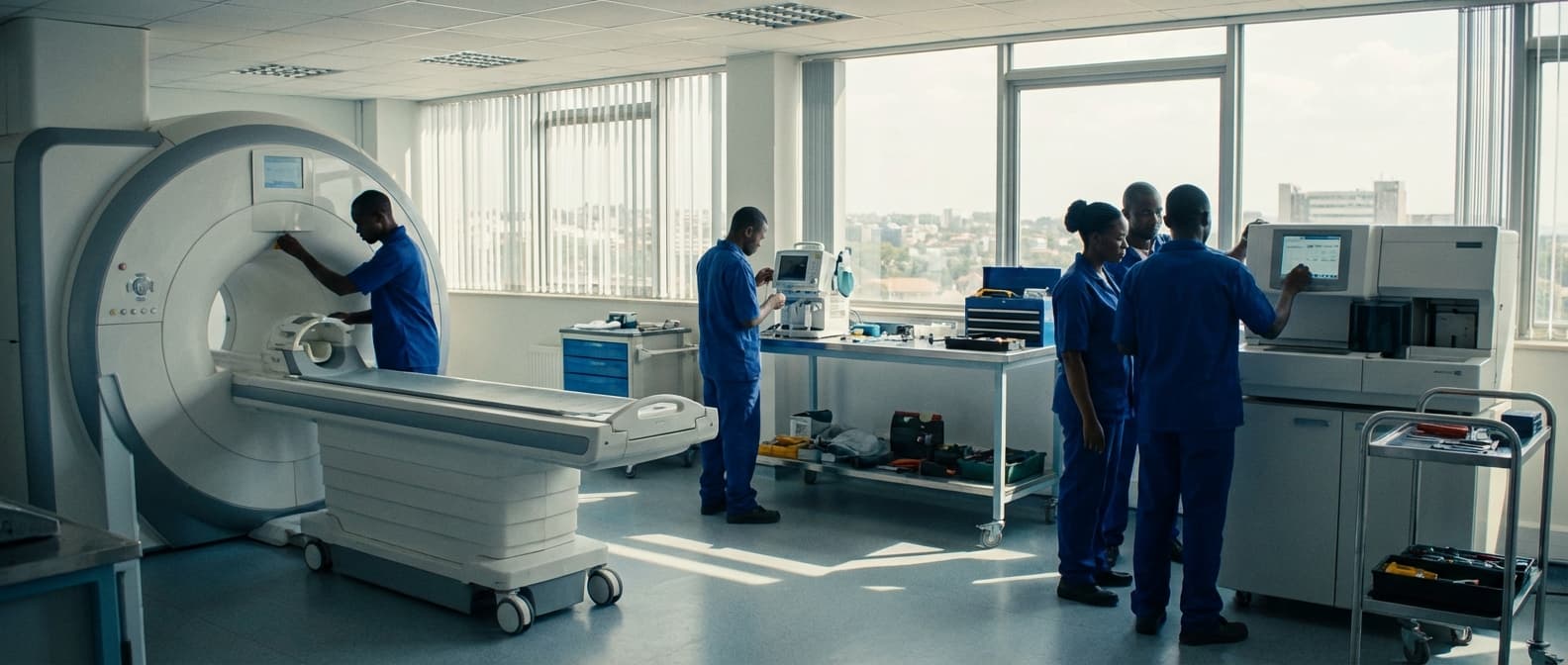
Uptime, Downtime & Root-Cause Analysis Reporting Service in Botswana
Engineering Excellence & Technical Support
Uptime, Downtime & Root-Cause Analysis Reporting Service High-standard technical execution following OEM protocols and local regulatory frameworks.
Proactive Uptime Maximization
Leverage our real-time monitoring and predictive analytics to identify potential system failures in Botswana's critical infrastructure before they impact your operations. Minimize downtime with proactive interventions and scheduled maintenance, ensuring consistent service availability.
Granular Downtime Insight
Gain precise visibility into every instance of downtime across your Botswana-based services. Our reporting details the duration, affected systems, and business impact, providing the data needed to quantify losses and justify improvements.
Accelerated Root-Cause Resolution
Pinpoint the exact source of issues impacting your Botswana infrastructure with our comprehensive root-cause analysis. Our service delivers detailed, actionable reports, enabling rapid remediation and preventing recurring problems, ultimately enhancing system resilience.
What Is Uptime, Downtime & Root-cause Analysis Reporting Service In Botswana?
Uptime, Downtime, and Root-Cause Analysis (RCA) Reporting Services in Botswana are critical IT operational metrics and subsequent analytical processes designed to ensure the reliability, availability, and performance of an organization's digital infrastructure.
Uptime refers to the percentage of time a system or service is operational and accessible to users. It is a measure of availability and is typically expressed as a percentage (e.g., 99.999% uptime). High uptime is crucial for business continuity and user satisfaction.
Downtime is the inverse of uptime, representing the periods when a system or service is unavailable or non-functional. Minimizing downtime is a primary objective of IT operations. Downtime can result from hardware failures, software bugs, network issues, cyberattacks, or human error.
Root-Cause Analysis (RCA) is a systematic process used to identify the fundamental underlying reason for an incident, such as a system outage or performance degradation. The goal of RCA is not just to fix the immediate problem but to prevent its recurrence by addressing the root cause. This involves investigating the incident, gathering data, analyzing contributing factors, and implementing corrective and preventive actions.
Reporting Services in this context involve the regular generation and dissemination of data and insights related to uptime, downtime, and the outcomes of RCA investigations. These reports provide visibility into system performance, identify trends, highlight areas for improvement, and justify investments in IT infrastructure and maintenance.
| Typical Use Cases | Description | Impact |
|---|---|---|
| Performance Monitoring & SLA Compliance: | Tracking uptime percentages against Service Level Agreements (SLAs) with clients or internal stakeholders. Identifying deviations from expected availability. | Ensures contractual obligations are met, builds trust with clients, and provides a basis for performance-based billing or penalties. |
| Incident Management & Resolution: | Documenting the duration, impact, and resolution steps of all downtime incidents. Using RCA to understand why incidents occurred. | Speeds up incident resolution by learning from past events, reduces future occurrence of similar incidents, and improves overall system resilience. |
| Capacity Planning & Infrastructure Optimization: | Analyzing downtime trends and performance bottlenecks to identify areas requiring upgrades, maintenance, or redesign. | Enables proactive investment in IT resources, prevents performance degradation due to overloads, and optimizes resource allocation for cost-effectiveness. |
| Risk Management & Business Continuity Planning: | Assessing the potential financial and operational impact of downtime. Identifying single points of failure through RCA. | Informs disaster recovery and business continuity strategies, helps in allocating appropriate resources for risk mitigation, and strengthens organizational resilience. |
| Security Incident Post-Mortems: | Investigating security breaches that lead to downtime, analyzing how the breach occurred, and identifying vulnerabilities exploited. | Enhances security posture by closing identified gaps, preventing future attacks, and improving incident response capabilities. |
| Service Improvement & Operational Excellence: | Using aggregated RCA findings to implement systemic changes in processes, training, or technology to foster a culture of continuous improvement. | Drives long-term operational efficiency, enhances user experience, and elevates the overall reliability and trustworthiness of IT services. |
Who Needs Uptime, Downtime & RCA Reporting Services?
- Businesses reliant on digital operations: Any organization where IT systems are fundamental to daily operations, revenue generation, or customer service delivery.
- IT Service Providers (ISPs, Cloud Providers, Managed Service Providers): Companies that host or manage IT infrastructure and services for other businesses.
- Financial Institutions: Banks, investment firms, and insurance companies requiring high availability for transactions and data integrity.
- Telecommunications Companies: Essential for maintaining network connectivity and communication services.
- E-commerce Platforms: Continuous availability is directly linked to sales and customer trust.
- Government Agencies: Particularly those providing essential citizen services online.
- Healthcare Providers: Critical for patient care systems, electronic health records, and medical equipment connectivity.
- Manufacturing and Industrial Sector: For operational technology (OT) systems controlling production lines and supply chains.
Who Needs Uptime, Downtime & Root-cause Analysis Reporting Service In Botswana?
In today's interconnected business landscape, ensuring continuous operation and swift resolution of technical issues is paramount for any organization. This is especially true in Botswana, where businesses rely heavily on digital infrastructure for their services and operations. An Uptime, Downtime & Root-Cause Analysis Reporting Service provides critical insights into system availability, identifies performance bottlenecks, and pinpoints the underlying causes of disruptions. This proactive and reactive approach minimizes financial losses, protects brand reputation, and optimizes resource allocation. Organizations in Botswana across various sectors can significantly benefit from such a service, moving from reactive firefighting to proactive system management and continuous improvement.
| Industry/Sector | Target Customer Examples | Key Departments Benefiting |
|---|---|---|
| Telecommunications | Mobile Network Operators (MNOs), Internet Service Providers (ISPs) | Network Operations Center (NOC), IT Operations, Engineering |
| Financial Services | Banks, Insurance Companies, Microfinance Institutions | IT Operations, Risk Management, Compliance, Business Operations |
| Government & Public Sector | Ministries, State-Owned Enterprises, Municipalities | IT Department, Service Delivery Units, Cybersecurity |
| Mining & Resources | Mining Companies, Service Providers to the Mining Sector | IT Infrastructure, Operations Technology (OT), Safety & Security |
| Retail & E-commerce | Major Retailers, Online Stores, Logistics Providers | IT Operations, Customer Service, Supply Chain Management |
| Healthcare | Hospitals, Clinics, Diagnostic Laboratories | IT Department, Clinical Operations, Patient Services |
| Education | Universities, Colleges, Educational Institutions | IT Services, Academic Administration, Research Departments |
| Utilities | Water Boards, Power Utilities | Operations Department, IT Infrastructure, Service Management |
| Technology & Software Companies | Software Developers, IT Service Providers, Cloud Providers | DevOps, Site Reliability Engineering (SRE), Technical Support |
Target Customers & Departments in Botswana
- Businesses requiring high system availability for customer-facing services.
- Organizations with complex IT infrastructures and multiple interconnected systems.
- Companies aiming to improve operational efficiency and reduce IT expenditure.
- Sectors with stringent regulatory compliance requirements where system stability is key.
Uptime, Downtime & Root-cause Analysis Reporting Service Process In Botswana
This document outlines the workflow for the Uptime, Downtime & Root-Cause Analysis Reporting Service Process in Botswana. This service aims to provide comprehensive reports on system availability and identify underlying causes of disruptions, enabling organizations to improve their operational resilience. The process is initiated by an inquiry and concludes with the delivery of detailed reports and actionable recommendations.
| Stage | Description | Key Activities | Deliverables | Responsible Parties |
|---|---|---|---|---|
| Initial contact from a client seeking uptime, downtime, and root-cause analysis reporting services. | Client expresses need, discusses service scope, identifies systems/applications to be monitored, clarifies reporting frequency and format. | Service agreement/scope document, pricing proposal. | Client, Service Provider Sales/Consulting Team |
| Establishing the infrastructure and methods for collecting uptime and downtime data. | Agent installation, log file configuration, API integration, network monitoring setup, defining key performance indicators (KPIs). | Monitoring infrastructure configured, baseline performance data established. | Service Provider Technical Team, Client IT Department |
| Continuous monitoring of systems for any deviations from normal operational status. | Real-time system health checks, anomaly detection, predefined alert thresholds triggering notifications. | Automated alerts (email, SMS, ticketing system). | Service Provider Monitoring System, Client IT Operations |
| Documenting all instances of system unavailability. | Automatic logging of downtime duration, timestamp, affected systems, initial categorization of downtime type (e.g., planned, unplanned, partial, full). | Initial downtime logs, incident tickets created. | Service Provider Monitoring System, Client IT Operations |
| Investigating the underlying reasons for identified downtime events. | Reviewing logs, system performance data, network traffic, interviewing stakeholders, using RCA methodologies (e.g., 5 Whys, Fishbone Diagram). | Identified root causes, contributing factors, evidence documentation. | Service Provider RCA Specialist, Client Technical Teams |
| Compiling all collected data and analysis into comprehensive reports. | Generating uptime/downtime statistics, trends analysis, detailed descriptions of incidents and their root causes, visual representations of data. | Uptime/Downtime Report, Root-Cause Analysis Report. | Service Provider Reporting Team |
| Delivering and discussing the generated reports with the client. | Scheduled meetings, presentation of findings, Q&A session, clarification of technical details. | Verbal presentation of findings, client acknowledgment of reports. | Service Provider Reporting Team, Client Management & Technical Teams |
| Providing actionable steps to prevent future incidents and improve system resilience. | Developing specific recommendations for system improvements, process changes, or training; follow-up on the implementation of recommendations. | Actionable recommendations document, follow-up reports (if applicable). | Service Provider RCA Specialist/Consultant, Client Management & Technical Teams |
Key Stages of the Reporting Service Process
- Inquiry & Scoping
- Data Collection & Monitoring Setup
- Incident Detection & Alerting
- Downtime Recording & Initial Assessment
- Root-Cause Analysis (RCA)
- Report Generation
- Report Presentation & Review
- Recommendations & Follow-up
Uptime, Downtime & Root-cause Analysis Reporting Service Cost In Botswana
Understanding the cost of Uptime, Downtime, and Root-Cause Analysis (RCA) reporting services in Botswana requires a look at several influencing factors. These services are crucial for businesses aiming to maintain operational continuity, identify the origins of disruptions, and implement preventative measures. The pricing in Botswana, as in many regions, is influenced by the complexity of the systems being monitored, the scope of the analysis, the expertise of the service provider, and the desired level of detail and frequency of reporting.
Key Pricing Factors:
- System Complexity & Scale: Larger and more complex IT infrastructures (e.g., cloud environments, multiple data centers, extensive network devices, diverse applications) will naturally incur higher costs due to the increased effort in monitoring, data collection, and analysis. The number of critical systems and their interdependencies also play a significant role.
- Scope of Monitoring: The breadth of what needs to be monitored impacts cost. This could include server uptime, network availability, application performance, database health, security event logs, and user experience. A wider scope necessitates more sophisticated tools and greater analytical resources.
- Downtime Impact & Severity: The business impact of downtime is a critical factor. Services that focus on high-availability systems or those where downtime results in significant financial losses will often command higher prices due to the need for more robust and rapid RCA.
- Root-Cause Analysis Depth: The level of detail required in RCA reports is a major determinant. Simple incident reports will be less expensive than in-depth investigations involving forensic analysis, historical data correlation, and recommendations for long-term solutions.
- Frequency and Format of Reporting: Daily, weekly, monthly, or on-demand reports will have varying costs. The format of the report (e.g., executive summaries, detailed technical documentation, interactive dashboards) also influences pricing.
- Service Provider Expertise & Reputation: Established IT service providers with specialized expertise in uptime monitoring and RCA, and a strong reputation for reliability, will typically charge more. This often reflects their investment in skilled personnel and advanced tools.
- Technology Stack & Tools Used: The sophistication of the monitoring and analysis tools employed by the provider can affect costs. Proprietary or advanced AI-driven tools might lead to higher service fees.
- Service Level Agreements (SLAs): Guaranteed response times for alerts and resolution for incidents, often outlined in SLAs, will influence pricing. Higher availability guarantees and faster response times generally mean higher costs.
- Customization & Integration: If the service requires significant customization to fit specific business workflows or integration with existing IT management systems, this will add to the overall cost.
Pricing Ranges in Botswana (in BWP):
It's important to note that these are estimated ranges and can vary significantly. Businesses should seek formal quotes from multiple providers for accurate pricing. The market for dedicated Uptime, Downtime, and RCA reporting services in Botswana is growing, with a mix of local IT consultancies and international firms offering services. For smaller businesses with simpler needs, the costs might be bundled into broader IT support contracts.
| Service Type/Complexity | Estimated Monthly Cost Range (BWP) | Typical Scope & Features |
|---|---|---|
| Basic Uptime Monitoring (e.g., simple server/website checks) | 750 - 2,500 | Hourly/Daily checks, basic alerts for unavailability, simple status reports. |
| Standard Uptime & Downtime Reporting (e.g., multiple servers, network devices) | 2,500 - 7,500 | More frequent checks, basic performance metrics, incident logging, summary downtime reports, potential basic RCA for known issues. |
| Comprehensive Uptime, Downtime & RCA Reporting (e.g., complex infrastructure, critical applications) | 7,500 - 25,000+ | 24/7 monitoring, deep system health checks, advanced performance analytics, detailed incident investigation, in-depth root-cause analysis with trending, proactive recommendations, customizable dashboards, frequent detailed reports. |
| Managed Services with Integrated RCA (outsourced IT support) | 15,000 - 50,000+ (often bundled) | Includes all aspects of comprehensive reporting, plus proactive management, incident response, and resolution. Pricing is highly dependent on the size and complexity of the entire IT environment. |
| On-Demand RCA Investigation (per incident) | 1,500 - 5,000+ (per investigation) | Focused investigation of a specific incident. Cost varies by complexity and time required. Not a recurring reporting service. |
Factors Influencing Uptime, Downtime & Root-Cause Analysis Reporting Service Costs in Botswana
- System Complexity & Scale
- Scope of Monitoring (Servers, Network, Applications, Databases, etc.)
- Downtime Impact & Severity
- Depth of Root-Cause Analysis (RCA)
- Frequency and Format of Reporting (Daily, Weekly, Monthly, On-Demand)
- Service Provider Expertise, Reputation, and Experience
- Technology Stack and Monitoring/Analysis Tools Used
- Service Level Agreements (SLAs) for Uptime and Response Times
- Level of Customization and Integration Required
- Duration of Service Contract (Monthly, Annual)
Affordable Uptime, Downtime & Root-cause Analysis Reporting Service Options
Ensuring system reliability through comprehensive uptime and downtime reporting, coupled with insightful root-cause analysis, is critical for businesses of all sizes. This service helps identify performance bottlenecks, prevent recurring issues, and optimize resource allocation. We offer flexible solutions designed to fit various budgets, emphasizing value through strategic bundling and cost-saving measures. Our goal is to provide actionable insights without breaking the bank, making advanced monitoring and analysis accessible and affordable.
| Value Bundle | Key Features | Target Audience | Estimated Monthly Cost (USD) | Cost-Saving Strategy | |
|---|---|---|---|---|---|
| Starter Reliability | Basic uptime monitoring, incident logging, automated downtime alerts, basic RCA summaries. | Small businesses, startups, applications with non-critical uptime requirements. | $49 - $99 | Leverages automated tools, focuses on core functionality, minimal human intervention for RCA. | Limited scope to essential monitoring and reporting. |
| Standard Performance | Advanced uptime monitoring, detailed downtime reports, automated RCA with human-assisted validation, performance trend analysis, customizable dashboards. | Growing businesses, SaaS providers, businesses with moderate uptime criticality. | $199 - $399 | Includes semi-automated RCA, tiered support levels, bundled reporting packages. | Focuses on recurring issues and proactive identification of trends. |
| Premium Insight | Comprehensive uptime and deep performance monitoring, full-spectrum downtime analysis, in-depth human-led RCA, proactive anomaly detection, predictive analytics, dedicated account manager, custom reporting formats. | Enterprise-level organizations, mission-critical applications, businesses with stringent uptime SLAs. | $599+ | Strategic partnership approach, comprehensive preventative maintenance, bulk reporting discounts, integrated with existing ITIL processes. | Maximizes ROI through deep system understanding and proactive risk mitigation. |
Key Service Components & Value Proposition
- Uptime Monitoring: Real-time tracking of service availability and performance metrics.
- Downtime Incident Reporting: Detailed logs of all service disruptions, including duration and impact.
- Root-Cause Analysis (RCA): In-depth investigation to pinpoint the underlying reasons for incidents.
- Performance Benchmarking: Establishing baseline performance to identify deviations.
- Trend Analysis: Identifying patterns in uptime, downtime, and performance over time.
- Actionable Recommendations: Providing clear steps to improve reliability and prevent future issues.
- Customizable Dashboards & Alerts: Tailored views and notifications for your specific needs.
- Scalable Solutions: Services that grow with your business and infrastructure complexity.
- Expert Support: Access to seasoned professionals for guidance and analysis.
Verified Providers In Botswana
In Botswana's evolving healthcare landscape, identifying trustworthy and competent healthcare providers is paramount. Franance Health stands out as a premier organization, consistently demonstrating a commitment to excellence in patient care, ethical practices, and advanced medical services. Their credentials are a testament to their dedication, and understanding them illuminates why Franance Health represents the best choice for your health and wellness needs.
| Credential/Attribute | Franance Health's Demonstrated Excellence | Benefit to Patients |
|---|---|---|
| Accreditation & Certifications | Franance Health actively pursues and maintains accreditations from recognized national and international health bodies. This signifies adherence to rigorous quality and safety standards. | Assurance of high-quality care, patient safety protocols, and internationally benchmarked services. |
| Medical Staff Expertise | All practitioners at Franance Health are fully licensed, board-certified, and possess extensive experience in their respective specializations. Continuous professional development is a core value. | Access to knowledgeable and skilled doctors and specialists for accurate diagnosis and effective treatment. |
| Technology & Infrastructure | Investment in modern medical equipment, diagnostic tools, and advanced treatment technologies ensures cutting-edge healthcare delivery. | Access to precise diagnostics, minimally invasive procedures, and advanced therapeutic options. |
| Patient Feedback & Outcomes | Franance Health consistently collects and analyzes patient feedback to improve services. Positive patient outcomes are a primary measure of success. | A healthcare experience that prioritizes patient comfort, satisfaction, and successful recovery. |
| Ethical Practice & Transparency | Upholding the highest ethical standards in all aspects of healthcare delivery, including patient consent, data privacy, and transparent billing. | Trust and confidence in the integrity and honesty of your healthcare provider. |
| Community Engagement & Public Health Initiatives | Active participation in community health programs and public health awareness campaigns demonstrates a commitment beyond individual patient care. | Contribution to a healthier community and access to preventive health resources. |
Why Franance Health is Your Best Choice:
- Unwavering Commitment to Quality Care
- Highly Qualified and Experienced Medical Professionals
- State-of-the-Art Facilities and Technology
- Patient-Centric Approach and Personalized Treatment Plans
- Adherence to International Standards and Best Practices
- Comprehensive Range of Specialized Services
Scope Of Work For Uptime, Downtime & Root-cause Analysis Reporting Service
This document outlines the Scope of Work (SOW) for a comprehensive Uptime, Downtime & Root-Cause Analysis (RCA) Reporting Service. The service aims to provide detailed and actionable insights into system availability, identify the causes of disruptions, and recommend measures to prevent recurrence. The technical deliverables will adhere to established industry standards for clarity, accuracy, and consistency.
| Deliverable | Description | Frequency/Trigger | Standard Specifications | Format |
|---|---|---|---|---|
| Uptime/Downtime Report | Summary of system availability over a defined period, detailing scheduled and unscheduled downtime. Includes key metrics like Mean Time Between Failures (MTBF) and Mean Time To Repair (MTTR). | Weekly, Monthly, Quarterly (as agreed) | Accuracy: +/- 1% for uptime/downtime percentages. Clarity: Easy-to-understand metrics and visualizations. Completeness: Covers all critical systems/services. | PDF, Excel |
| Downtime Incident Report | Detailed account of each unscheduled downtime event, including start and end times, affected services, impact assessment, and duration. | Per unscheduled downtime event exceeding X minutes/hours (configurable) | Timestamp accuracy: within +/- 1 minute. Impact assessment: quantified where possible (e.g., lost revenue, affected users). | PDF, HTML |
| Root-Cause Analysis (RCA) Report | Comprehensive investigation into the underlying causes of downtime incidents. Utilizes methodologies like the '5 Whys' or Fishbone diagrams. Includes immediate corrective actions and long-term preventive measures. | For each Downtime Incident Report meeting RCA criteria | Objectivity: data-driven analysis. Actionability: clear, implementable recommendations. Traceability: links back to incident data. | PDF, Word Document |
| Trend Analysis Report | Analysis of aggregated uptime/downtime and RCA data over longer periods to identify recurring issues, system vulnerabilities, and areas for improvement. | Quarterly, Annually (as agreed) | Identification of top 5 recurring root causes. Quantifiable improvement targets for key metrics. | PDF, Presentation Slides |
| Executive Summary | High-level overview of system availability, key incidents, and major findings from RCA and trend analysis, tailored for executive stakeholders. | Monthly, Quarterly (as agreed) | Concise, actionable insights. Focus on business impact and strategic recommendations. | PDF, Presentation Slides |
Service Objectives
- To accurately monitor and report on system uptime and downtime percentages for critical infrastructure and services.
- To conduct thorough root-cause analysis (RCA) for all unscheduled downtime events.
- To provide timely and comprehensive reports detailing incident timelines, impact, contributing factors, and corrective/preventive actions.
- To identify trends in downtime and suggest proactive measures to improve system reliability and resilience.
- To ensure reporting adheres to industry best practices and client-specific requirements.
Service Level Agreement For Uptime, Downtime & Root-cause Analysis Reporting Service
This Service Level Agreement (SLA) outlines the commitments regarding service uptime, downtime procedures, and root-cause analysis reporting for the provided service. It defines the expected performance standards and remedies in case of deviations.
| Metric | Target | Reporting Frequency | Response Time (Initial Acknowledgement) | Resolution Time Target |
|---|---|---|---|---|
| Monthly Uptime Guarantee | 99.9% | Monthly | ||
| Unscheduled Downtime | Maximum 4 hours per month | Monthly | ||
| Scheduled Maintenance Notification | Minimum 48 hours prior | As needed | ||
| Critical Incident (Severity 1) | Response within 30 minutes | Immediate for active incidents | 30 minutes | 4 hours (best effort) |
| Major Incident (Severity 2) | Response within 2 hours | Immediate for active incidents | 2 hours | 8 hours (best effort) |
| Minor Incident (Severity 3) | Response within 8 business hours | Next business day | 8 business hours | 24-48 business hours (best effort) |
| Root-Cause Analysis (RCA) Report (for Critical/Major Incidents) | Within 72 hours of resolution | As required | 72 hours |
Key Definitions
- Service: Refers to the [Specify the service here, e.g., Cloud-based application, API endpoint, Hosting platform].
- Uptime: The percentage of time the Service is available and functioning as intended, excluding Scheduled Maintenance.
- Downtime: The percentage of time the Service is unavailable or not functioning as intended, including Unscheduled Downtime and Scheduled Maintenance.
- Scheduled Maintenance: Pre-announced periods during which the Service may be temporarily unavailable for planned updates, upgrades, or maintenance activities.
- Unscheduled Downtime: Any period during which the Service is unavailable or not functioning as intended that is not part of Scheduled Maintenance.
- Root-Cause Analysis (RCA): A systematic process to identify the underlying causes of a service disruption.
- Downtime Incident: An event that causes the Service to become unavailable or significantly degraded.
Frequently Asked Questions

Ready when you are
Let's scope your Uptime, Downtime & Root-Cause Analysis Reporting Service in Botswana project in Botswana.

Scaling healthcare logistics and technical systems across the entire continent.