
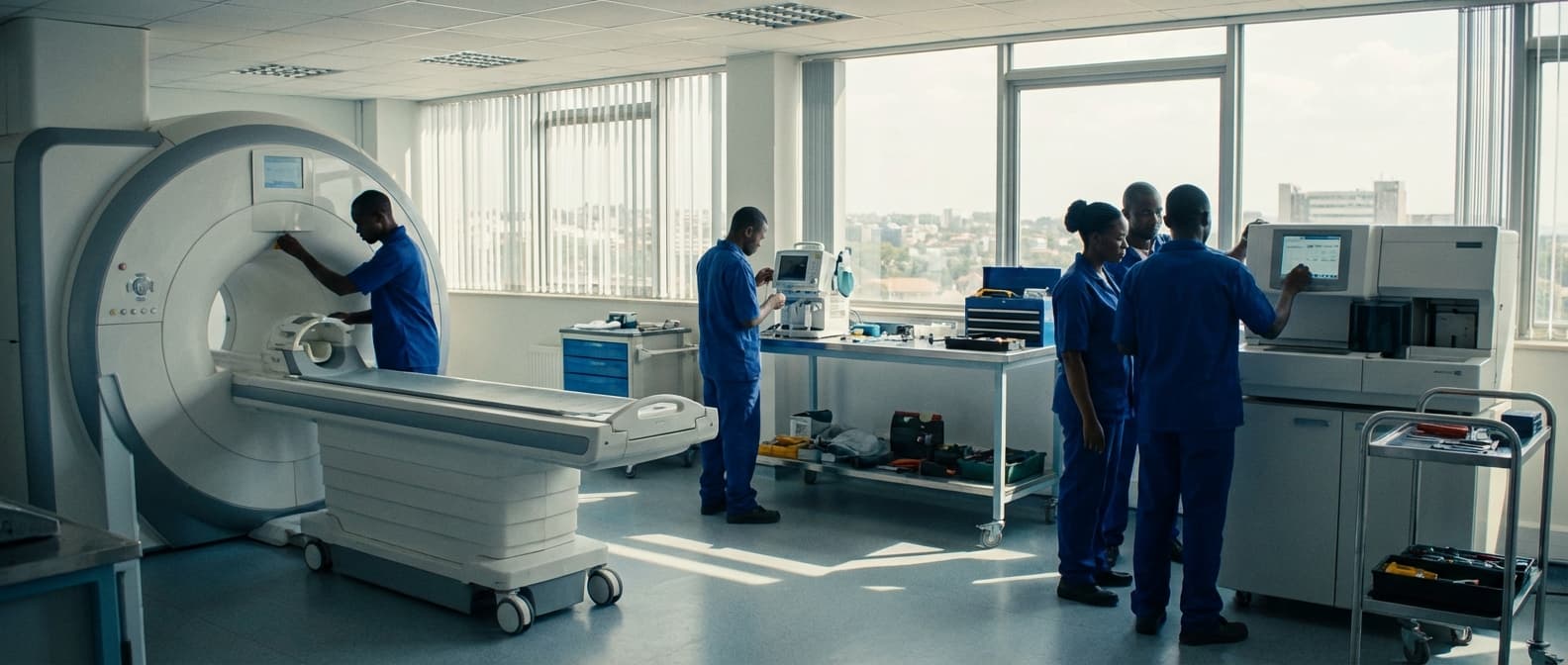
Planned Shutdown Coordination Service for Critical Equipment in Botswana
Engineering Excellence & Technical Support
Planned Shutdown Coordination Service for Critical Equipment High-standard technical execution following OEM protocols and local regulatory frameworks.
Minimizing Operational Downtime
Our service leverages advanced predictive analytics and real-time sensor data to schedule planned shutdowns for critical equipment with unparalleled accuracy. This proactive approach minimizes unexpected failures, significantly reducing costly operational downtime and ensuring continuous productivity for your Botswana operations.
Optimized Resource Allocation
We provide meticulous planning and coordination of all resources required for equipment shutdowns, including specialized personnel, spare parts, and external contractors. This ensures efficient deployment, reduces logistical bottlenecks, and optimizes budget utilization within the unique operational context of Botswana.
Enhanced Safety and Compliance
Adherence to stringent safety protocols and regulatory compliance is paramount. Our coordinated shutdown service incorporates comprehensive risk assessments, detailed safety procedures, and meticulous documentation, guaranteeing the highest standards of safety for your personnel and assets in Botswana while meeting all local and international compliance requirements.
What Is Planned Shutdown Coordination Service For Critical Equipment In Botswana?
Planned Shutdown Coordination Service for Critical Equipment in Botswana refers to a specialized operational and logistical framework designed to manage and execute scheduled outages of essential infrastructure and machinery. This service ensures that the discontinuation of operation for vital equipment is meticulously planned, coordinated, and executed with minimal disruption to ongoing operations, safety, and regulatory compliance. It encompasses a comprehensive approach to pre-shutdown planning, execution, and post-shutdown reintegration, leveraging advanced scheduling, resource allocation, and risk management methodologies. The primary objective is to optimize maintenance, repair, upgrade, or decommissioning activities, transforming potentially disruptive events into controlled, efficient processes that maintain asset integrity and operational continuity.
| Who Needs It? | Typical Use Cases in Botswana |
|---|---|
| Mining Operations: Significant reliance on heavy machinery, processing plants, and electrical infrastructure (e.g., crushers, conveyors, smelters, generators, electrical substations). | Scheduled maintenance of extraction equipment, refurbishment of processing plant components, upgrades to power generation systems, and routine inspections of critical safety systems. |
| Energy Sector: Power generation facilities (thermal, hydro, solar), transmission and distribution networks. | Overhaul of turbines and generators, maintenance of switchgear and transformers, grid infrastructure upgrades, and inspection of renewable energy installations. |
| Water and Wastewater Treatment: Pumping stations, filtration systems, purification plants, and distribution networks. | Repair and replacement of large pumps and motors, cleaning and maintenance of sedimentation tanks, calibration of treatment chemicals dosing systems, and infrastructure integrity checks. |
| Industrial Manufacturing: Production lines, specialized machinery, and integrated control systems. | Planned downtime for equipment recalibration, replacement of worn components in automated production lines, system-wide software updates, and preventative maintenance on robotic systems. |
| Telecommunications Infrastructure: Base stations, fiber optic networks, and data centers. | Upgrades to network hardware, maintenance of cooling systems in data centers, scheduled power system checks for critical network nodes, and fiber optic cable splicing and testing. |
| Transportation and Logistics: Rail infrastructure, port equipment, and large-scale warehousing facilities. | Scheduled maintenance of locomotives and rail lines, repair of gantry cranes and conveyor belts at ports, and system upgrades for automated warehouse management systems. |
Key Components of Planned Shutdown Coordination Service:
- Scope Definition and Work Package Development: Precisely defining the boundaries of the shutdown, identifying all affected equipment, and breaking down maintenance/repair tasks into manageable work packages.
- Schedule Development and Optimization: Creating detailed timelines for all shutdown activities, including pre-shutdown preparations, execution phases, and post-shutdown ramp-up, often utilizing critical path method (CPM) analysis.
- Resource Planning and Allocation: Identifying and securing all necessary personnel (skilled labor, engineers, technicians), specialized tools, equipment, and materials for the duration of the shutdown.
- Risk Assessment and Mitigation: Proactively identifying potential hazards and operational risks associated with the shutdown and developing robust mitigation strategies and contingency plans.
- Permitting and Regulatory Compliance: Ensuring all required permits, licenses, and adherence to local and national safety and environmental regulations are secured and maintained.
- Stakeholder Communication and Management: Establishing clear communication channels and protocols with all relevant internal and external stakeholders, including operational departments, contractors, regulatory bodies, and affected communities.
- Safety Management and Execution: Implementing rigorous safety protocols, including lockout/tagout (LOTO) procedures, work permits, and on-site safety supervision to ensure a secure working environment.
- Logistics and Material Management: Orchestrating the efficient movement, storage, and return of equipment, tools, and materials to and from the shutdown site.
- Quality Assurance and Control: Implementing checks and balances to ensure that all maintenance and repair work is performed to specified standards and meets quality requirements.
- Post-Shutdown Reintegration and Performance Verification: Planning and executing the safe and systematic return of equipment to operational status, including comprehensive testing and performance verification.
Who Needs Planned Shutdown Coordination Service For Critical Equipment In Botswana?
Planned Shutdown Coordination Service is crucial for organizations in Botswana that rely heavily on critical equipment for their operations. These services ensure that planned maintenance, repairs, or upgrades to essential machinery are executed efficiently, with minimal disruption to production, service delivery, and revenue generation. This coordination involves meticulous planning, scheduling, resource allocation, risk assessment, and communication among all stakeholders to achieve a safe and successful shutdown.
| Industry Sector | Critical Equipment Examples | Impact of Uncoordinated Shutdowns | Department(s) Most Affected |
|---|---|---|---|
| Mining | Crushers, conveyors, processing plants, ventilation systems, haul trucks | Production delays, safety hazards, increased operational costs, potential environmental breaches | Operations, Maintenance, SHE, Production Planning |
| Power Generation | Turbines, generators, transformers, switchgear, control systems | Blackouts, power outages, revenue loss, damage to reputation, grid instability | Operations, Maintenance, Engineering, SHE |
| Water Treatment | Pumps, filtration systems, chemical dosing equipment, control panels | Water shortages, supply disruptions, public health risks, regulatory non-compliance | Operations, Maintenance, SHE, Customer Service |
| Manufacturing | Assembly lines, machinery, robotic arms, HVAC systems, process control systems | Production stoppages, missed delivery deadlines, quality issues, increased waste | Production, Maintenance, Engineering, Quality Assurance |
| Telecommunications | Base stations, data centers, network switches, power backup systems | Service outages, loss of connectivity, customer dissatisfaction, revenue loss | Network Operations, Maintenance, IT, SHE |
Target Customers and Departments in Botswana
- {"items":["Mining and Mineral Processing Companies","Power Generation and Distribution Utilities","Water Treatment and Supply Authorities","Manufacturing and Industrial Plants","Telecommunications Infrastructure Providers","Oil and Gas Exploration and Refining Operations","Large-Scale Agriculture and Food Processing","Transport and Logistics Hubs (e.g., airports, major rail yards)","Hospitals and Healthcare Facilities with critical medical equipment","Government Infrastructure Departments"],"title":"Target Customers"}
- {"items":["Operations Management","Maintenance and Engineering","Production Planning","Safety, Health, and Environment (SHE/HSE)","Procurement and Supply Chain","Quality Assurance","IT and Telecommunications (for systems supporting operations)","Finance and Budgeting","Human Resources (for workforce planning and training)"],"title":"Key Departments Requiring Coordination"}
Planned Shutdown Coordination Service For Critical Equipment Process In Botswana
This document outlines the workflow for the Planned Shutdown Coordination Service for Critical Equipment in Botswana, covering the process from initial inquiry to the successful execution of a planned equipment shutdown. The service aims to ensure minimal disruption to operations by meticulously planning and managing all aspects of the shutdown.
| Stage | Activities | Key Stakeholders | Deliverables/Outcomes | Timeline (Indicative) |
|---|---|---|---|---|
| Inquiry & Initial Assessment | Client submits inquiry for planned shutdown of critical equipment. Service provider acknowledges inquiry and schedules initial consultation. Preliminary discussion of equipment, criticality, and desired shutdown window. Initial assessment of potential risks and constraints. | Client (Operations Manager, Maintenance Manager), Service Provider (Business Development Manager, Lead Coordinator) | Acknowledged inquiry, Initial consultation meeting minutes, Preliminary risk identification. | 1-3 Business Days |
| Scope Definition & Planning | Detailed site visit and equipment inspection. Jointly define the precise scope of work, including specific equipment, tasks, and objectives. Develop a comprehensive Work Breakdown Structure (WBS). Identify all associated dependencies and interfaces. Risk assessment and mitigation planning. | Client (Technical Teams, Safety Officer), Service Provider (Project Manager, Lead Engineers, Safety Specialist) | Detailed scope of work document, Work Breakdown Structure (WBS), Comprehensive risk assessment report, Preliminary safety plan. | 3-7 Business Days |
| Resource Allocation & Scheduling | Develop a detailed project schedule with critical path analysis. Identify and confirm required personnel (internal & external), specialized tools, and materials. Secure all necessary permits and authorizations. Develop a detailed communication plan. Finalize the budget. | Client (Procurement, HR, Operations), Service Provider (Project Manager, Procurement Specialist, Logistics Coordinator) | Detailed project schedule (Gantt chart), Confirmed resource list, Approved permits, Communication plan, Finalized budget. | 5-10 Business Days |
| Pre-Shutdown Preparations | Conduct pre-shutdown safety briefings and training. Mobilize all required resources to site. Perform necessary isolations and lock-out/tag-out (LOTO) procedures. Conduct pre-shutdown equipment checks and diagnostics. Finalize site logistics and access. | Client (Site Supervisors, Safety Team, Operations), Service Provider (Site Manager, Team Leaders, Technicians) | Trained personnel on-site, Implemented LOTO, Completed pre-shutdown checks, Ready site conditions. | 1-3 Business Days (prior to shutdown start) |
| Shutdown Execution | Execute planned shutdown activities as per the schedule and WBS. Continuous monitoring of progress and adherence to safety procedures. Regular communication updates to all stakeholders. Proactive identification and resolution of any unforeseen issues. Quality control checks during execution. | Client (Site Management, Operations), Service Provider (Site Manager, Supervisors, Technicians, Quality Control) | Completed shutdown tasks, Daily progress reports, Incident reports (if any), Quality inspection records. | Duration of shutdown (variable) |
| Post-Shutdown Activities & Review | Perform post-shutdown testing and commissioning of equipment. Complete all necessary documentation and handover procedures. Conduct a post-shutdown review meeting. Identify lessons learned and areas for improvement. Finalize project closure and billing. | Client (Operations, Maintenance, Finance), Service Provider (Project Manager, Account Manager) | Tested and commissioned equipment, Final project report, Lessons learned document, Closed project. | 2-5 Business Days |
Service Workflow Stages
- Inquiry & Initial Assessment
- Scope Definition & Planning
- Resource Allocation & Scheduling
- Pre-Shutdown Preparations
- Shutdown Execution
- Post-Shutdown Activities & Review
Planned Shutdown Coordination Service For Critical Equipment Cost In Botswana
The cost of a Planned Shutdown Coordination Service for Critical Equipment in Botswana is a variable figure, influenced by several key factors. These services are essential for minimizing downtime, ensuring safety, and optimizing maintenance schedules for vital machinery in industries such as mining, power generation, and manufacturing. The pricing structure is typically project-based, taking into account the complexity, duration, and specific requirements of each shutdown. Local currency pricing (Botswana Pula - BWP) will reflect the market conditions, expertise of the service providers, and the overall economic environment within Botswana. Several elements contribute to the final cost, and understanding these is crucial for budgeting and selecting the appropriate service.
| Service Level/Complexity | Estimated Price Range (BWP) | Typical Inclusions |
|---|---|---|
| Basic Coordination (Short Duration, Low Complexity) | BWP 15,000 - BWP 40,000 | Basic scheduling, communication facilitation, attendance at key meetings, site presence. |
| Standard Coordination (Medium Duration, Moderate Complexity) | BWP 40,000 - BWP 100,000 | Detailed planning support, resource identification, basic risk assessment, contractor liaison, progress reporting. |
| Comprehensive Project Management (Extended Duration, High Complexity) | BWP 100,000 - BWP 300,000+ | Full project lifecycle management, detailed risk analysis, safety plan development, budget control, extensive contractor management, on-site supervision, detailed post-shutdown analysis and reporting. |
| Specialized/Niche Equipment Coordination | Variable (Often a premium on standard rates) | Requires specific technical expertise for unique equipment, detailed understanding of specialized procedures, and potentially unique safety protocols. |
Key Pricing Factors for Planned Shutdown Coordination Services in Botswana:
- Scope and Complexity of the Shutdown: This is the most significant driver of cost. A shutdown involving multiple interconnected pieces of critical equipment will be more expensive than a single unit. Factors include the number of equipment types, their criticality, and the interdependencies between them.
- Duration of the Shutdown: The longer the planned shutdown, the higher the personnel, equipment, and coordination costs will be. This includes planning, execution, and post-shutdown activities.
- Number and Type of Critical Equipment: The more critical pieces of equipment requiring coordination, the more resources are needed. Specialized equipment may also require specialized coordination expertise.
- Level of Service Required: This can range from basic coordination to comprehensive project management, including detailed planning, risk assessment, resource allocation, contractor management, safety oversight, and communication.
- Expertise and Experience of the Service Provider: Established providers with a proven track record, specialized skills, and certifications often command higher fees.
- Geographic Location within Botswana: Accessibility to the site can influence travel and logistical costs for personnel and equipment.
- Requirement for Specialized Tools and Equipment: If the coordination service needs to provide or manage specialized tools or equipment for the shutdown, this will add to the cost.
- Third-Party Contractor Management: If the service provider is responsible for managing external contractors performing the maintenance, their fees will include overhead and management of these relationships.
- Safety and Compliance Requirements: Stringent safety protocols and regulatory compliance, especially in industries like mining, often necessitate more intensive coordination and reporting, impacting costs.
- Reporting and Documentation Needs: The level of detail and frequency of reporting required for stakeholders can influence the administrative overhead and thus the cost.
- Contingency Planning: The extent of contingency planning and the resources allocated for unforeseen issues during the shutdown will also be factored in.
Affordable Planned Shutdown Coordination Service For Critical Equipment Options
Our Affordable Planned Shutdown Coordination Service is designed to minimize disruption and maximize efficiency during essential maintenance of your critical equipment. We understand that planned shutdowns, while necessary, can be costly and complex. Our service focuses on proactive planning, streamlined execution, and data-driven optimization to reduce downtime and associated expenses. We offer flexible value bundles tailored to your specific needs, from basic scheduling assistance to comprehensive project management, ensuring you receive the most cost-effective solution.
| Value Bundle | Description | Ideal For | Cost-Saving Strategies Incorporated | Estimated Price Range (Illustrative) |
|---|---|---|---|---|
| Basic Coordination | Core scheduling, critical path identification, and essential communication support. | Smaller operations or less complex shutdowns. | Optimized scheduling to reduce downtime duration, early identification of potential delays. | $X,XXX - $XX,XXX |
| Standard Integration | Includes basic coordination plus vendor management, safety compliance oversight, and preliminary risk assessment. | Medium-sized operations with moderate complexity. | Streamlined vendor coordination, proactive safety planning to avoid incidents/delays, efficient resource allocation. | $XX,XXX - $XXX,XXX |
| Comprehensive Management | Full-service project management, including detailed planning, execution oversight, advanced risk mitigation, detailed cost tracking, and post-shutdown analysis. | Large-scale or highly critical equipment shutdowns requiring meticulous attention. | Minimizing extended downtime through robust planning, reduced rework through quality oversight, optimized material procurement, data-driven insights for future savings. | $XXX,XXX+ |
Key Value Components
- Expert Planning & Scheduling: Develop detailed, phased shutdown plans that minimize overlap and resource contention.
- Risk Assessment & Mitigation: Identify potential bottlenecks and develop contingency plans to prevent delays.
- Resource Optimization: Efficiently allocate personnel, equipment, and materials to reduce idle time and waste.
- Communication & Stakeholder Management: Ensure clear and consistent communication with all involved parties.
- Post-Shutdown Analysis & Reporting: Provide insights to improve future shutdown efficiency and cost-effectiveness.
Verified Providers In Botswana
In Botswana's evolving healthcare landscape, identifying truly "verified providers" is crucial for patients seeking quality and trustworthy medical services. Franance Health stands out as a leading example of such a provider, boasting robust credentials that underscore their commitment to excellence. Their comprehensive approach to healthcare, coupled with a focus on patient well-being and ethical practices, positions them as the best choice for many seeking reliable medical attention.
| Credential/Feature | Franance Health's Commitment | Why It Matters for Patients |
|---|---|---|
| Accreditation | Holds certifications from relevant national and international health organizations. | Ensures adherence to stringent safety, quality, and operational standards, providing peace of mind. |
| Professional Staff | Employs a team of licensed, board-certified, and experienced doctors, nurses, and specialists. | Guarantees access to expert medical advice and treatment from highly competent individuals. |
| Patient-Centric Approach | Prioritizes patient comfort, dignity, and active participation in their healthcare decisions. | Fosters a supportive environment where patients feel heard, respected, and empowered. |
| Technological Integration | Utilizes modern medical equipment and digital health solutions for accurate diagnostics and efficient care. | Leads to more precise diagnoses, effective treatments, and streamlined patient experiences. |
| Ethical Practices | Operates with utmost transparency in billing, treatment recommendations, and data privacy. | Builds trust and eliminates concerns about hidden costs or unnecessary procedures. |
Key Credentials of Franance Health:
- Accreditation by recognized health bodies
- Adherence to international quality standards
- Highly qualified and experienced medical professionals
- Commitment to continuous professional development
- Transparent pricing and ethical billing practices
- Positive patient testimonials and feedback
Scope Of Work For Planned Shutdown Coordination Service For Critical Equipment
This Scope of Work (SOW) outlines the services required for the coordinated planning and execution of planned shutdowns for critical equipment. The objective is to minimize downtime, ensure safety, and maintain operational integrity during scheduled maintenance activities. This SOW covers the technical deliverables and standard specifications that will guide the service provider.
| Technical Deliverable | Description | Standard Specifications / Requirements |
|---|---|---|
| Shutdown Planning Report | A comprehensive report detailing the scope, objectives, schedule, resource requirements, risk assessment, and communication plan for the planned shutdown. | Must include a detailed Work Breakdown Structure (WBS), critical path analysis, and contingency plans. Shall adhere to industry best practices for project management and shutdown planning. Report format to be agreed upon by both parties. |
| Detailed Shutdown Schedule | A time-phased plan outlining all tasks, dependencies, durations, and assigned resources for the shutdown period. | Utilize Gantt charts or similar visual tools. Must be updated dynamically as the shutdown progresses. Integrate with existing plant scheduling systems where feasible. Schedule shall be maintained to a granularity of no less than one (1) hour for critical path activities. |
| Risk Assessment and Mitigation Plan | Identification of potential risks associated with the shutdown and development of strategies to mitigate them. | Include process hazards, safety hazards, logistical challenges, and resource availability. Mitigation plans must be actionable and assigned to specific responsible parties. Formal HAZOP or similar risk assessment techniques may be required for high-risk activities. |
| Resource Management Plan | Detailed plan for the allocation and management of all required resources, including personnel, equipment, tools, and materials. | Specify required skill sets, availability, and mobilization/demobilization plans. Shall include provisions for contractor management and site access. Material and spare parts lists must be cross-referenced with equipment BOMs. |
| Communication Plan | A clear and concise plan for communicating information to all relevant stakeholders before, during, and after the shutdown. | Define communication channels, frequency, reporting structure, and escalation procedures. Daily progress meetings and end-of-shift reports are mandatory. Emergency communication protocols must be established. |
| Permit to Work (PTW) Coordination | Facilitation and oversight of the Permit to Work system to ensure all activities are conducted safely and in compliance with site procedures. | Ensure all necessary permits are obtained and adhered to. Conduct pre-job safety briefs for all work packages. PTW system to be managed in accordance with [Client's PTW Policy Document Name/Number]. |
| Execution Monitoring and Control | Continuous monitoring of shutdown progress against the approved schedule and implementation of corrective actions as needed. | Real-time tracking of task completion, resource utilization, and safety performance. Daily performance reporting against KPIs. Downtime tracking and analysis. |
| Post-Shutdown Report | A comprehensive report summarizing the shutdown execution, including actual duration, deviations from the plan, lessons learned, and recommendations for future shutdowns. | Include a detailed cost analysis and performance metrics. Lessons learned should be actionable and contribute to continuous improvement. Report to be submitted within [Number] days of shutdown completion. |
| Safety Performance Report | Detailed reporting on all safety incidents, near misses, and safety observations during the shutdown. | Includes root cause analysis and corrective actions implemented. Adherence to all relevant Occupational Health and Safety (OHS) regulations and client-specific safety standards. Zero LTI (Lost Time Injury) as a primary objective. |
| Quality Assurance/Quality Control (QA/QC) Plan | A plan to ensure all maintenance and repair work meets required quality standards. | Include inspection points, testing procedures, and documentation requirements. All work shall comply with manufacturer's specifications and industry standards (e.g., ISO, API, ASME). Hold points for critical inspections to be defined. |
Key Objectives
- Minimize unplanned downtime through proactive planning and scheduling.
- Ensure the safety of all personnel and assets during shutdown activities.
- Optimize resource allocation for efficient execution of maintenance tasks.
- Maintain operational continuity by coordinating interdependent activities.
- Provide clear and comprehensive documentation of all planning and execution phases.
Service Level Agreement For Planned Shutdown Coordination Service For Critical Equipment
This Service Level Agreement (SLA) outlines the response times and uptime guarantees for the Planned Shutdown Coordination Service for Critical Equipment. This service is designed to ensure minimal disruption and efficient execution of planned maintenance and upgrades for mission-critical infrastructure.
| Service Component | Response Time (Business Hours) | Uptime Guarantee (Critical Equipment) |
|---|---|---|
| Initial acknowledgement of shutdown request | 2 Business Hours | N/A |
| Distribution of draft shutdown schedule for review | 4 Business Hours (post-request acknowledgement) | N/A |
| Final shutdown schedule confirmation and distribution | 2 Business Hours (post-review feedback) | N/A |
| Real-time communication during shutdown | Immediate (within 15 minutes of critical event) | 99.99% (for the critical equipment being maintained) |
| Post-shutdown verification and testing coordination | 4 Business Hours (post-shutdown completion) | N/A |
| Delivery of final shutdown report | 2 Business Days (post-completion of verification) | N/A |
Service Scope
- Coordination of planned shutdowns for critical equipment.
- Development and dissemination of shutdown schedules.
- Communication with all affected stakeholders.
- Facilitation of pre-shutdown readiness checks.
- Monitoring of shutdown progress.
- Coordination of post-shutdown verification and testing.
- Post-shutdown reporting.
Frequently Asked Questions

Ready when you are
Let's scope your Planned Shutdown Coordination Service for Critical Equipment in Botswana project in Botswana.

Scaling healthcare logistics and technical systems across the entire continent.