
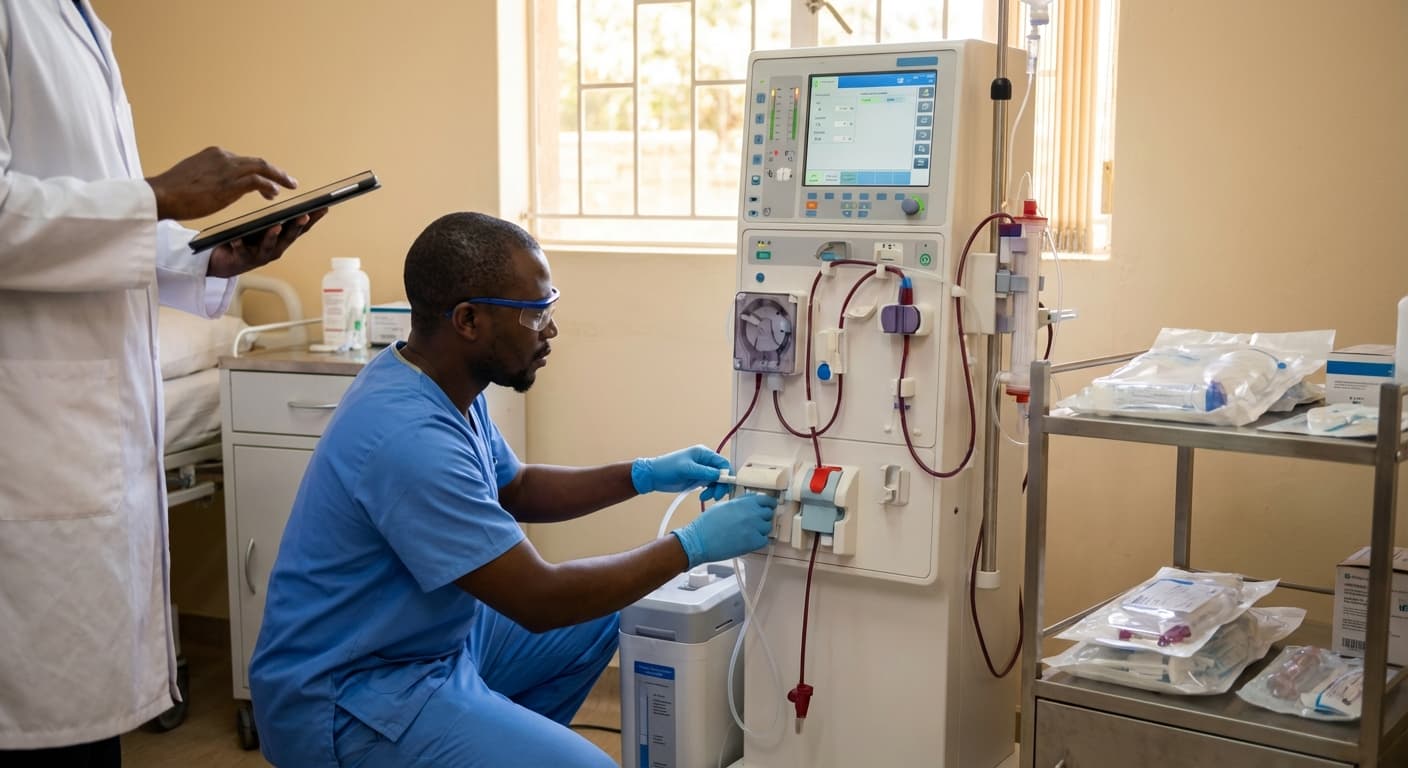
Hemodialysis Machine Installation Service in Botswana
Engineering Excellence & Technical Support
Hemodialysis Machine Installation Service High-standard technical execution following OEM protocols and local regulatory frameworks.
Certified Technical Expertise & Compliance
Our installation teams in Botswana comprise certified technicians with extensive experience in hemodialysis machine setup, adhering strictly to international medical equipment standards and local healthcare regulations. We ensure your equipment is installed safely, reliably, and compliant with all regulatory requirements for optimal patient care.
End-to-End Installation & Commissioning
We provide comprehensive, end-to-end hemodialysis machine installation services across Botswana, from meticulous site assessment and preparation to precision equipment mounting, intricate plumbing and electrical connections, and rigorous functional testing and calibration. Our goal is a seamless, fully operational system ready for immediate patient use.
Rapid Deployment & Localized Support
Leveraging our established presence and logistics network within Botswana, we offer rapid deployment of installation services to your facility, minimizing downtime. Our commitment extends beyond installation with readily available localized technical support and training for your staff, ensuring sustained operational excellence.
What Is Hemodialysis Machine Installation Service In Botswana?
Hemodialysis machine installation service in Botswana refers to the comprehensive process of setting up and commissioning hemodialysis equipment within healthcare facilities. This service is crucial for establishing functional dialysis units capable of treating patients with end-stage renal disease (ESRD). It encompasses a series of technical and logistical procedures to ensure the machines are correctly installed, calibrated, and integrated into the facility's infrastructure and workflows, meeting both manufacturer specifications and regulatory requirements.
| Who Needs Hemodialysis Machine Installation Service? | Typical Use Cases | ||||
|---|---|---|---|---|---|
| Hospitals (Public and Private): Establishing new dialysis units or expanding existing ones to manage the growing prevalence of ESRD. | Establishment of new renal dialysis centers or units within existing hospital infrastructure. | Setting up dialysis facilities in remote or underserved areas to improve access to care. | Upgrading or replacing outdated hemodialysis equipment with newer, more advanced models. | Tertiary care centers requiring specialized or high-volume dialysis services. | Emergency or disaster response situations where temporary dialysis capabilities are needed. |
| Government Health Ministries: Facilitating the rollout of public dialysis programs and ensuring nationwide access to renal replacement therapy. | Non-governmental Organizations (NGOs) and Charities: Implementing dialysis services in communities with limited resources. | Private Healthcare Providers: Expanding their service offerings and catering to a growing patient demographic. | Medical Equipment Suppliers and Manufacturers: As part of their product sales, offering installation as a bundled service. |
Key Components of Hemodialysis Machine Installation Service:
- Site Assessment and Preparation: Evaluation of the intended installation location for suitability, including power, water, drainage, and ventilation requirements. This may involve minor structural modifications or dedicated utility line installations.
- Equipment Delivery and Unpacking: Secure transportation of the hemodialysis machines and associated accessories to the installation site, followed by careful unpacking and inspection for any transit damage.
- Physical Installation and Connection: Precise placement of the hemodialysis machines and connection to essential utilities (water purification systems, electrical outlets, waste disposal points, and medical gas lines if applicable).
- Electrical and Plumbing Integration: Ensuring proper grounding, voltage stability, and water quality (often requiring a dedicated reverse osmosis water purification system) as per machine specifications.
- System Configuration and Calibration: Initial setup of machine parameters, software updates, and calibration of sensors and flow rates to ensure accurate and safe operation.
- Testing and Validation: Performing functional tests, including priming, dialysate preparation, and simulated dialysis runs, to verify optimal performance and adherence to safety standards.
- Integration with Facility Infrastructure: Connecting machines to monitoring systems, Electronic Health Records (EHRs), and alarm networks.
- User Training: Providing comprehensive training to biomedical engineers, nurses, and technicians on the operation, routine maintenance, troubleshooting, and safety protocols of the installed hemodialysis machines.
- Documentation and Handover: Providing detailed installation reports, user manuals, warranty information, and a formal handover to the facility's clinical and biomedical engineering departments.
Who Needs Hemodialysis Machine Installation Service In Botswana?
Botswana's healthcare system is increasingly focused on managing chronic diseases like kidney failure, driving a growing demand for hemodialysis services. This necessitates the reliable installation and maintenance of sophisticated hemodialysis machines across various healthcare facilities. Understanding who requires these services is crucial for manufacturers, distributors, and service providers aiming to cater to the specific needs of Botswana's medical landscape.
| Department/Unit | Typical Needs | Installation Rationale |
|---|---|---|
| Nephrology Department | Multiple hemodialysis machines, water treatment systems, patient monitoring equipment. | Core unit for treating kidney failure patients; new installations for increased capacity or upgrades. |
| Internal Medicine Department | May have limited dialysis capabilities for acute kidney injury or specific patient cases. | Installation of a few machines to supplement existing services or manage temporary needs. |
| Intensive Care Unit (ICU) | Critical care dialysis machines (e.g., CRRT machines). | Installation for critically ill patients requiring continuous renal replacement therapy. |
| Procurement and Biomedical Engineering Departments | Oversight of equipment acquisition, installation, and maintenance. | Key stakeholders involved in the decision-making and logistical execution of new installations. |
Target Customers for Hemodialysis Machine Installation Services in Botswana
- {"title":"Public Hospitals","description":"Government-funded hospitals, especially those designated as central or district hospitals, are primary users. They serve a large patient population and often house dedicated renal units. Installation is required for new units, expansions, and machine replacements."}
- {"title":"Private Hospitals and Clinics","description":"The growing private healthcare sector in Botswana is also investing in advanced medical equipment. Private facilities offering specialized care, including nephrology services, will require installation of hemodialysis machines for their patient base."}
- {"title":"Dialysis Centers","description":"Dedicated standalone dialysis centers, whether public or private, are a significant market. These facilities are specifically equipped for dialysis and require regular installation of new machines as capacity expands or older units reach end-of-life."}
- {"title":"Non-Governmental Organizations (NGOs) and Charitable Foundations","description":"Organizations involved in healthcare provision, particularly those focusing on chronic disease management or underserved communities, may establish or support facilities that require hemodialysis machine installations. Funding from international or local NGOs can drive such initiatives."}
- {"title":"Research and Training Institutions","description":"Medical schools or research facilities that offer training programs in nephrology or conduct clinical research may require the installation of hemodialysis machines for educational purposes and experimental studies."}
Hemodialysis Machine Installation Service Process In Botswana
This document outlines the standard workflow for Hemodialysis Machine Installation Services in Botswana, covering the entire process from initial client inquiry to the successful execution and handover of the installed equipment. The process is designed to ensure a seamless and efficient installation, meeting all regulatory and client-specific requirements.
| Phase | Step | Description | Key Activities | Responsible Party | Deliverables |
|---|---|---|---|---|---|
| 1: Inquiry & Consultation | 1.1 Initial Contact | Client expresses interest in hemodialysis machine installation. | Receive and acknowledge inquiry, schedule initial discussion. | Client, Service Provider | Acknowledged inquiry, confirmed interest |
| 1.2 Needs Assessment | Understand client's specific requirements, existing infrastructure, and machine model. | Gather details on facility, patient load, desired machine type, and budget. | Service Provider, Client | Detailed requirements document | |
| 1.3 Technical Consultation | Provide expert advice on machine suitability and preliminary installation considerations. | Discuss technical specifications, power, water, and space requirements. | Service Provider (Technical Specialist) | Preliminary technical advice | |
| 2: Site Assessment & Planning | 2.1 Site Visit | Conduct a thorough inspection of the proposed installation site. | Evaluate power supply, water quality and plumbing, drainage, ventilation, and space suitability. | Service Provider (Field Engineer) | Site assessment report |
| 2.2 Infrastructure Review | Assess current infrastructure against machine specifications and regulatory standards. | Identify any necessary upgrades or modifications to electrical, plumbing, or environmental systems. | Service Provider (Field Engineer) | Infrastructure gap analysis | |
| 2.3 Installation Planning | Develop a detailed installation plan, including timelines and resource allocation. | Outline equipment delivery, installation sequence, safety protocols, and testing procedures. | Service Provider (Project Manager) | Installation plan and schedule | |
| 3: Quotation & Agreement | 3.1 Quotation Generation | Prepare a comprehensive quotation based on the assessment and client requirements. | Include costs for the machine (if applicable), installation, materials, labor, and any necessary modifications. | Service Provider (Sales/Project Manager) | Formal quotation |
| 3.2 Negotiation & Agreement | Discuss and finalize terms and conditions with the client. | Address any queries, adjust quotation if necessary, and finalize contract. | Service Provider, Client | Signed Service Agreement/Contract | |
| 4: Procurement & Logistics | 4.1 Machine Procurement (if applicable) | Source and acquire the specified hemodialysis machine from authorized suppliers. | Place order, manage lead times, and ensure quality control. | Service Provider | Acquired Hemodialysis Machine |
| 4.2 Material & Equipment Procurement | Procure all necessary installation materials and tools. | Pipes, fittings, electrical components, testing equipment, safety gear. | Service Provider | Procured installation materials | |
| 4.3 Logistics & Delivery | Arrange for the safe and timely transportation of the machine and materials to the site. | Coordinate with shipping and logistics partners, ensure proper handling. | Service Provider | Delivered machine and materials | |
| 5: Pre-Installation Preparation | 5.1 Site Preparation | Undertake any agreed-upon infrastructure modifications or preparations at the client's site. | Install new plumbing, electrical wiring, or modify space as per the plan. | Service Provider (Installation Team) | Prepared installation site |
| 5.2 Verification of Utilities | Ensure all utilities (power, water) meet the required specifications before installation begins. | Test voltage, flow rates, water purity, and pressure. | Service Provider (Installation Team) | Verified utility readiness | |
| 6: Installation & Commissioning | 6.1 Machine Assembly & Installation | Install the hemodialysis machine according to manufacturer guidelines and safety standards. | Assemble components, connect to power and water supply, and secure in place. | Service Provider (Installation Team) | Installed Hemodialysis Machine |
| 6.2 System Testing | Conduct comprehensive tests to ensure the machine is functioning correctly and safely. | Perform operational tests, leak tests, safety checks, and calibration. | Service Provider (Field Engineer) | Test results and calibration records | |
| 6.3 Water Treatment System Integration (if applicable) | Integrate and test the water treatment system if it's part of the installation. | Ensure water purity meets dialytic standards. | Service Provider (Field Engineer) | Functional water treatment system | |
| 7: Training & Handover | 7.1 User Training | Provide comprehensive training to the client's clinical and technical staff. | Cover machine operation, basic maintenance, troubleshooting, and safety procedures. | Service Provider (Trainer/Field Engineer) | Trained staff, training attendance records |
| 7.2 Demonstration & Acceptance | Demonstrate the fully operational machine to the client and obtain formal acceptance. | Walk through all functions, answer questions, and verify client satisfaction. | Service Provider, Client | Signed Handover Certificate/Acceptance Form | |
| 8: Post-Installation Support & Documentation | 8.1 Documentation Handover | Provide all relevant documentation to the client. | User manuals, service records, warranty information, test reports, and maintenance schedules. | Service Provider | Complete documentation package |
| 8.2 Warranty & Maintenance | Inform client about warranty terms and discuss ongoing maintenance and service options. | Offer service contracts and schedule initial preventive maintenance. | Service Provider (Service Department) | Warranty information, service contract proposal | |
| 8.3 Follow-up | Conduct a follow-up to ensure the machine is performing optimally and address any post-installation issues. | Schedule a follow-up visit or call after a specified period. | Service Provider (Project Manager/Service Department) | Post-installation feedback and issue resolution |
Hemodialysis Machine Installation Service Workflow in Botswana
- Phase 1: Inquiry & Consultation
- Phase 2: Site Assessment & Planning
- Phase 3: Quotation & Agreement
- Phase 4: Procurement & Logistics
- Phase 5: Pre-Installation Preparation
- Phase 6: Installation & Commissioning
- Phase 7: Training & Handover
- Phase 8: Post-Installation Support & Documentation
Hemodialysis Machine Installation Service Cost In Botswana
Installing a hemodialysis machine is a critical process that requires specialized expertise and adherence to strict protocols. In Botswana, the cost of such a service can vary significantly based on several key factors. These include the complexity of the installation itself, the specific make and model of the hemodialysis machine, the location of the healthcare facility, the experience and reputation of the installation service provider, and any necessary ancillary services or modifications to the existing infrastructure.
Pricing Factors:
- Machine Type & Complexity: Different hemodialysis machines have varying installation requirements. Newer, more sophisticated models might require specialized power, water filtration, or data connectivity, impacting the overall cost.
- Facility Infrastructure: The existing water supply, electrical outlets, plumbing, and room preparation at the healthcare facility play a crucial role. If significant upgrades or modifications are needed (e.g., dedicated water treatment systems, enhanced electrical capacity), the cost will increase.
- Location: Installation costs can differ between major urban centers like Gaborone and more remote areas due to logistical challenges, travel time, and potential accommodation requirements for the installation team.
- Service Provider Expertise: Highly experienced and certified technicians or companies often command higher fees, reflecting their skill, reliability, and adherence to international standards.
- Ancillary Services: This can include initial calibration, testing, operator training, and ongoing maintenance contracts, which are often bundled with installation or offered as separate packages.
- Regulatory Compliance: Ensuring the installation meets all local health regulations and standards might involve additional inspections or documentation, contributing to the overall cost.
Cost Ranges in Botswana (Pula - BWP):
The installation of a hemodialysis machine in Botswana can range from approximately BWP 15,000 to BWP 50,000 or more. This broad range accounts for the diverse factors mentioned above. Simpler installations in well-equipped facilities with standard machines might fall at the lower end, while complex installations requiring significant infrastructure upgrades, specialized training, and premium service providers will be at the higher end.
| Service Component | Estimated Cost Range (BWP) | Notes |
|---|---|---|
| Basic Installation & Setup | 15,000 - 25,000 | Assumes standard machine and adequate facility infrastructure. |
| Standard Installation with Minor Infrastructure Adjustments | 20,000 - 35,000 | May include minor electrical or plumbing work. |
| Complex Installation with Significant Infrastructure Upgrades | 30,000 - 50,000+ | Includes substantial water treatment, electrical, or structural modifications. |
| Calibration & Initial Testing | Included in installation or BWP 2,000 - 5,000 | Often part of the overall service package. |
| Operator Training (Basic) | Included or BWP 3,000 - 8,000 | Depends on the duration and depth of training. |
| Travel & Logistics (Remote Areas) | Variable (added cost) | Dependent on distance and accommodation needs. |
Key Factors Influencing Hemodialysis Machine Installation Costs in Botswana
- Complexity of the specific hemodialysis machine model.
- Existing infrastructure at the healthcare facility (water, electricity, plumbing).
- Geographical location of the installation site within Botswana.
- Experience, certifications, and reputation of the installation service provider.
- Inclusion of additional services like calibration, testing, and operator training.
- Any required modifications or upgrades to the facility's utilities.
- Adherence to local health and safety regulations.
Affordable Hemodialysis Machine Installation Service Options
Investing in a hemodialysis machine for home use or a small clinic can be a significant undertaking. Beyond the machine's purchase price, the installation process requires specialized knowledge and equipment. Fortunately, various affordable hemodialysis machine installation service options exist, focusing on value bundles and cost-saving strategies to make this essential medical technology more accessible. Understanding these options can help patients and healthcare providers make informed decisions.
| Value Bundle/Service Option | Description | Potential Cost Savings Strategy |
|---|---|---|
| Basic Installation Package | Includes essential setup, connection to existing utilities, and initial machine testing. Focuses on core functionality. | Leverages existing infrastructure, minimizing the need for extensive plumbing or electrical work. Suitable for clients with pre-prepared facilities. |
| Comprehensive Installation Bundle | Encompasses site assessment, full setup, water purification system integration, electrical/plumbing checks, and basic user training. | Bundling services often provides a discounted rate compared to individual service bookings. Reduces the need for separate contractors for water treatment. |
| Home Dialysis Ready-to-Go Package | Designed for home use, this bundle includes installation, a compact water treatment system, and extended training for patient and caregiver, often with remote monitoring setup. | Streamlined process for home environments, potentially avoiding costly commercial-grade modifications. Package deals on equipment and installation. |
| Clinic Starter Kit Installation | Aimed at new or expanding clinics, this package includes installation for multiple machines, training for a larger staff, and consultation on workflow optimization. | Bulk installation discounts for multiple units. Integrated training reduces separate training costs for each staff member. |
| DIY Support & Professional Oversight | Clients handle some aspects of the installation (e.g., minor plumbing) with guidance from a professional technician, who then performs critical connections and testing. | Reduces labor costs by sharing responsibilities. Only specialized, critical tasks are outsourced to a certified professional. |
| Used/Refurbished Machine Installation | Specialized services for installing pre-owned hemodialysis machines, often requiring thorough inspection and potential parts replacement. | Significant upfront machine cost savings are extended to installation by providers who specialize in these units, potentially offering lower labor rates. |
Key Components of Hemodialysis Machine Installation Services
- Site Assessment and Planning: Evaluating the space, electrical requirements, plumbing, water purification needs, and waste disposal to ensure a safe and compliant installation.
- Machine Setup and Calibration: Physically positioning the machine, connecting it to water, power, and drainage systems, and performing necessary calibration and testing.
- Water Treatment System Integration: Installing and configuring a specialized water purification system (e.g., reverse osmosis) to meet stringent dialysis standards.
- Electrical and Plumbing Modifications: Any necessary upgrades or installations to existing electrical outlets, circuits, or water lines to support the machine's operation.
- Waste Management Solutions: Setting up appropriate disposal methods for used dialysate and other medical waste.
- Training and Education: Providing comprehensive training to patients, caregivers, or clinic staff on machine operation, maintenance, and troubleshooting.
- Post-Installation Support: Offering follow-up services, technical assistance, and warranty management.
Verified Providers In Botswana
When seeking healthcare in Botswana, partnering with verified providers is paramount for ensuring quality, safety, and reliability. Franance Health stands out as a leading platform for identifying and accessing these trusted healthcare professionals. This document outlines Franance Health's credentialing process and explains why their verified providers represent the best choice for your health needs.
| Why Choose Franance Health Verified Providers? | Benefits |
|---|---|
| Peace of Mind: Knowing that your healthcare provider has undergone a rigorous verification process significantly reduces the risk of encountering unqualified or fraudulent practitioners. | Access to safe and effective medical care. |
| Quality Assurance: Franance Health's standards ensure you are connecting with professionals who possess the necessary skills, knowledge, and experience. | Higher likelihood of positive health outcomes. |
| Reliability and Trust: The verification process builds a foundation of trust, allowing you to focus on your health without added worry about the provider's credentials. | Reduced stress and a more positive patient experience. |
| Access to the Best: Franance Health aims to curate a network of the most competent and dedicated healthcare professionals in Botswana. | Opportunity to receive care from top-tier medical experts. |
| Streamlined Healthcare Search: The platform simplifies the process of finding a qualified provider, saving you time and effort. | Efficiently connect with the right medical specialist for your needs. |
Franance Health's Verification Process:
- Licensing and Certification Checks: Franance Health meticulously verifies that all listed providers hold current and valid licenses and certifications from the relevant regulatory bodies in Botswana.
- Educational and Professional Background Verification: The platform scrutinizes the educational qualifications and professional experience of each healthcare provider to ensure they meet stringent standards.
- Reputation and Reference Checks: Franance Health may conduct background checks and gather testimonials or references to assess the provider's reputation within the medical community and among patients.
- Compliance with Ethical Standards: Providers are assessed for their adherence to professional ethical guidelines and best practices in healthcare delivery.
- Ongoing Monitoring: Franance Health maintains an ongoing commitment to monitoring its network of providers to ensure continued compliance and quality.
Scope Of Work For Hemodialysis Machine Installation Service
This Scope of Work (SOW) outlines the services required for the professional installation of hemodialysis machines at [Client Facility Name]. The objective is to ensure the machines are installed, tested, and commissioned according to manufacturer specifications, relevant regulations, and industry best practices, guaranteeing safe and efficient operation. This SOW also details the technical deliverables and standard specifications to be adhered to throughout the installation process.
| Technical Deliverable | Standard Specification / Requirement | Description |
|---|---|---|
| Site Survey Report | Post-site visit completion | Detailed report documenting site readiness, including power, water, drainage, ventilation, and space requirements. Any identified discrepancies or necessary modifications will be noted. |
| Machine Placement Plan | Approved by Client prior to installation | Diagram indicating the precise location of each hemodialysis machine, considering workflow, accessibility, and safety clearances. |
| Utility Connection Verification | As per manufacturer specifications and local codes | Confirmation that electrical, water (RO water quality), drainage, and compressed air connections meet the required parameters (voltage, flow rate, pressure, material compatibility, etc.). |
| Installation Certificate | Signed by vendor and client representative | Formal document certifying that the installation has been completed according to the SOW and manufacturer's guidelines. |
| Functional Test Report | Pass/Fail criteria based on manufacturer's checklist | Detailed report of all tests performed on the machine's various functions (e.g., blood pump, dialysate delivery, ultrafiltration, alarm systems) with documented results. |
| Calibration Records | Within manufacturer's specified tolerances | Records confirming that critical parameters of the machine have been calibrated and are within the manufacturer's acceptable ranges. |
| Training Materials | Provided in electronic or hard copy format | User manuals, operation guides, and safety protocols provided to designated staff. |
| Training Session Completion Record | Signed by trainer and attendees | Documentation confirming that the required training sessions have been conducted and attended. |
| As-Built Drawings | If modifications were made | Updated drawings reflecting any changes made to the facility's infrastructure during the installation process. |
| Final Handover Documentation | Comprehensive package | Includes all reports, certificates, calibration records, training materials, and warranties, formally transferring responsibility to the client. |
| Water Treatment System Integration Report | If applicable, adherence to industry standards (e.g., AAMI) | Report detailing the successful connection and functional testing of the hemodialysis machine with the facility's water purification system. |
| Waste Management Plan Integration | Compliance with local regulations | Confirmation of appropriate disposal routes for used consumables and machine waste. |
Key Objectives and Scope of Services
- Site assessment and readiness verification.
- Unpacking, inspection, and positioning of hemodialysis machines.
- Connection of machines to required utilities (water, power, drainage, air).
- Systematic testing and calibration of all machine functions.
- Integration with existing or new water treatment systems (if applicable).
- User training on machine operation and basic maintenance.
- Comprehensive documentation and handover.
- Compliance with all relevant safety and regulatory standards.
Service Level Agreement For Hemodialysis Machine Installation Service
This Service Level Agreement (SLA) outlines the guaranteed response times and uptime for the Hemodialysis Machine Installation Service provided by [Your Company Name] to [Client Name]. This SLA is an addendum to the master service agreement between the parties.
| Service Element | Target Response Time | Uptime Guarantee | Escalation Procedure |
|---|---|---|---|
| Initial Contact for Installation Scheduling | Within 2 business days of request acknowledgement | N/A | Contact Account Manager |
| On-site Technician Arrival for Scheduled Installation | As per agreed-upon schedule (within 1-hour window) | N/A | Contact Field Operations Manager |
| Post-Installation Technical Support (within 7 days of installation completion) | Within 4 business hours | N/A | Contact Technical Support Lead |
| Availability of Installed Hemodialysis Machines (post-successful installation and acceptance) | N/A | 99.5% uptime during scheduled operational hours (client defined) | Initiate Support Ticket, escalate to Senior Technician and then Engineering Manager if unresolved within 8 business hours of ticket creation. |
| Emergency On-site Support (for critical installation-related issues within 7 days of installation completion) | Within 2 business hours | N/A | Contact Emergency Response Hotline |
Scope of Service
- Installation of new hemodialysis machines at designated client facilities.
- Initial setup, calibration, and testing of installed machines.
- Basic user training for facility staff on machine operation.
- Troubleshooting and problem resolution related to the installation process.
Frequently Asked Questions

Ready when you are
Let's scope your Hemodialysis Machine Installation Service in Botswana project in Botswana.

Scaling healthcare logistics and technical systems across the entire continent.