
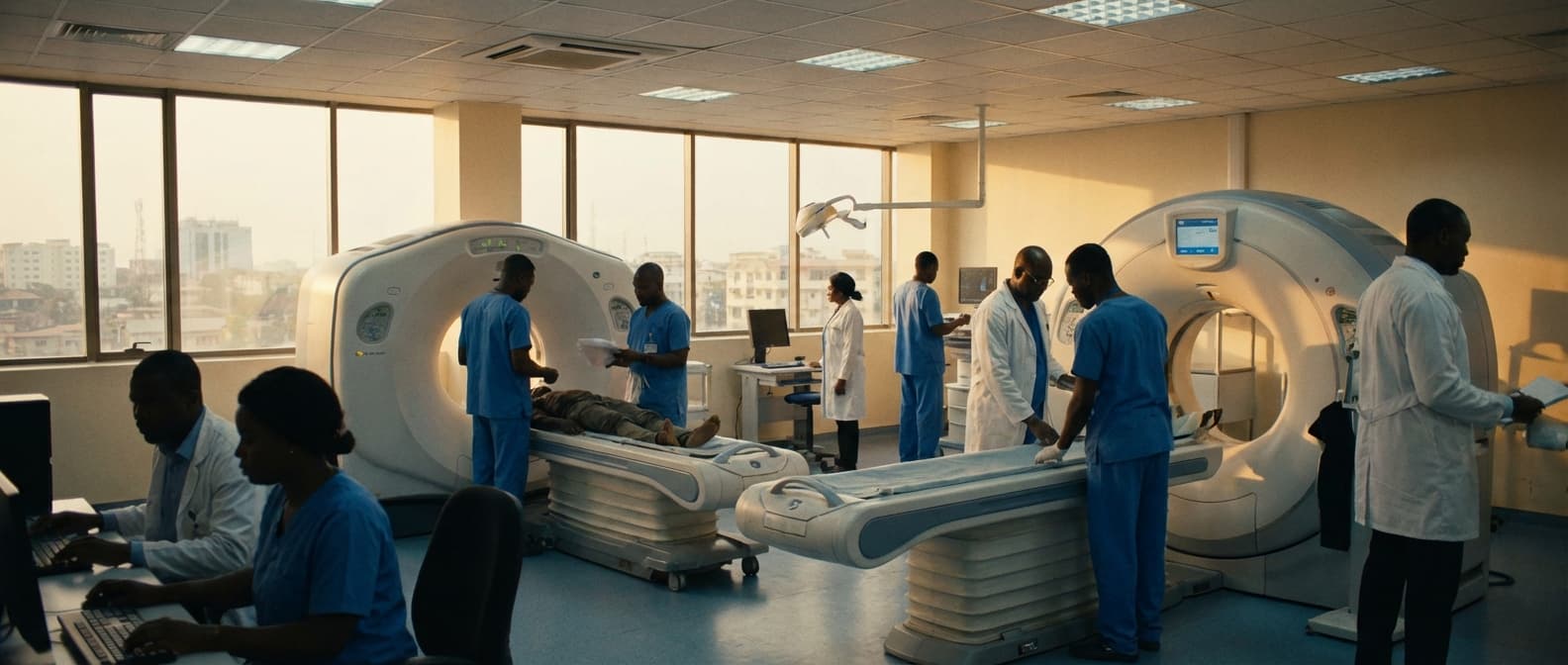
Radiology Room Design & Shielding Calculation in Botswana
Engineering Excellence & Technical Support
Turnkey room planning, shielding drawings and approvals for imaging suites. High-standard technical execution following OEM protocols and local regulatory frameworks.
Advanced Radiation Shielding Design for New Radiology Suite
Spearheaded the comprehensive radiation shielding design for a state-of-the-art radiology suite in Gaborone, ensuring optimal patient and staff safety. Calculations meticulously considered lead equivalence, structural integrity, and compliance with international radiation protection standards (e.g., ICRP 103, NCRP 147) for X-ray, CT, and fluoroscopy rooms.
Dosimetry & Shielding Optimization for Existing X-ray Facilities
Conducted detailed dosimetry and shielding calculations to evaluate and optimize existing X-ray facilities across multiple clinics in Francistown. Recommendations focused on reducing radiation exposure to personnel and the public while maintaining diagnostic image quality, involving accurate assessment of workload, occupancy factors, and equipment specifications.
3D Modeling & Simulation for Complex Shielding Scenarios
Utilized advanced 3D modeling and Monte Carlo simulation software (e.g., MCNP6) to analyze complex shielding scenarios in a new diagnostic imaging center in Maun. This approach provided precise predictions of radiation leakage and allowed for the optimization of shielding materials and thicknesses for high-energy imaging modalities, ensuring maximum protection.
What Is Radiology Room Design & Shielding Calculation In Botswana?
Radiology room design and shielding calculation in Botswana is a specialized engineering and architectural service focused on the safe and effective installation of diagnostic imaging equipment. This encompasses the meticulous planning of room layouts to optimize workflow, patient throughput, and radiation safety, coupled with precise calculations to determine the necessary protective shielding (typically lead, concrete, or other dense materials) for walls, floors, ceilings, and doors. The objective is to attenuate ionizing radiation to levels that comply with national radiation protection regulations, ensuring the safety of patients, staff, and the general public from unnecessary radiation exposure. The service is critical for any facility housing X-ray, CT, fluoroscopy, mammography, or other radiation-generating equipment.
| Service Component | Description | Who Needs It | Typical Use Cases |
|---|---|---|---|
| Architectural Planning | Conceptualization and detailed design of the room's physical layout, including dimensions, door placement, and workflow optimization. | Hospitals, clinics, diagnostic imaging centers, private practices acquiring or renovating radiology suites. | Setting up a new CT scanner suite, expanding an existing X-ray facility, building a dedicated mammography room. |
| Shielding Material Specification | Determination of the type and thickness of shielding materials required for walls, floors, ceilings, and doors to achieve regulatory compliance. | Radiology departments, medical equipment vendors, construction companies involved in healthcare facilities. | Installing a new general radiography unit, upgrading an existing fluoroscopy room, ensuring compliance for a mobile X-ray unit. |
| Radiation Dose Assessment | Calculation of potential radiation doses to personnel and the public under various operational scenarios. | Radiation protection officers, medical physicists, facility managers. | Pre-installation assessment for new equipment, post-installation verification, periodic review of existing facilities. |
| Regulatory Submission Support | Preparation of technical documentation and calculations to support license applications or renewals with the BRPA. | Radiology service providers, medical imaging companies seeking regulatory approval. | Obtaining a license to operate a new radiology facility, renewing an existing operational license. |
| Quality Assurance and Control | Ensuring the constructed shielding and room layout meet the designed specifications and regulatory standards. | Independent radiation safety consultants, BRPA inspectors. | On-site verification during construction, final inspection before operational commencement. |
Key Components of Radiology Room Design & Shielding Calculation
- Room Layout and Ergonomics: Designing the spatial arrangement of the imaging equipment, control console, patient holding areas, and changing rooms to facilitate efficient patient flow and minimize staff exposure during procedures.
- Radiation Physics Principles: Application of fundamental physics principles governing radiation attenuation, dose limits, and inverse square law to predict radiation levels at various distances from the source.
- Shielding Material Selection: Determining the appropriate shielding material (e.g., lead lining thickness, concrete density and thickness) based on the type and energy of radiation emitted, the workload of the equipment, and the distance to occupied areas.
- Regulatory Compliance: Ensuring that the design and shielding specifications meet or exceed the requirements set forth by the Botswana Radiation Protection Authority (BRPA) or equivalent regulatory bodies.
- Equipment Specific Requirements: Tailoring the design and shielding calculations to the unique specifications of the particular imaging modality being installed (e.g., CT scanners require more extensive shielding than general radiography units).
- Ventilation and HVAC Integration: Incorporating adequate ventilation systems to maintain comfortable ambient temperatures and manage heat generated by imaging equipment.
- Electrical and Data Infrastructure: Planning for the robust electrical supply and data connectivity required for modern imaging systems.
- Acoustic Considerations: Minimizing noise pollution from equipment operation for patient comfort and staff well-being.
Who Needs Radiology Room Design & Shielding Calculation In Botswana?
In Botswana, the need for specialized radiology room design and shielding calculations is driven by the growing demand for advanced medical imaging services and the critical importance of patient and staff safety. As healthcare facilities expand and upgrade their diagnostic capabilities, ensuring that X-ray, CT, MRI, and other radiation-producing equipment are housed in properly designed and shielded environments becomes paramount. This prevents unnecessary radiation exposure, adheres to international safety standards, and ensures the longevity and proper functioning of sensitive equipment. The primary entities requiring these services are those involved in providing diagnostic imaging services, ranging from public hospitals to private clinics and specialized medical centers.
| Department/Entity | Specific Needs | Key Considerations |
|---|---|---|
| Radiology Department | Design of X-ray rooms, CT scan rooms, MRI suites, angiography suites, mammography rooms, ultrasound rooms. Shielding calculations for lead, concrete, or other protective materials. Ventilation, lighting, and workflow optimization. | Patient safety, staff radiation protection, equipment performance, compliance with Botswana Radiation Protection Authority (BRPA) regulations, and international standards (e.g., ICRP). |
| Oncology Department (Radiation Therapy) | Design and shielding for linear accelerators (LINACs), brachytherapy suites, and imaging rooms used for treatment planning (e.g., CT simulators). | High-energy radiation shielding, bunker design, safety interlocks, patient positioning systems, and integration with treatment planning software. |
| Cardiology/Interventional Radiology | Design of catheterization labs (cath labs) and interventional suites, including shielding for fluoroscopy and angiography equipment. Workflow for complex procedures. | Real-time imaging requirements, high patient throughput, sterile environment considerations, and radiation safety for medical staff during prolonged procedures. |
| Hospital Administration/Facilities Management | Overall planning and budgeting for radiology infrastructure. Ensuring compliance with building codes and safety regulations. Coordination of construction and installation. | Cost-effectiveness, long-term operational efficiency, procurement of services, and adherence to national and international guidelines. |
| Ministry of Health and Wellness (Public Sector) | Establishing and upgrading radiology services in public health facilities across the country. Setting national standards and guidelines for radiation safety. | Equitable access to diagnostic services, public health impact, resource allocation, and oversight of radiation protection practices. |
Target Customers and Departments in Botswana Requiring Radiology Room Design & Shielding Calculation:
- {"title":"Public Hospitals","description":"Government-funded hospitals across Botswana that are either establishing new radiology departments or upgrading existing ones. This includes referral hospitals, district hospitals, and primary hospitals that are equipped with or plan to acquire imaging equipment."}
- {"title":"Private Hospitals and Clinics","description":"Private healthcare providers offering a range of medical services, including diagnostic imaging. These facilities often invest in state-of-the-art equipment and require specialized room design to accommodate it and ensure optimal patient care."}
- {"title":"Specialized Medical Centers","description":"Facilities focusing on specific medical disciplines that rely heavily on radiology, such as oncology centers (for radiation therapy planning and imaging) or cardiology units (for interventional radiology procedures)."}
- {"title":"Diagnostic Imaging Centers","description":"Independent centers dedicated solely to providing diagnostic imaging services, often serving multiple referring physicians and clinics. They require precise room layouts and shielding to maximize efficiency and safety."}
- {"title":"Research and Educational Institutions","description":"Universities or medical training institutions that may have research arms or teaching hospitals requiring radiology facilities for both practical training and scientific investigation."}
- {"title":"Veterinary Clinics and Hospitals (with advanced imaging)","description":"Larger veterinary facilities that are investing in advanced imaging modalities like CT or X-ray for animal diagnostics, requiring specialized room considerations."}
Radiology Room Design & Shielding Calculation Process In Botswana
Designing and implementing radiology room shielding in Botswana involves a structured process that ensures patient and staff safety, compliance with regulatory standards, and efficient room utilization. This workflow typically begins with an inquiry from a healthcare facility and culminates in the completed and commissioned shielding. The process emphasizes collaboration between the client, architects, engineers, and specialized shielding contractors to address the unique requirements of each installation, considering factors like equipment type, workload, and local building codes.
| Stage | Key Activities | Responsible Parties | Deliverables/Outcomes | Considerations (Botswana Specific) |
|---|---|---|---|---|
| Client expresses need for new or upgraded radiology room; initial discussion of scope, budget, and timeline. | Healthcare Facility Management, Radiology Department Heads, Potential Shielding Vendor | Understanding of client needs, preliminary scope definition, quotation/proposal request. | Awareness of available local expertise, understanding of the facility's existing infrastructure and future expansion plans. |
| Detailed inspection of the proposed room; gathering information on equipment, imaging modalities, expected workload, occupancy factors, and desired layout. | Shielding Vendor's Technical Team, Client's Facilities/IT Team, Radiologists | Detailed site survey report, equipment specifications, workload data, room layout drawings. | Access to the site, availability of current architectural drawings, understanding of local power supply and ventilation systems. |
| Using gathered data, engineers perform radiation shielding calculations (e.g., for X-ray, CT, MRI, Nuclear Medicine). Design includes specifying material types (lead, concrete), thicknesses, and placement. This stage adheres to international guidelines (e.g., NCRP, ICRP) and any applicable local regulations. | Radiation Physicist/Shielding Engineer | Detailed shielding design report, drawings indicating required shielding thicknesses and materials, specification sheets. | Adherence to principles outlined in relevant international standards; consultation with local health authorities if specific local guidelines exist or are being developed. |
| Integrating shielding requirements into the overall architectural and structural design of the room. This involves coordination with architects and structural engineers to ensure the building can support the weight of shielding materials and that openings (doors, windows) are properly shielded. | Architects, Structural Engineers, Shielding Vendor's Design Team | Revised architectural drawings, structural integrity assessments, detailed specifications for integrated shielding elements. | Coordination with local architectural and engineering firms; consideration of local building materials and construction practices. |
| Sourcing and procuring specified shielding materials (e.g., lead sheeting, concrete mixes). Custom fabrication of specialized components like shielded doors, windows, and frames. | Shielding Vendor's Procurement & Fabrication Department, Subcontractors | Procured shielding materials, fabricated components ready for installation. | Availability of quality shielding materials locally or reliable import channels; lead time for specialized fabricated items. |
| Installation of lead sheeting, concrete shielding, and other protective barriers according to the approved design. Installation of shielded doors, windows, and service penetrations. | Shielding Vendor's Installation Team, General Contractor | Physically installed shielding, completion of all structural and protective elements. | Skilled labor availability, site access for installation crews, coordination with other construction trades. |
| Verification of shielding integrity and effectiveness through visual inspections, leak testing, and radiation surveys. Ensuring all materials and installations meet specifications. | Shielding Vendor's QA Team, Radiation Physicist | QA/QC reports, radiation survey reports, confirmation of compliance with design specifications. | Availability of calibrated radiation survey equipment and qualified personnel for testing. |
| Formal commissioning of the radiology room. This includes final sign-off by the client and regulatory bodies (if applicable), provision of documentation, and training for facility staff. | Shielding Vendor, Client, Regulatory Authorities (if involved) | Commissioning certificate, O&M manuals, as-built drawings, staff training records. | Understanding of any national or regional requirements for commissioning and approval of medical imaging facilities. |
| Providing ongoing support, including maintenance recommendations, troubleshooting, and potential upgrades or modifications as needed. | Shielding Vendor, Healthcare Facility's Maintenance Team | Maintenance agreements, ongoing technical support. | Establishing reliable communication channels for support and ensuring access to spare parts if required. |
Radiology Room Design & Shielding Calculation Process in Botswana Workflow
- Inquiry & Initial Consultation
- Site Assessment & Requirements Gathering
- Shielding Design & Calculation
- Architectural & Structural Integration
- Material Procurement & Fabrication
- Shielding Installation
- Quality Assurance & Testing
- Commissioning & Handover
- Post-Installation Support & Maintenance
Radiology Room Design & Shielding Calculation Cost In Botswana
Designing and implementing radiation shielding for radiology rooms in Botswana involves several critical factors that influence the overall cost. These factors range from the complexity of the room layout and the required shielding materials to the specific equipment being installed and the expertise of the professionals involved. Understanding these elements is crucial for accurate budgeting and project planning.
The primary purpose of shielding is to protect medical staff, patients, and the public from harmful radiation emitted by X-ray, CT, and other radiological equipment. The thickness and type of shielding materials are determined by radiation physics calculations, taking into account the energy output of the equipment, the distance from the source, and the occupancy of the areas surrounding the radiology room. This necessitates consultation with qualified medical physicists or radiation protection experts, whose fees are a significant component of the project cost.
Key Pricing Factors:
- Shielding Material: The choice of shielding material (e.g., lead, concrete, barytes concrete) significantly impacts cost. Lead is highly effective but can be expensive. The required thickness of the material is determined by the radiation hazard assessment.
- Room Size and Layout: Larger rooms and more complex layouts requiring shielding on multiple walls, doors, and windows will naturally incur higher material and labor costs.
- Equipment Type and Energy Output: Different radiological equipment (e.g., standard X-ray, CT scanner, interventional radiology suite) emits radiation at varying energy levels, requiring different levels of shielding. Higher energy output demands thicker and more robust shielding.
- Professional Fees: This includes costs for:
* **Medical Physicist/Radiation Protection Consultant:** Essential for design, shielding calculations, and compliance with regulatory standards. Their fees are often based on project complexity and time spent.
* **Architect/Designer:** For room layout and integration of shielding into the overall building structure.
* **Contractor/Installer:** For the physical installation of shielding materials.
- Ancillary Components: This can include lead-lined doors, specialized observation windows (lead glass), and ventilation systems, all of which add to the overall expense.
- Regulatory Compliance and Approvals: Costs associated with obtaining necessary permits and approvals from the Botswana Ministry of Health and other relevant authorities.
- Location and Accessibility: While less of a direct factor for the shielding calculation itself, the remoteness of a site in Botswana could influence transportation costs for materials and labor, indirectly affecting the overall project budget.
Cost Ranges in Local Currency (Botswana Pula - BWP):
It's important to note that these are estimated ranges and can vary significantly based on the specific project details and the current market conditions in Botswana. Obtaining detailed quotes from local suppliers and consultants is highly recommended for accurate budgeting.
For a standard X-ray room, the cost of shielding materials alone (lead lining, specialized plaster) could range from BWP 15,000 to BWP 50,000. For more complex CT scanner rooms, this figure can easily escalate to BWP 70,000 to BWP 250,000 or more, depending on the extent of shielding and the size of the room. Professional fees for medical physicists and consultants typically represent 10-20% of the total shielding material and installation cost. Comprehensive project costs, including design, materials, installation, and professional fees for a basic X-ray room, might range from BWP 50,000 to BWP 150,000. For advanced imaging suites like CT scanners, the total cost could range from BWP 150,000 to BWP 500,000 or significantly higher for specialized interventional suites. The most precise figures will always come from detailed site assessments and supplier quotations.
| Item/Service Category | Estimated Cost Range (BWP) |
|---|---|
| Shielding Materials (Lead, specialized plaster for standard X-ray) | 15,000 - 50,000 |
| Shielding Materials (for CT Scanner rooms) | 70,000 - 250,000+ |
| Medical Physicist/Radiation Protection Consultant Fees (approx. 10-20% of total shielding cost) | Variable, based on project complexity |
| Lead-lined Doors and Frames | 10,000 - 30,000+ per door |
| Lead Glass Observation Windows | 15,000 - 50,000+ per window |
| Installation Labor | Variable, dependent on complexity and duration |
| Total Estimated Cost (Standard X-ray Room) | 50,000 - 150,000 |
| Total Estimated Cost (CT Scanner Room) | 150,000 - 500,000+ |
Factors Influencing Radiology Room Shielding Costs in Botswana
- Shielding Material Type and Thickness
- Room Dimensions and Architectural Complexity
- Type and Radiation Output of Imaging Equipment
- Professional Consultation Fees (Medical Physicist, Architect)
- Cost of Ancillary Shielding Components (Doors, Windows)
- Labor Costs for Installation
- Regulatory Approvals and Compliance
- Geographical Location and Material/Labor Logistics
Affordable Radiology Room Design & Shielding Calculation Options
Designing and outfitting a radiology room involves significant investment, particularly in shielding. This guide explores affordable design options and provides an overview of shielding calculation methodologies, focusing on value bundles and cost-saving strategies. The goal is to achieve compliance and patient/staff safety without unnecessary expenditure.
| Cost-Saving Strategy | Description | Potential Impact |
|---|---|---|
| Pre-fabricated Shielding Components | Utilizing modular, pre-fabricated lead-lined panels or doors instead of custom-built solutions. | Faster installation, reduced labor costs, consistent quality. |
| Optimized Room Layout | Designing for efficient workflow to minimize scatter radiation paths and reduce the required shielding thickness in certain areas. | Reduced material quantity, potentially smaller room footprint. |
| Standardized Equipment Placement | Planning for standard equipment configurations to leverage pre-engineered shielding solutions where available. | Avoids custom design costs for unique placements. |
| Bulk Purchasing & Supplier Negotiation | Acquiring shielding materials and components in larger quantities and negotiating prices with suppliers. | Lower per-unit cost for lead, drywall, etc. |
| Alternative Shielding Materials (where applicable) | Exploring combinations of materials like concrete, steel, and drywall with lead lining, or specialized composites, based on radiation type and energy. | Can be more cost-effective than solid lead in specific scenarios. |
| Phased Implementation | If budget is a major constraint, consider prioritizing essential shielding and upgrading later if regulations allow for phased compliance. | Spreads out capital expenditure. |
| Leveraging Existing Infrastructure | When renovating, assess if existing structural elements can contribute to shielding requirements. | Reduces the need for new shielding materials. |
Key Considerations for Affordable Radiology Room Design and Shielding
- {"title":"Value Bundles: Integrated Solutions","description":"Value bundles offer a streamlined approach by packaging design, shielding materials, and installation services from a single provider. This can lead to economies of scale and reduce the coordination burden."}
- {"title":"Cost-Saving Strategies","description":"Implementing smart design choices and procurement methods can significantly reduce overall project costs."}
- {"title":"Shielding Calculation Options","description":"Understanding the different approaches to calculating shielding requirements is crucial for selecting the most cost-effective yet compliant solution."}
- {"title":"Material Selection","description":"Choosing appropriate and readily available materials can impact both initial cost and long-term performance."}
- {"title":"Workflow Optimization","description":"Efficient room layout minimizes equipment footprint and can reduce the amount of shielding needed."}
Verified Providers In Botswana
When seeking healthcare in Botswana, particularly for specialized services or when looking for trusted partners, identifying 'Verified Providers' is crucial. This term signifies a level of assurance that healthcare professionals and institutions meet stringent standards for quality, safety, and ethical practice. Franance Health stands out as a leading example of such a verified provider, offering a compelling case for why they represent the best choice for your health needs in Botswana. Their commitment to excellence is reflected in their rigorous credentialing processes, adherence to international best practices, and patient-centric approach, all of which contribute to a superior healthcare experience.
| Credential/Feature | Franance Health's Commitment | Benefit to Patients |
|---|---|---|
| Licensing and Registration | All medical practitioners and facilities are fully licensed and registered with the Botswana Health Professions Council and relevant authorities. | Ensures legal and ethical practice, protecting patients from unqualified individuals. |
| Professional Qualifications | Employs doctors, nurses, and allied health professionals with recognized international and local qualifications. | Guarantees competence and expertise in various medical fields. |
| International Best Practices | Adheres to globally accepted medical protocols, treatment guidelines, and infection control standards. | Provides evidence-based and high-quality care aligned with international benchmarks. |
| Patient Feedback Mechanisms | Actively solicits and acts upon patient feedback to continuously improve services. | Ensures a patient-centered approach focused on satisfaction and well-being. |
| State-of-the-Art Facilities and Equipment | Invests in modern medical technology and maintains well-equipped facilities to support accurate diagnosis and effective treatment. | Facilitates precise diagnosis and advanced treatment options, leading to better outcomes. |
| Continuous Professional Development | Encourages and supports ongoing training and education for all staff members. | Keeps healthcare professionals updated with the latest medical advancements and techniques. |
Key Credentials and Benefits of Choosing Verified Providers like Franance Health:
- Accreditation and Certifications: Verified providers undergo thorough assessments by recognized accreditation bodies. This ensures compliance with established quality and safety benchmarks.
- Qualified and Licensed Professionals: Franance Health employs healthcare professionals who are not only highly qualified with advanced degrees but also possess valid licenses and certifications to practice in Botswana.
- Adherence to Ethical Standards: Verification often includes a review of ethical conduct and a commitment to patient privacy, dignity, and informed consent.
- Robust Patient Safety Protocols: Verified providers implement stringent safety measures to minimize risks and ensure positive patient outcomes.
- Continuous Quality Improvement: These providers are dedicated to ongoing training, skill development, and embracing the latest advancements in medical technology and treatment.
- Patient Trust and Reliability: The 'verified' status builds trust, assuring patients that they are receiving care from reputable and dependable sources.
- Access to Specialized Care: Franance Health, as a verified provider, often offers access to a wider range of specialized medical services, making it a convenient and comprehensive option.
Scope Of Work For Radiology Room Design & Shielding Calculation
This Scope of Work (SOW) outlines the requirements for the design of a new radiology room, including all necessary shielding calculations, to ensure compliance with radiation safety standards and operational efficiency. The project encompasses architectural design, structural considerations, lead shielding design, and the generation of all required technical deliverables.
| Task ID | Description | Deliverable | Standard Specification / Reference |
|---|---|---|---|
| 1.0 | Radiology Room Architectural Design | Detailed architectural drawings (floor plans, elevations, sections) including room layout, door/window placement, and workflow considerations. | NCBC Building Codes, Local Building Regulations, Healthcare Facility Design Guidelines (e.g., FGI Guidelines) |
| 2.0 | Radiation Shielding Calculations | Comprehensive shielding report detailing lead (Pb) thickness calculations for walls, doors, windows, and ceiling based on equipment type, workload, and occupancy factors. Includes shielding design drawings. | NCRP Report No. 147, NCRP Report No. 102, IAEA Safety Standards Series No. RS-G-1.7, State Radiation Control Agency Regulations |
| 3.0 | Equipment Integration Plan | Drawings and specifications showing the precise location, clearances, and mounting requirements for all specified radiology equipment (e.g., X-ray, CT, MRI, Fluoroscopy). | Manufacturer's Equipment Specifications, Room Layout Drawings |
| 4.0 | HVAC and Electrical Design | HVAC load calculations, ductwork layout, and specifications. Electrical panel schedules, power outlet locations, and specialized power requirements for medical equipment. | ASHRAE Standards, NFPA 70 (National Electrical Code), Local Electrical Codes |
| 5.0 | Lighting and Acoustics | Lighting fixture types, placement, and illumination levels. Acoustic treatment design to meet specified noise reduction requirements. | IES (Illuminating Engineering Society) Standards, ASHRAE Standards for HVAC noise |
| 6.0 | Final Technical Deliverables Package | Complete set of approved design drawings, shielding calculations report, specifications, and any other required documentation for construction and permitting. | As per client requirements and regulatory body submissions |
| 7.0 | Regulatory Compliance Review | Confirmation and documentation of compliance with all relevant local, state, and federal radiation safety and building codes. | State Radiation Control Agency Regulations, Building Department Permits |
Key Activities and Deliverables
- Architectural Design of Radiology Room(s)
- Radiation Shielding Calculations & Design
- Integration of Medical Imaging Equipment
- HVAC and Electrical Design Considerations
- Lighting and Acoustic Design
- Final Technical Deliverables Package
- Compliance with Regulatory Standards
Service Level Agreement For Radiology Room Design & Shielding Calculation
This Service Level Agreement (SLA) outlines the response times and uptime guarantees for the Radiology Room Design & Shielding Calculation service. It defines the expected performance standards and the remedies available to the client in case of non-compliance.
| Service Component | Response Time (Business Hours) | Uptime Guarantee (Service Availability) | Remedy for Non-Compliance |
|---|---|---|---|
| Initial Consultation & Requirements Gathering | 2 Business Days | N/A (Not a continuous service) | Rescheduling of consultation at no additional cost. |
| Delivery of Preliminary Design & Shielding Report | 5-10 Business Days (depending on project complexity) | N/A (Milestone-based delivery) | Discount of 5% on the total project cost for each day of delay beyond the agreed-upon deadline. |
| Client Feedback Incorporation & Revisions | 3 Business Days per revision cycle | N/A (Milestone-based delivery) | Additional revision cycle provided at no extra charge if the initial revision exceeds the 3-day timeframe. |
| Final Documentation Package Delivery | 2 Business Days after final approval | N/A (Milestone-based delivery) | Discount of 10% on the total project cost if delivery exceeds 2 business days. |
| Support for Queries & Clarifications Post-Delivery | 1 Business Day | 99.5% during standard business hours (9 AM - 5 PM local time, Mon-Fri) | Escalated support with priority response. For prolonged downtime, a credit of 0.5% of the monthly service fee for every hour of unscheduled downtime beyond the guaranteed threshold. |
Scope of Service
- Initial consultation and requirements gathering for radiology room design.
- Development of architectural and layout plans for radiology rooms.
- Detailed shielding calculations based on established radiation protection standards (e.g., NCRP, ICRP).
- Provision of shielding material specifications and thickness recommendations.
- Review and revision of designs based on client feedback (within agreed-upon limits).
- Final documentation package including design drawings and shielding reports.
Frequently Asked Questions

Ready when you are
Let's scope your Radiology Room Design & Shielding Calculation in Botswana project in Botswana.

Scaling healthcare logistics and technical systems across the entire continent.