
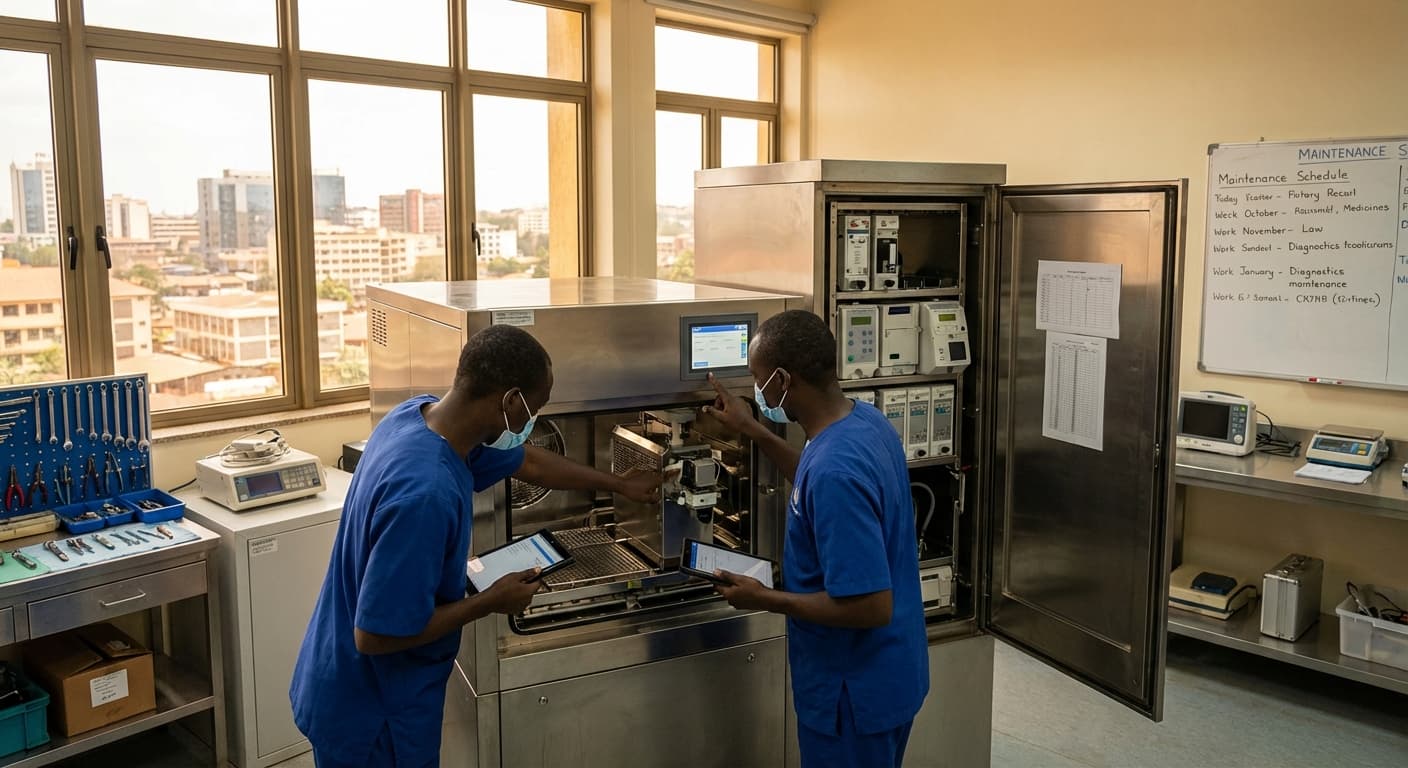
Total Cost of Ownership (TCO) & Lifecycle Budgeting Service in Botswana
Engineering Excellence & Technical Support
Total Cost of Ownership (TCO) & Lifecycle Budgeting Service High-standard technical execution following OEM protocols and local regulatory frameworks.
Optimized Capital Expenditure Planning
Leverage our TCO expertise to accurately forecast and optimize capital expenditures for your Botswana-based projects. We meticulously analyze asset acquisition costs, installation, and initial setup, ensuring your investments are strategically aligned with long-term operational efficiency and financial goals.
Proactive Operational Cost Reduction
Our Lifecycle Budgeting service identifies and quantifies operational expenses throughout your assets' lifespan in Botswana. From routine maintenance and repairs to energy consumption and consumables, we provide actionable insights to mitigate risks, prevent costly breakdowns, and drive down your ongoing operational expenditure.
Enhanced Asset Retirement & Resale Value
We go beyond operational efficiency to address the end-of-life cycle. Our TCO analysis incorporates depreciation, disposal costs, and potential resale values for assets operating in Botswana, ensuring informed decisions that maximize your return on investment and minimize unforeseen liabilities at the end of an asset's useful life.
What Is Total Cost Of Ownership (Tco) & Lifecycle Budgeting Service In Botswana?
Total Cost of Ownership (TCO) and Lifecycle Budgeting is a strategic financial management discipline that quantifies all direct and indirect costs associated with an asset, system, or project over its entire lifespan. It extends beyond initial acquisition costs to encompass operational, maintenance, upgrade, disposal, and even potential end-of-life decommissioning expenses. In Botswana, this service is crucial for organizations and government entities seeking to optimize resource allocation, enhance asset performance, mitigate financial risks, and ensure long-term financial sustainability.
| Who Needs TCO & Lifecycle Budgeting Service in Botswana? | Typical Use Cases | |||
|---|---|---|---|---|
| Government Ministries & Agencies: For infrastructure projects (roads, utilities, public buildings), vehicle fleets, IT systems, and public service delivery platforms. | Procurement of major capital equipment and infrastructure projects to compare bids based on long-term costs, not just upfront prices. | Development of robust budgets for public works and capital investment plans. | Strategic decision-making regarding asset replacement cycles. | |
| Parastatal Organizations: For energy generation and distribution, telecommunications, water and sanitation services, and transportation networks. | Evaluating the economic viability of new technology adoption (e.g., renewable energy solutions, advanced communication systems). | Optimizing maintenance schedules for critical infrastructure to minimize disruptions. | Forecasting future capital expenditure requirements. | |
| Large Private Sector Enterprises: Across mining, manufacturing, agriculture, tourism, and financial services, for plant, machinery, fleet vehicles, IT infrastructure, and facilities. | Fleet management, including vehicle acquisition, fuel, maintenance, insurance, and eventual disposal. | IT hardware and software lifecycle management, from initial purchase to end-of-life upgrades and support. | Facility management and building operational costs analysis. | Investment appraisal for new production lines or equipment. |
| Financial Institutions & Investors: For assessing the risk and return profile of investments in assets or projects. | Due diligence for mergers and acquisitions involving significant asset bases. | Loan portfolio management for assets requiring ongoing capital investment. | Evaluating the long-term financial sustainability of client projects. | |
| Non-Governmental Organizations (NGOs) & Development Partners: For managing donor-funded projects, vehicle fleets, and operational infrastructure. | Ensuring efficient and sustainable use of limited resources in project implementation. | Strategic planning for asset longevity and replacement within programmatic frameworks. | Reporting on long-term financial implications of project investments. |
Key Components of TCO & Lifecycle Budgeting Service
- Acquisition Costs: Includes purchase price, taxes, import duties, installation, and initial setup.
- Operating Costs: Encompasses energy consumption, consumables, labor for operation, and any associated licensing or subscription fees.
- Maintenance & Repair Costs: Covers routine maintenance, preventative measures, unscheduled repairs, spare parts, and technical support.
- Upgrade & Enhancement Costs: Addresses costs for necessary upgrades, modifications, and performance enhancements over the asset's life.
- Downtime & Productivity Loss: Quantifies the financial impact of system or asset unavailability.
- Disposal & Decommissioning Costs: Includes costs associated with removal, disposal, recycling, environmental remediation, and data sanitization.
- Financing Costs: Considers interest payments, depreciation, and residual value.
- Risk Assessment: Identifies and quantifies potential financial risks associated with the asset or project.
Who Needs Total Cost Of Ownership (Tco) & Lifecycle Budgeting Service In Botswana?
In Botswana, the strategic implementation of Total Cost of Ownership (TCO) and Lifecycle Budgeting services is crucial for organizations seeking to optimize their financial resources, reduce operational inefficiencies, and make informed long-term investment decisions. These services are not just for large corporations; they offer significant value to a diverse range of entities across various sectors. By understanding the complete financial picture of an asset or project from acquisition through disposal, businesses and government bodies can avoid hidden costs, enhance asset performance, and ensure sustainable financial planning.
| Industry/Sector | Target Customers (Examples) | Key Departments/Roles Involved |
|---|---|---|
| Government & Public Sector | Ministries (e.g., Transport, Works, Health, Education), Local Government Authorities, Parastatals (e.g., Botswana Power Corporation, Water Utilities Corporation) | Finance Departments, Procurement Units, Asset Management Teams, Planning Departments, Engineering Departments |
| Mining Sector | Large Mining Companies (e.g., Debswana, Lucara Diamond), Service Providers to the Mining Industry | Operations Management, Finance & Accounting, Procurement & Supply Chain, Engineering & Maintenance, Capital Projects Teams |
| Utilities & Infrastructure | Water Utilities Corporation, Botswana Power Corporation, Road Infrastructure Agencies, Telecommunications Companies | Finance & Budgeting, Asset Management, Engineering & Technical Services, Procurement, Strategic Planning |
| Manufacturing & Industrial | Manufacturing Plants, Food & Beverage Producers, Textile Factories, Chemical Plants | Operations Management, Finance & Controlling, Plant Management, Maintenance Departments, Procurement |
| Agriculture & Agribusiness | Large Commercial Farms, Agribusinesses, Agricultural Cooperatives | Farm Management, Finance Departments, Operations Managers, Procurement Officers |
| Transportation & Logistics | Airlines, Road Freight Companies, Public Transport Operators, Vehicle Fleet Management Companies | Fleet Management, Finance & Accounting, Operations, Procurement, Maintenance |
| Real Estate & Construction | Property Developers, Construction Companies, Facility Management Companies | Project Management, Finance & Cost Control, Procurement, Asset Management, Operations |
| Financial Services | Banks, Insurance Companies (for IT infrastructure and branch networks) | IT Departments, Facilities Management, Finance, Procurement |
| Tourism & Hospitality | Large Hotels, Resorts, Tourism Development Agencies | Operations Management, Finance, Procurement, Facilities Management |
Target Customers & Departments in Botswana for TCO & Lifecycle Budgeting Services:
- Organizations aiming for enhanced financial predictability and control.
- Entities with significant capital investments in physical assets (e.g., infrastructure, machinery, vehicles).
- Businesses and government bodies committed to sustainable operations and reducing environmental impact through efficient resource management.
- Organizations undergoing major procurement processes or asset replacement cycles.
- Departments responsible for managing large budgets and ensuring return on investment.
Total Cost Of Ownership (Tco) & Lifecycle Budgeting Service Process In Botswana
This document outlines the workflow for our Total Cost of Ownership (TCO) & Lifecycle Budgeting service in Botswana, guiding clients from their initial inquiry through the successful execution of the service. Our process is designed to be transparent, collaborative, and tailored to the specific needs of each client.
| Phase | Stage/Step | Key Activities | Deliverables | Client Involvement | Estimated Timeline (Typical) |
|---|---|---|---|---|---|
| Phase 1: Inquiry and Initial Consultation | Initial Contact & Needs Assessment | Client initiates contact. Understanding client's objectives, asset scope, project type (e.g., new acquisition, existing portfolio), and desired outcomes for TCO & Lifecycle Budgeting. Discussing preliminary scope and service suitability. | Understanding of client's needs, preliminary scope identification. | Active participation in discussions, providing background information. | 1-3 Business Days |
| Phase 1: Inquiry and Initial Consultation | Preliminary Scope Definition | Defining the boundaries of the TCO & Lifecycle Budgeting analysis (e.g., specific assets, timeframe, cost categories). | Draft preliminary scope document. | Review and feedback on the preliminary scope. | 1-2 Business Days |
| Phase 2: Proposal Development and Agreement | Proposal Creation | Developing a detailed proposal outlining the scope of work, methodology, team, timeline, fees, and terms & conditions. | Formal TCO & Lifecycle Budgeting Service Proposal. | Review and discussion of the proposal. | 2-5 Business Days |
| Phase 2: Proposal Development and Agreement | Contract Negotiation & Signing | Finalizing terms, addressing any client queries, and signing the service agreement. | Signed Service Agreement. | Negotiation and approval of the agreement. | 2-5 Business Days |
| Phase 3: Data Collection and Analysis | Data Gathering Plan | Developing a comprehensive data collection plan, identifying all necessary cost categories (acquisition, operation, maintenance, disposal, etc.) and data sources. | Data Collection Plan, list of required documents and data points. | Providing access to relevant data, internal documentation, and subject matter experts. | 1-3 Business Days |
| Phase 3: Data Collection and Analysis | Data Acquisition | Collecting all relevant historical and projected data from the client, third-party sources, and market research. | Raw data sets, documentation, interviews. | Facilitating access to data, answering queries, providing context. | 5-15 Business Days (Varies significantly based on data complexity and availability) |
| Phase 3: Data Collection and Analysis | Data Validation & Cleaning | Ensuring data accuracy, completeness, and consistency. Identifying and resolving any discrepancies or missing information. | Validated and cleaned dataset. | Clarifying data points, providing missing information, validating assumptions. | 3-7 Business Days |
| Phase 4: TCO & Lifecycle Budget Development | Cost Modeling | Developing robust financial models to forecast costs across the entire lifecycle of the asset(s) or project. | TCO & Lifecycle Cost Models (e.g., spreadsheets, specialized software outputs). | Providing input on assumptions and key drivers for cost projections. | 5-10 Business Days |
| Phase 4: TCO & Lifecycle Budget Development | Risk Assessment & Sensitivity Analysis | Identifying potential risks that could impact TCO and performing sensitivity analysis to understand the impact of changes in key variables. | Risk register, sensitivity analysis reports. | Identifying potential risks and uncertainties relevant to their operations. | 3-5 Business Days |
| Phase 5: Review, Refinement, and Finalization | Draft Report & Model Review | Presenting a draft TCO & Lifecycle Budget report and associated models to the client for review and feedback. | Draft TCO & Lifecycle Budget Report and Models. | Thorough review of the draft, providing detailed feedback and questions. | 3-7 Business Days |
| Phase 5: Review, Refinement, and Finalization | Incorporating Feedback & Refinement | Revising the report and models based on client feedback and conducting further analysis if required. | Revised TCO & Lifecycle Budget Report and Models. | Reviewing revised documents, confirming acceptance. | 2-5 Business Days |
| Phase 6: Reporting and Presentation | Final Report & Presentation | Delivering the final TCO & Lifecycle Budget report, including executive summary, detailed analysis, key findings, recommendations, and a comprehensive presentation to stakeholders. | Final TCO & Lifecycle Budget Report, Presentation Slides, Executive Summary. | Attending the presentation, asking clarifying questions, making decisions based on the findings. | 1-3 Business Days (for presentation and delivery) |
| Phase 7: Implementation Support and Ongoing Monitoring (Optional) | Implementation Guidance | Assisting the client in integrating the TCO & Lifecycle Budgeting insights into their decision-making processes and operational plans. | Guidance documents, workshops, training sessions. | Active participation in implementation, decision-making. | As per separate agreement |
| Phase 7: Implementation Support and Ongoing Monitoring (Optional) | Periodic Reviews & Updates | Establishing a schedule for periodic reviews and updates of the TCO & Lifecycle Budget to reflect changing market conditions, operational performance, and strategic shifts. | Updated TCO & Lifecycle Budget reports. | Participating in review meetings, providing updated information. | As per separate agreement |
TCO & Lifecycle Budgeting Service Process Workflow in Botswana
- Phase 1: Inquiry and Initial Consultation
- Phase 2: Proposal Development and Agreement
- Phase 3: Data Collection and Analysis
- Phase 4: TCO & Lifecycle Budget Development
- Phase 5: Review, Refinement, and Finalization
- Phase 6: Reporting and Presentation
- Phase 7: Implementation Support and Ongoing Monitoring (Optional)
Total Cost Of Ownership (Tco) & Lifecycle Budgeting Service Cost In Botswana
The Total Cost of Ownership (TCO) and Lifecycle Budgeting service is crucial for organizations in Botswana to understand the true financial implications of acquiring, operating, and disposing of assets or systems over their entire lifespan. This service moves beyond the initial purchase price to encompass all associated costs, enabling better strategic financial planning and decision-making. The pricing for these services in Botswana is influenced by a range of factors, leading to varying cost ranges.
| Service Component/Scope | Estimated Price Range (BWP) | Notes |
|---|---|---|
| Initial TCO Assessment (Small-Medium Scope) | 8,000 - 25,000 BWP | Covers a single asset or a small system, limited lifecycle stages, standard reporting. |
| Comprehensive TCO Analysis (Medium-Large Scope) | 25,000 - 75,000 BWP | Broader asset base, multiple lifecycle stages, detailed data gathering, advanced reporting, and initial recommendations. |
| Full Lifecycle Budgeting & Strategic Planning | 75,000 - 200,000+ BWP | Encompasses the entire lifecycle, deep dive into operational, maintenance, and end-of-life costs, scenario planning, integration with financial systems, and ongoing support. |
| Data Gathering & Validation Services (Add-on) | 500 - 2,000 BWP per day | If significant data collection effort is required by the consultant. |
| Custom TCO Model Development | 15,000 - 50,000 BWP (one-time)** | Development of a bespoke TCO model for repeated use by the client. |
| Expert Witness/Consultation (Specific Cases) | 1,500 - 4,000 BWP per hour | For legal disputes or specialized consulting on complex cost issues. |
Key Pricing Factors for TCO & Lifecycle Budgeting Services in Botswana
- Scope and Complexity of the Project: The size of the asset or system being analyzed (e.g., a single piece of equipment vs. an entire IT infrastructure), the number of lifecycle stages to be considered, and the level of detail required all impact pricing.
- Data Availability and Quality: The ease of obtaining accurate and comprehensive data for cost analysis is a significant factor. If extensive data gathering or validation is needed, costs will increase.
- Consultant Expertise and Experience: The reputation, specialization, and years of experience of the consulting firm or individual providing the service play a role. Highly sought-after experts will command higher rates.
- Duration of the Engagement: The time commitment required from the consultants to complete the analysis, produce reports, and provide recommendations will directly affect the overall cost.
- Tools and Methodologies Used: The sophistication of the TCO modeling software or proprietary methodologies employed by the service provider can influence pricing. Some advanced tools may have associated licensing fees.
- Reporting and Deliverables: The format and depth of the final reports, including detailed cost breakdowns, risk assessments, and strategic recommendations, can impact the effort and therefore the price.
- Geographic Location and Travel: While the service is in Botswana, if the consultant is based outside the immediate area of the client, travel and accommodation costs may be factored in.
- Industry-Specific Knowledge: For specialized industries (e.g., mining, telecommunications, government), consultants with deep understanding of sector-specific operational costs and regulatory environments may charge a premium.
- Level of Customization: The degree to which the TCO and lifecycle budgeting model needs to be tailored to the specific needs and accounting practices of the client will affect the development time and cost.
Affordable Total Cost Of Ownership (Tco) & Lifecycle Budgeting Service Options
Our Affordable Total Cost of Ownership (TCO) & Lifecycle Budgeting service empowers organizations to make informed financial decisions by providing comprehensive cost analysis and strategic budgeting across the entire lifecycle of an asset or project. We offer flexible value bundles designed to meet diverse needs, from basic asset tracking to advanced predictive maintenance and disposal planning. By understanding and managing TCO, businesses can uncover significant cost-saving opportunities and optimize resource allocation, ensuring long-term financial health and sustainability. Our approach focuses on identifying hidden costs, minimizing inefficiencies, and maximizing the return on investment for every expenditure.
| Cost-Saving Strategy | Description | TCO Impact | Budgeting Benefit |
|---|---|---|---|
| Optimize Procurement | Negotiating better terms, bulk purchasing, exploring leasing options. | Reduces initial acquisition cost and potential financing charges. | Lowers upfront capital expenditure and improves cash flow. |
| Implement Preventative Maintenance | Scheduled maintenance to avoid breakdowns and costly repairs. | Minimizes unexpected downtime and extends asset lifespan. | Predictable maintenance budget and reduced emergency repair costs. |
| Enhance Energy Efficiency | Upgrading to energy-efficient equipment, optimizing usage patterns. | Significantly lowers operational energy costs over the asset's life. | Reduces recurring operational expenses and contributes to sustainability goals. |
| Standardize Assets & Components | Using common parts and equipment across different systems. | Simplifies inventory management, reduces training needs, and allows for bulk purchasing of spares. | Lower inventory holding costs and improved operational efficiency. |
| Strategic Asset Disposal/Refurbishment | Planning for end-of-life to maximize residual value or ensure responsible disposal. | Recouping value from retired assets or minimizing disposal fees. | Potential for revenue generation or cost avoidance in later lifecycle stages. |
| Lifecycle Cost Modeling & Forecasting | Accurate projection of all costs associated with an asset over its entire life. | Identifies potential cost escalations and opportunities for early intervention. | Enables proactive budgeting and strategic resource allocation for future needs. |
Value Bundles for TCO & Lifecycle Budgeting Services
- {"title":"Core TCO Assessment Bundle","features":["Asset Register Setup","Initial Acquisition Cost Analysis","Operational Expense Categorization","Basic Depreciation Modeling"],"description":"Ideal for initial understanding and foundational budgeting. Includes acquisition cost analysis, operational cost tracking (energy, maintenance, consumables), and initial depreciation estimation.","price_point":"Entry-Level"}
- {"title":"Proactive Lifecycle Management Bundle","features":["All Core TCO features","Predictive Maintenance Strategy Development","Risk Assessment & Mitigation Planning","Lifecycle Cost Forecasting","Planned Replacement Schedule Optimization"],"description":"Builds upon the core bundle by incorporating predictive maintenance scheduling, risk assessment, and proactive replacement planning. Focuses on minimizing downtime and unexpected expenses.","price_point":"Mid-Range"}
- {"title":"Strategic Investment & Sustainability Bundle","features":["All Proactive Lifecycle features","Advanced Financial Modeling (ROI, NPV)","Sustainability Impact Assessment (ESG factors)","End-of-Life Management & Disposal Planning","Optimization for Total Value Realization","Regular TCO Review & Reporting"],"description":"The most comprehensive offering, including advanced financial modeling, sustainability impact analysis (environmental and social), and end-of-life disposal/recycling strategies. Designed for organizations seeking to align financial goals with long-term strategic objectives.","price_point":"Premium"}
Verified Providers In Botswana
When seeking healthcare in Botswana, the assurance of quality and ethical practice is paramount. Verified providers, particularly those like Franance Health, stand out due to their rigorous credentialing processes and commitment to excellence. This verification signifies that they meet stringent standards for medical expertise, patient care, and operational integrity, making them the most reliable choice for your health needs. Franance Health's dedication to upholding these verified credentials translates into a superior healthcare experience for all.
| Credential Type | Verification Standard | Benefit to Patients |
|---|---|---|
| Medical Board Registration | Mandatory and regularly reviewed by the Botswana Health Professions Council. | Ensures practitioners meet minimum competency and ethical requirements. |
| Specialist Certifications | Awarded by recognized national or international bodies after extensive training and examination. | Guarantees expertise in specific medical fields for accurate diagnosis and treatment. |
| Hospital/Clinic Accreditation | Achieved through adherence to quality management systems and patient safety protocols (e.g., ISO standards). | Confirms a safe and well-managed healthcare environment with high standards of care. |
| Continuous Professional Development (CPD) Records | Proof of ongoing training and education to stay updated with medical advancements. | Ensures patients receive care based on the latest knowledge and techniques. |
| Insurance Provider Network Participation | Selective and based on proven quality and cost-effectiveness. | Provides access to services with pre-approved financial coverage, simplifying patient experience. |
Why Franance Health Credentials Represent the Best Choice:
- Rigorous Professional Licensing and Accreditation
- Demonstrated Clinical Competence and Specialization
- Adherence to Ethical Medical Practices and Patient Rights
- Commitment to Continuous Professional Development
- Positive Patient Outcomes and Satisfaction
Scope Of Work For Total Cost Of Ownership (Tco) & Lifecycle Budgeting Service
This Scope of Work (SOW) outlines the services to be provided for the Total Cost of Ownership (TCO) and Lifecycle Budgeting analysis. The objective is to establish a comprehensive understanding of all costs associated with an asset or project from its acquisition through its disposal, enabling informed decision-making and optimized resource allocation throughout its lifespan. This document details the technical deliverables and standard specifications required for the successful execution of this service.
| Deliverable Name | Description | Format/Standard Specification | Key Inputs Required | Key Outputs |
|---|---|---|---|---|
| TCO Framework Document | Defines the methodology, categories, and assumptions for TCO calculation. This serves as the foundational document for all subsequent analysis. | Microsoft Word Document (or equivalent) adhering to company style guide. Includes clear definitions of cost categories (e.g., Capital Expenditure, Operational Expenditure, Maintenance, Decommissioning). | Project scope, asset type, organizational policies, relevant industry benchmarks. | Standardized TCO calculation methodology, defined cost categories, documented assumptions. |
| Lifecycle Cost Model (Spreadsheet) | A dynamic financial model that quantifies all costs across the asset's lifecycle, typically over a defined period. | Microsoft Excel (or equivalent) with robust formulas, data validation, and clear sheet organization. Model should be scalable and allow for multiple scenarios. Includes assumptions, cost inputs, calculations, and summary outputs. | TCO Framework Document, historical cost data, vendor quotes, operational data, maintenance schedules, inflation rates, discount rates, useful life estimates. | Detailed cost breakdown by lifecycle phase, net present value (NPV) of total lifecycle costs, annualized costs, sensitivity analysis results. |
| Data Collection Plan | A detailed plan outlining the data required, sources, methods of collection, and responsibilities for gathering TCO-related information. | Microsoft Word Document (or equivalent). Includes data points, responsible parties, timelines, and data quality checks. | TCO Framework Document, identification of key cost drivers. | Structured data collection templates, defined data sources, data validation protocols. |
| Data Validation Report | Documents the process of verifying the accuracy, completeness, and consistency of collected data. | Microsoft Word Document (or equivalent). Includes summary of data sources, validation techniques used, identified discrepancies, and resolutions. | Collected raw data, Data Collection Plan. | Validated dataset for use in the Lifecycle Cost Model, documented data quality improvements. |
| Scenario Analysis Report | Presents the results of analyzing how different assumptions or external factors impact the TCO and lifecycle budget. | Microsoft Word Document (or equivalent) with supporting charts and graphs. Details identified scenarios (e.g., high/low maintenance costs, extended lifespan, technology obsolescence) and their financial implications. | Lifecycle Cost Model, identified key risk factors, potential future market conditions. | Comparison of TCO under different scenarios, identification of key cost sensitivities, recommendations for mitigation strategies. |
| Lifecycle Budget Forecast | A projected budget outlining anticipated expenditures across the asset's lifecycle, based on the TCO analysis. | Microsoft Excel (or equivalent) or integrated financial planning software. Provides annual or periodic budget allocations, highlighting significant cost items. | Lifecycle Cost Model, organizational financial planning cycles, capital allocation processes. | Annual/periodic budget projections, identification of critical funding needs, recommendations for budget optimization. |
| Final TCO & Lifecycle Budgeting Report | A comprehensive report summarizing the TCO analysis, lifecycle budget findings, key recommendations, and implications for decision-making. | Microsoft Word Document (or equivalent) with executive summary, detailed findings, graphical representations, and actionable recommendations. May include a presentation-ready slide deck. | All previous deliverables, stakeholder feedback, project objectives. | Consolidated TCO assessment, validated lifecycle budget, strategic recommendations for asset management and financial planning, a clear presentation of findings. |
| Knowledge Transfer Session/Training Material | Sessions and materials designed to educate stakeholders on the TCO methodology, model usage, and ongoing data maintenance. | Presentation slides (PowerPoint or equivalent), user guides, FAQs. Content tailored to the audience's technical proficiency. | Final TCO & Lifecycle Budgeting Report, TCO Framework Document. | Trained personnel capable of utilizing and updating the TCO model, understanding of TCO principles, documentation for ongoing TCO management. |
Key Service Components
- TCO Framework Development
- Lifecycle Cost Modeling
- Data Collection and Validation
- Scenario Analysis and Sensitivity Testing
- Budgetary Planning and Forecasting
- Reporting and Presentation
- Knowledge Transfer and Training
Service Level Agreement For Total Cost Of Ownership (Tco) & Lifecycle Budgeting Service
This Service Level Agreement (SLA) outlines the performance expectations and guarantees for the Total Cost of Ownership (TCO) & Lifecycle Budgeting Service provided by [Your Company Name] to [Client Company Name].
| Service Component | Response Time Target | Uptime Guarantee | Service Credits (per incident/month, as applicable) |
|---|---|---|---|
| Initial TCO Model Development / Major Revision Request | 4 business hours for acknowledgment, 2 business days for initial draft/proposal | N/A (Project-based) | N/A |
| Routine TCO Model Updates (e.g., data refresh) | 2 business hours for acknowledgment, 5 business days for completion | N/A (Project-based) | N/A |
| Lifecycle Cost Analysis Report Generation | 4 business hours for acknowledgment, 3 business days for report delivery | N/A (Project-based) | N/A |
| Budget Planning & Forecasting Support (Question/Clarification) | 2 business hours for acknowledgment, 8 business hours for substantive response | 99.5% | 5% of monthly service fee |
| Performance Reporting & Insights Generation | 4 business hours for acknowledgment, 2 business days for report delivery | 99.5% | 5% of monthly service fee |
| Access to TCO/Lifecycle Budgeting Platform (if applicable) | N/A | 99.9% | 10% of monthly service fee for every 30 minutes of unscheduled downtime in a calendar month, up to a maximum of 50% |
| Dedicated Support Contact Availability | N/A (Scheduled appointments) | 99.5% (during scheduled hours) | 5% of monthly service fee if unable to connect during scheduled time without prior notice |
Key Service Areas
- TCO Model Development and Maintenance
- Lifecycle Cost Analysis and Projection
- Budget Planning and Forecasting Support
- Performance Reporting and Insights
- Dedicated Support and Consultation
Frequently Asked Questions

Ready when you are
Let's scope your Total Cost of Ownership (TCO) & Lifecycle Budgeting Service in Botswana project in Botswana.

Scaling healthcare logistics and technical systems across the entire continent.