
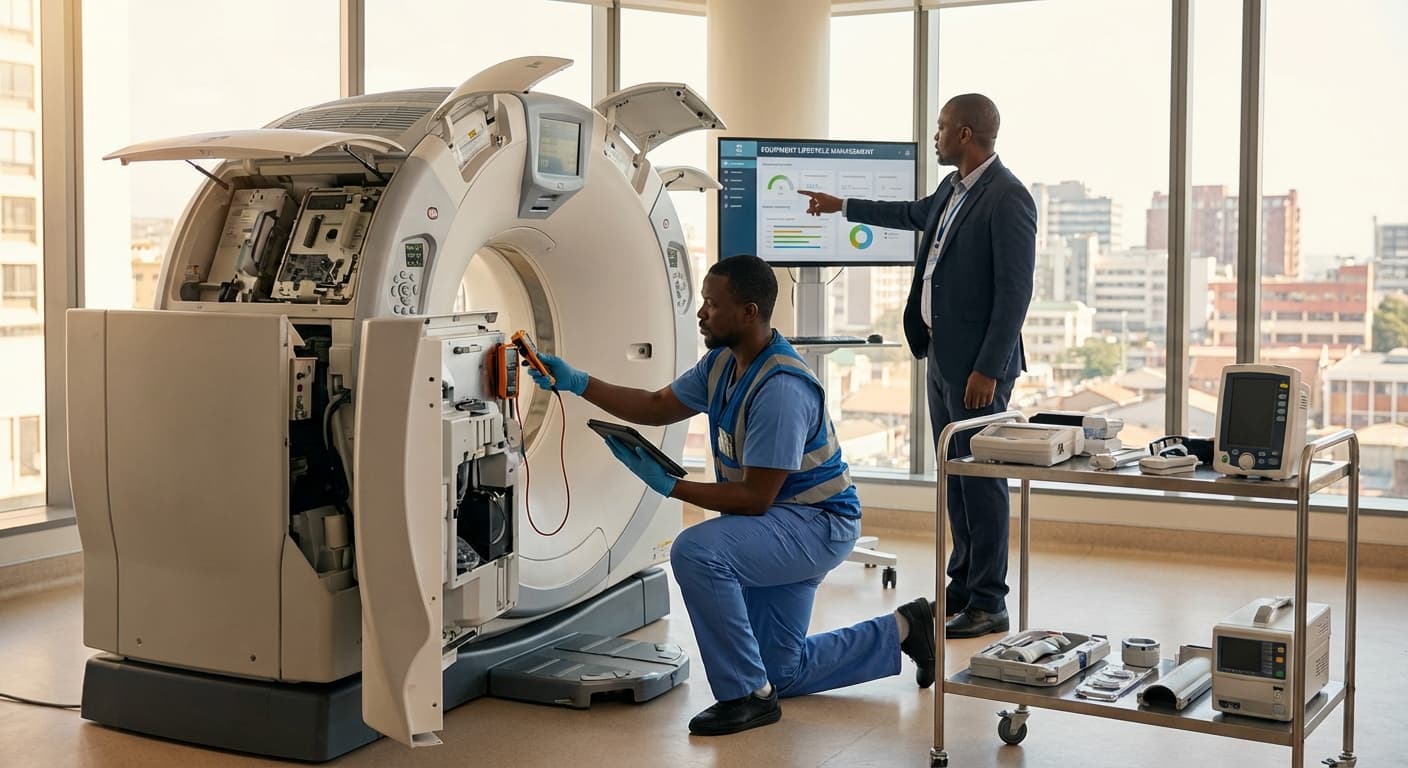
Equipment Replacement Planning & Obsolescence Strategy Service in Botswana
Engineering Excellence & Technical Support
Equipment Replacement Planning & Obsolescence Strategy Service High-standard technical execution following OEM protocols and local regulatory frameworks.
Predictive Asset Performance Modeling
Leverage advanced data analytics and machine learning to forecast equipment lifespan and degradation patterns. Our service empowers Botswana businesses to proactively identify assets nearing end-of-life, optimize maintenance schedules, and prevent costly downtime through data-driven replacement forecasting.
Strategic Obsolescence Mitigation & Sourcing
Navigate the complexities of diminishing supply chains for critical equipment in Botswana. We provide expert analysis of obsolescence risks, identify compliant and cost-effective replacement alternatives, and develop robust sourcing strategies to ensure continued operational integrity and mitigate future supply disruptions.
Lifecycle Cost Optimization & ROI Analysis
Unlock maximum value from your capital investments. Our service delivers comprehensive lifecycle cost analysis for new equipment, including TCO (Total Cost of Ownership) and ROI (Return on Investment) projections. We enable Botswana enterprises to make informed, financially sound replacement decisions that align with long-term business objectives and operational efficiency.
What Is Equipment Replacement Planning & Obsolescence Strategy Service In Botswana?
Equipment Replacement Planning & Obsolescence Strategy Service in Botswana is a specialized consultancy offering that guides organizations in proactively managing the lifecycle of their critical assets. This service is designed to mitigate risks associated with aging equipment, technological obsolescence, and suboptimal asset utilization. It encompasses a holistic approach to identifying, evaluating, and implementing strategies for equipment renewal, refurbishment, or replacement, thereby ensuring operational continuity, cost optimization, and adherence to evolving industry standards and regulatory requirements within the Botswana economic landscape.
| Who Needs This Service? | Typical Use Cases | ||
|---|---|---|---|
| Industrial Manufacturers (e.g., mining, agriculture, food processing, textiles): Organizations with significant investments in production machinery and plant equipment facing aging infrastructure and the need for modernization to maintain competitiveness. | Mine site operations requiring replacement of haul trucks, excavators, or processing plant equipment due to wear and tear or technological advancements making older models less efficient or environmentally compliant. | Agricultural enterprises needing to upgrade tractors, harvesters, or irrigation systems to improve yield, reduce operating costs, and adopt precision farming techniques. | Food processing plants that require replacement of outdated machinery to meet food safety regulations, improve hygiene standards, and increase production capacity. |
| Energy and Utilities Sector (e.g., power generation, water treatment): Companies responsible for maintaining critical infrastructure that is subject to strict performance, reliability, and safety standards. | Power utilities planning the replacement of aging turbines, transformers, or grid infrastructure to prevent outages, improve energy efficiency, and integrate renewable energy sources. | Water and wastewater treatment facilities needing to upgrade pumps, filtration systems, and control systems to meet environmental discharge standards and ensure reliable water supply. | |
| Transportation and Logistics Companies: Businesses operating fleets of vehicles, specialized transport equipment, or material handling systems where asset downtime significantly impacts operations. | Logistics companies evaluating the replacement of older forklifts, conveyor systems, or fleet vehicles to enhance efficiency, reduce maintenance costs, and improve safety. | Public transport operators planning the phased replacement of buses or railcars to comply with emission standards and improve passenger comfort and reliability. | |
| Healthcare Institutions: Hospitals and clinics with reliance on medical equipment that has a defined lifespan and requires regular upgrades to maintain diagnostic accuracy and patient safety. | Hospitals planning the replacement of imaging equipment (e.g., MRI, CT scanners), laboratory analyzers, or surgical instruments to leverage newer technologies and comply with evolving medical standards. | Diagnostic laboratories requiring the upgrade of analytical instruments to ensure accurate and timely test results. | |
| Telecommunications and IT Infrastructure Providers: Organizations managing extensive networks of hardware and software where rapid technological evolution leads to obsolescence. | Telecommunications companies planning the replacement of aging network switches, routers, or base stations to support higher bandwidth demands and new service offerings. | Data centers evaluating the refresh of servers, storage systems, and cooling infrastructure to improve performance, reduce energy consumption, and mitigate cybersecurity risks. |
Key Components of Equipment Replacement Planning & Obsolescence Strategy Service
- Asset Inventory and Condition Assessment: Comprehensive cataloging of existing equipment, including age, operational status, maintenance history, and performance metrics.
- Obsolescence Risk Analysis: Evaluation of technological advancements, vendor support availability, spare parts accessibility, and regulatory compliance of current assets.
- Life Cycle Costing (LCC) Analysis: Determination of total ownership costs, including acquisition, operation, maintenance, and disposal, to inform replacement decisions.
- Replacement/Refurbishment Strategy Development: Formulation of tailored plans based on risk assessment, LCC analysis, and business objectives, outlining optimal timing and methodologies.
- Technology Scouting and Evaluation: Research and assessment of emerging technologies and potential replacement solutions that offer improved efficiency, reliability, or functionality.
- Financial Planning and Budgeting: Development of capital expenditure forecasts and funding strategies for equipment upgrades and replacements.
- Implementation Support: Assistance with procurement, installation, commissioning, and disposal of legacy assets.
- Risk Mitigation and Contingency Planning: Identification of potential disruptions and development of strategies to minimize downtime during transition periods.
- Performance Monitoring and Optimization: Post-implementation evaluation of new assets to ensure they meet expected performance benchmarks and ROI.
Who Needs Equipment Replacement Planning & Obsolescence Strategy Service In Botswana?
Equipment replacement planning and obsolescence strategy services are crucial for organizations in Botswana that rely on industrial, commercial, or critical infrastructure equipment. These services help businesses proactively manage the lifecycle of their assets, mitigate the risks associated with aging or obsolete technology, and ensure operational continuity and cost-effectiveness. This prevents unexpected breakdowns, costly emergency repairs, and the security vulnerabilities associated with outdated systems.
| Target Customer Type | Key Departments Involved | Reasons for Seeking Service |
|---|---|---|
| Manufacturing Sector | Operations, Engineering, Maintenance, Procurement, Finance | Minimizing downtime, optimizing production efficiency, cost control, ensuring compliance with safety and environmental standards. |
| Utilities (Power, Water, Telecoms) | Operations & Maintenance, Engineering, Asset Management, IT/Network Infrastructure, Finance, Procurement | Ensuring uninterrupted service delivery, preventing infrastructure failures, managing long-term asset lifecycle, compliance with regulatory requirements. |
| Mining and Resource Extraction | Mine Operations, Maintenance & Reliability, Engineering, Procurement, Health & Safety, Finance | Maximizing equipment availability in harsh environments, reducing operational risks, managing the cost of heavy machinery, ensuring worker safety. |
| Government & Public Sector | Procurement, Public Works, Infrastructure Planning, IT Departments, Finance | Strategic asset allocation, efficient use of taxpayer funds, long-term infrastructure planning, ensuring service continuity for citizens. |
| Financial Services & Healthcare | IT Operations, Facilities Management, Biomedical Engineering, Procurement, Risk Management | Ensuring data security, preventing system failures, maintaining patient care quality, managing the cost of specialized equipment, regulatory compliance. |
Target Customers & Departments in Botswana
- {"items":["Manufacturing Plants (e.g., mining, automotive, food & beverage)","Power Generation and Distribution Utilities","Water and Wastewater Treatment Facilities","Telecommunications Providers","Oil and Gas Exploration and Processing"],"title":"Industries Requiring Consistent Operational Uptime"}
- {"items":["Large-scale Agricultural Operations","Mining Companies","Construction and Infrastructure Development Firms","Logistics and Transportation Companies"],"title":"Organizations with Significant Capital Investments in Equipment"}
- {"items":["Ministry of Infrastructure and Housing","Ministry of Mineral Resources, Green Technology and Energy Security","Ministry of Transport and Communications","Local Government Authorities"],"title":"Public Sector and Government Agencies"}
- {"items":["Financial Institutions (especially those with legacy IT systems)","Healthcare Providers (hospitals, clinics with medical equipment)","Educational Institutions (universities, technical colleges)"],"title":"Technology-Dependent Businesses"}
Equipment Replacement Planning & Obsolescence Strategy Service Process In Botswana
This document outlines the standard workflow for the Equipment Replacement Planning & Obsolescence Strategy Service offered in Botswana. The process is designed to be comprehensive, ensuring clients receive a tailored and effective strategy for managing their asset lifecycle and mitigating risks associated with aging equipment.
| Stage | Key Activities | Deliverables | Client Involvement |
|---|---|---|---|
| Inquiry & Initial Consultation | Understanding needs, defining scope, initial discussion. | Scope of Work document, Preliminary proposal. | Active participation in consultations, providing initial information. |
| Data Collection & Assessment | Gathering asset data, site visits (if needed), preliminary risk identification. | Asset register validation, preliminary risk report. | Providing access to data, facility access for site visits, stakeholder availability. |
| Analysis & Strategy Development | Data analysis, RUL estimation, TCO calculation, risk assessment, strategy formulation. | Detailed Analysis Report, Draft Equipment Replacement Plan & Obsolescence Strategy. | Availability of key personnel for clarification and input. |
| Strategy Presentation & Refinement | Presenting findings, discussing recommendations, incorporating feedback. | Finalized Equipment Replacement Plan & Obsolescence Strategy. | Active participation in presentation, providing feedback, decision-making. |
| Execution Planning & Implementation Support | Developing implementation plans, vendor assistance, project oversight. | Implementation Plan, Vendor selection criteria, Project oversight reports. | Decision-making on vendors, resource allocation, project steering committee participation. |
| Monitoring & Ongoing Support | Tracking performance, reviewing strategies, providing updates. | Performance reports, strategy update recommendations, ongoing advisory. | Providing feedback on implemented strategies, engagement in periodic reviews. |
Service Workflow Stages
- {"steps":["Client initiates contact.","Needs assessment and scope definition.","Introduction to service offerings and preliminary discussion of client needs.","Scheduling of initial detailed consultation."],"title":"Inquiry & Initial Consultation","description":"The process begins with a client's expressed need for equipment replacement planning and obsolescence strategy services. This involves an initial inquiry (via phone, email, or website) followed by a detailed consultation. The consultation aims to understand the client's current asset inventory, operational context, business objectives, and specific challenges related to equipment age and potential obsolescence. Key stakeholders from the client organization are identified and involved."}
- {"steps":["Request for client asset inventory and related documentation.","On-site assessments and data verification (if required).","Review of maintenance logs, service reports, and vendor documentation.","Identification of critical equipment and potential single points of failure."],"title":"Data Collection & Assessment","description":"Following the initial consultation, a thorough data collection phase is undertaken. This involves gathering detailed information about the client's existing equipment, including purchase dates, maintenance history, performance records, operational criticality, and manufacturer support status. Where necessary, site visits may be conducted to physically inspect equipment and its operational environment. Obsolescence risks are preliminarily identified based on available data and industry benchmarks."}
- {"steps":["Performance data analysis.","Failure analysis and root cause identification.","Remaining Useful Life (RUL) estimation.","Total Cost of Ownership (TCO) calculation.","Risk assessment for obsolescence and operational disruption.","Development of prioritized replacement recommendations.","Formulation of obsolescence mitigation strategies (e.g., extended warranties, alternative parts, redesign)."],"title":"Analysis & Strategy Development","description":"The collected data is rigorously analyzed to identify key trends, failure patterns, and obsolescence risks. This stage involves applying various analytical tools and methodologies to assess the remaining useful life (RUL) of equipment, evaluate the total cost of ownership (TCO), and determine the economic viability of repair vs. replacement. Based on this analysis, a tailored Equipment Replacement Plan and Obsolescence Strategy is developed, outlining recommended actions, timelines, and budget considerations."}
- {"steps":["Formal presentation of the Equipment Replacement Plan and Obsolescence Strategy.","Discussion of recommendations, timelines, and budget.","Gathering client feedback and addressing queries.","Iterative refinement of the strategy based on client input."],"title":"Strategy Presentation & Refinement","description":"The developed strategy is formally presented to the client. This presentation includes a detailed explanation of the findings, the rationale behind the recommendations, and the projected benefits (e.g., reduced downtime, improved efficiency, cost savings). The client's feedback is actively sought, and the strategy is refined based on their insights and priorities. This collaborative approach ensures buy-in and alignment with business objectives."}
- {"steps":["Development of detailed implementation plans (e.g., procurement schedules, installation timelines).","Assistance with vendor identification and selection.","Project management guidance and oversight.","Support for operational handover and decommissioning.","Change management strategies to minimize disruption."],"title":"Execution Planning & Implementation Support","description":"Once the strategy is approved, the focus shifts to the execution phase. This involves developing detailed implementation plans, including procurement strategies, project management frameworks, and change management protocols. While the service may not directly execute all replacements, it provides comprehensive support throughout the implementation, including vendor selection assistance, project oversight, and risk mitigation during the transition period."}
- {"steps":["Post-implementation performance monitoring.","Review of implemented obsolescence strategies.","Periodic strategic reviews and updates.","Ongoing advisory services and support."],"title":"Monitoring & Ongoing Support","description":"The service extends beyond the initial implementation to include ongoing monitoring and support. This involves tracking the performance of newly installed equipment, reviewing the effectiveness of obsolescence mitigation strategies, and providing periodic updates. The aim is to ensure the long-term success of the client's asset management program and to adapt strategies as new technologies and business needs emerge."}
Equipment Replacement Planning & Obsolescence Strategy Service Cost In Botswana
Planning for equipment replacement and developing obsolescence strategies are crucial for businesses in Botswana to maintain operational efficiency, mitigate risks, and optimize capital expenditure. The cost of such a service in Botswana is influenced by a variety of factors, leading to a broad pricing range. These services typically involve detailed analysis of current assets, market trends for new technologies, regulatory requirements, and financial forecasting.
Key Pricing Factors in Botswana:
- Scope of the Project: The number and complexity of the equipment being assessed. A small fleet of office equipment will cost significantly less than a comprehensive overhaul of an industrial plant's machinery.
- Consultant Expertise & Experience: Highly specialized consultants with a proven track record in asset management and obsolescence planning will command higher fees.
- Data Availability & Quality: The ease with which the consultant can access accurate and up-to-date information about the equipment's lifecycle, maintenance history, and performance. If extensive data collection or validation is required, costs will increase.
- Depth of Analysis: Whether the service includes basic assessment or advanced techniques like total cost of ownership (TCO) analysis, risk assessment, and scenario planning.
- Technology Involved: The complexity of the equipment being analyzed. For instance, planning for IT infrastructure obsolescence might differ in cost from planning for mining or agricultural machinery.
- Reporting & Deliverables: The detail and format of the final reports and recommendations. Comprehensive strategic plans with actionable roadmaps will be more expensive than basic summaries.
- Project Duration: The estimated time required to complete the assessment and develop the strategy.
- Geographic Location within Botswana: While less of a primary driver, travel and accommodation for consultants to remote locations might add to the overall cost.
- Consulting Firm Size & Overhead: Larger, established consulting firms may have higher overheads, reflected in their pricing, compared to smaller, specialized boutique firms.
| Service Level / Scope | Estimated Price Range (BWP) | Typical Duration |
|---|---|---|
| Basic Assessment (Small to Medium Business, limited equipment types) | 15,000 - 40,000 | 1-2 Weeks |
| Standard Service (Medium to Large Business, moderate equipment complexity) | 40,000 - 100,000 | 2-4 Weeks |
| Comprehensive Strategic Planning (Large Enterprise, complex industrial/fleet assets, detailed TCO & risk analysis) | 100,000 - 300,000+ | 4-8+ Weeks |
| Specialized/Niche Equipment Assessment (e.g., specialized manufacturing, mining, or IT infrastructure) | Customized (Often higher than standard, depending on complexity) | Variable |
Typical Cost Components for Equipment Replacement Planning & Obsolescence Strategy Services in Botswana
- Initial Consultation & Needs Assessment
- Asset Inventory & Condition Assessment
- Data Analysis & Performance Evaluation
- Obsolescence Risk Assessment
- Market Research for Replacements & Technologies
- Total Cost of Ownership (TCO) Modeling
- Development of Replacement Strategy & Roadmap
- Financial Justification & Budgeting Support
- Risk Mitigation Planning
- Reporting & Presentation of Findings
Affordable Equipment Replacement Planning & Obsolescence Strategy Service Options
Our Affordable Equipment Replacement Planning & Obsolescence Strategy Service is designed to help businesses proactively manage their asset lifecycle, minimize disruptive breakdowns, and optimize capital expenditure. By implementing a strategic approach to equipment replacement and obsolescence, organizations can avoid costly emergency repairs, leverage better pricing through planned purchases, and ensure operational continuity. We offer flexible value bundles to suit different organizational needs and budgets, along with proven cost-saving strategies embedded within our service.
| Cost-Saving Strategy | Description | Benefit |
|---|---|---|
| Proactive vs. Reactive Maintenance | Shifting from emergency repairs to planned maintenance and replacement cycles. | Reduces unplanned downtime, minimizes expensive rush orders for parts, and lowers overall repair costs. |
| Bulk Purchasing & Negotiation Leverage | Consolidating equipment replacement needs to negotiate better volume discounts with suppliers. | Achieves lower acquisition costs per unit and favorable payment terms. |
| Extended Equipment Lifespan Optimization | Implementing best practices for maintenance, upgrades, and component replacements to extend the useful life of existing assets. | Defers capital expenditure on new equipment and maximizes ROI on existing investments. |
| Reduced Inventory Holding Costs | Optimizing spare parts inventory based on realistic replacement schedules and failure probabilities. | Frees up working capital and reduces costs associated with warehousing, obsolescence of spare parts, and insurance. |
| Avoiding Unnecessary Upgrades | Thorough assessment of current equipment capabilities against actual business needs to prevent over-investing in technology that isn't required. | Ensures capital is allocated to genuinely value-adding improvements. |
| Improved Budgeting & Financial Forecasting | Accurate planning of capital expenditure for equipment replacement, leading to more reliable financial projections. | Enhances financial stability and supports strategic decision-making. |
Key Service Components & Value Bundles
- {"title":"Value Bundle 1: Basic Lifecycle Assessment","description":"Ideal for smaller businesses or those starting their asset management journey. Includes fundamental analysis of existing equipment, identification of critical assets, and initial replacement forecasting."}
- {"title":"Value Bundle 2: Standard Obsolescence Management","description":"Builds upon the Basic bundle with a more in-depth obsolescence risk assessment, development of early warning indicators, and preliminary mitigation strategies."}
- {"title":"Value Bundle 3: Comprehensive Replacement & Obsolescence Strategy","description":"Our most robust offering. Encompasses detailed lifecycle cost analysis, advanced obsolescence forecasting, proactive replacement scheduling, vendor negotiation support, and ongoing monitoring. Tailored to larger enterprises with complex asset portfolios."}
- {"title":"Add-on Service: Predictive Maintenance Integration","description":"Enhance your replacement planning by integrating data from predictive maintenance solutions to refine replacement timing and identify potential failures before they occur."}
- {"title":"Add-on Service: Technology Scouting & Future-Proofing","description":"Stay ahead of the curve by identifying emerging technologies and their potential impact on your current and future equipment needs."}
Verified Providers In Botswana
In Botswana's burgeoning healthcare landscape, ensuring access to verified and high-quality providers is paramount. Franance Health stands out as a leading entity committed to this mission, offering a robust network of credentialed healthcare professionals and facilities. This commitment to verification not only builds trust but also directly translates into superior patient care, timely interventions, and a more efficient healthcare system. By prioritizing rigorous vetting processes and continuous quality assurance, Franance Health empowers individuals to make informed decisions about their health, confident in the expertise and reliability of the providers they connect with.
| Provider Type | Franance Health Verification Benefits | Why it Matters for Patients |
|---|---|---|
| Doctors (GPs & Specialists) | Verified qualifications, licenses, and professional standing. Background checks and peer reviews. | Ensures you are treated by a qualified and reputable medical professional, reducing the risk of misdiagnosis or improper treatment. |
| Hospitals & Clinics | Accreditation, adherence to safety protocols, quality of infrastructure and equipment. Regular audits. | Guarantees access to safe, well-equipped facilities with trained staff, promoting better health outcomes and patient comfort. |
| Laboratories & Diagnostic Centers | Certified technicians, calibrated equipment, adherence to quality control standards. Regular proficiency testing. | Provides accurate and reliable diagnostic results, which are crucial for effective treatment planning. |
| Pharmacies | Licensed pharmacists, ethical dispensing practices, proper storage of medications. Compliance with pharmaceutical regulations. | Ensures you receive authentic, correctly dosed medications from trusted sources, safeguarding your health. |
| Allied Health Professionals (Physiotherapists, etc.) | Verified certifications, licenses, and demonstrated competence in their field. Adherence to professional codes of conduct. | Confirms that these essential healthcare support professionals possess the necessary skills and qualifications to assist in your recovery and well-being. |
Why Franance Health Providers are the Best Choice:
- Rigorous Credentialing and Verification: Each provider undergoes a comprehensive vetting process to ensure they meet stringent professional standards and regulatory requirements.
- Commitment to Quality and Excellence: Franance Health actively promotes a culture of continuous improvement and adherence to best practices in healthcare delivery.
- Extensive Network of Specialists: Access a wide array of medical professionals across various disciplines, ensuring comprehensive care for diverse health needs.
- Patient-Centric Approach: Providers within the Franance Health network are dedicated to delivering compassionate, personalized, and effective patient care.
- Streamlined Access to Care: Facilitates easier navigation of the healthcare system, connecting patients with the right providers efficiently.
- Enhanced Trust and Reliability: The Franance Health verification mark assures patients of the legitimacy and quality of the healthcare services they receive.
Scope Of Work For Equipment Replacement Planning & Obsolescence Strategy Service
This Scope of Work outlines the services to be provided for Equipment Replacement Planning & Obsolescence Strategy. The objective is to develop a comprehensive, data-driven strategy to manage equipment lifecycle, mitigate risks associated with obsolescence, and optimize replacement investments. This includes defining replacement criteria, forecasting needs, and establishing a prioritized roadmap for equipment renewal.
| Deliverable | Description | Format | Standard Specifications |
|---|---|---|---|
| Current State Assessment Report | Detailed inventory of existing equipment, including age, condition, maintenance history, operational costs, and current support status. | PDF, Editable Document | Includes data validation, categorization by asset type and criticality, identification of immediate concerns (e.g., end-of-life support). |
| Obsolescence Risk Analysis Report | Analysis of identified equipment for obsolescence risks, including vendor support, availability of spare parts, regulatory compliance, and performance degradation. | PDF, Editable Document | Quantifies risk levels (e.g., High, Medium, Low), identifies root causes of obsolescence, and provides an impact assessment. |
| Equipment Replacement Criteria and Prioritization Framework | Defined, measurable criteria for equipment replacement (e.g., age, failure rate, TCO, performance, strategic alignment) and a methodology for prioritizing replacements. | Editable Document, Presentation Slides | Clear, objective criteria, weightings for prioritization, and justification for the chosen methodology. |
| Long-Term Equipment Replacement Roadmap (3-5 Year) | A phased plan detailing recommended equipment replacements over a 3-5 year period, including budget estimates, lead times, and interdependencies. | Editable Spreadsheet, PDF, Presentation Slides | Includes timelines, estimated capital expenditure (CAPEX), operational expenditure (OPEX) savings, and phased implementation stages. |
| Obsolescence Management Policy and Procedures | A formal policy and associated procedures for proactively managing equipment obsolescence throughout its lifecycle. | Editable Document | Covers aspects such as technology watch, proactive replacement planning, risk mitigation strategies, and communication protocols. |
| Recommended Technology Watch Process | Guidelines and suggested tools for continuously monitoring emerging technologies and potential obsolescence threats. | Editable Document | Outlines sources of information, frequency of review, and responsible parties for technology scouting. |
| Stakeholder Training and Knowledge Transfer Session | Training sessions for relevant personnel on the developed strategy, tools, and procedures. | Presentation Slides, Live or Recorded Session | Covers understanding the roadmap, applying the criteria, and adhering to the obsolescence management policy. |
Key Deliverables
- Current State Assessment Report
- Obsolescence Risk Analysis Report
- Equipment Replacement Criteria and Prioritization Framework
- Long-Term Equipment Replacement Roadmap (3-5 Year)
- Obsolescence Management Policy and Procedures
- Recommended Technology Watch Process
- Stakeholder Training and Knowledge Transfer Session
Service Level Agreement For Equipment Replacement Planning & Obsolescence Strategy Service
This Service Level Agreement (SLA) outlines the guaranteed response times and uptime commitments for the Equipment Replacement Planning & Obsolescence Strategy Service. This service aims to proactively manage the lifecycle of your IT assets, minimizing disruption and maximizing return on investment through strategic replacement and obsolescence planning.
| Service Component | Response Time Guarantee | Uptime Guarantee (Service Availability) |
|---|---|---|
| Initial Assessment & Risk Identification (within 24 hours of request) | Email/Portal Ticket Acknowledgment: 2 business hours | N/A (This is a project-based or on-demand service) |
| Obsolete Equipment Identification & Reporting | Report Delivery: Within 5 business days of assessment completion | N/A (This is a project-based or on-demand service) |
| Replacement Strategy Proposal (per defined asset category) | Proposal Delivery: Within 10 business days of approved assessment | N/A (This is a project-based or on-demand service) |
| Obsolescence Alert Notifications (for critical components) | Notification Delivery: Within 4 business hours of identification | 99.5% availability of the notification system |
| Consultation & Strategy Review Meetings (scheduled) | Confirmation of meeting slot: Within 2 business days of request | N/A (Scheduled events are not subject to general uptime guarantees) |
| Access to Obsolescence Management Portal/Dashboard | N/A | 99.8% uptime, excluding scheduled maintenance windows |
Service Objectives
- Proactive identification of end-of-life (EOL) and end-of-support (EOS) equipment.
- Development of strategic replacement plans aligned with business needs and budget.
- Mitigation of risks associated with outdated or unsupported hardware.
- Optimization of IT asset utilization and reduction of total cost of ownership (TCO).
- Provision of timely and actionable obsolescence management insights.
Frequently Asked Questions

Ready when you are
Let's scope your Equipment Replacement Planning & Obsolescence Strategy Service in Botswana project in Botswana.

Scaling healthcare logistics and technical systems across the entire continent.