
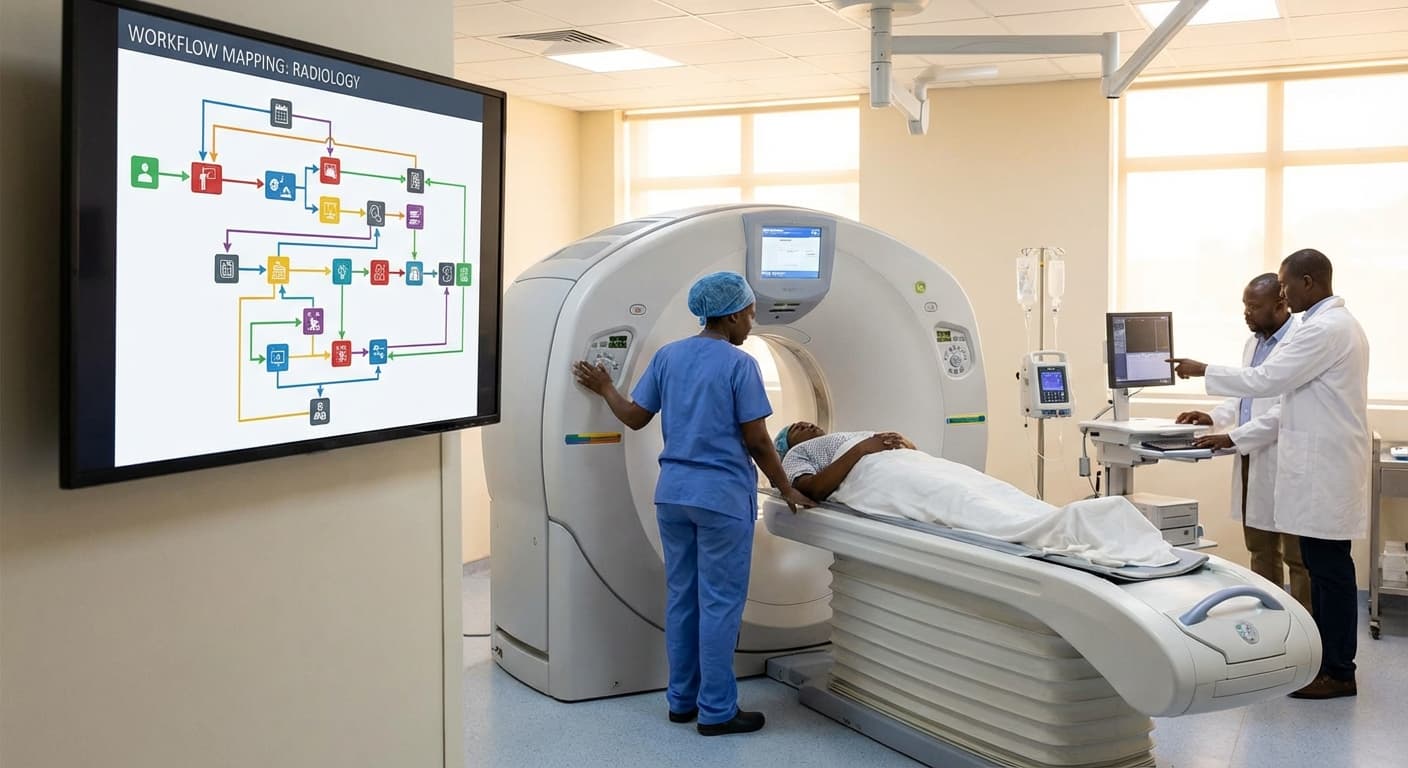
Department Workflow Mapping Service (Radiology/ICU/OT/Lab/Dialysis) in Botswana
Engineering Excellence & Technical Support
Department Workflow Mapping Service (Radiology/ICU/OT/Lab/Dialysis) High-standard technical execution following OEM protocols and local regulatory frameworks.
Streamlined Patient Pathways
Visualizing patient journeys across Radiology, ICU, OT, Lab, and Dialysis departments in Botswana, we identify bottlenecks and optimize workflows for faster diagnosis, treatment, and improved patient outcomes. Our detailed maps ensure seamless transitions between services.
Enhanced Resource Allocation
By mapping the intricate dependencies and resource utilization within Botswana's critical departments, we empower efficient allocation of medical equipment, personnel, and time. This leads to reduced waiting times and maximized operational efficiency.
Standardized Operational Protocols
Our workflow mapping service provides clear, standardized operational procedures for each step of patient care in Radiology, ICU, OT, Lab, and Dialysis. This consistency across Botswana's healthcare facilities ensures quality control, reduces errors, and facilitates effective training and onboarding.
What Is Department Workflow Mapping Service (Radiology/icu/ot/lab/dialysis) In Botswana?
The Department Workflow Mapping Service in Botswana, specifically within critical departments such as Radiology, Intensive Care Unit (ICU), Operating Theatre (OT), Laboratory, and Dialysis, is a systematic process of documenting, analyzing, and optimizing the sequential activities and decision points involved in the delivery of patient care and departmental operations. This service aims to identify inefficiencies, bottlenecks, redundancies, and potential risks within existing workflows, and to design or re-engineer them for improved patient outcomes, enhanced operational efficiency, cost reduction, and better resource utilization. The methodology typically involves discrete event simulation, process flowcharting, value stream mapping, and root cause analysis.
This service is primarily needed by healthcare institutions in Botswana, including public hospitals, private clinics, and specialized medical centers, that operate these critical departments. It is also relevant for healthcare administrators, operational managers, clinical department heads, quality improvement teams, and IT professionals responsible for the implementation of health information systems.
Typical use cases include:
- Radiology: Mapping the patient journey from referral to report generation, including image acquisition, processing, interpretation, and results dissemination, to reduce turnaround times and improve radiologist productivity.
- ICU: Analyzing patient admission, monitoring, treatment, and discharge processes to optimize bed utilization, streamline interdisciplinary communication, and minimize adverse events.
- OT: Documenting the surgical workflow from patient scheduling and pre-operative preparation to intra-operative procedures and post-operative recovery, with the goal of maximizing operating room utilization and minimizing delays.
- Laboratory: Mapping the pre-analytical, analytical, and post-analytical phases of laboratory testing to reduce sample rejection rates, improve TAT (Turnaround Time) for results, and ensure accuracy.
- Dialysis: Optimizing patient scheduling, treatment delivery, and resource allocation within dialysis units to enhance patient comfort, minimize wait times, and ensure efficient staff deployment.
| Department | Key Activities Mapped | Potential Improvement Areas | Stakeholders Involved |
|---|---|---|---|
| Radiology | Patient registration, appointment scheduling, imaging acquisition, image processing, radiologist interpretation, report generation, report dissemination. | Reduced report turnaround time, optimized scanner utilization, improved technologist workflow, enhanced reporting accuracy. | Radiologists, Radiographers, Sonographers, Nurses, IT support, Administration. |
| ICU | Patient admission criteria, patient transfer to ICU, monitoring protocols, ventilator management, medication administration, multidisciplinary rounds, patient discharge planning. | Improved patient flow, reduced length of stay, enhanced interdisciplinary communication, optimized nurse-to-patient ratios, minimized nosocomial infections. | Intensivists, ICU Nurses, Respiratory Therapists, Pharmacists, Physiotherapists, Patients/Families, Administration. |
| OT | Surgical scheduling, patient pre-operative assessment, operating room preparation, intra-operative procedure, post-operative recovery, patient transfer from recovery. | Maximized operating room utilization, reduced procedure delays, optimized surgical team efficiency, improved patient safety during peri-operative phases. | Surgeons, Anesthesiologists, Scrub Nurses, Circulating Nurses, Anaesthetic Technicians, Patients/Families, Administration. |
| Laboratory | Specimen collection, specimen transport, pre-analytical processing, analytical testing, post-analytical processing, result validation, report generation and distribution. | Reduced specimen rejection rates, improved TAT for test results, enhanced accuracy of results, optimized laboratory equipment utilization. | Pathologists, Medical Technologists, Phlebotomists, Nurses, Clerical Staff, IT Support, Administration. |
| Dialysis | Patient scheduling for dialysis sessions, patient pre-dialysis assessment, dialysis treatment administration, post-dialysis monitoring, equipment cleaning and sterilization, patient discharge. | Optimized patient scheduling and wait times, improved staff allocation, enhanced patient comfort and safety, efficient use of dialysis machines. | Nephrologists, Dialysis Nurses, Dialysis Technicians, Patients, Administration. |
Key Components of Department Workflow Mapping Service
- Process Identification and Definition
- Data Collection and Analysis
- Workflow Visualization (e.g., Flowcharts, BPMN diagrams)
- Bottleneck Identification
- Root Cause Analysis of Inefficiencies
- Development of Optimized Workflow Designs
- Simulation and Modeling (optional)
- Implementation Planning and Support
- Performance Measurement and Monitoring
Who Needs Department Workflow Mapping Service (Radiology/icu/ot/lab/dialysis) In Botswana?
Department workflow mapping is crucial for optimizing operations, identifying bottlenecks, and improving efficiency within specialized healthcare departments. In Botswana, institutions facing challenges in patient flow, resource allocation, or overall service delivery within Radiology, Intensive Care Units (ICU), Operating Theatres (OT), Laboratories, and Dialysis centers would greatly benefit from a professional workflow mapping service. This service provides a structured approach to understanding, analyzing, and redesigning current processes, leading to enhanced patient care, reduced costs, and improved staff satisfaction.
| Department | Description | Key Challenges Addressed by Workflow Mapping | Target Sub-Departments/Units |
|---|---|---|---|
| Radiology | Diagnostic imaging services (X-ray, CT, MRI, Ultrasound). | Long patient wait times, inefficient equipment utilization, delayed report turnaround, inter-departmental communication gaps, imaging protocol standardization. | Outpatient imaging, inpatient imaging, emergency imaging, interventional radiology, reporting and PACS (Picture Archiving and Communication System) workflow. |
| Intensive Care Unit (ICU) | Critical care for patients requiring advanced life support and monitoring. | Inefficient patient admission/discharge processes, communication breakdowns between care teams, medication administration errors, suboptimal resource allocation (beds, ventilators), nurse-to-patient ratio optimization. | Medical ICU (MICU), Surgical ICU (SICU), Cardiac ICU (CCU), Neonatal ICU (NICU), Pediatric ICU (PICU). |
| Operating Theatre (OT) | Surgical procedures requiring sterile environments and specialized equipment. | Long operating room turnaround times, scheduling conflicts, instrument/equipment availability issues, sterile processing inefficiencies, staff handover challenges, infection control process optimization. | Pre-operative assessment, surgical scheduling, intra-operative workflow, post-operative recovery, sterile supply chain management. |
| Laboratory | Diagnostic testing of biological samples (blood, urine, tissue). | Sample collection and transport delays, high error rates in testing, inefficient sample processing, slow result delivery, instrument maintenance and calibration challenges, specimen tracking. | Hematology, Biochemistry, Microbiology, Histopathology, Blood Transfusion Services, Specimen Reception and Processing. |
| Dialysis | Renal replacement therapy for patients with kidney failure. | Patient scheduling and appointment management, machine allocation and cleaning protocols, medication administration efficiency, staff allocation and workload balance, infection prevention during dialysis, waste management. | Hemodialysis units, Peritoneal Dialysis program, patient education and support services. |
Target Customers and Departments in Botswana for Workflow Mapping Service
- Hospitals (Public and Private)
- Specialized Medical Centers
- University Teaching Hospitals
- Diagnostic Laboratories (Public and Private)
- Dialysis Clinics
Department Workflow Mapping Service (Radiology/icu/ot/lab/dialysis) Process In Botswana
This document outlines the workflow for the Department Workflow Mapping Service in Botswana, specifically focusing on the Radiology, Intensive Care Unit (ICU), Operating Theatre (OT), Laboratory, and Dialysis departments. The service aims to analyze, document, and optimize operational processes within these critical healthcare units to enhance efficiency, reduce errors, and improve patient care.
| Stage | Description | Key Activities | Deliverables | Responsible Parties | Timeline (Indicative) |
|---|---|---|---|---|---|
| Inquiry and Initial Consultation | The process begins when a department or hospital administration expresses interest in the workflow mapping service. | Contacting the service provider, scheduling initial meetings, understanding the department's needs and challenges. | Initial understanding of requirements, agreement to proceed with consultation. | Department/Hospital Administration, Service Provider Representative | 1-3 Days |
| Scope Definition and Project Planning | Clearly defining the boundaries and objectives of the workflow mapping project. | Detailed discussions on which specific processes/areas within the department will be mapped, setting clear SMART goals, identifying key stakeholders, developing a project plan with timelines and resource allocation. | Project Charter, Detailed Project Plan, Stakeholder Register. | Service Provider Lead, Department Manager/Key Personnel | 3-5 Days |
| Data Collection and Current State Analysis | Gathering comprehensive information about existing workflows and processes. | Conducting interviews with staff at all levels, observing operations in real-time, reviewing existing documentation (SOPs, guidelines, forms), collecting performance data (wait times, error rates, resource utilization). | Interview Transcripts, Observation Notes, Collected Data, Initial Process Flow Diagrams. | Service Provider Analysts, Department Staff (All Levels) | 1-3 Weeks |
| Workflow Mapping and Documentation | Visually representing the current state of the identified workflows. | Creating detailed process maps using standard notation (e.g., BPMN), documenting each step, decision point, role, and system involved, identifying inputs and outputs for each activity. | Comprehensive 'As-Is' Workflow Maps for each defined process. | Service Provider Analysts | 1-2 Weeks |
| Analysis and Identification of Bottlenecks/Opportunities | Analyzing the documented workflows to identify inefficiencies and areas for improvement. | Identifying bottlenecks, redundant steps, delays, potential error points, areas of high workload, opportunities for automation, standardization, and resource optimization. | Bottleneck Report, Opportunity Identification Document. | Service Provider Analysts, Department Subject Matter Experts (SMEs) | 1 Week |
| Proposed Future State Design | Developing optimized and improved workflows based on the analysis. | Designing 'To-Be' workflow diagrams, proposing changes to process steps, roles, responsibilities, technology integration, and performance metrics, considering best practices. | Proposed 'To-Be' Workflow Maps, Recommendations Report. | Service Provider Analysts, Department SMEs | 1-2 Weeks |
| Validation and Refinement | Presenting the proposed future state to stakeholders for feedback and making necessary adjustments. | Conducting workshops with department staff to review proposed maps and recommendations, gathering feedback, iterating on the design based on stakeholder input. | Validated 'To-Be' Workflow Maps, Finalized Recommendations. | Service Provider Analysts, Department Staff, Management | 1 Week |
| Implementation Planning | Developing a detailed plan for implementing the proposed workflow changes. | Creating an implementation roadmap, defining specific actions, assigning responsibilities, setting timelines, identifying training needs, developing communication plans, and outlining change management strategies. | Implementation Plan, Training Plan, Communication Plan. | Service Provider Lead, Department Manager, Relevant Department Heads | 1 Week |
| Execution and Monitoring | Putting the proposed workflow changes into practice and tracking their effectiveness. | Implementing the approved changes, providing training to staff, monitoring the new processes, collecting performance data, and addressing any issues that arise during the transition. | Implemented Processes, Performance Data Reports, Issue Log. | Department Staff, Department Management, Service Provider (Support) | Ongoing (e.g., 4-8 Weeks) |
| Post-Implementation Review and Handover | Evaluating the success of the implemented changes and formally handing over the project. | Conducting a final review of performance against initial goals, documenting lessons learned, providing a comprehensive project report, and formally transferring ownership of the optimized processes to the department. | Final Project Report, Lessons Learned Document, Completed Handover Documentation. | Service Provider Lead, Department Manager, Hospital Administration | 1 Week |
Workflow Stages
- Inquiry and Initial Consultation
- Scope Definition and Project Planning
- Data Collection and Current State Analysis
- Workflow Mapping and Documentation
- Analysis and Identification of Bottlenecks/Opportunities
- Proposed Future State Design
- Validation and Refinement
- Implementation Planning
- Execution and Monitoring
- Post-Implementation Review and Handover
Department Workflow Mapping Service (Radiology/icu/ot/lab/dialysis) Cost In Botswana
Understanding the cost of Department Workflow Mapping Services in Botswana, specifically for high-demand areas like Radiology, Intensive Care Units (ICUs), Operating Theatres (OTs), Laboratories, and Dialysis units, requires a detailed examination of various pricing factors. These services are crucial for optimizing efficiency, patient safety, and resource utilization within these critical healthcare departments.
The cost of workflow mapping is not a fixed rate and can vary significantly based on several key considerations. These include the scope and complexity of the department being mapped, the level of detail required in the analysis, the experience and reputation of the consulting firm, the duration of the engagement, and the specific methodologies and tools employed. Furthermore, factors like the size of the department, the number of personnel involved, and the extent of process documentation needed will also influence the overall price.
| Department Type | Estimated Cost Range (BWP) | Notes |
|---|---|---|
| Radiology Department | 15,000 - 40,000 | Covers general X-ray, CT, MRI, ultrasound. Complexity increases with the number of modalities and patient throughput. |
| Intensive Care Unit (ICU) | 20,000 - 50,000 | Focuses on patient flow, staff allocation, equipment utilization, and critical care pathways. High patient acuity and rapid decision-making are key factors. |
| Operating Theatre (OT) | 25,000 - 60,000 | Includes pre-op, intra-op, and post-op workflows, scheduling, sterilization, and resource management. High-stakes environment with strict protocols. |
| Laboratory Department | 12,000 - 35,000 | Covers sample reception, testing processes, quality control, and reporting. Variations depend on the range of tests offered and automation levels. |
| Dialysis Unit | 18,000 - 45,000 | Focuses on patient scheduling, treatment protocols, equipment maintenance, and staff coordination. Repetitive yet critical patient care. |
Key Pricing Factors for Department Workflow Mapping in Botswana
- {"title":"Scope and Complexity of the Department","description":"Larger, more intricate departments with a higher volume of patient interactions and diverse processes (e.g., a comprehensive Radiology department with multiple imaging modalities vs. a single-bed ICU) will generally incur higher costs due to the increased effort in data collection and analysis."}
- {"title":"Level of Detail Required","description":"Basic process overviews will be less expensive than in-depth analyses that include every step, decision point, potential bottleneck, and interdependency within the workflow."}
- {"title":"Consulting Firm's Expertise and Reputation","description":"Established firms with a proven track record in healthcare workflow optimization and specialized knowledge of Botswana's healthcare landscape may command higher fees."}
- {"title":"Duration of Engagement","description":"The total cost is directly proportional to the time spent on site for observation, interviews, data analysis, and report generation."}
- {"title":"Methodologies and Tools Used","description":"The adoption of advanced software for process modeling, simulation, and data analytics can influence costs, though it may also lead to more robust and insightful outcomes."}
- {"title":"Number of Personnel Involved (Client-side)","description":"The availability and engagement level of staff from the healthcare department for interviews and workshops will impact the efficiency and cost of the mapping process."}
- {"title":"Geographic Location within Botswana","description":"While less impactful for remote consulting, if on-site presence is required, travel and accommodation costs for consultants can add to the overall expense, especially for remote areas."}
- {"title":"Deliverables and Reporting Requirements","description":"The complexity and format of the final report, including detailed process maps, recommendations, implementation plans, and training materials, will affect the cost."}
Affordable Department Workflow Mapping Service (Radiology/icu/ot/lab/dialysis) Options
Our Affordable Department Workflow Mapping Service is designed to optimize operations within critical hospital departments including Radiology, ICU, Operating Theatre (OT), Laboratory, and Dialysis. By meticulously analyzing and documenting existing workflows, we identify bottlenecks, inefficiencies, and areas for improvement, leading to enhanced patient care, reduced costs, and increased staff productivity. We offer flexible value bundles tailored to the specific needs and budget of each department.
| Value Bundle | Included Services | Target Department(s) | Key Value Proposition | Estimated Price Range (per department) | Cost-Saving Strategies Integrated |
|---|---|---|---|---|---|
| Essential Workflow Audit | As-is workflow documentation, high-level bottleneck identification, basic recommendations. | Any | Quick identification of obvious inefficiencies and cost-saving opportunities. | $3,000 - $7,000 | Eliminating redundant steps, optimizing task sequencing, reducing idle time. |
| Comprehensive Workflow Optimization | Detailed as-is and to-be workflow design, process re-engineering, simulation (optional), implementation roadmap, KPI development. | Radiology, ICU, OT, Lab, Dialysis | Significant improvements in efficiency, quality, and patient safety with a clear path to implementation. | $8,000 - $20,000 | Lean methodologies (reducing waste), Six Sigma principles (reducing variation), automation identification, improved inventory management. |
| Digital Transformation Accelerator | Comprehensive optimization plus assessment for EHR/HIS integration, digital tool recommendations, change management planning, training needs analysis. | Any (with focus on technology adoption) | Seamless integration of optimized workflows with digital solutions for maximum impact and future scalability. | $15,000 - $30,000+ | Leveraging technology for real-time data, reducing manual data entry, AI/ML opportunities, cloud-based solutions. |
| Department-Specific Deep Dive | Tailored workflow mapping and optimization focused on the unique challenges and critical pathways of a single department (e.g., ER patient journey, surgical scheduling, lab test turnaround time). | Radiology, ICU, OT, Lab, Dialysis | Deep expertise applied to the most critical operational areas for maximum impact. | $6,000 - $18,000 | Optimizing specific equipment utilization (e.g., MRI scanner uptime), staffing models for peak demand, inventory control for critical supplies. |
Key Benefits of Workflow Mapping:
- Improved patient flow and reduced wait times.
- Enhanced resource utilization (staff, equipment, consumables).
- Standardized processes and reduced variation.
- Identification of safety risks and opportunities for quality improvement.
- Cost reduction through elimination of waste and duplication.
- Increased staff satisfaction and reduced burnout.
- Foundation for digital transformation and technology adoption.
Verified Providers In Botswana
When seeking healthcare in Botswana, it's crucial to ensure you're engaging with Verified Providers. These are healthcare professionals and facilities that have met stringent quality, safety, and ethical standards, undergoing thorough credentialing processes. In the realm of health financing and access to quality medical services, Franance Health stands out as a leader. Their commitment to rigorously vetting and partnering with only the most qualified providers in Botswana makes them the optimal choice for individuals and organizations prioritizing reliable and excellent healthcare.
| Credentialing Aspect | Franance Health's Rigor | Benefit to Members |
|---|---|---|
| Professional Qualifications & Licensing | Verification of all medical degrees, specialized certifications, and active, unblemished licenses. | Ensures providers possess the foundational knowledge and legal authorization to practice. |
| Clinical Experience & Specialization | Assessment of years of practice, specific areas of expertise, and track record in relevant medical fields. | Guarantees access to experienced specialists best suited for particular conditions. |
| Patient Safety & Quality Standards | Evaluation of adherence to infection control protocols, use of modern medical equipment, and evidence-based treatment methodologies. | Minimizes risks and ensures care aligns with the highest medical standards. |
| Ethical Conduct & Professionalism | Background checks and review of professional conduct records to ensure ethical practice. | Builds trust and ensures a respectful and professional patient-provider relationship. |
| Facility Infrastructure & Resources | Assessment of the quality and suitability of medical facilities, including equipment and support staff. | Confirms that facilities are well-equipped to deliver effective and efficient care. |
Why Franance Health is the Best Choice for Verified Providers in Botswana
- Uncompromising Vetting Process: Franance Health implements a multi-faceted vetting system that goes beyond basic licensing. They scrutinize qualifications, experience, patient feedback, and adherence to international best practices.
- Access to a Comprehensive Network: Their curated network includes a wide range of specialists and facilities, ensuring members have access to the best care for any medical need.
- Commitment to Quality and Safety: Franance Health's verification process prioritizes providers who demonstrate a strong commitment to patient safety, evidence-based medicine, and continuous quality improvement.
- Transparency and Trust: By partnering exclusively with verified providers, Franance Health offers unparalleled transparency, allowing members to make informed healthcare decisions with confidence.
- Enhanced Patient Experience: Members benefit from a streamlined and efficient healthcare journey, knowing they are in the hands of competent and trustworthy professionals.
- Cost-Effectiveness: While prioritizing quality, Franance Health also works to ensure that their network of verified providers offers competitive and fair pricing, maximizing the value of healthcare investments.
Scope Of Work For Department Workflow Mapping Service (Radiology/icu/ot/lab/dialysis)
This Scope of Work (SOW) outlines the services to be provided for the mapping and optimization of existing workflows within various hospital departments, including Radiology, Intensive Care Unit (ICU), Operating Theatre (OT), Laboratory, and Dialysis. The primary objective is to identify inefficiencies, bottlenecks, and areas for improvement in current processes, leading to enhanced operational efficiency, reduced errors, and improved patient care.
| Phase | Activities | Deliverables | Timeline (Estimated) |
|---|---|---|---|
| Kick-off meeting with stakeholders. Define project scope and detailed plan. Establish communication protocols. Identify key personnel and subject matter experts (SMEs) for each department. | Project Plan (including detailed timeline and resource allocation). Stakeholder Register. Communication Plan. | 1-2 Weeks |
| Conduct interviews and workshops with SMEs from each department. Observe current processes in action. Gather existing documentation (SOPs, checklists, etc.). Map current workflows using standardized notation (e.g., BPMN). Validate mapped workflows with SMEs. | Current State Workflow Maps (per department). Summary of identified inefficiencies and bottlenecks (initial findings). Raw data from interviews and observations. | 4-6 Weeks (per department, concurrently or sequentially depending on scope) |
| Analyze identified inefficiencies and brainstorm optimization strategies. Design future state workflows incorporating best practices and technology solutions. Develop proposed process improvements and their rationale. Conduct re-validation workshops with SMEs for proposed workflows. | Future State Workflow Maps (per department). Detailed recommendations for workflow optimization (including rationale). Impact assessment of proposed changes (potential benefits, risks, resource needs). | 3-5 Weeks (per department) |
| Consolidate all workflow maps and recommendations into a comprehensive report. Develop user-friendly documentation for both current and future state workflows. Present findings and recommendations to stakeholders. | Final Report (including executive summary, detailed analysis, current and future state maps, recommendations, and implementation considerations). Training materials (if required for new processes). Presentation materials. | 2-3 Weeks |
Project Objectives
- To comprehensively document existing workflows for Radiology, ICU, OT, Laboratory, and Dialysis departments.
- To identify and analyze bottlenecks, redundancies, and inefficiencies within each mapped workflow.
- To propose actionable recommendations for workflow optimization and improvement.
- To facilitate better understanding of inter-departmental dependencies.
- To establish baseline metrics for future performance monitoring.
- To deliver clear, actionable documentation of current and proposed workflows.
Service Level Agreement For Department Workflow Mapping Service (Radiology/icu/ot/lab/dialysis)
This Service Level Agreement (SLA) outlines the performance metrics and guarantees for the Department Workflow Mapping Service. This service is critical for optimizing processes within the Radiology, Intensive Care Unit (ICU), Operating Theatre (OT), Laboratory, and Dialysis departments. The primary goals are to ensure efficient workflow, reduce turnaround times, and improve overall operational effectiveness. This SLA defines the expected response times for service requests and the guaranteed uptime for the workflow mapping platform and associated support.
| Service Component | Response Time Guarantee | Uptime Guarantee |
|---|---|---|
| Workflow Mapping Request (New Mapping) | 10 business days for initial consultation and scope definition. 4 weeks for initial draft map submission. | N/A (Project-based delivery) |
| Workflow Mapping Request (Update/Modification) | 3 business days for initial acknowledgment. 10 business days for minor updates (e.g., staff changes, equipment relocation). 20 business days for significant process changes. | N/A (Project-based delivery) |
| Technical Support for Mapping Platform | 1 hour for critical issues (platform inoperable). 4 business hours for high-priority issues (significant functionality impaired). 1 business day for normal requests (questions, minor issues). | 99.5% uptime during operational hours (Monday - Friday, 8:00 AM - 5:00 PM) |
| Access to Existing Workflow Maps | Immediate access via the central repository. | 99.8% uptime during operational hours (Monday - Friday, 8:00 AM - 5:00 PM) |
| Consultation on Workflow Optimization Findings | 5 business days for scheduling a follow-up meeting post-map submission. | N/A (Consultation-based) |
Service Objectives
- To provide accurate and comprehensive workflow maps for designated departments.
- To facilitate identification of bottlenecks and areas for process improvement.
- To support the implementation of optimized workflows.
- To ensure timely access to workflow mapping resources and support.
Frequently Asked Questions

Ready when you are
Let's scope your Department Workflow Mapping Service (Radiology/ICU/OT/Lab/Dialysis) in Botswana project in Botswana.

Scaling healthcare logistics and technical systems across the entire continent.