
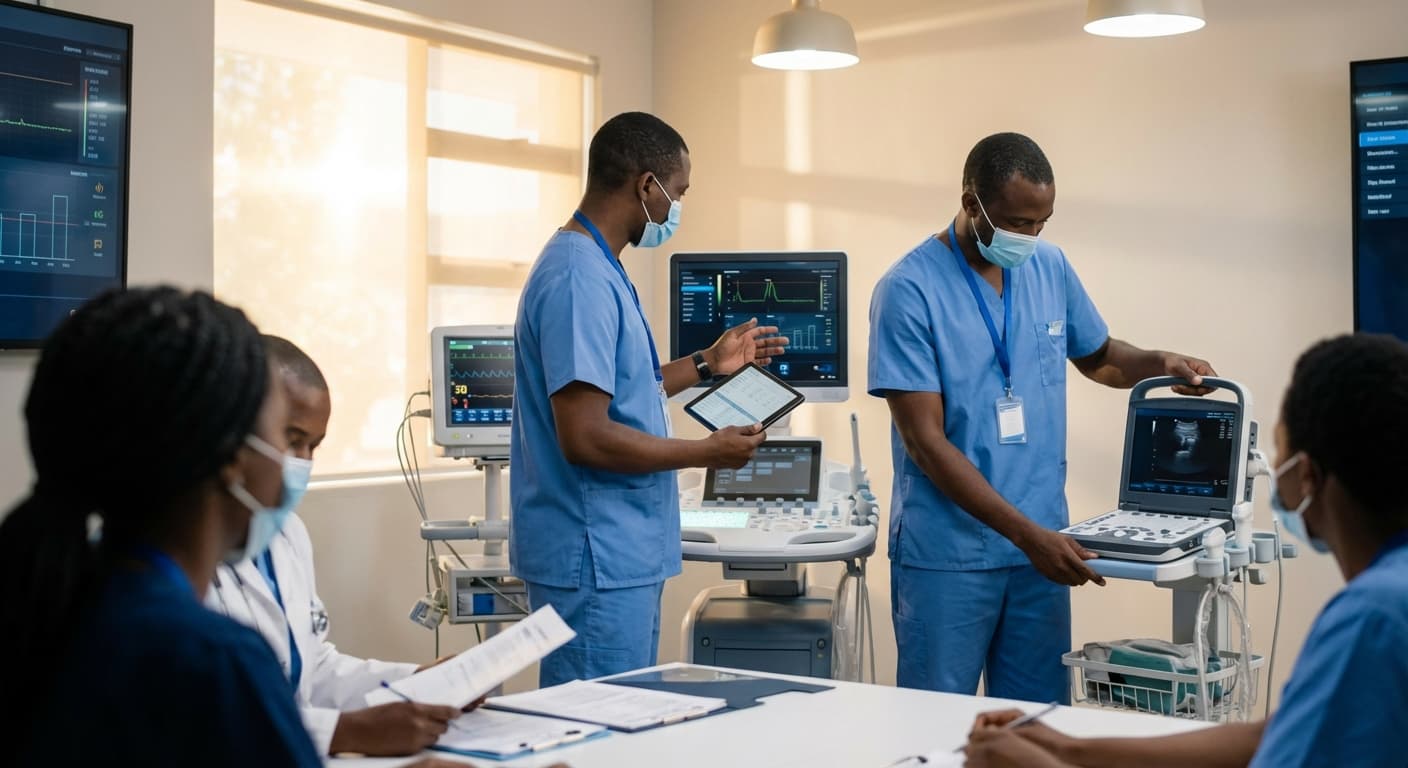
Clinical Needs Assessment for Medical Equipment in Botswana
Engineering Excellence & Technical Support
Clinical Needs Assessment for Medical Equipment High-standard technical execution following OEM protocols and local regulatory frameworks.
Strengthening Primary Healthcare Infrastructure
Identified critical equipment gaps in rural clinics, prioritizing essential diagnostic tools and basic surgical instruments. This assessment directly informs procurement strategies to enhance primary healthcare delivery and improve patient outcomes in underserved areas of Botswana.
Optimizing Hospital Sterilization & Infection Control
Evaluated existing sterilization equipment and practices in district hospitals. Recommendations focus on upgrading autoclaves and implementing robust infection control protocols to reduce healthcare-associated infections and ensure patient safety.
Enhancing Tertiary Care Capabilities
Assessed the needs of specialized departments within referral hospitals, including diagnostic imaging and intensive care. The findings will guide the acquisition of advanced medical technologies to expand treatment options and improve the management of complex medical conditions in Botswana.
What Is Clinical Needs Assessment For Medical Equipment In Botswana?
A Clinical Needs Assessment for Medical Equipment in Botswana is a systematic process of identifying, quantifying, and prioritizing the medical equipment requirements of healthcare facilities. This service involves a comprehensive evaluation of current equipment inventory, its operational status, utilization patterns, and alignment with existing and projected clinical service delivery models. It also considers epidemiological data, disease prevalence, population demographics, and national health policies to forecast future equipment demands. The assessment aims to ensure that healthcare providers have access to appropriate, functional, and sufficient medical equipment to deliver quality patient care, optimize resource allocation, and improve health outcomes across the nation. It is a critical component of strategic health system planning and infrastructure development.
| Stakeholder/Entity | Reason for Needing the Assessment | Typical Use Cases |
|---|---|---|
| Ministry of Health and Wellness (MoHW) | Strategic health system planning, resource allocation, national equipment procurement strategies, policy development, monitoring and evaluation of healthcare infrastructure. | Developing national medical equipment procurement plans, identifying critical equipment shortages for disease control programs, establishing maintenance strategies, justifying budget allocations for capital expenditure. |
| District Health Management Teams (DHMTs) | Optimizing equipment deployment within their jurisdiction, identifying specific needs for district hospitals and primary health facilities, improving service delivery at the local level. | Prioritizing equipment for newly established health posts, assessing the need for upgrades to existing diagnostic imaging capabilities, planning for mobile clinic equipment needs. |
| Individual Healthcare Facilities (Hospitals, Clinics, Health Centers) | Ensuring availability of necessary equipment for patient diagnosis and treatment, identifying replacement and upgrade requirements, planning for expansion of services. | Justifying requests for specific diagnostic equipment (e.g., ultrasound, ECG machines), assessing the need for advanced surgical instruments, planning for the replacement of aging anesthesia machines. |
| International Development Partners & NGOs | Informing targeted funding and project support, ensuring alignment of their interventions with national priorities, maximizing the impact of their resource contributions. | Identifying specific equipment needs for HIV/AIDS, TB, or malaria programs, supporting the establishment of new specialized units (e.g., neonatal intensive care), providing equipment for emergency response. |
| Medical Equipment Suppliers and Manufacturers | Understanding the market demand and specifications for medical equipment in Botswana, informing product development and sales strategies. | Responding to tender requests based on identified needs, adapting product offerings to meet local maintenance and training requirements, developing long-term supply chain strategies. |
Key Components of a Clinical Needs Assessment for Medical Equipment in Botswana
- Inventory and condition assessment of existing medical equipment.
- Analysis of equipment utilization rates and maintenance records.
- Evaluation of current clinical service offerings and patient caseloads.
- Forecasting of future service demands based on demographic trends and disease burden.
- Identification of gaps in equipment availability, functionality, and suitability.
- Prioritization of equipment needs based on clinical impact, cost-effectiveness, and strategic alignment.
- Development of recommendations for procurement, maintenance, training, and infrastructure upgrades.
- Consideration of local context, including availability of consumables, spare parts, and trained technical personnel.
Who Needs Clinical Needs Assessment For Medical Equipment In Botswana?
A clinical needs assessment for medical equipment in Botswana is crucial for ensuring that healthcare facilities are equipped with the right tools to provide effective and efficient patient care. This assessment identifies gaps in current equipment, prioritizes essential replacements and upgrades, and informs strategic procurement decisions. The primary goal is to optimize resource allocation, improve service delivery, and ultimately enhance health outcomes across the nation. Various entities within Botswana's healthcare system require this assessment to make informed decisions.
| Customer/Department | Key Roles and Responsibilities in Needs Assessment | Impact of Needs Assessment |
|---|---|---|
| Ministry of Health and Wellness (MoH&W) | Policy setting, national health strategy development, budget allocation, procurement oversight, standardization of equipment, national health information systems. | Ensures equitable distribution of essential equipment, supports evidence-based resource planning, strengthens national healthcare infrastructure. |
| District Health Management Teams (DHMTs) | Regional planning and resource allocation, supervision of health facilities within their district, identifying local equipment needs, coordinating procurement at district level. | Tailors equipment availability to specific district needs, improves service delivery at the district level, enhances local capacity. |
| Public Hospitals (Tertiary, Secondary, Primary) | Direct provision of comprehensive medical services, identifying equipment deficits for advanced diagnostics and treatment, managing large equipment inventories, training staff on new equipment. | Enables advanced medical interventions, improves patient outcomes through modern diagnostics and treatments, ensures operational efficiency. |
| Health Centres and Clinics | First-level healthcare providers, identifying essential equipment for primary care, maternal and child health, and emergency services, reporting on equipment functionality and needs. | Ensures availability of basic and essential medical equipment for primary healthcare services, improves access to care in rural and remote areas. |
| Botswana Defence Force (BDF) Medical Services | Providing healthcare to military personnel and their families, ensuring readiness for field medical support, maintaining specialized equipment for military medical operations. | Maintains operational readiness of medical units, provides specialized healthcare tailored to military needs, ensures effective deployment of medical resources. |
| Botswana Police Service (BPS) Medical Services | Providing healthcare to police officers and their families, supporting occupational health and safety, managing medical equipment for police-related incidents. | Ensures the health and well-being of law enforcement personnel, provides medical support during critical incidents. |
| Parastatal Organizations with Healthcare Facilities | Providing healthcare services to employees, managing in-house clinics or hospitals, ensuring compliance with occupational health and safety regulations. | Maintains a healthy workforce, reduces downtime due to illness, provides essential healthcare services to employees. |
| Non-Governmental Organizations (NGOs) | Supplementing government healthcare efforts, focusing on specific health areas or populations, procuring and managing equipment for their projects. | Extends healthcare reach, addresses specific health challenges, provides specialized equipment for targeted interventions. |
| Private Healthcare Providers | Offering specialized and general medical services, competing with public sector, investing in advanced technology and equipment to attract patients. | Enhances service diversity and quality in the private sector, provides alternative healthcare options for those who can afford it. |
| Academic and Training Institutions | Training future healthcare professionals, utilizing equipment for practical learning, ensuring access to current medical technologies for educational purposes. | Ensures well-trained healthcare workforce with hands-on experience on modern equipment, contributes to medical research and innovation. |
| Specialized Medical Units | Requiring highly specific and often complex equipment for specialized procedures and patient care, such as ICU ventilators, dialysis machines, CT scanners, MRI machines, surgical lasers. | Enables advanced diagnostics and life-saving interventions, improves management of chronic and complex diseases, enhances patient safety and recovery. |
Target Customers and Departments Requiring Clinical Needs Assessment for Medical Equipment in Botswana
- Ministry of Health and Wellness (MoH&W)
- District Health Management Teams (DHMTs)
- Public Hospitals (Tertiary, Secondary, Primary)
- Health Centres and Clinics
- Botswana Defence Force (BDF) Medical Services
- Botswana Police Service (BPS) Medical Services
- Parastatal Organizations with Healthcare Facilities (e.g., BCL)
- Non-Governmental Organizations (NGOs) involved in healthcare provision
- Private Healthcare Providers (Hospitals, Clinics)
- Academic and Training Institutions (for teaching hospitals and practical training)
- Specialized Medical Units (e.g., Intensive Care Units, Dialysis Centres, Radiology Departments, Surgical Theatres, Laboratories, Emergency Departments, Maternity Wards, Paediatric Wards, Oncology Units)
Clinical Needs Assessment For Medical Equipment Process In Botswana
This document outlines the typical workflow for a Clinical Needs Assessment for Medical Equipment process in Botswana, from initial inquiry to the final execution and procurement. The process is designed to ensure that the procured equipment aligns with the actual clinical needs of healthcare facilities, promoting efficient resource allocation and improved patient care.
| Stage | Description | Key Activities | Responsible Parties | Deliverables |
|---|---|---|---|---|
| Inquiry & Initial Request | The process begins when a healthcare facility or a relevant stakeholder identifies a need for new or replacement medical equipment. | Formal request submitted to the Ministry of Health and Wellness (MoHW) or designated procurement body. Clarification of initial request. | Healthcare Facility (e.g., hospital, clinic), District Health Management Team (DHMT), MoHW Procurement Unit. | Approved initial request, Terms of Reference (TOR) for the assessment. |
| Needs Identification & Data Collection | A detailed assessment to understand the specific clinical requirements and gaps. | Site visits to healthcare facilities, interviews with clinical staff (doctors, nurses, technicians), review of patient data and existing equipment inventory, observation of clinical workflows. | Clinical Needs Assessment Team (comprising clinical specialists, biomedical engineers, MoHW representatives), Facility Management, Healthcare Professionals. | Needs assessment report detailing identified gaps, usage patterns, patient demographics, and service requirements. |
| Analysis & Prioritization | Evaluating the collected data to determine the most critical equipment needs and their urgency. | Analysis of collected data, identification of priority equipment based on clinical impact, disease burden, cost-effectiveness, and available budget. Development of a prioritized list of equipment. | Clinical Needs Assessment Team, MoHW Planning and Budgeting Department, MoHW Procurement Unit. | Prioritized list of medical equipment with justification, preliminary budget estimates. |
| Specification Development | Defining the technical and functional requirements for each prioritized piece of equipment. | Development of detailed technical specifications, including performance requirements, safety standards, compatibility with existing infrastructure, maintenance needs, and warranty requirements. Consultation with potential suppliers for technical feasibility. | Clinical Needs Assessment Team, Biomedical Engineering Department, MoHW Procurement Unit, Relevant Technical Experts. | Detailed technical specifications for each equipment item, tender document drafts. |
| Procurement Process | The formal process of acquiring the identified medical equipment. | Tendering process (advertisement, bid submission, evaluation of bids based on technical and financial criteria), contract negotiation, and award. Compliance with Public Procurement Act and MoHW guidelines. | MoHW Procurement Unit, Public Procurement Regulatory Authority (PPRA), Tender Committee, Successful bidder(s). | Awarded contract(s) for equipment supply. |
| Installation & Training | Ensuring the equipment is properly installed and operational, and staff are trained to use it effectively. | Delivery, installation, commissioning, and calibration of equipment. Training of clinical and technical staff on operation, maintenance, and troubleshooting. Development of user manuals. | Supplier/Contractor, Biomedical Engineering Department, Healthcare Facility Staff, MoHW. | Installed and functional equipment, trained personnel, signed acceptance certificates. |
| Post-Installation Support & Evaluation | Ongoing monitoring of equipment performance and addressing any issues. | Routine maintenance and repair services as per contract. Periodic performance evaluation of equipment. Feedback collection from users. Assessment of long-term impact on patient care and operational efficiency. | Biomedical Engineering Department, MoHW (e.g., Quality Assurance Unit), Healthcare Facility Staff, Supplier/Contractor. | Maintenance logs, performance reports, user feedback, impact assessment reports. |
Workflow Stages
- Inquiry & Initial Request
- Needs Identification & Data Collection
- Analysis & Prioritization
- Specification Development
- Procurement Process
- Installation & Training
- Post-Installation Support & Evaluation
Clinical Needs Assessment For Medical Equipment Cost In Botswana
This document outlines a clinical needs assessment for medical equipment in Botswana, focusing on the crucial aspect of cost. Understanding the pricing of essential medical devices is paramount for effective healthcare planning, resource allocation, and ensuring accessibility for the population. This assessment aims to provide a foundational understanding of the factors influencing medical equipment costs in Botswana and present estimated price ranges in the local currency, the Botswana Pula (BWP).
Pricing Factors for Medical Equipment in Botswana:
Several key factors contribute to the final cost of medical equipment in Botswana. These include:
- Import Duties and Taxes: As Botswana is a net importer of medical equipment, import duties, Value Added Tax (VAT), and other levies significantly add to the landed cost.
- Shipping and Logistics: The cost of international freight, insurance, customs clearance, and local transportation from ports of entry to healthcare facilities across Botswana can be substantial.
- Supplier Markups and Distribution Channels: Local distributors and suppliers add their margins, which vary depending on their operational costs, exclusivity agreements, and market reach.
- Brand and Manufacturer: Reputable international brands with established reputations for quality and reliability generally command higher prices compared to lesser-known or generic alternatives.
- Technology and Features: Advanced technological features, specialized functionalities, and higher precision in diagnostic or therapeutic equipment will naturally increase the cost.
- Warranty and After-Sales Service: The cost of extended warranties, maintenance contracts, and the availability of local technical support and spare parts are factored into the initial purchase price.
- Volume and Bulk Purchasing: Larger orders or government tenders may benefit from volume discounts, potentially lowering the per-unit cost.
- Currency Exchange Rates: Fluctuations in the exchange rate between BWP and major international currencies (e.g., USD, EUR) directly impact the cost of imported equipment.
- Regulatory Compliance: Costs associated with meeting Botswana's health regulations and standards, including any necessary local certifications or testing, can be passed on to the consumer.
- Training and Installation: The price often includes the cost of installation and basic training for healthcare professionals, especially for complex equipment.
Estimated Price Ranges in Botswana Pula (BWP):
The following table provides estimated price ranges for commonly used medical equipment in Botswana. It's important to note that these are indicative figures and can vary significantly based on the specific model, brand, supplier, and prevailing market conditions at the time of purchase. For accurate budgeting, detailed quotations from multiple suppliers are essential.
| Category | Item | Estimated Price Range (BWP) |
|---|---|---|
| Diagnostic Imaging | X-ray Machine (Mobile) | 60,000 - 350,000+ |
| Diagnostic Imaging | Ultrasound Machine (Basic/Portable) | 30,000 - 150,000+ |
| Diagnostic Imaging | Digital X-ray System (Fixed) | 200,000 - 1,000,000+ |
| Laboratory Equipment | Microscope (Compound) | 3,000 - 25,000+ |
| Laboratory Equipment | Centrifuge (Basic) | 5,000 - 30,000+ |
| Laboratory Equipment | Hematology Analyzer (Semi-automatic) | 40,000 - 200,000+ |
| Laboratory Equipment | Biochemistry Analyzer (Fully Automatic) | 100,000 - 500,000+ |
| Patient Monitoring | Vital Signs Monitor (Basic) | 5,000 - 40,000+ |
| Patient Monitoring | ECG Machine (12-channel) | 10,000 - 60,000+ |
| Patient Monitoring | Defibrillator (Manual/AED) | 20,000 - 100,000+ |
| Surgical & Anesthesia | Surgical Lights (Single Dome) | 15,000 - 80,000+ |
| Surgical & Anesthesia | Anesthesia Machine (Basic) | 50,000 - 250,000+ |
| Surgical & Anesthesia | Operating Table (Manual) | 30,000 - 150,000+ |
| Ward & General Equipment | Hospital Bed (Manual) | 2,000 - 10,000+ |
| Ward & General Equipment | Infusion Pump | 5,000 - 30,000+ |
| Ward & General Equipment | Syringe Pump | 5,000 - 30,000+ |
| Ward & General Equipment | Oxygen Concentrator | 8,000 - 50,000+ |
| Dental Equipment | Dental Chair (Basic Unit) | 25,000 - 100,000+ |
| Dental Equipment | Dental X-ray Unit (Intraoral) | 10,000 - 50,000+ |
Commonly Used Medical Equipment and Estimated Price Ranges (BWP)
- {"Item":"X-ray Machine (Mobile)","Category":"Diagnostic Imaging","Estimated Price Range (BWP)":"60,000 - 350,000+"}
- {"Item":"Ultrasound Machine (Basic/Portable)","Category":"Diagnostic Imaging","Estimated Price Range (BWP)":"30,000 - 150,000+"}
- {"Item":"Digital X-ray System (Fixed)","Category":"Diagnostic Imaging","Estimated Price Range (BWP)":"200,000 - 1,000,000+"}
- {"Item":"Microscope (Compound)","Category":"Laboratory Equipment","Estimated Price Range (BWP)":"3,000 - 25,000+"}
- {"Item":"Centrifuge (Basic)","Category":"Laboratory Equipment","Estimated Price Range (BWP)":"5,000 - 30,000+"}
- {"Item":"Hematology Analyzer (Semi-automatic)","Category":"Laboratory Equipment","Estimated Price Range (BWP)":"40,000 - 200,000+"}
- {"Item":"Biochemistry Analyzer (Fully Automatic)","Category":"Laboratory Equipment","Estimated Price Range (BWP)":"100,000 - 500,000+"}
- {"Item":"Vital Signs Monitor (Basic)","Category":"Patient Monitoring","Estimated Price Range (BWP)":"5,000 - 40,000+"}
- {"Item":"ECG Machine (12-channel)","Category":"Patient Monitoring","Estimated Price Range (BWP)":"10,000 - 60,000+"}
- {"Item":"Defibrillator (Manual/AED)","Category":"Patient Monitoring","Estimated Price Range (BWP)":"20,000 - 100,000+"}
- {"Item":"Surgical Lights (Single Dome)","Category":"Surgical & Anesthesia","Estimated Price Range (BWP)":"15,000 - 80,000+"}
- {"Item":"Anesthesia Machine (Basic)","Category":"Surgical & Anesthesia","Estimated Price Range (BWP)":"50,000 - 250,000+"}
- {"Item":"Operating Table (Manual)","Category":"Surgical & Anesthesia","Estimated Price Range (BWP)":"30,000 - 150,000+"}
- {"Item":"Hospital Bed (Manual)","Category":"Ward & General Equipment","Estimated Price Range (BWP)":"2,000 - 10,000+"}
- {"Item":"Infusion Pump","Category":"Ward & General Equipment","Estimated Price Range (BWP)":"5,000 - 30,000+"}
- {"Item":"Syringe Pump","Category":"Ward & General Equipment","Estimated Price Range (BWP)":"5,000 - 30,000+"}
- {"Item":"Oxygen Concentrator","Category":"Ward & General Equipment","Estimated Price Range (BWP)":"8,000 - 50,000+"}
- {"Item":"Dental Chair (Basic Unit)","Category":"Dental Equipment","Estimated Price Range (BWP)":"25,000 - 100,000+"}
- {"Item":"Dental X-ray Unit (Intraoral)","Category":"Dental Equipment","Estimated Price Range (BWP)":"10,000 - 50,000+"}
Affordable Clinical Needs Assessment For Medical Equipment Options
Conducting a thorough clinical needs assessment for medical equipment is crucial, even with budget constraints. This process ensures that procured equipment aligns with patient care requirements and operational workflows, ultimately preventing overspending on unnecessary or unsuitable technology. Value bundles and strategic cost-saving measures are key to maximizing your investment and achieving your clinical goals affordably. A value bundle often includes multiple pieces of equipment, services like training and maintenance, and potentially consumables, offered at a consolidated price. Cost-saving strategies can range from bulk purchasing and leasing options to exploring refurbished equipment and negotiating favorable payment terms. By carefully evaluating your specific needs and leveraging these approaches, you can acquire essential medical equipment without compromising quality or patient outcomes.
| Strategy | Description | Cost-Saving Benefit | Considerations |
|---|---|---|---|
| Value Bundling | Procuring a package of related equipment, services, and consumables from a single vendor at a reduced overall price. | Reduced unit cost, streamlined procurement, potentially better integration and support. | Ensure all bundled items are genuinely needed; negotiate pricing for individual components if possible. |
| Leasing vs. Purchasing | Renting equipment for a fixed period with an option to buy or upgrade, versus outright ownership. | Lower upfront capital expenditure, predictable monthly costs, easier technology refresh. | Evaluate long-term costs; leasing may be more expensive over extended periods. |
| Refurbished/Certified Pre-Owned Equipment | Purchasing used equipment that has been professionally inspected, repaired, and certified. | Significant cost reduction compared to new equipment, often with warranties. | Verify vendor's refurbishment process, warranty terms, and availability of parts/service. |
| Bulk Purchasing/Group Purchasing Organizations (GPOs) | Acquiring large quantities of equipment to achieve volume discounts, or leveraging the purchasing power of a GPO. | Lower per-unit cost due to volume, access to pre-negotiated pricing. | Requires accurate forecasting of needs; GPO membership fees might apply. |
| Negotiating Payment Terms | Securing flexible payment schedules, extended payment periods, or early payment discounts. | Improved cash flow management, potential for interest savings. | Understand interest rates and implications of longer payment terms. |
| Technology Standardization | Selecting equipment from a limited number of manufacturers to simplify training, maintenance, and inventory. | Reduced training costs, more efficient service, potential for volume discounts on standardized items. | Ensure chosen standards meet all clinical needs; avoid sacrificing functionality for standardization. |
Key Considerations for Affordable Clinical Needs Assessment:
- Prioritize essential equipment based on patient demographics and acuity.
- Define specific clinical functionalities required, avoiding 'nice-to-have' features.
- Assess existing infrastructure and compatibility with new equipment.
- Involve end-users (clinicians, technicians) in the selection process.
- Research and compare multiple vendors for competitive pricing and service.
- Understand total cost of ownership (TCO), including maintenance, training, and consumables.
Verified Providers In Botswana
Ensuring you receive quality healthcare is paramount. In Botswana, discerning the credentials of healthcare providers can be a complex but crucial step in making informed decisions. Franance Health stands out as a beacon of reliability, offering a network of verified providers who meet stringent standards. This commitment to verification not only ensures patient safety but also guarantees access to competent and ethical medical professionals. Understanding what makes Franance Health the best choice involves examining their credentialing process, the benefits of choosing verified providers, and the overall impact on patient outcomes.
| Credential Type | Verification Scope | Franance Health Standard |
|---|---|---|
| Medical Licensure | Confirmation of valid and current registration with the Botswana Health Professions Council (BHPC). | Mandatory. Verification includes checking for any disciplinary actions or restrictions on practice. |
| Educational Qualifications | Authenticity and accreditation of medical degrees and specialized training from recognized institutions. | Thorough review of transcripts, diplomas, and certificates. Cross-referencing with awarding institutions. |
| Professional Experience | Validation of reported work history and clinical experience. | Includes reference checks with previous employers and confirmation of years in practice and areas of specialization. |
| Continuing Professional Development (CPD) | Proof of ongoing engagement in learning and skill enhancement. | Requires documented participation in accredited CPD activities and workshops relevant to their practice. |
| Background Checks | Screening for criminal records and any history of malpractice claims. | Comprehensive checks to ensure a safe and trustworthy healthcare environment. |
| Specialty Board Certification | For specialists, verification of board certification from recognized bodies. | Ensures adherence to the highest standards of expertise within a specific medical field. |
Why Franance Health Providers are the Best Choice:
- Rigorous Credentialing Process: Franance Health employs a multi-faceted verification system that goes beyond basic licensing. This includes thorough background checks, verification of educational qualifications, professional experience, and ongoing competency assessments.
- Commitment to Ethical Practice: All Franance Health providers are thoroughly vetted for their adherence to ethical medical codes of conduct, ensuring patient trust and transparency.
- Access to Specialized Expertise: The network comprises a diverse range of medical professionals, from general practitioners to highly specialized surgeons, ensuring that patients can find the right care for their specific needs.
- Enhanced Patient Safety: By partnering with verified providers, patients are assured of receiving care from individuals who have demonstrated a high level of competence and are committed to maintaining best practices.
- Improved Healthcare Outcomes: The focus on quality and expertise within the Franance Health network directly contributes to better diagnoses, more effective treatments, and ultimately, improved patient health outcomes.
- Peace of Mind: Choosing a Franance Health verified provider offers unparalleled peace of mind, knowing that you are in the hands of qualified and trustworthy healthcare professionals.
Scope Of Work For Clinical Needs Assessment For Medical Equipment
This Scope of Work (SOW) outlines the activities required for a comprehensive clinical needs assessment for medical equipment. The objective is to identify, prioritize, and specify the medical equipment necessary to support existing and future clinical services, ensuring optimal patient care, operational efficiency, and adherence to relevant standards. The assessment will consider current equipment inventory, utilization, maintenance status, clinical workflows, technological advancements, and future service expansion plans.
| Deliverable Title | Description | Format | Timeline (Weeks from SOW Start) |
|---|---|---|---|
| Stakeholder Interview Summaries | Consolidated notes and key takeaways from all conducted interviews. | Document (PDF/Word) | 2 |
| Current Equipment Inventory and Gap Analysis Report | Detailed list of existing equipment, condition, age, maintenance status, and identified gaps in coverage. | Document (PDF/Word) | 4 |
| Clinical Needs Prioritization Matrix | A structured matrix ranking identified equipment needs based on clinical impact, urgency, and cost-effectiveness. | Spreadsheet (Excel/CSV) | 5 |
| Technical Specifications for Prioritized Equipment | Detailed specifications for each piece of identified equipment, including functional requirements, performance metrics, safety certifications, power/environmental needs, and interface requirements. | Document (PDF/Word) with detailed annexes | 8 |
| Equipment Acquisition and Integration Recommendations Report | Strategic recommendations for procurement, phasing, vendor selection considerations, and integration plans with IT infrastructure. | Document (PDF/Word) | 10 |
| Final Clinical Needs Assessment Report | Comprehensive report integrating all findings, recommendations, and technical specifications. Includes executive summary, detailed analysis, and appendices. | Document (PDF/Word) | 12 |
Key Activities and Deliverables
- Conduct stakeholder interviews with clinical staff, department heads, biomedical engineers, and administrative personnel.
- Review existing medical equipment inventory, maintenance records, and utilization data.
- Analyze current and projected clinical service demands and patient demographics.
- Identify gaps in current equipment provision and areas for improvement.
- Research and evaluate emerging medical technologies and equipment relevant to the identified needs.
- Develop detailed technical specifications for prioritized medical equipment, including performance requirements, safety features, and connectivity standards.
- Provide recommendations for equipment acquisition, replacement, and upgrade strategies.
- Outline training requirements for new equipment.
- Assess the integration needs of new equipment with existing IT infrastructure (e.g., EMR, PACS).
- Identify potential risks and mitigation strategies associated with equipment procurement and implementation.
Service Level Agreement For Clinical Needs Assessment For Medical Equipment
This Service Level Agreement (SLA) outlines the commitment for providing Clinical Needs Assessment services for Medical Equipment, focusing on response times for requests and uptime guarantees for the assessment platform. The goal is to ensure timely and efficient evaluation of clinical requirements to support informed medical equipment procurement and deployment.
| Service Component | Metric | Target | Measurement | Remedy/Escalation |
|---|---|---|---|---|
| Clinical Needs Assessment Request | Response Time for Initial Acknowledgement | Within 4 business hours of receipt | Timestamp of receipt vs. timestamp of acknowledgement email/system notification | Escalate to Assessment Manager if not met. Potential for expedited assessment queue placement. |
| Assessment Platform | Uptime Guarantee | 99.5% within any given calendar month | System logs tracking availability and downtime events | Service credit equivalent to 5% of the monthly service fee for every hour of downtime exceeding the guaranteed threshold. |
| Clinical Needs Assessment Process | Time to First Draft Assessment Report | Within 7 business days of complete information submission | Timestamp of complete information receipt vs. timestamp of first draft report delivery | Escalate to Senior Clinical Analyst if not met. Potential for dedicated resource allocation to expedite. |
Key Performance Indicators (KPIs)
- Response Time for Initial Assessment Request
- Uptime Guarantee for Assessment Platform
- Time to First Draft Assessment Report
Frequently Asked Questions

Ready when you are
Let's scope your Clinical Needs Assessment for Medical Equipment in Botswana project in Botswana.

Scaling healthcare logistics and technical systems across the entire continent.