
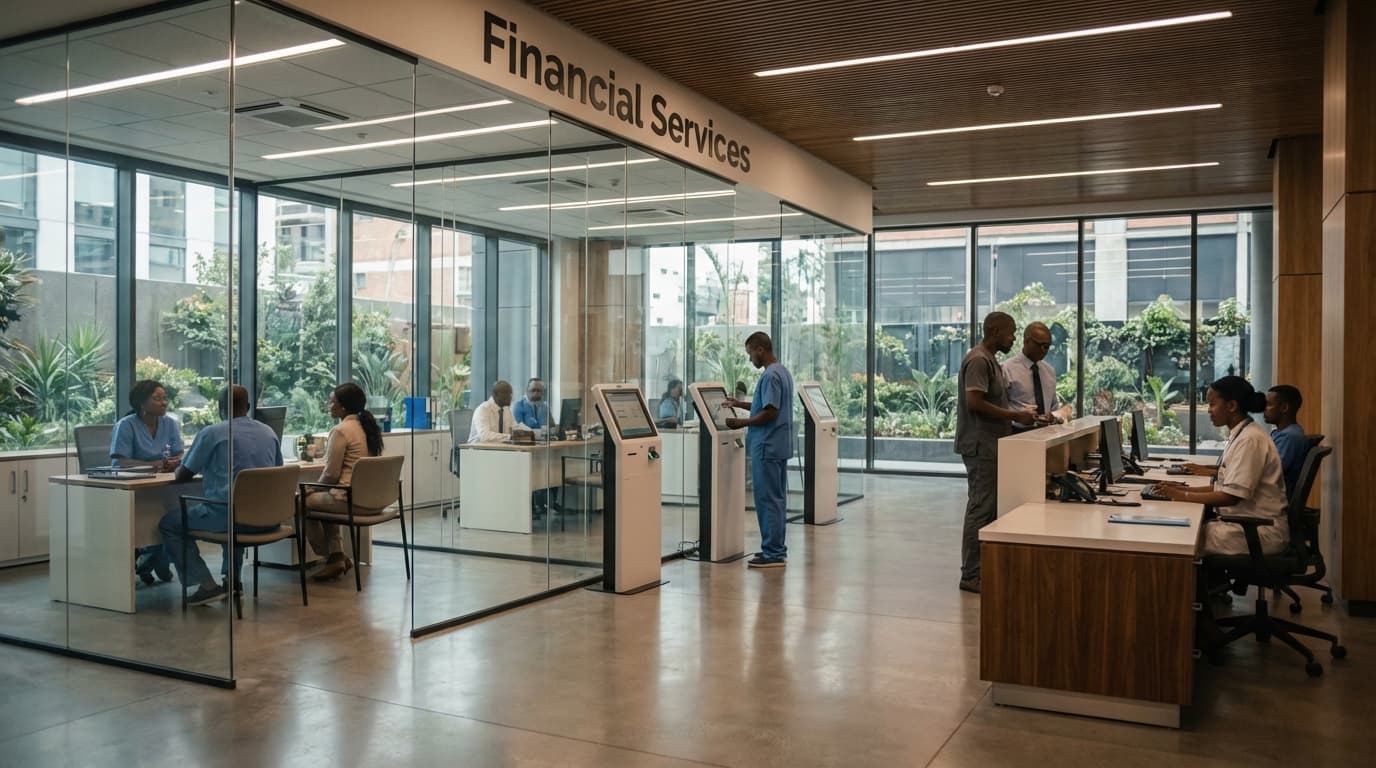
Medical Equipment Financing in Botswana
Engineering Excellence & Technical Support
Leasing and financing solutions for medical equipment High-standard technical execution following OEM protocols and local regulatory frameworks.
Tailored Financing Solutions
Access bespoke financing options for a comprehensive range of medical equipment, from diagnostic machinery to surgical instruments, designed to meet the specific needs and cash flow of healthcare providers in Botswana.
Competitive Interest Rates & Flexible Terms
Benefit from competitive interest rates and adaptable repayment schedules, enabling you to acquire essential medical technology without compromising your operational budget or future growth plans.
Streamlined Application & Fast Approvals
Experience a simplified and efficient application process with rapid approval times, ensuring you can secure the necessary capital to upgrade your medical facilities and enhance patient care in Botswana promptly.
What Is Medical Equipment Financing In Botswana?
Medical Equipment Financing in Botswana refers to financial solutions specifically structured to facilitate the acquisition of medical machinery, instruments, and technology by healthcare providers within Botswana. This service involves a range of financial products, including loans, leases, and hire-purchase agreements, tailored to the unique budgetary cycles and capital expenditure requirements of the healthcare sector. The primary objective is to enable medical facilities, both public and private, to upgrade their existing infrastructure or procure new, advanced equipment without the burden of immediate, substantial capital outlay. This financing mechanism is crucial for ensuring access to contemporary diagnostic, therapeutic, and patient care technologies, thereby enhancing the quality and scope of medical services offered within the nation. It also plays a vital role in supporting the expansion of healthcare capacity and addressing the growing demand for specialized medical interventions.
| Who Needs Medical Equipment Financing? | Typical Use Cases |
|---|---|
| Public Hospitals and Clinics: To equip government-run facilities, often facing budget constraints but needing to provide essential services across the population. | Private Hospitals and Specialist Clinics: To invest in advanced diagnostic imaging (MRI, CT scanners), surgical robotics, state-of-the-art laboratory equipment, and patient monitoring systems to offer competitive and specialized care. |
| Diagnostic Laboratories: For acquiring high-throughput analyzers, genetic sequencers, and advanced microscopy for a wider range of diagnostic tests. | Dental Practices: To finance dental chairs, X-ray machines, intraoral scanners, and sterilization equipment. |
| Specialty Medical Centers (e.g., Cardiology, Oncology, Ophthalmology): To acquire dedicated, high-cost equipment for specific treatment modalities and diagnostic procedures. | Ambulance Services: To equip emergency vehicles with life-support systems, defibrillators, and diagnostic tools. |
| Research and Educational Institutions: To acquire equipment for medical training and clinical research, fostering innovation and skill development. | Primary Healthcare Providers: To upgrade basic diagnostic tools, essential treatment equipment, and patient record management systems. |
Key Aspects of Medical Equipment Financing in Botswana
- Financial Instruments: Primarily includes term loans, operating leases, and finance leases.
- Asset-Centric Approach: Financing is secured by or directly tied to the medical equipment being acquired.
- Specialized Underwriting: Lenders often possess expertise in the healthcare sector and the specific types of medical equipment.
- Flexible Repayment Structures: Terms can be adjusted to align with revenue cycles and operational capacities of healthcare providers.
- Potential for Technology Upgrades: Financing models can incorporate provisions for periodic equipment refresh cycles.
Who Needs Medical Equipment Financing In Botswana?
Medical equipment financing in Botswana is a crucial service that empowers healthcare providers to acquire, upgrade, and maintain the essential tools needed for patient care. This financing addresses the significant upfront costs associated with purchasing modern medical technology, ensuring that healthcare facilities can offer the best possible services to the population. The demand for medical equipment financing stems from the constant evolution of medical technology and the necessity for healthcare institutions to stay current to provide effective and efficient care. Without it, many facilities would struggle to access the advanced diagnostic, treatment, and life-support systems that are vital for diagnosing and managing a wide range of health conditions.
| Customer Type | Primary Need for Financing | Key Departments Benefiting |
|---|---|---|
| Public Hospitals and Clinics | Upgrading outdated equipment, expanding capacity, acquiring specialized machinery for underserved areas, maintaining existing assets. | Radiology, Cardiology, Oncology, Intensive Care Units (ICUs), General Surgery, Emergency Departments, Laboratories, Primary Healthcare Units. |
| Private Hospitals and Clinics | Investing in cutting-edge technology for competitive advantage, expanding service offerings, replacing aging equipment, enhancing patient comfort and outcomes. | All departments, with particular emphasis on advanced surgical suites, diagnostic imaging centers, fertility clinics, and cosmetic surgery departments. |
| Specialty Medical Centers (e.g., Cardiac, Cancer Centers) | Acquiring highly specialized diagnostic and therapeutic equipment, replacing outdated treatment modalities, investing in advanced research tools. | Interventional Cardiology, Radiation Oncology, Medical Oncology, Neurosurgery, Gastroenterology, Pulmonology. |
| Diagnostic Laboratories | Purchasing advanced analyzers, imaging equipment (e.g., MRI, CT scanners), sophisticated microscopes, and automation systems for faster and more accurate results. | Pathology, Hematology, Biochemistry, Microbiology, Molecular Diagnostics. |
| Dental Practices | Acquiring modern dental chairs, digital X-ray machines, intraoral cameras, laser dentistry equipment, and sterilization units. | General Dentistry, Orthodontics, Periodontics, Endodontics, Oral Surgery. |
| Optometry Clinics | Investing in advanced eye examination equipment such as optical coherence tomography (OCT), visual field analyzers, and specialized surgical lasers. | Ophthalmology, Optometry, Retinal Imaging, Glaucoma Management. |
| Ambulatory Surgical Centers | Equipping operating rooms with modern surgical instruments, anesthesia machines, patient monitoring systems, and specialized procedure-specific equipment. | General Surgery, Gynecology, Orthopedics, Ophthalmology, Urology. |
| NGOs in Healthcare | Procuring equipment for mobile clinics, outreach programs, specific disease management initiatives (e.g., HIV/AIDS, malaria), and training facilities. | Primary Healthcare, Maternal and Child Health, Disease Prevention Units, Community Health Programs. |
| Medical Research Institutions | Acquiring advanced laboratory equipment for research and development, clinical trials, and specialized diagnostic tools for novel studies. | Various research departments depending on specialization, including genomics, proteomics, drug discovery, and clinical research. |
Target Customers for Medical Equipment Financing in Botswana
- Public Hospitals and Clinics
- Private Hospitals and Clinics
- Specialty Medical Centers
- Diagnostic Laboratories
- Dental Practices
- Optometry Clinics
- Ambulatory Surgical Centers
- Non-Governmental Organizations (NGOs) in Healthcare
- Medical Research Institutions
Medical Equipment Financing Process In Botswana
This document outlines the typical workflow for medical equipment financing in Botswana, from the initial inquiry stage to the final execution of the financing agreement. The process is designed to ensure due diligence, compliance with regulations, and the successful acquisition of essential medical technology for healthcare providers.
| Stage | Key Activities | Involved Parties | Deliverables |
|---|---|---|---|
| Expressing interest, understanding needs, discussing financing options. | Healthcare Provider, Financial Institution/Vendor. | Initial understanding of requirements and offerings. |
| Defining equipment type, model, quantity, and specifications. | Healthcare Provider (Medical Professionals). | Detailed equipment specifications. |
| Choosing a vendor, obtaining a detailed price quote. | Healthcare Provider, Equipment Vendor. | Equipment Quotation. |
| Initial financial assessment of the applicant. | Financial Institution. | Indicative eligibility assessment. |
| Completing application form and providing supporting documents. | Healthcare Provider. | Completed application and documentation package. |
| Analyzing financial health, verifying information, assessing risk. | Financial Institution. | Credit assessment report, risk evaluation. |
| Assessing the value and suitability of the equipment. | Financial Institution, Independent Valuer/Technical Expert (if required). | Equipment valuation report. |
| Drafting the financing terms and conditions. | Financial Institution. | Financing proposal/Offer Letter. |
| Discussing and agreeing on terms, formal acceptance of the offer. | Healthcare Provider, Financial Institution. | Signed Offer Letter. |
| Drafting, reviewing, and signing financing agreements. | Healthcare Provider, Financial Institution, Legal Counsel. | Executed Financing Agreement(s). |
| Meeting conditions for fund release, perfecting security. | Healthcare Provider, Financial Institution. | Satisfied pre-disbursement conditions, perfected security. |
| Vendor supplies and installs the equipment. | Equipment Vendor, Healthcare Provider. | Delivered and installed medical equipment. |
| Testing, commissioning, and formal acceptance of equipment. | Healthcare Provider, Equipment Vendor. | Equipment Acceptance Certificate. |
| Making regular payments as per the agreement. | Healthcare Provider, Financial Institution. | Loan/Lease repayment. |
Key Stages in the Medical Equipment Financing Process
- {"stage":"1. Inquiry and Initial Consultation","description":"The process begins when a healthcare institution (e.g., hospital, clinic, diagnostic center) expresses interest in financing medical equipment. This inquiry is typically directed to a financial institution (bank, specialized leasing company) or a vendor offering financing solutions. The initial consultation involves understanding the client's needs, the specific equipment required, the desired financing structure (loan, lease), and an overview of the financial institution's offerings and eligibility criteria."}
- {"stage":"2. Needs Assessment and Equipment Specification","description":"The healthcare provider clearly defines the medical equipment needed. This includes detailed specifications, manufacturer, model, quantity, and intended use. This stage often involves collaboration with medical professionals to ensure the equipment aligns with clinical requirements and technological advancements."}
- {"stage":"3. Vendor Selection and Quotation","description":"The healthcare provider identifies and selects a reputable vendor for the medical equipment. The vendor provides a detailed quotation, including the price of the equipment, delivery costs, installation fees, and any associated warranties or service agreements. This quotation is a crucial document for the financing application."}
- {"stage":"4. Pre-qualification and Eligibility Check","description":"The financial institution conducts a preliminary assessment of the healthcare provider's financial standing and eligibility. This may involve reviewing past financial statements, credit history, and general business operations to gauge their ability to service debt or meet lease obligations."}
- {"stage":"5. Application Submission","description":"The healthcare provider formally applies for financing. This involves submitting a comprehensive application form along with supporting documentation. This typically includes: \n* Business registration documents.\n* Audited financial statements for the past 2-3 years.\n* Management accounts.\n* Proof of ownership or lease for existing facilities.\n* Detailed equipment quotation from the vendor.\n* Business plan or expansion proposal (if applicable).\n* Identification documents of directors/key personnel.\n* Any other documents requested by the financial institution."}
- {"stage":"6. Credit Assessment and Due Diligence","description":"The financial institution undertakes a thorough credit assessment. This involves analyzing the applicant's financial health, cash flow projections, debt service capacity, and risk profile. Due diligence also extends to verifying the authenticity of the applicant and the proposed equipment, including market research and potentially site visits."}
- {"stage":"7. Equipment Valuation and Technical Assessment","description":"For larger or specialized equipment, the financial institution may commission an independent valuation of the equipment to ascertain its market value and residual value. A technical expert might also be engaged to assess the suitability, condition, and compliance of the equipment."}
- {"stage":"8. Proposal and Offer Generation","description":"Based on the successful credit assessment and due diligence, the financial institution prepares a financing proposal or offer letter. This document outlines the terms and conditions of the financing, including the loan amount/lease rental, interest rate/lease rate, repayment period, collateral requirements, fees, and any covenants."}
- {"stage":"9. Negotiation and Acceptance","description":"The healthcare provider reviews the financing proposal. Any points of contention are negotiated, and upon mutual agreement, the applicant formally accepts the offer. This acceptance often involves signing the offer letter and paying any required upfront fees."}
- {"stage":"10. Legal Documentation and Agreement","description":"Once the offer is accepted, legal teams from both the financial institution and the healthcare provider draft the final financing agreements. These can include loan agreements, lease agreements, security agreements, and any other relevant legal documents. This stage requires careful review and signing by authorized representatives."}
- {"stage":"11. Pre-disbursement Conditions and Security Perfection","description":"Before funds are disbursed, certain pre-disbursement conditions must be met. This often includes the perfection of any required securities (e.g., registration of charges, pledge of assets). The healthcare provider also needs to fulfill any insurance requirements for the equipment."}
- {"stage":"12. Equipment Procurement and Delivery","description":"Upon fulfillment of all pre-disbursement conditions, the financial institution disburses the funds directly to the vendor, or as per the agreed payment schedule. The vendor then procures, delivers, and installs the medical equipment at the healthcare provider's premises."}
- {"stage":"13. Installation, Commissioning, and Final Acceptance","description":"The medical equipment is installed and commissioned by the vendor. The healthcare provider then conducts a thorough inspection and testing to ensure the equipment functions correctly and meets specifications. A formal acceptance certificate is usually signed by the provider, confirming the satisfactory receipt and installation of the equipment."}
- {"stage":"14. Post-disbursement Monitoring and Repayment","description":"Following successful installation and acceptance, the financing agreement becomes active. The healthcare provider makes regular repayments (loan installments or lease rentals) as per the agreed schedule. The financial institution monitors loan performance and compliance with the agreement terms."}
Medical Equipment Financing Cost In Botswana
Securing medical equipment financing in Botswana involves a combination of factors that influence the final cost. These costs are typically expressed in Botswana Pula (BWP). Lenders assess various elements to determine interest rates, fees, and repayment terms, ultimately shaping the overall expense for healthcare providers. Understanding these pricing factors is crucial for accurate budgeting and financial planning.
| Financing Component | Typical Range in BWP (Indicative) | Notes |
|---|---|---|
| Annual Interest Rate | 12% - 25% p.a. | Varies significantly based on creditworthiness, loan term, and lender. Central bank rates and market conditions are key determinants. |
| Loan Origination/Processing Fees | 1% - 3% of loan amount | One-time fee charged at the beginning of the loan. May be negotiable. |
| Administrative Fees | 0.5% - 1.5% of loan amount (annual) | Charged annually or periodically for loan management. Can sometimes be incorporated into the interest rate. |
| Valuation Fees | BWP 500 - BWP 3,000+ | If a third-party valuation of the equipment is required by the lender. Depends on the complexity and value of the equipment. |
| Legal Fees | BWP 1,000 - BWP 5,000+ | For drafting and reviewing loan agreements and security documents. Varies with loan complexity. |
| Early Repayment Penalty | Varies (e.g., 1-3 months' interest or a fixed percentage) | Charged if the loan is paid off before its scheduled maturity date. Crucial to clarify with the lender. |
Key Pricing Factors for Medical Equipment Financing in Botswana
- {"title":"Equipment Value and Type","description":"The purchase price of the medical equipment is the primary driver of financing costs. Higher-value equipment naturally leads to larger loan amounts and, consequently, higher interest payments over time. The type of equipment also plays a role, with specialized or high-risk equipment potentially attracting higher rates due to perceived risk by the lender."}
- {"title":"Borrower's Creditworthiness","description":"A strong credit history, proven financial stability, and a good repayment record significantly influence interest rates. Lenders are more likely to offer favorable terms (lower interest rates and fees) to borrowers with a low credit risk. This often includes an assessment of the healthcare provider's financial statements, operational history, and existing debt obligations."}
- {"title":"Loan Term and Repayment Schedule","description":"The duration of the financing agreement (loan term) impacts the total interest paid. Longer terms generally result in lower periodic payments but accrue more interest over the life of the loan. The chosen repayment schedule (e.g., monthly, quarterly) also affects cash flow management and the overall cost, as different schedules might have slightly varied administrative fees."}
- {"title":"Interest Rate Structure","description":"Financing can be offered at fixed or variable interest rates. Fixed rates provide predictability, while variable rates may fluctuate based on market conditions. The prevailing Bank of Botswana monetary policy and lending benchmarks will influence the base rates offered by financial institutions."}
- {"title":"Lender Fees and Charges","description":"Beyond interest, lenders often impose various fees. These can include origination fees (for processing the loan), administration fees (for managing the loan), early repayment penalties (if applicable), and potentially legal or valuation fees associated with the asset being financed."}
- {"title":"Collateral and Security","description":"The requirement for collateral, such as the financed equipment itself or other business assets, can influence the interest rate. Loans secured by substantial collateral may be seen as less risky, potentially leading to lower interest rates."}
- {"title":"Market Competition and Economic Conditions","description":"The competitive landscape among financial institutions in Botswana offering equipment financing, as well as the broader economic climate (inflation, GDP growth), can influence the pricing strategies of lenders."}
Affordable Medical Equipment Financing Options
Securing affordable medical equipment is crucial for healthcare providers of all sizes. Financing options can significantly reduce the upfront financial burden. Beyond simple loans, understanding value bundles and implementing cost-saving strategies can maximize the return on investment and ensure long-term financial health. Value bundles often integrate equipment with essential services, offering a more comprehensive and often cost-effective solution than purchasing items piecemeal. Cost-saving strategies focus on smart purchasing, maintenance, and utilization to minimize ongoing expenses.
| Financing Option | Description | Pros | Cons |
|---|---|---|---|
| Direct Purchase (Cash) | Paying the full cost of the equipment upfront. | Ownership from day one, no interest paid. | High initial capital outlay, depreciates value. |
| Traditional Equipment Loan | Borrowing funds from a bank or lender to purchase equipment. | Ownership after loan repayment, builds credit history. | Requires good credit, interest payments, collateral may be needed. |
| Equipment Leasing | Renting equipment for a fixed period with payments. | Lower upfront cost, access to newer technology, tax advantages. | No ownership, ongoing payments, potential mileage/usage restrictions. |
| Sale-Leaseback | Selling owned equipment to a financing company and then leasing it back. | Provides immediate capital, frees up cash flow. | Loss of ownership, ongoing lease payments. |
| Value Bundles (Financed) | Financing a package that includes equipment, services, and support. | Comprehensive solution, potentially lower overall cost than separate purchases, predictable expenses. | May require longer commitment, bundled services might not be fully utilized. |
Key Value Bundle Components & Cost-Saving Strategies
- Value Bundle Components:
- Equipment Purchase/Lease: The core medical device itself.
- Installation & Setup: Professional installation ensures proper function and compliance.
- Maintenance & Service Contracts: Proactive maintenance to prevent costly breakdowns and extend equipment lifespan.
- Training: Comprehensive training for staff on equipment operation and best practices.
- Software Updates & Support: Ensuring the equipment's software is current and supported.
- Consumables & Accessories: Often offered at a discounted rate when bundled.
- Extended Warranties: Providing peace of mind and predictable repair costs.
- Cost-Saving Strategies:
- Lease vs. Purchase Analysis: Evaluate which option offers better financial benefits based on usage and technology lifecycle.
- Negotiate Bundle Pricing: Don't hesitate to negotiate the overall cost of a value bundle, especially for larger commitments.
- Refurbished Equipment: Consider high-quality, certified refurbished equipment for significant cost savings on certain items.
- Bulk Purchasing: For consumables and accessories, buying in bulk can lead to per-unit discounts.
- Preventative Maintenance Scheduling: Adhering to scheduled maintenance is far cheaper than emergency repairs.
- Equipment Utilization Monitoring: Track how often equipment is used to identify underutilized assets that could be shared or retired.
- Employee Training on Care: Proper handling and cleaning by staff can extend equipment life and prevent damage.
- Explore Government & Non-Profit Grants: Investigate available funding opportunities that can offset equipment costs.
- Vendor Relationship Management: Building strong relationships can lead to better pricing, priority service, and exclusive offers.
- Consignment or Shared Ownership Models: For specialized or infrequently used equipment, explore options to share costs with other facilities.
Verified Providers In Botswana
In Botswana's growing healthcare landscape, identifying reliable and high-quality healthcare providers is paramount for individuals seeking effective and trustworthy medical services. Franance Health stands out as a leading organization, distinguished by its rigorous credentialing process and unwavering commitment to patient well-being. Their verified providers represent the pinnacle of medical expertise and ethical practice within Botswana.
| Key Differentiators | Franance Health Verified Providers | Standard Providers |
|---|---|---|
| Credential Verification Depth | Comprehensive (qualifications, experience, ethics, ongoing development) | Basic licensing and initial qualifications |
| Commitment to Patient Care | Mandatory patient-centric approach | Varies |
| Professional Development | Actively encouraged and supported | Optional or self-driven |
| Alignment with Standards | International benchmarks for quality and safety | National regulations only |
| Specialist Network | Curated network of diverse specialists | Broader, less curated network |
Why Franance Health Providers Are the Best Choice:
- Rigorous Vetting and Credentialing: Franance Health employs a comprehensive and multi-stage vetting process for all healthcare professionals seeking to join their network. This goes beyond basic licensing, encompassing in-depth verification of qualifications, educational background, professional experience, and adherence to ethical standards.
- Commitment to Continuous Professional Development: Franance Health actively encourages and supports its providers in ongoing learning and skill enhancement. This ensures that their medical professionals remain at the forefront of medical advancements and best practices, offering patients access to the most current and effective treatments.
- Patient-Centric Approach: All Franance Health verified providers are selected based on their demonstrated commitment to a patient-first philosophy. This means prioritizing clear communication, empathetic care, and collaborative decision-making, ensuring patients feel heard, respected, and actively involved in their healthcare journey.
- Adherence to International Standards: Franance Health aligns its credentialing and operational standards with recognized international benchmarks for healthcare quality and patient safety. This provides an added layer of assurance for individuals seeking medical care.
- Network of Specialized Expertise: The Franance Health network comprises a diverse range of medical specialists across various disciplines. This allows patients to find highly qualified professionals tailored to their specific health needs, from general practitioners to highly specialized surgeons and therapists.
- Enhanced Trust and Reliability: By choosing a Franance Health verified provider, patients gain access to a network of professionals who have met stringent quality controls. This significantly reduces the uncertainty and risk associated with seeking medical care, fostering greater trust and peace of mind.
Scope Of Work For Medical Equipment Financing
This Scope of Work (SOW) outlines the technical deliverables and standard specifications required for Medical Equipment Financing. The objective is to ensure that financed medical equipment meets all necessary technical, regulatory, and performance standards, facilitating smooth procurement, installation, operation, and maintenance. This document serves as a foundational reference for equipment vendors, financing institutions, healthcare providers, and regulatory bodies involved in the financing and acquisition of medical technology.
| Category | Specification Type | Description | Acceptance Criteria | Documentation Required |
|---|---|---|---|---|
| Regulatory Compliance | Certifications | Adherence to applicable medical device regulations (e.g., FDA 510(k), CE Mark, ISO 13485). | Valid and current certifications for the target market. | Copies of certificates, registration documents. |
| Technical Performance | Performance Data | Detailed specifications and capabilities of the equipment, including accuracy, precision, throughput, and resolution. | Performance metrics meet or exceed stated specifications under defined conditions. | Technical specification sheets, performance validation reports. |
| Safety | Electrical Safety | Compliance with IEC 60601 series or equivalent national standards. | Successful completion of electrical safety testing. | Electrical safety test reports. |
| Safety | Biocompatibility | Materials in patient contact must be biocompatible and meet relevant ISO 10993 standards. | Demonstrated biocompatibility of materials used. | Biocompatibility test reports, material certificates. |
| Installation & Commissioning | Site Requirements | Environmental conditions (power, temperature, humidity, space) necessary for optimal operation. | Site assessment and confirmation of suitability. | Site readiness checklist, installation report. |
| Installation & Commissioning | Operational Qualification (OQ) | Verification that the equipment operates as intended within its specified operating ranges. | Successful OQ testing according to defined protocols. | OQ reports, calibration certificates. |
| Installation & Commissioning | Performance Qualification (PQ) | Verification that the equipment performs reliably and consistently under normal operating conditions. | Successful PQ testing demonstrating consistent performance over a defined period. | PQ reports. |
| Usability & Training | User Interface | Intuitive and user-friendly interface with clear instructions and feedback. | Positive feedback from trained end-users during usability testing. | User manuals, training attendance records. |
| Usability & Training | Training Program | Comprehensive training for clinical and technical staff on operation, maintenance, and troubleshooting. | Demonstrated competency of trained personnel. | Training agenda, competency assessments. |
| Maintenance & Support | Preventive Maintenance | Scheduled maintenance procedures and recommended intervals. | Availability of qualified service personnel and spare parts. | Preventive maintenance schedule, service manual. |
| Maintenance & Support | Warranty | Duration, coverage, and terms of the equipment warranty. | Warranty terms clearly defined and accepted by the user. | Warranty certificate, service level agreement (SLA). |
| Security | Cybersecurity | Measures to protect patient data and prevent unauthorized access or breaches. | Compliance with cybersecurity best practices and relevant data protection regulations (e.g., HIPAA, GDPR). | Cybersecurity risk assessment, data privacy policy. |
| Documentation | Technical Manuals | Comprehensive user, service, and spare parts manuals. | Manuals are accurate, up-to-date, and readily accessible. | Digital or hard copies of all relevant manuals. |
| Sustainability | Energy Efficiency | Compliance with energy efficiency standards or certifications (e.g., Energy Star). | Demonstrable reduction in energy consumption compared to previous models. | Energy efficiency reports or certifications. |
Key Technical Deliverables and Standard Specifications for Medical Equipment Financing
- Compliance with relevant national and international medical device regulations (e.g., FDA, CE marking, ISO standards).
- Demonstrable proof of origin and authenticity of the equipment.
- Detailed technical specifications and performance data sheets.
- User manuals and service manuals (in English and/or local language).
- Installation and commissioning reports.
- Training materials and records for end-users and maintenance personnel.
- Warranty documentation and service level agreements (SLAs).
- Post-installation verification and validation reports.
- Maintenance and calibration logs.
- Software licenses and update policies.
- Cybersecurity compliance and data privacy measures.
- Energy efficiency certifications (if applicable).
- Environmental impact assessments (if applicable).
Service Level Agreement For Medical Equipment Financing
This Service Level Agreement (SLA) outlines the response times and uptime guarantees for medical equipment financing services provided by [Your Company Name] to [Client Name]. It is designed to ensure the efficient and reliable operation of financed medical equipment, minimizing disruption to patient care and operational workflows.
| Service Category | Description | Response Time Target | Uptime Guarantee (Equipment Availability) |
|---|---|---|---|
| Critical System Failure | Complete loss of functionality for a life-sustaining or critical diagnostic/treatment device. | Immediate acknowledgement (within 30 minutes); On-site technician dispatched within 2 business hours. | 99.5% |
| Major Malfunction | Significant degradation of performance or loss of a key function impacting a substantial portion of the equipment's capabilities. | Acknowledgement within 1 business hour; Remote diagnostics within 4 business hours; On-site technician dispatched within 1 business day. | 98.0% |
| Minor Issue / Performance Degradation | Non-critical functional impairment or noticeable decrease in performance that does not immediately prevent essential use. | Acknowledgement within 4 business hours; Remote troubleshooting and resolution within 2 business days; On-site visit scheduled within 3 business days if necessary. | 97.0% |
| Preventive Maintenance Scheduling | Routine maintenance as per manufacturer recommendations to ensure optimal performance and longevity. | Scheduling confirmation within 5 business days of request; Maintenance performed within agreed upon timeframe. | N/A (This is a proactive service, not directly tied to uptime guarantee for failures) |
| Inquiry / Administrative Support | Questions regarding financing terms, billing, or general operational queries. | Acknowledgement within 1 business day; Resolution within 3 business days. | N/A |
Key Service Metrics
- Response Times: Define the timeframe within which service requests will be acknowledged and initial actions taken.
- Uptime Guarantees: Specify the minimum percentage of time the financed equipment is expected to be operational and available for use.
- Service Request Categories: Categorize service requests based on urgency and impact.
- Exclusions and Limitations: Clearly state conditions or events that are not covered by this SLA.
- Reporting and Monitoring: Outline how service performance will be tracked and reported.
Frequently Asked Questions

Ready when you are
Let's scope your Medical Equipment Financing in Botswana project in Botswana.

Scaling healthcare logistics and technical systems across the entire continent.