
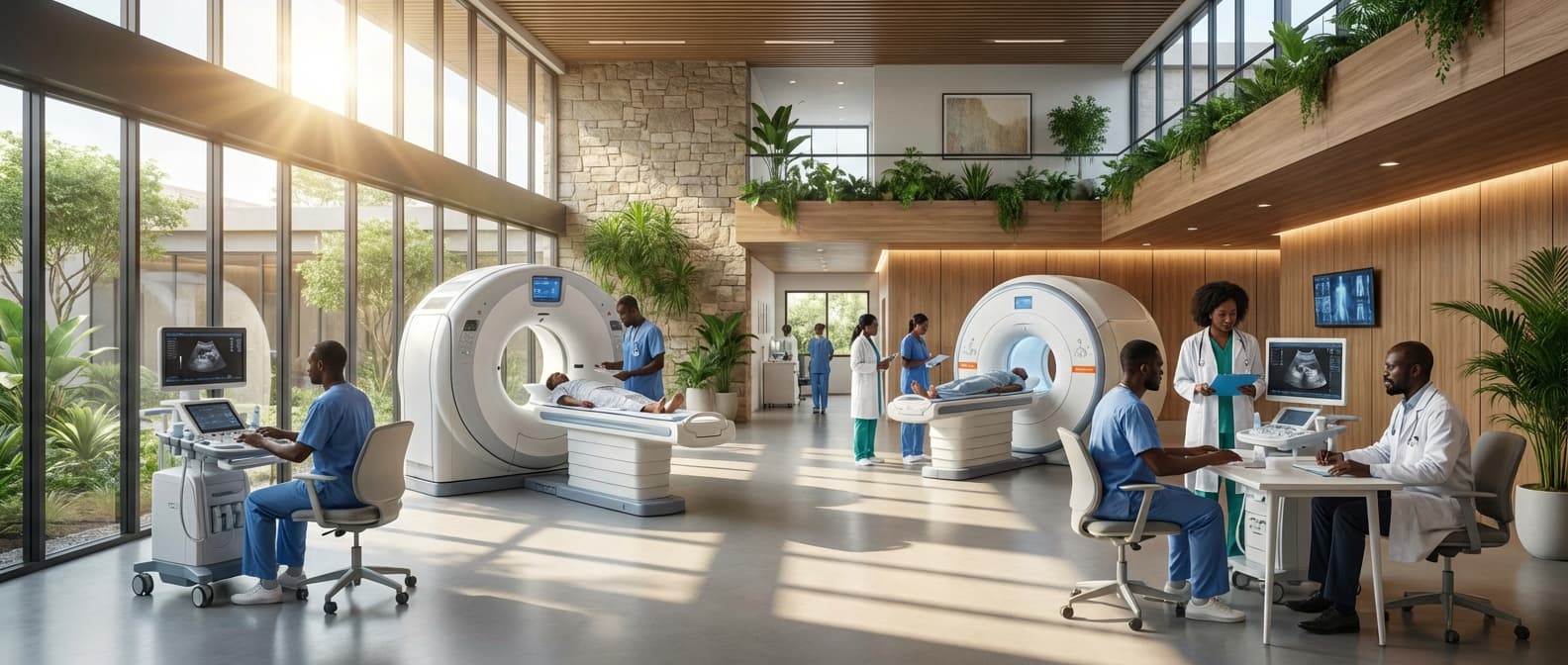
Endoscopy Solutions in Botswana
Engineering Excellence & Technical Support
Advanced endoscopic equipment delivering superior visualization and diagnostic precision for minimally invasive procedures. High-standard technical execution following OEM protocols and local regulatory frameworks.
Advanced Diagnostic Endoscopy
Empowering Botswana's healthcare providers with state-of-the-art flexible and rigid endoscopes for precise diagnosis of gastrointestinal, respiratory, and urological conditions, leading to earlier and more accurate treatment plans.
Minimally Invasive Therapeutic Procedures
Facilitating the adoption of advanced endoscopic accessories and techniques in Botswana for minimally invasive interventions such as polyp removal (polypectomy), stricture dilation, and foreign body retrieval, reducing patient recovery times and hospital stays.
Endoscopy Training & Support for Botswana
Providing comprehensive training programs and ongoing technical support for healthcare professionals across Botswana, ensuring optimal utilization of endoscopy equipment and fostering local expertise in endoscopic procedures.
What Is Endoscopy Solutions In Botswana?
Endoscopy Solutions in Botswana refers to the provision of diagnostic and therapeutic medical procedures utilizing endoscopes. An endoscope is a long, thin, flexible tube with a light and camera attached to its end, allowing visualization of internal organs and structures. This service encompasses a range of endoscopic examinations and interventions performed within Botswana's healthcare facilities.
| Who Needs Endoscopy Solutions | Typical Use Cases |
|---|---|
| Individuals experiencing persistent gastrointestinal symptoms such as chronic abdominal pain, unexplained weight loss, difficulty swallowing, or changes in bowel habits. | Diagnosis of gastroesophageal reflux disease (GERD), peptic ulcers, inflammatory bowel disease (Crohn's disease, ulcerative colitis), celiac disease, and upper gastrointestinal malignancies. |
| Patients presenting with rectal bleeding, changes in stool consistency, or a family history of colorectal cancer. | Screening for colorectal cancer, detection and removal of colorectal polyps, diagnosis of diverticular disease, and investigation of lower gastrointestinal bleeding. |
| Individuals with chronic cough, hemoptysis (coughing up blood), or suspected lung conditions. | Evaluation of persistent cough, diagnosis of lung infections (e.g., tuberculosis, pneumonia), identification of lung masses or tumors, and management of airway obstructions. |
| Patients experiencing symptoms related to the urinary tract, such as recurring urinary tract infections, blood in the urine, or urinary incontinence. | Investigation of urinary tract abnormalities, diagnosis of bladder cancer, evaluation of urinary stones, and management of urethral strictures. |
| Individuals with suspected bile duct or pancreatic duct issues. | Diagnostic assessment of jaundice, gallstones, pancreatitis, and tumors in the bile or pancreatic ducts, often utilizing Endoscopic Retrograde Cholangiopancreatography (ERCP). |
| Patients requiring post-operative surveillance or follow-up for specific conditions. | Monitoring of healed ulcers, surveillance after polypectomy, and assessment of treatment efficacy for inflammatory conditions. |
Key Aspects of Endoscopy Solutions in Botswana
- Definition: The service involves the use of specialized endoscopic equipment to visualize and access internal body cavities and organs for diagnostic and therapeutic purposes. This includes procedures like gastroscopy, colonoscopy, bronchoscopy, and cystoscopy.
- Diagnostic Capabilities: Endoscopy enables direct visualization of mucosal surfaces, identification of abnormalities (e.g., inflammation, ulcers, polyps, strictures, tumors), and tissue sampling (biopsy) for histopathological analysis.
- Therapeutic Applications: Beyond diagnosis, endoscopy facilitates a variety of minimally invasive interventions, such as polyp removal (polypectomy), bleeding control (hemorrhage management), dilation of stenotic areas, foreign body retrieval, and stenting.
- Technological Integration: Modern endoscopy utilizes high-definition imaging, advanced visualization techniques (e.g., narrow-band imaging), and specialized endoscopic accessories to enhance diagnostic accuracy and therapeutic efficacy.
- Healthcare Setting: These solutions are typically offered in hospitals and specialized clinics equipped with the necessary infrastructure and trained personnel.
Who Needs Endoscopy Solutions In Botswana?
Endoscopy, a vital diagnostic and therapeutic tool, plays a crucial role in identifying and treating a wide range of gastrointestinal, respiratory, and urinary tract conditions. In Botswana, the need for advanced endoscopy solutions is driven by several factors, including an increasing prevalence of gastrointestinal diseases, a growing emphasis on preventative healthcare, and the desire to improve patient outcomes through minimally invasive procedures. This technology enables early detection of cancers, management of inflammatory bowel diseases, removal of polyps, and treatment of bleeding ulcers, among other critical interventions. As Botswana's healthcare sector continues to develop, the demand for sophisticated endoscopy equipment and associated services is set to rise significantly.
| Department/Customer Type | Key Needs/Applications | Specific Endoscopy Modalities of Interest |
|---|---|---|
| Gastroenterology Departments | Diagnosis and treatment of upper and lower GI disorders (e.g., ulcers, gastritis, IBD, colon cancer, polyps), therapeutic interventions (e.g., polypectomy, hemostasis, stricture dilation). | Upper Endoscopy (Gastroscopy), Colonoscopy, Sigmoidoscopy, Enteroscopy (for small bowel investigation), Endoscopic Ultrasound (EUS). |
| Pulmonology Departments | Diagnosis of lung diseases (e.g., pneumonia, lung cancer, tuberculosis), therapeutic interventions (e.g., bronchoalveolar lavage, foreign body removal, stent placement). | Bronchoscopy. |
| Urology Departments | Diagnosis and treatment of urinary tract conditions (e.g., bladder tumors, kidney stones, urethral strictures). | Cystoscopy, Ureteroscopy. |
| General Surgery Departments | Pre-operative diagnosis, intra-operative guidance, post-operative monitoring for various surgical conditions. | Laparoscopy (though not strictly an endoscopy, often falls under the broader surgical visualization umbrella), ERCP (Endoscopic Retrograde Cholangiopancreatography) for biliary and pancreatic issues. |
| Oncology Centers | Early detection, diagnosis, staging, and surveillance of cancers of the GI tract, respiratory system, and urinary system. | All GI, Pulmonary, and Urological endoscopy modalities, particularly those with advanced imaging capabilities (e.g., NBI, FICE). |
| Private Hospitals & Clinics | Providing comprehensive diagnostic and therapeutic services, catering to patients seeking advanced and timely care. | A broad range of endoscopy solutions to meet diverse patient needs, often prioritizing advanced features and patient comfort. |
| Public Hospitals | Addressing a high volume of patients, focusing on essential diagnostic and therapeutic endoscopy for common conditions, while striving for cost-effectiveness. | Standard and reliable endoscopy systems, with a focus on durability and ease of use. |
| Diagnostic Centers | Offering specialized diagnostic endoscopy services to referring physicians and patients. | High-quality imaging and diagnostic capabilities across various endoscopy types. |
| Medical Training Institutions | Facilitating the education and training of future healthcare professionals in endoscopy techniques and procedures. | Simulation-based training equipment, advanced endoscopy systems with recording and playback features. |
Target Customers and Departments for Endoscopy Solutions in Botswana
- Hospitals (Public and Private)
- Specialty Clinics (Gastroenterology, Pulmonology, Urology)
- Diagnostic Centers
- Research Institutions
Endoscopy Solutions Process In Botswana
The Endoscopy Solutions Process in Botswana outlines the comprehensive workflow for providing endoscopy services, from the initial patient inquiry to the successful execution and follow-up of diagnostic or therapeutic procedures. This process is designed to ensure efficient patient management, accurate diagnosis, and effective treatment within the healthcare system of Botswana. It involves multiple stages, requiring coordination between patients, healthcare providers, and administrative staff. The workflow is crucial for maintaining high standards of care and accessibility to endoscopy services.
| Stage | Description | Key Activities | Responsible Parties |
|---|---|---|---|
| Inquiry and Initial Assessment | The process begins when a patient or their referring physician expresses a need for an endoscopy procedure. This stage involves understanding the patient's symptoms, medical history, and the suspected condition. | Patient/Doctor contact, symptom gathering, initial medical history review, determining the need for endoscopy. | Patient, Referring Physician, Clinic/Hospital Reception. |
| Referral and Appointment Scheduling | Following the initial assessment, if endoscopy is deemed necessary, the patient is formally referred to the endoscopy unit or a specialist. An appointment is then scheduled, taking into account urgency and availability. | Issuing a formal referral letter, booking an appointment slot, informing the patient of the date, time, and location. | Referring Physician, Endoscopy Unit Administrator, Patient. |
| Pre-Procedure Preparation | This critical stage ensures the patient is adequately prepared for the endoscopy. This includes dietary restrictions, medication adjustments, and clear instructions for the day of the procedure. | Providing detailed pre-procedure instructions (diet, bowel preparation, medication guidelines), obtaining informed consent, health status confirmation. | Endoscopy Unit Nurse, Patient, Physician (for specific instructions). |
| Procedure Execution | This is the core stage where the endoscopy is performed by a qualified specialist. It involves inserting the endoscope and visualizing the internal organs for diagnosis or intervention. | Patient assessment on arrival, sedation/anesthesia administration (if required), insertion of endoscope, visualization, biopsy collection, therapeutic interventions (e.g., polyp removal, stenting). | Endoscopist (Gastroenterologist/Surgeon), Endoscopy Nurse, Anesthetist (if applicable). |
| Post-Procedure Care and Recovery | After the procedure, the patient is monitored in a recovery area. This involves managing any immediate side effects and ensuring the patient is stable before discharge. | Monitoring vital signs, observing for immediate complications, recovery from sedation/anesthesia, initial patient briefing on findings (preliminary). | Endoscopy Nurse, Recovery Staff, Endoscopist. |
| Reporting and Follow-up | The findings from the endoscopy are documented in a formal report. The patient is then provided with detailed instructions for follow-up care, including further appointments, medication, or lifestyle changes. | Generating a comprehensive endoscopy report, discussing findings and recommendations with the patient, scheduling follow-up appointments, providing discharge instructions. | Endoscopist, Endoscopy Unit Administrator, Patient. |
Endoscopy Solutions Process in Botswana: Workflow Stages
- Inquiry and Initial Assessment
- Referral and Appointment Scheduling
- Pre-Procedure Preparation
- Procedure Execution
- Post-Procedure Care and Recovery
- Reporting and Follow-up
Endoscopy Solutions Cost In Botswana
Endoscopy procedures in Botswana can vary significantly in cost due to several factors. These factors influence the overall price, making it crucial for patients to understand them when seeking endoscopic services. The pricing typically encompasses the expertise of the medical professional, the complexity of the procedure, the specific type of endoscopy performed, the hospital or clinic's infrastructure and equipment, and the consumables used during the examination. Furthermore, pre-procedure consultations, post-procedure follow-ups, and any necessary biopsies or laboratory analyses also contribute to the final bill. The exchange rate of the Botswana Pula (BWP) against other currencies can also indirectly affect the cost of imported equipment and supplies. While exact figures are best obtained directly from healthcare providers, a general understanding of the pricing landscape can be beneficial.
| Endoscopy Type | Estimated Cost Range (BWP) | Notes |
|---|---|---|
| Gastroscopy (Upper GI Endoscopy) | 2,000 - 5,000 | Covers examination of esophagus, stomach, and duodenum. May include biopsy. |
| Colonoscopy (Lower GI Endoscopy) | 2,500 - 6,000 | Examines the large intestine. May include polyp removal. |
| Bronchoscopy | 3,000 - 7,000 | Examines airways and lungs. Often performed in specialized settings. |
| Cystoscopy | 1,500 - 3,500 | Examines the bladder. |
| Laparoscopy (Diagnostic) | 5,000 - 10,000+ | Minimally invasive abdominal surgery. Cost can vary significantly with surgical complexity and duration. |
| ERCP (Endoscopic Retrograde Cholangiopancreatography) | 6,000 - 12,000+ | Complex procedure for diagnosing and treating bile and pancreatic duct issues. Requires specialized equipment and expertise. |
Key Pricing Factors for Endoscopy in Botswana:
- Type of Endoscopy (e.g., Gastroscopy, Colonoscopy, Bronchoscopy, Laparoscopy)
- Hospital/Clinic Location and Reputation
- Medical Professional's Fees (Specialist Gastroenterologist, Surgeon)
- Complexity of the Procedure (e.g., diagnostic vs. therapeutic, presence of polyps)
- Anesthesia or Sedation Required
- Inclusion of Biopsies and Pathology Analysis
- Pre- and Post-Procedure Consultations
- Consumables and Disposables Used
- Length of Hospital Stay (if required)
Affordable Endoscopy Solutions Options
Endoscopy procedures, while crucial for diagnosis and treatment, can present significant costs for individuals and healthcare systems. Fortunately, various affordable endoscopy solutions and cost-saving strategies are available. These options aim to make essential endoscopic examinations more accessible without compromising the quality of care. Understanding these choices can empower patients and providers to make informed decisions about managing healthcare expenses related to endoscopy.
| Strategy/Solution | Description | Potential Savings Driver |
|---|---|---|
| Value Bundles | Pre-packaged services that combine the endoscopy procedure with related services (e.g., anesthesia, pathology, follow-up visit) for a set price. | Predictable costs, reduced administrative overhead, potential for negotiated discounts on combined services. |
| Negotiated Pricing/Self-Pay Discounts | Directly negotiating a lower price for the procedure, especially for patients paying out-of-pocket or with high deductibles. | Direct reduction in procedure cost without involving insurance complexities. |
| Outpatient Procedure Centers | Specialized centers focused on ambulatory surgical procedures, often with lower overhead than hospitals. | Lower facility fees, streamlined processes, potentially shorter procedure times. |
| Generic/Reusable Instruments | Utilizing reusable instruments where appropriate and safe, or considering facilities that use high-quality generic disposable components when available. | Reduced per-procedure cost for equipment. |
| Telehealth Consultations | Conducting pre- and post-procedure consultations remotely via video conferencing. | Reduced patient travel expenses, less time off work, improved accessibility. |
| Insurance Provider Networks | Choosing in-network providers and facilities to benefit from pre-negotiated insurance rates. | Significantly lower out-of-pocket expenses due to contractual agreements between insurers and providers. |
| Financial Assistance Programs | Exploring hospital financial aid, non-profit organizations, or patient advocacy groups for potential subsidies or payment plans. | Direct reduction or spread of patient's financial burden. |
| Preventive Screening Programs | Participating in recommended screening programs (e.g., colonoscopies at recommended ages) to catch issues early before they become complex and costly. | Early detection often leads to less invasive and less expensive treatment. |
Affordable Endoscopy Solutions & Cost-Saving Strategies
- Value Bundles: Understanding and utilizing value bundles is a key strategy for reducing endoscopy costs.
- Negotiated Pricing: Many healthcare facilities offer negotiated rates for self-pay patients or those with high deductibles.
- Generic vs. Brand-Name Equipment: While less common in direct patient cost, understanding the use of generic components in some disposable equipment can contribute to overall system cost reduction.
- Telehealth Integration: For pre- and post-procedure consultations, telehealth can reduce travel costs and time off work for patients.
- Preventive Care & Early Detection: Regular screenings can prevent the need for more complex and expensive procedures later.
- Outpatient vs. Inpatient Settings: Performing procedures in an outpatient setting is generally more cost-effective than inpatient admission.
- Comparative Shopping: Patients can compare costs for the same procedure across different facilities.
- Advanced Technology Adoption (Long-Term Savings): While initial investment can be high, adoption of more efficient and less invasive endoscopic technologies can lead to reduced procedure times, shorter recovery, and fewer complications, thus lowering overall costs.
- Group Purchasing Organizations (GPOs): For healthcare providers, GPOs can negotiate bulk discounts on endoscopy supplies and equipment.
- Robotic-Assisted Endoscopy (Emerging Cost-Effectiveness): While currently expensive, robotic-assisted procedures may offer long-term cost benefits through increased precision and potentially reduced complications.
Verified Providers In Botswana
In Botswana's burgeoning healthcare landscape, identifying trustworthy and competent medical professionals is paramount. Franance Health stands out as a leading platform dedicated to connecting individuals with verified healthcare providers. Their rigorous credentialing process ensures that all listed practitioners meet the highest standards of expertise, ethical conduct, and regulatory compliance. This commitment to verification is what makes Franance Health the premier choice for anyone seeking quality medical care in Botswana.
| Provider Type | Typical Qualifications | Franance Health Verification Standard | Benefits of Choosing Verified Provider |
|---|---|---|---|
| General Practitioner | MBBS/MD, Botswana Health Professions Council (BHPC) Registration | Valid BHPC License, verification of medical degree, background check | Accurate diagnosis, appropriate treatment, referral to specialists |
| Specialist (e.g., Cardiologist, Dermatologist) | MBBS/MD + Postgraduate Specialization (e.g., FCP, MRCP), BHPC Registration | Valid BHPC License, verification of specialization degrees and experience | Expertise in specific medical conditions, advanced treatment options |
| Dentist | BDS, BHPC Registration (Dental Division) | Valid BHPC Dental License, verification of dental degree | Oral health expertise, preventive and restorative dental care |
| Mental Health Professional (e.g., Psychologist, Counselor) | Relevant Degree (e.g., Psychology, Counseling), professional body accreditation | Verification of academic qualifications, professional accreditation, ethical conduct check | Confidential support, evidence-based therapeutic interventions |
| Pharmacist | B.Pharm, Botswana Health Professions Council (BHPC) Registration | Valid BHPC License, verification of pharmacy degree | Safe and effective medication management, patient counseling on drug use |
Why Franance Health is the Best Choice for Verified Providers in Botswana:
- Rigorous Verification Process: Franance Health employs a multi-stage verification system, scrutinizing qualifications, licenses, and professional histories of every provider.
- Commitment to Quality: We prioritize practitioners who demonstrate a dedication to patient well-being, continuous professional development, and adherence to best medical practices.
- Comprehensive Provider Network: Access a wide range of specialists, general practitioners, dentists, therapists, and other healthcare professionals across Botswana.
- Patient-Centric Approach: Our platform is designed for ease of use, enabling patients to find and book appointments with confidence.
- Transparency and Trust: We foster an environment of trust by providing clear and accurate information about each provider's credentials and expertise.
- Regulatory Compliance: All Franance Health providers are fully licensed and compliant with Botswana's healthcare regulations, offering peace of mind.
Scope Of Work For Endoscopy Solutions
This Scope of Work (SOW) outlines the technical deliverables and standard specifications for the procurement and implementation of Endoscopy Solutions. The objective is to acquire advanced endoscopic equipment and associated services that meet high-quality standards for diagnostic and therapeutic procedures. This SOW covers the entire lifecycle from procurement to ongoing support, ensuring optimal performance and integration within the existing healthcare infrastructure.
| Category | Specification | Required Performance Metric | Compliance Standard |
|---|---|---|---|
| Video Processor | Resolution: Minimum 1920x1080 (Full HD), 3840x2160 (4K) preferred. Frame Rate: Minimum 60 fps. Color Depth: 24-bit or higher. Connectivity: HDMI, DVI, SDI outputs. | Clear, artifact-free image reproduction. Smooth video playback. Seamless integration with display devices. | IEC 60601 series, FDA regulations, CE marking |
| Flexible Endoscopes | Working Length: [Specify range, e.g., 1300mm - 1700mm]. Outer Diameter: [Specify range, e.g., 9.8mm - 11.3mm]. Channel Diameter: [Specify range, e.g., 2.8mm - 3.2mm]. Field of View: Minimum 140 degrees. Angulation: Up/Down [Specify degrees, e.g., 210/90], Left/Right [Specify degrees, e.g., 100/100]. | High image clarity and color fidelity. Easy maneuverability and precise control. Adequate working channel for instrumentation. | ISO 13485, CE marking |
| Light Source | Type: LED or Xenon. Illumination Output: Minimum 300W (Xenon) or equivalent LED output. Color Temperature: Stable and adjustable. Lamp Life: Minimum 500 hours (Xenon) or 20,000 hours (LED). | Consistent and bright illumination. Accurate color rendering. Minimal heat generation. | IEC 60601 series, CE marking |
| Imaging & Documentation Software | Features: Real-time image capture, video recording, patient data management, DICOM compliance, PACS integration, reporting tools. Storage Capacity: Sufficient for [Specify duration, e.g., 5 years] of procedures. | Intuitive user interface. Reliable data storage and retrieval. Seamless interoperability with hospital IT systems. | DICOM Part 14, HL7, HIPAA compliance |
| Automated Endoscope Reprocessor (AER) | Capacity: Minimum [Specify number, e.g., 2] endoscopes per cycle. Cycle Time: Maximum [Specify time, e.g., 30] minutes. Disinfection Agent Compatibility: Compatible with approved chemical disinfectants. Drying Function: Integrated. | Effective and consistent disinfection. Reduced risk of cross-contamination. Compliance with infection control guidelines. | AAMI ST58, EN ISO 15883 series, FDA clearance |
Technical Deliverables
- High-definition (HD) or 4K Endoscopic Video System (including processor, light source, monitor, and camera)
- Flexible Endoscopes (gastroscopes, colonoscopes, duodenoscopes, etc.) with specified working lengths, diameters, and angulation capabilities
- Rigid Endoscopes (laparoscopes, arthroscopes, etc.) with relevant accessories (light cables, sheath, instruments)
- Endoscopic Imaging and Documentation Software with PACS integration capabilities
- Sterilization and Storage Solutions (e.g., automated endoscope reprocessors, sterile storage cabinets)
- Ancillary Endoscopic Instruments (biopsy forceps, snares, injection needles, retrieval devices, etc.)
- Training Program for clinical staff (physicians, nurses, technicians) on equipment operation, maintenance, and troubleshooting
- Installation and Integration Services for all procured equipment and software
- Post-installation Validation and Performance Testing
- Warranty and Service Level Agreement (SLA) for a defined period
- User Manuals and Technical Documentation (in English and local language)
- Maintenance and Calibration Schedule
Service Level Agreement For Endoscopy Solutions
This Service Level Agreement (SLA) outlines the response times and uptime guarantees provided for our Endoscopy Solutions. It aims to ensure the reliable and efficient operation of your endoscopy equipment and associated services, minimizing disruption to patient care.
| Service Component | Uptime Guarantee | Response Time (Business Hours) | Response Time (24/7 Support - if applicable) | Severity Level | Target Resolution Time |
|---|---|---|---|---|---|
| Endoscopy System Software (PACS Integration, Reporting Tools) | 99.5% | 2 business hours | 4 business hours | Critical (System Down, Patient Care Impacted) | 4 business hours |
| Endoscopy Imaging Equipment (Scopes, Light Sources, Processors) | 99.0% | 4 business hours | 8 business hours | High (Significant Functional Impairment) | 8 business hours |
| Ancillary Equipment (Insufflators, Biopsy Valves, Suction) | 98.0% | 8 business hours | 16 business hours | Medium (Partial Functional Impairment) | 2 business days |
| Non-critical issues or feature requests | N/A | 1 business day (for initial acknowledgment) | 2 business days (for initial acknowledgment) | Low (Minor cosmetic issues, general inquiries) | 5 business days |
Key Service Metrics
- Uptime Guarantee: A commitment to ensuring the availability of the Endoscopy Solutions for use during agreed-upon operational hours.
- Response Time: The maximum time allowed for our support team to acknowledge and begin addressing reported issues with the Endoscopy Solutions.
- Resolution Time: The target timeframe for resolving reported issues, categorized by severity.
- Maintenance Windows: Scheduled periods for essential system maintenance and updates, communicated in advance.
Frequently Asked Questions

Ready when you are
Let's scope your Endoscopy Solutions in Botswana project in Botswana.

Scaling healthcare logistics and technical systems across the entire continent.