
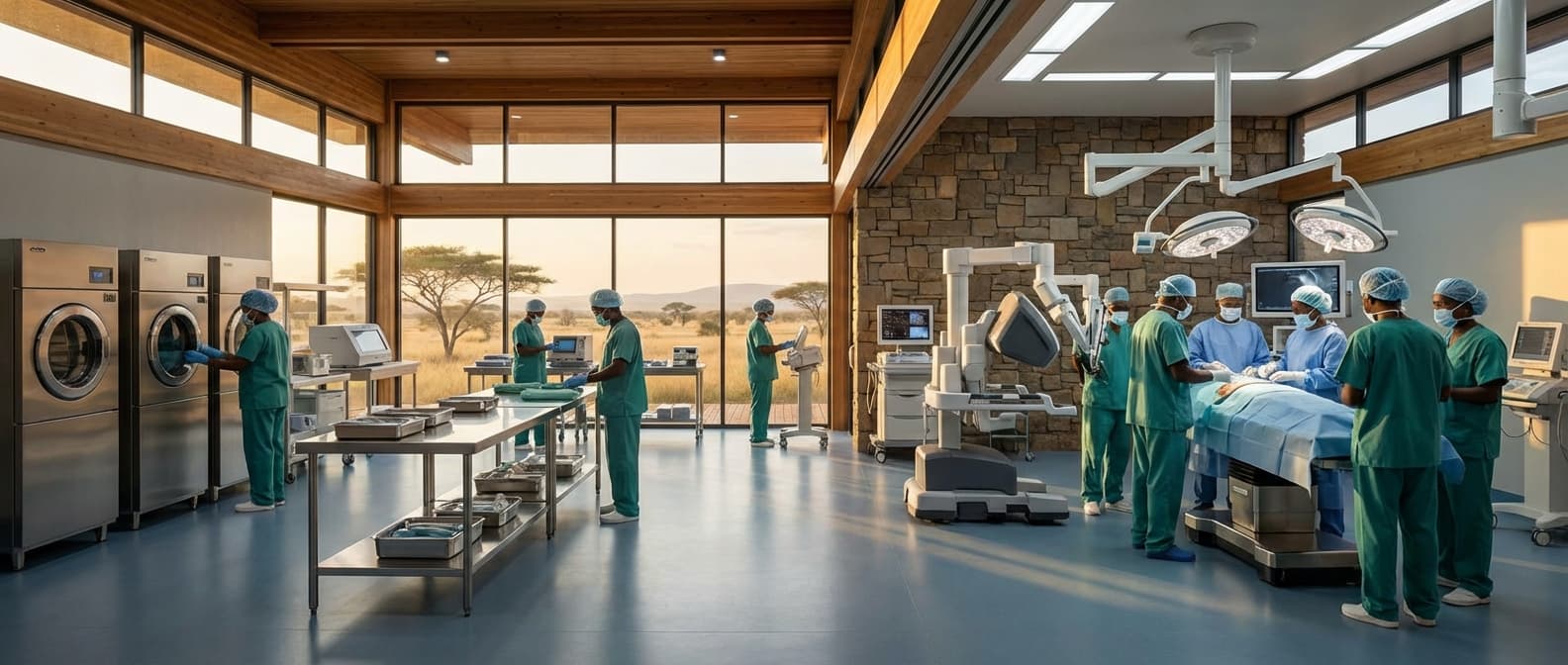
Operating Theatre Turnkey Build in Botswana
Engineering Excellence & Technical Support
Complete OR design, equipment integration and commissioning High-standard technical execution following OEM protocols and local regulatory frameworks.
Precision Medical Facility Design & Construction
Leveraging advanced architectural principles and stringent healthcare building codes, we deliver bespoke operating theatre turnkey solutions in Botswana. Our expertise encompasses site analysis, structural engineering, infection control integration, and custom workflow optimization to create state-of-the-art surgical environments.
Integrated HVAC & Environmental Systems
We specialize in the design and installation of highly sophisticated HVAC and environmental control systems crucial for sterile operating theatre environments in Botswana. This includes HEPA filtration, precise temperature and humidity regulation, pressure differentials, and advanced air change rates to ensure patient safety and infection prevention.
Advanced Medical Gas & Electrical Infrastructure
Our turnkey solutions encompass the complete design, installation, and commissioning of essential medical gas systems (oxygen, medical air, vacuum) and robust electrical infrastructure in Botswana's operating theatres. This includes redundant power supplies, UPS systems, specialized lighting, and integrated surgical panel integration for seamless operational efficiency.
What Is Operating Theatre Turnkey Build In Botswana?
An Operating Theatre Turnkey Build in Botswana refers to a comprehensive service where a specialized contractor takes full responsibility for the design, construction, equipping, and commissioning of a functional operating theatre (OT) suite, delivering it ready for immediate use. This 'turnkey' approach encompasses all project phases, from initial concept and regulatory approvals to final handover and operational readiness. The objective is to provide a seamless and efficient solution for healthcare facilities requiring new or upgraded surgical environments, minimizing the burden on the client and ensuring adherence to stringent international and local standards for infection control, safety, and operational efficiency.
| Who Needs It | Typical Use Cases |
|---|---|
| Public Healthcare Facilities: Government hospitals and clinics requiring expansion or modernization of surgical capacity to meet growing demand and improve patient outcomes. | Private Healthcare Providers: New hospital developments, existing private clinics expanding their surgical services, or facilities seeking to upgrade to meet international accreditation standards. |
| Specialized Surgical Centers: Facilities focusing on specific surgical disciplines (e.g., cardiac, orthopedic, neurosurgery) that require highly specialized and customized OT environments. | Research and Training Institutions: Medical schools and teaching hospitals needing state-of-the-art facilities for surgical training and research, often incorporating advanced simulation capabilities. |
| Remote or Underserved Areas: Projects aimed at establishing or improving surgical infrastructure in regions with limited existing capabilities, where a comprehensive, ready-to-use solution is paramount. | Emergency Response and Disaster Preparedness: Rapid deployment of surgical facilities in response to public health emergencies or natural disasters. |
Key Components of an Operating Theatre Turnkey Build:
- Design and Planning: This includes architectural design, space planning, layout optimization, and integration of essential services, adhering to national health regulations and international best practices (e.g., HTM, FGI guidelines).
- Civil Works and Construction: Execution of all structural and finishing works, including specialized wall and floor finishes, ceiling systems, and modifications to existing infrastructure.
- MEP (Mechanical, Electrical, and Plumbing) Systems: Installation of critical systems such as HVAC (with HEPA filtration and pressure differentials), medical gases, specialized lighting (surgical, ambient, task), electrical power distribution with UPS backup, and water/waste management systems.
- Specialized Equipment Integration: Procurement, installation, and integration of fixed and semi-fixed operating theatre equipment, including surgical lights, booms, imaging systems (e.g., C-arms), anesthesia machines, and patient monitoring systems.
- Sterile Services and Infection Control: Implementation of advanced infection control measures, including air handling systems, material flows, and appropriate surface materials to maintain aseptic environments.
- IT and Communication Infrastructure: Installation of networking, communication systems, and integration with hospital information systems (HIS) and Picture Archiving and Communication Systems (PACS).
- Commissioning and Validation: Rigorous testing, calibration, and validation of all installed systems and equipment to ensure compliance with performance specifications and regulatory requirements. This often involves environmental monitoring and performance testing.
- Training and Handover: Providing comprehensive training to hospital staff on the operation and maintenance of the new theatre facilities and equipment, followed by formal handover.
Who Needs Operating Theatre Turnkey Build In Botswana?
Operating theatre turnkey builds in Botswana are essential for healthcare facilities looking to establish or upgrade their surgical capabilities with modern, fully equipped, and compliant surgical environments. These projects involve the complete design, construction, and fit-out of operating theatres, ensuring they meet international standards and are ready for immediate use.
| Department | Specific Needs Addressed by Turnkey Builds | Examples of Procedures |
|---|---|---|
| General Surgery | Flexible space adaptable to various procedures, integrated lighting, anesthesia systems. | Appendectomies, hernia repairs, cholecystectomies. |
| Orthopedic Surgery | Pristine environments to minimize infection risk, specialized imaging integration, robust flooring. | Joint replacements (hip, knee), fracture fixation, spinal surgery. |
| Cardiothoracic Surgery | Advanced ventilation systems, specialized monitoring, precise climate control, ample space for complex equipment. | Coronary artery bypass grafting (CABG), valve replacements, thoracic tumor resection. |
| Neurosurgery | Advanced imaging integration (e.g., intraoperative MRI/CT), specialized microscopes, vibration isolation. | Brain tumor removal, aneurysm clipping, spinal decompression. |
| Obstetrics and Gynecology | Dedicated spaces for emergency C-sections, advanced fetal monitoring, and gynecological procedures. | Cesarean sections, hysterectomies, laparoscopic gynecological procedures. |
| Ophthalmology | Meticulous dust control, specialized lighting, integrated microsurgical equipment. | Cataract surgery, retinal detachments, glaucoma procedures. |
| Ear, Nose, and Throat (ENT) | Specialized surgical microscopes, advanced suction systems, acoustic considerations. | Tonsillectomies, septoplasties, middle ear surgery. |
| Urology | Integration of endoscopic equipment, laser systems, and imaging. | Prostatectomy, kidney stone removal, bladder tumor resection. |
Target Customers and Departments for Operating Theatre Turnkey Builds in Botswana:
- {"title":"Public Hospitals (Government-Owned)","description":"Botswana's public hospital network, ranging from national referral hospitals to district hospitals, are primary beneficiaries. These institutions often require upgrades to existing facilities or the construction of new theatres to cope with increasing patient loads and the introduction of advanced surgical procedures."}
- {"title":"Private Hospitals and Clinics","description":"The growing private healthcare sector in Botswana is a key market. These facilities aim to offer specialized surgical services and attract patients seeking higher standards of care, often necessitating state-of-the-art operating theatres built to international specifications."}
- {"title":"Specialized Surgical Centers","description":"Dedicated surgical centers focusing on specific disciplines like cardiology, orthopedics, or oncology will require bespoke operating theatre solutions tailored to their unique equipment and workflow needs."}
- {"title":"Mines and Large Industrial Companies","description":"Companies with significant workforces in remote areas may invest in on-site medical facilities, including operating theatres, to provide immediate care for occupational injuries and other emergencies. This can reduce the need for costly patient transfers."}
- {"title":"Military and Defense Medical Services","description":"The Botswana Defence Force (BDF) and other security agencies may require operating theatre capabilities for their medical units to support personnel, both domestically and in potential deployment scenarios."}
- {"title":"Medical Training and Research Institutions","description":"Universities or institutions involved in medical training will need modern operating theatres for educational purposes, allowing students and residents to learn in a simulated or actual surgical environment."}
Operating Theatre Turnkey Build Process In Botswana
Building an operating theatre turnkey project in Botswana involves a structured workflow designed to ensure efficiency, compliance, and the successful delivery of a fully functional medical facility. This process, from the initial inquiry to the final handover, encompasses several critical stages, each with specific objectives and deliverables. The turnkey approach means the contractor is responsible for the entire project lifecycle, from design and procurement to construction and commissioning, delivering a ready-to-use facility. This is particularly crucial for specialized environments like operating theatres, which demand stringent adherence to international healthcare standards, infection control protocols, and advanced technological integration. Botswana's healthcare infrastructure development often necessitates such comprehensive solutions to meet growing demands and improve patient care.
| Stage | Key Activities | Deliverables | Typical Duration |
|---|---|---|---|
| Understanding client needs, scope definition, preliminary budget discussion | Initial project brief, preliminary scope document | 1-2 weeks |
| Site evaluation, risk assessment, preliminary cost estimation | Feasibility report, site assessment report | 2-4 weeks |
| Developing layout, room functions, technology selection, cost breakdown | Conceptual design drawings, detailed proposal with cost and timeline | 3-6 weeks |
| Developing all architectural, MEP, and specialized designs | Full set of detailed design drawings and specifications | 8-16 weeks |
| Submitting applications, liaising with authorities | Approved building permits, health clearances | 4-12 weeks (highly variable) |
| Sourcing materials, equipment, and long-lead items | Procurement orders, delivery schedules | Ongoing, with critical path items identified early |
| Site preparation, structural work, MEP installation, finishing | Completed building shell and interiors | 24-48 weeks |
| Installing and connecting specialized medical equipment | Installed and functional medical equipment | 4-8 weeks |
| System checks, performance testing, quality assurance | Commissioning reports, validation certificates | 3-6 weeks |
| Staff training, final inspections, documentation handover | Trained staff, handover documentation, operational facility | 1-2 weeks |
| Defect rectification, warranty support, ongoing service | Resolved issues, ongoing operational support | As per contract (e.g., 12 months warranty, long-term service agreements) |
Operating Theatre Turnkey Build Process Workflow in Botswana
- {"title":"1. Inquiry & Initial Consultation","description":"The process begins with a client (hospital, government agency, private healthcare provider) expressing interest and submitting an inquiry. This stage involves initial discussions to understand the client's specific needs, scope of the project, budget, and timeline. Key aspects like the number of operating theatres, required specialties, technology integration, and desired quality standards are identified."}
- {"title":"2. Feasibility Study & Site Assessment","description":"A thorough feasibility study is conducted to assess the project's viability. This includes evaluating the chosen site for suitability, accessibility, utilities (power, water, waste management), and any potential site-specific challenges. A detailed site assessment informs the subsequent design and planning phases."}
- {"title":"3. Conceptual Design & Proposal","description":"Based on the initial consultations and feasibility study, the contractor develops a conceptual design. This outlines the basic layout, room configurations, workflow, and preliminary technology choices. A comprehensive proposal is then submitted to the client, detailing the scope of work, design concepts, estimated costs, project timeline, and contractual terms."}
- {"title":"4. Detailed Design & Engineering","description":"Upon acceptance of the proposal, detailed architectural, structural, mechanical, electrical, and plumbing (MEP) designs are developed. This stage involves close collaboration with the client and specialized consultants to finalize all technical specifications, equipment requirements, medical gas systems, HVAC (including laminar flow and pressure differentials), lighting, and safety features, ensuring compliance with international (e.g., ISO, ASHRAE) and local Botswana building and health regulations."}
- {"title":"5. Regulatory Approvals & Permitting","description":"The contractor manages the process of obtaining all necessary permits and approvals from relevant Botswana authorities, including building permits, environmental impact assessments, and health department clearances. This can be a time-consuming stage and requires thorough documentation and adherence to local requirements."}
- {"title":"6. Procurement & Supply Chain Management","description":"All materials, equipment, and specialized components for the operating theatre are procured. This involves sourcing high-quality, medical-grade products from reputable international and local suppliers. Efficient supply chain management is crucial to ensure timely delivery and minimize project delays."}
- {"title":"7. Construction & Building Works","description":"This is the physical construction phase. It involves site preparation, foundation work, structural erection, installation of MEP systems, interior finishing (including specialized wall and flooring materials for infection control), and integration of medical gas pipelines. Strict adherence to quality control and safety standards is paramount."}
- {"title":"8. Medical Equipment Installation & Integration","description":"Specialized medical equipment such as surgical lights, operating tables, anesthesia machines, imaging equipment, and sterilization units are installed and integrated into the building's infrastructure. This requires expert technicians and precise calibration."}
- {"title":"9. Testing, Commissioning & Validation","description":"Rigorous testing and commissioning are performed on all systems (HVAC, electrical, plumbing, medical gases, lighting) and equipment to ensure they function as per design specifications and meet regulatory requirements. Validation confirms that the operating theatre is safe, functional, and meets all infection control standards. This often includes air quality testing and pressure differential checks."}
- {"title":"10. Training & Handover","description":"The contractor provides comprehensive training to the client's medical and technical staff on the operation and maintenance of all installed systems and equipment. Following successful training and final inspections, the completed operating theatre is formally handed over to the client, along with all warranties, operation manuals, and as-built drawings."}
- {"title":"11. Post-Handover Support & Maintenance","description":"Many turnkey contracts include a period of post-handover support and maintenance to address any initial issues and ensure the smooth operation of the facility. This can extend to long-term service agreements for equipment and building systems."}
Operating Theatre Turnkey Build Cost In Botswana
The cost of a turnkey operating theatre build in Botswana can vary significantly due to a multitude of factors, ranging from the complexity of the medical equipment and finishes to the specific location and the chosen contractor. A turnkey solution typically encompasses design, construction, medical gas systems, HVAC, specialized lighting, electrical infrastructure, and the installation of all necessary medical equipment, ensuring the theatre is ready for immediate use. It's crucial to understand these pricing dynamics to budget effectively for such a significant investment. Factors influencing cost include the size of the operating theatre, the level of specialization (e.g., general surgery, cardiac, orthopedic), the quality and brand of medical equipment, the integration of advanced technologies (like robotics or imaging systems), and the finishing materials used (e.g., specialized anti-bacterial wall coverings, high-traffic flooring). Furthermore, unforeseen site conditions, regulatory approvals, and import duties on specialized equipment can also impact the final price. Given these variables, obtaining detailed quotes from reputable local and international contractors with experience in Botswana is essential for accurate cost estimation.
| Cost Category | Estimated Range (BWP) | Notes |
|---|---|---|
| Basic Turnkey (General Surgery) | BWP 2,000,000 - BWP 5,000,000 | Covers essential equipment, standard finishes, and basic infrastructure for general surgical procedures. This is a starting point and can increase rapidly with specifications. |
| Mid-Range Turnkey (Specialized Surgery) | BWP 4,000,000 - BWP 10,000,000 | Includes more advanced medical equipment, enhanced HVAC, higher-grade finishes, and integrated medical gas systems for procedures like orthopedics or gynecology. |
| High-End Turnkey (Complex/Advanced Surgery) | BWP 8,000,000 - BWP 25,000,000+ | Features state-of-the-art equipment, advanced imaging, robotic capabilities, sophisticated air handling, and premium finishes for highly specialized fields like cardiac or neurosurgery. Costs can escalate dramatically with technology. |
| Medical Equipment (Specific Items) | BWP 100,000 - BWP 5,000,000+ | Individual items like surgical lights, anesthesia machines, operating tables, and imaging equipment vary immensely in price based on brand, features, and technology. |
| Specialized Finishes (e.g., anti-microbial walls, seamless flooring) | BWP 50,000 - BWP 200,000+ | Cost per square meter for specialized materials needed for infection control and durability. |
| HVAC and Air Filtration Systems | BWP 500,000 - BWP 2,000,000+ | Depends on the complexity, number of air changes per hour, and filtration levels required. |
| Medical Gas Installation | BWP 300,000 - BWP 1,000,000+ | Includes piping, outlets, alarm systems, and compliance checks. |
Key Pricing Factors for Turnkey Operating Theatre Builds in Botswana
- Size and Square Footage: Larger theatres requiring more construction materials and services will naturally incur higher costs.
- Level of Specialization/Technology: Complex procedures (e.g., cardiac, neurosurgery) necessitate highly specialized equipment and infrastructure, increasing costs significantly.
- Medical Equipment Specification: The type, brand, and quantity of surgical equipment (lights, tables, imaging, anesthesia machines, etc.) are major cost drivers. High-end, state-of-the-art equipment is considerably more expensive.
- HVAC and Air Filtration Systems: Operating theatres require stringent air quality control, demanding sophisticated and often redundant HVAC systems with HEPA filtration, which are costly to install and maintain.
- Medical Gas Systems: Installation of piped medical gases (oxygen, medical air, vacuum, nitrous oxide) requires specialized infrastructure and compliance with strict safety standards.
- Electrical Infrastructure and Backup Power: Robust electrical systems, including uninterruptible power supplies (UPS) and generators, are critical for patient safety and operational continuity.
- Lighting Systems: Specialized surgical lighting, including overhead surgical lights and examination lights, can vary greatly in cost based on technology and features.
- Finishing Materials: High-performance, anti-microbial wall coverings, seamless flooring, and specialized doors are required for infection control and durability, impacting material costs.
- Architectural and Engineering Design: Detailed design and planning by experienced professionals are essential and contribute to the overall project cost.
- Contractor Fees and Markup: The chosen contractor's experience, overhead, profit margins, and project management capabilities will influence pricing.
- Location within Botswana: Construction costs can vary between urban centers like Gaborone and more remote areas due to logistical challenges, labor availability, and transportation costs.
- Regulatory Approvals and Compliance: Obtaining necessary permits and ensuring adherence to local and international healthcare construction standards can add to costs and timelines.
- Contingency and Unforeseen Costs: It's prudent to include a contingency for unexpected issues that may arise during construction.
Affordable Operating Theatre Turnkey Build Options
Establishing an operating theatre is a significant undertaking, often perceived as prohibitively expensive. However, various affordable operating theatre turnkey build options exist. These solutions are designed to streamline the process, reduce upfront costs, and provide a fully functional surgical environment. Value bundles are key to this affordability, bundling essential components and services into a single, cost-effective package. Cost-saving strategies are woven into every aspect of these builds, from modular construction to optimized equipment selection.
| Strategy | Description | Cost-Saving Benefit |
|---|---|---|
| Value Bundling | Combining multiple essential services and components (design, construction, equipment, installation) into a single package. | Reduces administrative overhead, streamlines procurement, and often allows for bulk discounts. |
| Modular Construction | Pre-fabricating significant portions of the operating theatre in a controlled factory environment. | Shorter on-site construction time, reduced labor costs, less material waste, and less disruption to existing facilities. |
| Standardized Designs | Utilizing pre-engineered and validated theatre layouts and specifications. | Minimizes custom design fees, speeds up the planning phase, and simplifies procurement of components. |
| Strategic Equipment Selection | Focusing on essential, reliable, and cost-effective equipment rather than high-end or specialized units unless absolutely necessary. | Lower initial equipment purchase cost and potentially lower maintenance costs over time. |
| Phased Implementation | Breaking down the project into manageable phases, allowing for incremental investment. | Spreads the financial burden, making the project more accessible for organizations with limited upfront capital. |
| Optimized Material Usage | Careful selection of building materials and efficient construction techniques to minimize waste. | Reduces material costs and disposal fees. |
| Leasing/Financing Options | Exploring leasing agreements for equipment or specialized financing for the build. | Reduces upfront capital expenditure and allows for predictable monthly payments. |
Key Components of Affordable Turnkey Operating Theatre Builds
- Modular or Prefabricated Theatre Modules: Offering faster construction and reduced on-site labor.
- Integrated HVAC and Air Filtration Systems: Ensuring critical air quality standards are met efficiently.
- Basic but Functional Surgical Lighting and Equipment: Prioritizing essential functionality over premium features.
- Streamlined Infrastructure: Optimizing plumbing, electrical, and medical gas systems for efficiency.
- Pre-selected and Compatible Equipment Packages: Bundling necessary surgical instruments, anesthesia machines, and monitoring devices.
- Project Management and Installation Services: Providing a single point of contact and integrated execution.
Verified Providers In Botswana
In Botswana's evolving healthcare landscape, identifying trusted and credentialed providers is paramount for ensuring quality and effective medical care. Franance Health stands out as a beacon of reliability, built upon a foundation of stringent credentials and a commitment to excellence. This document outlines why Franance Health represents the best choice for healthcare services in Botswana.
| Service Area | Franance Health Advantage | Why it Matters for Patients |
|---|---|---|
| Primary Healthcare | Extensive network of clinics staffed by general practitioners and nurses with broad experience. | Accessible, consistent, and comprehensive first-line medical care for routine illnesses and preventive services. |
| Specialty Care | Access to a diverse range of specialists (e.g., cardiology, pediatrics, obstetrics & gynecology) with international training and experience. | Expert diagnosis and treatment for complex medical conditions, reducing the need for overseas referrals. |
| Diagnostic Services | State-of-the-art laboratory and imaging facilities equipped with modern technology and operated by skilled technicians. | Accurate and timely diagnostic results crucial for effective treatment planning and monitoring. |
| Emergency Services | 24/7 availability of emergency medical teams and well-equipped facilities to handle critical situations. | Rapid response and expert care during medical emergencies, potentially saving lives. |
| Telemedicine and Virtual Consultations | Innovative use of technology for remote consultations and health monitoring, expanding reach and convenience. | Increased accessibility to medical advice, especially for those in remote areas or with mobility challenges. |
Key Credentials of Franance Health
- Accreditation and Certification: Franance Health facilities and personnel adhere to internationally recognized standards and are often accredited by reputable bodies, ensuring a high level of operational quality and patient safety.
- Qualified Medical Professionals: The team at Franance Health comprises highly trained and experienced doctors, nurses, specialists, and allied health professionals, each holding valid licenses and certifications from recognized medical councils.
- Partnerships with Leading Institutions: Franance Health collaborates with renowned local and international healthcare institutions, fostering knowledge exchange and access to advanced medical expertise and technologies.
- Compliance with Regulatory Standards: Franance Health operates in full compliance with all relevant Botswana Ministry of Health regulations and international healthcare best practices, guaranteeing ethical and professional service delivery.
- Commitment to Continuous Professional Development: The organization prioritizes ongoing training and professional development for its staff, ensuring they remain at the forefront of medical advancements and treatment methodologies.
Scope Of Work For Operating Theatre Turnkey Build
This Scope of Work outlines the requirements for the turnkey construction and commissioning of a state-of-the-art operating theatre. The project encompasses all phases from design and procurement to installation and final handover, ensuring a fully functional and compliant operating environment.
| Technical Deliverable | Standard Specification / Reference | Description | Key Performance Indicators (KPIs) |
|---|---|---|---|
| Architectural Drawings & BIM Model | Local Building Codes, ISO 14644-1, HTM 02-01 | Detailed architectural plans, structural drawings, and a Building Information Model (BIM) for all aspects of the theatre. | 3D Visualization Accuracy, Compliance with Codes, Material Traceability |
| Medical Gas Pipeline System (MGPS) | HTM 02-01, ISO 7396-1 | Installation of medical oxygen, medical air, vacuum, nitrous oxide, and anesthetic waste gas scavenging systems with appropriate alarms and control panels. | Purity Standards, Pressure Regulation Accuracy, Alarm Response Time, Leakage Rate |
| HVAC System | ISO 14644-1 (Class ISO 7 or ISO 8 depending on area), ASHRAE Standards | High-efficiency HVAC system with HEPA filtration, laminar airflow capabilities, temperature and humidity control, and positive pressure differentials. | Air Change Rate (ACR), HEPA Filter Efficiency, Airflow Pattern Uniformity, Pressure Differential Stability, Temperature/Humidity Tolerance |
| Electrical Systems & Power Distribution | IEC 60364-7-710, Local Electrical Regulations | Redundant power supply, medical isolation transformers, emergency generator backup, surge protection, and specialized lighting circuits. | Voltage Stability, Frequency Stability, Transfer Time (Emergency Power), Insulation Resistance, Grounding Integrity |
| Operating Theatre Lights | IEC 60601-2-41 | Surgical LED lights with adjustable intensity, color temperature, and shadow reduction capabilities. | Illuminance Levels, Color Rendering Index (CRI), Spot Size Adjustment, Lamp Life |
| Operating Theatre Table | IEC 60601-2-46 | Motorized or electro-hydraulic operating table with a wide range of articulation, load capacity, and accessory compatibility. | Weight Capacity, Articulation Range, Tabletop Stability, Trendelenburg/Reverse Trendelenburg Accuracy |
| Anesthesia Machine | IEC 60601-2-13 | Integrated or standalone anesthesia delivery system with ventilation, monitoring, and gas analysis capabilities. | Ventilator Performance, Gas Monitoring Accuracy, Alarm Functionality, Vaporizer Accuracy |
| Wall & Ceiling Cladding | Seamless, non-porous, antimicrobial, and easily cleanable materials (e.g., PVC, HPL) | Installation of durable, infection-resistant wall and ceiling finishes with integrated conduits and access panels. | Cleanability, Chemical Resistance, Impact Resistance, Fire Rating |
| Integrated Control Panels | Manufacturer Specifications, HTM 02-01 | Centralized control units for managing lighting, medical gases, environmental controls, and potentially audio-visual systems. | System Integration Reliability, User Interface Simplicity, Response Time |
| Waste Management Systems | Local Health & Safety Regulations, ISO 14001 | Design and installation of appropriate systems for general waste, infectious waste, and sharps disposal. | Containment Integrity, Ease of Use, Compliance with Regulations |
| Commissioning Report | ISO 17025 (for testing laboratories), Project-Specific Protocols | Comprehensive documentation detailing all tests performed, results, and validation of system performance against specifications. | Completeness of Testing, Traceability of Results, Sign-off by Qualified Personnel |
| User Manuals & Training Materials | Manufacturer Specifications, End-User Needs | Detailed manuals for all equipment and systems, along with training programs for clinical and technical staff. | Clarity of Information, Comprehensiveness, Effectiveness of Training |
Key Phases of the Operating Theatre Turnkey Build
- Design and Planning
- Procurement and Manufacturing
- Site Preparation and Civil Works
- Installation of Medical Gases and Electrical Systems
- Installation of HVAC and Air Filtration Systems
- Installation of Operating Theatre Equipment
- Finishing and Cladding
- Testing, Commissioning, and Validation
- Training and Handover
- Post-Commissioning Support
Service Level Agreement For Operating Theatre Turnkey Build
This Service Level Agreement (SLA) outlines the response times and uptime guarantees for the operating theatre turnkey build project. It defines the expected performance standards and the remedies available to the client in case of non-compliance. The goal is to ensure minimal disruption to the client's operations and timely completion of critical project milestones.
| Service Component | Response Time (for critical issues) | Resolution Time (for critical issues) | Uptime Guarantee (Annual) |
|---|---|---|---|
| Overall Operating Theatre Facility | 2 hours | 8 business hours | 99.8% |
| Medical Gas Systems (Oxygen, Air, Vacuum) | 1 hour | 4 business hours | 99.9% |
| HVAC and Air Filtration Systems | 2 hours | 6 business hours | 99.7% |
| Lighting and Power Systems | 1.5 hours | 5 business hours | 99.8% |
| Integrated Audiovisual and Communication Systems | 3 hours | 12 business hours | 99.5% |
Key Definitions
- Operating Theatre Turnkey Build: Refers to the complete design, construction, installation, commissioning, and handover of a fully functional operating theatre facility.
- Response Time: The maximum allowable time from the occurrence of a reported issue to the initiation of a support response (acknowledgment and assessment).
- Resolution Time: The maximum allowable time from the initial response to the complete rectification of a reported issue, restoring the operating theatre to its agreed-upon functional state.
- Uptime Guarantee: The percentage of time the operating theatre facility is expected to be operational and available for use, excluding scheduled maintenance.
- Scheduled Maintenance: Planned periods for routine checks, servicing, and upgrades, agreed upon in advance with the client.
- Critical Failure: Any event that renders the operating theatre completely unusable for its intended purpose, posing an immediate threat to patient safety or operational continuity.
- Minor Failure: An issue that affects a non-critical component or function, causing inconvenience but not preventing the overall operation of the theatre.
Frequently Asked Questions

Ready when you are
Let's scope your Operating Theatre Turnkey Build in Botswana project in Botswana.

Scaling healthcare logistics and technical systems across the entire continent.