
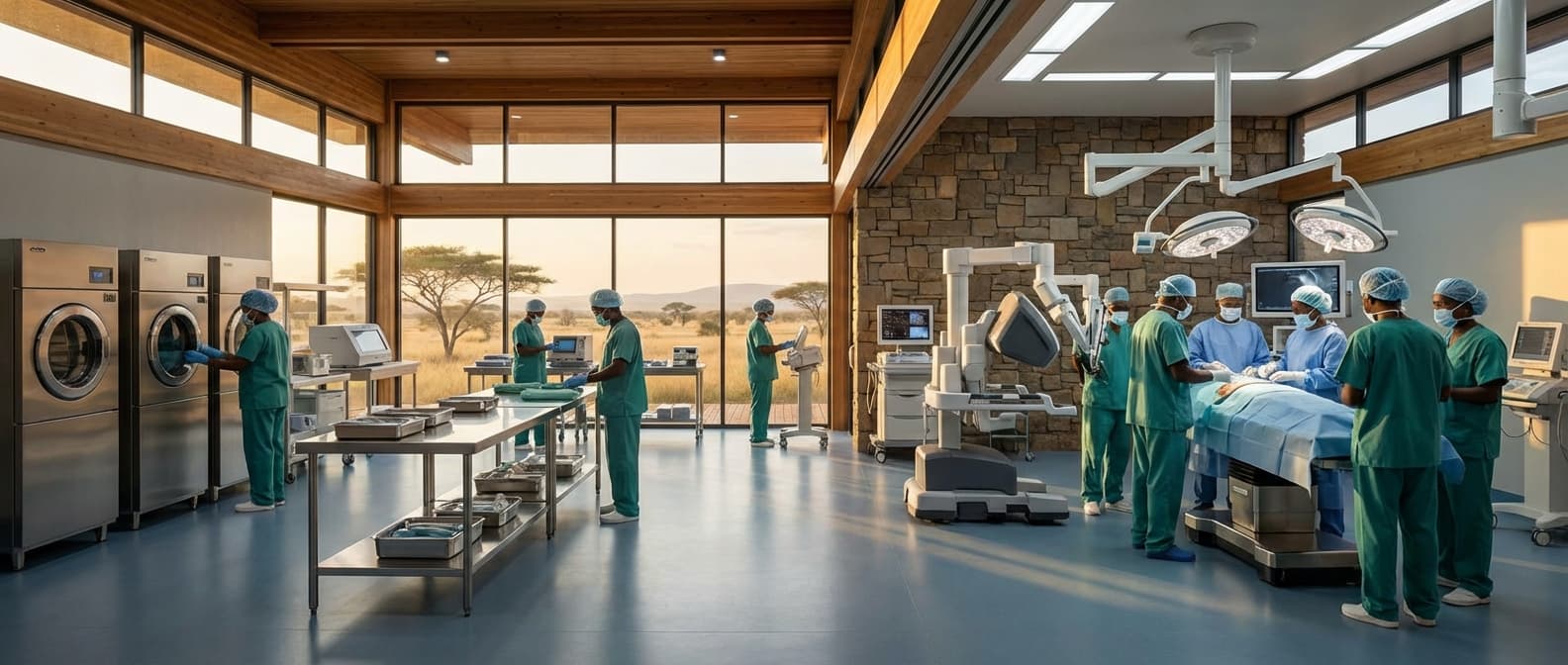
Endoscopy Reprocessing Validation in Botswana
Engineering Excellence & Technical Support
AER validation, SOP development and compliance High-standard technical execution following OEM protocols and local regulatory frameworks.
Ensuring High-Level Disinfection (HLD) Efficacy
Implemented rigorous validation protocols for automated endoscope reprocessors (AERs) and manual HLD processes. This included meticulous pre-cleaning assessment, consistent use of manufacturer-recommended disinfectants, and precise cycle parameter verification (temperature, time, concentration) to guarantee destruction of high-risk pathogens, exceeding Botswana's national guidelines for patient safety.
Microbiological Surveillance and Validation of Cleaning
Established a robust post-cleaning visual inspection and microbiological sampling program for flexible endoscopes. This involved surface swab testing using validated culture media and rapid detection methods to confirm the absence of viable microorganisms after manual cleaning, directly demonstrating the effectiveness of cleaning protocols prior to reprocessing.
Documentation and Traceability System
Developed and deployed a comprehensive digital documentation system for all reprocessing cycles. This system meticulously records equipment used, reprocessing steps, personnel involved, chemical lot numbers, and validation results, ensuring full traceability and facilitating audits. This robust data management supports ongoing quality improvement initiatives and compliance with international best practices for infection prevention in Botswana.
What Is Endoscopy Reprocessing Validation In Botswana?
Endoscopy reprocessing validation in Botswana refers to the documented verification process that ensures flexible endoscopes and their accessories are cleaned and disinfected according to established protocols, thereby rendering them safe for subsequent patient use. This process is critical for preventing the transmission of healthcare-associated infections (HAIs) and maintaining patient safety within healthcare facilities. The validation confirms that the chosen reprocessing methods are effective against a defined spectrum of microorganisms, including high-level disinfection (HLD)-resistant pathogens.
| Who Needs Endoscopy Reprocessing Validation? | Typical Use Cases |
|---|---|
All healthcare facilities in Botswana that utilize flexible endoscopes for diagnostic or therapeutic procedures, including:
|
|
Key Components of Endoscopy Reprocessing Validation:
- Validation of Cleaning Efficacy: Verifying that the manual or automated cleaning process effectively removes all gross soil, organic debris, and biofilms from the internal lumens and external surfaces of the endoscope. This often involves the use of adenosine triphosphate (ATP) testing or protein testing as objective measures of cleanliness.
- Validation of Disinfection/Sterilization Efficacy: Confirming that the high-level disinfection (HLD) or sterilization process effectively inactivates or eliminates vegetative bacteria, fungi, mycobacteria, and non-enveloped viruses. This may involve surrogate organism testing or biological indicator studies for sterilization.
- Process Parameter Verification: Ensuring that critical parameters of the automated endoscope reprocessor (AER) or manual disinfection process (e.g., cycle time, temperature, chemical concentration, rinse cycles) are consistently maintained within specified limits.
- Microbial Testing: Periodic or routine testing of reprocessed endoscopes using microbial swab cultures to detect any residual contamination.
- Documentation Review: Maintaining comprehensive records of all validation activities, including test results, equipment maintenance logs, chemical usage logs, and staff training records.
Who Needs Endoscopy Reprocessing Validation In Botswana?
Endoscopy reprocessing validation is a critical, yet often overlooked, aspect of healthcare safety, particularly in settings where robust infection control protocols are paramount. In Botswana, like many developing nations, ensuring the sterility and functionality of reusable medical devices such as endoscopes is essential to prevent healthcare-associated infections (HAIs) and maintain patient trust. This process involves rigorous testing and documentation to confirm that cleaning and disinfection procedures effectively eliminate pathogens and that the equipment remains in optimal working condition. Without proper validation, there's a significant risk of transmitting infections between patients, leading to increased morbidity, mortality, and escalating healthcare costs.
| Target Customer/Department | Specific Needs & Rationale for Validation | Key Endoscopic Procedures Performed |
|---|---|---|
| Government Referral Hospitals | High patient volume, diverse patient population, potential for outbreaks. Validation ensures adherence to national infection control standards and protects vulnerable patients. | Gastroscopy, Colonoscopy, Bronchoscopy, Laparoscopy, Hysteroscopy, Cystoscopy |
| Private Hospitals and Clinics | Focus on patient safety and reputation. Validation provides assurance to patients and regulatory bodies of the highest infection control standards, reducing liability. | Gastroscopy, Colonoscopy, Bronchoscopy, Laparoscopy, Hysteroscopy, Cystoscopy |
| University Teaching Hospitals | Training future healthcare professionals. Validation is crucial for establishing best practices and demonstrating commitment to quality education and patient care. | Gastroscopy, Colonoscopy, Bronchoscopy, Laparoscopy, Hysteroscopy, Cystoscopy |
| Gastroenterology Departments | Perform a high volume of GI endoscopies. Validation is essential for preventing cross-contamination of infectious agents (e.g., H. pylori, Hepatitis, HIV). | Gastroscopy, Colonoscopy, ERCP, Sigmoidoscopy |
| Pulmonology Departments | Bronchoscopes are complex and prone to contamination. Validation ensures adequate disinfection to prevent lower respiratory tract infections. | Bronchoscopy |
| Surgical Departments (General Surgery, Gynecology, Urology) | Laparoscopic and minimally invasive procedures rely heavily on sterile instruments. Validation of flexible endoscopes used in these settings is vital. | Laparoscopy, Hysteroscopy, Cystoscopy, Ureteroscopy |
| Infection Prevention and Control (IPC) Departments/Committees | Responsible for overseeing and ensuring compliance with infection control policies. Validation provides concrete data to support IPC efforts. | All departments utilizing endoscopes |
| Central Sterilization Supply Departments (CSSDs) | Directly responsible for the cleaning, disinfection, and sterilization of medical devices. Validation confirms the efficacy of their reprocessing protocols. | All departments utilizing endoscopes |
Who Needs Endoscopy Reprocessing Validation in Botswana? Target Customers and Departments
- Hospitals (Public and Private)
- Specialty Clinics (e.g., Gastroenterology, Pulmonology, Gynecology)
- Surgical Centers
- Diagnostic Laboratories
- Healthcare Facilities with Endoscopic Procedures
Endoscopy Reprocessing Validation Process In Botswana
This document outlines the Endoscopy Reprocessing Validation process in Botswana, detailing the workflow from initial inquiry to the final execution of validation activities. The validation ensures that reprocessing procedures for endoscopic equipment meet established safety and efficacy standards, minimizing the risk of infection transmission.
| Phase | Key Activities | Responsible Parties | Key Deliverables |
|---|---|---|---|
| Inquiry and Initial Consultation | Healthcare facility/user expresses interest in validating their endoscopy reprocessing procedures. Initial meeting to understand needs and objectives. | Healthcare Facility (e.g., Hospital Administration, Infection Control Department), Regulatory Body/Accreditation Agency, Potential Validation Service Provider | Understanding of validation requirements, preliminary agreement on scope. |
| Scope of Work Definition | Detailed discussion to define which endoscopes and reprocessing systems will be validated, the specific reprocessing steps to be evaluated (cleaning, disinfection/sterilization), and the validation parameters. | Healthcare Facility, Validation Service Provider, Equipment Manufacturers (if applicable) | Signed Scope of Work document, list of equipment and processes to be validated. |
| Protocol Development and Approval | Creation of a detailed validation protocol outlining methodology, test procedures, acceptance criteria, sampling plans, and reporting requirements. Protocol submission for approval. | Validation Service Provider, Healthcare Facility (Quality Assurance/Infection Control), Regulatory Body/Accreditation Agency | Approved Validation Protocol. |
| Validation Team Assembly | Formation of a qualified team comprising individuals with expertise in microbiology, infection control, biomedical engineering, and endoscopy. | Validation Service Provider, Healthcare Facility | Assembled Validation Team with defined roles and responsibilities. |
| Pre-validation Site Assessment | On-site visit to assess the current reprocessing environment, equipment functionality, staff training, and adherence to Standard Operating Procedures (SOPs) prior to formal validation. | Validation Team | Pre-validation Assessment Report, identification of any deviations or areas needing improvement. |
| Validation Execution | Implementation of the approved protocol. This involves performing tests such as biological and chemical indicator testing, RABS (Reprocessing Audit Biological Simulation) testing, microbial load testing, and verifying automated washer-disinfector cycles. | Validation Team, Healthcare Facility Staff (for operation) | Raw test data, completed test records, evidence of reprocessing effectiveness. |
| Data Analysis and Reporting | Analysis of all collected data against the acceptance criteria defined in the protocol. Compilation of a comprehensive validation report detailing findings, any non-conformities, and recommendations. | Validation Team, Validation Service Provider | Comprehensive Validation Report, including a summary of results and recommendations. |
| Validation Certificate Issuance | Upon successful completion of validation and resolution of any non-conformities, a validation certificate is issued, confirming that the endoscopy reprocessing procedures meet the required standards. | Validation Service Provider, Regulatory Body/Accreditation Agency | Endoscopy Reprocessing Validation Certificate. |
| Post-Validation Monitoring and Review | Establishment of a system for ongoing monitoring of reprocessing effectiveness, periodic re-validation as per regulatory requirements or equipment lifecycle, and review of performance data to ensure sustained compliance. | Healthcare Facility (Infection Control, Biomedical Engineering), Validation Service Provider (for future re-validation) | Ongoing monitoring plan, schedule for re-validation, continuous improvement initiatives. |
Endoscopy Reprocessing Validation Workflow in Botswana
- Inquiry and Initial Consultation
- Scope of Work Definition
- Protocol Development and Approval
- Validation Team Assembly
- Pre-validation Site Assessment
- Validation Execution
- Data Analysis and Reporting
- Validation Certificate Issuance
- Post-Validation Monitoring and Review
Endoscopy Reprocessing Validation Cost In Botswana
The cost of endoscopy reprocessing validation in Botswana is influenced by several key factors, leading to a range in pricing that can vary significantly based on the service provider, the specific tests required, and the volume of reprocessing. Validation is a critical process to ensure that endoscopes are cleaned and disinfected effectively, preventing the transmission of healthcare-associated infections. This process typically involves biological and chemical indicator testing, as well as documentation review and facility assessment.
Pricing Factors:
- Scope of Validation: A comprehensive validation, including extensive testing and documentation, will naturally cost more than a basic assessment. This can include validation of high-level disinfection (HLD) processes for flexible endoscopes and sterilization processes for rigid endoscopes.
- Type of Testing: The specific tests required by regulatory bodies or internal quality control protocols will impact the cost. This might include testing for specific pathogens, residual enzymatic cleaners, or the efficacy of the disinfection/sterilization cycle.
- Service Provider: Different providers, whether in-house hospital departments or external accredited laboratories, will have varying cost structures based on their overhead, expertise, and equipment.
- Number of Endoscopes/Reprocessing Bays: Larger healthcare facilities with more endoscopes and multiple reprocessing areas will likely incur higher overall validation costs, although the per-unit cost might decrease with volume.
- Frequency of Validation: Regulatory requirements or internal policies dictate how often validation needs to be performed (e.g., annually, quarterly, or after significant equipment changes). This directly impacts the recurring cost.
- Geographical Location within Botswana: While less of a primary driver, transportation and logistical costs for personnel and sample collection can play a minor role, especially for remote facilities.
- Accreditation and Certification Requirements: Facilities seeking or maintaining specific accreditations might require more rigorous and specialized validation procedures, driving up costs.
| Service Component | Estimated Cost Range (BWP) | Notes |
|---|---|---|
| Initial Site Assessment & Process Review | 1,500 - 5,000 | Covers initial inspection of facilities, equipment, and documentation. |
| Biological Indicator Testing (per cycle/batch) | 200 - 800 | Tests for the presence of viable microorganisms. Cost depends on the type of indicator and testing method. |
| Chemical Indicator Testing (per cycle/batch) | 50 - 200 | Monitors if disinfection/sterilization parameters were met. More affordable than biological indicators. |
| Water Quality Testing (for reprocessing water) | 300 - 1,000 | Essential for effective HLD. Performed periodically. |
| Endoscope Leak Testing (as part of validation) | 100 - 400 | Ensures the integrity of the endoscope before reprocessing. |
| Documentation Review & Report Generation | 500 - 2,000 | Includes compiling test results, assessing compliance, and providing a formal report. |
| Annual Comprehensive Validation Package (for a small clinic) | 5,000 - 15,000 | Includes a combination of the above services for one year. |
| Annual Comprehensive Validation Package (for a large hospital) | 15,000 - 50,000+ | Costs increase significantly with the number of endoscopes and reprocessing bays. May involve multiple site visits. |
Key Pricing Factors for Endoscopy Reprocessing Validation in Botswana
- Scope of validation services
- Types of tests performed (biological, chemical, efficacy)
- Service provider (in-house vs. external)
- Volume of endoscopes and reprocessing areas
- Frequency of validation cycles
- Geographical location (logistical considerations)
- Accreditation and certification demands
Affordable Endoscopy Reprocessing Validation Options
Ensuring the thorough reprocessing and validation of endoscopes is crucial for patient safety and infection prevention. However, the cost of validation can be a significant barrier, especially for smaller facilities or those with budget constraints. This document explores affordable endoscopy reprocessing validation options, focusing on the value of 'value bundles' and effective cost-saving strategies.
| Cost-Saving Strategy | Description | Potential Impact on Validation Costs |
|---|---|---|
| In-House Validation vs. Third-Party Services | Deciding whether to perform validation internally or outsource it. In-house offers more control but requires capital investment and trained staff. Third-party services can be more predictable in cost. | Can significantly reduce upfront capital expenditure if outsourcing. Can be cost-effective long-term with efficient in-house processes and trained staff. |
| Bulk Purchasing of Consumables and Test Kits | Negotiating discounts by purchasing validation supplies (e.g., chemical indicators, biological indicators, leak testing solutions) in larger quantities. | Reduces per-unit cost of essential validation materials. Forecastable demand is key. |
| Leveraging Manufacturer-Provided Validation Tools | Some endoscope manufacturers offer validation tools or services as part of their equipment purchase or maintenance agreements. | May be included at no extra cost or at a reduced rate, leveraging existing relationships. |
| Streamlining Workflow and Training | Implementing efficient reprocessing protocols and providing comprehensive, standardized training can reduce errors and the need for re-validation due to procedural non-compliance. | Minimizes waste of supplies and staff time. Reduces the frequency of costly re-validation events. |
| Invest in Reusable Validation Equipment (where applicable) | For certain validation tests, investing in reusable equipment that can be calibrated and maintained may be more cost-effective over time than single-use disposable items. | Reduces ongoing consumable costs. Requires initial investment and a robust calibration schedule. |
| Exploring 'Value Bundles' from Reputable Suppliers | As discussed, seeking out bundled offerings that combine multiple validation needs (e.g., training, supplies, basic equipment) at a competitive price. | Offers a predictable, often discounted, total cost for essential validation components. Simplifies budgeting and procurement. |
| Prioritizing Validation Frequency Based on Risk | Understanding regulatory requirements and internal risk assessments to determine the appropriate frequency of each validation test, avoiding unnecessary testing. | Optimizes the use of resources and reduces the volume of consumables and testing required. |
What are Value Bundles in Endoscopy Reprocessing Validation?
- {"title":"Definition","description":"Value bundles are pre-packaged services or products designed to offer a comprehensive solution at a fixed or discounted price. In the context of endoscopy reprocessing validation, this could involve a combination of training, consumables, validation testing equipment, and potentially ongoing support."}
- {"title":"Benefits","description":"Value bundles can simplify procurement, provide predictable costs, and ensure that all necessary components for effective validation are integrated. They often come with training and support, reducing the need for in-house expertise in every aspect of the validation process."}
- {"title":"Types of Bundles","description":"Bundles can range from basic test kits to comprehensive programs that include initial setup, staff training, regular testing supplies, and calibration services for validation equipment."}
Verified Providers In Botswana
In Botswana's evolving healthcare landscape, ensuring access to reliable and high-quality medical services is paramount. Franance Health stands out as a premier provider, recognized for its stringent credentialing processes and unwavering commitment to patient well-being. This commitment translates into a network of verified healthcare professionals and facilities that consistently deliver exceptional care. Understanding what makes Franance Health a leader is key to making informed healthcare decisions. Their rigorous vetting ensures that all affiliated providers meet and exceed established medical standards, offering peace of mind to individuals and families seeking medical attention. By prioritizing transparency and excellence in provider verification, Franance Health is setting a new benchmark for healthcare accessibility and quality in Botswana.
| Provider Type | Franance Health Verification Criteria | Benefits for Patients |
|---|---|---|
| Doctors (Specialists & GPs) | Valid Medical License, Board Certification (where applicable), Educational Degrees Verified, Clean Disciplinary Record, Peer Reviews. | Access to experienced and board-certified specialists. Assurance of legitimate medical qualifications. Trustworthy and safe medical advice. |
| Hospitals & Clinics | Accreditation Status, Compliance with Health Regulations, Quality of Facilities, Patient Satisfaction Scores, Infection Control Protocols. | Treatment in accredited and well-equipped facilities. Assurance of adherence to safety and hygiene standards. Reliable and comfortable healthcare environment. |
| Laboratories & Diagnostic Centers | Accreditation by relevant bodies (e.g., Ministry of Health), Qualified Technicians, Equipment Calibration and Maintenance Records, Quality Assurance Programs. | Accurate and reliable diagnostic results. Services performed by certified professionals. Up-to-date and well-maintained equipment. |
Why Franance Health is the Best Choice in Botswana:
- Rigorous Provider Verification: Franance Health employs a multi-faceted verification process for all its healthcare partners. This includes thorough checks of medical licenses, board certifications, educational qualifications, and practice history.
- Commitment to Quality Standards: Providers affiliated with Franance Health must adhere to a strict set of quality benchmarks and patient care protocols, ensuring a consistently high level of service.
- Focus on Patient Safety: Franance Health places patient safety at the forefront. Their verification process includes background checks and reviews of any past malpractice claims or disciplinary actions.
- Comprehensive Network: Franance Health offers access to a diverse network of specialists, general practitioners, and medical facilities across Botswana, catering to a wide range of healthcare needs.
- Enhanced Trust and Reliability: The 'verified' status from Franance Health provides patients with the assurance that they are receiving care from qualified and reputable professionals.
Scope Of Work For Endoscopy Reprocessing Validation
This Scope of Work (SOW) outlines the requirements for validating the end-to-end reprocessing of flexible endoscopes. The objective is to ensure that the established manual and automated cleaning and high-level disinfection (HLD) or sterilization processes consistently render endoscopes safe for patient use, meeting regulatory requirements and industry best practices. This validation will confirm the efficacy of the reprocessing workflow from pre-cleaning through storage, including the performance of all equipment and chemicals used.
| Deliverable | Description | Standard Specification / Acceptance Criteria | Frequency/Timing |
|---|---|---|---|
| Validation Protocol | A detailed document outlining the methodology, scope, equipment, reagents, acceptance criteria, and procedures for the endoscopy reprocessing validation. | Must align with AAMI ST91, ISO 17664, and relevant regulatory guidelines. Includes specific tests for cleaning efficacy (e.g., protein, hemoglobin, carbohydrate assays), HLD/sterilization efficacy (e.g., microbial challenge tests), AER performance, and drying effectiveness. | Pre-execution of validation activities. |
| IQ/OQ/PQ Documentation | Installation Qualification (IQ), Operational Qualification (OQ), and Performance Qualification (PQ) reports for all reprocessing equipment (e.g., AERs, washer-disinfectors, drying cabinets). | IQ: Verifies equipment is installed correctly and meets manufacturer specifications. OQ: Verifies equipment operates within defined parameters. PQ: Verifies equipment consistently performs as intended under normal operating conditions. All documented and signed. | Prior to validation execution (IQ/OQ) and during validation execution (PQ). |
| Cleaning Efficacy Testing Results | Data demonstrating the removal of biological soil (protein, hemoglobin, carbohydrates) from endoscope lumens and exterior surfaces. | Residual levels below established limits (e.g., protein < 30 µg/cm², hemoglobin < 2 µg/cm², carbohydrate < 15 µg/cm² as per industry standards). | During PQ phase. |
| High-Level Disinfection (HLD) / Sterilization Efficacy Testing Results | Microbiological challenge testing to demonstrate the inactivation of specified microorganisms. | Demonstration of a log reduction or complete inactivation of challenge organisms (e.g., relevant bacterial spores, vegetative bacteria) as per AAMI/ISO standards for HLD or sterilization. | During PQ phase. |
| Drying Efficacy Testing | Data confirming the adequate drying of endoscope lumens and channels. | Visual inspection for moisture, and potentially quantitative moisture detection methods, ensuring no residual moisture that could support microbial growth. | During PQ phase. |
| Chemical Efficacy Testing | Verification of the concentration and activity of cleaning detergents and HLD/sterilization agents. | Concentration confirmed via analytical testing or test strips. Activity verified as per manufacturer's instructions and regulatory requirements. | During PQ phase and throughout validation. |
| Endoscope Damage Assessment | Visual inspection of endoscopes for any signs of damage or material degradation post-reprocessing. | No visible damage, corrosion, or material compromise to the endoscope or its accessories. | During PQ phase and post-validation assessment. |
| AER Process Monitoring Records | Logs and printouts from AERs documenting cycle parameters (temperature, time, flow rates, chemical concentration). | All parameters within specified operating ranges defined by the AER manufacturer and validation protocol. | During PQ phase. |
| Final Validation Report | A comprehensive document summarizing all validation activities, methodologies, raw data, analysis, deviations, and conclusions. | Clearly states whether the reprocessing process is validated and provides recommendations for ongoing monitoring and improvements. Includes an executive summary, detailed results, and appendices with all raw data and certifications. | Upon completion of all validation activities. |
Key Objectives
- Verify the effectiveness of the pre-cleaning, manual cleaning, rinsing, HLD/sterilization, and drying steps.
- Confirm the validated performance of automated endoscope reprocessors (AERs).
- Assess the efficacy of detergents, disinfectants, and rinsing agents.
- Evaluate the effectiveness of drying procedures to prevent microbial growth.
- Ensure proper handling and storage protocols maintain endoscope integrity and sterility/disinfection status.
- Document all validation activities and results to meet regulatory audit requirements (e.g., FDA, ISO, AAMI, local health authorities).
- Provide a comprehensive report detailing the validation methodology, results, and recommendations.
Service Level Agreement For Endoscopy Reprocessing Validation
This Service Level Agreement (SLA) outlines the response times and uptime guarantees for the Endoscopy Reprocessing Validation service. This service is critical for ensuring the safety and compliance of endoscope reprocessing within healthcare facilities. The SLA aims to provide clear expectations for the availability and performance of the validation system and associated support.
| Service Component | Response Time (for Critical Issues) | Uptime Guarantee |
|---|---|---|
| Endoscopy Reprocessing Validation System Availability | 1 hour (from ticket creation) | 99.9% (monthly average) |
| Automated Cycle Validation Trigger | Immediate (within 5 minutes of cycle completion) | N/A (Real-time function) |
| Critical Alert Notification (e.g., failed cycle) | 15 minutes (from detection) | N/A (Real-time function) |
| Access to Validation Reports & Audit Trails | 2 hours (for report generation requests) | 99.9% (monthly average) |
| Technical Support (during business hours) | 4 hours (for initial response) | N/A (Business hours availability) |
| Technical Support (24/7 for critical system outages) | 2 hours (for initial response) | N/A (24/7 availability for critical issues) |
Scope of Service
- Automated validation of endoscope reprocessing cycles.
- Real-time monitoring of reprocessing parameters.
- Generation of validation reports and audit trails.
- Alerting for failed or out-of-spec reprocessing cycles.
- Access to historical validation data.
- Technical support for system operation and troubleshooting.
Frequently Asked Questions

Ready when you are
Let's scope your Endoscopy Reprocessing Validation in Botswana project in Botswana.

Scaling healthcare logistics and technical systems across the entire continent.