
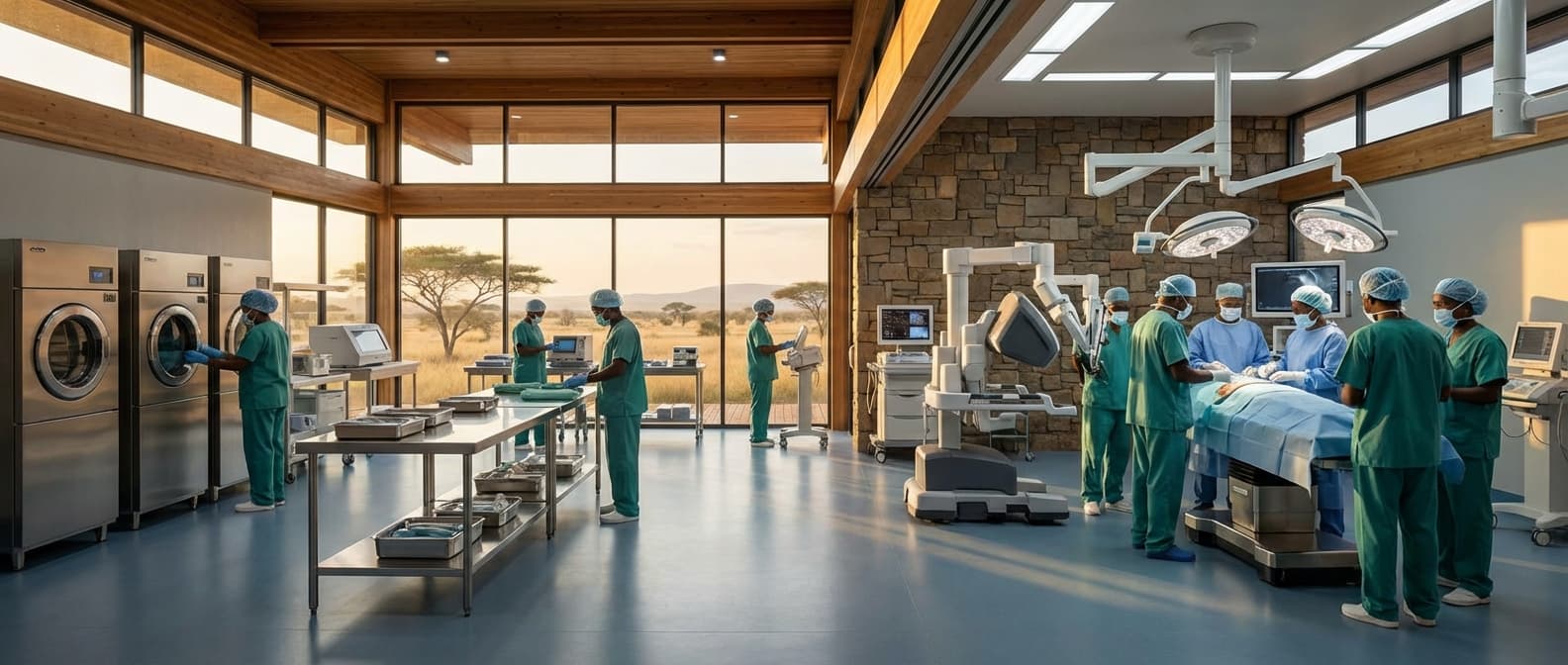
CSSD Design & Validation in Botswana
Engineering Excellence & Technical Support
CSSD workflow design, validation and process development High-standard technical execution following OEM protocols and local regulatory frameworks.
Advanced Sterilization Protocol Design
Leveraging international best practices and local healthcare needs, we design comprehensive CSSD sterilization protocols for critical medical equipment. This includes detailed validation of parameters like temperature, pressure, humidity, and time for autoclaves, low-temperature sterilizers, and washer-disinfectors, ensuring optimal patient safety and infection control in Botswana's healthcare facilities.
Automated Workflow & Quality Assurance Systems
Implementing cutting-edge automation in CSSD design, we integrate intelligent tracking systems for instrument decontamination, sterilization, and distribution. Our validation focuses on ensuring the seamless operation and data integrity of these systems, providing Botswana's hospitals with traceable and verifiable sterilization cycles, thereby reducing manual errors and enhancing operational efficiency.
Customized Equipment Integration & Performance Validation
We specialize in the bespoke integration of CSSD equipment tailored to the specific infrastructure and operational demands of Botswana's diverse healthcare landscape. Our rigorous validation processes encompass performance testing, calibration, and efficacy verification of all installed machinery, guaranteeing reliable and compliant sterilization performance that meets national and international standards.
What Is Cssd Design & Validation In Botswana?
Central Sterile Supply Department (CSSD) design and validation in Botswana refers to the systematic process of planning, configuring, and verifying the infrastructure, equipment, workflows, and operational procedures of a CSSD to ensure the safe and effective sterilization of reusable medical devices. This service is critical for healthcare facilities to maintain infection control standards, prevent healthcare-associated infections (HAIs), and comply with regulatory requirements within the Botswanan context. The design phase involves determining the optimal layout, flow of materials (dirty to clean to sterile), selection of appropriate sterilization technologies (e.g., steam autoclaves, low-temperature sterilizers), ventilation systems, water treatment, and waste management. Validation, a crucial component, establishes documented evidence that the CSSD processes and equipment consistently perform as intended, meeting predetermined specifications and regulatory benchmarks. This includes Installation Qualification (IQ), Operational Qualification (OQ), and Performance Qualification (PQ) for all sterilization units and associated equipment, as well as validation of cleaning and disinfection processes, packaging systems, and staff competency.
| Use Case | Description | Key Considerations |
|---|---|---|
| New Hospital Construction/Expansion | Designing a completely new CSSD from inception or significantly expanding an existing facility to accommodate increased surgical volume and improved infection control protocols. | Space allocation, workflow optimization, selection of scalable sterilization technologies, integration with other hospital departments, adherence to national building codes and health standards. |
| Equipment Upgrades or Replacement | Replacing outdated or malfunctioning sterilization equipment with newer, more efficient, and validated technologies. This often necessitates adjustments to existing workflows and infrastructure. | Compatibility of new equipment with existing infrastructure, validation of the new equipment (IQ/OQ/PQ), retraining of staff, impact on throughput and turnaround times. |
| Implementation of New Sterilization Modalities | Introducing advanced sterilization methods (e.g., plasma sterilization) for heat-sensitive instruments, requiring specialized equipment and validated processes. | Infrastructure requirements (e.g., power, ventilation), specific validation protocols for the new technology, staff training, integration with existing supply chain. |
| Compliance with Evolving Standards and Regulations | Ensuring that existing CSSD operations meet updated national or international infection control guidelines and regulatory requirements for sterilization and reprocessing. | Gap analysis of current practices against new standards, implementation of corrective actions, re-validation of processes, documentation and auditing. |
| Process Improvement and Efficiency Enhancement | Analyzing existing CSSD workflows, identifying bottlenecks, and redesigning processes or layouts to improve efficiency, reduce turnaround times, and minimize the risk of contamination. | Time-motion studies, workflow mapping, staff feedback mechanisms, lean management principles, impact on resource utilization. |
Key Stakeholders Requiring CSSD Design & Validation Services in Botswana
- Public Hospitals (e.g., Princess Marina Hospital, Nyangabwe Hospital)
- Private Healthcare Facilities and Clinics
- Surgical Centers
- Dental Practices with Sterilization Requirements
- Specialized Medical Centers (e.g., Dialysis Centers)
- Medical Device Manufacturers (for validation of sterilization processes for their devices)
- Government Health Ministries and Regulatory Bodies (for setting standards and oversight)
Who Needs Cssd Design & Validation In Botswana?
Central Sterile Services Department (CSSD) design and validation are critical for ensuring patient safety and infection control in healthcare facilities. In Botswana, these services are essential for a range of institutions that handle surgical procedures and require sterile instruments. Proper CSSD design optimizes workflow, minimizes contamination risks, and complies with international standards, while validation confirms that the equipment and processes are functioning as intended. This ensures the delivery of safe, sterile medical devices to patients, reducing the incidence of healthcare-associated infections (HAIs) and improving overall patient outcomes. Without robust CSSD design and validation, facilities risk operational inefficiencies, increased infection rates, and potential regulatory non-compliance.
| Customer Type | Key Departments Involved | Specific Needs/Benefits |
|---|---|---|
| Government Hospitals | CSSD, Surgical Wards, Operating Theatre, Infection Control Unit, Procurement Department, Estates/Maintenance | Scalable solutions for high patient volumes, cost-effectiveness, adherence to national health standards, capacity building for local staff. |
| Private Hospitals & Clinics | CSSD, Operating Theatre, Outpatient Departments, Administration, Quality Assurance | Advanced technology for efficiency, compliance with international accreditation standards (e.g., JCI if applicable), streamlined workflow for competitive service delivery. |
| Surgical Centres | CSSD, Surgical Teams, Anaesthesia Department, Nursing Staff | Optimized space for specialized surgical equipment, rapid turnaround times for instruments, enhanced safety protocols. |
| Dental Clinics (with Sterilization Needs) | Dental Operating Area, Sterilization Room (if dedicated) | Appropriate scale sterilization solutions for dental instruments, compliance with dental health regulations, prevention of cross-contamination. |
| Specialty Clinics | Relevant Clinical Departments, CSSD (or outsourced sterilization) | Tailored sterilization processes for delicate or specialized instruments, ensuring instrument integrity and patient safety for specific procedures. |
Target Customers & Departments for CSSD Design & Validation in Botswana
- Government Hospitals (District, Referral, Teaching)
- Private Hospitals & Clinics
- Surgical Centres
- Dental Clinics with Sterilization Needs
- Specialty Clinics (e.g., Ophthalmology, Cardiology requiring sterile instruments)
Cssd Design & Validation Process In Botswana
The CSSD (Central Sterile Services Department) Design & Validation Process in Botswana, as in many countries, is a critical undertaking to ensure the safety and efficacy of sterile medical devices. This process follows a structured workflow, beginning with an initial inquiry and culminating in the successful validation and operationalization of the CSSD. It involves meticulous planning, adherence to international standards, and rigorous testing.
| Stage | Key Activities | Involved Stakeholders | Key Deliverables | Typical Timeline (Indicative) |
|---|---|---|---|---|
| Initial contact from healthcare facility, identification of sterilization needs, assessment of current capacity, preliminary budget discussions. | Healthcare Facility Management, Ministry of Health, Potential CSSD Consultants/Suppliers. | Needs assessment report, preliminary scope of work. | 1-2 Weeks |
| Development of a high-level design concept, space allocation, workflow analysis, technology selection overview, initial cost estimation, regulatory compliance check. | CSSD Consultants, Architects, Healthcare Facility Management, Ministry of Health. | Conceptual design drawings, feasibility report, preliminary budget. | 2-4 Weeks |
| Creation of detailed architectural, mechanical, electrical, and plumbing (MEP) drawings. Finalization of workflow layouts, infection control measures, HVAC specifications, materials selection, and safety features. | Architects, MEP Engineers, CSSD Consultants, Infection Control Specialists. | Detailed design drawings, specifications for all building services, Bill of Quantities (BOQ). | 8-16 Weeks |
| Tendering for construction/renovation works, site preparation, construction or modification of the CSSD space according to detailed designs. | Contractors, Project Managers, Ministry of Health Procurement Department. | Completed CSSD physical space, all building infrastructure. | 6-12 Months (depending on scale) |
| Detailed specification of all required CSSD equipment (autoclaves, washer-disinfectors, ultrasonic cleaners, packaging machines, etc.), tendering, and procurement. | CSSD Consultants, Biomedical Engineers, Procurement Specialists, Equipment Suppliers. | Procured CSSD equipment. | 4-8 Months (can run concurrently with construction) |
| Physical installation of all CSSD equipment, connection to utilities, initial testing by suppliers to ensure basic functionality. | Equipment Suppliers, Biomedical Engineers, CSSD Technicians. | Installed and commissioned equipment. | 2-4 Weeks |
| Creation of detailed protocols for the validation of each piece of equipment and the overall CSSD process. This includes Performance Qualification (PQ), Operational Qualification (OQ), and Installation Qualification (IQ). Protocols must align with relevant Botswana health regulations and international standards (e.g., ISO 13485, HTM 01-01). | Validation Engineers, CSSD Consultants, Quality Assurance Specialists, Biomedical Engineers. | Approved Validation Protocols (IQ, OQ, PQ). | 2-4 Weeks |
| Carrying out the tests defined in the validation protocols. This involves biological and chemical indicator testing, load testing, environmental monitoring, and process parameter verification to ensure consistent and effective sterilization. | Validation Engineers, CSSD Technicians, Quality Assurance Personnel. | Validation test results, certificates of validation. | 4-8 Weeks |
| Comprehensive documentation of the entire process, including design drawings, equipment manuals, validation reports, and standard operating procedures (SOPs). | All involved stakeholders, especially Quality Assurance and CSSD Management. | Complete CSSD project documentation package, validation report. | Ongoing throughout the process |
| Training of CSSD staff on the operation of equipment, maintenance procedures, infection control protocols, and emergency procedures. Formal handover of the operational CSSD to the healthcare facility. | Equipment Suppliers, CSSD Consultants, CSSD Management, CSSD Staff. | Trained CSSD staff, operational CSSD facility. | 1-2 Weeks |
| Establishing routine monitoring of sterilization processes, regular equipment maintenance, and scheduled revalidation of equipment and processes as per regulatory requirements and manufacturer recommendations. | CSSD Management, CSSD Technicians, Biomedical Engineers, Ministry of Health. | Maintenance logs, revalidation reports, continuous quality improvement. | Ongoing |
CSSD Design & Validation Workflow in Botswana
- Inquiry & Needs Assessment
- Conceptual Design & Feasibility Study
- Detailed Design & Engineering
- Procurement & Construction/Renovation
- Equipment Specification & Procurement
- Installation & Commissioning of Equipment
- Validation Protocol Development
- Validation Execution & Testing
- Documentation & Reporting
- Training & Handover
- Ongoing Monitoring & Revalidation
Cssd Design & Validation Cost In Botswana
Designing and validating a Central Sterile Services Department (CSSD) in Botswana involves a multifaceted approach, with costs influenced by several key factors. These include the scale and complexity of the CSSD, the chosen technology and equipment, the required level of validation, the experience and reputation of the design consultants and validation service providers, and prevailing market conditions in Botswana. Pricing is typically quoted in Botswana Pula (BWP).
| Service Component | Estimated Price Range (BWP) | Notes |
|---|---|---|
| CSSD Design Consultancy (Conceptual to Detailed) | 50,000 - 300,000+ | Highly dependent on facility size, complexity, and consultant's experience. |
| Equipment Procurement (per major unit, e.g., Autoclave) | 150,000 - 1,000,000+ | Varies significantly by brand, size, and type (steam, low-temp). |
| Validation Services (IQ, OQ, PQ) | 80,000 - 400,000+ | Depends on the number and type of equipment, complexity of processes, and scope of validation. |
| Infrastructure Modifications (Plumbing, Electrical, HVAC) | 100,000 - 500,000+ | Can be a substantial cost if significant new construction or renovation is needed. |
| Project Management (if outsourced) | 10% - 20% of total project cost | Typically a percentage of the total project value. |
| Training for CSSD Staff | 20,000 - 100,000+ | Covers initial training on new equipment and processes. |
Key Pricing Factors for CSSD Design & Validation in Botswana
- Scale and Complexity: The size of the facility (number of beds in the hospital it serves), the range of sterilization processes required (e.g., steam, low-temperature, ultrasonic cleaning), and the workflow design all impact design hours and material costs.
- Equipment Selection: The type, brand, and sophistication of sterilization and cleaning equipment are significant cost drivers. High-end, automated systems will be more expensive than basic models. This includes autoclaves, washer-disinfectors, ultrasonic cleaners, sterile storage cabinets, and associated infrastructure.
- Validation Scope and Rigor: The extent of validation required, dictated by national regulations, international standards (like ISO 13485 or AAMI standards), and institutional policies, will influence the testing procedures, documentation, and personnel involved. This can range from basic performance qualification to comprehensive process validation.
- Consultancy Fees: The fees charged by specialized CSSD design consultants are based on their expertise, experience, project duration, and the scope of their services (e.g., conceptual design, detailed design, tender documentation, site supervision).
- Validation Service Provider Fees: Similar to designers, validation firms charge based on their expertise, the complexity of the validation protocols, the number of tests performed, and the time spent on-site. Expertise in specific validation techniques and adherence to regulatory requirements are crucial.
- Infrastructure Requirements: Costs associated with modifying or building new infrastructure to accommodate the CSSD, including plumbing, electrical, ventilation (HVAC), and waste disposal systems, will be factored in.
- Geographic Location and Accessibility: While less of a direct factor for design and validation itself, remote locations in Botswana might incur additional travel and accommodation costs for external consultants and validation teams.
- Regulatory Compliance: Ensuring compliance with Botswana's health regulations and relevant international standards adds to the complexity and therefore the cost of both design and validation. This often necessitates specialized knowledge and thorough documentation.
- Project Management: The overhead and fees associated with effective project management throughout the design and validation phases.
Affordable Cssd Design & Validation Options
Designing and validating a Central Sterile Services Department (CSSD) is crucial for patient safety and operational efficiency. However, traditional approaches can be expensive. This guide explores affordable CSSD design and validation options, focusing on value bundles and cost-saving strategies to help facilities implement robust sterile processing practices without breaking the bank.
| Value Bundle/Strategy | Description | Cost-Saving Impact | Key Benefits | |
|---|---|---|---|---|
| Basic CSSD Design Package | Includes essential layout recommendations, workflow optimization, and basic equipment lists based on facility size and service volume. | Reduces consulting fees associated with extensive custom design. | Provides a solid foundation for efficient sterile processing. Faster implementation. | Cost-effective entry point for new or upgrading CSSDs. |
| Integrated Validation Bundle | Combines initial qualification (IQ), operational qualification (OQ), and performance qualification (PQ) for key equipment (e.g., sterilizers, washer-disinfectors) into a single service offering. | Lower per-service cost compared to individual validation bookings. Streamlined scheduling. | Ensures equipment is functioning correctly and reliably. Reduces validation delays. | Compliance assurance at a predictable cost. |
| Standardized Workflow & Documentation Kit | Pre-designed templates for Standard Operating Procedures (SOPs), competency assessments, and cleaning/sterilization logs, aligned with industry best practices. | Eliminates the need for extensive in-house development of documentation. Reduces training material creation costs. | Ensures consistency in processes and facilitates regulatory compliance. Improves staff understanding. | Promotes a culture of quality and safety. |
| Refurbished Equipment Leasing Program | Access to certified, high-quality refurbished sterilizers, washer-disinfectors, and other CSSD equipment on a lease-to-own or rental basis. | Significantly lower upfront capital expenditure compared to new equipment. Predictable monthly costs. | Access to reliable equipment without the high initial investment. Allows for technology upgrades. | Ideal for budget-constrained facilities or those with fluctuating demand. |
| Remote CSSD Process Audit & Consulting | Utilizes secure video conferencing and shared documentation platforms for off-site audits of CSSD processes and workflow. | Eliminates travel and accommodation expenses for consultants. Shorter audit durations. | Provides expert feedback and recommendations for process improvement. Identifies areas of inefficiency. | Offers ongoing support and quality assurance at a reduced cost. |
| Modular Cleaning Station Design Service | Focuses on optimizing the cleaning area with pre-fabricated, ergonomic, and easily installed cleaning stations that can be adapted to various spaces. | Reduced construction and installation time and costs. Minimal disruption. | Enhances ergonomic workflows and staff safety. Improves cleaning efficacy. | Scalable solution for both small and large CSSDs. |
Key Considerations for Affordable CSSD Design & Validation
- Phased Implementation: Break down large projects into manageable phases, allowing for budget allocation over time.
- Standardization: Utilize standardized workflows, equipment, and documentation to reduce complexity and training costs.
- Modular Design: Opt for modular CSSD layouts that can be easily expanded or reconfigured as needs change.
- Lean Principles: Apply lean methodologies to optimize workflow, minimize waste, and reduce operational costs.
- Technology Integration: Leverage cost-effective technology for tracking, documentation, and validation, such as barcode systems and cloud-based software.
- Training & Education: Invest in comprehensive staff training to ensure competency and reduce errors, which can lead to costly rework or patient harm.
- Third-Party Validation: Explore cost-effective validation services from accredited third-party providers, especially for smaller facilities or specific validation needs.
- Equipment Selection: Prioritize multi-functional equipment and consider refurbished or leased options for significant cost savings.
Verified Providers In Botswana
In Botswana's evolving healthcare landscape, discerning patients seek assurance of quality and reliability. Franance Health stands as a beacon of trust, meticulously vetting its network of healthcare providers to ensure they meet the highest standards of care. This commitment to verification not only safeguards patient well-being but also streamlines access to credible medical services. Franance Health's rigorous credentialing process, encompassing qualifications, experience, and adherence to ethical practices, makes them the premier choice for anyone prioritizing dependable healthcare in Botswana. Their dedication to excellence means patients can be confident in the competence and integrity of the providers they are referred to.
| Aspect | Franance Health's Approach | Benefit to Patients |
|---|---|---|
| Provider Qualification | Mandatory verification of academic degrees, certifications, and licenses. | Ensures access to competent and officially recognized medical professionals. |
| Clinical Experience | Assessment of practical experience and track record in relevant medical fields. | Provides confidence in the provider's ability to handle diverse medical needs. |
| Reputation and Ethics | Thorough background checks and evaluation of professional conduct and patient feedback. | Guarantees care from ethical practitioners who prioritize patient welfare. |
| Specialty Expertise | Verification of specific training and ongoing professional development in chosen specialties. | Facilitates finding the right specialist for specific health concerns. |
| Continuing Education | Ensures providers are up-to-date with the latest medical advancements and best practices. | Promotes access to modern and effective treatment options. |
Why Franance Health is the Best Choice for Verified Providers in Botswana:
- Rigorous Credentialing: Franance Health employs a stringent verification process for all its partner providers, ensuring they meet and exceed industry standards.
- Qualified Professionals: Access to a network of highly qualified and experienced medical practitioners across various specialties.
- Ethical Practice Assurance: Providers are screened for their commitment to ethical conduct and patient-centered care.
- Streamlined Access: Franance Health simplifies the process of finding and booking appointments with trusted medical professionals.
- Patient Trust and Safety: Prioritizing patient well-being through a commitment to transparency and accountability in healthcare delivery.
Scope Of Work For Cssd Design & Validation
This Scope of Work (SOW) outlines the design and validation requirements for a Central Sterile Services Department (CSSD). It details the technical deliverables, standard specifications, and key activities to ensure the CSSD meets all regulatory, operational, and infection control standards. The objective is to establish a state-of-the-art CSSD that can efficiently and safely process, sterilize, and distribute medical devices.
| Phase | Key Activities | Technical Deliverables | Standard Specifications / References |
|---|---|---|---|
| Needs assessment, stakeholder consultation, workflow analysis, space programming, preliminary layout development. | Conceptual design report, preliminary space program, initial equipment list, high-level workflow diagrams. | Local building codes, healthcare facility guidelines, infection control guidelines, preliminary ergonomic studies. |
| Development of architectural, mechanical, electrical, and plumbing (MEP) drawings, detailed equipment specifications, material selection, IT infrastructure planning. | Detailed architectural drawings (floor plans, elevations, sections), MEP drawings, equipment specifications sheets, material schedules, IT network design, fire safety plan. | ISO 13485 (Medical devices – Quality management systems), HTM 01-01 (Decontamination of reusable medical devices), AAMI ST79 (Comprehensive guide to sterilization and sterile packaging for healthcare facilities), ASHRAE standards for HVAC in healthcare facilities. |
| Issuance of tender documents, equipment sourcing, vendor selection, equipment delivery, installation, and preliminary testing. | Tender documents, approved equipment vendor list, installation certificates, preliminary testing reports. | Manufacturer's specifications, installation manuals, safety certifications (CE, UL), energy efficiency ratings. |
| Verification of installed equipment functionality, system integration testing, preliminary workflow trials, staff training on equipment operation. | Commissioning reports for each piece of equipment, integrated system test results, initial operational procedures, preliminary training materials. | Manufacturer's operating manuals, functional testing protocols, initial user training checklists. |
| Prospective and concurrent validation of sterilization processes, biological and chemical indicator testing, environmental monitoring, documentation review, final operational qualification (OQ) and performance qualification (PQ). | Validation Master Plan (VMP), Installation Qualification (IQ) protocols and reports, Operational Qualification (OQ) protocols and reports, Performance Qualification (PQ) protocols and reports, validation certificates, final CSSD Standard Operating Procedures (SOPs). | ISO 17665 (Sterilization of health care products – Moist heat), ISO 11135 (Sterilization of health care products – Ethylene oxide), ISO 17665-1 (Sterilization of health care products – Moist heat – Requirements for the development, validation and routine control of a sterilization process for medical devices), AAMI TIR12 (Guidance on selecting test methods for evaluating the effectiveness of cleaning reusable medical devices), FDA Guidance documents (if applicable). |
| Compilation of all design, commissioning, and validation documentation, final handover to the client, post-occupancy evaluation planning. | Comprehensive CSSD design dossier, complete validation reports, as-built drawings, O&M manuals, warranty information, final handover report. | Client's requirements documentation, project management standards, record-keeping requirements. |
Key Objectives of the CSSD Design & Validation SOW
- To ensure the CSSD design adheres to current best practices, international standards (e.g., ISO, AAMI, HTM), and local health regulations.
- To facilitate efficient workflow from soiled item reception to sterile storage and distribution.
- To implement robust infection control measures throughout the CSSD process.
- To define clear responsibilities and timelines for design, procurement, installation, commissioning, and validation phases.
- To ensure all equipment and processes are validated to confirm their effectiveness and safety.
- To promote optimal space utilization and ergonomic design for staff efficiency and safety.
- To integrate technology for effective tracking, monitoring, and documentation of sterile supplies.
Service Level Agreement For Cssd Design & Validation
This Service Level Agreement (SLA) outlines the performance expectations for CSSD (Central Sterile Supply Department) Design & Validation services. It defines the response times for critical issues and the guaranteed uptime for essential services during the operational phase of a newly designed or validated CSSD. This SLA is intended to ensure the efficient and reliable functioning of the CSSD, minimizing disruptions and supporting patient safety.
| Service Category | Issue Severity Level | Response Time Target | Resolution Time Target | Uptime Guarantee (Post-Validation) |
|---|---|---|---|---|
| Critical Design Flaw/Validation Protocol Defect | High (Impacts immediate operational safety or regulatory compliance) | 2 Business Hours | 8 Business Hours | N/A (This category pertains to pre-operational phases) |
| Significant Design Obstacle/Validation Procedure Inaccuracy | Medium (Impacts workflow or efficiency, but not immediate safety) | 4 Business Hours | 2 Business Days | N/A (This category pertains to pre-operational phases) |
| Minor Design Clarification/Documentation Query | Low (Information request or minor clarification) | 1 Business Day | 3 Business Days | N/A (This category pertains to pre-operational phases) |
| Critical System Failure (e.g., Autoclave malfunction impacting core sterilization) | High (Immediate risk to patient safety and operational continuity) | 1 Business Hour (for remote assessment/guidance) | 4 Business Hours (for on-site technician dispatch) | 99.5% (Monitored monthly) |
| Major Equipment Malfunction (e.g., Washer-disinfector failure affecting significant portion of workflow) | Medium (Significant workflow disruption, potential impact on turnaround times) | 2 Business Hours (for remote assessment/guidance) | 8 Business Hours (for on-site technician dispatch) | 98.0% (Monitored monthly) |
| Minor Equipment Issue/Ancillary System Failure (e.g., Cart washer issue, minor environmental control fluctuation) | Low (Minor workflow impact, manageable with workarounds) | 4 Business Hours (for remote assessment/guidance) | 1 Business Day (for on-site technician dispatch, if deemed necessary) | 99.0% (Monitored monthly) |
| Software Glitch (e.g., Tracking system error impacting data entry) | Medium (Potential for data integrity issues or workflow delays) | 4 Business Hours | 1 Business Day | 99.5% (Monitored monthly) |
Scope of Services Covered
- CSSD Design Consultation and Review
- Validation Protocol Development
- Installation Qualification (IQ) Support
- Operational Qualification (OQ) Support
- Performance Qualification (PQ) Support
- Revalidation Planning and Support
- Documentation Review and Approval
Frequently Asked Questions

Ready when you are
Let's scope your CSSD Design & Validation in Botswana project in Botswana.

Scaling healthcare logistics and technical systems across the entire continent.