
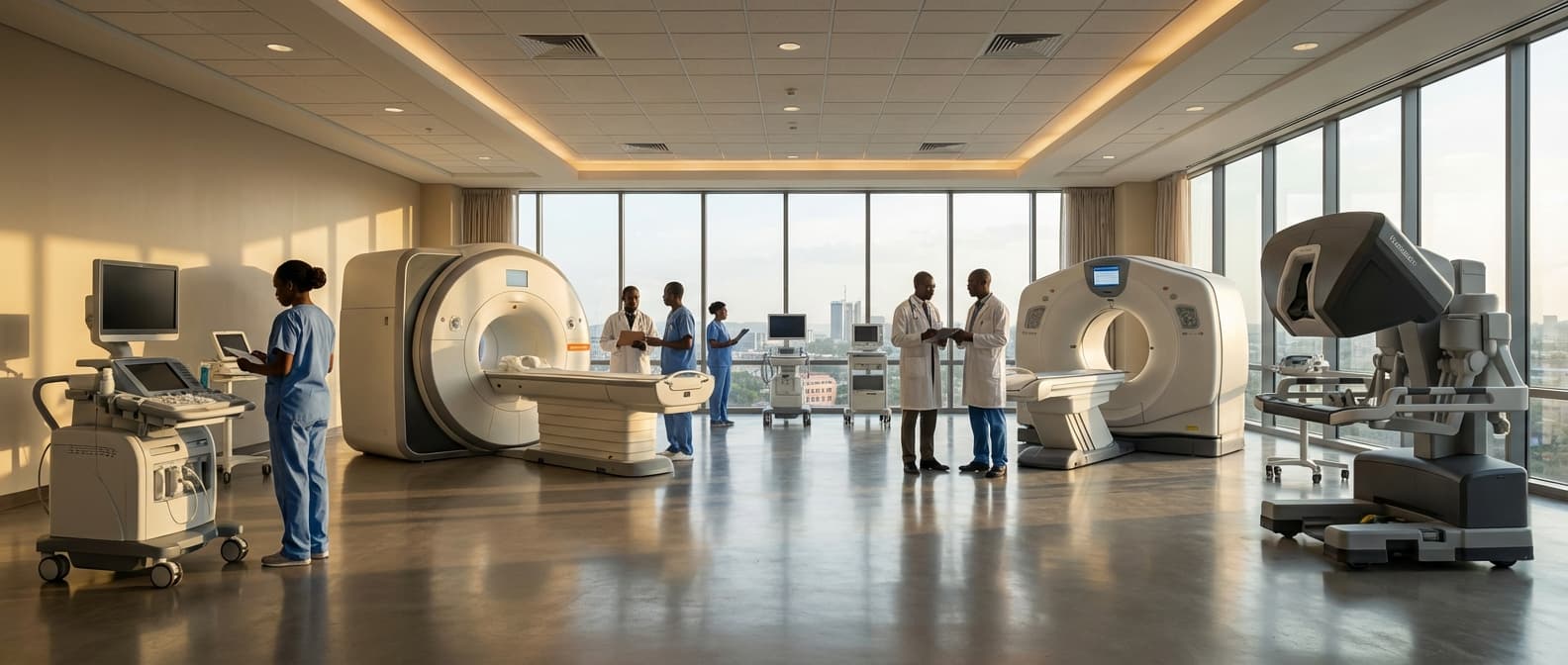
Renal Solutions in Botswana
Engineering Excellence & Technical Support
Complete dialysis systems and renal care equipment designed to deliver safe, effective, and patient-centered kidney treatment. High-standard technical execution following OEM protocols and local regulatory frameworks.
Advanced Hemodialysis Technology
Renal Solutions in Botswana deploys state-of-the-art hemodialysis machines, offering enhanced patient comfort, precise dialysate control, and improved treatment efficacy for end-stage renal disease patients.
Ultra-Pure Water Systems
Our Botswana facilities utilize advanced reverse osmosis and ultrafiltration systems to ensure the highest purity of water for dialysis, minimizing the risk of complications and optimizing treatment outcomes.
Remote Patient Monitoring & Telehealth Integration
Renal Solutions is pioneering the integration of telehealth and remote monitoring capabilities in Botswana, enabling proactive patient management, timely interventions, and improved access to specialist care for individuals in remote areas.
What Is Renal Solutions In Botswana?
Renal Solutions in Botswana refers to a comprehensive range of services and products dedicated to the diagnosis, management, and treatment of kidney-related diseases (renal disease) within the country. This encompasses both medical interventions and the provision of necessary equipment and consumables. The primary objective is to mitigate the progression of renal failure, improve patient quality of life, and enhance survival rates for individuals afflicted with chronic kidney disease (CKD) and acute kidney injury (AKI).
| Who Needs Renal Solutions? | Typical Use Cases |
|---|---|
| Individuals diagnosed with Chronic Kidney Disease (CKD) across all stages, particularly Stage 3 to 5, where kidney function is significantly compromised. | Management of complications associated with CKD, such as uremia, fluid overload, electrolyte disturbances, anemia, and bone disease. |
| Patients experiencing Acute Kidney Injury (AKI) due to various causes (e.g., dehydration, infections, nephrotoxic drugs, sepsis). | Temporary or permanent renal replacement therapy for patients with end-stage renal disease (ESRD) who require dialysis to survive. |
| Individuals with comorbidities that significantly impact kidney health, such as uncontrolled diabetes mellitus, hypertension, and cardiovascular disease. | Pre- and post-operative care for patients undergoing kidney transplantation. |
| Patients with hereditary kidney diseases or congenital abnormalities of the urinary tract. | Support and treatment for individuals experiencing nephrotic syndrome or glomerulonephritis. |
| Healthcare facilities (hospitals, clinics) requiring equipment, consumables, and specialized expertise for renal care. | Public health initiatives aimed at early detection and prevention of kidney disease in at-risk populations. |
| Individuals requiring palliative care for end-stage renal disease where RRT is no longer indicated or desired. | Rehabilitation and ongoing monitoring for patients who have undergone kidney transplantation. |
Key Components of Renal Solutions in Botswana
- Diagnostic Services: This includes laboratory tests (e.g., serum creatinine, glomerular filtration rate (GFR) estimation, urinalysis, electrolyte panels) and imaging studies (e.g., renal ultrasound, CT scans) to assess kidney function and identify underlying pathologies.
- Medical Management: Pharmacological interventions, dietary counseling, and lifestyle modifications prescribed by nephrologists and healthcare professionals to manage hypertension, diabetes mellitus (common causes of CKD), anemia, mineral and bone disorders, and fluid/electrolyte imbalances.
- Renal Replacement Therapies (RRT):
- Dialysis: Provision of hemodialysis and peritoneal dialysis services, including the supply of dialysis machines, dialyzers, bloodlines, dialysate solutions, and access management (e.g., fistula care, catheter maintenance). This is a critical component for patients with end-stage renal disease (ESRD).
- Kidney Transplantation: Facilitation of kidney transplant programs, which may involve pre-transplant workup, surgical procedures, and post-transplant immunosuppressive therapy. While less common than dialysis, it represents a definitive treatment option.
- Equipment and Consumables Supply: Procurement and distribution of specialized medical equipment (dialysis machines, water purification systems) and essential consumables for renal care facilities across Botswana.
- Healthcare Professional Training and Support: Development and delivery of training programs for nephrologists, nurses, technicians, and allied health professionals involved in renal care, ensuring adherence to best practices and standards.
- Patient Education and Support Programs: Providing information, resources, and support networks for patients and their families to better understand and manage their condition, promoting adherence to treatment regimens and improving self-care.
Who Needs Renal Solutions In Botswana?
Renal solutions in Botswana are crucial for individuals and healthcare institutions facing the growing burden of kidney-related diseases. The demand for these services is driven by factors such as an aging population, lifestyle changes leading to increased incidences of diabetes and hypertension (major causes of kidney disease), and a need for accessible and effective treatment options.
| Target Customer Segment | Specific Needs/Interests | Relevant Departments/Stakeholders |
|---|---|---|
| Patients with CKD/ESRD | Dialysis (hemodialysis, peritoneal dialysis), kidney transplant evaluations and support, medication management, dietary advice, patient education, palliative care. | Nephrology Departments, Dialysis Centers, Transplant Units, General Practitioners, Nurses, Dietitians, Social Workers. |
| Patients with AKI | Intensive care, short-term dialysis, reversible cause identification and management, close monitoring. | Intensive Care Units (ICUs), Nephrology Departments, Emergency Departments. |
| High-Risk Individuals | Screening and early detection, proactive management of underlying conditions (diabetes, hypertension), lifestyle modification counseling, regular monitoring. | General Practitioner Clinics, Diabetes Clinics, Hypertension Clinics, Public Health Initiatives. |
| Elderly Patients | Geriatric nephrology expertise, management of comorbidities, tailored treatment plans, support for chronic disease management. | Geriatric Departments, Nephrology Departments, Home Care Services. |
| Healthcare Facilities (Hospitals, Clinics) | Acquisition of advanced dialysis equipment, training for medical and nursing staff, establishment of specialized nephrology units, access to expert nephrologists, management of infection control for dialysis. | Hospital Administration, Procurement Departments, Medical Education & Training, Clinical Departments (Nephrology, Internal Medicine). |
| Government & Public Health Agencies | Policy development for kidney disease prevention and management, resource allocation for dialysis and transplant services, public awareness campaigns, data collection and research. | Ministry of Health, National Health Insurance Schemes, Public Health Departments, Research Institutions. |
Who Needs Renal Solutions in Botswana?
- Individuals diagnosed with Chronic Kidney Disease (CKD) across all stages.
- Patients requiring Renal Replacement Therapy (RRT), including dialysis (hemodialysis and peritoneal dialysis) and kidney transplantation.
- Individuals with Acute Kidney Injury (AKI) requiring immediate and intensive care.
- People at high risk of developing kidney disease due to underlying conditions like diabetes, hypertension, autoimmune diseases, and a family history of kidney problems.
- Elderly individuals who are more susceptible to age-related kidney decline and associated complications.
- Patients with end-stage renal disease (ESRD) seeking to improve their quality of life and manage their condition.
- Healthcare providers and facilities seeking to expand or improve their nephrology services.
- Public health organizations and government bodies focused on improving national health outcomes and managing chronic diseases.
Renal Solutions Process In Botswana
The Renal Solutions Process in Botswana outlines the comprehensive workflow for individuals seeking kidney-related medical solutions, from the initial inquiry to the final execution of treatment or management plans. This process is designed to be patient-centric, ensuring timely and effective care. The stages involve initial contact, assessment, diagnosis, treatment planning, execution, and ongoing management.
| Stage | Description | Key Activities | Responsible Parties | Expected Outcome |
|---|---|---|---|---|
| Inquiry & Initial Contact | The starting point where a patient or referring healthcare provider expresses a need for renal solutions. | Contacting Renal Solutions providers (clinics, hospitals, NGOs), initial information exchange, scheduling appointments. | Patient, Family, General Practitioner, Referring Healthcare Facility | Appointment scheduled, initial understanding of patient's situation. |
| Information Gathering & Preliminary Assessment | Collecting essential patient history and current health status. | Review of medical records, patient interview, basic physical examination. | Renal Solutions Administrator/Coordinator, Nurse | Initial patient profile created, eligibility for further assessment determined. |
| Referral & Specialist Consultation | Directing the patient to the appropriate renal specialist or unit. | Referral letter generation, scheduling with Nephrologist or Urologist, initial consultation. | General Practitioner, Renal Solutions Coordinator, Nephrologist/Urologist | Patient assessed by a renal specialist, preliminary diagnosis considered. |
| Diagnostic Testing & Evaluation | Conducting comprehensive tests to confirm diagnosis and assess the extent of renal disease. | Blood tests (e.g., creatinine, urea, electrolytes), urine tests, imaging (ultrasound, CT scan), kidney biopsy (if necessary), eGFR calculation. | Laboratory Technicians, Radiologists, Nephrologist/Urologist | Accurate diagnosis and staging of renal condition. |
| Diagnosis & Treatment Plan Development | Establishing a definitive diagnosis and formulating a personalized treatment strategy. | Discussion of findings by the specialist team, collaborative decision-making with the patient and family, outlining treatment options (medication, dialysis, transplant, lifestyle changes). | Nephrologist/Urologist, Patient, Family, Multidisciplinary Team (e.g., dietitians, social workers) | Clear diagnosis and a mutually agreed-upon treatment plan. |
| Treatment Execution | Implementing the agreed-upon treatment plan. | Initiation of medication, commencement of dialysis (hemodialysis/peritoneal dialysis), preparation for kidney transplant, implementation of dietary and lifestyle modifications. | Nurses, Dialysis Technicians, Surgeons (for transplant), Dietitians, Pharmacists | Active treatment of the renal condition. |
| Post-Treatment Monitoring & Management | Ongoing observation and management to ensure treatment effectiveness and patient well-being. | Regular check-ups, lab monitoring, adjustment of treatment, management of side effects, follow-up appointments. | Nephrologist/Urologist, Nurses, Allied Health Professionals | Stable health condition, management of chronic renal disease, improved quality of life. |
| Patient Education & Support | Empowering patients and their families with knowledge and resources. | Providing information on their condition, treatment, self-care, coping mechanisms, and access to support groups. | Nurses, Dietitians, Social Workers, Patient Support Groups | Informed and empowered patients, better adherence to treatment, improved psychological well-being. |
Key Stages in the Renal Solutions Process
- Inquiry & Initial Contact
- Information Gathering & Preliminary Assessment
- Referral & Specialist Consultation
- Diagnostic Testing & Evaluation
- Diagnosis & Treatment Plan Development
- Treatment Execution
- Post-Treatment Monitoring & Management
- Patient Education & Support
Renal Solutions Cost In Botswana
Understanding the cost of renal solutions in Botswana is crucial for individuals and healthcare providers managing kidney disease. These solutions, primarily dialysis fluids and related consumables, are essential for maintaining the health of patients requiring renal replacement therapy. The pricing in Botswana is influenced by several factors, including import duties, transportation costs from international manufacturers, the specific type and brand of solution, and the profit margins of local distributors. Due to these variables, a precise, universal price is difficult to state, but we can outline typical price ranges and the contributing factors.
| Item/Solution Type | Estimated Price Range (BWP per unit) | Typical Unit |
|---|---|---|
| Hemodialysis Dialysate Concentrate (e.g., Bicarbonate or Acetate based) | 150 - 350 | 5-liter concentrate bag |
| Sterile Water for Dialysis (for dilution) | 80 - 150 | 5-liter bag |
| Peritoneal Dialysis Solution (e.g., Glucose-based, different concentrations) | 200 - 500 | 2-liter bag |
| Saline Solution (for priming and rinsing) | 50 - 100 | 1-liter bag |
| Dialysis Disinfection Solutions (e.g., citric acid, peracetic acid) | 100 - 250 | 1-liter bottle |
Factors Influencing Renal Solution Costs in Botswana
- {"title":"Import Duties and Taxes","description":"Botswana levies import duties on medical supplies, which directly add to the final cost of renal solutions. These duties can vary based on trade agreements and government policy."}
- {"title":"Transportation and Logistics","description":"Sourcing these solutions often involves international shipping, followed by local distribution within Botswana. The distances, fuel costs, and warehousing contribute significantly to the overall price."}
- {"title":"Brand and Type of Solution","description":"Different brands and formulations of dialysis solutions (e.g., for hemodialysis vs. peritoneal dialysis, different electrolyte compositions) come with varying manufacturing costs, research and development investments, and market positioning, impacting their price."}
- {"title":"Supplier and Distributor Margins","description":"Local pharmacies, medical suppliers, and hospitals add their profit margins to the cost of goods, which is a standard business practice and contributes to the end-user price."}
- {"title":"Volume and Bulk Purchasing","description":"Larger healthcare facilities or government tenders might negotiate lower prices due to bulk purchasing, while individual patients buying smaller quantities may face higher per-unit costs."}
- {"title":"Regulatory Compliance","description":"Ensuring that imported medical supplies meet Botswana's health and safety regulations can incur additional costs related to testing, certification, and documentation."}
Affordable Renal Solutions Options
Finding affordable renal solutions is a crucial aspect of managing kidney disease. This involves understanding the various treatment options available, their associated costs, and how to make them more financially accessible. Value bundles and cost-saving strategies play a significant role in making these essential healthcare services more manageable for individuals and families.
| Strategy | Description | Potential Savings |
|---|---|---|
| Value Bundles | Package deals offered by healthcare providers that combine multiple services (e.g., dialysis treatments, lab work, physician visits) into a single, often discounted, price. | Reduced overall cost compared to purchasing services individually. Predictable budgeting. |
| Generic Medications | Using less expensive generic versions of brand-name drugs when available. | Significant reduction in prescription drug costs. |
| Home Dialysis | Performing dialysis at home (peritoneal dialysis or home hemodialysis) under medical supervision. | Potentially lower treatment costs compared to in-center dialysis, increased convenience. |
| Medicare and Medicaid | Government insurance programs that provide coverage for kidney disease treatment, including dialysis and transplantation, for eligible individuals. | Subsidized healthcare costs, often covering a large portion of treatment expenses. |
| Patient Assistance Programs (PAPs) | Programs offered by pharmaceutical companies and non-profit organizations to help patients afford prescription medications. | Reduced or free medication costs for eligible individuals. |
| Negotiating Medical Bills | Discussing bills with healthcare providers or billing companies to explore payment plans or potential discounts. | Reduced out-of-pocket expenses through extended payment terms or prompt payment discounts. |
| Health Insurance Advocacy | Working with insurance providers or patient advocates to ensure maximum coverage and to appeal denied claims. | Maximizing insurance benefits and reducing unexpected costs. |
| Preventive Care and Lifestyle Management | Adopting a healthy lifestyle, managing underlying conditions like diabetes and hypertension, and adhering to dietary recommendations to slow disease progression. | Potentially delaying or preventing the need for more aggressive and costly treatments. |
Key Renal Solution Options & Cost Considerations
- Dialysis (Hemodialysis and Peritoneal Dialysis): Essential for filtering waste from the blood when kidneys fail. Costs vary based on type, frequency, and location.
- Kidney Transplantation: A long-term solution, but involves significant pre- and post-operative costs, including surgery, immunosuppressant medications, and ongoing monitoring.
- Medications: Prescribed to manage symptoms, control blood pressure, treat anemia, and address other complications associated with kidney disease. These can represent a substantial ongoing expense.
- Nutritional Support and Dietary Counseling: Crucial for managing fluid intake, electrolytes, and protein. Professional guidance can prevent complications and optimize health, potentially reducing overall medical costs.
- Medical Equipment and Supplies: For home dialysis or managing chronic kidney disease, specific equipment and ongoing supplies are necessary.
- Transportation: Frequent medical appointments and dialysis sessions can incur significant transportation costs, especially for those living far from treatment centers.
Verified Providers In Botswana
In Botswana's burgeoning healthcare landscape, identifying truly reliable and high-quality healthcare providers is paramount. Franance Health stands out as a beacon of trust, meticulously vetting its network of providers to ensure patients receive exceptional care. This commitment to verification not only simplifies the search for quality healthcare but also offers tangible benefits to individuals and families seeking medical assistance.
| Provider Type | Franance Health Verification Criteria | Benefits for Patients |
|---|---|---|
| Hospitals | Accreditation status, adherence to international patient safety standards, qualified medical staff, advanced equipment, efficient patient management systems. | Access to state-of-the-art facilities, comprehensive medical services, and a high standard of care from a trusted institution. |
| Specialist Clinics | Board certification in specialty, years of experience, advanced training, positive patient reviews, availability of specialized diagnostic tools. | Expert diagnosis and treatment from highly qualified specialists, ensuring effective management of specific health conditions. |
| General Practitioners | Medical license, continuous professional development, patient-centric approach, effective communication skills, integration with specialist networks. | Reliable primary healthcare services, proactive health management, and seamless referral to specialists when needed. |
| Diagnostic Laboratories | Accreditation by relevant bodies, use of calibrated equipment, qualified laboratory technicians, timely and accurate reporting of results. | Trustworthy diagnostic testing, leading to accurate diagnoses and appropriate treatment plans. |
Why Franance Health is the Best Choice for Verified Providers in Botswana:
- Rigorous Vetting Process: Franance Health employs a stringent credentialing process that goes beyond basic licensing. They assess qualifications, experience, specialized training, and adherence to ethical standards, ensuring every listed provider meets a high benchmark of competence and integrity.
- Focus on Quality and Patient Outcomes: The verification process prioritizes providers who demonstrate a commitment to patient well-being and positive health outcomes. This includes evaluating their track record, patient feedback mechanisms, and adherence to best medical practices.
- Comprehensive Network: Franance Health curates a diverse network encompassing various specialties, from general practitioners and specialists to hospitals and diagnostic centers. This broad coverage ensures that patients can find verified care for a wide range of medical needs.
- Transparency and Accessibility: By providing a curated list of verified providers, Franance Health eliminates the guesswork and anxiety often associated with choosing a healthcare professional. Information about provider credentials and services is readily accessible, empowering patients to make informed decisions.
- Trust and Peace of Mind: Knowing that a provider has been thoroughly vetted by Franance Health offers immense peace of mind. Patients can focus on their health journey with confidence, assured of the quality of care they will receive.
- Innovation in Healthcare Access: Franance Health is dedicated to leveraging technology and innovative approaches to improve healthcare accessibility and quality in Botswana, making it a forward-thinking partner in the nation's health sector.
Scope Of Work For Renal Solutions
This document outlines the Scope of Work (SOW) for Renal Solutions, detailing the technical deliverables and standard specifications required for the successful implementation and operation of our advanced renal care platform. The SOW encompasses all phases of the project, from initial setup and configuration to ongoing support and maintenance. Our objective is to provide a comprehensive, integrated, and user-friendly solution that enhances patient outcomes and streamlines clinical workflows.
| Component | Description | Standard Specifications | Deliverable Format |
|---|---|---|---|
| Renal Care Platform | Secure, scalable cloud-based application for managing patient data, treatment plans, and clinical workflows. | AWS/Azure/GCP hosted, HIPAA/GDPR compliant, OWASP Top 10 security standards, 99.9% uptime SLA. | Deployed application instance, access credentials, user manual. |
| EMR/EHR Integration Module | Bi-directional data exchange with selected Electronic Medical/Health Record systems. | HL7 v2.x/FHIR standards, secure API endpoints, data mapping documentation. | Configured integration interface, testing reports, integration guide. |
| Data Migration Service | Secure transfer and validation of historical patient data from legacy systems to the new platform. | Data encryption in transit and at rest, data integrity checks, detailed migration plan. | Migrated dataset, validation reports, audit trail. |
| User Training Program | Comprehensive training materials and sessions for clinical and administrative staff. | Interactive e-learning modules, instructor-led sessions, user guides, quick reference cards. | Training materials (PDF, video), attendance records, post-training assessment results. |
| API Gateway | Provides secure and standardized access to platform functionalities for third-party applications. | RESTful APIs, OAuth 2.0 authentication, OpenAPI 3.0 specification. | API documentation portal, sample API calls. |
| Security and Compliance | Ensuring the platform meets all relevant data privacy and security regulations. | Regular vulnerability scans, penetration testing, audit logs, compliance certificates (e.g., SOC 2 Type II). | Security audit reports, compliance documentation. |
| Performance Monitoring | Tools and dashboards to track platform performance, resource utilization, and user activity. | Real-time dashboards, historical performance data, alerting mechanisms. | Access to monitoring dashboards, performance reports. |
| Maintenance and Support | Ongoing technical support, bug fixes, and software updates. | 24/7 technical support (based on SLA), scheduled maintenance windows, version control documentation. | Support tickets, release notes for updates, maintenance schedule. |
Key Technical Deliverables
- Cloud-based Renal Care Platform Deployment
- Integration with Existing EMR/EHR Systems
- Data Migration Strategy and Execution
- User Training Modules and Documentation
- API Documentation for Third-Party Integrations
- Security Audits and Compliance Reports
- Performance Monitoring and Optimization Tools
- Regular Software Updates and Patch Management
Service Level Agreement For Renal Solutions
This Service Level Agreement (SLA) outlines the commitment of Renal Solutions to its clients regarding the performance and availability of its services. This SLA applies to all services provided by Renal Solutions, including but not limited to its remote patient monitoring platform, data analytics services, and support infrastructure. The primary goal of this SLA is to ensure a high level of service reliability and responsiveness to support the critical needs of our clients in the renal care sector.
| Service Category | Uptime Guarantee (Monthly) | Critical Incident Response Time | Non-Critical Support Request Response Time | Scheduled Maintenance Window |
|---|---|---|---|---|
| Remote Patient Monitoring Platform | 99.9% | 1 hour | 4 business hours | Sunday, 02:00 - 04:00 UTC |
| Data Analytics & Reporting Services | 99.5% | 2 hours | 8 business hours | Saturday, 22:00 - Sunday, 02:00 UTC |
| Client Support Infrastructure (Phone/Email) | N/A (Availability based on business hours) | Immediate acknowledgement, resolution target TBD | 4 business hours acknowledgement | N/A |
Key Service Commitments
- Uptime Guarantee: Renal Solutions commits to maintaining a high level of service availability.
- Response Times: Renal Solutions guarantees prompt responses to support requests and critical incidents.
- Maintenance Windows: Scheduled maintenance will be performed during off-peak hours to minimize disruption.
- Reporting: Regular reports on service performance and uptime will be provided.
Frequently Asked Questions

Ready when you are
Let's scope your Renal Solutions in Botswana project in Botswana.

Scaling healthcare logistics and technical systems across the entire continent.