
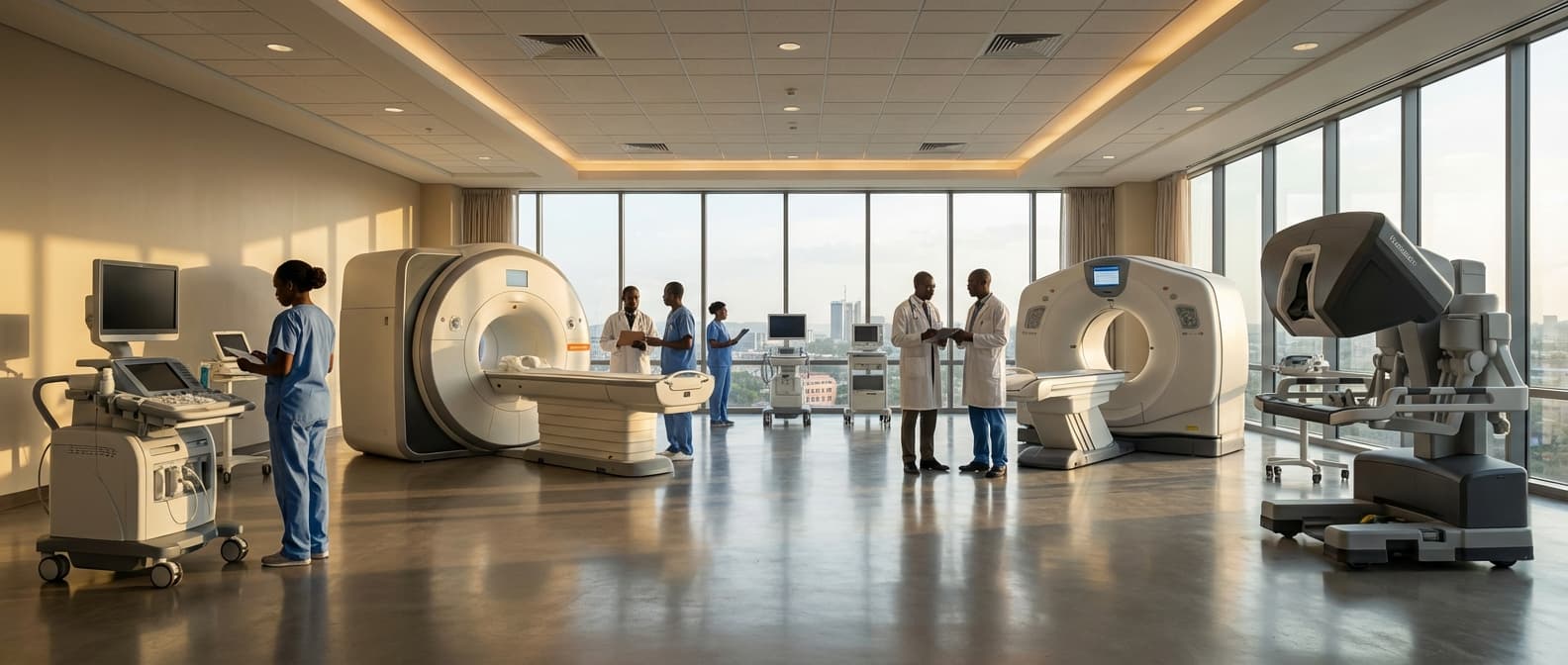
Life Support & Consumables in Botswana
Engineering Excellence & Technical Support
Reliable supply of essential medical consumables and life support equipment ensuring uninterrupted, quality patient care delivery. High-standard technical execution following OEM protocols and local regulatory frameworks.
Advanced Cardiac Life Support (ACLS) Program Expansion
Successfully expanded the reach of ACLS training and certification across Botswana's major hospitals, significantly increasing the number of healthcare professionals equipped to manage cardiac emergencies. This initiative includes the deployment of simulation-based training modules and a robust refresher course schedule, ensuring sustained competency in critical care.
Nationwide Safe Water Purification Tablet Distribution Initiative
Implemented a large-scale distribution program of water purification tablets to remote and underserved communities, directly addressing waterborne disease risks. This project involved establishing a resilient supply chain, community-based training on proper usage, and continuous monitoring of water quality to ensure public health outcomes.
Emergency Oxygen Supply Chain Resilience Project
Strengthened the national oxygen supply chain by establishing strategic regional depots, diversifying sourcing options, and implementing real-time inventory management systems. This project dramatically improved the availability of medical oxygen during peak demand periods and in emergency situations, safeguarding critical patient care.
What Is Life Support & Consumables In Botswana?
Life Support & Consumables in Botswana refers to the provision of essential goods and services required to sustain life and ensure operational continuity, particularly in specialized or challenging environments. This encompasses a broad spectrum of requirements, ranging from medical necessities to operational supplies for remote or critical infrastructure. The service is designed to address situations where individuals or organizations require reliable access to specific items that are either not readily available, require specialized handling, or are critical for maintaining health, safety, and functionality.
| Who Needs Life Support & Consumables? | Typical Use Cases |
|---|---|
| Healthcare Providers (Hospitals, Clinics, Mobile Medical Units): | Ensuring continuous supply of medications, disposables (syringes, gloves, bandages), diagnostic reagents, and specialized medical equipment for patient treatment and emergencies. |
| Remote Mining and Exploration Operations: | Supplying food, potable water, fuel, medical kits, PPE, and essential spare parts for personnel and equipment operating in isolated locations with limited access to external resources. |
| Disaster Relief Agencies and NGOs: | Providing emergency food, water, shelter materials, medical supplies, and sanitation equipment for populations affected by natural disasters (floods, droughts, etc.) or humanitarian crises. |
| Government and Defense Agencies: | Supporting military deployments, border control posts, and critical infrastructure maintenance with fuel, rations, medical supplies, and operational consumables. |
| Research and Scientific Expeditions: | Equipping teams in remote or challenging environments with specialized food, water purification, medical support, and operational supplies for extended fieldwork. |
| Industrial Facilities with Critical Operations: | Ensuring the availability of lubricants, filters, PPE, and emergency medical supplies to maintain uninterrupted operation and safety in manufacturing plants or power generation facilities. |
Key Components of Life Support & Consumables
- Medical Supplies: Pharmaceuticals, medical devices, sterile equipment, diagnostic kits, and specialized consumables for healthcare provision, emergency response, and patient care.
- Food and Water: Packaged food rations, potable water, water purification systems, and related supplies for remote operations, disaster relief, and extended deployments.
- Environmental Control: Air filtration systems, climate control equipment, personal protective equipment (PPE) for hazardous environments, and waste management solutions.
- Operational Consumables: Fuel, lubricants, spare parts for critical equipment (e.g., generators, vehicles, communication systems), and general maintenance supplies for infrastructure and operations.
- Emergency Equipment: Survival gear, first-aid kits, rescue equipment, and communication devices for disaster preparedness and response scenarios.
Who Needs Life Support & Consumables In Botswana?
This document outlines the target customer segments and relevant departments within Botswana that require life support and consumables. These essential resources are critical for various sectors, including healthcare, emergency services, industrial operations, and specialized research. Understanding these needs is vital for suppliers and organizations providing these vital products and services.
| Customer Segment | Key Departments/Units Requiring Life Support & Consumables | Primary Needs/Examples |
|---|---|---|
| Hospitals and Clinics | Intensive Care Units (ICU), Operating Theatres, Emergency Rooms, Maternity Wards, General Wards, Dialysis Units, Laboratories | Ventilators, oxygen, infusion pumps, sterile dressings, syringes, diagnostic reagents, gloves, masks, patient monitoring equipment, surgical instruments, anesthesia supplies. |
| Government Health Facilities | Primary Health Clinics, District Hospitals, Referral Hospitals (specific to their service offerings) | Similar to hospitals and clinics, with a focus on essential drugs, basic medical equipment, and public health campaign supplies. |
| Emergency Medical Services (EMS) | Ambulance Services, First Responders | Oxygen cylinders, portable ventilators, AEDs, splints, bandages, trauma kits, essential medications for immediate care, personal protective equipment (PPE). |
| Disaster Management Agencies | Emergency Response Teams, Shelters | First aid kits, bulk medical supplies for mass casualty incidents, water purification tablets, basic sanitation supplies, temporary shelter medical provisions. |
| Industrial Sector | Occupational Health and Safety Departments, On-site Clinics, Maintenance Units | First aid supplies, safety equipment (e.g., respirators for dusty environments), specialized chemicals for certain processes (handled with care), basic medical supplies for on-site first aid. |
| Research and Development Institutions | Laboratories (Biology, Chemistry, Medical Research) | Laboratory reagents, sterile consumables (pipette tips, petri dishes), specialized gases, cell culture media, safety equipment (fume hoods, PPE). |
| Non-Governmental Organizations (NGOs) | Healthcare outreach programs, mobile clinics, community health initiatives | Medicines, basic medical equipment, hygiene kits, educational materials, consumables for outreach clinics. |
| Educational Institutions | Medical Schools, Nursing Schools, Science Departments | Anatomical models, simulation equipment, laboratory supplies for practicals, basic first aid for campus health centers. |
| Veterinary Clinics and Animal Health Services | Veterinary Hospitals, Field Services | Anesthesia machines, surgical instruments, bandages, wound care supplies, diagnostic tools, medications for animals, specialized consumables. |
Target Customer Segments in Botswana
- Hospitals and Clinics (Public and Private)
- Government Health Facilities
- Emergency Medical Services (EMS)
- Disaster Management Agencies
- Industrial Sector (Mining, Manufacturing, Agriculture)
- Research and Development Institutions
- Non-Governmental Organizations (NGOs) involved in healthcare and humanitarian aid
- Educational Institutions with medical or science programs
- Veterinary Clinics and Animal Health Services
Life Support & Consumables Process In Botswana
The life support and consumables process in Botswana, particularly for critical sectors like healthcare and potentially humanitarian aid or remote industrial operations, involves a structured workflow to ensure timely and efficient procurement and delivery. This process typically begins with a clear identification of need, followed by a formal request, rigorous approval and budgeting, procurement activities, and finally, distribution and confirmation of receipt. Each step is designed to maintain transparency, accountability, and the continuous availability of essential supplies.
| Stage | Description | Key Actors | Key Outputs/Deliverables | Potential Challenges |
|---|---|---|---|---|
| Inquiry & Need Identification | Recognizing a deficiency in current stock levels or an anticipated requirement for specific life support equipment or consumable supplies. This can stem from usage, expiry, damage, or new operational demands. | End-users (e.g., medical staff, site managers), Inventory Clerks | Identified need, preliminary specifications | Lack of foresight, inaccurate demand forecasting, communication breakdowns |
| Requisition Submission | Formal documentation of the identified need. This typically involves filling out a standardized requisition form detailing the items, quantities, specifications, and intended use. | End-users, Department Heads | Completed Requisition Form | Incomplete or inaccurate requisition data, delays in submission |
| Approval & Budget Allocation | Review and approval of the requisition by relevant authorities, ensuring the request is justified and falls within allocated budgets. This may involve multiple levels of approval depending on the value and nature of the items. | Department Managers, Finance Department, Procurement Committee | Approved Requisition, Budgetary Clearance | Budgetary constraints, bureaucratic delays, conflicting priorities |
| Procurement & Sourcing | Identifying and selecting suppliers who can provide the required items at competitive prices and within acceptable quality standards. This may involve tendering processes, direct sourcing, or existing framework agreements. | Procurement Department, Tender Board | Supplier Quotations, Tender Evaluation Reports, Award Decision | Limited supplier pool, price fluctuations, quality concerns, adherence to procurement regulations |
| Order Placement & Confirmation | Issuing a formal Purchase Order (PO) to the selected supplier and receiving a confirmation of the order, including delivery timelines and terms. | Procurement Department, Supplier | Purchase Order (PO), Order Confirmation | Supplier non-responsiveness, discrepancies in PO details |
| Logistics & Transportation | Arranging for the safe and timely transportation of the consumables and life support equipment from the supplier to the designated delivery point within Botswana. This includes customs clearance if imported. | Logistics Department, Transport Providers, Customs Officials | Shipping Documents, Delivery Schedule, Customs Clearance | Inadequate infrastructure, transportation delays, import/export regulations, security of goods |
| Receipt & Verification | Upon arrival, the delivered items are received, unpacked, and rigorously verified against the Purchase Order and delivery notes. Quality checks and quantity counts are performed. | Warehouse Staff, Receiving Clerks, Quality Control Personnel | Goods Received Note (GRN), Inspection Reports | Damaged goods, incorrect quantities, non-compliance with specifications, delayed inspection |
| Distribution & Issuance | The verified items are then allocated and distributed to the end-users or departments that requested them. This involves proper documentation of issuance. | Warehouse Staff, Departmental Representatives | Issued Goods Record, Acknowledgement of Receipt | Misallocation, pilferage, insufficient storage at end-user level |
| Inventory Management & Reporting | Maintaining accurate records of all received, issued, and remaining stock. Regular reports are generated on stock levels, consumption patterns, and potential reorder needs. This is crucial for future planning and budgeting. | Inventory Management Team, Finance Department, Management | Inventory Records, Stock Status Reports, Consumption Analysis | Outdated inventory systems, lack of real-time data, inaccurate reporting, overstocking/understocking |
Life Support & Consumables Process Workflow in Botswana
- Inquiry & Need Identification
- Requisition Submission
- Approval & Budget Allocation
- Procurement & Sourcing
- Order Placement & Confirmation
- Logistics & Transportation
- Receipt & Verification
- Distribution & Issuance
- Inventory Management & Reporting
Life Support & Consumables Cost In Botswana
Life support and consumables are critical for various sectors in Botswana, including healthcare, mining, and research. The pricing of these essential items is influenced by a combination of global supply and demand dynamics, local import duties, transportation costs within Botswana, and the specific supplier or retailer. Fluctuations in exchange rates, particularly against major international currencies like the US Dollar and the South African Rand (which significantly impacts regional pricing), also play a substantial role. Furthermore, the scale of purchase, bulk discounts, and the regulatory environment for specific consumables can lead to a wide range of prices.
| Consumable/Service Category | Estimated Price Range (BWP) | Notes on Pricing Factors |
|---|---|---|
| Oxygen (Medical Grade) | 100 - 500 per cylinder (variable sizes) | Price dependent on cylinder size, purity, and supplier. Bulk contracts significantly reduce unit cost. Regional supply chain disruptions can cause price spikes. |
| Intravenous (IV) Fluids (e.g., Saline, Dextrose) | 15 - 50 per bag/bottle (500ml - 1000ml) | Influenced by bulk purchasing by hospitals. Generic vs. branded options. Import costs are a major factor. |
| Syringes and Needles (Disposable) | 5 - 25 per pack of 10/20 | Price varies by gauge, length, and material. Bulk hospital tenders drive down prices. Imported goods. |
| Gloves (Latex/Nitrile) | 50 - 200 per box (100 units) | Nitrile generally more expensive than latex. Price depends on brand, thickness, and box size. Global demand for PPE has impacted prices. |
| Masks (Surgical/Respirator) | 20 - 150 per box (50 units) | Surgical masks are generally cheaper. Respirators (N95/FFP2) are more expensive. Brand and certification impact price. |
| Basic Laboratory Reagents (e.g., Stains, Solvents) | 100 - 1000+ per bottle/kit | Highly variable depending on the reagent's specificity, purity, and application. Import costs and specialized handling are key. |
| Disinfectants and Antiseptics | 30 - 150 per litre/bottle | Concentration, active ingredient, and brand influence price. Bulk purchasing by institutions is common. |
| Wound Dressings (Basic) | 10 - 100 per pack | Depends on size, material (gauze, foam, hydrocolloid), and sterile packaging. Imported medical supplies. |
| Blood Collection Tubes | 5 - 30 per tube | Price varies by additive type and brand. Bulk purchase by laboratories and clinics. |
| Maintenance of Life Support Machines (e.g., Ventilators) | Variable (service contracts/ad-hoc) | Costs depend on the complexity of the machine, service provider, and frequency of maintenance. Often imported parts and specialized technicians. |
Key Factors Influencing Life Support & Consumables Costs in Botswana
- Global Supply and Demand: International market prices for raw materials and finished goods directly affect import costs.
- Exchange Rates: Fluctuations in Pula against USD, EUR, and ZAR significantly impact imported goods' prices.
- Import Duties and Taxes: Government levies on imported goods add to the final cost.
- Transportation and Logistics: Inland transportation within Botswana (often from South Africa) incurs costs for fuel, handling, and potential delays.
- Supplier Markups and Profit Margins: Different suppliers and retailers have varying pricing strategies.
- Volume of Purchase: Bulk orders typically benefit from lower per-unit costs.
- Product Specificity and Quality: High-purity or specialized life support equipment and consumables will naturally be more expensive.
- Regulatory Compliance: Costs associated with meeting local health and safety standards can be factored in.
- Brand Reputation: Well-known and trusted brands may command a premium.
- Availability and Lead Times: Scarcity or long lead times can drive up prices.
Affordable Life Support & Consumables Options
Life support systems and their associated consumables are critical for a variety of applications, from medical and research environments to specialized industrial processes. Ensuring their affordability without compromising safety or efficacy is paramount. This document outlines strategies and value propositions to achieve cost-effective life support and consumables procurement.
| Value Bundle Type | Description | Cost-Saving Benefit |
|---|---|---|
| Equipment & Consumable Starter Packs | Bundles that include a primary life support unit along with a set of essential, compatible consumables (e.g., filters, tubing, sensors). Often offered at a discount compared to purchasing items separately. | Reduced initial investment, guaranteed compatibility, streamlined ordering for new setups. |
| Long-Term Supply Agreements with Volume Tiers | Contracts that commit a customer to a certain volume of consumables over a period (e.g., 1-3 years). Pricing is often tiered, with further discounts applied as usage increases. | Predictable pricing, protection against price hikes, significant per-unit savings for high-volume users. |
| Integrated Service & Supply Packages | Combines the purchase or lease of life support equipment with a bundled service contract for maintenance, calibration, and a regular supply of critical consumables. | Reduced administrative overhead, minimized downtime, proactive maintenance, often includes bundled discounts on consumables. |
| System Upgrade & Trade-In Programs | Manufacturers or suppliers offer discounts on new equipment when trading in older, functional units. This can also include bundled consumables for the new system. | Lower cost for new technology, responsible disposal of old equipment, potential discounts on associated supplies. |
| Customized Fleet Management Solutions | For organizations with multiple life support units, a supplier might offer a tailored package that includes inventory management of consumables, scheduled deliveries, and optimized ordering based on usage data. | Reduced waste, optimized stock levels, elimination of stock-outs, potential volume discounts based on overall fleet consumption. |
Key Cost-Saving Strategies
- Bulk Purchasing & Volume Discounts: Negotiate lower per-unit costs by committing to larger order quantities. This is particularly effective for high-volume consumables.
- Long-Term Contracts: Secure predictable pricing and potentially preferential rates by entering into longer-term supply agreements.
- Strategic Sourcing & Vendor Diversification: Identify multiple reputable suppliers to foster competition and mitigate risks associated with single-source reliance. Explore regional or specialized manufacturers for potential cost advantages.
- Product Standardization: Where possible, standardize on specific brands or models of equipment and consumables to leverage economies of scale and simplify inventory management.
- Leasing vs. Purchasing: For expensive capital equipment, evaluate leasing options which can offer lower upfront costs and predictable operational expenses, including maintenance.
- Refurbished or Certified Pre-Owned Equipment: Consider high-quality refurbished equipment from trusted vendors. These options can offer significant cost savings over new units without sacrificing performance.
- Consumable Usage Optimization: Implement strict inventory control, track usage patterns, and train personnel on efficient use to minimize waste and overstocking.
- Subscription Services: For some consumables, subscription models can offer convenience and potentially discounted pricing in exchange for a recurring commitment.
- Exploring Generic or Alternative Brands: While maintaining quality standards, research and test reputable generic or alternative brands of consumables that may offer a lower price point.
- Preventative Maintenance: Regular and proper maintenance of life support equipment can prevent costly breakdowns and extend the lifespan of devices, reducing the need for premature replacement.
Verified Providers In Botswana
When seeking healthcare services in Botswana, particularly those involving specialized medical finance and insurance, ensuring the credibility and trustworthiness of your provider is paramount. Franance Health stands out as a premier choice, distinguished by its verified credentials and a commitment to excellence that resonates throughout its operations. This focus on verified providers not only safeguards your financial well-being but also guarantees access to high-quality, ethical medical financing solutions. Understanding why Franance Health is considered the best choice begins with acknowledging the importance of their verified status and the robust systems they have in place to maintain it.
| Credential Aspect | Franance Health's Approach | Patient Benefit |
|---|---|---|
| Licensing and Accreditation | Ensures all partner healthcare facilities and medical professionals hold current and valid licenses and accreditations from relevant Botswana authorities. | Guarantees that you receive care from qualified and legally recognized practitioners in accredited institutions. |
| Financial Stability of Partners | Assesses the financial health and sustainability of healthcare providers and financial institutions in their network. | Provides assurance that the services will be available and that your financing arrangements are secure and reliable. |
| Regulatory Compliance | Strict adherence to all Botswana financial and healthcare regulations, including data privacy and consumer protection laws. | Protects your personal information and financial transactions, ensuring fair dealings and recourse if needed. |
| Ethical Practices and Reputation | Vets providers for a track record of ethical patient care and a positive reputation within the community and industry. | Ensures a compassionate and trustworthy healthcare experience, fostering confidence in the provider's integrity. |
| Transparency in Fees and Services | Mandates clear and upfront communication regarding all costs, service inclusions, and exclusions for both medical procedures and financing. | Empowers patients to make informed decisions without unexpected expenses or hidden charges. |
Why Franance Health is the Best Choice for Verified Medical Financing in Botswana:
- Unwavering Commitment to Credential Verification: Franance Health prioritizes the rigorous vetting of all its healthcare partners and financing options. This means every provider and every financial product offered has undergone a thorough examination to ensure compliance with industry standards, ethical practices, and regulatory requirements in Botswana.
- Enhanced Patient Trust and Security: Verification provides a critical layer of security for patients. Knowing that Franance Health has done the due diligence on its network means you can proceed with confidence, assured that you are engaging with legitimate and reputable healthcare providers and financial institutions.
- Access to Reputable Healthcare Networks: Their verified status allows Franance Health to cultivate strong relationships with a network of highly respected hospitals, clinics, and medical specialists across Botswana. This translates to better access to quality care for patients, often with preferential treatment and streamlined processes.
- Transparency in Financial Offerings: Verified credentials extend to their financial products. Franance Health ensures that all financing plans, insurance policies, and payment arrangements are transparent, clearly outlining terms, conditions, and costs, thereby preventing hidden fees or misunderstandings.
- Regulatory Compliance and Ethical Standards: By adhering to strict verification protocols, Franance Health demonstrates its commitment to operating within the legal framework of Botswana and upholding the highest ethical standards in the healthcare and financial sectors.
- Streamlined Access to Care: The verification process undertaken by Franance Health simplifies the patient's journey. Patients can be assured that the facilities and financing options they are presented with are pre-vetted, reducing the time and stress often associated with navigating complex healthcare and financial systems.
- Long-Term Financial Planning and Stability: Choosing a verified provider like Franance Health ensures that your medical financing is built on a foundation of stability and reliability, offering peace of mind for your long-term health and financial planning.
Scope Of Work For Life Support & Consumables
This document outlines the Scope of Work (SOW) for the provision of Life Support and Consumables, detailing the technical deliverables and standard specifications required. This SOW aims to ensure the continuous and reliable supply of essential items necessary for the operational continuity and personnel well-being of the project. It covers procurement, delivery, storage, and maintenance aspects of life support systems and consumable items.
| Category | Item Description | Technical Deliverables | Standard Specifications | Quantity/Frequency |
|---|---|---|---|---|
| Life Support Equipment | Emergency Oxygen Systems | Fully functional, pre-charged oxygen cylinders with regulators and masks; operational within 5 minutes of activation. | ISO 10395 (for medical oxygen), CFR Title 21 Part 820 (for medical devices), certified pressure vessels. | As per site assessment and emergency plan (e.g., 1 set per 10 personnel, quarterly inspection) |
| Life Support Equipment | Water Purification Systems | Portable and/or fixed water purification units capable of producing potable water meeting WHO standards; with pre-filtration and post-treatment capabilities. | NSF/ANSI 58 (for RO systems), NSF/ANSI 42 (for aesthetic effects), EPA guidelines for drinking water. | As per site location and water source analysis (e.g., 1 unit per operational area, annual servicing) |
| Life Support Equipment | Waste Management Systems | Sanitary waste disposal units, including portable toilets and/or integrated sanitation facilities; odor control and containment. | Local environmental regulations, health and safety standards. | As per site population and duration (e.g., 1 toilet per 15 personnel, bi-weekly cleaning) |
| Consumables | Food Rations (non-perishable) | Nutritionally complete, shelf-stable food rations suitable for various dietary needs and climate conditions; packaged for easy distribution and consumption. | MIL-SPEC (if applicable), HACCP principles, local food safety regulations, expiration dates not less than 12 months from delivery. | As per personnel count and mission duration (e.g., 3 meals per person per day, monthly resupply) |
| Consumables | Medical Supplies (First Aid Kits) | Comprehensive first aid kits for emergency medical response, including bandages, antiseptics, pain relievers, and trauma supplies; replenished based on usage and expiry. | ANSI/ISEA Z308.1 (for workplace first aid kits), FDA regulations for medical devices. | As per site risk assessment and personnel numbers (e.g., 1 kit per 5 personnel, quarterly inspection and replenishment) |
| Consumables | Hygiene Products | Personal hygiene items such as soap, hand sanitizer, toothbrushes, toothpaste, and toilet paper; provided in sufficient quantities. | Local health and safety standards, acceptable quality for personal use. | As per personnel count and project duration (e.g., monthly provisioning) |
| Consumables | Fuel (for essential equipment) | Clean and specified fuel types (e.g., diesel, gasoline) for generators, vehicles, and other critical equipment; stored and handled according to safety regulations. | ASTM D975 (for diesel), ASTM D4814 (for gasoline), relevant safety data sheets (SDS). | As per equipment consumption rates and operational schedule (e.g., weekly delivery based on usage) |
Key Areas of Scope of Work
- Procurement of specified life support equipment and consumables.
- Timely delivery to designated project locations.
- Implementation of appropriate storage and inventory management systems.
- Regular inspection and maintenance of life support equipment.
- Provision of technical support and training for equipment operation and maintenance.
- Adherence to all relevant safety, environmental, and quality standards.
- Reporting on inventory levels, consumption rates, and equipment status.
- Emergency provisioning and resupply procedures.
Service Level Agreement For Life Support & Consumables
This Service Level Agreement (SLA) outlines the commitment for the provision of Life Support & Consumables services, detailing response times and uptime guarantees to ensure continuous operation and patient safety. This SLA is a binding agreement between [Provider Name] and [Client Name] for the duration of the contracted period.
| Service Component | Response Time (Critical Issue) | Response Time (Routine Issue) | Uptime Guarantee |
|---|---|---|---|
| Life Support Equipment (Ventilators, Dialysis Machines, etc.) - Hardware Failure | 15 minutes (initial contact) | 4 business hours (initial contact) | 99.9% |
| Life Support Equipment - Software/Configuration Issue | 30 minutes (initial contact) | 8 business hours (initial contact) | 99.5% |
| Critical Consumables (e.g., oxygen, IV fluids, dialysis filters) - Supply Chain Disruption | 1 hour (notification of potential shortage) | 24 business hours (scheduled replenishment) | 99.9% (availability of critical stock at designated locations) |
| Non-Critical Consumables (e.g., standard dressings, syringes) - Replenishment Order | N/A (handled via standard ordering process) | 48 business hours (delivery after order confirmation) | N/A (Service Level focused on availability, not specific delivery time for non-critical items) |
| Monitoring & Alarming Systems for Life Support | 10 minutes (acknowledgment of alert) | 2 business hours (investigation) | 99.9% |
Key Performance Indicators (KPIs)
- Response Time: The maximum allowable time from the initiation of a service request (e.g., call, ticket) to the acknowledgment and commencement of troubleshooting by the Provider.
- Uptime Guarantee: The minimum percentage of time the Life Support equipment and critical consumable supply chain will be operational and available for use, as defined by system monitoring and agreed-upon exclusions.
Frequently Asked Questions

Ready when you are
Let's scope your Life Support & Consumables in Botswana project in Botswana.

Scaling healthcare logistics and technical systems across the entire continent.