
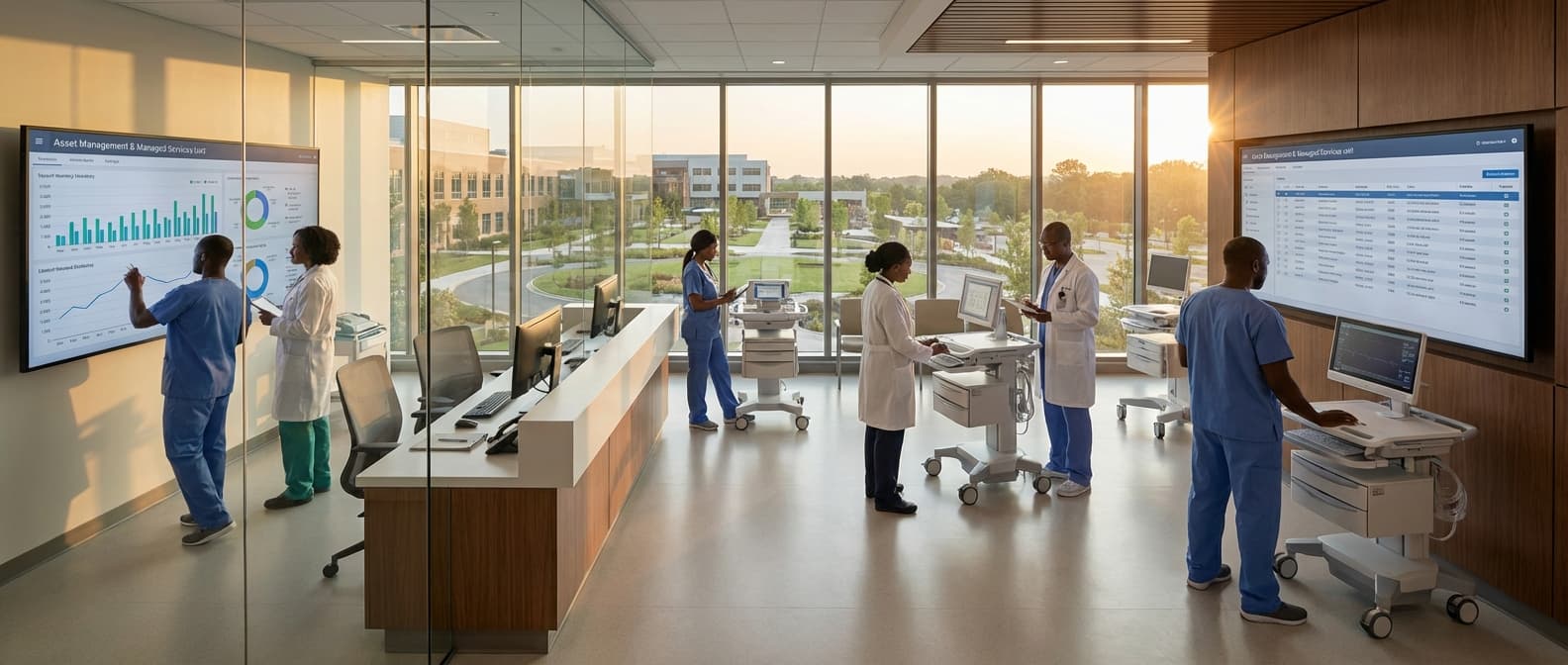
Maintenance KPI Reporting Service (Uptime/MTBF/MTTR) in Botswana
Engineering Excellence & Technical Support
Maintenance KPI Reporting Service (Uptime/MTBF/MTTR) High-standard technical execution following OEM protocols and local regulatory frameworks.
Maximized Uptime with Proactive Monitoring
Our advanced Uptime monitoring solutions in Botswana leverage real-time data analytics to detect potential equipment failures before they occur. This predictive maintenance approach significantly reduces unexpected downtime, ensuring your critical assets operate at peak performance and minimizing revenue loss. Benefit from enhanced operational continuity and a more reliable production schedule.
Enhanced Equipment Reliability (MTBF)
We provide Botswana's industries with data-driven insights to improve Mean Time Between Failures (MTBF). By analyzing historical maintenance data and operational patterns, our service helps identify root causes of recurring issues. This allows for targeted preventative maintenance strategies, extending the lifespan of your equipment and reducing the frequency of costly breakdowns.
Streamlined Maintenance Response (MTTR)
Our KPI reporting service empowers Botswana businesses to drastically reduce Mean Time To Repair (MTTR). We implement efficient workflows and provide actionable data on repair times, enabling faster diagnostics and quicker resolution of equipment issues. This results in minimized disruption to operations and a quicker return to full productivity after any incident.
What Is Maintenance Kpi Reporting Service (Uptime/mtbf/mttr) In Botswana?
Maintenance KPI Reporting Service (Uptime/MTBF/MTTR) in Botswana refers to the provision of specialized services aimed at monitoring, analyzing, and reporting on key performance indicators (KPIs) related to the operational availability and reliability of physical assets and systems within organizations operating in Botswana. This service focuses on metrics such as Uptime (the percentage of time a system or asset is operational and available for use), Mean Time Between Failures (MTBF - the average time a system operates before experiencing a failure), and Mean Time To Repair (MTTR - the average time it takes to resolve a failure and restore a system to operational status). The service involves the implementation of robust data collection mechanisms, sophisticated analytical tools, and the generation of comprehensive reports designed to provide actionable insights into maintenance effectiveness, asset performance, and operational efficiency. These reports are critical for informed decision-making, proactive maintenance strategies, and optimizing resource allocation to minimize downtime and maximize productivity.
| Stakeholder Group | Needs and Benefits | Typical Use Cases |
|---|---|---|
| Operations & Maintenance Teams | Monitoring real-time asset status, identifying recurring issues, optimizing repair schedules, improving technician efficiency, reducing unplanned downtime. | Tracking individual asset performance, scheduling preventative maintenance tasks based on MTBF, responding to alarms and incidents, managing work orders, analyzing technician response times (MTTR). |
| Plant/Facility Managers | Assessing overall operational efficiency, identifying underperforming assets, optimizing maintenance budgets, ensuring service level agreement (SLA) compliance, improving asset reliability. | Evaluating the effectiveness of maintenance strategies, forecasting maintenance expenditures, identifying capital expenditure needs for asset replacement, reporting on operational performance to higher management. |
| Senior Management & Executives | Understanding the financial impact of downtime, strategic asset management decisions, risk assessment, improving return on investment (ROI) from assets, ensuring business continuity. | Reviewing high-level KPI dashboards to gauge overall business health, making strategic decisions on technology adoption and infrastructure investment, assessing the performance of operational divisions. |
| Procurement & Supply Chain | Optimizing spare parts inventory based on failure rates (MTBF), ensuring availability of critical spares, reducing inventory holding costs. | Forecasting demand for spare parts, identifying critical spares with low MTBF, evaluating supplier performance for spare part delivery and quality. |
Key Components of a Maintenance KPI Reporting Service
- Data Collection and Integration: Establishing systems to capture real-time or near real-time data from various sources, including SCADA systems, CMMS/EAM platforms, IoT sensors, and manual logs.
- KPI Calculation and Analysis: Applying defined methodologies to calculate Uptime, MTBF, MTTR, and other relevant maintenance KPIs.
- Benchmarking and Trend Analysis: Comparing performance against industry standards, historical data, and internal targets to identify areas for improvement.
- Root Cause Analysis (RCA) Support: Facilitating the investigation of recurring failures to identify underlying causes and implement corrective actions.
- Reporting and Visualization: Generating clear, concise, and visually appealing reports (dashboards, charts, tables) tailored to different stakeholder needs (operational, management, executive).
- Recommendations and Action Planning: Providing data-driven recommendations for maintenance strategies, spare parts management, training needs, and asset lifecycle management.
- Technology and Software Solutions: Leveraging specialized software for data aggregation, analysis, and reporting (e.g., CMMS, EAM, BI tools, dedicated KPI platforms).
Who Needs Maintenance Kpi Reporting Service (Uptime/mtbf/mttr) In Botswana?
In Botswana's diverse and growing economy, ensuring the reliability and efficiency of assets is paramount. Businesses and organizations that depend on operational uptime, whether in manufacturing, mining, utilities, or critical infrastructure, require robust Key Performance Indicator (KPI) reporting, particularly focusing on Uptime, Mean Time Between Failures (MTBF), and Mean Time To Repair (MTTR). A dedicated Maintenance KPI Reporting Service can provide the insights needed to optimize maintenance strategies, reduce costly downtime, and extend the lifespan of equipment. This service is crucial for organizations looking to improve their operational resilience, cost-effectiveness, and overall productivity within the specific context of Botswana's industrial landscape.
| Target Customer Type | Key Departments Requiring Service |
|---|---|
| Mining and Mineral Processing | Maintenance Engineering, Operations Management, Reliability Engineering, Asset Management |
| Manufacturing | Production Management, Plant Maintenance, Quality Control, Engineering Services |
| Energy and Utilities | Operations Department, Technical Services, Asset Management, Safety and Compliance |
| Telecommunications | Network Operations Center (NOC), Field Operations, Technical Support, Infrastructure Management |
| Transportation and Logistics | Fleet Management, Maintenance and Repair Shops, Operations Planning, Asset Utilization |
| Large-Scale Agriculture | Farm Management, Equipment Maintenance, Processing Plant Operations, Supply Chain Management |
| Healthcare Facilities | Biomedical Engineering, Facilities Management, Hospital Administration, Operations Management |
| Government/Public Infrastructure | Public Works Department, Project Management Offices, Infrastructure Maintenance Divisions, Utility Management |
Target Customers in Botswana
- Mining and Mineral Processing Operations
- Manufacturing and Industrial Plants
- Energy and Utilities (Power Generation, Water Treatment)
- Telecommunications Infrastructure Providers
- Transportation and Logistics Companies
- Large-Scale Agriculture and Food Processing
- Healthcare Facilities (Hospitals, Clinics)
- Government and Public Infrastructure Projects
Maintenance Kpi Reporting Service (Uptime/mtbf/mttr) Process In Botswana
This document outlines the workflow for the Maintenance KPI Reporting Service, focusing on Uptime, Mean Time Between Failures (MTBF), and Mean Time To Repair (MTTR) in Botswana. The service aims to provide clients with accurate and actionable insights into their maintenance performance, enabling them to optimize operations and minimize downtime. The process begins with an initial client inquiry and culminates in the delivery of comprehensive KPI reports.
| Step | Description | Responsible Party | Key Activities | Deliverables/Outputs | Duration (Typical) |
|---|---|---|---|---|---|
| Client expresses interest in the Maintenance KPI Reporting Service. | Client & Service Provider | Discuss client's needs, existing systems, current reporting capabilities, and desired KPIs (Uptime, MTBF, MTTR). Identify scope and preliminary data requirements. | Meeting Minutes, Preliminary Scope Document | 1-3 Business Days |
| Service Provider prepares a detailed proposal outlining the scope, methodology, deliverables, timeline, and pricing. | Service Provider | Develop proposal, conduct pricing analysis, draft Service Level Agreement (SLA). | Formal Proposal, Draft SLA | 3-5 Business Days |
| Client reviews and accepts the proposal, leading to contract signing. | Client & Service Provider | Contract negotiation and signing, establish communication channels, assign project team, initiate data collection planning. | Signed Contract, Project Kick-off Meeting Minutes | 2-7 Business Days |
| Establish mechanisms for collecting accurate and consistent maintenance data. | Service Provider & Client IT/Maintenance Teams | Identify data sources (CMMS, SCADA, manual logs), define data fields for Uptime, downtime events (cause, duration), and repair times. Implement data extraction or integration methods. | Data Collection Plan, Data Integration/Extraction Scripts/Procedures | 5-15 Business Days |
| Ensure the accuracy, completeness, and consistency of collected data. | Service Provider | Perform data validation checks, identify and correct errors or inconsistencies, liaise with client for clarification on ambiguous data points. | Cleaned Data Set, Data Quality Report | 3-7 Business Days |
| Compute Uptime, MTBF, and MTTR based on the verified data. | Service Provider | Apply agreed-upon formulas for KPI calculation, identify trends, outliers, and potential root causes for poor performance. | Calculated KPI Values, Preliminary Analysis Summary | 3-7 Business Days |
| Compile the findings into a comprehensive and visually appealing report. | Service Provider | Design report templates, incorporate data visualizations (charts, graphs), write executive summaries and recommendations. | Draft KPI Report | 2-5 Business Days |
| Service Provider presents the draft report to the client for review and feedback. | Service Provider & Client | Conduct review meetings, address client queries, incorporate feedback for report refinement. | Feedback Log, Revised KPI Report | 2-5 Business Days |
| Deliver the finalized KPI report to the client. | Service Provider | Provide the polished report in the agreed-upon format (e.g., PDF, dashboard access). | Final Maintenance KPI Report | 1 Business Day |
| Ongoing support and consultation to help clients leverage the KPI insights. | Service Provider & Client | Offer further analysis, debriefings on findings, advice on implementing corrective actions, and discuss future reporting needs. | Follow-up Meetings, Recommendations Implementation Status Updates (if applicable) | Ongoing |
Key Maintenance KPIs Explained
- {"term":"Uptime","definition":"The percentage of time a piece of equipment or system is operational and available for use. It is calculated as (Total Operating Time - Downtime) / Total Operating Time * 100%."}
- {"term":"Mean Time Between Failures (MTBF)","definition":"The average time elapsed between inherent failures of a repairable system during normal system operation. It is calculated as Total Uptime / Number of Failures."}
- {"term":"Mean Time To Repair (MTTR)","definition":"The average time required to repair a failed component or system, bringing it back to operational status. It is calculated as Total Downtime / Number of Repairs."}
Maintenance Kpi Reporting Service (Uptime/mtbf/mttr) Cost In Botswana
The cost of a Maintenance KPI Reporting Service (Uptime, MTBF, MTTR) in Botswana can vary significantly based on several factors. These services typically involve data collection, analysis, reporting, and often, recommendations for improvement. The pricing structure will depend on the complexity of the operations being monitored, the volume of data, the frequency of reporting, the level of customization required, and the provider's expertise and reputation. For businesses in Botswana, understanding these cost drivers is crucial for budgeting and selecting the right service provider.
| Service Tier/Complexity | Estimated Cost Range (BWP) | Typical Inclusions |
|---|---|---|
| Basic Reporting (Standard Templates, Limited Assets) | BWP 2,500 - BWP 7,500 per month | Uptime percentage, basic MTBF and MTTR calculations, monthly summary reports for a small number of assets. |
| Intermediate Reporting (Customizable Templates, Moderate Assets) | BWP 7,500 - BWP 15,000 per month | Customizable dashboards, detailed MTBF/MTTR analysis by asset type, trend analysis, quarterly performance reviews, support for a moderate asset base. |
| Advanced Reporting & Analytics (High Customization, Large Asset Base, Predictive Elements) | BWP 15,000 - BWP 30,000+ per month | Real-time dashboards, advanced predictive analytics integration, root cause analysis support, benchmarking, weekly/monthly in-depth reports, integration with existing systems, dedicated account management, support for a large and diverse asset portfolio. |
| Project-Based/Consulting Engagements (One-time Setup/Analysis) | BWP 10,000 - BWP 50,000+ | Initial system setup, in-depth audit of current maintenance practices, development of custom KPI frameworks, historical data analysis, and strategic recommendations. |
Key Pricing Factors for Maintenance KPI Reporting Services in Botswana
- {"title":"Scope and Complexity of Operations","description":"The number of assets or machines being monitored, the criticality of these assets, and the complexity of their maintenance processes will directly impact the service cost. More complex environments require more sophisticated data collection and analysis."}
- {"title":"Data Volume and Frequency","description":"The amount of data generated by the assets and how often reports are needed (daily, weekly, monthly, quarterly) will influence pricing. Higher data volumes and more frequent reporting generally incur higher costs."}
- {"title":"Level of Customization and Reporting Granularity","description":"Standardized reporting templates will be less expensive than fully customized reports tailored to specific business needs. The depth of analysis and the level of detail in the reports also affect pricing."}
- {"title":"Data Collection Methods","description":"The methods used for data collection (manual, sensor-based, integration with existing CMMS/ERP systems) will impact the initial setup and ongoing service costs. Automated systems might have higher upfront costs but lower per-report expenses."}
- {"title":"Provider Expertise and Reputation","description":"Established providers with a proven track record, specialized expertise in asset management and KPI reporting, and a strong local presence may command higher fees."}
- {"title":"Additional Services","description":"Services beyond basic reporting, such as predictive maintenance analysis, Root Cause Analysis (RCA), benchmarking, or training, will add to the overall cost."}
- {"title":"Contract Duration and Service Level Agreements (SLAs)","description":"Longer-term contracts may offer discounted rates. SLAs defining response times, uptime guarantees, and data accuracy will also influence pricing."}
Affordable Maintenance Kpi Reporting Service (Uptime/mtbf/mttr) Options
Our Affordable Maintenance KPI Reporting Service provides essential insights into your operational efficiency through key metrics like Uptime, Mean Time Between Failures (MTBF), and Mean Time To Repair (MTTR). We understand that managing maintenance costs while ensuring reliability is crucial. This service is designed to offer valuable data-driven reporting without a significant financial burden, enabling proactive maintenance, reduced downtime, and optimized resource allocation. We offer flexible value bundles and cost-saving strategies tailored to your specific needs, ensuring you get the most impactful reporting at the best possible price.
| Value Bundle | Included Services | Target Audience | Key Benefits | Estimated Monthly Cost (USD) |
|---|---|---|---|---|
| Essential Insights | Monthly Uptime Reporting, Basic MTBF & MTTR Trend Analysis | Small to Medium Businesses, Entry-level maintenance tracking | Fundamental understanding of asset availability and common failure/repair durations. | $150 - $300 |
| Proactive Performance | Weekly Uptime Monitoring, Detailed MTBF & MTTR Analysis with Root Cause Indicators, Basic Downtime Categorization | Growing Businesses, Operations-focused teams | Identify recurring issues, understand failure patterns, and begin optimizing repair processes. | $300 - $600 |
| Optimized Reliability | Real-time Uptime Dashboards, Advanced MTBF & MTTR Benchmarking (Industry Comparison), Predictive Maintenance Trend Alerts, Comprehensive Downtime Analysis & Reporting | Established Operations, Organizations focused on maximizing asset lifecycle | Deeper insights into reliability, ability to forecast potential failures, and drive significant cost savings through informed decision-making. | $600 - $1200+ |
Key Maintenance KPIs Explained
- Uptime: The percentage of time a piece of equipment or a system is operational and available for use. Higher uptime directly translates to increased productivity and revenue.
- Mean Time Between Failures (MTBF): The average time that a system or component operates between inherent failures. A higher MTBF indicates greater reliability and fewer unexpected breakdowns.
- Mean Time To Repair (MTTR): The average time it takes to repair a failed component or system. A lower MTTR signifies efficient maintenance and quicker recovery from downtime.
Verified Providers In Botswana
In Botswana, ensuring access to reliable and high-quality healthcare is paramount. Franance Health stands out as a leader, offering a network of verified providers that represent the best choice for your health needs. Our rigorous vetting process guarantees that every provider within the Franance Health network meets the highest standards of professionalism, expertise, and patient care. This commitment to quality translates into peace of mind for our members, knowing they are receiving care from trusted and skilled professionals. By choosing Franance Health, you are not just selecting a healthcare provider; you are investing in a superior healthcare experience characterized by excellence and reliability.
| Category | Franance Health Advantage | What This Means for You |
|---|---|---|
| Provider Credentialing | Strict verification of licenses, certifications, and experience. | Guaranteed access to qualified and competent medical professionals. |
| Specialty Coverage | Broad network encompassing various medical specialties. | Convenient access to specialists for all your health concerns, from general practice to complex treatments. |
| Facility Standards | Partnerships with accredited and well-equipped healthcare facilities. | Receiving care in safe, modern, and efficient medical environments. |
| Patient Feedback | Ongoing monitoring of patient satisfaction and outcomes. | Continuous improvement of healthcare services based on real patient experiences. |
| Ethical Practice | Adherence to a strict code of ethics and professional conduct. | Trustworthy and transparent healthcare interactions. |
Why Franance Health is Your Best Choice for Verified Providers in Botswana
- Rigorous Vetting Process: We meticulously screen all healthcare professionals to ensure they meet stringent quality and ethical standards.
- Exceptional Expertise: Our network comprises highly qualified doctors, specialists, and allied health professionals with proven track records.
- Patient-Centric Care: Providers in our network are dedicated to delivering compassionate, personalized, and effective healthcare solutions.
- Access to Advanced Facilities: We partner with reputable hospitals and clinics equipped with modern technology and resources.
- Comprehensive Network: Our extensive network ensures you have access to a wide range of medical services across Botswana.
- Peace of Mind: Trust in knowing you are receiving care from accredited and dependable healthcare providers.
Scope Of Work For Maintenance Kpi Reporting Service (Uptime/mtbf/mttr)
This Scope of Work (SOW) outlines the services to be provided for the maintenance Key Performance Indicator (KPI) Reporting service, focusing on Uptime, Mean Time Between Failures (MTBF), and Mean Time To Repair (MTTR). The objective is to establish a robust and consistent reporting framework that enables proactive maintenance, identifies areas for improvement, and ultimately enhances operational efficiency and asset reliability. This document details the technical deliverables, standard specifications, and methodologies to be employed.
| Deliverable | Description | Standard Specification / Methodology | Frequency | Format |
|---|---|---|---|---|
| KPI Data Collection Framework | Establishment of a standardized process and tools for collecting raw data related to asset operational status, failure events, and repair activities. | Utilize existing CMMS/EAM systems where possible. Define data points for each KPI (e.g., start/end timestamps for operational status, failure type, repair start/end timestamps, technician assigned). Data validation rules to ensure accuracy and completeness. | Ongoing (real-time or near real-time) | API integrations, scheduled data extracts, manual data entry templates |
| Uptime Report | Monthly report detailing the overall uptime percentage for critical assets and asset groups, with breakdowns by operational period. | Calculation: (Total Operating Hours - Downtime Hours) / Total Operating Hours * 100%. Include analysis of major downtime events and their root causes. | Monthly | PDF, Excel, Interactive Dashboard |
| MTBF Report | Monthly report showcasing the average time between failures for key equipment, highlighting trends and potential reliability issues. | Calculation: Total Uptime Hours / Number of Failures. Analysis to identify recurring failure modes and contributing factors. | Monthly | PDF, Excel, Interactive Dashboard |
| MTTR Report | Monthly report illustrating the average time taken to resolve equipment failures, identifying bottlenecks in the repair process. | Calculation: Total Downtime Hours / Number of Repairs. Analysis to pinpoint delays in diagnosis, parts availability, or labor execution. | Monthly | PDF, Excel, Interactive Dashboard |
| Trend Analysis Report | Quarterly report that analyzes the historical trends of Uptime, MTBF, and MTTR, providing insights into long-term asset performance and maintenance effectiveness. | Comparison of current quarter metrics against previous quarters and historical averages. Identification of significant deviations and their potential drivers. Recommendations for proactive interventions. | Quarterly | PDF, Excel, Interactive Dashboard |
| Root Cause Analysis (RCA) Support Data | Provision of detailed data and context for specific failure events to support in-depth root cause analysis. | Inclusion of failure timestamps, asset details, maintenance logs, technician notes, and any relevant operational data preceding the failure. | As required (upon request for specific incidents) | Detailed Data Logs (CSV, Excel), Annotated CMMS Records |
| KPI Dashboard | An interactive digital dashboard providing real-time or near real-time visualization of key maintenance KPIs. | Key metrics for Uptime, MTBF, and MTTR displayed with drill-down capabilities. Customizable views for different user roles. Visual indicators for performance against targets. | Real-time / Daily Refresh | Web-based Interactive Dashboard (e.g., Power BI, Tableau, Grafana) |
| Methodology Documentation | Documented procedures and definitions for calculating and reporting each KPI. | Clear articulation of data sources, calculation formulas, inclusion/exclusion criteria for data points, and reporting cycles. Version control for all documentation. | Upon initial setup and for any subsequent updates | Word Document, PDF |
Key Performance Indicators (KPIs)
- Uptime: The percentage of time an asset or system is operational and available for use within a defined period.
- Mean Time Between Failures (MTBF): The average time elapsed between inherent failures of a repairable system during normal system operation.
- Mean Time To Repair (MTTR): The average time required to repair a failed component or system and return it to operational status.
Service Level Agreement For Maintenance Kpi Reporting Service (Uptime/mtbf/mttr)
This Service Level Agreement (SLA) outlines the performance standards and responsibilities for the Maintenance KPI Reporting Service, specifically focusing on Uptime, Mean Time Between Failures (MTBF), and Mean Time To Repair (MTTR). This agreement defines the guaranteed response times and uptime percentages for the service. The Maintenance KPI Reporting Service is defined as the platform and associated processes responsible for collecting, processing, and presenting maintenance-related Key Performance Indicators (KPIs) including Uptime, MTBF, and MTTR.
| Service Component | Uptime Guarantee (per Reporting Period) | Response Time (Critical Incident) | Uptime Guarantee (Scheduled Maintenance Exclusion) | MTBF Target (per Reporting Period) | MTTR Target (per Reporting Period) |
|---|---|---|---|---|---|
| Maintenance KPI Reporting Service (Core Functionality) | 99.5% | Within 1 hour of detection | 99.9% | Minimum 14 days | Maximum 4 hours |
| Data Ingestion and Processing | 99.0% | Within 2 hours of detection | 99.5% | Minimum 10 days | Maximum 8 hours |
| Report Generation and Delivery | 99.2% | Within 1.5 hours of detection | 99.7% | Minimum 12 days | Maximum 6 hours |
Service Definitions
- Uptime: The percentage of time the Maintenance KPI Reporting Service is available and operational for users to access and utilize its reporting functionalities.
- Mean Time Between Failures (MTBF): The average time elapsed between inherent failures of a repairable system during normal system operation. For this service, it refers to the average time the reporting service operates without experiencing a critical outage affecting KPI generation or accessibility.
- Mean Time To Repair (MTTR): The average time taken to repair a faulty system or component. For this service, it refers to the average time it takes to restore full functionality after a critical incident has been detected.
- Critical Incident: An event that renders the Maintenance KPI Reporting Service unavailable or significantly impairs its ability to generate and deliver accurate KPI reports (Uptime, MTBF, MTTR).
- Scheduled Maintenance: Planned downtime for system updates, upgrades, or routine maintenance, communicated in advance to the Customer.
- Unscheduled Downtime: Any downtime that is not part of Scheduled Maintenance.
- Reporting Period: A calendar month over which performance metrics are measured.
Frequently Asked Questions

Ready when you are
Let's scope your Maintenance KPI Reporting Service (Uptime/MTBF/MTTR) in Botswana project in Botswana.

Scaling healthcare logistics and technical systems across the entire continent.