
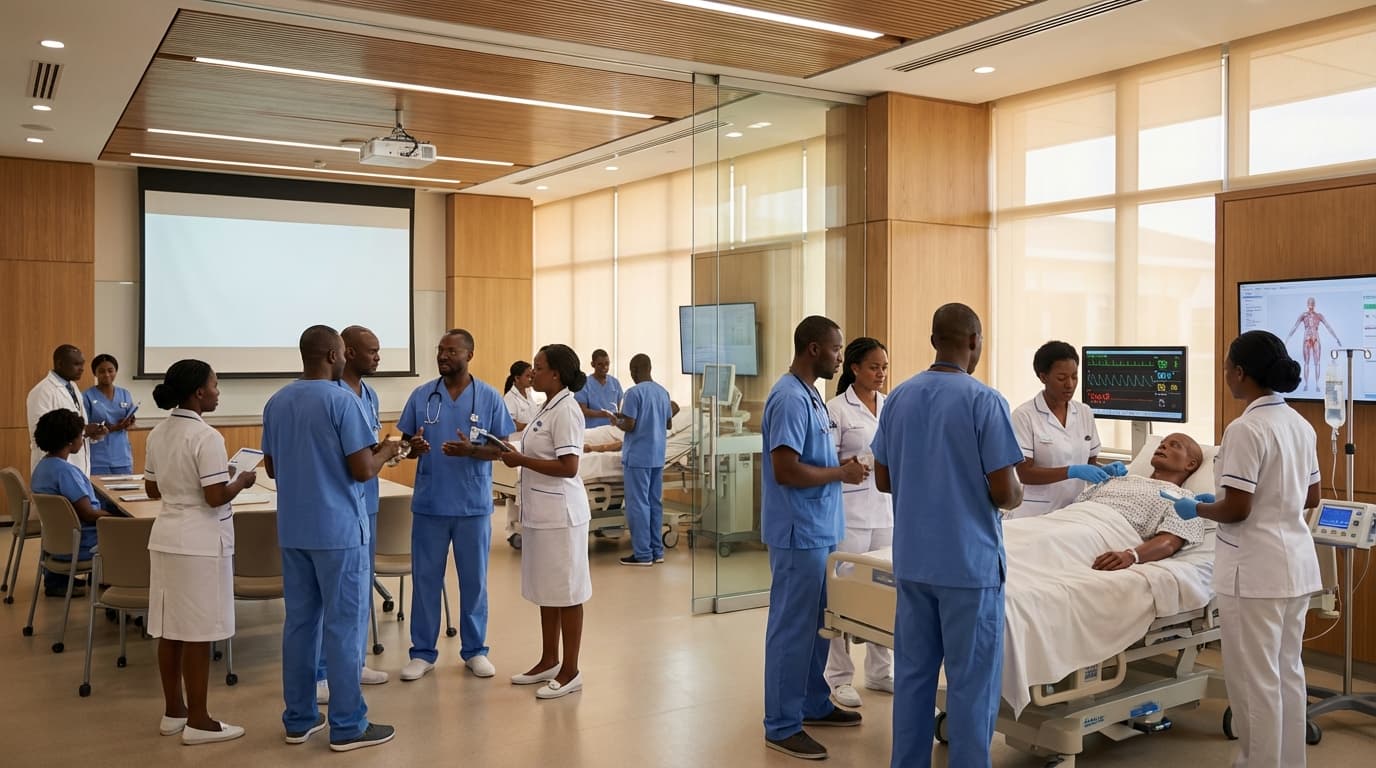
Equipment Training & Education in Benin
Engineering Excellence & Technical Support
Comprehensive equipment training and certification programs High-standard technical execution following OEM protocols and local regulatory frameworks.
Hands-On Skill Development Workshops
Our comprehensive training programs offer practical, hands-on experience with specialized equipment, fostering immediate skill acquisition and on-the-job readiness for Benin's workforce in key industries like agriculture, manufacturing, and energy.
Interactive Digital Learning Modules
Leveraging cutting-edge digital platforms, we deliver accessible and engaging training modules, including simulations and virtual labs, to enhance understanding and retention of complex equipment operations and maintenance procedures across Benin.
Certification and Competency Assurance
We provide recognized certifications upon successful completion of our training, validating the technical competence of individuals in operating and maintaining essential equipment, thereby boosting employability and industry standards in Benin.
What Is Equipment Training & Education In Benin?
Equipment training and education in Benin refers to the systematic impartation of knowledge and practical skills required for the safe, efficient, and effective operation, maintenance, and repair of specific machinery and tools within various industrial, agricultural, and commercial sectors. This service aims to enhance user competency, reduce operational risks, optimize resource utilization, and extend the lifespan of capital assets. The training encompasses theoretical understanding of equipment principles, hands-on operation, troubleshooting methodologies, preventative maintenance procedures, and adherence to safety protocols and regulatory compliance.
| Target Audience | Typical Use Cases | Benefits |
|---|---|---|
| Agricultural Workers & Technicians | Operation and maintenance of tractors, harvesters, irrigation systems, processing machinery. | Increased crop yields, reduced post-harvest losses, improved equipment longevity, enhanced worker safety. |
| Industrial Operators & Maintenance Staff | Operation and maintenance of manufacturing machinery, construction equipment, power generation units, material handling systems. | Improved production efficiency, reduced downtime, enhanced product quality, minimized workplace accidents, compliance with industrial standards. |
| Healthcare Professionals & Technicians | Operation and maintenance of medical diagnostic equipment (e.g., X-ray, MRI), laboratory analyzers, surgical instruments. | Accurate diagnostic results, patient safety, extended equipment lifespan, efficient healthcare delivery. |
| Logistics & Transportation Personnel | Operation and maintenance of forklifts, cranes, heavy-duty vehicles, warehouse management systems. | Efficient material handling, reduced transportation costs, improved supply chain reliability, enhanced workplace safety. |
| IT & Telecommunications Technicians | Installation, operation, and maintenance of servers, networking equipment, telecommunication infrastructure. | Reliable network performance, data integrity, reduced system outages, efficient technical support. |
| Energy Sector Professionals | Operation and maintenance of power generation equipment (e.g., turbines, generators), oil and gas extraction machinery, renewable energy systems. | Safe and efficient energy production, reduced environmental impact, extended equipment operational life, compliance with energy sector regulations. |
Key Components of Equipment Training & Education in Benin
- Theoretical Instruction: Covering equipment specifications, operational parameters, mechanical and electrical principles, safety standards, and potential failure modes.
- Practical Demonstration and Simulation: Real-world or simulated operation of the equipment under supervision.
- Hands-on Practice: Supervised user engagement with the equipment to develop operational proficiency.
- Troubleshooting and Diagnostics: Training on identifying and resolving common operational issues and equipment malfunctions.
- Preventative Maintenance: Instruction on routine checks, lubrication, cleaning, and scheduled servicing to prevent failures.
- Safety Procedures: Comprehensive coverage of personal protective equipment (PPE), emergency protocols, lockout/tagout procedures, and hazard identification.
- Regulatory Compliance: Education on local and international standards relevant to equipment operation and safety.
- Documentation and Record-Keeping: Training on interpreting manuals, logs, and maintenance records.
Who Needs Equipment Training & Education In Benin?
In Benin, robust equipment training and education are crucial for a wide range of individuals and organizations to ensure safe, efficient, and productive operations. This training bridges skill gaps, enhances safety protocols, and maximizes the lifespan and utility of valuable machinery across various sectors.
| Department/Sector | Types of Equipment | Training Needs & Benefits | Target Personnel |
|---|---|---|---|
| Manufacturing & Industry | Assembly lines, CNC machines, forklifts, welding equipment, packaging machinery | Operational efficiency, error reduction, safety compliance, preventative maintenance. Leads to increased productivity and reduced downtime. | Machine operators, line supervisors, maintenance technicians, quality control staff. |
| Agriculture | Tractors, harvesters, irrigation systems, processing equipment (e.g., for cassava, shea butter) | Optimized crop yields, reduced manual labor, improved food processing quality, sustainable practices. Enhances farmer livelihoods. | Farmers, agricultural extension workers, cooperative managers, agro-processing unit operators. |
| Construction | Excavators, bulldozers, cranes, concrete mixers, power tools, scaffolding | Site safety, accident prevention, proper operation of heavy machinery, project timelines. Crucial for preventing costly accidents and delays. | Heavy equipment operators, site supervisors, foremen, construction workers, safety officers. |
| Healthcare | Diagnostic imaging (X-ray, MRI), surgical instruments, laboratory analyzers, patient monitoring systems, sterilizers | Patient safety, accurate diagnostics, proper equipment calibration, infection control, extended equipment lifespan. Directly impacts patient care quality. | Doctors, nurses, radiographers, laboratory technologists, biomedical engineers, hospital administrators. |
| Mining & Extractive Industries | Drilling rigs, loaders, haul trucks, crushers, conveyor systems, safety equipment | Operational safety in hazardous environments, efficient resource extraction, environmental compliance, reduced equipment wear. Essential for high-risk industries. | Miners, machine operators, maintenance crews, safety managers, geologists. |
| Logistics & Warehousing | Forklifts, pallet jacks, automated storage systems, loading dock equipment | Efficient material handling, inventory management, workplace safety, reduced damage to goods. Streamlines supply chain operations. | Warehouse managers, forklift operators, inventory clerks, logistics coordinators. |
Target Customers for Equipment Training & Education in Benin
- Industrial Workers (Manufacturing, Production, Assembly)
- Agricultural Technicians and Farmers
- Construction Site Personnel (Operators, Supervisors)
- Healthcare Professionals (Medical Equipment Users)
- Laboratory Technicians and Researchers
- Logistics and Warehouse Staff
- Mining and Extractive Industry Employees
- Energy Sector Technicians (Oil, Gas, Renewables)
- Transportation and Automotive Mechanics
- Public Works and Municipal Staff
Equipment Training & Education Process In Benin
The Equipment Training & Education Process in Benin is a structured workflow designed to ensure individuals and organizations acquire the necessary knowledge and skills to operate and maintain specific equipment effectively. This process typically begins with an inquiry from a potential client and concludes with the successful execution of the training program, followed by post-training support. The workflow emphasizes clear communication, needs assessment, curriculum development, and practical application.
| Stage | Description | Key Activities | Responsible Parties | Deliverables/Outcomes |
|---|---|---|---|---|
| Inquiry & Initial Consultation | The process begins when an individual or organization expresses interest in equipment training. | Contact initiation, initial discussion of needs, identification of potential training areas. | Client, Training Provider (e.g., Manufacturer Representative, Specialized Training Firm) | Understanding of client's initial interest, preliminary information exchange. |
| Needs Assessment & Scope Definition | A detailed understanding of the client's specific requirements, skill gaps, and desired learning outcomes is established. | On-site visits (if applicable), interviews with stakeholders, review of existing knowledge, equipment specifications analysis. | Training Provider, Client (Technical Personnel, Management) | Detailed training needs report, defined learning objectives, identification of specific equipment models, target audience analysis. |
| Proposal & Agreement | Based on the needs assessment, a comprehensive proposal is developed and presented to the client for approval. | Proposal writing (including curriculum outline, duration, methodology, costs), negotiation, contract signing. | Training Provider, Client | Formal training proposal, signed training agreement/contract. |
| Curriculum Development & Customization | The training content is designed or adapted to meet the identified needs and learning objectives. | Development of training modules (theory, practical exercises), creation of training materials (manuals, presentations, visual aids), customization for specific equipment and client context. | Training Provider (Instructors, Curriculum Developers) | Finalized training curriculum and materials. |
| Logistics & Scheduling | All practical arrangements for the training delivery are made. | Scheduling of training dates and times, booking training venue(s), arranging for equipment availability (if not client-owned), coordinating trainer travel and accommodation, participant registration. | Training Provider, Client (Logistics Coordinator) | Confirmed training schedule, confirmed venue and equipment, registered participants. |
| Training Execution (Theory & Practical) | The actual delivery of the training program to the participants. | Lectures, demonstrations, hands-on practice sessions, Q&A, problem-solving exercises, simulations. | Training Provider (Instructors), Participants | Knowledge transfer, skill development, practical competency acquisition. |
| Assessment & Evaluation | Measuring the effectiveness of the training and the participants' understanding and proficiency. | Written tests, practical assessments, observation of performance, feedback surveys from participants and instructors. | Training Provider, Participants | Assessment results, evaluation reports, identification of areas for improvement. |
| Certification & Documentation | Formal recognition of successful completion of the training program. | Issuance of certificates of completion or competency, provision of training records and reports. | Training Provider | Certificates, training completion reports. |
| Post-Training Support & Follow-up | Providing ongoing assistance and support to ensure sustained learning and application of skills. | Technical support, refresher courses (if needed), access to online resources, follow-up consultations, collection of long-term feedback. | Training Provider, Client | Sustained operational efficiency, ongoing skill maintenance, client satisfaction. |
Key Stages of the Equipment Training & Education Process in Benin
- Inquiry & Initial Consultation
- Needs Assessment & Scope Definition
- Proposal & Agreement
- Curriculum Development & Customization
- Logistics & Scheduling
- Training Execution (Theory & Practical)
- Assessment & Evaluation
- Certification & Documentation
- Post-Training Support & Follow-up
Equipment Training & Education Cost In Benin
Equipment training and education costs in Benin are influenced by several key factors, leading to a wide range of pricing. These factors include the complexity and type of equipment, the duration and intensity of the training, the provider's reputation and specialization, the location within Benin (urban vs. rural), and whether the training is customized or standardized. Specialized technical training for sophisticated industrial machinery will naturally command higher prices than basic operational training for common office equipment. Furthermore, the inclusion of practical, hands-on sessions, access to genuine spare parts for demonstrations, and certification upon completion all contribute to the overall cost. The local currency in Benin is the West African CFA franc (XOF).
| Training Type/Equipment Category | Typical Duration | Estimated Cost Range (XOF) | Notes |
|---|---|---|---|
| Basic IT/Office Equipment (e.g., computers, printers) | 1-2 days | 15,000 - 50,000 | Covers basic operation, troubleshooting, software use. |
| Agricultural Equipment (e.g., tractors, irrigation systems) | 2-5 days | 30,000 - 150,000 | Includes operation, maintenance, safety protocols. May vary significantly with equipment sophistication. |
| Small-Scale Industrial Machinery (e.g., sewing machines, food processing equipment) | 3-7 days | 40,000 - 200,000 | Focuses on operation, basic maintenance, quality control. Certified training can be higher. |
| Advanced Industrial/Technical Equipment (e.g., manufacturing machinery, medical devices) | 5-10+ days | 100,000 - 500,000+ | Highly specialized, often requires certified instructors. Costs can escalate with complexity and vendor-specific training. |
| Specialized Software Training (e.g., CAD, accounting software) | 2-4 days | 25,000 - 120,000 | Depends on the software's complexity and industry application. May include hands-on exercises. |
| Safety & Compliance Training (e.g., working at heights, hazardous materials) | 1-3 days | 20,000 - 80,000 | Crucial for many industries, often mandated. Includes practical simulations and certifications. |
Key Pricing Factors for Equipment Training in Benin
- Equipment Type & Complexity (e.g., industrial machinery, IT equipment, agricultural tools)
- Training Duration & Intensity (e.g., half-day workshop, multi-day course, certification program)
- Provider Reputation & Specialization (e.g., certified trainers, established training centers)
- Location (e.g., major cities like Cotonou vs. more remote areas)
- Customization Level (e.g., standard curriculum vs. tailored program for specific needs)
- Inclusion of Practical Sessions & Materials
- Certification & Assessment
- Travel & Accommodation (if applicable for trainers or trainees)
Affordable Equipment Training & Education Options
Investing in proper equipment training and education is crucial for safety, efficiency, and productivity. Fortunately, there are numerous affordable options available. Value bundles offer a cost-effective way to acquire multiple training modules or resources at a reduced price, while various cost-saving strategies can significantly lower the overall investment. This guide explores these options to help you maximize your training budget.
| Cost-Saving Strategy | Description | Benefits |
|---|---|---|
| Bulk Discounts: | Enroll multiple employees or purchase multiple training courses simultaneously to receive reduced per-unit pricing. | Lower overall training cost per person, easier budget management for large groups. |
| Online & E-learning Platforms: | Utilize web-based courses, videos, and simulations that eliminate travel costs, venue rental, and instructor fees for on-site training. | Flexibility in scheduling, accessibility from anywhere, reduced travel and accommodation expenses. |
| Train-the-Trainer Programs: | Invest in training a select group of employees to become internal trainers, who can then educate others within the organization. | Long-term cost savings, consistent knowledge transfer, fosters internal expertise. |
| Government & Industry Grants: | Research and apply for grants offered by government agencies or industry associations that support workforce development and safety training. | Significant reduction or elimination of training costs, access to specialized programs. |
| Partnerships with Manufacturers/Suppliers: | Many equipment manufacturers offer training as part of a purchase or at a discounted rate to their customers. | Specialized, equipment-specific training at potentially lower costs, ensures manufacturer-approved best practices. |
| Free Resources & Webinars: | Leverage free introductory webinars, online articles, and basic safety guides provided by reputable organizations and industry leaders. | Foundation-level knowledge acquisition at no cost, helps identify training needs. |
| Community College & Vocational Schools: | Explore affordable training programs offered by local educational institutions, which often cater to industry needs. | Cost-effective, often hands-on training, can lead to recognized certifications. |
| Phased Training Approach: | Break down complex training into smaller, manageable modules, spreading the cost over time and allowing for immediate application of learned skills. | Easier on the budget, allows for continuous skill development, immediate return on investment for each module. |
Value Bundles: Maximizing Training Investment
- Comprehensive Safety Suites: Bundles often include core safety certifications, hazard recognition, and emergency response training, providing a holistic safety education for employees.
- Skill-Specific Packages: Combine foundational training with advanced modules for specific equipment types (e.g., forklift operation fundamentals plus specialized attachments training).
- Onboarding Kits: For new hires, bundles can include essential equipment orientation, company safety policies, and basic operational procedures, streamlining the onboarding process.
- Continuing Education Credits: Some providers offer bundles of courses that fulfill continuing education requirements for certifications, saving you the cost and hassle of sourcing them individually.
- E-learning & On-site Hybrids: Value bundles can sometimes combine the flexibility of online learning modules with the hands-on experience of in-person practical sessions, offering a balanced and cost-effective approach.
- Team Licenses: Purchasing training licenses for an entire team or department often comes with significant discounts compared to individual enrollments.
Verified Providers In Benin
Finding reliable healthcare providers is paramount, especially in Benin. Franance Health stands out as a beacon of trust, offering a curated network of verified healthcare professionals. This verification process ensures that all listed providers meet stringent standards of qualification, experience, and ethical practice. Choosing a Franance Health verified provider means opting for quality, safety, and peace of mind for yourself and your loved ones.
| Provider Type | Franance Health Verification Criteria | Benefits to Patients |
|---|---|---|
| Doctors (General & Specialists) | Valid medical license, recognized board certification, proven clinical experience, positive patient feedback. | Accurate diagnoses, effective treatment plans, access to specialized care, trustworthy medical advice. |
| Nurses | Registered Nurse (RN) or equivalent certification, relevant training and experience, ethical conduct. | Compassionate care, post-treatment support, health education, assistance with daily medical needs. |
| Hospitals & Clinics | Accreditation from recognized health bodies, adherence to hygiene and safety protocols, availability of essential medical equipment, qualified staff. | Safe and sterile environment, comprehensive medical services, emergency care, access to diagnostic facilities. |
| Pharmacies | Valid operating license, qualified pharmacists, reputable drug sourcing and dispensing practices. | Access to genuine medications, accurate prescription fulfillment, professional pharmaceutical advice, drug interaction checks. |
Why Franance Health Credentials Matter:
- Rigorous vetting process: Each provider undergoes thorough background checks and credential verification.
- Commitment to quality: Ensuring adherence to the highest standards of medical care.
- Patient-centric approach: Verified providers prioritize patient well-being and satisfaction.
- Access to expertise: Connect with specialists and general practitioners you can trust.
- Enhanced patient safety: Minimizing risks through validated medical professionals.
Scope Of Work For Equipment Training & Education
This Scope of Work (SOW) outlines the requirements for providing comprehensive training and education services for the newly acquired [Equipment Name/System]. The objective is to ensure that designated personnel are proficient in the operation, maintenance, and troubleshooting of the equipment, thereby maximizing its utility and minimizing downtime. The training will cover both theoretical understanding and practical application, adhering to established industry best practices and the manufacturer's specifications.
| Deliverable Type | Description | Standard Specification/Reference | Format/Method | Frequency/Timeline |
|---|---|---|---|---|
| Training Curriculum | Detailed outline of all modules, learning objectives, and content for each session. | Aligned with manufacturer's technical manuals and industry standards for [relevant industry]. | Document (PDF, Word) | Pre-training delivery |
| Training Materials (Participant Guides) | Comprehensive handouts, presentations, and reference materials for trainees. | Clear, concise language, visually engaging with diagrams and illustrations. Compliant with accessibility standards. | Digital (PDF) and/or Printed | Provided at the start of each module |
| Hands-on Training Sessions | Practical demonstration and supervised practice of equipment operation and maintenance tasks. | Conducted on the actual [Equipment Name/System] in a controlled environment. | On-site (if applicable) or simulated environment. | As scheduled in the training plan |
| Competency Assessment | Evaluation of trainee understanding and practical skills through quizzes, practical tests, or simulations. | Defined pass/fail criteria. Aligned with learning objectives. | Written assessments, practical demonstrations | End of each module or at the conclusion of the training program |
| Training Certification | Formal recognition of successful completion of the training program. | Issued upon successful completion of all assessments. | Digital Certificate | Upon successful completion |
| Post-Training Support | Limited availability of trainers for clarification of doubts and guidance after the training. | Defined response time and contact method. | Email, Phone | For a period of [e.g., 2 weeks] post-training |
| Trainer Qualifications | Evidence of trainer's expertise in [Equipment Name/System] and adult learning methodologies. | Relevant certifications, years of experience, previous training engagements. | Resume/CV, certification documents | Pre-engagement |
Key Training Modules
- Introduction to [Equipment Name/System]: Overview, components, and intended applications.
- Operation and Control: User interface, standard operating procedures (SOPs), and parameter adjustments.
- Preventive Maintenance: Scheduled checks, lubrication, cleaning, and routine inspections.
- Troubleshooting and Diagnostics: Common issues, error codes, and corrective actions.
- Safety Procedures: Equipment-specific safety protocols, emergency shutdown, and personal protective equipment (PPE).
- Advanced Features/Applications (Optional): Specialized functions, programming, or integration with other systems.
- Refresher Training (Optional): Periodic sessions to reinforce knowledge and address new updates.
Service Level Agreement For Equipment Training & Education
This Service Level Agreement (SLA) outlines the agreed-upon response times and uptime guarantees for equipment training and educational services provided by [Your Company Name] (hereinafter referred to as 'Provider') to [Client Company Name] (hereinafter referred to as 'Client').
| Service Component | Description | Target Response Time | Service Level Objective (SLO) |
|---|---|---|---|
| Technical Support (Training Platform) | Support requests related to the functionality and accessibility of the online training platform. | 1 business hour for acknowledgment, 4 business hours for initial diagnosis. | 99.5% Uptime |
| Training Material Updates | Requests for updates or corrections to existing training content. | 2 business days for acknowledgment and confirmation of receipt. | N/A (Focus on turnaround for specific requests) |
| New Training Request (Minor Adjustments) | Requests for minor modifications to existing training modules (e.g., adding a short section, updating a single slide). | 1 business day for acknowledgment, 5 business days for completion (subject to complexity). | N/A (Focus on turnaround for specific requests) |
| Scheduled Instructor-Led Training Sessions | Availability and delivery of scheduled virtual or in-person training sessions. | 15 minutes prior to scheduled start time for virtual sessions. | 99.0% Availability of scheduled sessions (excluding client-initiated cancellations/rescheduling). |
Key Service Commitments
- Response Times: Defines the maximum allowable time for the Provider to acknowledge and begin addressing support requests.
- Uptime Guarantees: Specifies the minimum percentage of time the training platform or related educational services will be available to the Client.
- Definitions: Clarifies key terms used throughout the SLA.
- Service Credits: Outlines the compensation provided to the Client in the event of service level breaches.
- Exclusions: Lists circumstances under which the SLA does not apply.
Frequently Asked Questions

Ready when you are
Let's scope your Equipment Training & Education in Benin project in Benin.

Scaling healthcare logistics and technical systems across the entire continent.