
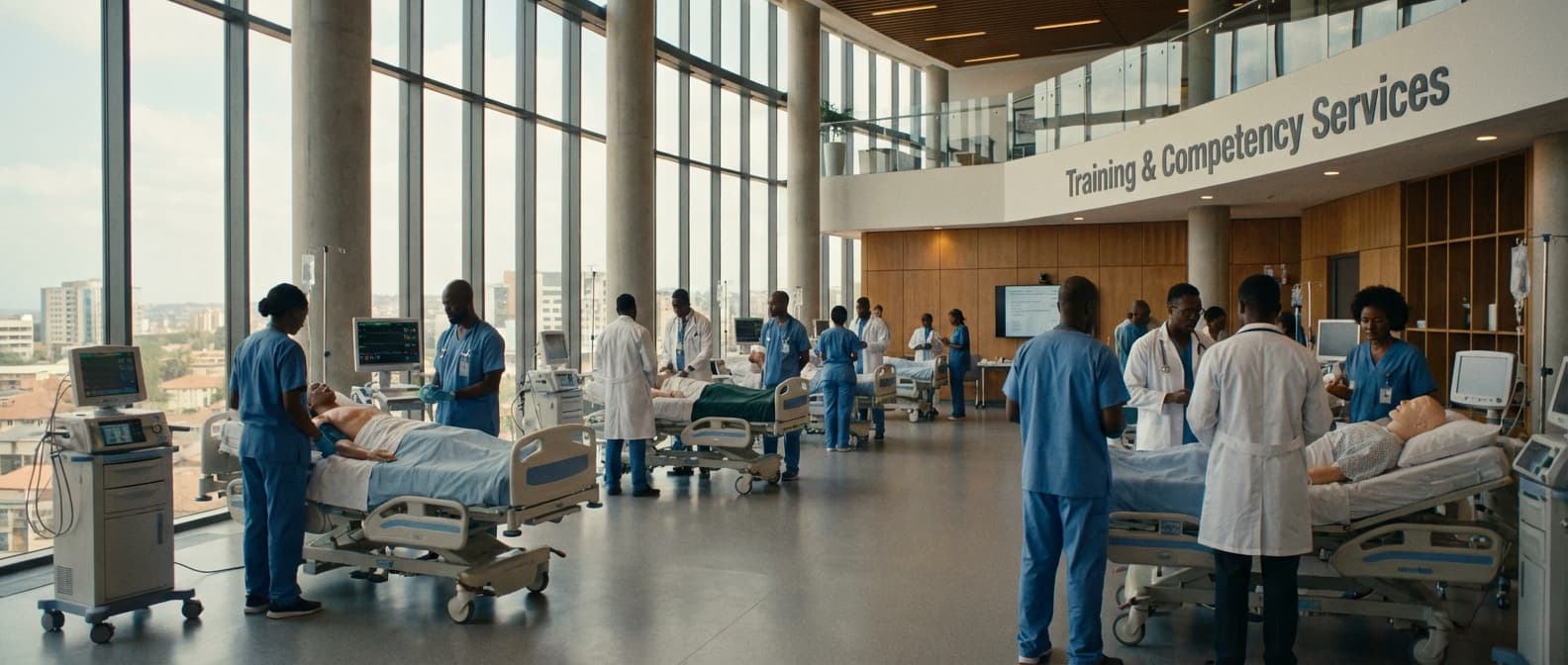
Ventilator User Training Service (Nurses) in Benin
Engineering Excellence & Technical Support
Ventilator User Training Service (Nurses) High-standard technical execution following OEM protocols and local regulatory frameworks.
Mastering Ventilator Settings for Optimal Patient Outcomes
Learn to confidently adjust key ventilation parameters (tidal volume, respiratory rate, PEEP, FiO2) based on patient's clinical presentation and ABG results, ensuring safe and effective gas exchange. Hands-on practice with common ventilator modes for adult and pediatric patients.
Ensuring Seamless Ventilator Connection & Circuit Management
Gain proficiency in sterile techniques for connecting the ventilator circuit, troubleshooting common disconnection alarms, and performing regular circuit integrity checks to prevent leaks and contamination. Understand appropriate humidification and temperature settings.
Proactive Alarms & Troubleshooting: Early Detection Saves Lives
Develop the skills to quickly identify and respond to critical ventilator alarms (e.g., high pressure, low volume, apnea). Learn systematic troubleshooting steps to address common issues and prevent patient deterioration, with emphasis on timely physician notification.
What Is Ventilator User Training Service (Nurses) In Benin?
Ventilator User Training Service (Nurses) in Benin refers to specialized educational programs designed to equip registered nurses and other qualified healthcare professionals with the knowledge and practical skills necessary to safely and effectively operate, monitor, and manage mechanical ventilators in a clinical setting within Benin. This service is critical for optimizing patient outcomes in critical care and acute respiratory failure scenarios, ensuring adherence to best practices and protocols specific to the Beninese healthcare system.
| Target Audience | Necessity | Typical Use Cases |
|---|---|---|
| Registered Nurses (RNs) working in Intensive Care Units (ICUs), Emergency Departments (EDs), and operating rooms. | To ensure safe and effective operation of mechanical ventilators, reduce the incidence of ventilator-associated complications (e.g., VAP, barotrauma), improve patient survival rates, and comply with national healthcare standards. | Management of patients with acute respiratory failure due to conditions such as Severe Pneumonia, Acute Respiratory Distress Syndrome (ARDS), Chronic Obstructive Pulmonary Disease (COPD) exacerbations, Neuromuscular disorders affecting respiratory drive, and Post-operative respiratory support. |
| Licensed Practical Nurses (LPNs) or Enrolled Nurses with specific roles in critical care settings (depending on local scope of practice). | To enable them to assist in patient care under the direct supervision of RNs, monitor basic ventilator parameters, and recognize and report critical changes. | Assisting with patient positioning, basic suctioning, monitoring vital signs, and recognizing alarm conditions under RN supervision. |
| Respiratory Therapists (where available and applicable in Benin's healthcare structure). | To enhance their skills in advanced ventilator management, perform complex troubleshooting, and contribute to the development of weaning protocols. | Performing initial ventilator setup and titration, complex waveform analysis, and acting as subject matter experts in mechanical ventilation. |
| New graduates entering critical care roles. | To provide foundational knowledge and practical skills for immediate and safe deployment in ventilator-dependent patient care. | Learning the basics of ventilator operation and patient monitoring for patients requiring respiratory support. |
Key Components of Ventilator User Training Service (Nurses) in Benin
- Theoretical Foundations: Comprehensive coverage of respiratory physiology, pathophysiology of respiratory failure (e.g., ARDS, COPD exacerbations, pneumonia), principles of mechanical ventilation, ventilatory modes (e.g., AC, SIMV, PSV, CPAP), and gas exchange.
- Equipment Operation and Management: Hands-on training on the specific models of ventilators available in Beninese healthcare facilities, including setup, calibration, alarm management, troubleshooting, and maintenance procedures.
- Patient Assessment and Monitoring: Training on the interpretation of ventilator graphics and parameters (e.g., tidal volume, respiratory rate, PEEP, pressure waveforms), patient-ventilator synchrony, and the assessment of patient tolerance and complications.
- Ventilator-Associated Pneumonia (VAP) Prevention: Education on evidence-based strategies for VAP prevention, including oral care, head-of-bed elevation, and sedation management protocols.
- Weaning Protocols: Instruction on appropriate criteria and methodologies for initiating and progressing mechanical ventilation weaning, including spontaneous breathing trials (SBTs) and decannulation procedures.
- Emergency Procedures and Troubleshooting: Simulation of common ventilator-related emergencies and development of rapid response strategies for critical events.
- Ethical and Legal Considerations: Understanding of institutional policies, patient rights, and professional responsibilities related to mechanical ventilation in Benin.
- Local Contextualization: Training tailored to the specific resources, equipment availability, and clinical guidelines prevalent in Beninese hospitals and intensive care units.
Who Needs Ventilator User Training Service (Nurses) In Benin?
This document outlines the essential user training service for ventilators specifically tailored for nurses in Benin. Recognizing the critical role nurses play in patient care and the increasing reliance on mechanical ventilation, this service aims to equip them with the necessary knowledge and skills to operate and manage ventilators effectively and safely. The training will cover fundamental principles of respiratory support, ventilator modes, patient assessment, troubleshooting, and emergency procedures, ensuring optimal patient outcomes and adherence to best practices.
| Department | Specific Role/Focus | Training Need |
|---|---|---|
| Intensive Care Unit (ICU) | Registered Nurses, Critical Care Nurses | Advanced ventilator management, complex patient scenarios, weaning protocols, high-frequency ventilation. |
| Emergency Department (ED) | Emergency Room Nurses | Rapid assessment and initiation of ventilation, stabilization of critically ill patients, transfer protocols. |
| Anesthesiology Department | Anesthetic Nurses | Intraoperative ventilation management, airway management, post-operative recovery. |
| Pediatric Intensive Care Unit (PICU) | Pediatric Critical Care Nurses | Ventilator management for neonates and children, specific pediatric ventilation modes, parental education. |
| Neonatal Intensive Care Unit (NICU) | Neonatal Nurses | Ventilator management for premature infants and newborns, specialized neonatal ventilators, respiratory distress syndrome management. |
| General Wards (with respiratory patients) | Ward Nurses | Basic ventilator operation, monitoring of patients on non-invasive ventilation, recognizing signs of deterioration. |
Target Customers & Departments
- Hospitals (Public and Private)
- Clinics and Health Centers with Critical Care Units
- Missions and Non-Governmental Organization (NGO) Healthcare Facilities
Ventilator User Training Service (Nurses) Process In Benin
This document outlines the workflow for the Ventilator User Training Service (Nurses) in Benin, from the initial inquiry to the successful execution of the training program. The process is designed to ensure that registered nurses receive comprehensive and effective training on the proper operation and maintenance of ventilators, thereby improving patient care and safety.
| Phase | Key Activities | Responsible Parties | Deliverables/Outcomes |
|---|---|---|---|
| Healthcare facility or nursing association expresses interest in ventilator training. Initial consultation to understand training needs, target audience (e.g., number of nurses, experience level), specific ventilator models, and desired learning outcomes. | Interested Facility/Association, Training Provider (Technical Team) | Understanding of training scope and objectives. Preliminary needs assessment report. |
| Training provider develops a detailed proposal outlining training modules, duration, methodology, trainer qualifications, costs, and a proposed schedule. Negotiation and formal agreement (contract or Memorandum of Understanding) are established. | Training Provider (Sales/Management), Interested Facility/Association (Administration/Procurement) | Signed training agreement. Detailed project plan. |
| Based on the needs assessment, the training provider finalizes or customizes the training curriculum. This includes theoretical modules, practical demonstrations, hands-on exercises, and assessment methods, tailored to the specific ventilator models and the nurses' skill levels. | Training Provider (Curriculum Developers, Subject Matter Experts) | Approved training curriculum and materials (presentations, manuals, case studies, assessment tools). |
| Coordination of training dates, venue selection (on-site at the facility or a dedicated training center), ensuring availability of functional ventilators for hands-on practice, training materials, and any necessary audio-visual equipment. Communication of the finalized schedule to all participants. | Training Provider (Logistics Coordinator), Interested Facility/Association (Facilities Manager, HR) | Confirmed training dates and venue. Availability of equipment and materials. Participant roster. |
| Selection and briefing of qualified trainers. Trainers review the curriculum, familiarize themselves with the specific ventilators to be used, and prepare for interactive delivery and assessment. | Training Provider (Training Manager, Trainers) | Trained and prepared instructors. |
| Delivery of the training program to the participating nurses. This includes lectures, demonstrations, supervised hands-on practice with ventilators, troubleshooting scenarios, and Q&A sessions. Pre- and post-training assessments are conducted. | Trainers, Participating Nurses | Completion of training modules. Demonstrated competency in ventilator operation and management. Pre/post-assessment scores. |
| Collection of feedback from participants and trainers to evaluate the effectiveness of the training. Issuance of certificates of completion to successful participants. Provision of ongoing support, such as access to online resources, refresher courses, or technical advice as per the agreement. | Training Provider (Evaluation Team, Administration), Participating Nurses | Training evaluation report. Certificates of completion. Post-training support plan implemented. |
Ventilator User Training Service (Nurses) Workflow in Benin
- Inquiry and Needs Assessment
- Proposal and Agreement
- Curriculum Development and Customization
- Logistics and Scheduling
- Trainer Preparation
- Training Execution
- Post-Training Evaluation and Support
Ventilator User Training Service (Nurses) Cost In Benin
The cost of Ventilator User Training services for nurses in Benin can vary significantly due to several factors. These include the experience and qualifications of the trainers, the duration and comprehensiveness of the training program, the specific type of ventilators being covered, the location where the training is conducted (e.g., urban versus rural hospitals), and the number of participants. Furthermore, the inclusion of hands-on practical sessions, simulation equipment, and ongoing support can also influence the overall price. Pricing is typically negotiated on a per-participant basis or as a package deal for a group or an entire hospital department. Discounts may be available for bulk enrollments or long-term training contracts.
| Training Scope | Estimated Cost Range (XOF - West African CFA Franc) | Notes |
|---|---|---|
| Basic Introduction (1-2 days, theoretical and basic practical) | 40,000 - 80,000 per participant | Covers fundamental operation, safety checks, and common alarms. |
| Intermediate (3-4 days, comprehensive theory, advanced practical, troubleshooting) | 75,000 - 150,000 per participant | Includes detailed settings, waveform analysis, common troubleshooting scenarios, and ventilation modes. |
| Advanced/Specialized (5+ days, in-depth, specific patient populations, complex scenarios, simulation) | 120,000 - 250,000+ per participant | Focuses on critical care ventilation, patient-specific adjustments, and advanced troubleshooting. May include high-fidelity simulations. |
| On-site Hospital Training (Package for a department) | Negotiable (often based on number of participants and days) | Costs can be significantly impacted by travel and accommodation for trainers if outside major urban centers. Packages are common for a defined number of nurses. |
Key Factors Influencing Ventilator User Training Costs in Benin
- Trainer Experience and Qualifications
- Training Program Duration and Content Depth
- Specific Ventilator Models Covered
- Training Location (Urban vs. Rural)
- Number of Participants
- Inclusion of Practical/Simulation Sessions
- Post-Training Support and Follow-up
- Type of Training Provider (e.g., independent consultant, medical equipment supplier, specialized training institute)
Affordable Ventilator User Training Service (Nurses) Options
This document outlines affordable ventilator user training service options specifically for nurses. We understand the critical need for well-trained nursing staff in managing mechanical ventilation and the budgetary constraints healthcare facilities often face. This guide focuses on delivering high-quality, cost-effective training through value bundles and strategic cost-saving measures.
| Cost-Saving Strategy | Description | Potential Savings | Implementation Notes |
|---|---|---|---|
| Group Training Discounts | Offer reduced per-nurse pricing for larger training cohorts. | 10-25% depending on group size | Encourages facility-wide training initiatives. Schedule training during off-peak patient load times. |
| Train-the-Trainer Programs | Empower internal nursing educators or experienced staff to deliver training. Reduces reliance on external instructors for ongoing needs. | Significant long-term savings | Requires initial investment in training the trainers. Ensure trainers maintain current competency. |
| Blended Learning Approach | Combine online learning modules for theoretical content with in-person, hands-on simulation sessions for practical skills. Maximizes efficiency. | 15-30% reduction in on-site training hours | Requires a robust Learning Management System (LMS) for online components. Schedule simulation labs strategically. |
| Customizable Training Modules | Tailor training content to the specific ventilators and patient populations used by the facility. Avoids unnecessary information and focuses on relevant skills. | 5-15% reduction in overall training time | Requires a thorough needs assessment of the facility's equipment and patient care needs. |
| Subscription-Based Access | Offer annual or multi-year subscriptions for access to all training resources, including updates and new content. Predictable budgeting. | Cost-effective for continuous learning | Requires upfront commitment from the facility. Ensure content is regularly updated. |
| Partnerships with Simulation Centers | Collaborate with existing simulation centers to leverage their equipment and facilities, rather than investing in dedicated on-site simulation labs. | Reduced capital expenditure and maintenance costs | Requires establishing strong partnerships and negotiating favorable rates. |
| Bundled Equipment Procurement | If purchasing new ventilators, inquire about bundled training packages or discounts offered by the equipment vendor. | Variable, can be substantial | Negotiate training as part of the equipment purchase agreement. |
Value Bundles for Ventilator User Training (Nurses)
- {"title":"Essentials Bundle","features":["Introduction to Mechanical Ventilation Principles","Ventilator Modes (Volume Control, Pressure Control)","Basic Waveform Analysis","Patient Monitoring & Alarms","Troubleshooting Common Issues","Hands-on Simulation Lab (Limited Hours)"],"description":"Provides core knowledge and practical skills for basic ventilator operation and patient monitoring. Ideal for newly graduated nurses or those requiring a refresher on fundamental concepts.","estimated_price_range":"$300 - $500 per nurse"}
- {"title":"Advanced Skills Bundle","features":["All features from Essentials Bundle","Advanced Ventilation Modes (APRV, BiPAP, PAV)","Weaning Protocols & Strategies","Ventilator-Associated Pneumonia (VAP) Prevention","Ventilator Graphics Interpretation","Case Study Analysis","Extended Hands-on Simulation Lab"],"description":"Builds upon the Essentials Bundle with a focus on more complex ventilation strategies and critical care scenarios. Suitable for experienced nurses working in ICU or critical care settings.","estimated_price_range":"$600 - $900 per nurse"}
- {"title":"Comprehensive Program Bundle","features":["All features from Advanced Skills Bundle","Ventilator-Associated Complications Management","Ethical Considerations in Mechanical Ventilation","Emergency Ventilation Scenarios","Team-Based Simulation Exercises","Post-Training Competency Assessments","Access to Online Learning Resources for 6 Months"],"description":"A complete training solution covering all aspects of ventilator management, from fundamentals to advanced techniques and emergency preparedness. Designed for departments requiring a robust and standardized training program.","estimated_price_range":"$1000 - $1500 per nurse"}
- {"title":"On-Demand & Refresher Bundle","features":["Modular online courses on specific ventilator topics","Interactive quizzes and knowledge checks","Recorded expert webinars","Case-based learning scenarios","Short, focused simulations (where applicable)"],"description":"Flexible online modules for ongoing learning, skill reinforcement, and addressing specific knowledge gaps. Cost-effective for maintaining competency between comprehensive training sessions.","estimated_price_range":"$150 - $300 per module/course"}
Verified Providers In Benin
Ensuring access to reliable healthcare is paramount, and in Benin, identifying verified providers is crucial for quality care. Franance Health stands out as a leading entity, meticulously vetting and credentialing healthcare professionals and institutions. Their rigorous verification process ensures that all listed providers meet stringent standards of expertise, ethics, and patient safety. Choosing a Franance Health credentialed provider means opting for a healthcare experience characterized by professionalism, competence, and a commitment to the highest medical practices. This dedication to quality translates into better patient outcomes and a more trustworthy healthcare landscape in Benin.
| Provider Type | Franance Health Verification Includes | Benefits for Patients |
|---|---|---|
| Hospitals | Accreditation, staff qualifications, equipment standards, patient safety protocols | Access to well-equipped facilities with skilled medical teams, improved patient care quality |
| Clinics | Physician licenses, specialization certifications, operational compliance, patient feedback mechanisms | Reliable primary and specialized care from licensed and experienced practitioners |
| Specialist Doctors | Medical board certifications, continuous professional development, ethical conduct reviews | Consultation with highly qualified specialists in their respective fields |
| Diagnostic Centers | Equipment calibration and maintenance, technician qualifications, quality control measures | Accurate and dependable diagnostic results for informed medical decisions |
Why Franance Health Credentials Matter:
- Rigorous vetting process ensures only qualified professionals are listed.
- Commitment to ethical medical practices and patient safety.
- Access to healthcare providers with demonstrated expertise.
- Enhanced trust and confidence in the quality of care received.
- Contribution to a more robust and reliable healthcare system in Benin.
Scope Of Work For Ventilator User Training Service (Nurses)
This document outlines the Scope of Work (SOW) for providing comprehensive ventilator user training services specifically tailored for nurses. The objective is to equip nurses with the necessary knowledge and practical skills to safely and effectively operate, monitor, and manage patients on mechanical ventilators. This SOW details the technical deliverables and standard specifications required for the successful execution of this training program.
| Deliverable ID | Deliverable Name | Description | Standard Specification/Requirement |
|---|---|---|---|
| TD-001 | Training Curriculum Development | Comprehensive curriculum covering theoretical and practical aspects of ventilator use for nurses. | Modular design with clearly defined learning objectives, content, and assessment methods. Must adhere to current clinical guidelines and best practices. Includes instructor guides and participant workbooks. |
| TD-002 | Training Materials (Digital/Print) | All necessary educational materials for participants. | High-quality, visually engaging materials. Includes presentations (e.g., PowerPoint), handouts, case studies, and quick reference guides. Available in printable PDF format and potentially interactive digital formats. |
| TD-003 | Practical Training Sessions | Hands-on training utilizing simulated or actual ventilator equipment. | Minimum of X hours of supervised practical training per participant. Training must be conducted in a controlled environment using a range of common ventilator models. Emphasis on simulation of various clinical scenarios. |
| TD-004 | Competency Assessment Tools | Tools to evaluate participant understanding and skill acquisition. | Includes pre- and post-training knowledge assessments (quizzes/tests), practical skills checklists, and scenario-based evaluations. Minimum passing score of X% for all assessments. |
| TD-005 | Training Equipment/Simulators | Provision of appropriate ventilators and associated equipment for training. | Functional ventilators (at least 2-3 different models), breathing circuits, humidifiers, manikins, and other necessary simulation aids. Equipment must be in good working order and calibrated. |
| TD-006 | Qualified Trainers | Experienced and certified instructors to deliver the training. | Instructors must possess a nursing license, extensive experience in critical care/respiratory therapy, and proven experience in adult education/training. Trainer-to-participant ratio of no more than 1:X. |
| TD-007 | Training Venue & Logistics | Suitable location and arrangements for conducting the training. | Classroom space with audio-visual equipment, adequate ventilation, and sufficient space for practical sessions. Access to power outlets for equipment. Provision of refreshments if applicable. |
| TD-008 | Training Report & Certificates | Documentation of training completion and individual participant performance. | A comprehensive training report detailing attendance, assessment results, and overall program effectiveness. Issuance of certificates of completion to participants who successfully meet the competency criteria. |
| TD-009 | Post-Training Support | Limited support for participants after the training. | Access to a designated point of contact for clarification of concepts or troubleshooting for a defined period (e.g., 30 days) post-training. May include access to online resources. |
Key Training Objectives
- Understanding the principles of mechanical ventilation.
- Proficiency in setting up and operating various types of ventilators.
- Ability to interpret ventilator settings and patient physiological data.
- Skills in identifying and responding to ventilator-related alarms and complications.
- Competency in performing routine ventilator maintenance and troubleshooting.
- Understanding of ventilator-associated pneumonia (VAP) prevention strategies.
- Knowledge of weaning parameters and protocols.
Service Level Agreement For Ventilator User Training Service (Nurses)
This Service Level Agreement (SLA) outlines the response times and uptime guarantees for the Ventilator User Training Service specifically designed for nurses. This agreement aims to ensure timely and effective support for nurses utilizing the training service.
| Service Component | Response Time Target (Business Hours) | Uptime Guarantee |
|---|---|---|
| Urgent Technical Support (e.g., training platform inaccessible, critical feature failure) | Within 2 Business Hours | 99.5% |
| Standard Technical Support (e.g., minor bugs, feature clarification) | Within 4 Business Hours | 99.5% |
| General Inquiries & Support Requests (e.g., access issues, training material questions) | Within 8 Business Hours | 99.5% |
| Scheduled Maintenance | N/A | Scheduled with advance notice (minimum 48 hours) and primarily outside of peak training hours (e.g., weekends, overnight). |
Service Level Objectives
- Response Time: The maximum time allowed for the training service to acknowledge and begin addressing a reported issue or request.
- Uptime Guarantee: The percentage of time the Ventilator User Training Service is available and operational, excluding scheduled maintenance windows.
Frequently Asked Questions

Ready when you are
Let's scope your Ventilator User Training Service (Nurses) in Benin project in Benin.

Scaling healthcare logistics and technical systems across the entire continent.