
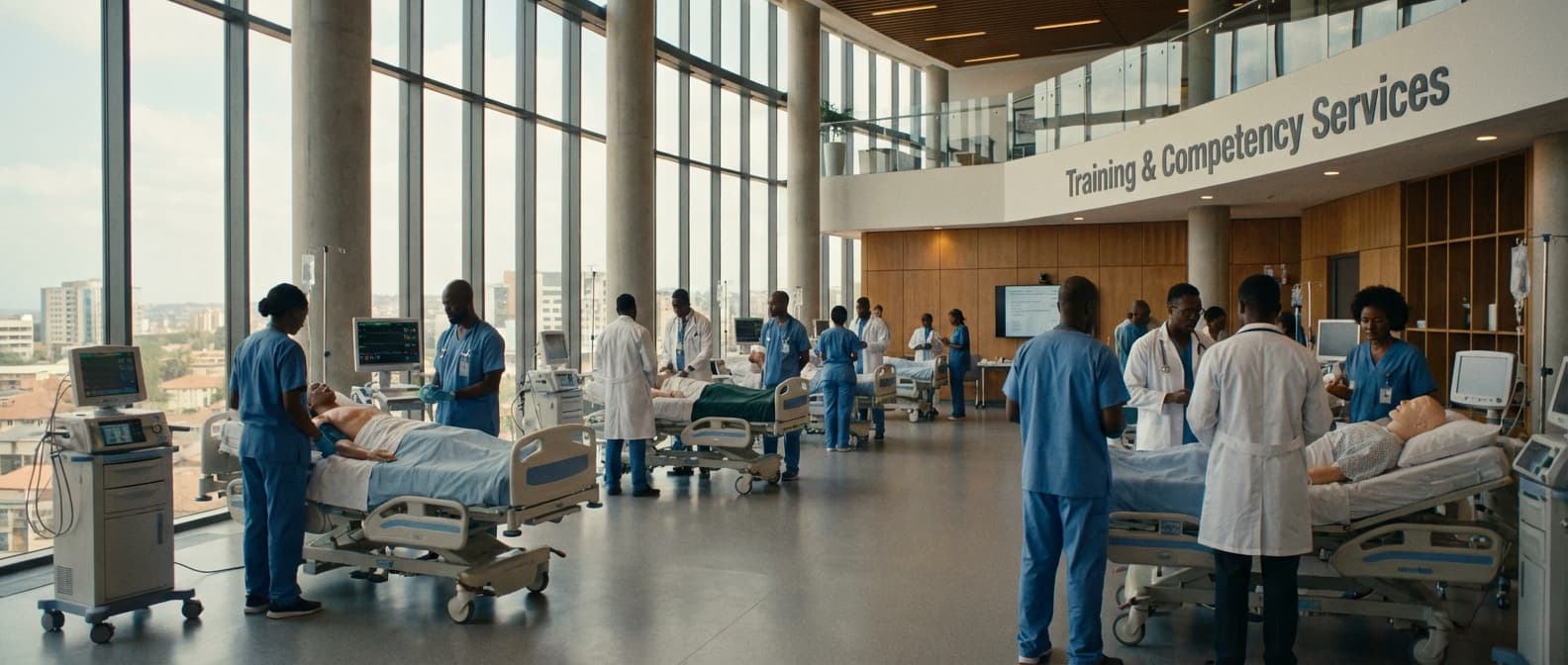
Ultrasound Application Training Service (Protocol-Based) in Benin
Engineering Excellence & Technical Support
Ultrasound Application Training Service (Protocol-Based) High-standard technical execution following OEM protocols and local regulatory frameworks.
Standardized Protocol Adherence
Ensure consistent and accurate ultrasound examinations across Benin by training practitioners on globally recognized, protocol-driven methodologies. This guarantees reproducibility and facilitates data comparison for improved diagnostics.
Expert-Led, Hands-On Training
Benefit from in-depth, practical training sessions led by experienced sonographers. Our curriculum focuses on practical application of protocols, enabling rapid skill acquisition and confidence in diverse clinical scenarios.
Certification & Skill Validation
Receive accredited certification upon successful completion of our protocol-based ultrasound training. This validates proficiency, enhances career prospects, and assures quality patient care in Benin's healthcare landscape.
What Is Ultrasound Application Training Service (Protocol-based) In Benin?
Ultrasound Application Training Service (Protocol-Based) in Benin refers to structured, standardized educational programs designed to equip healthcare professionals with the knowledge and practical skills to effectively utilize ultrasound imaging technology for diagnostic purposes. This service is specifically anchored to established clinical protocols, ensuring consistency and adherence to best practices in ultrasound examination across various medical specialties. The protocol-based approach emphasizes a systematic method for acquiring and interpreting ultrasound images, leading to more accurate diagnoses and improved patient management. Training typically involves a combination of theoretical instruction, hands-on simulation, and supervised clinical practice within the Beninese healthcare context, taking into account local epidemiological data and resource availability. The objective is to foster competency in specific ultrasound applications, such as abdominal, obstetric, gynecological, vascular, or musculoskeletal imaging, by adhering to pre-defined examination steps, standard views, and reporting guidelines.
| Target Audience | Needs Addressed | Typical Use Cases |
|---|---|---|
| Radiologists and Imaging Specialists | Enhance diagnostic accuracy and efficiency in specialized ultrasound examinations. Maintain up-to-date knowledge of emerging protocols and techniques. Fulfill continuing medical education requirements. | Comprehensive abdominal ultrasound for liver, kidney, and spleen pathologies. Detailed gynecological assessments including ovarian cyst identification and uterine anomaly detection. Fetal well-being assessment and anomaly screening in obstetric practice. Evaluation of deep vein thrombosis (DVT) and arterial insufficiency in vascular ultrasound. |
| Obstetricians and Gynecologists | Integrate point-of-care ultrasound (POCUS) into routine clinical practice. Improve prenatal care and maternal-fetal monitoring. Enhance diagnostic capabilities for gynecological conditions. | First-trimester dating scans and viability assessments. Mid-trimester anomaly scans. Monitoring of fetal growth and amniotic fluid levels. Pelvic pain investigation and adnexal mass evaluation. Intrauterine device (IUD) placement verification. |
| General Practitioners and Family Physicians | Develop foundational ultrasound skills for initial patient assessment and screening. Improve diagnostic decision-making in primary care settings. Optimize referral pathways for complex cases. | Basic abdominal screening for suspected organomegaly or free fluid. Bladder volume assessment. Basic musculoskeletal assessments for joint effusions or soft tissue masses. Preliminary cardiac screening (in some advanced POCUS contexts). |
| Other Medical Professionals (e.g., Surgeons, Anesthesiologists) | Acquire ultrasound skills for procedural guidance and intraoperative assessment. Improve patient safety during interventions. Facilitate bedside diagnostic imaging. | Ultrasound-guided biopsies and fluid aspirations. Nerve blocks for regional anesthesia. Vascular access placement (e.g., central venous catheters). Intraoperative assessment of surgical sites. |
| Sonographers and Ultrasound Technicians | Standardize examination techniques and image quality. Expand application scope and proficiency. Ensure competency in adhering to established protocols. | Performing a wide range of diagnostic ultrasound examinations across multiple specialties as per departmental protocols. Ensuring optimal image acquisition for radiologist interpretation. Assisting in advanced ultrasound procedures. |
Key Components of Ultrasound Application Training Service (Protocol-Based) in Benin
- Curriculum Design: Tailored to specific ultrasound applications (e.g., Abdominal, OB/GYN, Vascular).
- Protocol Standardization: Adherence to internationally recognized or locally adapted ultrasound examination protocols.
- Theoretical Instruction: Covering ultrasound physics, instrumentation, image optimization, and relevant anatomy/pathology.
- Hands-on Skills Development: Utilizing phantoms, simulators, and real patient examinations under supervision.
- Image Acquisition & Interpretation: Training on obtaining standard views, identifying anatomical structures, and recognizing pathological findings.
- Reporting Guidelines: Educating on standardized reporting formats for accurate documentation.
- Clinical Integration: Emphasizing the role of ultrasound within the broader diagnostic and treatment pathways.
- Assessment & Evaluation: Measuring knowledge and skill acquisition through theoretical tests and practical evaluations.
- Continuing Professional Development: Offering opportunities for ongoing learning and skill refinement.
Who Needs Ultrasound Application Training Service (Protocol-based) In Benin?
Ultrasound Application Training Services (Protocol-Based) are crucial for enhancing diagnostic accuracy, improving patient outcomes, and ensuring standardized best practices in medical imaging. These services are particularly vital in regions where access to specialized training and up-to-date protocols may be limited. Benin, with its growing healthcare sector and commitment to improving medical services, presents a significant market for such specialized training.
| Target Customer Type | Key Departments Requiring Training | Specific Training Needs |
|---|---|---|
| Public Hospitals | Radiology/Medical Imaging, Obstetrics & Gynecology, Cardiology, Pediatrics, Emergency Medicine, Surgery, Internal Medicine | General ultrasound protocols, specialized applications (e.g., obstetric dating, fetal anomaly screening, cardiac assessment, Doppler studies), emergency ultrasound (FAST scan), point-of-care ultrasound (POCUS). |
| Private Hospitals | Radiology/Medical Imaging, Obstetrics & Gynecology, Cardiology, Urology, General Surgery, Internal Medicine | Advanced diagnostic protocols, niche applications based on specialization, quality assurance and reporting standards, efficiency optimization. |
| Clinics and Health Centers | General Practice, Obstetrics & Gynecology, Pediatrics, Emergency Care | Basic diagnostic ultrasound protocols, common applications (e.g., abdominal scans, obstetric scans, thyroid scans), triage and referral decision-making. |
| Diagnostic Imaging Centers | Radiology/Medical Imaging | Advanced protocols across all modalities, specialized imaging techniques, quality control, advanced reporting, new protocol integration. |
| Medical Training Institutions | Radiology Departments, Medical Faculties, Nursing Schools, Midwifery Schools | Curriculum development support, hands-on training modules, simulation-based learning, assessment of practical skills, introduction to evolving ultrasound technologies and protocols. |
| NGOs/International Health Organizations | Maternal Health Units, Pediatric Care Programs, Emergency Response Teams | Point-of-care ultrasound (POCUS) for field applications, essential obstetric and neonatal ultrasound, trauma and emergency assessment protocols. |
Target Customers and Departments in Benin Requiring Ultrasound Application Training Service (Protocol-Based)
- {"title":"Hospitals (Public and Private)","description":"Hospitals are primary beneficiaries, requiring trained personnel across various departments to effectively utilize ultrasound for diagnosis and monitoring. This includes both large referral centers and smaller community hospitals."}
- {"title":"Clinics and Health Centers","description":"Smaller healthcare facilities, often serving remote or underserved populations, can significantly benefit from protocol-based training to offer essential diagnostic services and improve patient management without the need for immediate referral."}
- {"title":"Diagnostic Imaging Centers","description":"Dedicated imaging centers focused on providing specialized diagnostic services will benefit from advanced training to stay competitive and offer high-quality, standardized ultrasound examinations."}
- {"title":"Medical Training Institutions (Universities, Schools of Health Sciences)","description":"Educational institutions can integrate protocol-based ultrasound training into their curriculum for medical students, radiographers, sonographers, nurses, and other healthcare professionals, ensuring a foundation of standardized practice."}
- {"title":"Non-Governmental Organizations (NGOs) and International Health Organizations","description":"Organizations working on maternal and child health, emergency medicine, or general healthcare improvement in Benin may require training services to equip local healthcare providers with essential ultrasound skills."}
Ultrasound Application Training Service (Protocol-based) Process In Benin
This document outlines the workflow for the Ultrasound Application Training Service (Protocol-Based) provided in Benin. The process is designed to be systematic, from initial client inquiry to the successful execution and completion of the training program. This protocol-based approach ensures standardized and effective training delivery.
| Stage | Key Activities | Deliverables | Responsible Parties |
|---|---|---|---|
| Client contacts provider, initial discussion of needs, request for information. | Initial meeting notes, expressed interest. | Client, Training Provider |
| Detailed needs analysis, discussion of training objectives, matching needs to available protocols. | Needs assessment report, selected training protocol. | Training Provider, Client Representative |
| Develop and present training proposal, negotiate terms, sign agreement. | Training proposal, signed training agreement. | Training Provider, Client |
| Schedule dates, confirm venue, arrange equipment & materials, pre-disseminate information. | Confirmed schedule, logistical arrangements, prepared training materials. | Training Provider |
| Conduct lectures, demonstrations, hands-on practice, case studies. | Trained participants, practical skills acquired. | Trainer, Participants |
| Administer tests, practical assessments, gather participant feedback. | Assessment results, evaluation reports, participant feedback. | Trainer, Participants |
| Issue certificates, provide post-training resources/support. | Training certificates, access to post-training support. | Training Provider |
| Collect feedback from client and participants, analyze feedback, implement improvements. | Feedback summary, action plan for improvement. | Training Provider, Client |
Ultrasound Application Training Service (Protocol-Based) Workflow in Benin
- {"title":"1. Inquiry and Initial Consultation","description":"The process begins with a client (e.g., a hospital, clinic, or individual practitioner) expressing interest in ultrasound application training."}
- {"title":"2. Needs Assessment and Protocol Selection","description":"A detailed discussion is held to understand the client's specific needs, current skill levels, and desired ultrasound applications. Based on this, the most suitable protocol-based training module is identified."}
- {"title":"3. Proposal and Agreement","description":"A comprehensive proposal is submitted, detailing the training objectives, curriculum, duration, location, trainer profiles, required equipment, and cost. Upon acceptance, a formal training agreement is established."}
- {"title":"4. Pre-Training Preparations","description":"This phase involves logistical arrangements, including scheduling the training dates, confirming the venue, ensuring availability of ultrasound equipment and consumables, and preparing training materials."}
- {"title":"5. Training Delivery (Protocol Execution)","description":"The core of the service. The training is delivered according to the selected protocol, typically involving a blend of theoretical lectures, practical demonstrations, hands-on scanning sessions, case study reviews, and interactive Q&A."}
- {"title":"6. Assessment and Evaluation","description":"Throughout and at the end of the training, participants are assessed to gauge their understanding and practical proficiency. This may include written tests, practical scanning evaluations, and trainer observation. Feedback mechanisms are also employed."}
- {"title":"7. Certification and Post-Training Support","description":"Upon successful completion of the training and assessment, participants receive a certificate. Post-training support, such as access to online resources or follow-up consultations, may be offered."}
- {"title":"8. Feedback and Continuous Improvement","description":"Client and participant feedback is collected to evaluate the effectiveness of the training and identify areas for improvement in future service delivery."}
Ultrasound Application Training Service (Protocol-based) Cost In Benin
This document outlines the cost considerations for Ultrasound Application Training Services in Benin, specifically focusing on protocol-based training. Understanding these factors is crucial for healthcare institutions and individuals seeking to enhance their ultrasound proficiency. The cost of such training is not a fixed figure and can vary significantly based on several key determinants. These include the duration and intensity of the training program, the specific ultrasound applications covered, the expertise and qualifications of the trainers, the location of the training (on-site at an institution or off-site at a training center), the number of participants, and the inclusion of any additional materials or resources. Furthermore, the reputation and accreditation of the training provider can also influence pricing.
| Training Package/Type | Estimated Cost Range (CFA Francs) | Notes |
|---|---|---|
| Basic General Ultrasound (e.g., Abdomen, Pelvis) | 150,000 - 350,000 CFA | Typically 1-3 days, covers fundamental protocols and image acquisition. |
| Intermediate Specialization (e.g., Obstetrics, Cardiology Fundamentals) | 250,000 - 600,000 CFA | 3-5 days, delves deeper into specific protocols and interpretation. |
| Advanced/Specialized Application (e.g., Advanced Cardiac, Vascular, Interventional) | 400,000 - 1,000,000+ CFA | 5+ days, often includes hands-on practice with complex cases and specialized equipment. |
| On-site Training (per day, group rate) | 100,000 - 300,000 CFA | Excludes trainer travel/accommodation. Cost is for the institution. |
| Individual/Small Group Off-site Training (per person) | 75,000 - 200,000 CFA | For shorter workshops or introductory courses. |
| Refresher/Update Courses | 50,000 - 150,000 CFA | Shorter duration, focuses on specific updates or challenging areas. |
Key Pricing Factors for Ultrasound Application Training in Benin
- Training Duration and Intensity: Longer and more intensive programs naturally incur higher costs.
- Specific Ultrasound Applications Covered: Training for highly specialized applications (e.g., advanced cardiac, interventional) will be more expensive than general ultrasound training.
- Trainer Expertise and Qualifications: Highly experienced and certified sonographers or radiologists command higher fees.
- Training Location: On-site training at a healthcare facility may involve travel and accommodation costs for trainers, while off-site training at a dedicated center might have facility rental fees.
- Number of Participants: Group discounts are common, making per-person costs lower for larger cohorts.
- Inclusion of Training Materials: Access to comprehensive manuals, simulators, or online resources can add to the overall cost.
- Training Provider Reputation and Accreditation: Established and accredited institutions often charge a premium for their quality assurance.
- Equipment and Simulation Access: Availability and quality of ultrasound machines and simulation tools used during training.
- Certification and Assessment Fees: Costs associated with any formal certification or assessment processes.
Affordable Ultrasound Application Training Service (Protocol-based) Options
Our Affordable Ultrasound Application Training Service (Protocol-Based) provides specialized, hands-on learning designed to equip healthcare professionals with essential ultrasound skills, strictly adhering to established protocols. We understand the budgetary constraints faced by many institutions and offer flexible training solutions that prioritize both cost-effectiveness and high-quality education. Our training focuses on practical application, ensuring proficiency in specific ultrasound examinations and workflows, leading to improved diagnostic accuracy and patient care.
| Value Bundle | Description | Included Features | Cost-Saving Strategy | Starting Price (per participant) |
|---|---|---|---|---|
| Foundation Fundamentals | Introductory training covering core ultrasound principles and basic protocol adherence for a chosen application. | Online modules, 1-day in-person workshop (max 10 participants), basic protocol guide. | Group discounts for larger cohorts, reduced travel costs with remote options. | $450 |
| Advanced Application Mastery | In-depth training on a specific ultrasound application, including complex protocols, image optimization, and case review. | 3-day intensive on-site or virtual training, advanced protocol library, simulation sessions, 1-month post-training mentorship. | Bundled content provides comprehensive learning at a lower per-module cost, efficiency through specialized focus. | $1200 |
| Comprehensive Departmental Rollout | Full-scale training for an entire department, covering multiple applications and tailored to your institution's workflow. | On-site training for multiple groups, custom protocol development, train-the-trainer options, ongoing support retainer. | Significant economies of scale, reduced administrative overhead, long-term operational efficiency gains. | Custom Quote (based on number of participants and applications) |
| On-Demand Skill Refreshers | Short, focused virtual sessions to refresh skills on specific protocols or address emerging challenges. | 1-2 hour virtual sessions, targeted protocol reviews, expert Q&A. | Cost-effective solution for continuous professional development, minimizes downtime. | $150 |
Our Value Proposition & Cost-Saving Strategies
- Protocol-Driven Excellence: Training is meticulously structured around industry-standard ultrasound protocols, ensuring consistency and accuracy in examinations.
- Targeted Skill Development: Focus on specific ultrasound applications (e.g., Abdominal, OB/GYN, Vascular, Cardiac) allows for efficient and relevant training.
- Experienced Instructors: Learn from certified sonographers and medical professionals with extensive practical experience.
- Flexible Learning Formats: Choose from on-site group training, remote virtual sessions, or individual coaching to suit your needs and schedule.
- Customizable Curricula: We can tailor training modules to address your specific equipment and departmental requirements.
- Post-Training Support: Access to resources and Q&A sessions to reinforce learning and address ongoing challenges.
Verified Providers In Benin
In the quest for reliable healthcare services in Benin, identifying 'Verified Providers' is paramount. This designation signifies that healthcare facilities and professionals have undergone rigorous vetting processes, ensuring they meet stringent standards for quality, safety, and ethical practice. Franance Health stands out as a leading entity in this verification landscape, offering a robust credentialing system that provides patients with the confidence to make informed decisions about their health. Their commitment to transparency and excellence makes them the best choice for anyone seeking trustworthy healthcare in Benin.
| Franance Health Verification Level | Key Criteria Met | Patient Benefits |
|---|---|---|
| Certified Provider | Minimum licensing and registration requirements, basic operational standards. | Access to legally recognized and functional healthcare facilities. |
| Accredited Facility | Compliance with advanced quality management systems, patient safety protocols, and infrastructure standards. | Higher assurance of quality care, improved patient outcomes, and enhanced safety measures. |
| Excellence Certified Professional | Demonstrated clinical expertise, continuous professional development, and patient satisfaction ratings. | Confidence in the skills and dedication of individual healthcare practitioners. |
Why Franance Health Credentials Matter:
- Ensures adherence to international quality and safety benchmarks.
- Promotes ethical medical practices and patient-centric care.
- Provides easy access to a network of accredited and reliable healthcare professionals.
- Reduces the risk of encountering substandard or fraudulent medical services.
- Facilitates informed decision-making for patients seeking healthcare in Benin.
Scope Of Work For Ultrasound Application Training Service (Protocol-based)
This Scope of Work (SOW) outlines the requirements for providing a protocol-based ultrasound application training service. The service will focus on standardized protocols to ensure consistent and high-quality ultrasound examinations. This document details the technical deliverables and standard specifications required for successful execution of the training program.
| Section | Description | Technical Deliverables | Standard Specifications |
|---|---|---|---|
| Development of a comprehensive, protocol-based ultrasound training curriculum tailored to specific applications (e.g., Abdominal, OB/GYN, Vascular, Cardiac). | Training syllabus, lesson plans, module outlines, learning objectives for each module. | Curriculum must align with internationally recognized ultrasound guidelines (e.g., AIUM, EFSUMB) and organization-specific protocols. Modules should be modular and adaptable. Language: English. |
| Definition and documentation of standardized ultrasound protocols for each targeted application. This includes recommended scanning planes, transducer selections, image optimization techniques, and measurement parameters. | Documented Standard Ultrasound Protocols (digital format), annotated sample images demonstrating protocol adherence. | Protocols must be clear, concise, and actionable. Include normal variants and common pathology examples. Version control for all protocols. |
| Conducting theoretical and practical training sessions for the target audience (e.g., sonographers, radiologists, physicians). Training will be delivered by qualified and experienced ultrasound instructors. | Delivery of lectures, hands-on scanning sessions (simulated or live patient), case study reviews, interactive Q&A sessions. | Trainee-to-instructor ratio not exceeding X:1 for practical sessions. Minimum X hours of theoretical and Y hours of practical training per module. Use of high-fidelity ultrasound simulators where applicable. |
| Provision of all necessary training materials for trainees and instructors. | Trainee handbooks/manuals (digital or print), instructor guides, presentation slides, atlases of ultrasound images (digital), assessment tools. | Materials must be up-to-date, evidence-based, and aligned with the developed protocols. Accessible via a secure online portal or provided physically as agreed. |
| Development and implementation of methods to assess trainee competency and evaluate the effectiveness of the training program. | Pre- and post-training assessments (written and practical), competency checklists, feedback forms, post-training proficiency reports. | Assessments must measure understanding of protocols and practical application skills. Evaluation reports to include aggregate trainee performance data and recommendations for improvement. |
| Specification of technical requirements for ultrasound equipment and software to be used during training. | List of recommended ultrasound machine specifications, transducer types, and essential software features for optimal training. | Training should ideally be conducted on modern, multi-frequency ultrasound systems capable of high-resolution imaging. Software should support image acquisition, review, and annotation. Compatibility with existing organizational systems is a plus. |
| Provision of ongoing technical support and follow-up mechanisms to reinforce learning and address challenges post-training. | Dedicated technical support channel (email/phone), scheduled follow-up sessions, access to a knowledge base or online forum. | Support response time within X business hours. Follow-up sessions conducted within Y weeks of initial training completion. Knowledge base to be continuously updated. |
| Regular reporting on training progress, outcomes, and any deviations from the SOW. | Progress reports (weekly/bi-weekly), final training summary report, attendance records, certificates of completion. | Reports to be submitted in PDF format. Certificates to include trainee name, course title, date, and instructor signature. |
Key Objectives of the Ultrasound Application Training Service
- To equip trainees with the knowledge and practical skills to perform ultrasound examinations according to established, protocol-driven guidelines.
- To enhance diagnostic accuracy and consistency in ultrasound interpretations.
- To promote best practices in ultrasound operation, image acquisition, and patient care.
- To ensure compliance with relevant medical standards and regulatory requirements.
- To facilitate the adoption of standardized ultrasound protocols across the organization.
Service Level Agreement For Ultrasound Application Training Service (Protocol-based)
This Service Level Agreement (SLA) outlines the guaranteed response times and uptime for the Ultrasound Application Training Service (Protocol-Based). It ensures the availability and responsiveness of the training platform to support educational and operational needs.
| Issue Type | Initial Response Time Target | Target Resolution Time | Escalation Path |
|---|---|---|---|
| Critical Issue (e.g., Platform Unavailability, Core Module Failure) | 2 Business Hours | 24 Business Hours | Dedicated Support Engineer & Technical Lead |
| Non-Critical Issue (e.g., Feature Inquiry, Minor Bug, Content Clarification) | 8 Business Hours | 3 Business Days | Standard Support Team |
| Feature Request / Enhancement Suggestion | Next Business Day Acknowledgement | N/A (Reviewed for future development) | Product Management Team |
Key Service Level Objectives
- Uptime Guarantee: The Ultrasound Application Training Service will be available for use 99.5% of the time, measured on a monthly basis.
- Response Time for Critical Issues: Technical issues preventing access to core training modules or critical functionalities will receive an initial response within 2 business hours.
- Response Time for Non-Critical Issues: Inquiries regarding feature usage, minor bugs, or general support questions will receive an initial response within 8 business hours.
- Resolution Targets: While not guaranteed, the service aims to resolve critical issues within 24 business hours and non-critical issues within 3 business days.
- Maintenance Windows: Scheduled maintenance, necessary for system updates and improvements, will be communicated at least 48 hours in advance and will be conducted during off-peak hours to minimize disruption. The service will be unavailable during these scheduled maintenance windows, which will not count towards the uptime guarantee.
Frequently Asked Questions

Ready when you are
Let's scope your Ultrasound Application Training Service (Protocol-Based) in Benin project in Benin.

Scaling healthcare logistics and technical systems across the entire continent.