
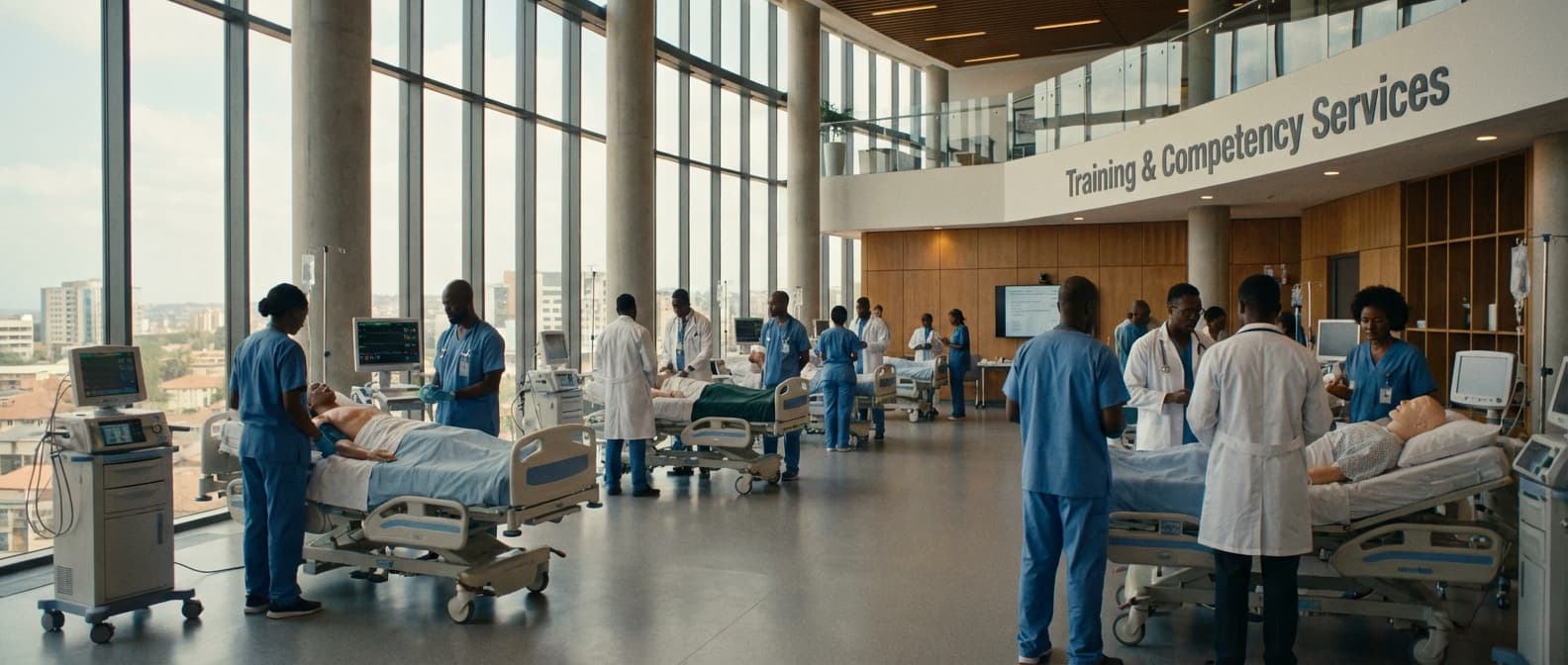
MRI Operator Training Service (Radiographers) in Benin
Engineering Excellence & Technical Support
MRI Operator Training Service (Radiographers) High-standard technical execution following OEM protocols and local regulatory frameworks.
Advanced Neuroimaging Protocols
Master specialized MRI sequences for detailed brain, spinal cord, and peripheral nerve imaging, crucial for diagnosing neurological disorders prevalent in Benin.
Cardiovascular MRI Expertise
Gain proficiency in cardiac MRI techniques to accurately assess congenital heart defects, acquired heart disease, and vascular anomalies impacting the population.
Musculoskeletal Imaging Mastery
Develop advanced skills in MRI interpretation for common musculoskeletal injuries and degenerative conditions, ensuring comprehensive patient care in Benin's healthcare landscape.
What Is Mri Operator Training Service (Radiographers) In Benin?
MRI Operator Training Service (Radiographers) in Benin refers to specialized educational programs designed to equip radiographers with the necessary theoretical knowledge and practical skills to safely and effectively operate Magnetic Resonance Imaging (MRI) scanners. This service focuses on developing proficiency in image acquisition, patient positioning, protocol selection, artifact recognition, and radiation safety principles pertinent to MRI environments. The training aims to ensure that radiographers can perform diagnostic MRI examinations according to established medical standards and institutional guidelines within the healthcare sector of Benin.
| Who Needs MRI Operator Training? | Typical Use Cases |
|---|---|
| Newly Qualified Radiographers: Those entering the field of diagnostic imaging in Benin, seeking to specialize in MRI. | Acquiring proficiency in operating MRI scanners for routine diagnostic imaging across various specialties (neurology, orthopedics, abdominal imaging, etc.). |
| Existing Radiographers Seeking Specialization: Experienced radiographers aiming to transition to or enhance their skills in MRI operation. | Performing advanced MRI techniques, such as functional MRI (fMRI), diffusion-weighted imaging (DWI), or MR spectroscopy, under supervision or independently. |
| Healthcare Institutions in Benin: Hospitals, diagnostic imaging centers, and clinics that have acquired or plan to acquire MRI technology. | Ensuring the safe and efficient utilization of MRI equipment, maximizing diagnostic yield and patient throughput. |
| Radiographers in Rural or Underserved Areas: Providing access to specialized MRI training where limited resources may exist, potentially through mobile training units or remote learning components. | Contributing to the development of advanced diagnostic imaging capabilities in regions with a high demand for specialized medical services. |
| Radiographers in Research Settings: Individuals involved in clinical research requiring MRI data acquisition. | Implementing and adhering to specific MRI acquisition parameters and protocols for research studies. |
Key Components of MRI Operator Training Service:
- Theoretical Foundations: Comprehensive understanding of MRI physics, including principles of nuclear magnetic resonance (NMR), signal generation, pulse sequences, contrast mechanisms, and image reconstruction.
- Anatomical and Pathological Correlation: Knowledge of cross-sectional anatomy relevant to various body regions and common pathologies detectable by MRI.
- Scanner Operation and Maintenance: Hands-on training on specific MRI scanner models, including system calibration, troubleshooting basic operational issues, and understanding safety interlocks.
- Patient Care and Safety: Protocols for patient screening (metal artifact assessment, contraindications), patient preparation, contrast agent administration (if applicable), and management of claustrophobia and anxiety.
- Image Acquisition Protocols: Development and application of standardized imaging protocols for different anatomical regions and clinical indications, including parameter optimization.
- Image Interpretation Fundamentals: Basic understanding of image quality assessment, artifact identification (e.g., motion, magnetic susceptibility), and recognizing gross abnormalities to inform technologists of potential concerns.
- Radiation Safety (MRI Specific): While MRI does not use ionizing radiation, understanding electromagnetic field safety, acoustic noise, and quench procedures is crucial.
- Quality Assurance and Control (QA/QC): Implementation of QA/QC procedures to ensure optimal image quality and equipment performance.
- Legal and Ethical Considerations: Awareness of patient confidentiality, informed consent, and professional conduct in the MRI setting.
Who Needs Mri Operator Training Service (Radiographers) In Benin?
MRI Operator Training Service (Radiographers) in Benin addresses a critical need for skilled professionals in medical imaging. As MRI technology advances and its utilization expands across healthcare facilities, the demand for well-trained radiographers who can operate these complex machines safely and effectively has never been higher. This training is essential for ensuring accurate diagnoses, patient safety, and the optimal functioning of MRI equipment. The service is designed to upskill existing radiographers and train new entrants to the field, thereby strengthening the overall diagnostic imaging capacity within Benin's healthcare sector.
| Customer Type | Primary Need | Departmental Focus |
|---|---|---|
Target Customers and Departments for MRI Operator Training Service in Benin
- {"items":["Hospitals (Public and Private)","Specialized Imaging Centers","Diagnostic Clinics","Medical Research Institutions","Government Health Ministries and Agencies"],"title":"Target Customers"}
- {"items":["Radiology Department","Diagnostic Imaging Department","Medical Imaging Unit","Neurology Department (for neurological MRIs)","Orthopedics Department (for musculoskeletal MRIs)","Oncology Department (for cancer staging and monitoring)","Cardiology Department (for cardiac MRIs)","Pediatrics Department (for pediatric imaging)"],"title":"Target Departments within Healthcare Facilities"}
Mri Operator Training Service (Radiographers) Process In Benin
This document outlines the typical workflow for an MRI Operator Training Service targeting radiographers in Benin, from initial inquiry to the successful execution of the training program. The process is designed to be comprehensive, ensuring client needs are met and that the training is effective and relevant to the Beninese healthcare context.
| Stage | Description | Key Activities | Responsible Party | Deliverables/Outcomes |
|---|---|---|---|---|
| The process begins when a healthcare institution or individual radiographer expresses interest in MRI operator training. | Receive inquiry (email, phone, website form), initial discussion to understand basic requirements and interest level. | Prospective Client, Training Provider | Initial understanding of client's need, confirmation of service offering. |
| A detailed understanding of the client's specific training needs, current skill levels, and institutional context is established. | In-depth discussion with client representatives (e.g., hospital administration, radiology department head), assessment of existing radiographer experience, identification of specific MRI systems to be covered, understanding of desired learning outcomes, development of a tailored training proposal outlining scope, duration, modules, costs, and methodology. | Training Provider, Prospective Client | Detailed training needs analysis report, comprehensive training proposal. |
| Formal agreement on the terms and conditions of the training service. | Review and negotiation of the training proposal, finalization of contract terms (payment schedule, cancellation policy, intellectual property, liability), signing of the service agreement. | Training Provider, Prospective Client | Signed training service contract. |
| The training program is refined to precisely match the agreed-upon needs and curriculum. | Development or customization of training modules (theory, practical, safety), creation of training materials (presentations, manuals, case studies), scheduling of training dates and times, identification and confirmation of qualified trainers with relevant MRI experience. | Training Provider | Finalized training curriculum, training schedule, confirmed trainers. |
| All practical arrangements for the training delivery are made. | Booking of training venue(s) (on-site or off-site), arrangement for access to MRI scanner(s) for practical sessions, procurement of necessary training equipment and consumables, travel and accommodation arrangements for trainers (if applicable), communication with participants regarding logistics. | Training Provider, Client Institution | Secured training venue(s), access to MRI equipment, all logistical arrangements in place. |
| The core training program is conducted. | Facilitation of theoretical sessions (online/in-person), hands-on practical training on MRI scanners, demonstration of imaging protocols, image interpretation guidance, troubleshooting sessions, emphasis on radiation safety and patient care within the MRI environment. | Training Provider (Trainers) | Trained radiographers, acquired practical skills and theoretical knowledge. |
| The effectiveness of the training and the learning outcomes of the participants are assessed. | Administering theoretical quizzes/exams, practical skill assessments (e.g., protocol execution, image quality evaluation), participant feedback surveys on the training content, trainers, and logistics, trainer evaluation of participant performance. | Training Provider, Participants | Assessment reports for individual participants, overall training evaluation summary. |
| Formal recognition of successful completion and post-training support. | Issuance of training certificates to successful participants, provision of post-training support (e.g., answering follow-up questions, offering additional resources), potential for ongoing mentorship or advanced training opportunities, final invoicing and payment processing. | Training Provider, Client Institution | Training certificates, client satisfaction, potential for future engagements. |
MRI Operator Training Service (Radiographers) Process in Benin: Workflow
- Inquiry & Initial Contact
- Needs Assessment & Proposal Development
- Contract Negotiation & Agreement
- Curriculum Customization & Planning
- Logistics & Resource Allocation
- Training Delivery
- Assessment & Evaluation
- Certification & Follow-up
Mri Operator Training Service (Radiographers) Cost In Benin
The cost of MRI operator training services for radiographers in Benin can vary significantly depending on several key factors. These factors influence the overall price, from basic introductory courses to advanced specialization modules. Understanding these elements is crucial for institutions and individuals seeking to invest in this specialized training.
Key Pricing Factors:
| Training Type/Scope | Estimated Cost Range (XOF) | Notes |
|---|---|---|
| Basic MRI Principles & Introduction for Radiographers (Short Course/Workshop) | 75,000 - 250,000 XOF | Covers fundamental physics, safety, image acquisition basics. Often theoretical with limited practical demonstration. |
| Intermediate MRI Operator Training (Comprehensive, incl. practical sessions) | 250,000 - 750,000 XOF | Includes more in-depth anatomy, protocol optimization, artifact identification, and supervised practical scanning. |
| Advanced/Specialized MRI Training (e.g., Neuro, MSK, Cardiac) | 750,000 - 2,000,000+ XOF | Focuses on specific body regions or advanced techniques. May involve manufacturer-specific training or highly specialized instructors. |
| On-site Training (per day, group rate) | 150,000 - 500,000+ XOF (plus travel/accommodation) | Costs vary greatly based on instructor seniority, duration, and location. This is often a custom quote. |
| Certification Exam Fees (separate) | 50,000 - 150,000 XOF | If not fully integrated into the training package. |
Factors Influencing MRI Operator Training Costs in Benin
- Duration and Depth of the Program: Shorter, introductory courses covering fundamental principles will be less expensive than comprehensive programs that include extensive practical sessions, advanced techniques, and specialized applications (e.g., neuroimaging, musculoskeletal MRI).
- Provider Reputation and Accreditation: Highly reputable training institutions, those with international accreditation, or those offering training directly from equipment manufacturers or their authorized partners often command higher fees due to perceived quality, expertise, and recognized certification.
- Level of Practical Training and Equipment Access: The extent to which trainees gain hands-on experience with MRI equipment is a major cost driver. Programs offering substantial simulator time or actual scanner access during clinical rotations will naturally be priced higher than those relying solely on theoretical instruction or limited demonstrations.
- Instructor Expertise and Qualifications: The experience, specialization, and credentials of the trainers play a significant role. Highly qualified radiographers, physicists, or internationally recognized MRI specialists will command higher fees, which are reflected in the course cost.
- Training Modality (On-site vs. Off-site): The location of the training is a primary determinant. On-site training at the client's facility (e.g., a hospital) might involve travel and accommodation costs for instructors, potentially increasing the overall price. Off-site training at a dedicated training center might include facility rental and other overheads.
- Curriculum Customization: Tailored training programs designed to meet the specific needs of a particular hospital or department, focusing on their existing equipment or specific patient populations, may incur additional development costs and thus higher prices.
- Certification and Examination Fees: The inclusion of formal certification exams and the associated administrative fees will add to the total cost. Some programs may offer certificates of attendance, while others provide globally recognized certifications.
- Materials and Resources: The provision of comprehensive training manuals, access to online learning platforms, textbooks, and other learning resources contributes to the overall cost.
- Class Size and Participant Numbers: While not always a direct factor in per-person pricing, larger group bookings might negotiate bulk discounts, whereas smaller, specialized workshops might have higher individual costs.
Affordable Mri Operator Training Service (Radiographers) Options
This document outlines affordable options for MRI operator (radiographer) training, focusing on value bundles and cost-saving strategies to make advanced certification accessible. Investing in skilled MRI operators is crucial for diagnostic imaging quality and patient care. We aim to provide cost-effective solutions that don't compromise on the depth and breadth of training required for competent practice.
| Value Bundle Type | Included Components | Cost-Saving Benefit | Target Audience |
|---|---|---|---|
| Basic MRI Operator Certification Bundle | Online theory modules (physics, safety, protocols), limited supervised clinical hours, online assessment. | Lower tuition fees, reduced travel, flexible learning schedule. | Entry-level radiographers, new to MRI. |
| Advanced MRI Specialist Bundle (e.g., Neuro, MSK, Cardiac) | Comprehensive online theory for specialization, extended supervised clinical hours, hands-on workshops, advanced protocol training, case study analysis. | Specialization without extensive external travel for advanced sites, bundled practical experience. | Radiographers seeking to specialize, experienced MRI operators. |
| Institution-Wide Training Solution | Customizable online curriculum, on-site training facilitation support (if applicable), dedicated account management, reporting tools, potential for train-the-trainer modules. | Scalability, bulk pricing, reduced administrative overhead for the institution, consistent training standards. | Hospitals, imaging centers, large healthcare networks. |
| Refresher & CEU Focused Bundle | Short, focused online modules on specific MRI advancements or safety updates, online quizzes for CEU credits, access to expert webinars. | Cost-effective way to maintain certification and stay updated, minimal time commitment. | Practicing MRI operators needing CEUs or skill updates. |
Key Cost-Saving Strategies for MRI Operator Training
- Online & Blended Learning: Transitioning from fully in-person to online or blended (online theory, in-person practical) courses significantly reduces travel, accommodation, and facility costs.
- Group Discounts & Institutional Partnerships: Negotiating bulk discounts for multiple trainees from the same institution or forming partnerships with educational bodies can lead to substantial savings.
- Modular Training Programs: Breaking down comprehensive MRI training into smaller, specialized modules allows institutions to train operators for specific modalities or skill levels as needed, rather than a one-size-fits-all expensive package.
- Leveraging Existing Equipment & Personnel: Utilizing in-house MRI scanners for practical sessions and experienced radiographers as mentors can reduce the need for external resources and associated fees.
- Government & Industry Grants/Subsidies: Actively seeking out and applying for available grants, subsidies, or scholarships offered by government health departments, professional bodies, or equipment manufacturers can offset training expenses.
- Train-the-Trainer Programs: Investing in a few key individuals within an organization to become certified trainers can create a sustainable, in-house training capacity, reducing reliance on external providers over time.
- Continuing Education Units (CEUs) Integration: Designing training that simultaneously fulfills mandatory CEU requirements can add value and perceived cost-effectiveness.
- Phased Payment Plans: Exploring training providers that offer flexible, phased payment options can ease the financial burden on individuals or institutions.
Verified Providers In Benin
When seeking healthcare services in Benin, ensuring the credibility and quality of providers is paramount. Franance Health stands out as a beacon of trust, offering a network of verified healthcare professionals and facilities. Their rigorous credentialing process not only guarantees that practitioners meet high professional standards but also ensures they adhere to ethical practices and are equipped to provide excellent patient care. Choosing Franance Health means prioritizing your well-being with providers who are not just licensed, but have demonstrated a commitment to excellence and patient safety.
| Credential Type | Franance Health Verification Standard | Why it Matters for Patients |
|---|---|---|
| Medical Licensing | Up-to-date and valid in Benin | Confirms legal authorization to practice and adherence to national medical regulations. |
| Professional Qualifications | Verified academic degrees and specialized training | Ensures providers have the foundational knowledge and expertise for their chosen field. |
| Work Experience | Documented and validated professional history | Indicates practical application of knowledge and established competence. |
| Continuing Professional Development (CPD) | Evidence of ongoing training and skill enhancement | Guarantees providers are up-to-date with the latest medical advancements and techniques. |
| Ethical Conduct Checks | Review of past disciplinary actions and professional reputation | Promotes patient trust and assures ethical treatment and patient-centered care. |
| Facility Accreditation (for clinics/hospitals) | Compliance with national health standards and safety protocols | Ensures a safe, hygienic, and well-equipped environment for medical procedures. |
Key Benefits of Choosing Verified Franance Health Providers:
- Uncompromising Quality: All Franance Health providers undergo a stringent vetting process, ensuring they possess the necessary qualifications, experience, and certifications.
- Enhanced Patient Safety: Verification includes checks on medical licenses, professional standing, and adherence to best practices, minimizing risks to patients.
- Access to Specialized Care: Franance Health connects you with a diverse range of specialists, ensuring you find the right expertise for your specific health needs.
- Transparency and Trust: Their commitment to transparency builds confidence, allowing you to make informed decisions about your healthcare.
- Streamlined Healthcare Experience: Navigating the healthcare system is made easier with a trusted network that prioritizes your convenience and well-being.
Scope Of Work For Mri Operator Training Service (Radiographers)
This Scope of Work (SOW) outlines the requirements for a comprehensive MRI Operator Training Service specifically designed for Radiographers. The service aims to equip radiographers with the necessary theoretical knowledge and practical skills to safely and effectively operate MRI scanners, produce high-quality diagnostic images, and ensure optimal patient care and workflow efficiency. This SOW details the technical deliverables and standard specifications expected from the training provider.
| Deliverable Category | Specific Component | Standard Specification/Requirement | Acceptance Criteria |
|---|---|---|---|
| Training Curriculum | Theoretical Modules | Coverage of MRI physics, safety (including MRI safety zones, contraindications, screening), image acquisition techniques, pulse sequences, artifact recognition and reduction, contrast agent administration protocols, basic troubleshooting, and relevant anatomy/physiology. Modules should be structured logically and progressively. | Curriculum document provided and approved by client. Content accuracy and completeness verified by client's clinical lead. |
| Training Curriculum | Practical Modules | Hands-on training covering patient positioning, coil selection, protocol selection and optimization, image acquisition for common MRI examinations (e.g., head, spine, knee, abdomen), data management, and emergency procedures. Sufficient time allocated for supervised practice. | Demonstrated competency in all practical skills as assessed by the trainer and observed by client representative. |
| Trainers | Qualifications and Experience | Trainers must possess a minimum of 5 years of direct experience as qualified MRI Radiographers and hold relevant professional certifications (e.g., ARRT, HCPC). Evidence of prior teaching or training experience is required. | CVs of all proposed trainers submitted and approved by client. Verification of certifications and experience. |
| Training Facilities | MRI Scanner Access | Dedicated or allocated access to a functional MRI scanner (specify manufacturer and model if known/required) that is representative of scanners used by the client. Scanner should be in good working order with appropriate software versions. | Confirmation of scanner availability and suitability. Site visit may be required. |
| Training Materials | Documentation | Provision of comprehensive training manuals, lecture notes, case studies, quick reference guides, and any other relevant learning resources. Materials should be clear, concise, and up-to-date. Digital format preferred. | Training materials provided electronically or in print and approved by client prior to training commencement. |
| Assessment and Evaluation | Theoretical Assessment | Written or online examination covering theoretical concepts. Minimum passing score to be defined and agreed upon. | Assessment results provided to client. Participants achieving the defined passing score are deemed competent in theoretical aspects. |
| Assessment and Evaluation | Practical Assessment | Observation and evaluation of radiographers' performance during hands-on practical sessions. Competency checklist to be utilized. | Completion of competency checklist for each radiographer, signed by trainer and participant. Positive assessment of all critical practical skills. |
| Certification | Completion Certificate | Issuance of a recognized certificate of completion to participants who successfully meet all assessment criteria. Certificate should include participant's name, training dates, course content overview, and trainer's signature. | Certificates issued to all successful participants within 10 business days of training completion. |
| Post-Training Support | Follow-up Consultation | Availability of trainers for limited remote consultation (e.g., email, phone) for a defined period post-training to address any emergent questions or challenges. | Response to inquiries within 24-48 business hours during the agreed support period. |
Technical Deliverables
- Comprehensive Training Curriculum (Theory and Practical)
- Experienced and Certified MRI Trainers
- Access to Functional MRI Scanner(s) for Hands-on Training
- Standardized Training Protocols and Procedures
- Assessment Tools and Evaluation Methods
- Training Materials and Resources (Digital and/or Print)
- Certification upon Successful Completion
- Post-Training Support and Consultation (Optional)
Service Level Agreement For Mri Operator Training Service (Radiographers)
This Service Level Agreement (SLA) outlines the performance standards for the MRI Operator Training Service provided to Radiographers. It defines key performance indicators (KPIs) related to response times for support requests and uptime guarantees for the training platform and associated resources. This SLA is designed to ensure efficient learning, timely assistance, and reliable access to training materials.
| Service Component | Uptime Guarantee | Response Time (Support Request) | Resolution Target (Support Request) |
|---|---|---|---|
| Online Training Platform Availability | 99.5% (measured monthly, excluding scheduled maintenance) | Within 4 business hours | Within 1 business day for non-complex issues; 3 business days for complex issues |
| Access to Training Materials (Videos, Documents) | 99.5% (measured monthly, excluding scheduled maintenance) | Within 4 business hours | Within 1 business day |
| Simulation Software Access (if applicable) | 99.0% (measured monthly, excluding scheduled maintenance) | Within 8 business hours | Within 2 business days for non-complex issues; 5 business days for complex issues |
| Subject Matter Expert (SME) Q&A Sessions | N/A (scheduled events, attendance not guaranteed) | N/A (pre-scheduled) | N/A (interaction during scheduled times) |
Scope of Service
- Provision of online MRI Operator Training modules and resources.
- Technical support for accessing and navigating the training platform.
- Access to simulation software (if applicable) for practical exercises.
- Availability of subject matter expert (SME) for Q&A sessions (scheduled).
Frequently Asked Questions

Ready when you are
Let's scope your MRI Operator Training Service (Radiographers) in Benin project in Benin.

Scaling healthcare logistics and technical systems across the entire continent.