
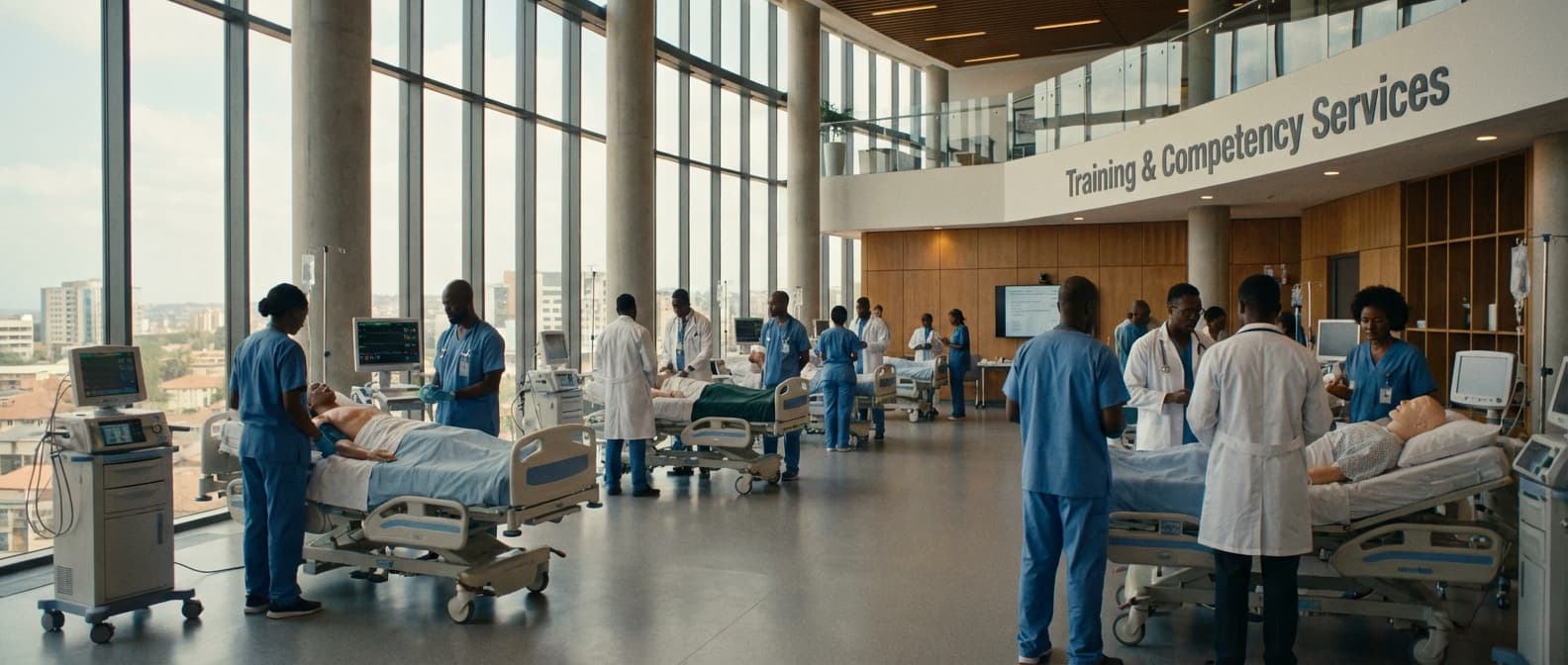
CT Operator Training Service (Radiographers) in Benin
Engineering Excellence & Technical Support
CT Operator Training Service (Radiographers) High-standard technical execution following OEM protocols and local regulatory frameworks.
Advanced Image Interpretation
Master the latest techniques in CT image interpretation for accurate diagnosis and patient care, with a focus on common pathologies encountered in Benin's healthcare landscape.
CT Scanner Optimization & Maintenance
Learn best practices for operating and maintaining CT scanners, ensuring optimal image quality, radiation safety, and extended equipment lifespan.
Radiation Dose Management & Safety Protocols
Implement and adhere to strict radiation dose reduction strategies and safety protocols, safeguarding both patients and radiographers in accordance with international standards.
What Is Ct Operator Training Service (Radiographers) In Benin?
CT Operator Training Service (Radiographers) in Benin refers to specialized educational programs designed to equip radiographers with the necessary theoretical knowledge and practical skills to safely and effectively operate Computed Tomography (CT) scanners. This service encompasses comprehensive instruction in CT physics, image acquisition protocols, radiation safety principles, patient positioning, artifact reduction techniques, and quality assurance procedures specific to the CT modality. The objective is to ensure radiographers are proficient in producing high-quality diagnostic images while minimizing radiation dose to patients and themselves, adhering to international standards and local regulatory requirements in Benin.
| Stakeholder/User Group | Training Need | Typical Use Cases |
|---|---|---|
| Certified Radiographers (Newly Qualified) | Fundamental training in CT operation to gain initial competency. | Performing routine diagnostic CT scans across various anatomical regions (e.g., head, chest, abdomen, pelvis) for diagnostic purposes. |
| Certified Radiographers (Experienced) | Advanced training for specialized CT applications, new scanner technologies, or to refresh existing skills. | Acquiring proficiency in advanced CT techniques such as CT angiography (CTA), dual-energy CT, interventional CT, or cardiac CT. |
| Medical Imaging Technologists | Comprehensive CT training to expand their scope of practice and assume CT operational responsibilities. | Operating CT scanners in public and private healthcare facilities, contributing to diagnostic imaging services. |
| Healthcare Institutions (Hospitals, Clinics, Diagnostic Centers) | Ensuring a competent workforce to operate installed CT scanners, comply with regulatory standards, and provide high-quality patient care. | Maintaining operational efficiency of CT departments, reducing scan retakes due to technical errors, and enhancing diagnostic accuracy. |
| Regulatory Bodies (Ministry of Health, Radiation Protection Authorities) | Ensuring that CT operators meet defined competency standards for safe and effective practice. | Verification of personnel qualifications for licensing and accreditation of CT facilities. |
Key Components of CT Operator Training:
- CT Physics and Principles of Image Formation
- CT Scanner Hardware and Software Operation
- Patient Preparation and Safety Protocols
- Contrast Media Administration and Management
- Standard and Advanced CT Imaging Protocols
- Image Quality Assessment and Artifact Identification
- Radiation Dose Optimization and Management
- Quality Assurance (QA) and Quality Control (QC) Procedures
- Emergency Management and Patient Care during CT Procedures
- Ethical and Legal Considerations in Medical Imaging
Who Needs Ct Operator Training Service (Radiographers) In Benin?
CT Operator Training Service for Radiographers in Benin is crucial for enhancing diagnostic imaging capabilities across various healthcare institutions. This service aims to equip radiographers with the advanced skills and knowledge required for the safe, efficient, and effective operation of Computed Tomography (CT) scanners. The demand for such specialized training is driven by the increasing adoption of CT technology in Benin's healthcare system, the need for adhering to international safety standards, and the desire to improve diagnostic accuracy and patient outcomes. The service would cater to both public and private healthcare providers who operate or plan to operate CT imaging facilities.
| Target Customer Type | Primary Departments Involved | Specific Roles Requiring Training | Rationale for Training |
|---|---|---|---|
| Public Hospitals | Radiology Department, Diagnostic Imaging Department | Radiographers, CT Technologists, Senior Radiographers | Improving diagnostic accuracy, ensuring patient safety, increasing scanner utilization, compliance with national health standards. |
| Private Hospitals | Radiology Department, Imaging Services | Radiographers, CT Supervisors, Imaging Technicians | Offering competitive diagnostic services, meeting patient demand for advanced imaging, maintaining high-quality standards, reducing errors. |
| Specialized Diagnostic Imaging Centers | CT Scanning Unit, Imaging Operations | CT Radiographers, Lead Technologists, Quality Assurance Personnel | Focus on specialized CT procedures, advanced protocols, quality control, and efficient workflow optimization. |
| University Teaching Hospitals | Radiology Department, Medical Education Units | Radiographers (Clinical Staff), Residents in Radiology, Medical Imaging Students (as part of their practical training) | Training future radiographers, conducting research involving CT, ensuring the highest level of patient care and diagnostic expertise. |
| Ministry of Health / Public Health Agencies | Healthcare Infrastructure Planning, Human Resources Development | Radiographers (in government facilities), Training Coordinators, Policy Makers (for understanding training needs) | Standardizing CT operator competency across the public sector, addressing workforce shortages in specialized areas, ensuring equitable access to quality diagnostic imaging. |
| NGOs with Healthcare Focus | Clinical Services, Medical Missions | Radiographers deployed in NGO-run clinics or mobile units, Project Managers overseeing medical equipment | Providing essential diagnostic imaging in underserved areas, ensuring safe operation of CT equipment in resource-limited settings, capacity building for local staff. |
Target Customers and Departments in Benin Requiring CT Operator Training Service (Radiographers)
- Hospitals (Public and Private)
- Specialized Diagnostic Imaging Centers
- University Teaching Hospitals
- Ministry of Health / Public Health Agencies
- Non-Governmental Organizations (NGOs) with Healthcare Focus
Ct Operator Training Service (Radiographers) Process In Benin
This document outlines the CT Operator Training Service (Radiographers) process in Benin, detailing the workflow from initial inquiry to the successful execution of the training program. The service aims to enhance the skills and knowledge of radiographers in operating CT scanners, ensuring high-quality diagnostic imaging and patient care. The process is designed to be efficient and transparent, meeting the specific needs of healthcare institutions and individual radiographers within Benin.
| Phase | Key Activities | Responsible Party |
|---|---|---|
| Inquiry & Planning | Initial contact, needs assessment, proposal development | Client, Training Provider |
| Agreement & Finance | Contract negotiation, signing, payment processing | Client, Training Provider |
| Preparation | Schedule finalization, logistics, material preparation, participant communication | Training Provider |
| Delivery | Theoretical and practical training sessions, demonstrations, Q&A | Training Provider (Trainers), Participants |
| Completion & Follow-up | Assessment, certification, post-training support, evaluation, feedback | Training Provider, Participants |
CT Operator Training Service Workflow in Benin
- {"step":1,"title":"Inquiry and Needs Assessment","description":"Healthcare institutions or individual radiographers initiate contact expressing interest in CT operator training. This initial stage involves understanding the client's specific needs, including the number of trainees, existing skill levels, desired training outcomes, preferred training dates, and any specific CT scanner models to be covered. A preliminary consultation is conducted to clarify these requirements."}
- {"step":2,"title":"Proposal Development and Submission","description":"Based on the needs assessment, a detailed training proposal is developed. This proposal outlines the training curriculum, duration, learning objectives, training methodology (e.g., theoretical lectures, practical demonstrations, hands-on simulation), assessment methods, trainer qualifications, venue requirements, and a comprehensive cost breakdown. The proposal is then submitted to the client for review and approval."}
- {"step":3,"title":"Contract Agreement and Payment","description":"Upon acceptance of the proposal, a formal training agreement or contract is drafted and signed by both parties. This agreement details the terms and conditions of the training, including cancellation policies, intellectual property rights, and responsibilities. An initial deposit or full payment, as stipulated in the contract, is then processed."}
- {"step":4,"title":"Training Schedule and Logistics","description":"Once the contract is finalized and payment is confirmed, the training schedule is meticulously planned. This includes booking qualified trainers, securing a suitable training venue (if not provided by the client), arranging for necessary training equipment and materials (e.g., simulators, anatomical models, educational resources), and confirming travel and accommodation arrangements for trainers if required."}
- {"step":5,"title":"Pre-Training Communication","description":"Prior to the commencement of training, participants receive comprehensive pre-training information. This includes the final training agenda, a list of required materials, pre-reading assignments (if any), and contact details for the training coordinator. This ensures participants are well-prepared and aware of the training expectations."}
- {"step":6,"title":"Training Execution","description":"The core training program is delivered according to the agreed-upon curriculum and schedule. This involves a blend of theoretical instruction, hands-on practical sessions on CT scanners or simulators, case study reviews, and interactive Q&A sessions. Trainers provide constructive feedback and guidance to participants throughout the process."}
- {"step":7,"title":"Assessment and Evaluation","description":"At the conclusion of the training, participants undergo an assessment to evaluate their understanding and practical skills. This may include written examinations, practical skill evaluations, and case study analyses. The training program itself is also evaluated through participant feedback forms to identify areas for improvement."}
- {"step":8,"title":"Certification and Post-Training Support","description":"Upon successful completion of the training and passing the assessment, participants are awarded a certificate of completion. Post-training support may include access to online resources, follow-up consultations, or advanced training modules based on client needs. A final report summarizing the training outcomes and participant performance may also be provided to the institution."}
- {"step":9,"title":"Follow-up and Feedback","description":"A follow-up mechanism is in place to gauge the impact of the training on the radiographers' daily practice. This might involve periodic check-ins or surveys to assess the application of learned skills and identify any ongoing challenges or further training needs. This continuous feedback loop helps refine future training programs."}
Ct Operator Training Service (Radiographers) Cost In Benin
The cost of CT Operator Training for Radiographers in Benin can vary significantly based on several factors. These include the reputation and accreditation of the training institution, the duration and intensity of the program, the specific curriculum covered (e.g., advanced techniques, specific CT scanner models), and the inclusion of practical hands-on experience. The cost also depends on whether the training is conducted in a major city like Cotonou or in a more remote region, and if the training is offered as a standalone course or part of a broader radiography program. Additionally, the need for specialized equipment or simulator access can influence the overall price. While official, standardized pricing is not readily available, typical ranges can be estimated based on the general cost of professional development and vocational training in Benin.
| Training Type/Level | Estimated Cost Range (CFA Francs) | Notes |
|---|---|---|
| Basic CT Operator Certificate (Short Course, e.g., 1-2 weeks) | 150,000 - 350,000 CFA | Focuses on fundamental principles, safety, and basic scan protocols. May be offered by vocational schools or private training centers. |
| Comprehensive CT Operator Program (Longer Course, e.g., 1-3 months) | 400,000 - 800,000 CFA | Includes in-depth theoretical knowledge, various scanning techniques, image post-processing, and potentially some clinical attachment. Often provided by specialized health training institutes. |
| Advanced/Specialized CT Training (e.g., Cardiac CT, Interventional CT) | 600,000 - 1,200,000+ CFA | For experienced radiographers seeking to specialize. May involve partnerships with international bodies or require access to highly specific equipment. |
| On-site Training for Institutions | Negotiable (based on number of trainees, duration, and customization) | Hospitals or clinics may arrange for trainers to come to their facility. Pricing is typically bespoke. |
Key Pricing Factors for CT Operator Training (Radiographers) in Benin
- Training Institution Reputation & Accreditation: Well-established and internationally recognized institutions may command higher fees.
- Program Duration & Intensity: Longer and more intensive programs will generally be more expensive.
- Curriculum Scope: Basic CT operation versus advanced techniques, specialized applications, or specific vendor training.
- Practical/Hands-on Component: Availability and duration of practical training sessions on actual CT scanners or simulators.
- Location of Training: Major urban centers (e.g., Cotonou) often have higher costs than other regions.
- Inclusion of Materials & Resources: Cost of training manuals, online resources, and examination fees.
- Certification & Examination Fees: Costs associated with obtaining a recognized certification.
- Instructor Expertise: The qualifications and experience of the trainers can influence pricing.
- Mode of Delivery: In-person, blended, or online training can have different cost structures.
- Group Discounts: Organizations sending multiple trainees may negotiate lower per-person costs.
Affordable Ct Operator Training Service (Radiographers) Options
Seeking cost-effective CT operator training for radiographers is a smart investment for any imaging facility. Affordable options not only reduce immediate expenses but also contribute to long-term efficiency and competency. This section outlines various avenues for acquiring quality CT operator training without breaking the bank, emphasizing value bundles and actionable cost-saving strategies.
| Cost-Saving Strategy | Description | Potential Savings |
|---|---|---|
| Value Bundles | Purchasing training for multiple radiographers or combining different training modules (e.g., basic CT + advanced protocols) often comes with a discounted price. Look for packages that include study materials, practice exams, and ongoing support. | 10-25% on bulk purchases or combined offerings. |
| Early Bird Discounts | Registering for courses well in advance can often unlock significant savings. These promotions are common for conferences, workshops, and longer training programs. | 5-15% reduction. |
| Membership Discounts | Many professional organizations and training providers offer reduced rates for their members. Joining relevant associations can be a worthwhile investment. | Varies, but can be substantial (e.g., 20-50%). |
| Group Training Sessions | Arranging for a training provider to conduct a session at your facility for a group of employees can be more cost-effective than individual enrollments. This also minimizes travel costs. | Reduces per-person fees and eliminates travel expenses. |
| Leverage Existing Equipment | If pursuing manufacturer-specific training, inquire about using your existing CT scanner for practical components, rather than paying for dedicated simulator time if not absolutely necessary. | Avoids rental or specialized equipment fees. |
| Government Grants & Funding | Investigate if any local, state, or federal grants or funding programs are available for professional development in healthcare or advanced imaging technologies. | Can cover a significant portion or all training costs. |
| Negotiate Pricing | Especially for larger groups or multi-year training contracts, don't hesitate to negotiate the pricing with training providers. Be prepared to present your needs and potential commitment. | Negotiable, can result in significant savings based on volume and terms. |
Affordable CT Operator Training Service (Radiographers) Options
- {"title":"Online/E-Learning Modules","description":"Highly flexible and often the most budget-friendly. These courses can be accessed anytime, anywhere, reducing travel and accommodation costs associated with in-person training. Many offer interactive simulations and self-paced learning."}
- {"title":"Blended Learning Programs","description":"Combines the convenience of online modules with essential in-person practical sessions or workshops. This approach offers a good balance of cost-effectiveness and hands-on experience, often at a lower price point than purely on-site training."}
- {"title":"Manufacturer-Specific Training","description":"Some CT scanner manufacturers offer their own training programs, often as part of equipment purchase agreements or at a reduced cost for existing customers. This is ideal for ensuring operators are proficient with a specific brand's technology."}
- {"title":"Community College & Vocational Programs","description":"Local educational institutions can provide accredited CT operator courses. These are often more affordable than private training providers and can lead to recognized certifications."}
- {"title":"Professional Organization Workshops","description":"Radiography professional organizations frequently host workshops and continuing education events, some of which focus on CT. These can be cost-effective, especially for members who receive discounts."}
- {"title":"In-House Training Programs (Internal Development)","description":"Leveraging experienced in-house radiographers to train new personnel can be a highly cost-effective solution. This requires dedicated time from senior staff but eliminates external fees."}
Verified Providers In Benin
In the burgeoning healthcare landscape of Benin, discerning reliable and credentialed medical providers is paramount for ensuring quality patient care. Franance Health stands out as a beacon of trust, offering a curated network of verified healthcare professionals and facilities. Their rigorous vetting process and commitment to upholding high standards make them the preeminent choice for individuals seeking dependable medical services.
| Provider Type | Franance Health Verification Criteria | Benefits to Patients |
|---|---|---|
| Doctors & Specialists | Valid medical license, board certification, demonstrated experience, clean disciplinary record, malpractice insurance. | Access to highly qualified medical experts, confident diagnosis and treatment, reduced risk of medical errors. |
| Hospitals & Clinics | Accreditation from relevant health authorities, adherence to hygiene and safety standards, well-equipped facilities, qualified medical staff. | Safe and sterile environment, access to advanced medical technology, comprehensive range of services, quality patient care. |
| Pharmacies | Valid operating license, qualified pharmacists, proper storage of medications, adherence to dispensing regulations. | Access to safe and authentic medications, expert advice on drug usage, prevention of counterfeit drugs. |
| Diagnostic Centers | Certified technicians and radiologists, up-to-date equipment, adherence to quality control measures, accurate reporting. | Reliable and precise diagnostic results, informed medical decisions, timely identification of health issues. |
Why Franance Health Credentials Matter:
- Rigorous Verification Process: Franance Health meticulously vets all its affiliated providers, examining their educational backgrounds, licenses, certifications, and professional histories. This ensures that only qualified and ethical practitioners are part of their network.
- Commitment to Quality Standards: Beyond basic credentials, Franance Health assesses providers on their adherence to established quality of care benchmarks and patient safety protocols.
- Patient-Centric Approach: Franance Health prioritizes patient well-being and satisfaction, ensuring that their network of providers shares this core value and offers compassionate, effective care.
- Accessibility and Convenience: By providing a readily accessible directory of verified providers, Franance Health simplifies the process of finding and engaging with trusted healthcare professionals in Benin.
- Continuous Monitoring and Feedback: Franance Health actively monitors the performance of its network and incorporates patient feedback to maintain the highest levels of service and address any concerns promptly.
Scope Of Work For Ct Operator Training Service (Radiographers)
This document outlines the Scope of Work (SOW) for providing comprehensive Computed Tomography (CT) Operator Training Services for Radiographers. The training aims to equip radiographers with the necessary theoretical knowledge and practical skills to safely and effectively operate CT scanners, optimize imaging protocols, and ensure high-quality diagnostic imaging. This SOW details the technical deliverables and standard specifications for the training program.
| Technical Deliverable | Description | Standard Specification / Requirement | Deliverable Format |
|---|---|---|---|
| Training Curriculum | A comprehensive, modular curriculum covering theoretical and practical aspects of CT operation. | Includes modules on CT physics, anatomy and physiology relevant to CT, scanner operation, patient preparation, imaging protocols, radiation safety, image quality optimization, artifact recognition, and post-processing. Curriculum should be adaptable to different CT scanner manufacturers and models. | Digital document (PDF/Word), presented in a logical, sequential order. |
| Training Manuals (Trainee) | Detailed manuals for each radiographer attending the training. | Covers all curriculum topics, including step-by-step operational guides, protocol examples, and troubleshooting tips. Must be clear, concise, and easy to understand. English language as standard. | Printed or Digital (PDF format). |
| Trainer's Guide | Comprehensive guide for the instructor(s). | Includes lesson plans, teaching methodologies, presentation slides, practical exercise instructions, assessment guidelines, and key learning points for each module. Must align with the trainee manuals. | Digital document (PDF/Word). |
| Practical Training Sessions | Hands-on training conducted on actual CT scanner(s). | Minimum of X hours of supervised practical scanning per radiographer. Trainees must perform a variety of scans under expert guidance, covering common clinical indications. Adequate time for observation and repetition. | On-site practical sessions. |
| Case Study Reviews | Analysis of representative CT cases. | Includes review of normal and abnormal findings, discussion of imaging parameters used, and identification of potential improvements. Focus on diagnostic accuracy and clinical relevance. | Presentation slides and verbal discussion. |
| Assessment Tools | Methods to evaluate trainee knowledge and skill acquisition. | Includes written examinations (multiple choice, short answer), practical competency assessments (demonstration of scanning techniques), and case-based scenarios. Passing score to be defined (e.g., 80%). | Digital or hard copy questionnaires, practical observation checklists. |
| Certification of Completion | Formal certificate awarded to trainees upon successful completion of the course. | Issued for each radiographer who meets the passing criteria for all assessments. Must include the training provider's name, course title, date of completion, and trainee's name. Potentially includes CME credits if applicable. | Official document (hard copy or digitally signed PDF). |
| Post-Training Support (Optional) | Continued support for radiographers after the formal training period. | Includes access to a knowledge base, Q&A forum, or periodic refresher sessions. Duration and scope to be defined. | Online portal access, scheduled virtual meetings. |
| Training Equipment & Materials | Provision of all necessary training equipment and materials. | Includes access to functional CT scanner(s) for practical sessions, phantoms for quality assurance demonstrations, training software (if applicable), and any required consumables for practice scans. | On-site provision of equipment and materials. |
| Training Venue & Logistics | Suitable facilities for theoretical and practical training. | Classroom with AV equipment, projector, whiteboard, and adequate seating for theoretical sessions. Access to a clinical CT suite for practical training, with appropriate safety measures in place. Training to be conducted during specified operational hours of the CT scanner. | On-site provision of venue and logistics. |
Training Program Objectives
- To provide a thorough understanding of CT physics and principles.
- To train operators on the safe and efficient operation of specific CT scanner models.
- To develop proficiency in selecting and optimizing imaging parameters for various clinical indications.
- To emphasize patient safety and radiation protection protocols.
- To introduce image acquisition, reconstruction, and post-processing techniques.
- To foster an understanding of common artifacts and troubleshooting methods.
- To prepare radiographers for independent CT scanning and protocol management.
Service Level Agreement For Ct Operator Training Service (Radiographers)
This Service Level Agreement (SLA) outlines the guaranteed response times and uptime for the CT Operator Training Service provided to Radiographers. It defines the expected performance standards and the remedies available in case of service degradation.
| Service Component | Guaranteed Uptime | Response Time (Critical Issue) | Response Time (Major Issue) | Response Time (Minor Issue) |
|---|---|---|---|---|
| CT Operator Training Platform Availability | 99.5% (Measured monthly, excluding scheduled maintenance) | N/A | N/A | N/A |
| Technical Support (Login issues, platform errors, content access) | N/A | < 2 Business Hours | < 8 Business Hours | < 24 Business Hours |
Key Service Components
- CT Operator Training Platform Availability
- Technical Support Response Times
- Content Update Frequency
Frequently Asked Questions

Ready when you are
Let's scope your CT Operator Training Service (Radiographers) in Benin project in Benin.

Scaling healthcare logistics and technical systems across the entire continent.