
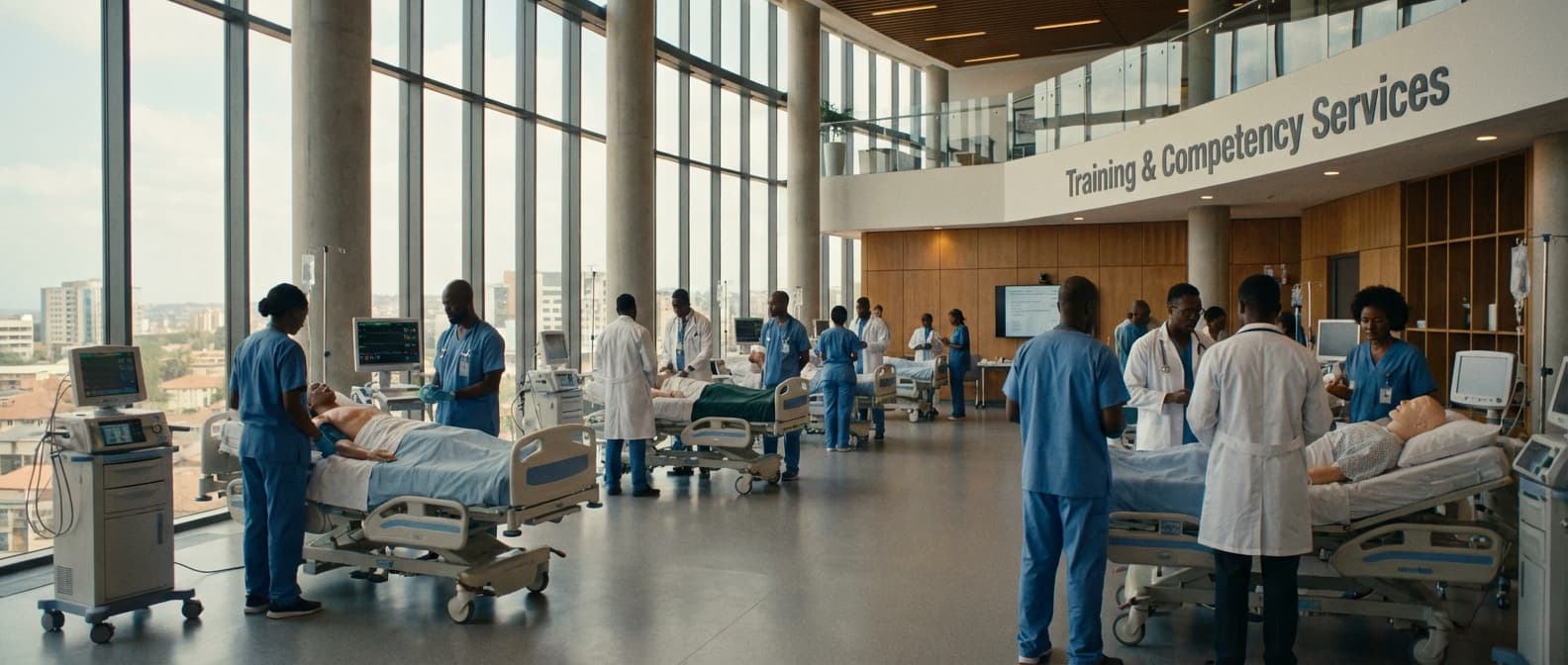
Anesthesia Workstation User Training Service in Benin
Engineering Excellence & Technical Support
Anesthesia Workstation User Training Service High-standard technical execution following OEM protocols and local regulatory frameworks.
Intuitive Interface Navigation & Workflow Optimization
Master the advanced graphical user interface (GUI) of your anesthesia workstation. Our training focuses on efficient navigation, understanding critical data displays, and streamlining workflow for rapid, informed decision-making during patient care in Benin's diverse clinical settings.
Advanced Alarm Management & Troubleshooting
Gain expert proficiency in configuring, interpreting, and responding to a comprehensive range of anesthesia workstation alarms. Our training equips clinicians in Benin with the skills to effectively troubleshoot common issues, ensuring patient safety and minimizing disruptions.
Ventilator Modes & Patient-Specific Settings Mastery
Deeply understand the various ventilation modes available on your anesthesia workstation. This module covers selecting appropriate modes, fine-tuning patient-specific parameters, and adapting to different patient populations encountered in Benin, from neonates to adults.
What Is Anesthesia Workstation User Training Service In Benin?
Anesthesia Workstation User Training Service in Benin refers to a specialized educational program designed to equip healthcare professionals in Benin with the knowledge and practical skills necessary to safely and effectively operate anesthesia workstations. These workstations are complex medical devices that integrate multiple functionalities for the administration of anesthesia, including vaporizers, ventilators, gas monitoring, and patient monitoring systems. The training service aims to ensure proficiency in device setup, calibration, routine maintenance, troubleshooting, and emergency procedures, thereby optimizing patient safety and treatment outcomes within the Beninese healthcare context.
| Target Audience | Typical Use Cases |
|---|---|
| Anesthesiologists | Pre-operative assessment and anesthesia planning. Intraoperative anesthetic management. Post-operative recovery monitoring. |
| Anesthesia Residents and Fellows | Acquisition of foundational skills and competency development for independent practice. |
| Certified Registered Nurse Anesthetists (CRNAs) and Nurse Anesthetists | Assisting in the administration of anesthesia and managing specific aspects of the anesthesia delivery. |
| Anesthesia Technicians and Biomedical Engineers | Routine maintenance, calibration, and initial troubleshooting of anesthesia workstations. Assisting anesthesia providers with device setup and operation. |
| Hospital and Clinic Management | Ensuring staff competency and compliance with standards for safe patient care. Optimizing the utilization and lifespan of expensive medical equipment. |
Key Components of Anesthesia Workstation User Training in Benin
- Device familiarization and anatomical/physiological principles of anesthesia delivery.
- Operational procedures: setup, pre-use checks, calibration, and shutdown protocols.
- Ventilator management: modes, settings, interpretation of waveforms and parameters.
- Vaporizer operation and agent management.
- Gas monitoring: identification, interpretation, and alarm management.
- Integration with patient monitoring systems (e.g., ECG, SpO2, EtCO2, NIBP).
- Troubleshooting common device malfunctions and error codes.
- Emergency procedures and contingency planning.
- Infection control and sterilization of reusable components.
- Understanding of local regulatory requirements and best practices in Benin.
Who Needs Anesthesia Workstation User Training Service In Benin?
Anesthesia workstation user training is crucial for ensuring the safe and effective operation of these complex medical devices. In Benin, several institutions and healthcare professionals can significantly benefit from specialized training services. This training empowers users with the knowledge and skills to maximize the workstation's capabilities, troubleshoot issues, and maintain optimal patient care standards.
| Target Customer/Department | Specific Needs Addressed | Key Benefits of Training |
|---|---|---|
| Anesthesiologists | Understanding advanced ventilation modes, drug delivery systems, monitoring parameters, and emergency protocols. | Improved patient safety, reduced risk of errors, enhanced clinical decision-making, and efficient use of the workstation's features. |
| Anesthesia Technicians/Nurses | Proper setup, calibration, routine maintenance, troubleshooting common issues, and assisting anesthesiologists during procedures. | Increased operational efficiency, extended equipment lifespan, faster response to alarms, and better support for the anesthesia team. |
| Critical Care Units (ICUs) | Utilizing workstations for prolonged ventilation, advanced monitoring, and managing critically ill patients. | Optimized patient management in critical situations, improved patient outcomes, and standardized critical care practices. |
| Operating Rooms (ORs) | Ensuring seamless integration of the workstation into surgical workflows, understanding different anesthetic techniques, and managing diverse patient populations. | Streamlined OR procedures, enhanced team coordination, and adaptability to various surgical specialties. |
| Biomedical Engineering Departments | In-depth understanding of the workstation's technical specifications, preventive maintenance schedules, and repair procedures. | Proactive equipment maintenance, reduced downtime, efficient troubleshooting, and extended equipment lifespan. |
| New Equipment Implementations | Training for staff on newly acquired anesthesia workstations to ensure immediate and competent usage. | Rapid adoption of new technology, minimized learning curve, and immediate impact on patient care quality. |
| Refresher Training Needs | Ongoing training to reinforce existing knowledge, introduce new features, and address evolving best practices. | Maintained high competency levels, adaptation to technological advancements, and continuous improvement in anesthetic practice. |
Target Customers and Departments for Anesthesia Workstation User Training in Benin:
- Hospitals (Public and Private)
- University Teaching Hospitals
- Specialty Clinics
- Non-Governmental Organizations (NGOs) with healthcare initiatives
- Medical Equipment Suppliers and Distributors
- Government Health Ministries and Agencies
Anesthesia Workstation User Training Service Process In Benin
This document outlines the Anesthesia Workstation User Training Service Process in Benin, detailing the workflow from initial inquiry to the successful execution of training. The service aims to equip healthcare professionals with the knowledge and skills necessary to safely and effectively operate anesthesia workstations, ensuring optimal patient care and operational efficiency. The process is designed to be comprehensive, client-centric, and compliant with relevant healthcare standards.
| Phase | Key Activities | Responsible Party | Deliverables/Outcomes | Timeline (Indicative) |
|---|---|---|---|---|
| Healthcare facility expresses interest in anesthesia workstation training. Initial discussion of needs, scope, and potential dates. | Client (Healthcare Facility), Training Provider | Initial understanding of requirements, contact established. | 1-3 Business Days |
| Detailed assessment of the facility's current equipment, staff skill levels, and specific training objectives. Development of a tailored training proposal outlining curriculum, duration, methodology, and cost. | Training Provider, Client (for input) | Comprehensive needs assessment report, detailed training proposal. | 3-7 Business Days |
| Review and negotiation of the training proposal, including terms, conditions, payment schedule, and cancellation policy. Formalization of a service agreement. | Client (Healthcare Facility), Training Provider | Signed service agreement/contract. | 5-10 Business Days |
| Based on the agreed proposal, the training curriculum, modules, and practical exercises are finalized. Development of training materials (manuals, presentations, case studies). | Training Provider | Customized training curriculum and materials. | 7-14 Business Days (concurrent with other phases) |
| Logistics coordination (venue, equipment availability, trainer travel). Communication of training schedule and prerequisites to participants. Confirmation of participant list. | Training Provider, Client (for logistics support) | Confirmed training logistics, registered participants, accessible training environment. | 2-3 Weeks before training |
| Execution of the training program, including theoretical sessions, practical demonstrations, hands-on practice on anesthesia workstations, and Q&A sessions. Focus on safe operation, troubleshooting, and maintenance. | Training Provider (Trainer), Participants | Knowledgeable and skilled participants in operating anesthesia workstations. | As per agreed duration (e.g., 1-5 Days) |
| Assessment of participant learning through tests or practical evaluations. Collection of feedback on the training. Provision of immediate post-training support and clarification of any remaining questions. | Training Provider, Participants | Participant assessment results, training feedback report, initial post-training support. | Immediately after training, ongoing for 1 week |
| Issuance of certificates of completion to participants who meet the required standards. Follow-up communication to ensure successful integration of learned skills into practice and to identify any ongoing support needs. | Training Provider, Client | Certificates of completion, follow-up report, enhanced operational competence. | 1-2 Weeks after training, ongoing as needed |
Anesthesia Workstation User Training Service Process in Benin
- 1. Inquiry & Initial Contact:
- 2. Needs Assessment & Proposal Development:
- 3. Contract Negotiation & Agreement:
- 4. Training Program Customization:
- 5. Pre-Training Preparations:
- 6. Training Delivery:
- 7. Post-Training Evaluation & Support:
- 8. Certification & Follow-up:
Anesthesia Workstation User Training Service Cost In Benin
The cost of anesthesia workstation user training services in Benin can vary significantly based on several factors. These factors influence the overall price, making it difficult to provide a single definitive figure. Understanding these elements will help organizations budget effectively for essential staff development.
Key pricing factors include:
- Training Provider: Whether the training is conducted by the workstation manufacturer, a specialized third-party training company, or an internal team with certified trainers will impact costs. Manufacturer-provided training often comes at a premium but ensures direct product expertise.
- Number of Participants: Training is typically priced per participant or in tiered packages based on group size. Larger groups may benefit from economies of scale, but the total cost will naturally increase.
- Duration and Intensity of Training: A comprehensive, multi-day course covering advanced features will naturally be more expensive than a basic introductory session. The depth of theoretical knowledge and practical hands-on experience required will determine the length and thus the cost.
- Location of Training: If the training is conducted at the client's facility, travel and accommodation costs for trainers (if they are not local) will be added. Conversely, if participants need to travel to a training center, their individual travel and accommodation expenses will be a separate consideration.
- Customization of Curriculum: A standard, off-the-shelf training program will be less expensive than a custom-designed curriculum tailored to the specific needs, patient population, and existing protocols of a particular healthcare facility.
- Equipment Used: The cost may also depend on whether the training utilizes actual anesthesia workstations or simulation equipment. Access to and maintenance of specialized training units can add to the provider's overhead.
- Certification and Assessment: If the training includes formal certification or assessments, these often come with additional fees for examination materials, grading, and certification issuance.
- Post-Training Support: Some training packages may include follow-up support, Q&A sessions, or access to online resources, which can influence the overall cost.
Estimated Cost Ranges (in West African CFA Franc - XOF):
It's important to note that these are broad estimates and actual quotes can vary widely. For precise pricing, direct consultation with training providers in Benin is recommended.
- Basic User Training (1-2 days): Typically covers fundamental operations, safety features, and routine procedures. This might range from 250,000 XOF to 600,000 XOF per participant. For a group of 5-10 participants, the total could be between 1,250,000 XOF and 6,000,000 XOF.
- Advanced/Comprehensive Training (3-5 days): Includes in-depth feature exploration, troubleshooting, maintenance overview, and potentially advanced ventilation modes. Costs could range from 500,000 XOF to 1,200,000 XOF per participant. For a group of 5-10, this could be between 2,500,000 XOF and 12,000,000 XOF.
- On-site Training (including trainer travel/accommodation): This can add an additional 30% to 70% to the base training cost, depending on the trainer's location and the duration of their stay.
- Customized Training Programs: May incur an initial development fee in addition to per-participant costs, potentially increasing the overall investment by 15% to 30%.
These figures are indicative and should be used as a starting point for budget planning. Healthcare institutions in Benin are encouraged to solicit detailed proposals from multiple qualified training providers to secure the most suitable and cost-effective solution for their anesthesia workstation user training needs.
| Training Type | Estimated Cost Range (XOF per participant) | Estimated Total for 5-10 Participants (XOF) |
|---|---|---|
| Basic User Training (1-2 days) | 250,000 - 600,000 | 1,250,000 - 6,000,000 |
| Advanced/Comprehensive Training (3-5 days) | 500,000 - 1,200,000 | 2,500,000 - 12,000,000 |
| On-site Training (Additional Overhead) | Varies (Adds 30-70% to base cost) | Varies |
| Customized Training Programs (Additional Development) | Varies (Adds 15-30% to base cost) | Varies |
Factors Influencing Anesthesia Workstation User Training Costs in Benin
- Training Provider (Manufacturer vs. Third-Party vs. Internal)
- Number of Participants
- Duration and Intensity of Training
- Location of Training (On-site vs. Off-site)
- Curriculum Customization Level
- Type of Equipment Used for Training (Actual vs. Simulation)
- Certification and Assessment Fees
- Inclusion of Post-Training Support
Affordable Anesthesia Workstation User Training Service Options
Acquiring and maintaining anesthesia workstations represents a significant investment for healthcare facilities. To maximize the return on this investment and ensure safe, efficient patient care, comprehensive user training is paramount. This service focuses on providing accessible and cost-effective training solutions for affordable anesthesia workstations. We offer a range of options designed to meet diverse needs, emphasizing value through bundled services and strategic cost-saving measures. Our goal is to empower your clinical staff with the knowledge and skills to operate these vital machines effectively, minimizing downtime and enhancing patient safety, all while respecting budgetary constraints.
| Service Option | Key Features | Ideal For | Typical Duration | Cost-Saving Rationale |
|---|---|---|---|---|
| Core Competency Bundle | Basic operation, parameter understanding, alarm management, safety checks | New staff, refreshers | 1-2 days | Discounted package, standardized knowledge |
| Advanced Features & Troubleshooting Bundle | Advanced ventilation modes, waveform analysis, error troubleshooting, basic maintenance | Experienced users, technicians | 1-2 days | Combined topics, reduced service calls |
| Comprehensive Suite Bundle | Core + Advanced features, simulations, emergency procedures, software updates | Complete team rollout, facility-wide | 3-4 days | Maximum savings, reduced overall training time |
| On-Demand E-Learning Library | Self-paced online modules, flexible access | Continuous learning, quick refreshers | N/A (self-paced) | Eliminates travel/scheduling, scalable |
| Train-the-Trainer Program | Internal trainer certification, comprehensive materials | Building internal capacity | 2-3 days (for trainers) | Long-term cost reduction, reduced external dependency |
Value Bundles for Anesthesia Workstation Training
- {"title":"Core Competency Bundle","description":"This foundational bundle covers essential operational knowledge. It's ideal for new staff or as a refresher for existing users. Includes hands-on basic operation, parameter understanding, alarm management, and safety checks. Duration: 1-2 days.","costSavingStrategy":"Bundling core modules offers a significant discount compared to individual session purchases. Standardizes foundational knowledge across the team."}
- {"title":"Advanced Features & Troubleshooting Bundle","description":"Expands on core competencies by delving into advanced ventilation modes, waveform analysis, troubleshooting common errors, and basic maintenance procedures. Recommended for experienced users and technicians. Duration: 1-2 days.","costSavingStrategy":"Combines advanced topics, reducing the need for separate specialized training sessions. Equips staff for self-sufficiency in minor troubleshooting, minimizing service call costs."}
- {"title":"Comprehensive Suite Bundle","description":"The most robust offering, encompassing both core and advanced features, along with scenario-based simulations, emergency procedures, and an introduction to software updates. Ideal for a complete team rollout or facility-wide training. Duration: 3-4 days.","costSavingStrategy":"Maximizes savings by covering all essential training aspects in a single package. Reduces overall training duration and associated travel/accommodation costs if applicable."}
- {"title":"On-Demand E-Learning Module Library","description":"Access to a library of self-paced online modules covering specific topics, from basic setup to advanced waveform interpretation. Available 24/7 for flexible learning and quick refreshers.","costSavingStrategy":"Highly cost-effective for ongoing or just-in-time learning. Eliminates the need for scheduled group sessions and travel for simple queries. Scalable to any number of users."}
- {"title":"Train-the-Trainer Program","description":"Empowers selected members of your staff to become internal trainers. We provide them with comprehensive materials and expertise to train their colleagues effectively, fostering continuous learning within your institution.","costSavingStrategy":"Long-term cost reduction by building internal training capacity. Reduces reliance on external trainers for routine onboarding and refreshers."}
Verified Providers In Benin
In Benin's dynamic healthcare landscape, discerning the most reliable and competent healthcare providers is paramount for individuals seeking quality medical services. This is where the importance of verified providers and recognized credentials, such as those offered by Franance Health, becomes evident. Franance Health's rigorous verification process and commitment to upholding high standards ensure that their accredited providers represent the best choice for your health and well-being.
| Credential/Verification Aspect | What Franance Health Assesses | Benefit to Patients |
|---|---|---|
| Medical Licensing and Certification | Ensures providers hold valid and current licenses from recognized medical boards. | Confirms providers are legally authorized and meet basic professional standards. |
| Professional Experience and Specialization | Evaluates the depth and breadth of a provider's clinical experience and specific areas of expertise. | Helps patients find providers with the most relevant skills for their condition. |
| Educational Background and Training | Verifies academic qualifications from accredited institutions and specialized training programs. | Guarantees that providers have received a strong foundational education. |
| Peer Review and Reputation | May involve reviewing patient feedback and, where applicable, peer assessments of clinical performance. | Provides an indication of a provider's quality of care and patient satisfaction. |
| Adherence to Ethical Standards | Confirms that providers uphold professional ethical guidelines and patient rights. | Ensures respectful and patient-centered care. |
| Continuing Medical Education (CME) | Checks that providers actively participate in ongoing learning to stay updated with medical advancements. | Means patients are treated with the latest medical knowledge and techniques. |
Why Franance Health Verified Providers are the Best Choice:
- Enhanced Patient Safety: Franance Health's verification involves a thorough assessment of a provider's qualifications, experience, and adherence to safety protocols, directly contributing to a safer patient experience.
- Guaranteed Quality of Care: By partnering only with accredited professionals, Franance Health assures patients access to up-to-date medical knowledge and best practices, leading to superior health outcomes.
- Increased Trust and Confidence: The Franance Health seal of approval offers a significant layer of trust, allowing patients to make informed decisions with confidence in the competency of their chosen healthcare provider.
- Access to Specialized Expertise: Franance Health's network often includes highly specialized professionals, ensuring that patients can find the right expert for their specific medical needs.
- Streamlined Healthcare Navigation: Navigating the healthcare system can be complex. Franance Health simplifies this process by pre-vetting providers, saving patients time and reducing uncertainty.
- Commitment to Continuous Improvement: Franance Health encourages and monitors continuous professional development among its verified providers, ensuring they remain at the forefront of medical advancements.
Scope Of Work For Anesthesia Workstation User Training Service
This Scope of Work outlines the requirements for providing comprehensive user training services for Anesthesia Workstations. The training will cover all essential functions, safety protocols, and troubleshooting procedures necessary for proficient and safe operation of the anesthesia workstation.
| Deliverable | Description | Standard Specifications |
|---|---|---|
| Training Curriculum Development | Creation of a detailed curriculum tailored to the specific anesthesia workstation model. | Must cover theoretical concepts, practical demonstrations, and hands-on exercises. Curriculum should be modular and adaptable. Includes pre- and post-training assessments. |
| Training Materials | Development of all necessary training documentation and aids. | Includes user manuals (digital and/or printed), presentation slides, quick reference guides, case studies, and simulation scenarios. Materials should be clear, concise, and visually engaging. |
| Trainer Qualifications | Provision of qualified and experienced trainers. | Trainers must possess a clinical background in anesthesia and have proven expertise in operating the specific anesthesia workstation model. Certification in adult education or training is a plus. |
| Training Delivery | Execution of the training program. | Training can be delivered on-site at the client's facility or remotely via virtual platforms. Sessions should be interactive and allow for ample Q&A. Maximum participant to trainer ratio to be defined. |
| Hands-on Practical Sessions | Dedicated time for participants to practice using the anesthesia workstation. | Involves simulation of various clinical scenarios and patient types. Access to functioning anesthesia workstations (either client-provided or demo units) is required. |
| Assessment and Evaluation | Methods for evaluating participant learning and training effectiveness. | Includes pre- and post-training knowledge assessments, practical skill evaluations, and participant feedback surveys. A completion certificate will be issued upon successful completion. |
| Post-Training Support | Limited ongoing support following the completion of the training program. | May include access to a knowledge base, email support for specific queries, or scheduled follow-up Q&A sessions. Duration and scope of support to be clearly defined. |
| Reporting | Provision of a summary report on the training engagement. | Report should include participant attendance, assessment results, feedback summary, and any identified areas for improvement in training or workstation usage. |
Key Objectives of the Training Service
- To equip healthcare professionals with the knowledge and skills to operate the anesthesia workstation effectively and safely.
- To ensure users understand the various modes of ventilation, anesthetic delivery systems, and monitoring capabilities.
- To familiarize users with critical safety features and alarm management.
- To provide practical guidance on routine maintenance and basic troubleshooting.
- To foster confidence and competence in using the anesthesia workstation for diverse patient populations and surgical procedures.
Service Level Agreement For Anesthesia Workstation User Training Service
This Service Level Agreement (SLA) outlines the terms and conditions for the Anesthesia Workstation User Training Service provided by [Your Company Name]. It defines the expected response times for support requests and the guaranteed uptime for the online training platform.
| Service Component | Response Time Guarantee | Uptime Guarantee |
|---|---|---|
Key Definitions
- {"term":"Anesthesia Workstation User Training Service","definition":"The comprehensive online training program designed to educate users on the safe and effective operation of the [Specific Anesthesia Workstation Model] equipment."}
- {"term":"Training Platform","definition":"The online learning management system (LMS) hosting the Anesthesia Workstation User Training Service."}
- {"term":"User","definition":"Any individual authorized to access and complete the Anesthesia Workstation User Training Service."}
- {"term":"Support Request","definition":"A formal request submitted by a User for technical assistance or issue resolution related to the Training Platform or training content."}
- {"term":"Business Hours","definition":"Monday through Friday, 9:00 AM to 5:00 PM [Your Time Zone], excluding public holidays."}
- {"term":"Scheduled Maintenance","definition":"Pre-announced periods during which the Training Platform may be unavailable for updates, upgrades, or essential maintenance."}
- {"term":"Emergency Maintenance","definition":"Unscheduled maintenance required to address critical system issues that impact the stability or security of the Training Platform."}
Frequently Asked Questions

Ready when you are
Let's scope your Anesthesia Workstation User Training Service in Benin project in Benin.

Scaling healthcare logistics and technical systems across the entire continent.