
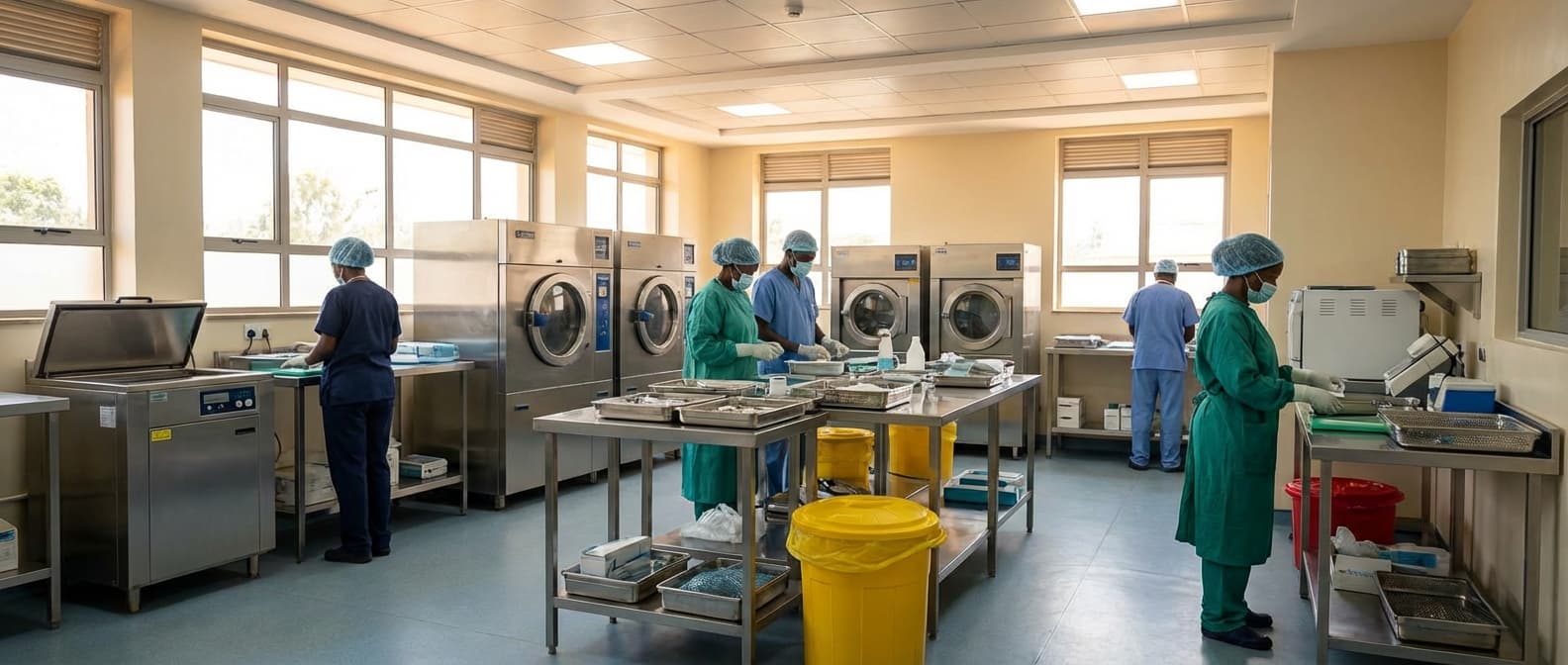
Medical Equipment Decontamination Service (Pre-Repair/Pre-Relocation) in Benin
Engineering Excellence & Technical Support
Medical Equipment Decontamination Service (Pre-Repair/Pre-Relocation) High-standard technical execution following OEM protocols and local regulatory frameworks.
Advanced Disinfection Protocols
Our specialized service employs cutting-edge disinfection agents and validated multi-stage processes to eliminate all bioburden from medical equipment, ensuring a sterile environment prior to repair or relocation. We adhere to international standards, guaranteeing safety for technicians and recipients.
Cross-Contamination Prevention
We implement rigorous decontamination protocols designed to specifically prevent cross-contamination between different medical devices. This includes dedicated cleaning zones, specialized equipment, and trained personnel to maintain the integrity of each item's decontamination status.
Bioburden Verification & Documentation
Beyond visual inspection, our service includes optional bioburden verification testing (e.g., ATP testing) to confirm effective decontamination. Comprehensive documentation of the entire process is provided, offering transparency and compliance assurance for our clients in Benin.
What Is Medical Equipment Decontamination Service (Pre-repair/pre-relocation) In Benin?
Medical Equipment Decontamination Service (Pre-Repair/Pre-Relocation) in Benin refers to the specialized process of cleaning, disinfecting, and sterilizing medical devices and equipment prior to their repair or relocation. This service is crucial for mitigating the risk of cross-contamination, preventing the transmission of infectious agents, and ensuring the safety of technicians, facility staff, and future patients. It adheres to stringent protocols to render equipment biologically inert and safe to handle in non-sterile environments, as well as to protect repair and transport personnel from potential biohazards.
| Who Needs the Service? | Typical Use Cases |
|---|---|
| Hospitals and Clinics (Public and Private): Facilities that own and operate a wide range of medical equipment. | Repair of malfunctioning medical devices, from small diagnostic tools to large imaging systems. |
| Diagnostic Laboratories: Laboratories handling potentially infectious biological samples. | Relocation of medical equipment between departments within a facility or to a new medical center. |
| Surgical Centers and Operating Theaters: Environments with high sterility requirements. | Transfer of equipment to external repair facilities, requiring a certified handover of decontaminated items. |
| Medical Equipment Manufacturers/Distributors (for returns/refurbishment): Companies that receive used equipment. | Inter-facility transfers of equipment for specialized procedures or sharing of resources. |
| Emergency Medical Services (EMS): Ambulances and field units with portable medical devices. | Decommissioning or disposal of old equipment, ensuring it is safe for handling and transportation. |
| Research Institutions with Medical Equipment: Facilities involved in medical research and development. | Preparation of equipment for lease or rental to other healthcare providers. |
Key Components of the Service:
- Initial Assessment and Classification: Evaluating the type of equipment, its intended use, and potential bioburden.
- Cleaning: Mechanical removal of gross contaminants, debris, and visible soil using appropriate detergents and cleaning agents.
- Disinfection: Application of chemical disinfectants or physical methods (e.g., UV-C irradiation) to kill or inactivate microorganisms.
- Sterilization (where applicable): Employing high-level disinfection or terminal sterilization methods to eliminate all forms of microbial life.
- Drying: Ensuring thorough drying to prevent microbial regrowth.
- Packaging and Containment: Securely packaging decontaminated equipment to maintain integrity during transit.
- Documentation: Maintaining detailed records of the decontamination process, including chemicals used, exposure times, and personnel involved.
- Certification/Verification: Providing documentation or certification confirming successful decontamination to specified standards.
Who Needs Medical Equipment Decontamination Service (Pre-repair/pre-relocation) In Benin?
Medical equipment decontamination service, especially for pre-repair and pre-relocation needs, is crucial for ensuring the safety, functionality, and compliance of healthcare facilities in Benin. This specialized service prevents the spread of infections and contaminations during the handling and servicing of medical devices. Without proper decontamination, equipment moved for repair or relocation can pose significant biohazard risks to technicians, patients, and the wider community. It is an essential step for maintaining a sterile environment and adhering to international healthcare standards. Target customers in Benin include a diverse range of healthcare providers and institutions that regularly handle, maintain, or move medical equipment.
| Department | Specific Equipment/Activities Requiring Decontamination | Reason for Decontamination (Pre-Repair/Pre-Relocation) |
|---|---|---|
| Radiology/Imaging | X-ray machines, CT scanners, MRI machines, Ultrasound devices | Preventing biohazard transmission to technicians during maintenance and ensuring sterility when moving equipment between imaging suites or to repair facilities. |
| Operating Rooms (OR) | Surgical lasers, anesthesia machines, endoscopes, surgical lights, patient monitoring systems | Eliminating biological contaminants before equipment is removed for sterilization, repair, or relocation to other surgical areas. |
| Intensive Care Units (ICU) | Ventilators, infusion pumps, dialysis machines, cardiac monitors | Ensuring a sterile environment for critically ill patients. Decontamination is essential before servicing or moving life-support equipment. |
| Laboratories (Clinical & Pathology) | Centrifuges, incubators, microscopes, automated analyzers | Preventing cross-contamination of biological samples and ensuring safe handling by laboratory technicians and repair personnel. |
| Sterilization and Central Supply Departments | Autoclaves, sterilizers, surgical instrument trays | Decontaminating equipment that may have come into contact with infectious agents before it is sent for repair or moved to different storage or processing areas. |
| Emergency Medical Services (EMS) / Ambulance Services | Defibrillators, portable ventilators, diagnostic tools | Ensuring equipment is free from pathogens after use in emergency situations before being transported for servicing or relocation to new stations. |
| Biomedical Engineering Departments (In-house) | All types of medical equipment being prepared for internal or external repair | Protecting in-house technicians and ensuring that equipment returned from external repair is also decontaminated before re-integration into service. |
| Facilities Management / Estates Department (for relocation) | All medical equipment undergoing departmental or facility-wide moves | Minimizing the risk of environmental contamination during the physical transfer of equipment within or between buildings. |
Target Customers and Departments in Benin Requiring Medical Equipment Decontamination Service (Pre-Repair/Pre-Relocation)
- {"title":"Hospitals (Public and Private)","description":"Hospitals are primary users of medical equipment and frequently require decontamination for equipment sent for in-house or external repairs, or when relocating departments or entire facilities."}
- {"title":"Clinics and Health Centers","description":"Smaller healthcare facilities that may not have in-house repair capabilities and rely on external technicians for servicing. Decontamination is vital before any equipment leaves their premises for repair."}
- {"title":"Diagnostic Laboratories","description":"Facilities housing specialized diagnostic equipment (e.g., MRI machines, CT scanners, X-ray units) that require regular maintenance and occasional relocation. Contamination can affect test accuracy and safety."}
- {"title":"Medical Equipment Suppliers and Distributors","description":"Companies that sell, install, and service medical equipment. They need decontamination for returned equipment for repair, refurbishment, or before delivering it to new locations."}
- {"title":"Research and Development Institutions","description":"Organizations involved in medical research that use and maintain advanced medical devices. Decontamination is critical to prevent cross-contamination of samples and ensure data integrity."}
- {"title":"Government Health Agencies","description":"Ministries of Health and related bodies overseeing public health infrastructure and equipment management. They may contract such services for public health facilities."}
- {"title":"Non-Governmental Organizations (NGOs) with Healthcare Programs","description":"NGOs operating clinics, mobile health units, or providing medical supplies and support often require decontamination for their equipment before servicing or relocation."}
- {"title":"Tertiary and Specialized Medical Centers","description":"Facilities with advanced and highly specialized equipment (e.g., surgical centers, cancer treatment units) where the risk of contamination is high and requires expert handling."}
Medical Equipment Decontamination Service (Pre-repair/pre-relocation) Process In Benin
This document outlines the standard workflow for the Medical Equipment Decontamination Service (Pre-Repair/Pre-Relocation) in Benin. The process ensures that medical devices are safely and effectively decontaminated before undergoing repair or relocation, minimizing the risk of cross-contamination and protecting personnel. The workflow progresses from initial client inquiry through to the final execution of the decontamination service.
| Step | Activity | Key Personnel Involved | Key Considerations |
|---|---|---|---|
| 1 | Inquiry and Initial Consultation | Client, Service Provider Sales/Operations | Equipment type, intended use, urgency, initial scope definition. |
| 2 | Information Gathering and Risk Assessment | Service Provider Technical Team, Client | Equipment history, known contaminants, manufacturer guidelines, safety protocols. |
| 3 | Quotation and Agreement | Service Provider Sales/Operations, Client | Clear scope, pricing, terms and conditions, service level agreement. |
| 4 | Logistics and Scheduling | Service Provider Logistics, Client | Safe transport, scheduling efficiency, on-site vs. off-site feasibility. |
| 5 | On-Site Preparation (if applicable) | Service Provider Technical Team | Ventilation, containment, PPE, adherence to biosafety standards. |
| 6 | Decontamination Procedure | Service Provider Trained Technicians | Approved methods, chemicals, equipment, safety protocols, manufacturer guidelines. |
| 7 | Post-Decontamination Verification | Service Provider Technical Team | Visual inspection, indicator tests, confirmation of cleanliness. |
| 8 | Drying and Packaging | Service Provider Trained Technicians | Prevention of recontamination, appropriate materials, maintaining cleanliness. |
| 9 | Documentation and Certification | Service Provider Administration/Technical Team | Accuracy, completeness, regulatory compliance, client receipt. |
| 10 | Return/Handover of Equipment | Service Provider Logistics, Client, Repair Technician/Relocation Company | Secure handover, confirmation of receipt, clear communication. |
| 11 | Record Keeping | Service Provider Administration/Technical Team | Data integrity, retention period, audit readiness. |
Medical Equipment Decontamination Service Workflow (Pre-Repair/Pre-Relocation) in Benin
- {"step":1,"title":"Inquiry and Initial Consultation","description":"Client (hospital, clinic, repair technician, relocation company) contacts the decontamination service provider with a request for decontamination of medical equipment. This involves understanding the type of equipment, its intended use, the reason for decontamination (repair or relocation), and the urgency."}
- {"step":2,"title":"Information Gathering and Risk Assessment","description":"The service provider gathers detailed information about the equipment, including make, model, any known contaminants (e.g., biological, chemical), and the history of its use. A preliminary risk assessment is conducted to determine the appropriate decontamination method and required safety protocols."}
- {"step":3,"title":"Quotation and Agreement","description":"Based on the gathered information and risk assessment, a detailed quotation is provided to the client, outlining the scope of service, decontamination methods, timeline, and cost. Upon client approval, a service agreement is finalized."}
- {"step":4,"title":"Logistics and Scheduling","description":"The service provider coordinates the pickup or drop-off of the equipment. This involves scheduling a convenient time for the client and ensuring safe transportation of potentially contaminated items. If on-site decontamination is feasible and agreed upon, this step is adjusted accordingly."}
- {"step":5,"title":"On-Site Preparation (if applicable)","description":"If decontamination is to be performed on-site, the service provider prepares the designated area, ensuring adequate ventilation, containment measures, and adherence to biosafety standards. Necessary protective equipment and consumables are brought to the site."}
- {"step":6,"title":"Decontamination Procedure","description":"The trained technicians execute the agreed-upon decontamination procedure. This may involve manual cleaning, disinfection, sterilization, or a combination of methods, using approved chemicals and equipment. Strict adherence to safety protocols and manufacturer guidelines for the specific equipment is paramount."}
- {"step":7,"title":"Post-Decontamination Verification","description":"After the primary decontamination process, the equipment is inspected for residual contamination. Depending on the level of risk and type of equipment, indicator tests or other verification methods may be employed."}
- {"step":8,"title":"Drying and Packaging","description":"The decontaminated equipment is thoroughly dried to prevent microbial growth and then appropriately packaged to maintain its sterile or clean state during transport or storage. Packaging materials are selected to prevent recontamination."}
- {"step":9,"title":"Documentation and Certification","description":"A decontamination certificate or report is issued to the client, detailing the equipment, date of decontamination, methods used, and verification results. This document serves as proof of decontamination and is crucial for repair shops and relocation services."}
- {"step":10,"title":"Return/Handover of Equipment","description":"The decontaminated and certified equipment is returned to the client or handed over to the designated repair technician or relocation company. Clear communication is maintained throughout this final stage."}
- {"step":11,"title":"Record Keeping","description":"The decontamination service provider maintains detailed records of all decontamination activities, including client information, equipment details, procedures performed, and issued certificates, for a specified period as per regulatory requirements and internal policies."}
Medical Equipment Decontamination Service (Pre-repair/pre-relocation) Cost In Benin
The cost of medical equipment decontamination services in Benin, specifically for pre-repair or pre-relocation, can vary significantly based on several key factors. These services are crucial to prevent the spread of infections and ensure the safety of technicians and the environment. The pricing is typically determined by the complexity of the equipment, the level of contamination, the specific decontamination methods employed, and the provider's operational costs. Local currency pricing is prevalent, with the West African CFA franc (XOF) being the standard.
Pricing Factors:
- Type and Size of Equipment: Larger and more complex medical devices (e.g., MRI machines, CT scanners) requiring specialized handling and more extensive cleaning will command higher prices than smaller, simpler equipment (e.g., stethoscopes, blood pressure monitors). The number of components and the accessibility of internal parts also play a role.
- Level of Contamination: Equipment known to have been exposed to highly infectious agents (e.g., during an outbreak or used in isolation wards) will necessitate more rigorous and potentially multi-stage decontamination protocols, increasing the cost. A routine cleaning for minor soiling will be less expensive.
- Decontamination Methods: The techniques used are a significant cost driver. Standard disinfection might be cheaper than high-level disinfection or sterilization methods. The use of specific chemical agents, heat sterilization (autoclaving), or specialized UV-C light treatments will influence the final price.
- Urgency and Turnaround Time: Emergency decontamination services or those requiring rapid turnaround often incur premium charges. Scheduled services usually have more standardized pricing.
- Provider's Expertise and Certification: Reputable providers with certified technicians, adherence to international safety standards, and proper licensing may charge more due to their expertise, reliability, and the assurance of quality service.
- Location and Accessibility: The geographic location of the equipment within Benin and the ease of access for the decontamination team can impact travel and logistical costs.
- Volume of Equipment: Bulk decontamination services for multiple pieces of equipment might offer discounted rates per unit.
- Post-Decontamination Testing/Certification: Some services may include verification of decontamination efficacy, which adds to the overall cost.
Estimated Cost Ranges (in West African CFA Franc - XOF):
It is important to note that these are estimated ranges and actual quotes can vary. It is always recommended to obtain multiple quotes from different service providers.
- Small, Non-complex Equipment (e.g., diagnostic tools, minor surgical instruments): 5,000 - 20,000 XOF per item.
- Medium-sized Equipment (e.g., patient monitors, infusion pumps, small imaging devices): 20,000 - 75,000 XOF per item.
- Large, Complex Equipment (e.g., large imaging systems, complex surgical robots, ventilators): 75,000 - 300,000+ XOF per item. This can be significantly higher for highly specialized or exceptionally large equipment.
- Specialized Decontamination (e.g., for high-risk pathogens, requiring specific chemical or biological validation): May involve project-based pricing, potentially starting from 100,000 XOF and going upwards considerably.
These prices generally cover the labor, consumables (cleaning agents, protective gear), and the use of specialized equipment. Additional charges might apply for transportation, waste disposal of contaminated materials, and any required certification or documentation.
| Equipment Category | Estimated Cost Range (XOF) | Notes |
|---|---|---|
| Small, Non-complex Equipment (e.g., diagnostic tools, minor surgical instruments) | 5,000 - 20,000 | Per item |
| Medium-sized Equipment (e.g., patient monitors, infusion pumps, small imaging devices) | 20,000 - 75,000 | Per item |
| Large, Complex Equipment (e.g., large imaging systems, ventilators) | 75,000 - 300,000+ | Per item; can be significantly higher for specialized systems |
| Specialized Decontamination (e.g., high-risk pathogens) | Starting from 100,000+ | Project-based pricing; dependent on specific requirements and validation |
Key Factors Influencing Medical Equipment Decontamination Costs in Benin
- Type and Size of Medical Equipment
- Level of Contamination (e.g., standard vs. high-risk pathogens)
- Decontamination Methods Employed (e.g., disinfection, sterilization)
- Urgency and Required Turnaround Time
- Provider's Expertise, Certifications, and Reputation
- Geographic Location and Accessibility of Equipment
- Volume of Equipment for Decontamination
- Inclusion of Post-Decontamination Testing or Certification
Affordable Medical Equipment Decontamination Service (Pre-repair/pre-relocation) Options
This service provides essential decontamination of medical equipment before it undergoes repair or relocation. This process ensures the safety of technicians, prevents the spread of infectious agents, and maintains the integrity of sensitive equipment. We offer flexible options designed to provide significant value and cost savings through strategic bundling and proactive planning.
| Value Bundle | Description | Includes | Cost Savings Strategy | Ideal For |
|---|---|---|---|---|
| Basic Decon Package | Essential decontamination for common equipment. | Surface cleaning and disinfection (non-critical areas), visual inspection for bioburden. | Bundled pricing offers a discount over individual service bookings. Streamlined process reduces labor time. | Routine maintenance, minor repairs, internal equipment movement within a facility. |
| Comprehensive Decon Bundle | Thorough decontamination for high-risk or complex equipment. | Deep cleaning of accessible surfaces, disinfection of high-touch points, basic bioburden testing (if applicable). | Bulk purchase discounts for multiple units. Reduced risk of contamination means fewer re-work or cleanup costs. | Major repairs, inter-facility transfers, equipment used in isolation wards or for infectious patients. |
| Proactive Maintenance Bundle | Regular, scheduled decontamination to prevent buildup and ensure optimal performance. | Includes Basic or Comprehensive Decon, plus a predetermined schedule (e.g., quarterly, bi-annually). | Predictable costs. Early detection of minor issues prevents costly major repairs. Reduced downtime. | Facilities with a high volume of medical equipment, those seeking to optimize equipment lifespan and minimize unexpected failures. |
| Emergency Decon On-Demand | Rapid response decontamination for urgent situations. | Priority scheduling and expedited service for immediate decontamination needs. | While priced for urgency, pre-negotiated rates for contracted clients offer preferential pricing over standard ad-hoc emergency calls. | Unexpected spills, equipment failures requiring immediate attention, urgent relocations. |
Key Benefits of Pre-Repair/Pre-Relocation Decontamination
- Ensures technician safety and reduces risk of occupational exposure.
- Prevents cross-contamination between equipment and facilities.
- Protects sensitive internal components from further damage during handling.
- Facilitates smoother and more efficient repair/relocation processes.
- Helps facilities comply with regulatory and infection control standards.
Verified Providers In Benin
In Benin's evolving healthcare landscape, identifying trusted and qualified medical professionals is paramount. Franance Health stands out as a beacon of reliability, rigorously vetting and credentialing providers to ensure the highest standards of care. This commitment to quality assurance translates directly into patient safety, improved health outcomes, and a more confident healthcare experience. Choosing a Franance Health-verified provider means opting for expertise, ethical practice, and a dedication to your well-being.
| Credential Component | Franance Health Verification Standard | Patient Benefit |
|---|---|---|
| Medical Degrees & Licenses | Confirmed with relevant licensing boards and educational institutions. | Ensures providers have the foundational legal and academic qualifications. |
| Professional Experience | Verified through peer references and documented work history. | Confirms practical application of knowledge and skills. |
| Specialty Certifications | Validated with recognized certifying bodies for specific medical fields. | Guarantees expertise in particular areas of medicine. |
| Ethical Conduct & Disciplinary Records | Thorough checks of professional conduct and absence of significant disciplinary actions. | Protects patients from practitioners with a history of malpractice or unethical behavior. |
| Continuing Medical Education (CME) | Documentation of participation in accredited CME programs. | Ensures providers stay updated with the latest medical research and techniques. |
Why Franance Health Credentials Matter:
- Rigorous Vetting Process: Franance Health employs a multi-faceted vetting system that goes beyond basic licensing. This includes verification of educational qualifications, professional experience, peer reviews, and adherence to ethical guidelines.
- Commitment to Continuous Professional Development: Verified providers are often required to engage in ongoing training and education, ensuring they remain at the forefront of medical advancements and best practices.
- Enhanced Patient Safety: The stringent credentialing process minimizes the risk of unqualified individuals providing care, directly contributing to patient safety and reducing potential medical errors.
- Improved Quality of Care: By partnering with proven and competent professionals, Franance Health ensures that patients receive effective, evidence-based treatments and personalized attention.
- Building Trust and Confidence: The Franance Health seal of approval provides a clear indicator of a provider's trustworthiness, empowering patients to make informed decisions about their healthcare.
- Access to Specialized Expertise: Franance Health's network often includes a diverse range of specialists, ensuring that patients can find the right expertise for their specific health needs.
Scope Of Work For Medical Equipment Decontamination Service (Pre-repair/pre-relocation)
This Scope of Work (SOW) outlines the requirements for the decontamination of medical equipment prior to repair or relocation. The objective is to ensure the equipment is free from biological, chemical, and radiological contaminants to protect personnel, the environment, and the integrity of the repair/relocation process. This SOW details the technical deliverables and standard specifications for the decontamination service.
| Technical Deliverable | Standard Specification / Requirement | Verification Method | Notes |
|---|---|---|---|
| Decontamination Plan | A detailed plan outlining the specific decontamination agents, procedures, contact times, temperatures, and safety protocols for each equipment type and identified contaminant. Must comply with relevant regulatory guidelines (e.g., OSHA, EPA, local health department). | Review and approval by client's designated representative. | Plan should be adaptable based on equipment complexity and contaminant risk. |
| Trained and Certified Personnel | All personnel involved in the decontamination process must have documented training in hazardous material handling, infection control, and specific decontamination procedures relevant to medical equipment. Certification may be required for certain contaminant types. | Submission of training records and certifications. | Proof of competency and understanding of safety protocols. |
| Approved Decontamination Agents | Use of only hospital-grade, EPA-registered, or FDA-approved disinfectants/sterilants, or other appropriately certified agents based on contaminant type and equipment material compatibility. Agents must be used at manufacturer-recommended concentrations and contact times. | Provision of Safety Data Sheets (SDS) for all used agents. Verification of product registration. | Compatibility testing with equipment materials should be considered. |
| Containment and Waste Management | All decontamination activities must be performed in a contained environment to prevent cross-contamination and environmental release. All contaminated waste generated (e.g., wipes, solutions, PPE) must be collected, labeled, and disposed of according to applicable hazardous waste regulations. | On-site observation of containment procedures. Documentation of waste manifests and disposal records. | Compliance with EPA and local regulations is mandatory. |
| Decontamination Efficacy Report | A written report detailing the decontamination process performed, including dates, times, personnel involved, agents used, contact times, and temperatures. The report must certify that the equipment has been decontaminated to a level suitable for repair or relocation. | Client review and acceptance of the report. | Should include any deviations from the initial plan and their justification. |
| Certificate of Decontamination | A formal document issued upon successful completion of decontamination, attesting that the equipment is free from specified contaminants. This certificate must accompany the equipment during repair or relocation. | Issuance of a signed and dated Certificate of Decontamination. | Must be clearly legible and contain all relevant equipment identifiers. |
| Equipment Damage Assessment (Post-Decontamination) | Visual inspection for any damage incurred during the decontamination process. Any identified damage must be documented. | Photographic evidence of any damage. | Distinguish between pre-existing and post-decontamination damage. |
| Post-Decontamination Verification (if applicable) | For high-risk contaminants or critical equipment, may include specific testing (e.g., surface swabs for biological indicators, wipe tests for chemical residues) to confirm the absence of specific contaminants. | Submission of laboratory testing results. | As specified in the Decontamination Plan. |
Key Stages of Decontamination
- Initial Assessment and Risk Evaluation
- Pre-Cleaning and Gross Contaminant Removal
- Primary Decontamination
- Rinsing and Neutralization
- Drying
- Final Inspection and Verification
- Documentation and Certification
Service Level Agreement For Medical Equipment Decontamination Service (Pre-repair/pre-relocation)
This Service Level Agreement (SLA) outlines the terms and conditions for the decontamination of medical equipment prior to repair or relocation. It defines the response times and uptime guarantees for the decontamination service provided by [Service Provider Name] to [Client Name].
| Service | Description | Target Response Time | Guaranteed Uptime | Notes |
|---|---|---|---|---|
| Decontamination Request Initiation | Client initiates a request for decontamination service. | Within 4 business hours of receiving a valid request. | N/A | Request can be made via [Specify Method, e.g., phone, email, online portal]. |
| Service Scheduling Confirmation | Service Provider confirms the scheduled date and time for decontamination. | Within 8 business hours of request initiation. | N/A | Confirmation will include estimated duration and any pre-service requirements. |
| On-Site Decontamination Arrival | Service Provider technician arrives at the client's designated location to perform decontamination. | Within the agreed-upon scheduled time slot. | 99% | Uptime refers to the availability of the decontamination service as scheduled. Downtime includes scheduled maintenance, unavoidable delays (e.g., natural disasters), or client-related issues. |
| Decontamination Completion | Completion of the decontamination process as per agreed-upon procedures. | Within the estimated duration communicated during scheduling. | N/A | A decontamination certificate will be provided upon completion. |
Key Service Parameters
- Scope of Service: This SLA covers the decontamination of specified medical equipment by [Service Provider Name] to ensure it is safe for transportation, repair, or relocation, meeting industry standards and regulatory requirements.
- Equipment Covered: A detailed list of equipment to be decontaminated will be provided in a separate appendix or work order.
- Service Hours: Decontamination services will be available during [Specify Days of Week] from [Start Time] to [End Time] ([Time Zone]).
- Exclusions: This SLA does not cover the repair, relocation, or disposal of the equipment itself, nor does it cover the decontamination of biohazardous materials beyond the scope of standard medical equipment cleaning.
Frequently Asked Questions

Ready when you are
Let's scope your Medical Equipment Decontamination Service (Pre-Repair/Pre-Relocation) in Benin project in Benin.

Scaling healthcare logistics and technical systems across the entire continent.