
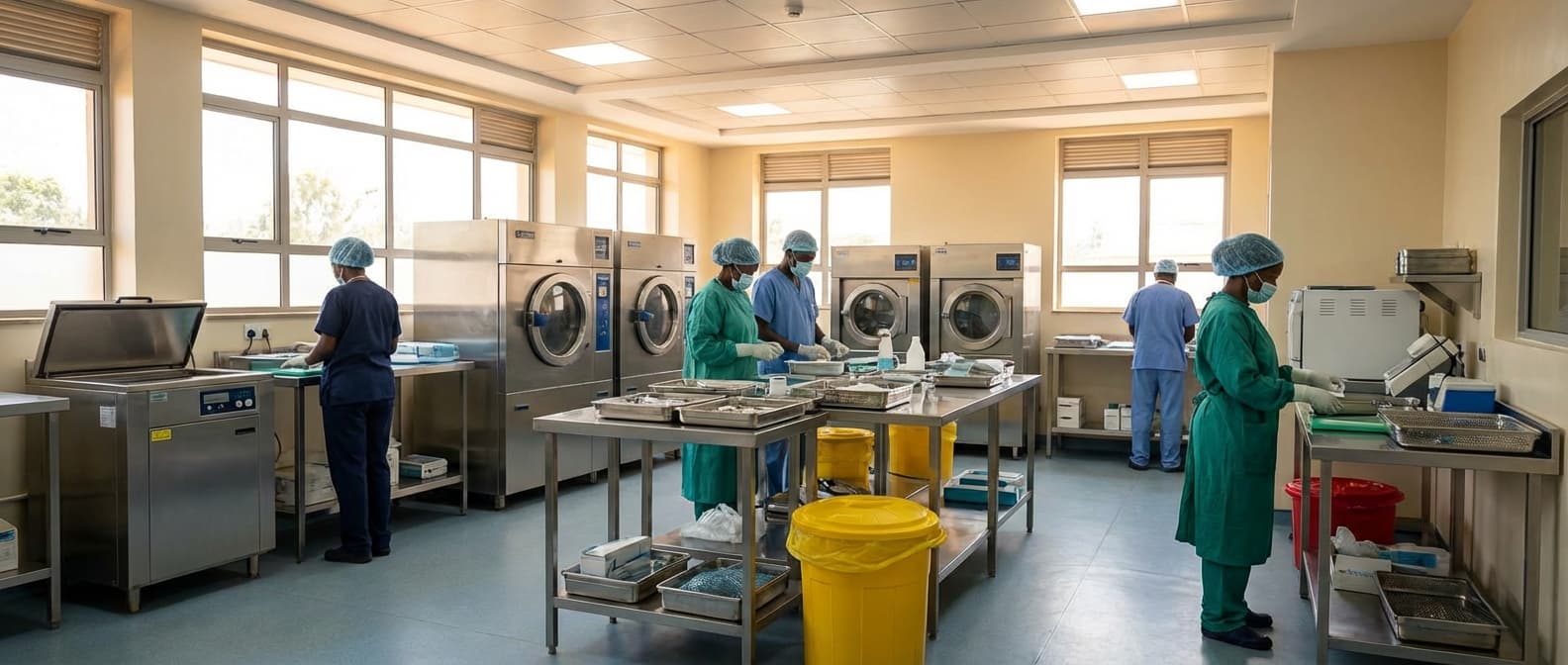
Endoscope Reprocessing Equipment Support Service in Benin
Engineering Excellence & Technical Support
Endoscope Reprocessing Equipment Support Service High-standard technical execution following OEM protocols and local regulatory frameworks.
Rapid On-Site Repair & Maintenance
Ensuring minimal downtime for your vital endoscope reprocessing equipment in Benin through swift, expert on-site technical support and preventative maintenance. Our certified technicians are equipped to diagnose and resolve issues promptly, keeping your facility operational.
Advanced Diagnostic & Calibration Services
Leveraging state-of-the-art diagnostic tools, we provide precise calibration and performance verification for all your endoscope reprocessing machines. This guarantees optimal cleaning efficacy and adherence to stringent safety standards across Benin.
Genuine Parts & Technical Expertise
We utilize only genuine manufacturer-approved spare parts and provide highly specialized technical expertise for all major brands of endoscope reprocessing equipment. This ensures the longevity and reliability of your investment, delivered directly to your facility in Benin.
What Is Endoscope Reprocessing Equipment Support Service In Benin?
Endoscope reprocessing equipment support services in Benin refer to a specialized field of technical assistance focused on the maintenance, repair, validation, and lifecycle management of automated endoscope reprocessors (AERs) and associated equipment used in healthcare facilities. These services are critical for ensuring the safety and efficacy of endoscopic procedures by guaranteeing that reusable endoscopes are effectively disinfected and sterilized between patient uses, thereby preventing the transmission of healthcare-associated infections (HAIs). The scope of these services encompasses routine preventive maintenance, calibration, troubleshooting, breakdown repairs, spare parts management, and performance validation according to international and local regulatory standards.
| Who Needs This Service? | Typical Use Cases | Impact of Inadequate Support | ||||||||||||
|---|---|---|---|---|---|---|---|---|---|---|---|---|---|---|
| Hospitals (public and private) | Routine maintenance of AERs in endoscopy units, surgical departments, and gastroenterology clinics. | Increased risk of HAIs, compromised patient safety, potential regulatory non-compliance and fines. | Clinics and Polyclinics performing endoscopic procedures | Emergency repairs for unexpected AER breakdowns during critical patient care periods. | Prolonged equipment downtime leading to cancellation of procedures and financial losses. | Surgical Centers | Performance validation after installation of new AERs or after major repairs to ensure effective disinfection. | Ineffective reprocessing leading to instrument contamination and potential patient harm. | Specialized Medical Facilities (e.g., diagnostic centers) | Annual or bi-annual preventive maintenance contracts to ensure continuous operational readiness. | Premature equipment failure due to lack of maintenance, increasing long-term operational costs. | Government Health Agencies (for public facilities) | Calibration and validation of AERs to meet national sterilization and disinfection standards. | Reputational damage to healthcare providers and the healthcare system as a whole. |
Key Components of Endoscope Reprocessing Equipment Support Service in Benin
- Preventive Maintenance (PM): Scheduled inspections, cleaning, lubrication, and replacement of wear-and-tear parts to ensure optimal operational performance and longevity of AERs.
- Corrective Maintenance and Repair: Diagnosis and resolution of equipment malfunctions, including component replacement, electronic and mechanical troubleshooting, and software updates.
- Performance Validation and Calibration: Verification of the reprocessor's adherence to specified disinfection/sterilization parameters (e.g., temperature, cycle time, chemical concentration) using validated test methods and equipment.
- Installation and Commissioning: Professional setup, initial testing, and configuration of new AER units to ensure they meet manufacturer specifications and facility requirements.
- Spare Parts Management: Maintaining an inventory of genuine or compatible spare parts for timely repairs, minimizing downtime.
- Training and Technical Consultation: Providing expert advice to facility staff on proper operation, basic maintenance, and troubleshooting of AERs.
- Regulatory Compliance Support: Assisting facilities in meeting national and international guidelines (e.g., from ministries of health, ISO standards) related to medical device reprocessing.
- Decommissioning and Disposal: Safe and compliant removal of end-of-life equipment.
Who Needs Endoscope Reprocessing Equipment Support Service In Benin?
Ensuring the sterility and functionality of endoscopes is paramount for patient safety and the effectiveness of diagnostic and therapeutic procedures. Endoscope reprocessing equipment, vital for this crucial process, requires regular maintenance, calibration, and repair. This service is indispensable for healthcare facilities in Benin that utilize endoscopic procedures. A comprehensive support service for endoscope reprocessing equipment is essential to prevent infections, prolong the lifespan of expensive equipment, and maintain operational efficiency. This service not only addresses immediate repair needs but also proactive maintenance to minimize downtime.
| Target Customer Type | Key Departments Requiring Support | Primary Needs Addressed | Impact of Reliable Support |
|---|---|---|---|
| Public Hospitals | Gastroenterology, Pulmonology, Urology, Gynecology, Endoscopy Units, Central Sterile Supply Department (CSSD) | Preventive maintenance, emergency repairs, spare parts, equipment calibration, technical training for staff. | Reduced hospital-acquired infections, increased patient throughput, extended equipment life, cost savings through efficient operation. |
| Private Hospitals & Specialty Clinics | Gastroenterology, Pulmonology, Urology, Gynecology, Operating Rooms, CSSD | Prompt response to breakdowns, on-site technical expertise, scheduled maintenance, upgrade consultations, consumables supply. | Minimized patient appointment cancellations, enhanced reputation for quality care, optimized investment in advanced technology. |
| Diagnostic Centers | Endoscopy Suites, CSSD | Regular servicing, validation of reprocessing cycles, troubleshooting, spare parts availability, performance optimization. | Accurate and reliable diagnostic results, adherence to regulatory standards, efficient turnaround times for procedures. |
| Surgical Centers | Operating Rooms, CSSD | Immediate support for critical equipment, preventative maintenance schedules, ensuring readiness for emergency procedures, staff training. | Seamless surgical operations, patient safety assurance, efficient resource utilization. |
| Teaching Hospitals & Medical Training Institutions | Endoscopy Units, CSSD, Clinical Skills Labs | Equipment reliability for training, maintenance of modern reprocessing standards, technical support for research and development, staff education on equipment care. | Effective training of future healthcare professionals, adherence to best practices in infection control, fostering a culture of equipment stewardship. |
Target Customers and Departments in Benin Requiring Endoscope Reprocessing Equipment Support Service
- Hospitals (Public and Private)
- Specialty Clinics (e.g., Gastroenterology, Pulmonology, Urology, Gynecology)
- Diagnostic Centers
- Surgical Centers
- Teaching Hospitals and Medical Training Institutions
Endoscope Reprocessing Equipment Support Service Process In Benin
This document outlines the workflow for the Endoscope Reprocessing Equipment Support Service Process in Benin, detailing the steps from initial customer inquiry to the successful execution of the service. This process ensures that healthcare facilities in Benin have reliable and well-maintained endoscope reprocessing equipment, crucial for patient safety and infection control.
| Phase | Stage | Description | Key Activities | Responsibility | Deliverables/Outcomes |
|---|---|---|---|---|---|
| Inquiry | Initial Contact | Customer identifies a need for support, maintenance, or repair of endoscope reprocessing equipment. | Customer contacts the service provider (phone, email, website). | Customer, Service Provider Sales/Customer Service | Acknowledgement of inquiry, preliminary information gathering. |
| Inquiry | Needs Assessment | Understanding the specific issue, equipment model, and urgency. | Customer provides details on the problem (e.g., error codes, malfunctioning symptoms). Service provider asks clarifying questions. | Service Provider Technical/Sales Support | Identification of the service type (preventive maintenance, corrective repair, installation, validation). |
| Request & Quotation | Service Request Generation | Formalizing the customer's request for service. | Customer submits a formal service request or confirms the quote. | Customer, Service Provider Sales/Service Coordinator | Approved service request, reference number generated. |
| Request & Quotation | Quotation & Approval | Providing an estimate of costs and timelines for the requested service. | Service provider prepares a detailed quotation including parts, labor, and travel expenses. Customer reviews and approves the quotation. | Service Provider Sales/Service Coordinator, Customer | Approved quotation, payment terms agreed upon. |
| Scheduling & Dispatch | Service Planning | Arranging for the service visit at a convenient time for the customer. | Service coordinator schedules the service based on technician availability and customer's preferred time. Coordination of travel arrangements for the technician. | Service Provider Service Coordinator | Confirmed service date and time. |
| Scheduling & Dispatch | Technician Dispatch | Mobilizing the qualified technician to the customer's location. | Assigned technician receives service order, necessary tools, spare parts, and diagnostic equipment. Technician travels to the customer's site. | Service Provider Service Coordinator, Assigned Technician | Technician en route to customer site. |
| On-Site Service | Equipment Inspection & Diagnosis | Initial assessment of the equipment's condition and precise identification of the problem. | Technician performs a visual inspection, runs diagnostic tests, and interviews end-users to pinpoint the root cause of the issue. | Assigned Technician | Accurate diagnosis of the equipment problem. |
| On-Site Service | Repair/Maintenance Execution | Implementing the necessary repairs or performing scheduled maintenance. | Technician replaces faulty parts, calibrates components, performs cleaning, lubrication, and other maintenance tasks as per service manual. | Assigned Technician | Repaired or maintained equipment. |
| Testing & Validation | Functional Testing | Verifying that the equipment is operating correctly after the service. | Technician performs operational checks and tests to ensure all functions are working as expected. This may include running simulated reprocessing cycles. | Assigned Technician | Confirmation of operational functionality. |
| Testing & Validation | Performance Validation (if applicable) | Ensuring the equipment meets specific performance standards and regulatory requirements. | For validation services, technician uses specialized equipment to verify cleaning efficacy, disinfection parameters, and other critical metrics as per established protocols. | Assigned Technician | Validated equipment performance against defined standards. |
| Completion & Documentation | Service Report Generation | Documenting all aspects of the service performed. | Technician completes a detailed service report including: date, time, technician name, equipment details, problem identified, work performed, parts used, test results, and recommendations. | Assigned Technician | Completed service report. |
| Completion & Documentation | Customer Sign-off | Customer confirms satisfaction with the service provided. | Customer reviews the service report and signs off on the completion of the service. | Customer, Assigned Technician | Signed service report indicating customer acceptance. |
| Follow-up & Billing | Service Closure | Finalizing the service process internally. | Service report is submitted to the service coordinator for review and filing. | Service Provider Service Coordinator | Closed service ticket. |
| Follow-up & Billing | Invoicing | Generating and sending the final invoice to the customer. | Based on the approved quotation and completed service report, the finance department generates and sends the invoice to the customer. | Service Provider Finance Department | Invoice sent to customer. |
| Follow-up & Billing | Customer Feedback & Support | Gathering feedback and offering further assistance. | Service provider may contact the customer for feedback on the service quality. Proactive follow-up to ensure continued satisfaction and address any new concerns. | Service Provider Customer Service/Sales | Customer satisfaction, potential for repeat business. |
Endoscope Reprocessing Equipment Support Service Process Workflow in Benin
- Inquiry & Initial Assessment
- Service Request & Quotation
- Service Scheduling & Technician Dispatch
- On-Site Service Execution
- Testing & Validation
- Completion & Documentation
- Follow-up & Billing
Endoscope Reprocessing Equipment Support Service Cost In Benin
Providing comprehensive support services for endoscope reprocessing equipment in Benin involves several cost considerations. These services are crucial for maintaining the longevity, functionality, and safety of vital medical equipment used in diagnostic and therapeutic procedures. The pricing for these services is influenced by a combination of technical, logistical, and market-related factors.
| Service Type / Scope | Estimated Price Range (XOF) | Notes |
|---|---|---|
| Routine Preventive Maintenance (Annual Contract) | 150,000 - 500,000 | Covers scheduled checks, cleaning, minor adjustments, and basic part replacements. Price varies by equipment type and number of units. |
| On-Demand Repair (Per Incident) | 75,000 - 300,000+ | Includes diagnostic fees, labor, and parts. Can be significantly higher for complex issues or rare parts. Excludes cost of major component replacement. |
| Comprehensive Service Contract (Multi-Year) | 300,000 - 1,500,000+ per year | Often includes unlimited preventive maintenance, priority repair calls, and sometimes even parts coverage. Varies greatly based on contract terms and equipment value. |
| Emergency Service Callout | 50,000 - 150,000 (additional fee) | This is typically an extra charge on top of the standard repair cost for immediate dispatch outside regular working hours or on weekends/holidays. |
| Technician Training/Certification (per technician) | 200,000 - 800,000+ | Costs for specialized training on new equipment or advanced troubleshooting techniques. This is usually a one-time or periodic investment. |
| Spare Parts (Estimated) | 20,000 - 1,000,000+ | Highly variable. Minor parts like seals or filters are inexpensive, while major components (pumps, control boards) can be very costly. Import duties and shipping add to this. |
Key Pricing Factors for Endoscope Reprocessing Equipment Support Service in Benin:
- Type and Complexity of Equipment: Different types of endoscope reprocessing equipment (e.g., automated reprocessors, ultrasonic cleaners, disinfection cabinets) have varying levels of complexity, requiring specialized knowledge and parts. More sophisticated machines generally incur higher service costs.
- Scope of Service: Whether the service is a routine preventive maintenance check, a specific repair, or a comprehensive service contract significantly impacts the price. Contractual agreements often offer better value and predictable budgeting.
- Technician Expertise and Training: Highly skilled and certified technicians with specific training on the brands and models of equipment being serviced command higher rates. Their expertise ensures efficient and accurate diagnostics and repairs.
- Parts and Consumables: The cost of genuine or compatible spare parts, lubricants, cleaning agents, and other consumables used during the service is a direct component of the overall price. Availability and import costs of these items in Benin can also play a role.
- Travel and Logistics: For on-site services, the geographical location of the healthcare facility within Benin, travel time for technicians, and associated transportation costs (fuel, accommodation if necessary) will be factored into the pricing.
- Urgency of Service: Emergency or same-day service calls typically incur premium charges compared to scheduled maintenance appointments.
- Brand and Manufacturer Agreements: Services provided directly by the original equipment manufacturer (OEM) or authorized service partners may have different pricing structures than independent third-party providers. OEM services often come with a premium due to guaranteed parts and expertise.
- Downtime and Productivity Loss: While not a direct service fee, the potential cost of equipment downtime to the healthcare facility is an implicit factor that can influence willingness to invest in robust support services.
- Local Market Dynamics and Competition: The presence of multiple service providers in Benin can lead to competitive pricing. However, the limited availability of specialized technicians or parts might constrain price reductions.
- Currency Exchange Rates: If parts or specialized training need to be sourced internationally, fluctuations in the exchange rate of the West African CFA franc (XOF) against major currencies can affect the final cost.
Affordable Endoscope Reprocessing Equipment Support Service Options
Maintaining the cleanliness and functionality of endoscope reprocessing equipment is crucial for patient safety and operational efficiency. This service focuses on providing affordable support options, ensuring that healthcare facilities can manage their vital equipment without incurring excessive costs. We achieve this through flexible value bundles and strategic cost-saving initiatives designed to maximize your investment.
| Cost-Saving Strategy | Description | Benefit |
|---|---|---|
| Multi-Year Contracts: | Committing to longer-term service agreements often unlocks discounted rates on labor and parts. | Predictable budgeting, reduced overall cost per year. |
| Bundled Services: | Combining multiple support services (e.g., preventative maintenance + on-demand) into a single package typically offers a lower price than purchasing them separately. | Streamlined procurement, integrated support, potential discounts. |
| Remote Diagnostics & Support: | Leveraging technology for initial troubleshooting and diagnostics can resolve many issues without requiring an on-site visit. | Faster resolution times, reduced travel costs for technicians. |
| Refurbished Parts Options: | When available and appropriate, using high-quality, certified refurbished parts can significantly reduce the cost of replacements. | Lower part expenses without compromising on quality or warranty (where applicable). |
| Preventative Maintenance Focus: | Investing in regular preventative maintenance identifies and addresses minor issues before they become major, expensive repairs. | Reduced emergency repair costs, extended equipment lifespan, minimized downtime. |
| Bulk Purchasing & Volume Discounts: | For facilities with multiple pieces of equipment or those planning future acquisitions, discussing volume discounts can be beneficial. | Lower per-unit service costs for larger commitments. |
Key Value Bundles for Endoscope Reprocessing Equipment Support
- {"title":"Preventative Maintenance Package","description":"Scheduled inspections, calibration, and minor part replacements to prevent costly breakdowns and extend equipment lifespan. Ideal for routine upkeep."}
- {"title":"On-Demand Repair & Response","description":"Priority access to certified technicians for emergency repairs. Covers labor and essential replacement parts, minimizing downtime."}
- {"title":"Comprehensive Equipment Management","description":"Combines preventative maintenance, on-demand repairs, and remote monitoring. Offers proactive issue detection and optimized performance."}
- {"title":"Training & Certification Bundle","description":"Training for your in-house staff on proper equipment operation, basic troubleshooting, and reprocessing protocols. Empowers your team and reduces reliance on external support for minor issues."}
Verified Providers In Benin
In Benin's evolving healthcare landscape, ensuring access to verified and reputable providers is paramount. Franance Health stands out as a leading organization committed to upholding the highest standards of medical care and patient safety. Their rigorous credentialing process guarantees that affiliated healthcare professionals and facilities meet stringent quality benchmarks, offering peace of mind to those seeking medical services. This commitment translates to better patient outcomes, enhanced trust, and a more reliable healthcare experience.
| Credentialing Aspect | Franance Health Approach | Benefit to Patients |
|---|---|---|
| Professional Licenses and Certifications | Thorough verification of all relevant medical licenses and board certifications. | Ensures providers possess the legally required qualifications and specialized expertise. |
| Education and Training | Detailed review of academic background and specialized training programs. | Confirms a strong foundation of medical knowledge and up-to-date skills. |
| Clinical Experience | Assessment of practical experience in relevant medical fields. | Guarantees providers have a proven track record of successful patient care. |
| Professional References | Contacting and evaluating feedback from peers and supervisors. | Provides objective insights into a provider's competence and professional reputation. |
| Background Checks | Comprehensive checks for any disciplinary actions or malpractice history. | Safeguards patients from potentially problematic or unethical practitioners. |
| Continuing Medical Education (CME) | Ensuring providers actively participate in ongoing professional development. | Confirms providers are up-to-date with the latest medical advancements and treatments. |
Why Franance Health Credentials Represent the Best Choice:
- Rigorous Vetting Process: Franance Health employs a comprehensive and multi-faceted credentialing process that scrutinizes the qualifications, experience, and professional conduct of all affiliated providers.
- Commitment to Quality Standards: Adherence to internationally recognized quality benchmarks and best practices in healthcare delivery.
- Patient Safety Focus: Prioritization of patient well-being through thorough background checks and ongoing performance monitoring of providers.
- Enhanced Trust and Reliability: Providing patients with confidence in the competence and ethical practice of the healthcare professionals they engage with.
- Access to Superior Care: Ensuring that only highly qualified and ethically sound medical professionals are part of the Franance Health network.
- Continuous Improvement: A dedication to regularly updating and improving their credentialing standards in line with advancements in medical science and patient care.
Scope Of Work For Endoscope Reprocessing Equipment Support Service
This Scope of Work (SOW) outlines the services to be provided for the support and maintenance of endoscope reprocessing equipment. The objective is to ensure the optimal functioning, reliability, and compliance of all automated endoscope reprocessors (AERs) and associated equipment, thereby upholding patient safety and infection control standards.
| Deliverable | Description | Standard Specification/Requirement | Frequency/Trigger | Responsible Party |
|---|---|---|---|---|
| Preventive Maintenance (PM) | Scheduled inspection, cleaning, lubrication, and testing of AERs to prevent failures and ensure optimal performance. | Adherence to manufacturer's recommended PM checklist and procedures. Use of approved parts and consumables. Verification of all functional tests. | As per manufacturer's recommendations (e.g., semi-annually, annually) or based on usage hours. | Service Provider |
| Corrective Maintenance (CM) & Troubleshooting | On-site or remote diagnosis and repair of equipment malfunctions and failures. | Response time for critical failures: within 4 hours. Resolution time for common issues: within 8 business hours. Use of genuine or equivalent replacement parts. | Upon equipment malfunction or failure report. | Service Provider |
| Calibration and Performance Verification | Ensuring the accuracy and reliability of critical parameters such as temperature, pressure, flow rates, and cycle times. | Calibration traceable to national or international standards. Verification against manufacturer's specifications. Issuance of calibration certificates. | Post-PM, post-CM, or as per regulatory requirements. | Service Provider |
| Software Updates and Patches | Installation of manufacturer-provided software updates and security patches to maintain equipment functionality and compliance. | Testing of updated software in a controlled environment before deployment. Downtime minimized during installation. | As released by the manufacturer or identified as necessary for compliance/security. | Service Provider |
| Operator Training and Refresher Courses | Training for clinical staff on proper operation, basic troubleshooting, and routine maintenance of AERs. | Training materials to be up-to-date and comprehensive. Sessions tailored to specific equipment models. Competency assessment included. | Initial deployment, after significant software updates, or upon request. | Service Provider |
| Documentation and Reporting | Comprehensive records of all service activities, including PM reports, CM logs, calibration certificates, and parts used. | Reports to be clear, concise, and submitted within 5 business days of service completion. Archived for a minimum of 5 years. | Following each service intervention and on a scheduled basis (e.g., quarterly summary report). | Service Provider |
Key Technical Deliverables
- Preventive Maintenance (PM) Schedule and Execution
- Corrective Maintenance (CM) and Troubleshooting
- Calibration and Performance Verification
- Software Updates and Patches
- Operator Training and Refresher Courses
- Documentation and Reporting
Service Level Agreement For Endoscope Reprocessing Equipment Support Service
This Service Level Agreement (SLA) outlines the support services provided for endoscope reprocessing equipment, focusing on guaranteed response times for issues and minimum uptime for critical equipment. This SLA is intended to ensure the consistent and reliable operation of endoscope reprocessing workflows, thereby supporting patient safety and operational efficiency.
| Equipment Type | Uptime Guarantee | Severity Level 1 Response Time | Severity Level 2 Response Time | Severity Level 3 Response Time |
|---|---|---|---|---|
| Critical Equipment (AERs) | 98% Uptime (Monthly Average) | 1 Hour (Remotely Accessible Issue Diagnosis) | 4 Business Hours (Initiate Remote/On-site Diagnosis) | 8 Business Hours (Initiate Remote Diagnosis/Ticket Creation) |
| Standard Equipment (Washer-Disinfectors, Drying Cabinets, etc.) | 95% Uptime (Monthly Average) | 4 Business Hours (Initiate Remote/On-site Diagnosis) | 8 Business Hours (Initiate Remote/On-site Diagnosis) | 24 Business Hours (Initiate Remote Diagnosis/Ticket Creation) |
Key Definitions
- Critical Equipment: Refers to Automated Endoscope Reprocessors (AERs) and associated docking/storage systems essential for the immediate reprocessing of endoscopes.
- Standard Equipment: Refers to ancillary equipment such as washer-disinfectors, leak testers, and drying cabinets that are important but may have a less immediate impact on patient care if temporarily unavailable.
- Downtime: The period during which Critical or Standard Equipment is inoperable or not functioning according to its specifications, preventing its intended use.
- Incident: An event that causes or may cause Downtime for equipment.
- Severity Level 1 (Critical): An incident that renders Critical Equipment completely inoperable, significantly impacting patient care and requiring immediate resolution.
- Severity Level 2 (Major): An incident that renders Standard Equipment inoperable, or causes partial malfunction of Critical Equipment, impacting workflow but with potential workarounds. This also includes performance degradation of Critical Equipment.
- Severity Level 3 (Minor): An incident involving non-critical equipment malfunction, cosmetic issues, or questions that do not prevent the primary function of the equipment.
Frequently Asked Questions

Ready when you are
Let's scope your Endoscope Reprocessing Equipment Support Service in Benin project in Benin.

Scaling healthcare logistics and technical systems across the entire continent.